Pick and pack scooper
US20150167264A1
2015-06-18
14/104,231
2013-12-12
✅ Patent granted
US 9,091,031 B2
2015-07-28
-
-
Paul T Chin
2033-12-12
Abstract:
A pet waste disposal device has a handle, a body, and a waste handling portion with two opposing scoops, which pivot outwardly between an open position and a closed position. A heating block and a pressing block extend along the free edges of the opposing scoops. Current from a power source, operable at the handle, runs through a heating wire on the heating block to seal pet waste within a plastic bag pressed between the contact faces of the heating block and pressing block.
Applicant:
Interested in similar patents?
Get notified when new applications in this technology area are published.
Classification:
E01H1/1206 » CPC main
Removing undesirable matter from roads or like surfaces, with or without moistening of the surface; Hand implements, e.g. litter pickers for picking up excrements
E01H2001/122 » CPC further
Removing undesirable matter from roads or like surfaces, with or without moistening of the surface; Hand implements, e.g. litter pickers Details
E01H1/12 IPC
Removing undesirable matter from roads or like surfaces, with or without moistening of the surface Hand implements, e.g. litter pickers
A01K29/00 IPC
Other apparatus for animal husbandry
Description
The Pick n Pack Scooper has two technologies working side by side.
1: Electronic
2: Mechanical
Electronic Parts:
- Battery pack that takes five AA batteries (Fig B)
- Momentary push switch (Fig A)
- Heating element wire installed on a plastic strip
- Wiring (Fig E)
Mechanical Parts:
- Grab handle (Fig A)
- Pull handle (Fig A)
- Pull handle lock (Fig B)
- Main body that connects handle assembly to scooper assembly (Fig B)
- Left and Right scooper claws (Fig C)
- Invert U shaped plastic rod (Fig C)
- Threaded steel rod (Fig B-C)
- Tension springs (Fig C)
DRAWING DESCRIPTION
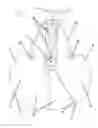
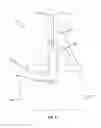
Page 1—fig A is the front view of the handle assembly showing
-
- Momentary push switch 1
- Grab handle 2
- Pull handle 3
- Connecting rod 4
- Wiring 5
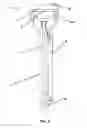
Page 2—fig B is the front view of the handle assembly attached to the main body showing
-
- Momentary push switch 1
- Grab handle 2
- Pull handle 3
- Connecting rod 4
- Wiring 5
- Handle lock 6
- Battery pack 7
- Main body 8
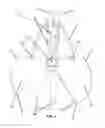
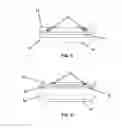
Page 3—fig C is the side view of the scooper assembly showing
-
- Connecting rod 4
- Main body 8
- Locking nuts 9
- U shaped puller 10
- Tension springs 11
- Connecting pins 12
- Pivot pin 13
- Left scoop 14
- Right scoop 15
- Scoop side wall extension 16
Page 4—fig D is the front view of the scooper assembly showing
-
- Connecting rod 4
- Main body 8
- Locking nuts 9
- U shaped puller 10
- Connecting pin 12
- Pivot pin 13
- Left scoop 14
- Right scoop 15
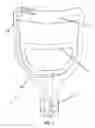
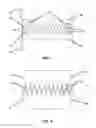
Page 5—fig E is the top view of the bag sealer showing
-
- Heating block 17
- Heating wire tension spring 19
- Pressing block 20
Page 5—fig F is the front/side view of the bag sealer showing
-
- Heating block 17
- Heating wire 18
- Heating wire tension spring 19
- Pressing block 20
Page 6—fig G is the inside view of the scoop showing the placement of the bag sealer in the scoop
-
- Right scoop 15
- Left scoop 14
- Heating block 17
- Pressing block 20
- Heating wire tension spring 19
- Scoop teeth 21
Page 7—fig H is the bottom view of the scooper showing
-
- Left scoop 14
- Right scoop 15
- Scoop teeth 21
DESCRIPTION
The Pick n Pack scooper needs five AA batteries incased in a battery pack, shown on page 2—fig B, to generate heat to seal the plastic bag. More or less batteries can be used in bigger or smaller size scoopers. Batteries can also be rechargeable.
Hold the Pick n Pack scooper with grab handle, shown on page 1—fig A and pull the pull handle with fingers to open the scooper claws. The pull handle is attached to the inverted U shaped puller by a threaded steel rod. When pulled the U attachment opens the scooper claws and the claws close when the handle is released. Two steel springs provide the tension to close the scooper claws. Lock the claws in open position by pressing the handle lock, handle lock is shown on page 2—fig B. Install an appropriate size plastic bag inside the open claws of the scooper and release the lock. The scooper is now in close position with the open end of the bag hanging out of the scooper. Now fold the extra bag over the outer side of the scooper and stick it to the sticky strip on the outer surface of the scooper. A double sided sticky strip is installed on the outer side of the scooper to keep the plastic bag from moving when the scooper claws are open to pick up the waste. The Pick n Pack scooper is now ready to pick up the waste.
Open the claws to pick up the waste and after the pick up press the momentary push switch, shown on page 1—fig A, for few seconds. The DC power from the battery pack heats up the heating element wire instantly and seals the plastic bag by melting the part of the bag that is pressed between the bottom edges of the scooper claws. As shown on page 5—fig E (top view) and fig F (front/side view) the inside bottom edge of one scooper claw the heating heating element wire of the bag sealer is installed around a rectangle hard plastic block, that is the same size of the inside of the scooper claw. The wire has two small steel springs at both ends, shown on page 5—fig E and fig F, to keep it at the same tension during the heating and cooling of the wire as the wire expands and shrinks during the sealing process. The other scooper claw has a hard rubber strip of the same size as the inside of the claw. It is also the same thickness as the heating element plastic strip installed inside the other claw, also shown on page 6—fig G. When the plastic bag is pressed between the heating and the rubber strips and the wire is heated by pressing the momentary push switch installed on the grab handle, the bag is sealed. Once the bag is sealed with the waste inside, open the scooper and the sealed bag drops out because of the weight of the waste.
Claims
1. The main difference between Pick n Pack scooper and an ordinary pooper scooper is the bag sealer installed at the inner bottom edges of the scooper claws so when a plastic bag is pressed between the bottom edges it can be sealed by using the battery operated bag sealer. I want to patent the use of battery powered bag sealing capability in the scooper.
2. The other difference is the extended side walls of the scooper claws that always overlap each other at open or close position. The overlapping side walls prevent the plastic bag from sticking out from the sides. Only the open side of the bag sticks out from the bottom edges of the scooper claws and can be sealed by using the bag sealer. I want to patent the use of overlapping side walls of the scooper.
No measurements are provided in this application because the Pick n Pack scooper can be made in different sizes, bigger or smaller.
Images & Drawings included:
Sources:
- United States Patent and Trademark Office - verify current appl. status at the USPTO↗
Recent applications in this class:
- » 20250290261 2025-09-18
PET WASTE SCOOP ASSEMBLY - » 20250283287 2025-09-11
Pet Waste Tray - » 20250257534 2025-08-14
PET WASTE PICK UP POWER TOOL SYSTEM AND METHOD OF USE - » 20250207340 2025-06-26
PET WASTE BAG RETAINER AND ORGANIZER SYSTEM AND METHODS FOR USING THE SAME - » 20250059717 2025-02-20
Portable Ground Picking Collector - » 20240417940 2024-12-19
Animal Waste Scooper - » 20240384485 2024-11-21
APPARATUS AND METHODS FOR REFUSE COLLECTION - » 20240360635 2024-10-31
EXTENDABLE WASTE-SCOOPING DEVICE - » 20240344286 2024-10-17
Cat Litter Scoop - » 20240337080 2024-10-10
Animal Waste Collection Apparatus