Substrate insert molding with deposited light-generating sources
US20150171289A1
2015-06-18
14/542,595
2014-11-15
✅ Patent granted
US 10,403,801 B2
2019-09-03
-
-
Peter Dungba Vo | Azm A Parvez
Lee & Hayes, P.C.
2035-01-28
Abstract:
Disclosed herein are technologies related to film-insert molding (FIM) with deposited light-generating sources, such as printed light-emitting diodes. This Abstract is submitted with the understanding that it will not be used to interpret or limit the scope or meaning of the claims.
Assignee:
- ROHINNI, LLC 52 🇺🇸 Coeur d'Alene, ID, United States
Applicant:
Interested in similar patents?
Get notified when new applications in this technology area are published.
Classification:
H01L33/507 » CPC further
Semiconductor devices with at least one potential-jump barrier or surface barrier specially adapted for light emission; Processes or apparatus specially adapted for the manufacture or treatment thereof or of parts thereof; Details thereof characterised by the semiconductor body packages; Wavelength conversion elements the elements being in intimate contact with parts other than the semiconductor body or integrated with parts other than the semiconductor body
H01L33/56 » CPC further
Semiconductor devices with at least one potential-jump barrier or surface barrier specially adapted for light emission; Processes or apparatus specially adapted for the manufacture or treatment thereof or of parts thereof; Details thereof characterised by the semiconductor body packages; Encapsulations Materials, e.g. epoxy or silicone resin
B29C45/14 IPC
Injection moulding, i.e. forcing the required volume of moulding material through a nozzle into a closed mould; Apparatus therefor incorporating preformed parts or layers, e.g. injection moulding around inserts or for coating articles
B29C45/14639 » CPC further
Injection moulding, i.e. forcing the required volume of moulding material through a nozzle into a closed mould; Apparatus therefor incorporating preformed parts or layers, e.g. injection moulding around inserts or for coating articles for obtaining an insulating effect, e.g. for electrical components
H01L25/0753 » CPC further
Assemblies consisting of a plurality of individual semiconductor or other solid state devices ; Multistep manufacturing processes thereof all the devices being of a type provided for in the same subgroup of groups - , e.g. assemblies of rectifier diodes the devices not having separate containers the devices being of a type provided for in group the devices being arranged next to each other
B29K2995/002 » CPC further
Properties of moulding materials, reinforcements, fillers, preformed parts or moulds having particular optical properties, e.g. fluorescent or phosphorescent Coloured
B29K2995/0026 » CPC further
Properties of moulding materials, reinforcements, fillers, preformed parts or moulds having particular optical properties, e.g. fluorescent or phosphorescent Transparent
B29K2995/0035 » CPC further
Properties of moulding materials, reinforcements, fillers, preformed parts or moulds having particular optical properties, e.g. fluorescent or phosphorescent Fluorescent
H01L33/505 » CPC further
Semiconductor devices with at least one potential-jump barrier or surface barrier specially adapted for light emission; Processes or apparatus specially adapted for the manufacture or treatment thereof or of parts thereof; Details thereof characterised by the semiconductor body packages; Wavelength conversion elements characterised by the shape, e.g. plate or foil
H01L2924/0002 » CPC further
Indexing scheme for arrangements or methods for connecting or disconnecting semiconductor or solid-state bodies as covered by; Technical content checked by a classifier Not covered by any one of groups , and
H01L2933/005 » CPC further
Details relating to devices covered by the group but not provided for in its subgroups; Processes relating to semiconductor body packages relating to encapsulations
H01L2933/0041 » CPC further
Details relating to devices covered by the group but not provided for in its subgroups; Processes relating to semiconductor body packages relating to wavelength conversion elements
Y10T29/49146 » CPC further
Metal working; Method of mechanical manufacture; Electrical device making; Conductor or circuit manufacturing; On flat or curved insulated base, e.g., printed circuit, etc.; Assembling to base an electrical component, e.g., capacitor, etc. with encapsulating, e.g., potting, etc.
H01L33/54 » CPC main
Semiconductor devices with at least one potential-jump barrier or surface barrier specially adapted for light emission; Processes or apparatus specially adapted for the manufacture or treatment thereof or of parts thereof; Details thereof characterised by the semiconductor body packages; Encapsulations having a particular shape
H01L25/075 IPC
Assemblies consisting of a plurality of individual semiconductor or other solid state devices ; Multistep manufacturing processes thereof all the devices being of a type provided for in the same subgroup of groups - , e.g. assemblies of rectifier diodes the devices not having separate containers the devices being of a type provided for in group
H01L33/50 IPC
Semiconductor devices with at least one potential-jump barrier or surface barrier specially adapted for light emission; Processes or apparatus specially adapted for the manufacture or treatment thereof or of parts thereof; Details thereof characterised by the semiconductor body packages Wavelength conversion elements
B29K2069/00 » CPC further
Use of PC, i.e. polycarbonates or derivatives thereof , as moulding material
B29K2105/0032 » CPC further
Condition, form or state of moulded material or of the material to be shaped containing compounding ingredients Pigments, colouring agents or opacifiyng agents
Description
PRIORITY CLAIM AND CROSS-REFERENCE TO RELATED APPLICATIONS
This application claims the benefit under 35 U.S.C. §119(e)(1) of U.S. Provisional Applications: No. 61/905,155, filed Nov. 15, 2013; and No. 61/903,391, filed Nov. 13, 2013, which are hereby incorporated by reference in their entirety.
BACKGROUND
The terms in-mold decoration (IMD), in-mold labeling (IML), and film insert molding (FIM) refer to the same general concept of fusing a material having some indicators (e.g., graphics and lettering) thereon into a plastic mold. In some camps, the meaning of each term (IMD, IML, and FIM) may differ in some in their nuances.
According to Wikipedia, in-mould (or mold) decoration is described:
-
- In-mould decoration is a special type of plastic moulding that is used for decorating plastic surfaces with color and/or with an abrasion resistant coat.
- A carrier foil is placed inside the opened mould. It carries the dried paint layers, which are to be transferred to the plastic part, with the paint facing the gate. After filling with plastic the paint adheres to the plastic, and is removed from the carrier when opening the mould. For the next cycle the carrier foil is advanced, positioning the next area to be transferred.
Another website (www.juju-chemical.com) describes in-mold decoration (IMD) in this manner:
-
- IMD is resin-moulding system that has been rapidly developing recently. In a broad sense, IMD means whole insert-moulding. In a narrow sense, it means the system in which the preliminarily-moulded film is insert-moulded. The process is: printing—preliminary-moulding—trimming —injection moulding — finished product.
- There are three kinds of preliminary moulding: high-pressure moulding, vacuum moulding and press-moulding with metal dice. Preliminarily-moulded film is trimmed and adhered to the resin in the injection moulding machine. The unprinted side of the film generally comes on the surface of the finished product face up, which means that the printed ink is sandwiched between the film and resin. As the ink is covered with the film, abrasion resistance becomes good. The ink which is used for IMD must have conflicting properties: flexibility to cope with moulding and the resistance to heat and pressure of injection process
Wikipedia describes In-Mould (mold) labeling in this manner:
-
- In-mould labelling is the use of paper or plastic labels during the manufacturing of containers by blow molding, injection molding, or thermoforming processes. The label serves as the integral part of the final product, which is then delivered as pre-decorated item. Combining the decoration process with the moulding process cuts the total cost. The technology was first developed by Owens-Illinois in cooperation with Procter & Gamble to supply pre-labelled bottles that could be filled on the product filling line. This was first applied to Head & Shoulders shampoo bottles.
- In-mould labelling (IML) was initially designed for blow molding, though developments using injection molding or thermoforming with reel-fed systems have increased the efficiency of the labelling process. The original concept involves coating the reverse side of the label with a heat seal layer, followed by a substrate material in which heat resistant ink is applied to. A heat resistant coating of lacquer is then applied. This process eliminates the need to flame treat the bottles prior labelling to achieve adequate adhesion.
- There are several techniques for conducting the in-mould labelling process. Vacuum and compressed air can be used to handle the labels, also static electricity can be used. Electrostatic charging electrodes charge a label while it is being transferred to the moulding machine, so that when the label is placed on the tool and released by the labelling robot, it will wrap itself onto the tool. Most robot systems for placement of labels are not required for specific moulding machines and can be used with up to date presses with fast clamping systems.
- Labels may be paper or a similar material to the moulded product. Polypropylene or polystyrene is commonly used as label material, with a thickness of 15 to 40 micrometres. Cavitated label material is also used. This is a sandwich material, having a spongy layer bonded between two very thin solid layers. An advantage of cavitated film is better conformance to small-radius curves on a product. Laminated film can be used to decorate products, yielding high wear-resistance. This type of film has the printed surface protected by a second layer of film, with a thickness of 30 or 40 micrometres. Products using this type of label might include picnic-ware, mouse-mats, or internal automotive components.
- In-mould labeling is a popular method of decorating injection-molded parts for consumer electronics and for plastic bottles. Notebook computer and cellphone manufacturers are adopting IML technology for greater wear resistance than spray painting or pad-printing. IML can provide greater decorating options than other methods. Multi-color screen printed and offset lithography printed graphics are used to produce products with higher quality graphics than available with other decorating methods. Most applications in this area use second surface graphics. The decoration is printed on the back side of a clear substrate, typically polycarbonate or acrylic 0.125 mm to 0.375 mm thick. The injection plastic is on the ink side of the film. This encapsulates the decoration between the film layer and the injected plastic resulting in a decoration that can't be abraded during use. Vision systems can check for accurate label positioning, and can validate label correctness.
At website at www.lgintl.com describes Film Insert Molding in this manner:
-
- Film Insert Molding (FIM), [is a type of] Mold Decorating (IMD) is a new, highly advanced method of applying printed graphics to molded plastic parts. The label is seamlessly integrated into the housing of the part, eliminating the need for post production labeling. FIM can be used to apply clear scratch-resistant hardcoats, logos, text and graphics, in any color or combination of colors, to plastic parts prior to injection molding. The final product is highly durable and ideal for handheld devices, electronic equipment and even point-of-purchase displays
The context of the technology is in the realm of in-mold decorating (IMD), in-mold labeling (IML), and film-insert molding (FIM) as introduced above and has known to those of skill in the art. Herein, unless the particular context indicates otherwise, the terms IMD is a general label that encompasses IMD, IML, and FIM technologies.
BRIEF DESCRIPTION OF THE DRAWINGS
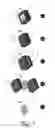
FIG. 1 shows an example system in accordance with one or more implementations described herein.
FIG. 2 shows an example process in accordance with one or more implementations described herein.
The Detailed Description references the accompanying figures. In the figures, the left-most digit(s) of a reference number identifies the figure in which the reference number first appears. The same numbers are used throughout the drawings to reference like features and components.
DETAILED DESCRIPTION
Disclosed herein are technologies related to film-insert molding (FIM) with deposited light-generating sources, such as printed light-emitting diodes (pLEDs).
Conventionally, there are difficulties involved in using semiconductors (like LEDs) and their circuitry with of in-mold decorating (IMD). These difficulties are discussed in these references:
U.S. Pat. No. 6,137,224;
DE102007011123;
EP 2371510.
Some of those difficulties include:
-
- Temperature sensitivities of the conventional electronic components;
- Difficulty (and thus cost) of handling and placing the conventional electronic components;
- Effective sealing with the conventional electronic components;
- Thickness of the conventional electronic components (and their substrates).
For example, the thermoplastic encapsulating material (e.g., resin) or the IMD process itself may destroy the conventional semiconductors (like LEDs) and/or their circuitry.
Example Implementation
For the purposes of the discussion herein, the term substrate insert molding (SIM) covers the process of IMD, IML, and/or FIM as applied to the described new approach and technology.
In general, the example implementation involves the encapsulation of a lighted substrate by injection molding a light-transmissive (e.g., transparent or translucent) thermoplastic encapsulating material that covers and mechanically bonds with the substrate.
The lighted substrate has is a thin film (e.g., polyester) having deposited (e.g., printed) light-generating sources (such as pLEDs).
The lighted substrate may be created via this example process:
-
- printing a trace of conductive material (e.g., silver ink or ink with conductive nano-fibers) on non-conductive substrate (e.g., polyester);
- using ink with pLEDs dispersed therein, printing shapes/areas/regions of pLEDs over the traces;
- printing a dielectric (i.e., insulating) layer to separate conductive material layers;
- printing another trace of conductive material (e.g., silver ink or ink with conductive nano-fibers) over the shapes/areas/regions of pLEDs thus completing a circuit (once attached to a power source) therethrough the pLEDs a circuitry
The lighted substrate has an interface tail extending from the finished mold. The interface has an electronic circuit connection for powering and controlling the light-generating sources.
An encapsulating material is typically a thermoplastic resin, which is often chosen from among the groups of polycarbonates and acrylics.
In some implementations, a diffusing layer may be layered over one side of the light substrate.
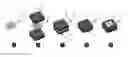
FIG. 1 shows five sub-figures A-E that illustrate an example SIM process and the resulting product of that process.
FIG. 1A shows a lighted substrate 100, such as a thin film having deposited (e.g., printed) light-generating sources (such as pLEDs) thereon. Extending from the substrate is an interface tail 110. The thin interface tail 110 is typically an extension of the same substrate material. It includes the circuitry for connecting the light-generating sources to power and/or control signals.
This can also be done by covering the traces with a mold feature such that they are exposed after the molding process to contact with a separate connector. Examples would be Cell phone antennas that are printed on the back of a plastic housing.
FIG. 1B shows a mold 200 having a top mold 120 and a bottom mold 130. The mold 200 is composed of a polycarbonates and acrylics (or the like) material. Typically, the top mold 120 will be light-transmissive (e.g., transparent or translucent). Note that the lighted substrate 100 is interposed between the top mold 120 and the bottom mold 130.
In addition, a diffusing film adhered to the lighted substrate or the light-transmissive mold. Alternatively, colored pigments may be added to translucent or transparent polymers of the molds or the transmissive thermoplastic encapsulating material. In other implementations, phosphor and/or diffusers may be layers or printed on the lighted substrate and/or the light-transmissive mold or the transmissive thermoplastic encapsulating material.
FIG. 1C shows the same mold 200, but with the top mold 120 and bottom mold 130 sandwiching the lighted substrate 100 therebetween. A light-transmissive thermoplastic encapsulating material 140 is introduced between the top and bottom mold. It covers the lighted substrate 100 and when pressed together (and possibly heated), it mechanically bonds with the substrate and to the top and bottom molds. Note that the interface tail 110 extends out and away from the mold 200.
FIG. 1D shows the mold 200 after completion of the SIM process. The top mold 120 and bottom mold 130 are fused together as one solid and integrated whole. The interface tail 110 extends from the mold 200, but, since the substrate is made from thin and compatible material (e.g., thermally compatible), it is sealed in the mold 200. No hole around the tail 110 is left.
FIG. 1E shows the mold 200 with a pattern 150 of light-generating sources (such as pLEDs) on the fully encapsulated lighted substrate 100 illuminated. This, of course, presumes that the interface tail 110 is connected to a power source (e.g., battery), which is not shown.
In some implementations, the power source might be encapsulated in the mold 200 or attached directly to the mold.
Unlike conventional approaches, it is not necessary to protect the electronic components (e.g., LEDs, wiring, traces, circuit board, substrate, etc.) from the thermal process of conventional IMD, IML, and/or FIM processes. Conventional electronic components are destroyed by thermal and/or plastic encapsulation of the conventional IMD, IML, and/or FIM processes.
The new SIM process described herein may use the same thermal and/or plastic encapsulation of the conventional IMD, IML, and/or FIM processes that would destroy the conventional electronic components (e.g., LEDs, wiring, traces, circuit board, substrate, etc.). The difference here is that the new electronic components (such as light-generating sources) themselves, the new way of creating the circuitry (e.g., depositing (e.g., printing) the circuitry and the active electronic components (e.g., LEDs)), and the use of a material for the substrate that is fully compatible with heat and encapsulation process.
In addition, the interface tail 110 is fully sealed. Therefore, unlike conventional approaches the finished mold is impervious to liquid intrusion. That is, it will not leak and allow moisture inside to interfere with the encapsulated electronics.
Alternatively, instead of using a tail, some implementations may employ a contact-and-spring type connector. With such a connector, circuitry of the lighted substrate is conductively connected internally to a conductive contact that is exposed on the outer surface of the overall unit. There is no physical hole that will allow liquid ingress. Instead, the contact allows for connection to another metal (often a spring) conductor that is attached to a power source (e.g., battery) and/or a controller.
FIG. 2 shows a process 200 for implementing the technology discussed herein. The process discussed herein may be implemented by one or more machinery components as part of a manufacturing facility.
At 210, the manufacturing machinery interposes a lighted substrate between a top mold and a bottom mold, wherein the lighted substrate is a thin film having light-generating sources with their electronically conductive circuitry deposited thereon, the lighted substrate having a thin interface tail with connectors configured to connect the deposited light-generating sources to an external power source.
At 212, the manufacturing machinery sandwiches the interposed lighted substrate between the top mold and the bottom mold.
At 214, the manufacturing machinery positions the interposed lighted substrate between the top mold and the bottom mold to expose the interface tail while the molds are sandwiched together. As mentioned above, a contact-and-tail may be used in the alternative.
At 216, the manufacturing machinery introduces a light-transmissive thermoplastic encapsulating material in between the top and bottom molds and covering, at least a portion of, the lighted substrate;
At 218, the manufacturing machinery fuses the top and bottom and thermoplastic encapsulating material together.
Deposited Light-Generating Sources
Conventionally, the smallest produced surface-mount LEDs are about 1.0 mm long by 0.8 mm wide and 0.2 mm thick. An example of a light-generating component that is contemplated to be used with the technology described herein is described in U.S. Pat. No. 8,415,879, which is titled “Diode for a Printable Composition.” These semi-conductor light-generating sources are called “printable light-emitting diodes” or more generally “placeable” LEDs. That maybe generally called pLEDs herein.
Each pLED has a cross-section with a maximum length of 3 to 50 microns. Indeed, in some implementations, the light-generating component has a cross-section with a maximum length of 15 to 20 microns. This is about thirty to fifty times smaller than the smallest conventional surface-mount LEDs available.
Using the pLEDs, each group of light-generating sources contains about two-thousand sources in some implementations. In other implementations, a group may contain as much as five-thousand sources.
Of course, other implementations may use different technology for the light-generating sources that may be deposited on a thin layer of material (e.g., 0.07 to 0.25 mm thick) and in an electrically conductive manner.
Of course, other suitable light-generating sources may be used with implementations discussed herein and otherwise contemplated. In some implementations, a suitable light-generating source is smaller than 1.0 mm long by 0.8 mm wide and 0.2 mm thick and is larger than includes light-emitting semiconductors that each has a cross-section with a maximum length of 3 to 50 microns.
Deposition of Light-Generating Sources
Implementations of the technology described herein that use the pLEDs involve a disposition (e.g., printing, spraying, etc.) of printable light-emitting diodes that are suspended in a liquid or gel (e.g., ink).
The process of placing the light-generating sources that are suspended in a liquid or gel on the lightplate is called “liquid deposition” herein. The liquid deposition may be accomplished by printing, spraying, or other such application processes. Indeed, the liquid deposition may be accomplished on a conventional printing press, screen press, ink jet printing, or other printing technology.
Deposition, as used herein, of light-generating sources involves the placement of such sources on a surface and in such a manner so that it is or can be linked electronically to a power source. Disposition does not include surface mounting as is accomplished with conventional LEDs. Rather, deposition herein includes, for example, liquid deposition, printing, spraying, lithography, electrophotography, ejection, squirting, shooting, electrophoresis, electroplating, and the like onto a surface.
Of course, other implementations may use different technology for the light-generating sources that may be deposited on a thin layer of material (e.g., 0.07 to 0.25 mm thick), such as a thin film, underneath the keys and in an electrically conductive manner.
With the existing printed LED technology, the pLEDs are suspended in a liquid or gel (e.g., ink). That pLED ink is printed on a surface. Indeed, this printed may be accomplished on a conventional printing press or screen press.
An example of an existing pLED printing process includes:
-
- printing a trace of conductive material (e.g., silver ink or clear ink with conductive nano-fibers) on non-conductive substrate (e.g., polyester);
- using ink with pLEDs dispersed therein, printing shapes/areas/regions of pLEDs over the traces;
- printing a dielectric (i.e., insulating) layer to separate conductive material layers;
- printing another trace of conductive material (e.g., silver ink or clear ink with conductive nano-fibers) over the shapes/areas/regions of pLEDs thus completing a circuit (once attached to a power source) therethrough the pLEDs.
Placement of Light-Generating Sources
Alternative implementations of the technology described herein may employ precisely placed unpackaged LEDs. For example, very tiny unpackaged LEDs may be placed onto a substrate with a printed circuitry via a mechanical apparatus using one or more various techniques to pick-and-place the LEDs (e.g., magnetics, electrostatic, van der Waals force, etc.).
Additional and Alternative Implementation Notes
In the above description of exemplary implementations, for purposes of explanation, specific numbers, materials configurations, and other details are set forth in order to better explain the present invention, as claimed. However, it will be apparent to one skilled in the art that the claimed invention may be practiced using different details than the exemplary ones described herein. In other instances, well-known features are omitted or simplified to clarify the description of the exemplary implementations.
The inventor intends the described exemplary implementations to be primarily examples. The inventor does not intend these exemplary implementations to limit the scope of the appended claims. Rather, the inventor has contemplated that the claimed invention might also be embodied and implemented in other ways, in conjunction with other present or future technologies.
Moreover, the word “exemplary” is used herein to mean serving as an example, instance, or illustration. Any aspect or design described herein as exemplary is not necessarily to be construed as preferred or advantageous over other aspects or designs. Rather, use of the word “exemplary” is intended to present concepts and techniques in a concrete fashion. The term “technology,” for instance, may refer to one or more devices, apparatuses, systems, methods, articles of manufacture, and/or computer-readable instructions as indicated by the context described herein.
As used in this application, the term “or” is intended to mean an inclusive “or” rather than an exclusive “or.” That is, unless specified otherwise or clear from context, “X employs A or B” is intended to mean any of the natural inclusive permutations. That is, if X employs A; X employs B; or X employs both A and B, then “X employs A or B” is satisfied under any of the foregoing instances. In addition, the articles “a” and “an” as used in this application and the appended claims should generally be construed to mean “one or more,” unless specified otherwise or clear from context to be directed to a singular form.
These processes are illustrated as a collection of blocks in a logical flow graph, which represents a sequence of operations that can be implemented in mechanics alone or a combination with hardware, software, and/or firmware. In the context of software/firmware, the execution of the instructions on the medium may cause performance of the operations described herein. For example, or more computer-readable media with processor-executable instructions stored thereon which when executed by one or more processors may cause performance of operations described herein.
Note that the order in which the processes are described is not intended to be construed as a limitation, and any number of the described process blocks can be combined in any order to implement the processes or an alternate process. Additionally, individual blocks may be deleted from the processes without departing from the spirit and scope of the subject matter described herein.
Claims
What is claimed is:1. A method of substrate insert molding (SIM), the method comprising:
interposing a lighted substrate between a top mold and a bottom mold, wherein the lighted substrate is a thin film having light-generating sources with their electronically conductive circuitry deposited thereon, the lighted substrate having a thin interface tail with connectors configured to connect the deposited light-generating sources to an external power source;
sandwiching the interposed lighted substrate between the top mold and the bottom mold;
positioning the interposed lighted substrate between the top mold and the bottom mold to expose the interface tail while the molds are sandwiched together;
introducing a light-transmissive thermoplastic encapsulating material in between the top and bottom molds and covering, at least a portion of, the lighted substrate;
fusing the top and bottom and thermoplastic encapsulating material together.
2. A method according to claim 1, wherein for fusing includes heating and pressing.
3. A method according to claim 1, wherein the light-transmissive thermoplastic encapsulating material mechanically bonds with the lighted substrate during the fusing.
4. A method according to claim 1, wherein light-transmissive thermoplastic encapsulating material is a thermoplastic resin.
5. A method according to claim 1, wherein light-transmissive thermoplastic encapsulating material is a thermoplastic resin selected from a group consisting of polycarbonates and acrylics.
6. A method according to claim 1, wherein light-transmissive thermoplastic encapsulating material includes pigments therein.
7. A method according to claim 1, wherein light-transmissive thermoplastic encapsulating material includes phosphor therein.
8. A method according to claim 1 further comprising including a diffusing layer on one side of the lighted substrate.
9. A method according to claim 1, wherein the lighted substrate includes a plurality of light-generating sources.
10. A method according to claim 1, wherein the lighted substrate includes a plurality of light-generating sources, wherein each light-generating source is a light-emitting semiconductor.
11. A method according to claim 1, wherein the lighted substrate includes a plurality of light-generating sources that each has a cross-section with a maximum length of 3 to 50 microns.
12. A method according to claim 1, wherein the lighted substrate includes a plurality of light-generating sources, each light-generating source being deposited on the lighted substrate.
13. An electronic product sealed against liquid ingress in accordance with the method of claim 1.
14. A method comprising:
obtaining a video signal interposing a lighted substrate between a top mold and a bottom mold, wherein the lighted substrate is a thin film having light-generating sources with their electronically conductive circuitry deposited thereon, at least one of the molds having an externally electrically conductive connector configured to internally connect the deposited light-generating sources of the lighted substrate;
sandwiching the interposed lighted substrate between the top mold and the bottom mold;
positioning the interposed lighted substrate between the top mold and the bottom mold to connect the externally electrically conductive connector configured to internally connect the deposited light-generating sources of the lighted substrate;
introducing a light-transmissive thermoplastic encapsulating material in between the top and bottom molds and covering, at least a portion of, the lighted substrate;
fusing the top and bottom and thermoplastic encapsulating material together.
15. A method according to claim 14, wherein for fusing includes heating and pressing.
16. A method according to claim 14, wherein the light-transmissive thermoplastic encapsulating material mechanically bonds with the lighted substrate during the fusing.
17. A method according to claim 14, wherein the lighted substrate includes a plurality of light-generating sources that each has a cross-section with a maximum length of 3 to 50 microns.
18. A method according to claim 14, wherein the lighted substrate includes a plurality of light-generating sources, each light-generating source being deposited on the lighted substrate.
19. An electronic product sealed against liquid ingress in accordance with the method of claim 14.
20. An electronic product sealed against liquid ingress in accordance with a method comprising:
interposing a lighted substrate between a top mold and a bottom mold, wherein the lighted substrate is a thin film having light-generating sources with their electronically conductive circuitry deposited thereon, the lighted substrate having a thin interface tail with connectors configured to connect the deposited light-generating sources to an external power source;
sandwiching the interposed lighted substrate between the top mold and the bottom mold;
positioning the interposed lighted substrate between the top mold and the bottom mold to expose the interface tail while the molds are sandwiched together;
introducing a light-transmissive thermoplastic encapsulating material in between the top and bottom molds and covering, at least a portion of, the lighted substrate;
fusing the top and bottom and thermoplastic encapsulating material together.
Images & Drawings included:

Sources:
- United States Patent and Trademark Office - verify current appl. status at the USPTO↗
Recent applications in this class:
- » 20250056938 2025-02-13
SEMICONDUCTOR LIGHT-EMITTING APPARATUS - » 20250048804 2025-02-06
LIGHT-EMITTING DEVICE, PLANAR LIGHT SOURCE, AND LIQUID CRYSTAL DISPLAY DEVICE - » 20250022992 2025-01-16
DISPLAY DEVICE AND MANUFACTURING METHOD THEREOF - » 20240429353 2024-12-26
SEMICONDUCTOR LIGHT-EMITTING APPARATUS - » 20240421270 2024-12-19
BACKLIGHTING UNIT COMPRISING A SIDE-EMITTING SEMICONDUCTOR CHIP - » 20240413276 2024-12-12
LEATHER-TEXTURED LIGHT-EMITTING DISPLAY DEVICE - » 20240395985 2024-11-28
DISPLAY DEVICE - » 20240379917 2024-11-14
DISPLAY DEVICE AND METHOD OF MANUFACTURING THE SAME - » 20240379916 2024-11-14
LIGHT-EMITTING DEVICE - » 20240379915 2024-11-14
DISPLAY PANEL
Recent applications for this Assignee:
- » 20210142700 2021-05-13
Multi-function light apparatus - » 20210035837 2021-02-04
Bridge apparatus for semiconductor die transfer - » 20200286770 2020-09-10
Multi-axis movement for transfer of semiconductor devices - » 20200243491 2020-07-30
Apparatus for direct transfer of semiconductor device die - » 20200227217 2020-07-16
Apparatus and method of backlighting through a cover on the apparatus - » 20200160762 2020-05-21
Indicium illumination - » 20200159069 2020-05-21
Backlighting display apparatus - » 20200135688 2020-04-30
Apparatus and method for transferring semiconductor devices from a substrate and stacking semiconductor devices on each other - » 20200118862 2020-04-16
Direct transfer apparatus for a pattern array of semiconductor device die - » 20200105570 2020-04-02
Variable pitch multi-needle head for transfer of semiconductor devices