Treadmill providing gait analysis
US20150174444A1
2015-06-25
14/207,124
2014-03-12
✅ Patent granted
US 9,494,446 B2
2016-11-15
-
-
Loan T Thanh | Rae Fischer
Huffman Law Group, PC
2034-03-12
Abstract:
A treadmill is capable of performing a gait analysis and comprises a conveyor belt, a supporting plate, a driving mechanism, and at least two sensing assemblies. The conveyor belt is used for a user to walk or run in place. The driving mechanism drives the conveyor belt to run. The supporting plate supports the conveyor belt. The two sensing assemblies are fixed with the supporting plate, for respectively sensing the user's left and right heel strike. A left and right pulse diagram thus can be obtained from the sensing assemblies, and the gait analysis is performed according to the left and right pulse diagram.
Inventors:
- BRIAN MURRAY 5 🇹🇼 Taipei City, Taiwan
- MAO-YING HUANG 2 🇹🇼 Taipei City, Taiwan
- HAO CHIANG 4 🇹🇼 Taipei City, Taiwan
- HAO CHIANG 5 🇹🇼 Taipei, Taiwan
- BRIAN MURRAY 7 🇹🇼 Taipei, Taiwan
- Mao-Ying Huang 2 🇹🇼 Taipei, Taiwan
Assignee:
- DYACO INTERNATIONAL INC. 23 🇹🇼 Taipei City, Taiwan
- Dyaco International Inc. 62 🇹🇼 Taipei, Taiwan
Applicant:
Interested in similar patents?
Get notified when new applications in this technology area are published.
Classification:
A63B2220/05 » CPC further
Measuring of physical parameters relating to sporting activity Image processing for measuring physical parameters
A63B2220/80 » CPC further
Measuring of physical parameters relating to sporting activity Special sensors, transducers or devices therefor
A63B22/02 » CPC main
Exercising apparatus specially adapted for conditioning the cardio-vascular system, for training agility or co-ordination of movements with movable endless bands, e.g. treadmills
G01C22/00 » CPC main
Measuring distance traversed on the ground by vehicles, persons, animals or other moving solid bodies, e.g. using odometers, using pedometers
A63B22/0235 » CPC further
Exercising apparatus specially adapted for conditioning the cardio-vascular system, for training agility or co-ordination of movements with movable endless bands, e.g. treadmills driven by a motor
A63B2220/17 » CPC further
Measuring of physical parameters relating to sporting activity Counting, e.g. counting periodical movements, revolutions or cycles, or including further data processing to determine distances or speed
A63B2220/22 » CPC further
Measuring of physical parameters relating to sporting activity; Distances or displacements Stride length
A63B2220/89 » CPC further
Measuring of physical parameters relating to sporting activity; Special sensors, transducers or devices therefor Field sensors, e.g. radar systems
A63B23/04 IPC
Exercising apparatus specially adapted for particular parts of the body for limbs, i.e. upper or lower limbs, e.g. simultaneously for lower limbs
A61B5/11 IPC
Measuring for diagnostic purposes ; Identification of persons; Detecting, measuring or recording devices for testing the shape, pattern, colour, size or movement of the body or parts thereof, for diagnostic purposes Measuring movement of the entire body or parts thereof, e.g. head or hand tremor, mobility of a limb
A63B71/06 IPC
Games or sports accessories not covered in groups - Indicating or scoring devices for games or players, or for other sports activities
A63B2071/0652 » CPC further
Games or sports accessories not covered in groups -; Indicating or scoring devices for games or players, or for other sports activities; Displays, user interfaces and indicating devices, specially adapted for sport equipment, e.g. display mounted on treadmills; Visualisation of specific exercise parameters Visualisation or indication relating to symmetrical exercise, e.g. right-left performance related to spinal column
A61B5/112 » CPC further
Measuring for diagnostic purposes ; Identification of persons; Detecting, measuring or recording devices for testing the shape, pattern, colour, size or movement of the body or parts thereof, for diagnostic purposes; Measuring movement of the entire body or parts thereof, e.g. head or hand tremor, mobility of a limb Gait analysis
Description
CROSS-REFERENCE TO RELATED APPLICATIONS
The entire contents of Taiwan Patent Application No. 102147449, filed on Dec. 20, 2013, from which this application claims priority, are incorporated herein by reference.
BACKGROUND OF THE INVENTION
1. Field of the Invention
The present invention relates to exercise devices, and more particularly relates to an exercise device providing symmetry index.
2. Description of Related Art
Nowadays, people tend to lack adequate exercise due to busy lifestyles. To the extent running has become popular as a simple and effective means for squeezing physical activity into a tight schedule, it is not always practicable.
Gait analysis is the biomechanics systematic study of human motion, using instrument to measure and analyze walk movements. The gait analysis can be used to assess individuals with conditions affecting their ability to walk. Commercial treadmills typically have no gait analysis function. Recently, someone develop a treadmill employing a pressure plate or a force plate to perform gait analysis for the user.
SUMMARY OF THE INVENTION
In one general aspect, the present invention relates to exercise devices, and more particularly relates to a treadmill providing gait analysis.
In an embodiment of the present invention, a treadmill capable of performing a gait analysis is provided. The treadmill comprises a conveyor belt, a supporting plate, a driving mechanism, and at least two sensing assemblies. The conveyor belt is used for a user to walk or run in place. The driving mechanism drives the conveyor belt to run. The supporting plate supports the conveyor belt. The two sensing assemblies are fixed with the supporting plate, for respectively sensing the user's left and right heel strike. A left and right pulse diagram thus can be obtained from the sensing assemblies, and the gait analysis is performed according to the left and right pulse diagram.
Accordingly, the present invention provides a treadmill capable of performing a gait analysis, which can assess individuals with conditions affecting their ability to walk or the conditions of recovery.
BRIEF DESCRIPTION OF THE DRAWINGS
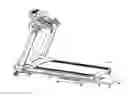
FIGS. 1A and 1B are perspective view and top view showing a treadmill capable of performing a gait analysis according to a preferred embodiment of the present invention.
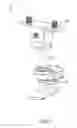
FIG. 2 shows the detail of the sensing assembly of the treadmill according to a preferred embodiment of the present invention.
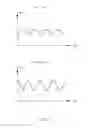
FIG. 3 shows a left and a right pulse diagram obtained from the sensing assemblies of the treadmill according to a preferred embodiment of the present invention.
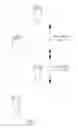
FIG. 4 illustrates the definition of step length according to a preferred embodiment of the present invention.
DETAILED DESCRIPTION OF THE PREFERRED EMBODIMENT
Reference will now be made in detail to those specific embodiments of the invention. Examples of these embodiments are illustrated in accompanying drawings. While the invention will be described in conjunction with these specific embodiments, it will be understood that it is not intended to limit the invention to these embodiments. On the contrary, it is intended to cover alternatives, modifications, and equivalents as may be included within the spirit and scope of the invention as defined by the appended claims. In the following description, numerous specific details are set forth in order to provide a thorough understanding of the present invention. The present invention may be practiced without some or all of these specific details. In other instances, well-known process operations and components are not described in detail in order not to unnecessarily obscure the present invention. While drawings are illustrated in detail, it is appreciated that the quantity of the disclosed components may be greater or less than that disclosed, except where expressly restricting the amount of the components. Wherever possible, the same or similar reference numbers are used in drawings and the description to refer to the same or like parts.
FIGS. 1A and 1B are perspective view and top view showing a treadmill 1 capable of performing a gait analysis according to a preferred embodiment of the present invention, in which some components are omitted from FIG. 1B for clearly showing essential components of the treadmill.
As shown in FIGS. 1A and 1B, the treadmill may comprise a conveyor belt 10, a supporting plate 11, a driving mechanism 12, a control panel 13, and at least two sensing assemblies 14. The conveyor belt 10 is used for a user to walk or run in place. The supporting plate 11 is arranged below the conveyor belt 10 for supporting the conveyor belt 10. The driving mechanism 12 drives the conveyor belt 10 to run. The two sensing assemblies 14 are fixed with the supporting plate 11, for respectively sensing the user's left and right heel strike. A left and right pulse diagram thus can be obtained from the sensing assemblies 14, and the gait analysis is performed according to the left and right pulse diagram. The detail is described as follows.
FIG. 2 shows the detail of the sensing assembly 14 of the treadmill according to the preferred embodiment of the present invention. Each sensing assembly comprises a hall sensor 140, a magnet 142, a coupling member 144, and a fixing member 146. The sensing assembly 14 couples with the supporting plate 11 via the fixing member 146. The fixing member 146 may be, but is not limited to, a screw. The hall sensor 140 does not fix with the coupling member 144, but fix with another mechanism. The magnet 142 fixes with the coupling member 144. When the user walks or runs, the coupling member 144 will vibrate with the supporting plate 11 but the hall sensor 140 remain static. The distance between the magnet 142 and the hall sensor 140 is thus varied, and the hall sensor 140 outputs induction voltages depending on the distance between the magnet 142 and the hall sensor 140, so that the left and right pulse diagram can be obtained.
FIG. 3 illustrates a left and a right pulse diagram obtained from the sensing assemblies of the treadmill according to a preferred embodiment of the present invention.
The left and right pulse diagram provide information regarding the relationship between the location of left foot (for instance, the tiptoe or heel portion of the left foot) and the time, and the relationship between the location of right foot (for instance, the tiptoe or heel portion of the right foot) and the time. By doing some computation, the gait analysis can be obtained.
In one embodiment, the gait analysis comprises a step number and/or a step frequency of the left and right foot of the user that walks or runs on the conveyor belt 10.
In one embodiment, the gait analysis comprises a step length of the left and right foot of the user that walks or runs on the conveyor belt 10.
FIG. 4 illustrates the definition of step length according to a preferred embodiment of the present invention. As shown in FIG. 4, the step length of right foot is the distance between the right heel and the left heel in a pair of steps, and the step length of left foot is the distance between the left heel and the right heel in a pair of steps. Instead of heel-to-heel, the step length can be computed by other portions of the left and right foot, such as tiptoe-to-tiptoe.
In one embodiment, the gait analysis comprises a step length symmetry index, which is computed by the following formula:
( step length symmetry index ) = 2 × S L - S R ( S L + S R ) × 100 % ,
wherein SL denotes the step length of the left foot, and SR denotes the step length of the right foot.
An analysis module (not shown) can be used to execute the foregoing computations. The computed gait analysis results can be shown in the control panel 13.
Except the treadmill shown in FIGS. 1A and 1B, the sensing assemblies 14 can be used in other exercise devices for performing the gait analysis.
Accordingly, the present invention provides a treadmill capable of performing a gait analysis, which can assess individuals with conditions affecting their ability to walk or the conditions of recovery.
The intent accompanying this disclosure is to have each/all embodiments construed in conjunction with the knowledge of one skilled in the art to cover all modifications, variations, combinations, permutations, omissions, substitutions, alternatives, and equivalents of the embodiments, to the extent not mutually exclusive, as may fall within the spirit and scope of the invention. Corresponding or related structure and methods disclosed or referenced herein, and/or in any and all co-pending, abandoned or patented application(s) by any of the named inventor(s) or assignee(s) of this application and invention, are incorporated herein by reference in their entireties, wherein such incorporation includes corresponding or related structure (and modifications thereof) which may be, in whole or in part, (i) operable and/or constructed with, (ii) modified by one skilled in the art to be operable and/or constructed with, and/or (iii) implemented/made/used with or in combination with, any part(s) of the present invention according to this disclosure, that of the application and references cited therein, and the knowledge and judgment of one skilled in the art.
Conditional language, such as, among others, “can,” “could,” “might,” or “may,” unless specifically stated otherwise, or otherwise understood within the context as used, is generally intended to convey that embodiments include, and in other interpretations do not include, certain features, elements and/or steps. Thus, such conditional language is not generally intended to imply that features, elements and/or steps are in any way required for one or more embodiments, or interpretations thereof, or that one or more embodiments necessarily include logic for deciding, with or without user input or prompting, whether these features, elements and/or steps are included or are to be performed in any particular embodiment.
Although specific embodiments have been illustrated and described, it will be appreciated by those skilled in the art that various modifications may be made without departing from the scope of the present invention, which is intended to be limited solely by the appended claims.
Claims
What is claimed is:1. An treadmill, comprising:
a conveyor belt on which a user walks or runs in place;
a supporting plate, arranged below the conveyor belt for supporting the conveyor belt;
a driving mechanism driving the conveyor belt to run; and
at least two sensing assemblies fixed with the supporting plate, for respectively sensing the user's left and right heel strike, so as to obtain a left pulse diagram and a right pulse diagram, and a gait analysis is performed according to the left and right pulse diagram.
2. The treadmill as set forth in claim 1, wherein the gait analysis comprises a step number of the left and right foot of the user that walks or runs on the conveyor belt.
3. The treadmill as set forth in claim 1, wherein the gait analysis comprises a step frequency of the left and right foot of the user that walks or runs on the conveyor belt.
4. The treadmill as set forth in claim 1, wherein the gait analysis comprises a step length of the left and right foot of the user that walks or runs on the conveyor belt.
5. The treadmill as set forth in claim 1, wherein the gait analysis comprises a step length symmetry index, which is computed by the following formula:
( step length symmetry index ) = 2 × S L - S R ( S L + S R ) × 100 % ,
wherein SL denotes the step length of the left foot, and SR denotes the step length of the right foot.
6. The treadmill as set forth in claim 1, wherein each sensing assembly comprises a hall sensor, a magnet, a coupling member, and a fixing member, in which the magnet fixes with the coupling member, and when the user walks or runs, the coupling member will vibrate with the supporting plate but the hall sensor remain static, so that the distance between the magnet and the hall sensor is thus varied, and the hall sensor outputs induction voltages depending on the distance between the magnet and the hall sensor, so as to obtain the left and right pulse diagram.
7. The treadmill as set forth in claim 1, further comprising a control panel for displaying the gait analysis.
Images & Drawings included:


Sources:
- United States Patent and Trademark Office - verify current appl. status at the USPTO↗
Recent applications in this class:
- » 20250222302 2025-07-10
EXERCISE DEVICE AND EXERCISE SYSTEM HAVING THE SAME - » 20250213913 2025-07-03
FOLDABLE TREADMILL - » 20250195944 2025-06-19
Rollback Braking for Non-Motorized Treadmills - » 20250195943 2025-06-19
HANDRAIL FOLDING STRUCTURE FOR TREADMILL - » 20250186829 2025-06-12
LIFTING STRUCTURE FOR PLATFORM OF TREADMILL - » 20250144468 2025-05-08
Locking mechanism for upright post of walking machine - » 20250082987 2025-03-13
TREADMILL CAPABLE OF ADJUSTING SLOPE RISING AND FALLING BY SCREW ROD - » 20250082986 2025-03-13
TREADMILL - » 20240408443 2024-12-12
FOLDING TREADMILL - » 20240399196 2024-12-05
LIFTING STRUCTURE FOR TREADMILL
Recent applications for this Assignee:
- » 20250058846 2025-02-20
Bicycle safety system - » 20230415020 2023-12-28
Exercise equipment with rotatable display - » 20210244999 2021-08-12
Elliptical trainer - » 20200330817 2020-10-22
Exercise machine - » 20200188727 2020-06-18
Exercise machine - » 20200094106 2020-03-26
Climbing machine - » 20200038706 2020-02-06
Climbing machine - » 20190262651 2019-08-29
Resistance regulating device for wheel of training machine - » 20190118033 2019-04-25
Elliptical trainer - » 20190118021 2019-04-25
Exercise machine with variable resistance