Self-enhancement plastic profile and production method thereof
US20150191961A1
2015-07-09
14/418,047
2013-08-14
✅ Patent granted
US 9,273,509 B2
2016-03-01
WO; PCT/CN2013/081474; 20130814
WO; WO2014/032524; 20140306
Vivian Chen
Novick, Kim & Lee, PLLC | Allen Xue
2033-08-14
Abstract:
The present invention provides a self-enhancement plastic profile and a production method thereof. The self-enhancement plastic profile is made by co-extrusion a substrate resin and a PBT resin containing fiber glass. The production method of the self-enhancement plastic profile is that: melting and co-extrusion of the substrate resin and the PBT resin containing fiber glass. Infrastructures comprise a main engine and an auxiliary engine vertically arranged to the main engine. The main engine processes the PVC substrate (1), the auxiliary engine processes an enhancement bar (2) of the PBT resin containing fiberglass, the raw materials are extruded by the main engine and the auxiliary engine at the same and the extrudate is pre-profiled, and subjected to cold cutting and sized. The enhancement bar (2) is made by blending the fiberglass with the polybutylene terephthalate (PBT) plastic. The self-enhancement plastic profile has advantages of simple, convenient and quick installation and convenient to produce.
Inventors:
- Feihu Yang 1 🇨🇳 Dalian, China
- Xiansheng Cheng 1 🇨🇳 Dalian, China
- Feng Jiang 1 🇨🇳 Dalian, China
- Huaijin Fan 1 🇨🇳 Dalian, China
- Hongrong Zhou 1 🇨🇳 Dalian, China
- Zhijun Yin 1 🇨🇳 Dalian, China
- Feihu Yang 1 🇨🇳 Liaoning, China
- Xiansheng Cheng 1 🇨🇳 Liaoning, China
- Feng Jiang 1 🇨🇳 Liaoning, China
- Huaijin Fan 1 🇨🇳 Liaoning, China
- Hongrong Zhou 1 🇨🇳 Liaoning, China
- Zhijun Yin 1 🇨🇳 Liaoning, China
Assignee:
- DALIAN SHIDE SCIENCE & TECHNOLOGY DEVELOPMENT CO., LTD. 1 🇨🇳 Dalian, Liaoning, China
Applicant:
Interested in similar patents?
Get notified when new applications in this technology area are published.
Classification:
B29K2027/06 » CPC further
Use of polyvinylhalogenides or derivatives thereof as moulding material PVC, i.e. polyvinylchloride
E06B1/28 » CPC main
Border constructions of openings in walls, floors, or ceilings; Frames to be rigidly mounted in such openings; Frames for doors, windows, or the like to be fixed in openings; Frames of plastics Hollow frames
E06B3/221 » CPC further
Window sashes, door leaves, or like elements for closing wall or like openings; Layout of fixed or moving closures, e.g. windows in wall or like openings ; Features of rigidly-mounted outer frames relating to the mounting of wing frames; Wing frames not characterised by the manner of movement; Single frames; Constructions depending on the use of specified materials of plastics; Hollow frames with the frame member having local reinforcements in some parts of its cross-section or with a filled cavity
B29K2067/006 » CPC further
Use of polyesters or derivatives thereof , as moulding material PBT, i.e. polybutylene terephthalate
B29K2309/08 » CPC further
Use of inorganic materials not provided for in groups - , as reinforcement Glass
B32B27/18 » CPC further
Layered products comprising synthetic resin characterised by the use of special additives
B32B27/20 » CPC further
Layered products comprising synthetic resin characterised by the use of special additives using fillers, pigments, thixotroping agents
B32B27/304 » CPC further
Layered products comprising synthetic resin comprising vinyl (co)polymers; comprising acrylic (co)polymers comprising vinyl halide (co)polymers, e.g. PVC, PVDC, PVF, PVDF
B32B27/36 » CPC further
Layered products comprising synthetic resin comprising polyesters
B32B37/15 » CPC further
Methods or apparatus for laminating, e.g. by curing or by ultrasonic bonding characterised by the properties of the layers with at least one layer being manufactured and immediately laminated before reaching its stable state, e.g. in which a layer is extruded and laminated while in semi-molten state
B32B37/153 » CPC further
Methods or apparatus for laminating, e.g. by curing or by ultrasonic bonding characterised by the properties of the layers with at least one layer being manufactured and immediately laminated before reaching its stable state, e.g. in which a layer is extruded and laminated while in semi-molten state at least one layer is extruded and immediately laminated while in semi-molten state
B32B38/0004 » CPC further
Ancillary operations in connection with laminating processes Cutting, tearing or severing, e.g. bursting; Cutter details
B32B2250/02 » CPC further
Layers arrangement 2 layers
B32B2250/24 » CPC further
Layers arrangement All layers being polymeric
B32B2262/101 » CPC further
Composition or structural features of fibres which form a fibrous or filamentary layer or are present as additives; Inorganic fibres Glass fibres
B32B2309/02 » CPC further
Parameters for the laminating or treatment process; Apparatus details Temperature
B32B2327/06 » CPC further
Polyvinylhalogenides PVC, i.e. polyvinylchloride
B32B2367/00 » CPC further
Polyesters, e.g. PET, i.e. polyethylene terephthalate
B32B2419/00 » CPC further
Buildings or parts thereof
C08K5/0008 » CPC further
Use of organic ingredients Organic ingredients according to more than one of the "one dot" groups of -
C08L23/0892 » CPC further
Compositions of homopolymers or copolymers of unsaturated aliphatic hydrocarbons having only one carbon-to-carbon double bond; Compositions of derivatives of such polymers not modified by chemical after-treatment; Homopolymers or copolymers of ethene; Copolymers of ethene; Copolymers of ethene with unsaturated hydrocarbons containing other atoms than carbon or hydrogen atoms containing monomers with other atoms than carbon, hydrogen or oxygen atoms
C08L27/06 » CPC further
Compositions of homopolymers or copolymers of compounds having one or more unsaturated aliphatic radicals, each having only one carbon-to-carbon double bond, and at least one being terminated by a halogen; Compositions of derivatives of such polymers not modified by chemical after-treatment containing chlorine atoms Homopolymers or copolymers of vinyl chloride
C08L33/06 » CPC further
Compositions of homopolymers or copolymers of compounds having one or more unsaturated aliphatic radicals, each having only one carbon-to-carbon double bond, and only one being terminated by only one carboxyl radical, or of salts, anhydrides, esters, amides, imides or nitriles thereof; Compositions of derivatives of such polymers; Homopolymers or copolymers of esters of esters containing only carbon, hydrogen and oxygen, which oxygen atoms are present only as part of the carboxyl radical
C08L67/02 » CPC further
Compositions of polyesters obtained by reactions forming a carboxylic ester link in the main chain ; Compositions of derivatives of such polymers Polyesters derived from dicarboxylic acids and dihydroxy compounds
C08L67/03 » CPC further
Compositions of polyesters obtained by reactions forming a carboxylic ester link in the main chain ; Compositions of derivatives of such polymers; Polyesters derived from dicarboxylic acids and dihydroxy compounds the dicarboxylic acids and dihydroxy compounds having the carboxyl- and the hydroxy groups directly linked to aromatic rings
E06B2003/228 » CPC further
Window sashes, door leaves, or like elements for closing wall or like openings; Layout of fixed or moving closures, e.g. windows in wall or like openings ; Features of rigidly-mounted outer frames relating to the mounting of wing frames; Wing frames not characterised by the manner of movement; Single frames; Constructions depending on the use of specified materials of plastics; Hollow frames with the frame member having local reinforcements in some parts of its cross-section or with a filled cavity with separate reinforcements situated outside the cavity or in the walls
Y10T428/1314 » CPC further
Stock material or miscellaneous articles; Hollow or container type article [e.g., tube, vase, etc.]; Glass, ceramic, or sintered, fused, fired, or calcined metal oxide or metal carbide containing [e.g., porcelain, brick, cement, etc.] Contains fabric, fiber particle, or filament made of glass, ceramic, or sintered, fused, fired, or calcined metal oxide, or metal carbide or other inorganic compound [e.g., fiber glass, mineral fiber, sand, etc.]
Y10T428/24628 » CPC further
Stock material or miscellaneous articles; Structurally defined web or sheet [e.g., overall dimension, etc.] Nonplanar uniform thickness material
Y10T428/31786 » CPC further
Stock material or miscellaneous articles; Composite [nonstructural laminate] Of polyester [e.g., alkyd, etc.]
Y10T428/31797 » CPC further
Stock material or miscellaneous articles; Composite [nonstructural laminate]; Of polyester [e.g., alkyd, etc.] Next to addition polymer from unsaturated monomers
Y10T428/31935 » CPC further
Stock material or miscellaneous articles; Composite [nonstructural laminate]; Of addition polymer from unsaturated monomers Ester, halide or nitrile of addition polymer
B32B27/30 IPC
Layered products comprising synthetic resin comprising vinyl (co)polymers; comprising acrylic (co)polymers
C08K3/00 IPC
Use of inorganic substances as compounding ingredients
C08K5/00 IPC
Use of organic ingredients
C08L23/08 IPC
Compositions of homopolymers or copolymers of unsaturated aliphatic hydrocarbons having only one carbon-to-carbon double bond; Compositions of derivatives of such polymers not modified by chemical after-treatment; Homopolymers or copolymers of ethene Copolymers of ethene
E06B3/22 IPC
Window sashes, door leaves, or like elements for closing wall or like openings; Layout of fixed or moving closures, e.g. windows in wall or like openings ; Features of rigidly-mounted outer frames relating to the mounting of wing frames; Wing frames not characterised by the manner of movement; Single frames; Constructions depending on the use of specified materials of plastics Hollow frames
E06B1/30 » CPC further
Border constructions of openings in walls, floors, or ceilings; Frames to be rigidly mounted in such openings; Frames for doors, windows, or the like to be fixed in openings; Frames of plastics composed of several parts with respect to the cross-section of the frame itself
B32B38/00 IPC
Ancillary operations in connection with laminating processes
Description
FIELD OF THE INVENTION
The present invention relates to a patent classification No. C08: organic high molecular compound; preparation or chemical processing of the organic high molecular compound; and a composition taking the organic high molecular compound as a substrate.
BACKGROUND OF THE INVENTION
Doors and windows on a building sustain the influences from the environment which are mainly wind pressure and invasion of rain and snow, and also sustain the opening and closing force while in use as well as self gravity. The wind force is the main reason that enables the rod pieces (cross bar, vertical stile and window lattice serving as lattice profiles), frames and sashes to bend and deform. Safety of the doors and windows are mainly decided by the ability of the doors and windows for sustaining the wind force, and is usually measured according to the gas pressure value sustained in unit area.
The mechanical properties of rigid PVC plastic which is namely a PVC profile is far poorer than that of steel, aluminum and wood. Particularly, the bending strength of the PCV profile is only ¼ of that of the wood product, 1/28 of that of the aluminum product and 1/84 of that of the steel product; under the same section shape and size, the bending property of the PVC profiled bar is much poorer than that of the aluminum profiled bar and the steel profiled bar. In order to makeup this defect, one important measure is to additionally arrange steel enhancement profiled bar which is namely a steel lining in the empty cavity of the PVC profile.
Additionally arranging the steel lining can solve the problem of insufficient intensity of the PVC profile, but also brings some negative defects.
Usually, the steel linings and the PVC profiles are separately stored. When installing the doors and windows, the installation personnel needs to fix the steel linings and the PVC profiles in the job site, thus increasing the assembling procedure of installing the doors and windows. Moreover, the site installation personnel need to have corresponding technologies and proficiency. Consumption of a number of steel products causes severe wastes inevitably. Moreover, there are certain requirements for storage and transportation of the steel products, for example, attention needs to be paid to water prevention, keeping cleanness of the steel products, and keeping far away from articles having corrosion effect, and the like. More importantly, because the steel lining is metal which is a good conductor of heat, the heat transfer coefficient of the PVC doors and windows is increased, and the thermal insulation performance of the PVC doors and windows is reduced, which is not beneficial for thermal insulation and energy conservation.
SUMMARY OF THE INVENTION
Due to the adoption of the technical scheme, this invention provides a self-enhancement plastic profile, comprising: a plastic profile substrate and at least one enhancement bar integrally formed with the plastic profile substrate to increase the intensity of the profile.
The enhancement bar is arranged inside the profile substrate.
The enhancement bar is a PBT resin added with fiberglass.
The self-enhancement plastic profile is made by co-extrusion of a substrate resin with a PBT resin containing fiberglass, wherein the composition of the substrate resin is:
| raw material name | mass fraction | |
| PVC | 100 | |
| stabilizer | 3-8 | |
| modifier | 4-11 | |
| stain | 3-6 | |
| filler | 5-10 | |
| processing agent | 1-4 | |
| pigment | 0.015-0.045 | |
wherein, the stabilizer is a lead based stabilizer, a calcium/zinc stabilizer or an organic tin stabilizer; the modifier is a CPE modifier or an acrylic ester modifier; the stain is titanium dioxide; the filler is kaolin, wollastonite, calcium carbonate or talc powder; the processing agent is acrylic ester; and the pigment is ultramarine or phthalocyanine blue;
the PBT resin containing fiberglass is made by blending the fiberglass with the PBT material, wherein the raw materials and proportion compositions of the PBT resin are:
| raw material name | mass ratio (%) | |
| PBT material | 45-75 | |
| enhanced fiberglass | 25-55 | |
A method for producting the self-enhancement plastic profile, wherein the self-enhancement plastic profile is made by melting and co-extrusion of a substrate resin with the PBT resin containing fiberglass; the raw material formulation of the substrate is:
| raw material name | mass fraction | |
| PVC | 100 | |
| stabilizer | 3-8 | |
| modifier | 4-11 | |
| stain | 3-6 | |
| filler | 5-10 | |
| processing agent | 1-4 | |
| pigment | 0.015-0.045 | |
The main raw materials of an intermediate enhancement material co-extrusion layer and their proportions are:
| raw material name | mass ratio (%) | |
| PBT material | 45-75 | |
| enhanced fiberglass | 25-55 | |
The production process is that: infrastructures comprise a main engine and an auxiliary engine vertically arranged to the main engine; the PVC profile is processed by the main engine; the enhancement bar of the PBT resin containing fiberglass is processed by the auxiliary engine; the raw materials are extruded by the main engine and the auxiliary engine at the same, the extrudate is pre-profiled and subjected to cold cutting and sized; the enhancement bar is made by blending the fiberglass with PBT plastic.
The main engine is a double screw plastic extruder, wherein the inside of the extruder has six heating zones: the heating temperatures of each heating zone are respectively that:
zone I: 172-176° C., zone II: 175-180° C., zone III: 176-183° C., zone IV: 182-187° C., zone V: 184-190° C., zone VI: 172-176° C.;
the temperature in adapter is 185-195° C.;
the rotating speed of an extrusion screw in the main engine is 7-9 rpm, and the rotating speed of a feeding screw is 18-25 rpm, the torque is: 32-39%, and the melting pressure is 310-330 bar.
The auxiliary engine is a single screw plastic extruder;
The auxiliary engine has three heating zones, wherein the heating temperatures of each heating zone are respectively: zone I: 220-240° C., zone II: 220-240° C., zone III: 220-240° C.;
the temperature in adapter is 220-240° C.;
The auxiliary engine has two co-extrusion heads in total, wherein the heating temperature of the co-extrusion head I is 220-240° C., and the heating temperature of the co-extrusion head II is 220-240° C.; temperature parameters of a die head: zone I: 185-200° C., zone II: 185-200° C., zone III:
185-200° C., and zone IV: 185-200° C.
Because the foregoing technical solution is adopted, the self-enhancement plastic profile provided by the present invention is a plastic profile having the advantages of simple, convenient and quick installation, low requirement on the technical proficiency of the site installation personnel, convenience in storage, better heat insulation performance, energy conservation and environment protection. The self-enhancement plastic profile not only is convenient to produce, but also has a very low cost and is suitable for wide popularization.
BRIEF DESCRIPTION OF THE DRAWINGS
In order to illustrate the technical solutions in the embodiments of the present invention or the prior art more clearly, the accompanying drawings used in the descriptions of the embodiments or the prior art will be described simply hereunder. Apparently, the accompanying drawings described hereunder are merely some embodiments of the present invention. Those having ordinary skills in the art may also figure out other accompanying drawings according to the accompanying drawings without going through any creative work.
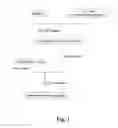
FIG. 1 is a flow schematic view of a production process according to the present invention.
FIG. 2 is a sectional view of a profile produced according to the present invention.
In the drawings, 1 refers to a substrate and 2 refers to an enhancement material co-extrusion layer.
DETAILED DESCRIPTION OF PREFERRED EMBODIMENTS
To make the objective, technical solution and advantages of the present invention more clear, the technical solution in the embodiments of the present invention is further described in details by reference to the drawings and embodiments hereunder. The sections of the profiled bars produced in each embodiment are as shown in FIG. 1.
Embodiment 1
The raw materials of the base material with PVC as a main part and their proportions are as
| Raw material name | Mass fraction | |
| PVC | 100 | |
| Stabilizer | 5 | |
| Modifier | 7 | |
| Stain | 4 | |
| Filler | 9 | |
| Processing agent | 1 | |
| Pigment | 0.02 | |
The main raw materials of intermediate enhancement material co-extrusion layer and their proportions are as follows:
| Raw material name | Mass ratio (%) | |
| PBT material | 71 | |
| Enhanced fiberglass | 29 | |
The stabilizer is a lead based stabilizer or a calcium/zinc stabilizer; the modifier is acrylic ester; the stain is titanium dioxide; the filler is calcium carbonate or wollastonite; the processing agent is acrylic ester; and the pigment is ultramarine.
The main engine is a double screw plastic extruder, wherein the extruder has six heating zones and an adapter, and the working temperatures of each heating zone and the adapter are as follows:
| Heating zone | Temperature (degree celsius ° C.) | |
| Zone I | 175 | |
| Zone II | 177 | |
| Zone III | 180 | |
| Zone IV | 186 | |
| Zone V | 184 | |
| Zone VI | 176 | |
| Adapter | 190 | |
The rotating speed of an extrusion screw in the main engine is 7 rpm, and the rotating speed of a feeding screw is 18 rpm, the torque is 32%, and the melting pressure is 310 bar.
The auxiliary engine is a single screw plastic extruder, and the auxiliary engine has three heating zones, two co-extrusion heads and one die head, wherein:
temperature of zone I is 220° C., the temperature of zone II is 220° C., the temperature of zone III is 220° C.; the temperature of the adapter is 220° C.
The auxiliary engine has two co-extrusion heads in total, wherein the heating temperature of the co-extrusion head I is 220° C., and the heating temperature of the co-extrusion head II is: 220° C. Temperature parameters of the die head are that: the temperature of zone I is 185° C., the temperature of zone II is 190° C., the temperature of zone III is 190° C., and the temperature of zone IV is 190° C.
Embodiment 2
The raw materials of base material with PVC as a main part and their proportions are as follows:
| Raw material name | Mass fraction | |
| PVC | 100 | |
| Stabilizer | 6 | |
| Modifier | 9 | |
| Stain | 6 | |
| Filler | 7 | |
| Processing agent | 2 | |
| Pigment | 0.03 | |
The main raw materials of an intermediate enhancement material co-extrusion layer and their proportions are as follows:
-
- Raw material name Mass ratio (%)
- PBT material 68
- Enhanced fiberglass 32
The stabilizer is a lead based stabilizer or a calcium/zinc stabilizer; the modifier is acrylic ester, the stain is titanium dioxide; the filler is calcium carbonate or wollastonite; the processing agent is acrylic ester; and the pigment is ultramarine.
The main engine is a double screw plastic extruder, wherein the extruder has six heating zones and an adapter, and the working temperatures of each heating zone and the adapter are as follows:
| Heating zone | Temperature (degree celsius ° C.) | |
| Zone I | 176 | |
| Zone II | 180 | |
| Zone III | 183 | |
| Zone IV | 185 | |
| Zone V | 190 | |
| Zone VI | 173 | |
| Adapter | 195 | |
The rotating speed of an extrusion screw in the main engine is 9 rpm, and the rotating speed of a feeding screw is 25 rpm, the torque is 39%, and the melting pressure is 330 bar.
The auxiliary engine is a single screw plastic extruder, and the auxiliary engine has three heating zones, two co-extrusion heads and one die head, wherein:
temperature of zone I is 240° C., the temperature of zone II is 240° C., the temperature of zone III is: 240° C., the temperature of the adapter is 240° C.
The auxiliary engine has two co-extrusion heads in total, wherein the heating temperature of the co-extrusion head I is 240° C., and the heating temperature of the co-extrusion head II is 240° C. Temperature parameters of the die head are that: the temperature of zone I is 200° C., the temperature of zone II is 200° C., the temperature of zone III is 200° C., and the temperature of zone IV is 200° C.
Embodiment 3
The raw materials of base material with PVC as a main part and their proportions are as follows:
| Raw material name | Mass fraction | |
| PVC | 100 | |
| Stabilizer | 3 | |
| Modifier | 6 | |
| Stain | 9 | |
| Filler | 8 | |
| Processing agent | 1.5 | |
| Pigment | 0.035 | |
The main raw materials of an intermediate enhancement material co-extrusion layer and their proportions are as follows:
| Raw material name | Mass ratio (%) | |
| PBT material | 74 | |
| Enhanced fiberglass | 26 | |
wherein, the stabilizer is an organic tin stabilizer; the modifier is an acrylic ester modifier; the stain is titanium dioxide; the filler is calcium carbonate or talc powder; the processing agent is acrylic ester; and the pigment is phthalocyanine blue.
The main engine is a double screw plastic extruder, wherein the extruder has six heating zones and an adapter, and the working temperatures of each heating zone and the adapter are as follows:
| Heating zone | Temperature (degree celsius ° C.) | |
| Zone I | 172 | |
| Zone II | 175 | |
| Zone III | 176 | |
| Zone IV | 182 | |
| Zone V | 184 | |
| Zone VI | 173 | |
| Adapter | 185 | |
The rotating speed of an extrusion screw in the main engine is 8 rpm, and the rotating speed of a feeding screw is 23 rpm, the torque is 37%, and the melting pressure is 320 bar.
The auxiliary engine is a single screw plastic extruder, and the auxiliary engine has three heating zones, two co-extrusion heads and one die head, wherein:
temperature of zone I is 230° C., the temperature of zone II is 230° C., the temperature of zone III is: 230° C., the temperature of the adapter is 230° C.
The auxiliary engine has two co-extrusion heads in total, wherein the heating temperature of the co-extrusion head I is 240° C., and the heating temperature of the co-extrusion head II is 240° C. Temperature parameters of the die head are that: the temperature of zone I is 185° C., the temperature of zone II is 185° C., the zone III is 185° C., and the zone IV is 185° C.
Embodiment 4
The raw materials of base material with PVC as a main part and their proportions are as follows:
| Raw material name | Mass fraction | |
| PVC | 100 | |
| Stabilizer | 3 | |
| Modifier | 11 | |
| Stain | 9 | |
| Filler | 5 | |
| Processing agent | 1 | |
| Pigment | 0.025 | |
The main raw materials of an intermediate enhancement material co-extrusion layer and their proportions are as follows:
-
- Raw material name Mass ratio (%)
- PBT material 65
- Enhanced fiberglass 35
wherein, the stabilizer is an organic tin stabilizer; the modifier is a CPE modifier; the stain is titanium dioxide; the filler is kaolin or wollastonite; the processing agent is acrylic ester; and the pigment is phthalocyanine blue.
The main engine is a double screw plastic extruder, wherein the extruder has six heating zones and an adapter, and the working temperatures of each heating zone and the adapter are as follows:
| Heating zone | Temperature (degree celsius ° C.) | |
| Zone I | 173 | |
| Zone II | 179 | |
| Zone III | 182 | |
| Zone IV | 185 | |
| Zone V | 189 | |
| Zone VI | 176 | |
| Adapter | 194 | |
The rotating speed of an extrusion screw in the main engine is 8 rpm, and the rotating speed of a feeding screw is 23 rpm, the torque is 36%, and the melting pressure is 32 bar.
The auxiliary engine is a single screw plastic extruder, and the auxiliary engine has three heating zones, two co-extrusion heads and one die head, wherein:
temperature of zone I is 230° C., the temperature of zone II is 230° C., the temperature of zone III is: 230° C., the temperature of the adapter is 230° C.
The auxiliary engine has two co-extrusion heads in total, wherein the heating temperature of the co-extrusion head I is 240° C., and the heating temperature of the co-extrusion head II is 240° C. Temperature parameters of the die head are that: the temperature of zone I is 185° C., the temperature of zone II is 185° C., the temperature of zone III is 185° C., and the temperature of zone IV is 185° C.
The foregoing descriptions are merely preferred embodiments of the present invention, but are not intended to limit the protection scope of the present invention. Any equivalent replacement or modification figured out by those skilled in the art within the technical scope disclosed by the present invention and according to the technical solution and concepts of the present invention shall all fall within the protection scope of the present invention.
Claims
1. A self-enhancement plastic profile, comprising:
a PVC substrate and a fiberglass-containing PBT resin, wherein the PVC substrate resin and the fiberglass-containing PBT resin are co-extruded,
wherein the PVC substrate comprises a PVC resin, a stabilizer, a modifier, a stain, a filler, a processing agent, and a pigment at mass fractions of 100, 3-8, 4-11, 3-6, 5-10, 1-4, and 0.015-0.045, respectively
wherein the stabilizer is a lead based stabilizer, a calcium/zinc stabilizer or an organic tin stabilizer, the modifier is a CPE modifier or an acrylic ester modifier, the stain is titanium dioxide, the filler is kaolin, wollastonite, calcium carbonate or talc powder, the processing agent is acrylic ester, and the pigment is ultramarine or phthalocyanine blue;
wherein the fiber-glass containing PBT resin forms one or more enhancement bars in the self-enhancement plastic profile, comprises 45-75% mass ratio of a PBT material and 25-55% mass ratio of fiberglass,
wherein a process of making the self-enhancement plastic profile comprises:
employing a main extruder and an auxiliary extruder vertically arranged to the main extruder; extruding the PVC substrate using the main extruder and extruding the fiberglass-containing PBT resin using the auxiliary extruder simultaneously to form an extrudate; pre-profiling the extrudate followed by cold cutting,
wherein the main extruder is a double screw plastic extruder comprising six heating zones, and an adapter, wherein temperatures of the heating zones are: zone I: 172-176° C., zone II: 175-180° C., zone III: 176-183° C., zone IV: 182-187° C., zone V: 184-190° C., zone VI: 172-176° C.;
wherein a temperature in the adapter is 185-195° C.,
wherein, in the main extruder, a rotating speed of an extrusion screw in the main engine is 7-9 rpm, and a rotating speed of a feeding screw is 18-25 rpm, a torque is: 32-39%, and a melting pressure is 310-330 bar;
wherein the auxiliary extruder is a single screw extruder comprising three heating zone and an adapter, wherein temperatures of the heating zones are: zone I: 220-240° C., zone II: 220-240° C., zone III: 220-240° C., wherein the temperature in adapter is 220-240° C.,
wherein the auxiliary extruder comprises two co-extrusion heads, wherein a heating temperature of a first co-extrusion head is 220-240° C., and a heating temperature of second co-extrusion head is 220-240° C.,
wherein temperatures of a die head in the auxiliary extruder are: zone I: 185-200° C., zone II: 185-200° C., zone III: 185-200° C., and zone IV: 185-200° C.
2-7. (canceled)
Images & Drawings included:


Sources:
- United States Patent and Trademark Office - verify current appl. status at the USPTO↗
Recent applications in this class:
- » 20060248823 2006-11-09
Window subassembly for use with insulated concrete forms - » 20050034384 2005-02-17
Window buck with retention flange