Pear tree named 'PremP027'
US20150195970P1
2015-07-09
14/544,401
2014-12-31
Abstract:
A new and distinct pear tree named ‘PremP027’ is disclosed. The new pear is notable for its attractive appearance, superb texture, improved flavor and long shelf life.
Interested in similar patents?
Get notified when new applications in this technology area are published.
Classification:
A01H5/00 IPC
Products
A01H5/00 IPC
Angiosperms, i.e. flowering plants, characterised by their plant parts; Angiosperms characterised otherwise than by their botanic taxonomy
Description
LATIN NAME OF THE GENUS AND SPECIES OF THE PLANT CLAIMED
Pyrus bretschneideri×Pyrus communis
VARIETY DENOMINATION
‘PremP027’
BRIEF DESCRIPTION OF THE PHOTOGRAPHS
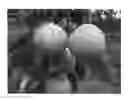
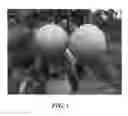
FIG. 1 shows the fruit of a ‘PremP027’ pear tree
BRIEF DESCRIPTION OF THE VARIETY
The new variety of pear tree ‘PremP027’ was created in the course of a planned breeding program carried out at Motueka, New Zealand. ‘PremP027’ originated as a result of a controlled cross of ‘Max Red Bartlett’ (seed parent, U.S. Plant Pat. No. 741) and ‘Snowflake’ (pollen parent, not patented) in 1989. ‘PremP027’ was selected in 1996 as a single plant from among a population of seedlings derived from the parents, and was selected for its quality of fruit. It is distinguished from its parents by its shape and color. ‘Max Red Bartlett’ fruit is pyriform in shape with high coverage of red skin color compared to ‘PremP27’ which has no red skin color. ‘PremP27’ is almost round with slight tapering at the stem and calyx end. Fruit of ‘PremP27’ ripens 7-10 days later than ‘Max red Bartlett’. Fruit of ‘PremP27’ has less prominent lenticels than ‘Snowflake’ and ripens approximately 14-21 days earlier. ‘PremP27’ is also distinguishable from other known varieties, such as ‘Nijisseiki’(U.S. Plant Pat. No. 8,529). ‘Nijisseiki’ has more round fruit than ‘PremP27’ and ripens approximately 7-10 days earlier. Asexual propagation by budding was first carried out in Motueka and Havelock North, New Zealand. The variety has since been observed over a number of asexually propagated generations, and has been found to remain true to type.
DETAILED BOTANICAL DESCRIPTION OF THE VARIETY
The following detailed botanical description is based on observations made during the 2013 growing season at Parker, Wash. on 5 year old trees. All colors are described according to The Royal Horticultural Society Colour Chart as published in 2001. It should be understood that the characteristics described will vary somewhat depending upon cultural practices and climatic conditions, and can vary with location and season. Quantified measurements are expressed as an average of measurements taken from a number of individual plants of the new variety. The measurements of any individual plant, or any group of plants, of the new variety may vary from the stated average.
- Tree: Vigor — Medium; Habit — Upright; Size — Height 10 feet; Spread 5 feet; Trunk — Diameter at graft union 10.2 cm; Bark texture — smooth.
- Branch: Size — Diameter 3.5 cm at 86 cm above ground; Crotch angle relative to trunk — 70°.
- Dormant one-year-old shoot: Size — diameter 1.7 cm, length 86 cm; Color — 146B; Internode length — 6-8 cm; Lenticels — quantity 10 per square inch, color 155B, diameter 0.05 cm.
- Flowers: Petal — Quantity per flower 5; Bloom period — First bloom April 12, full bloom April 18 in Parker, Wash.
- Leaf: Attitude in relation to shoot — upward; Blade margin — serulate; Size — length 8.5 cm, width 7 cm; Color — upper surface 146D; Color of lower surface — 145C.
- Petiole: Length — 5 cm; Diameter — 0.1 cm Fruit: Size — diameter 9.6 cm, length 15 cm; Ribbing absent; Size of eye 2 cm; Depth of eye basin 0.5 cm; Width of eye basin 1 cm; Stalk — length 4.5 cm, width at limb attachment 0.5 cm, color N176D; Depth of stalk cavity 0.25 cm; Width of stalk cavity 1 cm; Size of lenticels 0.1 cm; Color of lenticels 200D; Ground color of skin 154C;
- Quantity per cluster 2 — 3; Flesh is very crisp and very juicy; Flesh color 155B; Quantity of seeds 10; Width of seed 0.5 cm; Length of seed 1 cm; Seed color Black 200A.
- Disease resistance/susceptibility: None noted.
- Storage: Excellent storage performance of at least 3 months.
- Use: Fresh Market.
Claims
1. We claim a new and distinct pear tree substantially as shown and described herein.
Images & Drawings included:
Sources:
- United States Patent and Trademark Office - verify current appl. status at the USPTO↗
Recent applications in this class:
- » 20240292771 2024-08-29
Campanula plant named 'Twilight' - » 20240251691 2024-07-25
HYDRANGEA PLANT NAMED 'HYLV17520' - » 20240251690 2024-07-25
Vaccinium Plant Named 'BWPBLUE02' - » 20240251689 2024-07-25
BLUEBERRY PLANT NAMED 'FC13-113' - » 20240251688 2024-07-25
BLUEBERRY PLANT NAMED 'FCM14-057' - » 20240237567 2024-07-11
PONGAMIA VARIETIES - » 20240224827 2024-07-04
PELARGONIUM PLANT NAMED 'PEQZ0103' - » 20240215470 2024-06-27
Agapanthus plant named 'Monsapho' - » 20240215469 2024-06-27
plant named ‘LOCORA3519’ - » 20240206359 2024-06-20
CORYLUS PLANT NAMED 'BWM01'