Citrus rootstock named 'UFR-3'
US20150195976P1
2015-07-09
14/544,427
2015-01-05
Abstract:
‘UFR-3’ is a new and distinct allotetraploid citrus rootstock for tree size control and improved disease resistance. ‘UFR-3’ has shown a positive reaction to the Huanglongbing disease (HLB, or citrus greening disease) in multiple experimental field trials. Scion trees grafted on this rootstock show a reduced frequency of infection and reduced disease symptoms once infected as compared to commercial diploid rootstocks.
Interested in similar patents?
Get notified when new applications in this technology area are published.
Classification:
A01H5/00 IPC
Products
A01H5/00 IPC
Angiosperms, i.e. flowering plants, characterised by their plant parts; Angiosperms characterised otherwise than by their botanic taxonomy
Description
CROSS REFERENCE TO RELATED APPLICATIONS
This application claims the benefit of U.S. Provisional Application No. 61/923,586, filed Jan. 3, 2014, herein incorporated by reference in its entirety.
BACKGROUND OF THE INVENTION
Latin Name of the Genus and Species of the Plant Claimed
Citrus reticulata
Variety Denomination
‘UFR-3’
The present invention relates to a new and distinct variety of citrus rootstock named ‘UFR-3’. The Plant Improvement Team in Lake Alfred, Fla. has pioneered the development and testing of allotetraploid citrus rootstocks. ‘UFR-3’ (identified as Orange #15 in field trials) is an allotetraploid zygotic hybrid derived from a conventional cross of two somatic hybrids previously produced by protoplast fusion. The somatic hybrid seed parent is ‘Nova’ mandarin hybrid+Hirado Buntan pummelo (zygotic seedling) and the somatic hybrid pollen parent is Cleopatra mandarin+Argentine trifoliate orange.
BRIEF SUMMARY OF THE INVENTION
‘UFR-3’ was selected on the basis of its positive reaction to Huanglongbing disease (HLB, or citrus greening disease) in multiple experimental field trials. Scion trees grafted onto this rootstock show a reduced frequency of infection and reduced disease symptoms once infected when compared to commercial diploid rootstocks. Although trees grafted to ‘UFR-3’ grow off quickly, trees remain small in size, suitable for use in Advanced Citrus Production Systems that feature high density plantings. ‘UFR-3’ produces adequate nucellar seed, making it amenable to standard nursery propagation practices for uniform liner production. This selection exhibited a lower incidence of HLB infection than commercial rootstocks after 5 years in an exposed field trial. Long-term performance of trees on this rootstock selection is unknown. Yield and fruit quality data is limited, but 3 years of data from young trees (the St. Helena project, see Table 1) indicates good productivity and fruit quality. Tolerance to citrus blight is also unknown. Fruit quality for Valquarius® ‘SF14W-62’ (U.S. Plant Pat. No. 21,535) scion was significantly less than that of ‘Vernia’.
| TABLE 1 |
| Rootstock Data from 5-year old trees in the St. Helena trial - Dundee, FL |
| Lbs | Yield Boxes/Tree | Cumulative |
| Solids/Box | 2011 | 2012 | 2013 | Yield |
| Scion | Type | Rootstock | 2012 | 2013 | (35 mo.) | (47 mo.) | (59 mo.) | (Boxes) |
| VALQUARIUS | Som. Hyb. | ‘UFR-6’ | 5.64 | 5.43 | 0.5 | 0.78 | 1.94 | 3.22 |
| VERNIA | Som. Hyb. | ‘UFR-6’ | 5.67 | 6.01 | 0.4 | 0.63 | 1.41 | 2.44 |
| VALQUARIUS | Tetrazyg | ‘UFR-1’ | 5.5 | 4.87 | NS | 0.72 | 2.23 | 2.95 |
| VERNIA | Tetrazyg | ‘UFR-1’ | 5.61 | 6.28 | 0.31 | 0.67 | 1.33 | 2.31 |
| VERNIA | Tetrazyg | ‘UFR-2’ | 5.47 | 5.93 | 0.35 | 0.25 | 1.38 | 1.98 |
| VALQUARIUS | Tetrazyg | ‘UFR-2’ | 4.57 | 5.37 | NS | 0.75 | 1.73 | 2.48 |
| VALQUARIUS | Tetrazyg | ‘UFR-3’ | 4.84 | 5.05 | NS | 0.81 | 1.97 | 2.78 |
| VERNIA | Tetrazyg | ‘UFR-3’ | 5.46 | 5.82 | 0.37 | 0.38 | 1.82 | 2.57 |
| VERNIA | Tetrazyg | ‘UFR-4’ | 5.79 | 6.07 | 0.54 | 0.71 | 1.73 | 2.98 |
| VALQUARIUS | Tetrazyg | ‘UFR-4’ | 4.65 | 5.07 | NS | 0.65 | 1.59 | 2.64 |
| VALQUARIUS | Tetrazyg | ‘UFR-5’ | 5.76 | 5.72 | 0.33 | 0.56 | 1.80 | 2.69 |
| VERNIA | Tetrazyg | ‘UFR-5’ | 5.89 | 5.34 | 0.42 | 0.25 | 1.93 | 2.60 |
| VALQUARIUS | Diploid | FG 1731 | 5.83 | 6.81 | NS | 0.68 | 2.20 | 2.88 |
| VALQUARIUS | Diploid | FG 1733 | 5.12 | 5.63 | NS | 0.67 | 2.77 | 3.44 |
| VERNIA | Diploid | SWINGLE* | 5.11 | 5.79 | 0.33 | 0.85 | 1.08 | 2.26 |
| VALQUARIUS | Diploid | SWINGLE* | NS | 5.61 | NS | NS | 1.50 | 1.50 |
| VERNIA | Diploid | CLEO* | 4.79 | 5.51 | NS | 0.50 | 0.83 | 1.33 |
| VALQUARIUS | Diploid | CLEO* | NS | 5.21 | NS | NS | 1.7 | 1.7 |
| VERNIA | Diploid | R. LEMON* | 3.67 | na | NS | 0.78 | na | 0.78 |
| VALQUARIUS | Diploid | VOLK* | NS | 4.12 | NS | NS | 2.58 | 2.58 |
| VERNIA | Diploid | VOLK* | 3.6 | 4.73 | 0.4 | 1.13 | 0.83 | 2.36 |
| VALQUARIUS | Diploid | KUHARSKE* | NS | 5.75 | NS | NS | 2.2 | 2.2 |
| VERNIA | Diploid | KUHARSKE* | 4.34 | 5.83 | 0.15 | 0.75 | 1.08 | 1.98 |
| NS—not significant fruit; | ||||||||
| na—data not available; | ||||||||
| *—control commercial rootstock | ||||||||
| One box contains approximately 90 lbs. fruit. |
BRIEF DESCRIPTION OF THE DRAWINGS
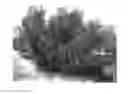
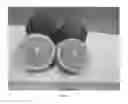
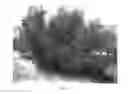
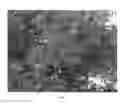
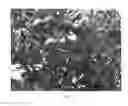
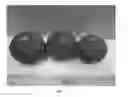
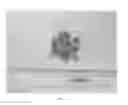
‘UFR-3’ is illustrated by the accompanying photographs, which show the tree's form, foliage, and fruit. The colors shown are as true as can be reasonably obtained by conventional photographic procedures. The photographs are of a tree approximately 6 years old. All figures were taken of the same tree during the fall.
FIG. 1.—Shows a close-up of the nearly mature fruits with the rind and cross-sectional view of the fruit when cut in the center.
FIG. 2.—Shows the overall mature plant growth habit in the fall of 2013.
FIG. 3.—Shows nearly mature fruits hanging on the tree.
FIG. 4.—Shows a close-up of leaves and nearly mature fruits.
FIG. 5.—Shows a close-up of nearly mature fruits.
FIG. 6.—Shows a close-up of seeds from nearly mature fruit.
DETAILED BOTANICAL DESCRIPTION
The following detailed description sets forth the distinctive characteristics of ‘UFR-3’. The colors (except those in common terms) are described from R.H.S. Colour Chart published by The Royal Horticultural Society in London (second edition), in association with the Flower Council of Holland.
- Phenotypic description of Citrus reticulata ‘UFR-3’
- Classification:
-
- Botanical.—[Citrus reticulata hybrid (Clementine mandarin×Orlando tangelo) Citrus reticulata×Citrus paradisi)+Citrus grandis]×[Citrus reticulata+Poncirus trifoliata (trifoliate orange)].
- Common name.—Complex allotetraploid ‘tetrazyg’ rootstock hybrid.
-
- Parentage:
-
- Female parent.—‘Nova mandarin+Hirado Buntan pummelo (zygotic seedling) somatic hybrid (unpatented).
- Male parent.—Cleopatra mandarin+Argentine trifoliate orange; somatic hybrid (unpatented).
-
- Tree:
-
- Ploidy.—Tetraploid.
- Size.—Medium.
- Height.—3.70 meters.
- Tree spread.—3.8 to 4.3 meters.
- Vigor.—Vigorous.
- Density.—Canopies are quite dense.
- Form.—The tree is obloid-shaped with lateral and upright branches growing toward low to medium angles. Branches with fruit exhibit drooping.
- Growth habit.—Both upright and lateral growth with low medium angle.
-
- Trunk:
-
- Trunk diameter.—20 cm in diameter at 30 cm above the ground on a 6-year-old tree.
- Trunk texture.—Smooth.
- Trunk bark color.—RHS 195A (greyed-green); irregularly striated with RHS N189A (greyed-green).
-
- Branches:
-
- Crotch angle.—First crotch forms a 55- to 60-degree angle, middle crotch forms a 50-degree angle.
- Branch length.—Branch reaches 4.2 meters from the first crotch to the tip of the branch.
- Branch texture.—Relatively rough with small thorns or spines.
- Branch color (shoots from previous flush, hardened and 4 to 5 mm in diameter).—RHS 137A (green).
-
- Leaves:
-
- Size (lamina average).—Length: 91.5 mm Width: 62.5 mm L/W ratio: 1.46.
- Thickness.—Thicker than regular and average for diploid commercial rootstock hybrids.
- Type.—Simple leaves with a small amount of trifoliate and biofoliate leaves.
- Shape.—Elliptical.
- Apex.—Reuse.
- Base.—Acute to sub-obtuse.
- Margin.—Entire and slightly undulate.
- Surface.—Upper surface: Glabrous Lower surface: Medium veins that are pinnately netted.
- Color.—Upper surface (adaxial): RHS 137A (green) Lower surface (abaxial): RHS 137C (green).
- Petiole.—Shape: Brevipetiolate (shorter than leaf lamina); junction between petiole and lamina is articulate. Width (petiole wing): Narrow Shape (petiole wing): Obovate Length: 17 to 19.5 mm Width: 5.1 to 6.5 mm Color: RHS 137A (green).
-
- Flowers and flower buds:
-
- Type.—Hermaphrodite.
- Bearing.—Flower grown from leaf axillaries and leaf terminals singly and in small clusters; most single flowers grow from leaf axillaries.
- Flower bud size.—Shape: Initial visible flower bud has a round ball shape; mature flower bud has an elongated olive shape.
- Flower petals.—Shape: Flat, spatula-shaped Apex shape: Smooth, acute-shaped Base shape: Even obtuse Margin: Smooth.
- Flower sepal.—Shape: Delta-shaped with an acute angle at the apex. Apex shape: Triangle-shaped Margin: Smooth.
- Fragrance.—Fragrant/Moderately fragrant.
- Reproductive organs.—Fertility: Appears self-fertile Pollen amount: Abundant/Moderately amount Pollen color (general): Bright-yellow Ovary shape: Oval-shaped.
-
- Fruit:
-
- Size.—Uniform.
- Height.—70.5 to 72.8 mm on average.
- Width.—86 to 94 mm on average.
- Average weight (per individual fruit).—302.1 grams.
- Shape.—Round.
- Shape (cross-section).—Round.
- Apex.—Truncated with slight dent.
- Apex cavity diameter.—N/A.
- Base cavity diameter.—6.9 to 8.2 mm.
- Base.—No neck.
- Harvesting.—Fruit can be harvested from October through December in Florida.
- Fruit stem (short stem connecting the fruit).—Length: 8.0 mm Diameter: 5.8 mm Color: RHS N137A (green) with RHS 195B (greyed-green) strip.
-
- Rind:
-
- Adherence.—Adherence between albedo (mesocarp) and flesh (endocarp) is medium. The adherence is evenly distributed from based to apex.
- Thickness.—6.0 to 7.8 mm on average.
- Texture.—Smooth.
- Color.—Flavedo (epicarp): Ranges between RHS 150C (yellow-green) to RHS 151 D (yellow-green) Albedo (mesocarp): RHS 150C (white).
- Stylar end.—Closed.
- Rind oil cell density.—145 oil cells/square cm.
-
- Flesh:
-
- Number of segments.—Between 9 and 10 segments per fruit on average.
- Segment walls.—Medium-firm with sufficient strength to maintain integrity as separated.
- Juice.—Abundant.
- Color.—Uniformly RHS 14D (yellow-orange).
- Texture.—Medium soft.
- Vesicles.—Length: Arranged from 13.5 to 21.5 mm on average Diameter (thickness): 3.2 to 3.6 mm on average.
- Eating quality.—N/A.
- Juice index.—
- Soluble solids (average).—8.5 Brix.
-
- Seeds:
-
- Type.—Polyembryonic and monoembryonic.
- Number.—Ranges from 5 to 23. Most fruit has less than 10 seeds.
- Shape.—Seed shapes are not uniform. Normal seeds are mostly ventricose/swollen-shaped and clavate club shaped. Many seeds appear to be wrinkled and flatter than normal.
- Size.—Length: 13.6 to 18.6 mm Width: 5.5 to 7.2 mm.
- Seed coat color.—Outer Surface: RHS 155C (white) and wrinkled Inner surface: RHS 164B (greyed-orange) Cotyledon color: RHS 144D (green).
-
- Resistance to disease: ‘UFR-3’ rootstock was selected on the basis of its positive reaction to HLB disease (huanglongbing or citrus greening disease) in multiple field trials. Trees on this rootstock show a reduced frequency of infection, and reduced disease symptoms once infected as compared to commercial diploid rootstocks.
Claims
What is claimed is:1. A new and distinct citrus rootstock cultivar as illustrated and described herein.
Images & Drawings included:
Sources:
- United States Patent and Trademark Office - verify current appl. status at the USPTO↗
Recent applications in this class:
- » 20240292771 2024-08-29
Campanula plant named 'Twilight' - » 20240251691 2024-07-25
HYDRANGEA PLANT NAMED 'HYLV17520' - » 20240251690 2024-07-25
Vaccinium Plant Named 'BWPBLUE02' - » 20240251689 2024-07-25
BLUEBERRY PLANT NAMED 'FC13-113' - » 20240251688 2024-07-25
BLUEBERRY PLANT NAMED 'FCM14-057' - » 20240237567 2024-07-11
PONGAMIA VARIETIES - » 20240224827 2024-07-04
PELARGONIUM PLANT NAMED 'PEQZ0103' - » 20240215470 2024-06-27
Agapanthus plant named 'Monsapho' - » 20240215469 2024-06-27
plant named ‘LOCORA3519’ - » 20240206359 2024-06-20
CORYLUS PLANT NAMED 'BWM01'