Wood fibre based panel with a surface layer
US20150197942A1
2015-07-16
14/593,521
2015-01-09
✅ Patent granted
US 10,100,535 B2
2018-10-16
-
-
Jeffrey A Vonch
Buchanan Ingersoll & Rooney P.C.
2035-01-09
Abstract:
A building panel with a surface layer (1) including a wood veneer, a wood fibre based core (2) and a sub-layer (3) between the surface layer (1) and the core (2). The sub-layer (3) includes wood fibres (4) and a binder (5). The surface layer (1) has surface portions (6) including material from the sub-layer (3). The surface portions (6) including material from the sub-layer (3) extend into the wood veneer.
Assignee:
- VALINGE INNOVATION AB 553 🇸🇪 Viken, Sweden
Applicant:
Interested in similar patents?
Get notified when new applications in this technology area are published.
Classification:
E04F15/042 » CPC main
Flooring; Flooring or floor layers composed of a number of similar elements only of wood , e.g. with wooden connecting members with a top layer of wood in combination with a lower layer of other material the lower layer being of fibrous or chipped material, e.g. bonded with synthetic resins
B27N3/00 IPC
Manufacture of substantially flat articles, e.g. boards, from particles or fibres
B27N3/005 » CPC further
Manufacture of substantially flat articles, e.g. boards, from particles or fibres and foam
E04F15/04 IPC
Flooring; Flooring or floor layers composed of a number of similar elements only of wood , e.g. with wooden connecting members
B27N3/02 » CPC further
Manufacture of substantially flat articles, e.g. boards, from particles or fibres from particles
B27N3/08 » CPC further
Manufacture of substantially flat articles, e.g. boards, from particles or fibres Moulding or pressing
B32B27/42 » CPC further
Layered products comprising synthetic resin comprising condensation resins of aldehydes, e.g. with phenols, ureas or melamines
B32B37/1284 » CPC further
Methods or apparatus for laminating, e.g. by curing or by ultrasonic bonding characterised by using adhesives Application of adhesive
B27G1/00 » CPC further
Machines or devices for removing knots or other irregularities or for filling-up holes
B32B27/20 » CPC further
Layered products comprising synthetic resin characterised by the use of special additives using fillers, pigments, thixotroping agents
B32B37/10 » CPC further
Methods or apparatus for laminating, e.g. by curing or by ultrasonic bonding characterised by the pressing technique, e.g. using action of vacuum or fluid pressure
B32B3/30 » CPC further
Layered products comprising a layer with external or internal discontinuities or unevennesses, or a layer of non-planar form ; Layered products having particular features of form characterised by a particular shape of the outline of the cross-section of a continuous layer; characterised by a layer with cavities or internal voids ; characterised by an apertured layer characterised by a layer formed with recesses or projections, e.g. hollows, grooves, protuberances, ribs
B32B37/18 » CPC further
Methods or apparatus for laminating, e.g. by curing or by ultrasonic bonding characterised by the properties of the layers with all layers existing as coherent layers before laminating involving the assembly of discrete sheets or panels only
B32B5/142 » CPC further
Layered products characterised by the non- homogeneity or physical structure, i.e. comprising a fibrous, filamentary, particulate or foam layer; Layered products characterised by having a layer differing constitutionally or physically in different parts characterised by a layer differing constitutionally or physically in different parts, e.g. denser near its faces Variation across the area of the layer
B27N7/005 » CPC further
Coating boards, e.g. with a finishing or decorating layer
B44C5/043 » CPC further
Processes for producing special ornamental bodies; Ornamental plaques, e.g. decorative panels, decorative veneers containing wooden elements
B44C1/24 » CPC further
Processes, not specifically provided for elsewhere, for producing decorative surface effects Pressing or stamping ornamental designs on surfaces
B27N3/04 » CPC further
Manufacture of substantially flat articles, e.g. boards, from particles or fibres from fibres
B32B21/02 » CPC further
Layered products comprising a layer of wood, e.g. wood board, veneer, wood particle board of fibres, chips, or particles
B44C5/0438 » CPC further
Processes for producing special ornamental bodies; Ornamental plaques, e.g. decorative panels, decorative veneers containing stone elements
E04F15/045 » CPC further
Flooring; Flooring or floor layers composed of a number of similar elements only of wood , e.g. with wooden connecting members Layered panels only of wood
E04F15/082 » CPC further
Flooring; Flooring or floor layers composed of a number of similar elements only of stone or stone-like material, e.g. ceramics , concrete; of glass or with a top layer of stone or stone-like material, e.g. ceramics, concrete or glass with a top layer of stone or stone-like material, e.g. ceramics, concrete or glass in combination with a lower layer of other material
B32B2262/067 » CPC further
Composition or structural features of fibres which form a fibrous or filamentary layer or are present as additives; Vegetal fibres; Cellulose fibres, e.g. cotton Wood fibres
B32B2264/062 » CPC further
Composition or properties of particles which form a particulate layer or are present as additives; Vegetal particles Cellulose particles, e.g. cotton
B32B2266/0285 » CPC further
Composition of foam; Organic; Materials belonging to Condensation resins of aldehydes, e.g. with phenols, ureas, melamines
B32B2266/14 » CPC further
Composition of foam Adhesive foam
B32B2305/073 » CPC further
Condition, form or state of the layers or laminate; Parts immersed or impregnated in a matrix partially
B32B2307/4026 » CPC further
Properties of the layers or laminate having particular optical properties; Coloured within the layer by addition of a colorant, e.g. pigments, dyes
B32B2307/554 » CPC further
Properties of the layers or laminate having particular mechanical properties Wear resistance
B32B2317/02 » CPC further
Animal or vegetable based Cork
B32B2317/16 » CPC further
Animal or vegetable based Wood, e.g. woodboard, fibreboard, woodchips
B32B2607/00 » CPC further
Walls, panels
Y10T156/10 » CPC further
Adhesive bonding and miscellaneous chemical manufacture Methods of surface bonding and/or assembly therefor
Y10T156/1039 » CPC further
Adhesive bonding and miscellaneous chemical manufacture; Methods of surface bonding and/or assembly therefor with permanent bending or reshaping or surface deformation of self sustaining lamina Surface deformation only of sandwich or lamina [e.g., embossed panels]
Y10T428/24132 » CPC further
Stock material or miscellaneous articles; Structurally defined web or sheet [e.g., overall dimension, etc.] including grain, strips, or filamentary elements in different layers or components parallel
Y10T428/24298 » CPC further
Stock material or miscellaneous articles; Structurally defined web or sheet [e.g., overall dimension, etc.] including aperture Noncircular aperture [e.g., slit, diamond, rectangular, etc.]
Y10T428/24314 » CPC further
Stock material or miscellaneous articles; Structurally defined web or sheet [e.g., overall dimension, etc.] including aperture; Noncircular aperture [e.g., slit, diamond, rectangular, etc.] Slit or elongated
Y10T428/24322 » CPC further
Stock material or miscellaneous articles; Structurally defined web or sheet [e.g., overall dimension, etc.] including aperture Composite web or sheet
Y10T428/24331 » CPC further
Stock material or miscellaneous articles; Structurally defined web or sheet [e.g., overall dimension, etc.] including aperture; Composite web or sheet including nonapertured component
Y10T428/24339 » CPC further
Stock material or miscellaneous articles; Structurally defined web or sheet [e.g., overall dimension, etc.] including aperture; Composite web or sheet including nonapertured component Keyed
Y10T428/24603 » CPC further
Stock material or miscellaneous articles; Structurally defined web or sheet [e.g., overall dimension, etc.] including variation in thickness and varying density Fiber containing component
Y10T428/24612 » CPC further
Stock material or miscellaneous articles; Structurally defined web or sheet [e.g., overall dimension, etc.] including variation in thickness Composite web or sheet
Y10T428/24893 » CPC further
Stock material or miscellaneous articles; Structurally defined web or sheet [e.g., overall dimension, etc.]; Discontinuous or differential coating, impregnation or bond [e.g., artwork, printing, retouched photograph, etc.] including particulate material
Y10T428/24992 » CPC further
Stock material or miscellaneous articles; Structurally defined web or sheet [e.g., overall dimension, etc.] including components having same physical characteristic in differing degree Density or compression of components
Y10T428/24994 » CPC further
Stock material or miscellaneous articles; Web or sheet containing structurally defined element or component; Noninterengaged fiber-containing paper-free web or sheet which is not of specified porosity Fiber embedded in or on the surface of a polymeric matrix
Y10T428/24995 » CPC further
Stock material or miscellaneous articles; Web or sheet containing structurally defined element or component; Noninterengaged fiber-containing paper-free web or sheet which is not of specified porosity; Fiber embedded in or on the surface of a polymeric matrix Two or more layers
Y10T428/249925 » CPC further
Stock material or miscellaneous articles; Web or sheet containing structurally defined element or component; Noninterengaged fiber-containing paper-free web or sheet which is not of specified porosity Fiber-containing wood product [e.g., hardboard, lumber, or wood board, etc.]
Y10T428/249959 » CPC further
Stock material or miscellaneous articles; Web or sheet containing structurally defined element or component; Composite having voids in a component [e.g., porous, cellular, etc.]; Void-containing component partially impregnated with adjacent component Void-containing component is wood or paper
Y10T428/249982 » CPC further
Stock material or miscellaneous articles; Web or sheet containing structurally defined element or component; Composite having voids in a component [e.g., porous, cellular, etc.] With component specified as adhesive or bonding agent
Y10T428/249985 » CPC further
Stock material or miscellaneous articles; Web or sheet containing structurally defined element or component; Composite having voids in a component [e.g., porous, cellular, etc.]; With component specified as adhesive or bonding agent Composition of adhesive or bonding component specified
Y10T428/249986 » CPC further
Stock material or miscellaneous articles; Web or sheet containing structurally defined element or component; Composite having voids in a component [e.g., porous, cellular, etc.] Void-containing component contains also a solid fiber or solid particle
Y10T428/249987 » CPC further
Stock material or miscellaneous articles; Web or sheet containing structurally defined element or component; Composite having voids in a component [e.g., porous, cellular, etc.] With nonvoid component of specified composition
Y10T428/25 » CPC further
Stock material or miscellaneous articles Web or sheet containing structurally defined element or component and including a second component containing structurally defined particles
Y10T428/253 » CPC further
Stock material or miscellaneous articles; Web or sheet containing structurally defined element or component and including a second component containing structurally defined particles Cellulosic [e.g., wood, paper, cork, rayon, etc.]
Y10T428/256 » CPC further
Stock material or miscellaneous articles; Web or sheet containing structurally defined element or component and including a second component containing structurally defined particles Heavy metal or aluminum or compound thereof
Y10T428/257 » CPC further
Stock material or miscellaneous articles; Web or sheet containing structurally defined element or component and including a second component containing structurally defined particles; Heavy metal or aluminum or compound thereof Iron oxide or aluminum oxide
Y10T428/3167 » CPC further
Stock material or miscellaneous articles; Composite [nonstructural laminate] Of cork
Y10T428/31957 » CPC further
Stock material or miscellaneous articles; Composite [nonstructural laminate]; Of aldehyde or ketone condensation product; Next to cellulosic Wood
Y10T428/31989 » CPC further
Stock material or miscellaneous articles; Composite [nonstructural laminate]; Of carbohydrate Of wood
B32B5/14 IPC
Layered products characterised by the non- homogeneity or physical structure, i.e. comprising a fibrous, filamentary, particulate or foam layer; Layered products characterised by having a layer differing constitutionally or physically in different parts characterised by a layer differing constitutionally or physically in different parts, e.g. denser near its faces
B32B37/12 IPC
Methods or apparatus for laminating, e.g. by curing or by ultrasonic bonding characterised by using adhesives
E04F15/08 IPC
Flooring; Flooring or floor layers composed of a number of similar elements only of stone or stone-like material, e.g. ceramics , concrete; of glass or with a top layer of stone or stone-like material, e.g. ceramics, concrete or glass
B44C5/04 IPC
Processes for producing special ornamental bodies Ornamental plaques, e.g. decorative panels, decorative veneers
B32B38/06 » CPC further
Ancillary operations in connection with laminating processes Embossing
E04F15/085 » CPC further
Flooring; Flooring or floor layers composed of a number of similar elements only of stone or stone-like material, e.g. ceramics , concrete; of glass or with a top layer of stone or stone-like material, e.g. ceramics, concrete or glass with a top layer of stone or stone-like material, e.g. ceramics, concrete or glass in combination with a lower layer of other material The lower layer being of fibrous or chipped material, e.g. bonded with synthetic resins
B32B2471/00 » CPC further
Floor coverings
Y10T428/24802 » CPC further
Stock material or miscellaneous articles; Structurally defined web or sheet [e.g., overall dimension, etc.] Discontinuous or differential coating, impregnation or bond [e.g., artwork, printing, retouched photograph, etc.]
Y10T428/31866 » CPC further
Stock material or miscellaneous articles; Composite [nonstructural laminate]; Of addition polymer from unsaturated monomers; Next to an aldehyde or ketone condensation product; Melamine-aldehyde Impregnated or coated cellulosic material
B32B21/08 » CPC further
Layered products comprising a layer of wood, e.g. wood board, veneer, wood particle board comprising wood as the main or only constituent of a layer, next to another layer of a of synthetic resin
B32B21/14 » CPC further
Layered products comprising a layer of wood, e.g. wood board, veneer, wood particle board comprising wood board or veneer
B32B2266/0214 » CPC further
Composition of foam; Organic Materials belonging to
Y10T428/24521 » CPC further
Stock material or miscellaneous articles; Structurally defined web or sheet [e.g., overall dimension, etc.] including variation in thickness with component conforming to contour of nonplanar surface
Y10T428/31862 » CPC further
Stock material or miscellaneous articles; Composite [nonstructural laminate]; Of addition polymer from unsaturated monomers; Next to an aldehyde or ketone condensation product Melamine-aldehyde
Description
CROSS REFERENCE TO RELATED APPLICATIONS
The present application claims the benefit of Swedish Application No. 1450023-5, filed on Jan. 10, 2014, the benefit of Swedish Application No. 1450552-3, filed on May 12, 2014, and the benefit of Swedish Application No. 1451154-7, filed on Sep. 29, 2014. The entire contents of each of Swedish Application No. 1450023-5, Swedish Application No. 1450552-3, and Swedish Application No. 1451154-7 are hereby incorporated herein by reference in their entirety.
TECHNICAL FIELD
The disclosure generally relates but is not limited to the field of wood fibre based building panels with a surface layer, preferably floor panels, wall panels and furniture components.
TECHNICAL BACKGROUND
Embodiments of the disclosure are particularly suitable for use in floating floors, which are formed of floor panels with a wood fibre core and a decorative wear resistant surface. The following description of known technique, problems of known systems and objects and features of the disclosure will therefore, as a non-restrictive example, be aimed above all at this field of application and in particular at floorings which are similar to traditional wood fibre based laminate floorings.
It should be emphasized that the embodiments of the disclosure can also be used in other applications as, for example, wall panels, ceilings, furniture components, and similar.
KNOWN TECHNIQUE AND PROBLEMS THEREOF
Several technologies are used to provide a floor panel, which is a copy of a solid floor panel. The reason is that copies may be produced more cost efficient and a floor with a separate layer attached to a core of for example HDF or plywood is more moisture stable than solid wood floors.
Wood fibre based direct pressed laminated flooring usually comprises a core of a 6-12 mm fibre board, a 0.2 mm thick upper decorative surface layer of laminate and a 0.1-0.2 mm thick lower balancing layer of laminate, plastic, paper or like material.
A laminate surface generally comprise two paper sheets, a 0.1 mm thick printed decorative paper and a transparent 0.05-0.1 mm thick overlay intended to protect the decorative paper from abrasion. The transparent overlay, which is made of -cellulose fibres, comprises small hard and transparent aluminium oxide particles, which gives the surface layer a high wear resistance.
The printed decorative paper and the overlay are impregnated with melamine resin and laminated to a wood fibre based core under heat and pressure. The two papers have prior to pressing a total thickness of about 0.3 mm and they are after pressing compressed to about 0.2 mm.
Other common surface materials are wood veneer and foils, which are glued to a core. The surface may also be a powder layer comprising wood fibres, melamine resins, colour pigments and aluminium oxide particles.
Wood veneers may provide the most natural copies. The disadvantage is that a wood veneer generally has a lower impact resistance than laminate floors and the production cost is high when high quality veneers may be used
It is known that a wood veneer may be pressed on a powder layer as described above and that such a powder layer may provide increased impact resistance. This will not solve the cost problems.
U.S. Pat. No. 2,831,793 discloses a composite wood veneer panel. A thin veneer is applied to a composite fibrous core of ligno-cellulose particles and binder and openings of the veneer are filled with core material when pressed together to form the composite panel. In the manufacture of the plywood or veneered panels according to this document, the plugging of the surface layer opening defects is done simultaneously with the formation of the board.
SUMMARY
The objective of at least certain embodiments of the disclosure is to provide a building panel, such as a floor panel, with a wood based surface layer, which has a more attractive surface design and/or better surface properties and/or cost structure than present known floorings.
At least some of these and other objects and advantages that will be apparent from the description have been achieved by a building panel comprising a surface layer comprising a wood veneer, a wood fibre based core, and a sub-layer arranged between the surface layer and the wood fibre based core. The sub-layer comprises wood fibres and a binder. The surface layer has surface portions comprising material from the sub-layer extending into the wood veneer.
By extending into the wood veneer is meant that the material from the sub-layer extends, for example, at least into ⅓ of the thickness of the wood veneer. In one embodiment, the material of the sub-layer extends completely through the wood veneer.
The surface portions comprising material from the sub-layer may be flush with a remainder of the surface layer.
In an embodiment, the core may be a wood-based board, for example, a wood-fibre based board such as MDF or HDF, or plywood. The core may be a Wood Plastic Composite (WPC). In an embodiment, the core may be a mineral composite board, a fibre cement board, a magnesium oxide cement board, a ceramic board, or a plastic board such as a thermoplastic board.
Preferably, the core is a pre-fabricated core.
In an embodiment, the veneer layer may be a wood veneer, a cork veneer, or a stone veneer.
In an embodiment, the sub-layer may comprise a filler and a binder. The fillers may be particles or fibres, for example wood fibres or particles, or mineral particles or fibres. The wood particles may be lignocellulosic particles and/or cellulosic particles. The wood particles may be at least partially bleached. The fillers may be rice, straw, corn, jute, linen, flax, cotton, hemp, bamboo, bagasse or sisal particles or fibres. The filler may be starch such as maize starch, potato starch, etc.
The thickness of the veneer may be in the range of about 0.2 mm to about 1 mm.
The building panel may be provided with a thinner veneer than known building panels with veneer, since the sub-layer reinforces the veneer.
The building panel may be provided with a partly broken veneer that comprises holes, such as cracks, through the veneer. The sub-layer may protrude through the holes and level the surface layer. The sub-layer may be used as an alternative for putty for a building panel with a broken surface layer. Material from the sub-layer may fill holes, such as cracks, of the veneer.
The veneer may also be pre-treated prior to pressing, for example, be brushed.
The surface layer may comprise embossed portions and a part of the sub-layer may be more compressed under an embossed portion than under a non-embossed surface portion.
The embossed portions may be naturally occurring after pressing. For wood veneers having a porous structure, such as hard wood (e.g., angiosperm), porous portions of the veneer form embossed portions after pressing, since these portions do not spring back from their compressed state when the pressure is released. These porous portions are filled with the binder of the sub-layer during pressing. Then the binder cures and/or hardens, the binder locks the position of the porous portions in the compressed state.
The portions of veneer having high density, i.e. being non-porous, are compressed during pressing but spring back when the pressure is released, thus forming protrusions of the surface layer. The high-density portions do not absorb enough binder from the sub-layer to be locked by the hardened binder after pressing.
For wood veneer having a non-porous structure, such as soft wood (e.g., gymnosperm), the summer wood annual rings (also called late wood annual rings), having high density, are not compressible during pressing. Instead, the summer wood annual rings are pressed into the sub-layer such that the sub-layer is compressed. The summer wood annual rings form embossed portions of the surface layer. The spring wood annual rings (also called early wood annual rings) are compressible during pressing. During pressing, the spring wood annual rings are compressed. Then the pressure is released, the spring wood annual rings spring back, and form protrusions.
The embossed portions of the surface layer may also be formed by pressing by an embossed pressing device, such as an embossed press plate.
The building panel may comprise a powder based balancing layer. The powder based balancing layer may comprise cellulose or lignocellulosic particles and a binder. In one embodiment, the building panel comprises a balancing layer comprising a resin impregnated paper, preferably impregnated with a thermosetting binder.
The building panel may be a floor panel comprising a powder based balancing layer. The powder based balancing layer may comprise cellulose or lignocellulosic particles and a binder. In one embodiment, the floor panel comprises a balancing layer comprising a resin impregnated paper, preferably impregnated with a thermosetting binder.
The binder in the sub-layer may be a thermosetting resin.
The binder in the sub-layer may be a melamine resin. The binder in the sub-layer may be an amino resin, such as melamine formaldehyde resin, urea formaldehyde resin, phenol formaldehyde resin, or a combination thereof.
The binder in the sub-layer may be a thermoplastic binder. The thermoplastic binder may be polyvinyl chloride (PVC), polyethylene (PE), polypropylene (PP), polyurethane (PU), polyvinyl alcohol (PVOH), polyvinyl butyral (PVB), and/or polyvinyl acetate (PVAc), or a combination thereof.
The binder may be wood mastic, wood filler or any other type of putty-like paste.
The sub-layer may be substantially or completely formaldehyde free.
The wood fibres in the sub-layer may be lignocellulosic and/or cellulosic particles. The wood fibres may be at least partially bleached.
The sub-layer may comprise wear resistant particles.
The sub-layer may further comprise colour pigments and/or a colorant. The colour pigment may be of dark colour, or may be white, such as TiO2.
The wood veneer may comprise holes and/or cracks, wherein the sub-layer fills the holes and/or cracks of the wood veneer.
The surface layer may further comprise a protective overlay, comprising wear resistant particles, arranged on the wood veneer.
The sub-layer may comprise a foaming agent. Additives such as blowing agents may be included in the sub-layer. The blowing agents may be physical foaming agents such as Expancel® and/or chemical blowing agents such as AlBN (azoisobutyronitrile) or ADC (azodicarbonamide).
The surface layer may be a cork layer.
The building panel may be a floor panel, a wall panel, a ceiling panel, a furniture component, skirting boards, mouldings, edging profiles etc.
An alternative to the veneer may be a paper or a plastic foil provided with apertures that extends through the paper or the plastic foil.
A second aspect of the disclosure is a method to produce a building panel, comprising the step of:
-
- applying a wood fibre powder and a binder on a wood fibre based core, to obtain a sub-layer;
- applying a wood veneer, comprising holes through the veneer, on the sub-layer,
- applying heat and pressure to bond the veneer, the sub-layer and the wood fibre based core together, wherein a portion of the wood fibre powder and the binder is pressed into the holes.
The method preferably comprises the step of applying a foaming agent. The foaming agent may facilitate the displacement of the wood fibre powder and the agent into the holes.
The wood fibre powder may comprise lignocellulosic particles or cellulose particles.
The method may comprise the step of applying different colour pigments, such that the colour of the visible sub-layer portion varies along the building panel, or such that the portion of the sub-layer in the holes forms a pattern.
After applying pressure, the surface layer may comprise embossed portions, and wherein a part of the sub-layer is more compressed under an embossed surface portion than under a non-embossed surface portion.
The method may further comprise applying a protective overlay with wear resistant particles on the wood veneer, preferably prior to pressing.
The sub-layer may further comprise colour pigments and/or a colorant.
The sub-layer may comprise wear resistant particles.
According to a third aspect of the disclosure, a building panel is provided. The building panel comprises a surface layer comprising a wood veneer, a core, and a sub-layer arranged between the surface layer and the core. The surface layer has surface portions comprising material from the sub-layer extending into the wood veneer.
Preferably, the core is a wood fibre based core.
Preferably, the sub-layer comprises wood fibres and a binder.
BRIEF DESCRIPTION OF THE DRAWINGS
The disclosure will by way of example be described in more detail with reference to the appended schematic drawing, which shows an embodiment of the disclosure.
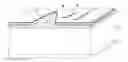
FIG. 1 illustrates a building panel according to an embodiment of the disclosure.
DETAILED DESCRIPTION
FIG. 1 shows a building panel with a surface layer 1 comprising a wood veneer, a core 2, and a sub-layer 3 arranged between the surface layer 1 and the core 2. The core 2 may be wood fibre based board such as MDF, HDF, particle board, plywood, OSB etc. The core 2 may be a WPC (Wood Plastic Composite). The core 2 may in one embodiment be a mineral board. The building panel may be a floor panel, a wall panel, a ceiling panel, a furniture component, skirting boards, mouldings, edging profiles, etc.
A low quality wood veneer is used as a surface layer 1. The veneer comprises cracks and other similar defects. The veneer is pressed against the core 2 with a powder based sub-layer 3 comprising wood fibres 4 and a binder 5 such that the powder floats and fills the cracks. The panel comprises after pressing a surface layer 1 with surface portions 6 comprising material from the sub-layer 3. The surface portions 6 comprising material from the sub-layer 3 extend into the wood veneer. The surface portions comprising material from the sub-layer may be flush with a remainder of the surface layer. A “surface portion” is a portion of the surface layer that is visible on the exposed surface of the surface layer facing away from the core.
In one embodiment, the sub-layer 3 comprises a binder applied in liquid form.
The panel may be pressed against an embossed press plate such that a part of the sub-layer 3 is more compressed under an embossed portion 8 than under a non-embossed surface portion.
Preferably the building panel is a floor panel that may have a powder based balancing layer 7. A powder based balancing layer 7 may also be applied on any other type of building panel. The powder based balancing layer 7 may comprise lignocellulosic particles or cellulose particles and a binder, preferably a thermosetting binder, more preferably an amino resin such as melamine formaldehyde resin. The binder may also be applied in powder form, the sub-layer 3 being a dry powder layer. In one embodiment, the sub-layer 3 is a pre-pressed layer, wherein the binder has not completely cured during the pre-pressing.
The binder of the sub-layer 3 may be a thermosetting resin, such as, for, example a melamine formaldehyde resin. The sub-layer 3 may also comprise colour pigments and wear resistant particles such as aluminium oxide particles. The wood fibres of the sub-layer 3 may be lignocellulosic particles or cellulose particles. The wood fibres of the sub-layer 3 may be at least partially bleached. The sub-layer may comprise a foaming agent. The wood veneer may be replaced by a cork veneer or a stone veneer.
The sub-layer 3 may be applied in an amount of 200-600 g/m2, preferably 300-500 g/m2 such as about 400 g/m2. The amount of binder applied for the sub-layer 3 may be 100-300 g/m2, preferably 150-250 g/m2 such as about 200 g/m2. The sub-layer 3 may comprise the binder in an amount of 30-80 wt %, preferably in an amount of 40-60 wt % such as about 50 wt %.
In an embodiment, a produced building panel may be 6-25 mm thick, preferably 8-15 mm thick after pressing, while the core may be 5-22 mm thick, preferably 7-14 mm thick. The sub-layer may be 0.1-2 mm thick after pressing.
Using a protective overlay with wear resistant particles applied on the veneer is not excluded and this could increase the wear resistance of a wood veneer. Dry and wet overlays, which are produced by production methods where for example thermosetting resins in dry or wet form are mixed with aluminium oxide, without any fibres could also be used. Aluminium oxide particles mixed with melamine powder could for example be applied on a wood veneer prior to pressing and a wear resistant surface could be obtained without any surface coating after pressing. Dry and wet overlays may be applied on the surface layer prior to pressing. Wax may be applied, for example, as a powder, prior to pressing on the veneer. A lacquer may also be applied on the surface layer after pressing. A protective foil may also be applied on the veneer prior to pressing or on the surface layer after pressing.
It is also contemplated that the building panel is provided with a second surface layer (not shown) comprising a wood veneer of the above described type. A sub-layer of the above described type is arranged between the second surface layer and a second surface of the core of the above described type. The second surface layer has surface portions comprising material from the sub-layer extending into the wood veneer. The second surface of the core faces away from the surface layer described above with reference to FIG. 1. In this embodiment, the surface layer described above with reference to FIG. 1 is considered as first surface layer.
The building panel may be produced by a method comprising the step of:
-
- applying a wood fibre powder and a binder on a wood fibre based core, to obtain a sub-layer;
- applying a wood veneer, comprising holes through the veneer, on the sub-layer,
- applying heat and pressure to bond the veneer, the sub-layer and the wood fibre based core together, wherein a portion of the wood fibre powder and the binder is pressed into the holes.
The method preferably comprises the step of applying a foaming agent. The foaming agent may facilitate the displacement of the wood fibre powder and the agent into the holes.
The wood fibre powder may comprise lignocellulosic particles or cellulose particles.
The method may comprise the step of applying different colour pigments, such that the colour of the visible sub-layer portion varies along the building panel, or such that the portion of the sub-layer in the holes forms a pattern.
Claims
1. A building panel comprising:
a surface layer comprising a wood veneer,
a wood fibre based core, and
a sub-layer arranged between the surface layer and the wood fibre based core, wherein the sub-layer comprises wood fibres and a binder,
wherein the surface layer has surface portions comprising material from the sub-layer extending into the wood veneer.
2. The building panel as claimed in claim 1, wherein the surface portions comprising material from the sub-layer are flush with a remainder of the surface layer.
3. The building panel as claimed in claim 1, wherein the surface layer comprises embossed portions and wherein a part of the sub-layer is more compressed under an embossed portion than under a non-embossed surface portion.
4. The building panel as claimed in claim 1, wherein the sub-layer comprises colour pigments and/or a colorant.
5. The building panel as claimed in claim 1, wherein the sub-layer comprises wear resistant particles.
6. The building panel as claimed in claim 1, further comprising a powder-based balancing layer.
7. The building panel as claimed in claim 1, wherein the wood veneer comprises holes and/or cracks, wherein the sub-layer fills the holes and/or cracks of the wood veneer.
8. The building panel as claimed in claim 1, further comprising a protective overlay comprising wear resistant particles arranged on the surface layer.
9. The building panel as claimed in claim 1, wherein the binder in the sub-layer is a thermosetting resin.
10. The building panel as claimed in claim 1, wherein the binder in the sub-layer is a melamine formaldehyde resin.
11. The building panel as claimed in claim 1, wherein the sub-layer comprises a foaming agent.
12. The building panel as claimed in claim 1, wherein the surface layer is a cork layer.
13. A building panel comprising:
a surface layer comprising a wood veneer,
a wood fibre based core, and
a sub-layer arranged between the surface layer and the wood fibre based core, wherein the sub-layer comprises wood fibres, a binder and wear resistant particles,
wherein the surface layer has surface portions comprising material from the sub-layer extending into the wood veneer.
14. A building panel comprising:
a surface layer comprising a wood veneer,
a wood fibre based core, and
a sub-layer arranged between the surface layer and the wood fibre based core, wherein the sub-layer comprises wood fibres, a binder and colour pigments and/or a colorant,
wherein the surface layer has surface portions comprising material from the sub-layer extending into the wood veneer.
15. A building panel comprising:
a surface layer comprising a veneer,
a core, and
a sub-layer arranged between the surface layer and core,
wherein the surface layer has surface portions comprising material from the sub-layer extending into the veneer.
16. A method to produce a building panel, the method comprising:
applying a wood fibre powder and a binder on a wood fibre based core, to obtain a sub-layer;
applying a wood veneer, comprising holes through the veneer, on the sub-layer,
applying heat and pressure to bond the veneer, the sub-layer and the wood fibre based core together, wherein a portion of the wood fibre powder and the binder is pressed into the holes.
17. The method as claimed in claim 16, further comprising applying a foaming agent in the sub-layer.
18. The method as claimed in clam 16, wherein the wood fibre powder comprises lignocellulosic particles or cellulose particles.
19. The method as claimed in claim 16, further comprising applying different colour pigments, such that the colour of the visible sub-layer portion varies along the building panel, or such that the portion of the sub-layer in the holes forms a pattern.
20. The method as claimed in claim 16, wherein after applying pressure, the wood veneer comprises embossed portions, and wherein a part of the sub-layer is more compressed under an embossed surface portion than under a non-embossed surface portion.
21. The method as claimed in claim 16, further comprising applying a protective overlay with wear resistant particles on the wood veneer, preferably prior to pressing.
22. The method as claimed in claim 16, wherein the sub-layer comprises colour pigments and/or a colorant.
23. The method as claimed in claim 16, wherein the sub-layer comprises wear resistant particles.
Images & Drawings included:

Sources:
- United States Patent and Trademark Office - verify current appl. status at the USPTO↗
Similar patent applications:
- » 20190010711
Wood fibre based panel with a surface layer - » 20220324217
WOOD FIBRE BASED PANEL WITH A SURFACE LAYER - » 20100092731
Wood fibre based panels with a thin surface layer - » 20130189534
Wood fibre based panels with a thin surface layer - » 20160114495
Wood fibre based panels with a thin surface layer
Recent applications in this class:
- » 20250277374 2025-09-04
PANEL - » 20240011304 2024-01-11
PANEL - » 20230407648 2023-12-21
FLOOR PANEL AND METHODS FOR MANUFACTURING FLOOR PANELS - » 20230075615 2023-03-09
Panel - » 20210277670 2021-09-09
Method of producing a veneered element - » 20190292796 2019-09-26
FIBRE BASED PANELS WITH A WEAR RESISTANCE SURFACE - » 20190010711 2019-01-10
Wood fibre based panel with a surface layer - » 20180002934 2018-01-04
FIBRE BASED PANELS WITH A WEAR RESISTANCE SURFACE - » 20170321435 2017-11-09
Engineered plank material having waterproofed veneer and its manufacturing method - » 20160230400 2016-08-11
FIBRE BASED PANELS WITH A WEAR RESISTANCE SURFACE
Recent applications for this Assignee:
- » 20250290326 2025-09-18
BUILDING PANEL WITH MECHANICAL LOCKING DEVICE - » 20250277501 2025-09-04
JOINERY ARRANGEMENT COMPRISING INTERLOCKED JOINERY COMPONENTS - » 20250276542 2025-09-04
METHOD TO PRODUCE A BUILDING PANEL AND A SEMI-FINISHED PRODUCT - » 20250270821 2025-08-28
PANEL WITH LOCKING DEVICE - » 20250270819 2025-08-28
VERTICAL JOINT SYSTEM AND ASSOCIATED SURFACE COVERING SYSTEM - » 20250270812 2025-08-28
BUILDING PANEL WITH LOCKING SYSTEM - » 20250248520 2025-08-07
PANELS COMPRISING A MECHANICAL LOCKING DEVICE AND AN ASSOCIATED ASSEMBLED ARTICLE - » 20250243675 2025-07-31
FLOOR COVERING WITH INTERLOCKING DESIGN - » 20250243674 2025-07-31
FLOOR COVERING WITH INTERLOCKING DESIGN - » 20250243673 2025-07-31
FLOOR COVERING WITH INTERLOCKING DESIGN