System and method for recognizing characters in multimedia content
US20150199336A1
2015-07-16
14/638,210
2015-03-04
✅ Patent granted
US 10,776,585 B2
2020-09-15
-
-
Daniel T Pellett
Reches Patent
2038-04-27
Abstract:
A system and method for recognizing characters embedded in multimedia content are provided. The method includes extracting at least one image of at least one character from a received multimedia content item; identifying a natural language character corresponding to the at least one image of the at least one character, wherein the identification is performed by a deep content classification (DCC) system; and storing the identified natural language character in a data warehouse.
Inventors:
- Yehoshua Y. Zeevi 179 🇮🇱 Haifa, Israel
- Igal Raichelgauz 75 🇺🇸 New-York, NY, United States
- Karina Odinaev 75 🇺🇸 New-York, NY, United States
Assignee:
- Cortica, Ltd. 167 🇮🇱 TEL AVIV, Israel
Applicant:
Interested in similar patents?
Get notified when new applications in this technology area are published.
Classification:
G09B19/0092 » CPC further
Teaching not covered by other main groups of this subclass Nutrition
G06F40/40 » CPC main
Handling natural language data Processing or translation of natural language
H04N21/258 IPC
Selective content distribution, e.g. interactive television or video on demand [VOD]; Servers specifically adapted for the distribution of content, e.g. VOD servers; Operations thereof; Management operations performed by the server for facilitating the content distribution or administrating data related to end-users or client devices, e.g. end-user or client device authentication, learning user preferences for recommending movies Client or end-user data management, e.g. managing client capabilities, user preferences or demographics, processing of multiple end-users preferences to derive collaborative data
H04N21/8106 » CPC further
Selective content distribution, e.g. interactive television or video on demand [VOD]; Generation or processing of content or additional data by content creator independently of the distribution process; Content; Monomedia components thereof involving special audio data, e.g. different tracks for different languages
H04N7/17318 » CPC further
Television systems; Analogue secrecy systems; Analogue subscription systems with two-way working, e.g. subscriber sending a programme selection signal; Transmission or handling of upstream communications Direct or substantially direct transmission and handling of requests
H04H60/48 » CPC further
Arrangements for broadcast applications with a direct linking to broadcast information or broadcast space-time; Broadcast-related systems; Arrangements for identifying or recognising characteristics with a direct linkage to broadcast information or to broadcast space-time, e.g. for identifying broadcast stations or for identifying users for recognising items expressed in broadcast information
H04H60/59 » CPC further
Arrangements for broadcast applications with a direct linking to broadcast information or broadcast space-time; Broadcast-related systems; Arrangements characterised by components specially adapted for monitoring, identification or recognition covered by groups - of video
H04N21/25891 » CPC further
Selective content distribution, e.g. interactive television or video on demand [VOD]; Servers specifically adapted for the distribution of content, e.g. VOD servers; Operations thereof; Management operations performed by the server for facilitating the content distribution or administrating data related to end-users or client devices, e.g. end-user or client device authentication, learning user preferences for recommending movies; Client or end-user data management, e.g. managing client capabilities, user preferences or demographics, processing of multiple end-users preferences to derive collaborative data; Management of end-user data being end-user preferences
H04H2201/90 » CPC further
Aspects of broadcast communication characterised by the use of signatures
G09B19/00 IPC
Teaching not covered by other main groups of this subclass
H04N7/173 IPC
Television systems; Analogue secrecy systems; Analogue subscription systems with two-way working, e.g. subscriber sending a programme selection signal
H04N21/81 IPC
Selective content distribution, e.g. interactive television or video on demand [VOD]; Generation or processing of content or additional data by content creator independently of the distribution process; Content Monomedia components thereof
H04N21/466 » CPC further
Selective content distribution, e.g. interactive television or video on demand [VOD]; Client devices specifically adapted for the reception of or interaction with content, e.g. set-top-box [STB]; Operations thereof; Management operations performed by the client for facilitating the reception of or the interaction with the content or administrating data related to the end-user or to the client device itself, e.g. learning user preferences for recommending movies, resolving scheduling conflicts Learning process for intelligent management, e.g. learning user preferences for recommending movies
H04N21/2668 » CPC further
Selective content distribution, e.g. interactive television or video on demand [VOD]; Servers specifically adapted for the distribution of content, e.g. VOD servers; Operations thereof; Management operations performed by the server for facilitating the content distribution or administrating data related to end-users or client devices, e.g. end-user or client device authentication, learning user preferences for recommending movies; Channel or content management, e.g. generation and management of keys and entitlement messages in a conditional access system, merging a VOD unicast channel into a multicast channel Creating a channel for a dedicated end-user group, e.g. insertion of targeted commercials based on end-user profiles
H04H60/37 » CPC further
Arrangements for broadcast applications with a direct linking to broadcast information or broadcast space-time; Broadcast-related systems; Arrangements for identifying or recognising characteristics with a direct linkage to broadcast information or to broadcast space-time, e.g. for identifying broadcast stations or for identifying users for identifying segments of broadcast information, e.g. scenes or extracting programme ID
Description
CROSS-REFERENCE TO RELATED APPLICATIONS
This application claims the benefit of U.S. Provisional Application No. 61/948,050 filed on Mar. 5, 2014. This application is a continuation-in-part (CIP) of U.S. patent application Ser. No. 14/096,865 filed on Dec. 4, 2013, now pending, which claims the benefit of U.S. Provisional Patent Application No. 61/890,251 filed on Oct. 13, 2013. The Ser. No. 14/096,865 application is a CIP of U.S. patent application Ser. No. 13/624,397 filed on Sep. 21, 2012, now pending. The Ser. No. 13/624,397 application is a CIP of:
-
- (a) U.S. patent application Ser. No. 13/344,400 filed on Jan. 5, 2012, now U.S. Pat. No. 8,959,037, which is a continuation of U.S. patent application Ser. No. 12/434,221, filed on May 1, 2009, now U.S. Pat. No. 8,112,376;
- (b) U.S. patent application Ser. No. 12/195,863, filed on Aug. 21, 2008, now U.S. Pat. No. 8,326,775, which claims priority under 35 USC 119 from Israeli Application No. 185414, filed on Aug. 21, 2007, and which is also a continuation-in-part of the below-referenced U.S. patent application Ser. No. 12/084,150; and,
- (c) U.S. patent application Ser. No. 12/084,150 having a filing date of Apr. 7, 2009, now U.S. Pat. No. 8,655,801, which is the National Stage of International Application No. PCT/IL2006/001235 filed on Oct. 26, 2006, which claims foreign priority from Israeli Application No. 171577 filed on Oct. 26, 2005 and Israeli Application No. 173409 filed on Jan. 29, 2006.
All of the applications referenced above are herein incorporated by reference.
TECHNICAL FIELD
The present disclosure relates generally to the analysis of multimedia content, and more specifically to recognizing natural language characters appearing in multimedia content items.
BACKGROUND
Identification of textual content embedded in multimedia content is a challenging problem with many practical applications. Currently available optical character recognition (OCR) systems are mainly used in order to recognize such textual content. However, such solutions are insufficient in cases where the input content is not properly scanned, captured or printed into an accurate computer-readable text.
In additional, prior art solutions may have difficulty recognizing textual content that is in an unexpected font type and/or a particularly small font size (e.g., smaller than 12 point font). Inability of such solutions to appropriately identify textual content may lead to data loss and/or decreased efficiency as a result of compensating for such data loss.
It would therefore be advantageous to provide a solution that would overcome the deficiencies of the prior art by recognizing natural language character in multimedia content.
SUMMARY
A summary of several example embodiments of the disclosure follows. This summary is provided for the convenience of the reader to provide a basic understanding of such embodiments and does not wholly define the breadth of the disclosure. This summary is not an extensive overview of all contemplated embodiments, and is intended to neither identify key or critical elements of all embodiments nor to delineate the scope of any or all embodiments. Its sole purpose is to present some concepts of one or more embodiments in a simplified form as a prelude to the more detailed description that is presented later. For convenience, the term “some embodiments” may be used herein to refer to a single embodiment or multiple embodiments of the disclosure.
Certain embodiments disclosed herein include a method for recognizing characters embedded in multimedia content. The method comprises extracting at least one image of at least one character from a received multimedia content item; identifying a natural language character corresponding to the at least one image of the at least one character, wherein the identification is performed by a deep content classification (DCC) system; and storing the identified natural language character in a data warehouse.
Certain embodiments disclosed herein also include a system for recognizing characters embedded in multimedia content. The system comprises an interface to a network for receiving a multimedia content item; a processor; a memory connected to the processor, wherein the memory contains instructions that, when executed by the processor, configure the system to: extract at least one image of at least one character from the received multimedia content item; identify a natural language character corresponding to the at least one image of the at least one character, wherein the identification is performed by a deep content classification (DCC) system; and store the identified natural language character in a data warehouse.
BRIEF DESCRIPTION OF THE DRAWINGS
The subject matter disclosed herein is particularly pointed out and distinctly claimed in the claims at the conclusion of the specification. The foregoing and other objects, features, and advantages of the disclosed embodiments will be apparent from the following detailed description taken in conjunction with the accompanying drawings.
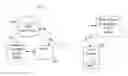
FIG. 1 is a schematic block diagram of a network system utilized to describe the various embodiments disclosed herein.
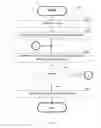
FIG. 2 is a flowchart describing a method for recognizing natural language characters embedded in multimedia content according to one embodiment.
FIG. 3 is a block diagram depicting the basic flow of information in the signature generator system.
FIG. 4 is a diagram showing the flow of patches generation, response vector generation, and signature generation in a large-scale speech-to-text system.
FIG. 5 is a flowchart illustrating a method returning a natural language character corresponding to an image according to an embodiment.
DETAILED DESCRIPTION
It is important to note that the embodiments disclosed herein are only examples of the many advantageous uses of the innovative teachings herein. In general, statements made in the specification of the present application do not necessarily limit any of the various claimed embodiments. Moreover, some statements may apply to some inventive features but not to others. In general, unless otherwise indicated, singular elements may be in plural and vice versa with no loss of generality. In the drawings, like numerals refer to like parts through several views.
The various disclosed embodiments include a method and system for recognizing natural language characters embedded in multimedia content. The natural language characters may be, for example, one or more letters in a natural language, numbers, and so on. The multimedia content item in which the natural language characters are embedded is received, and at least an image of each character is extracted therefrom. At least one natural language character corresponding to the image of the character is identified, using for example, a deep content classification (DCC) system. The natural language character is then stored for further use.
According to one embodiment, a sequence of characters of a natural language embedded in multimedia content is compared to a library of words stored in a memory. In that embodiment, word in the natural language that compares positively with the sequence of characters of at least a natural language respective of the comparison results is stored in the memory for further use.
FIG. 1 shows an exemplary and non-limiting schematic diagram of a network system 100 utilized to describe the various embodiments disclosed herein. A network 110 is used to communicate between different parts of the network system 100. The network 110 may be the Internet, the world-wide-web (WWW), a local area network (LAN), a wide area network (WAN), a metro area network (MAN), and another network capable of enabling communication between the elements of the system 100.
Further connected to the network 110 is a user device 120 configured to execute at least one application 125. The application 125 may be, for example, a web browser, a script, or any other application configured to interact with a server 130. The user device 120 may be, but is not limited to, a personal computer (PC), a personal digital assistant (PDA), a mobile phone, a smart phone, a tablet computer, a laptop, a wearable computing device, or another kind of computing device equipped with browsing, viewing and managing capabilities that is enabled as further discussed herein below. It should be noted that only one user device 120 and one application 125 are illustrated in FIG. 1 merely for the sake of simplicity and without limitation on the generality of the disclosed embodiments. Additional user devices and/or applications may be utilized without departing from the scope of the disclosed embodiments.
The network system 100 also includes a data warehouse 160 configured to store at least one multimedia content item in which characters, natural language characters in a variety of natural languages, a plurality of words in natural languages, and the like may be embedded. In the embodiment illustrated in FIG. 1, the server 130 communicates with the data warehouse 160 through the network 110. In other non-limiting configurations, the server 130 may be directly connected to the data warehouse 160.
The various embodiments disclosed herein are realized using the server 130, a signature generator system (SGS) 140 that is communicatively connected to the server 130, and a deep-content-classification (DCC) system 150. The SGS 140 may be connected to the server 130 directly or through the network 110. The server 130 is configured to receive and serve at least one multimedia content item in which at least one character is embedded. The server 130 extracts at least one image of the at least one character from the multimedia content item.
The DCC system 150 is configured to identify at least one natural language character corresponding to the image of the at least one character. According to one embodiment, the identification comprises generation of concept structures (or concepts) and identification of concepts that correspond to the image of the at least one character. A concept is a collection of signatures representing a multimedia element and metadata describing the concept. The collection is a signature reduced cluster generated by inter-matching the signatures generated for the many multimedia elements, clustering the inter-matched signatures, and providing a reduced cluster set of such clusters. As a non-limiting example, a ‘Superman concept’ is a signature reduced cluster of signatures describing elements (such as multimedia elements) related to, e.g., a Superman cartoon: a set of metadata including textual representations of the Superman concept.
Techniques for generating concepts and concept structures are described further in U.S. Pat. No. 8,266,185 (hereinafter the '185 Patent) to Raichelgauz, et al., which is assigned to a common assignee, and is hereby incorporated by reference for all that it contains. In an embodiment, the DCC system 150 is configured to operate as the DCC system discussed in the '185 patent. The process of generating the signatures in the SGS 140 is explained in more detail herein below with respect to FIGS. 3 and 4.
In certain configurations, the DCC system 150 and SGS 140 may be embedded in the server 130. It should be noted that each of the server 130, the SGS 140, and the DCC system 150 typically comprises a processing unit. The memory contains instructions that can be executed by the processor. The server 130 also includes an interface (not shown) to the network 110.
In one embodiment, the processing unit may be realized through architecture of computational cores as described in further detail herein below. In another embodiment, the processing unit may comprise, or be a component of, a larger processing unit implemented with one or more processors. The one or more processors may be implemented with any combination of general-purpose microprocessors, microcontrollers, digital signal processors (DSPs), field programmable gate array (FPGAs), programmable logic devices (PLDs), controllers, state machines, gated logic, discrete hardware components, dedicated hardware finite state machines, or any other suitable entities that can perform calculations or other manipulations of information.
The processing unit may also include machine-readable media for storing software. Software shall be construed broadly to mean any type of instructions, whether referred to as software, firmware, middleware, microcode, hardware description language, or otherwise. Instructions may include code (e.g., in source code format, binary code format, executable code format, or any other suitable format of code). The instructions, when executed by the processing unit, cause the processing unit to perform the various functions described herein.
According to the disclosed embodiments, the server 130 is configured to receive a multimedia content item in which at least one character is embedded from the user device 120. The multimedia content item may be, but is not limited to, an image, a graphic, a video stream, a video clip, a video frame, a photograph, and/or combinations thereof and portions thereof. In one embodiment, the server 130 receives a URL of a web-page viewed by the user device 120 and accessed by the application 125. The web-page is processed to extract the multimedia content item contained therein. The request to analyze the multimedia content item can be sent by a script executed in the web-page such as the application 125 (e.g., a web server or a publisher server) when requested to upload one or more multimedia content items to the web-page. Such a request may include a URL of the web-page or a copy of the web-page. The application 125 can also send a picture or a video clip taken by a user of the user device 120 to the server 130.
The server 130, in response to receiving the multimedia content item, is configured to extract at least one image of the at least one character. The server 130 identifies at least one natural language character corresponding to the least one image. The at least one natural language character is stored in a data warehouse 160 for further use. According to one embodiment, the at least one corresponding natural language character is provided to the user device 120 by the server 130. According to yet another embodiment, the server 130 is further configured to compare a sequence of characters of at least a natural language embedded in a multimedia content item to a library of words stored in the data warehouse 160. The word(s) in the natural language that positively compares with the sequence of characters of at least a natural language respective of the comparison results is then stored in the data warehouse 160 for further use.
As a non-limiting example, when the server 130 receives a multimedia content item in which the sequence of characters: m, o, r, n, i, n and g, are embedded, an image of the sequence is extracted by the server 130. Then, the sequence is compared to a plurality of words stored in the data warehouse 160. The word “morning” in English is determined as positive comparing to the sequence of characters. The comparison results are then stored in the data warehouse 160 for further use.
FIG. 2 depicts an exemplary and non-limiting flowchart 200 describing a method for recognizing natural language characters embedded in multimedia content items according to an embodiment. In an embodiment, the method may be performed by the server 130.
In S210, a multimedia content item in which at least one character is embedded is received. In an embodiment, the multimedia content item is received together with a request to identify the character(s) embedded in the multimedia content item. The multimedia content item may be, but is not limited to, an image, a graphic, a video stream, a video clip, a video frame, a photograph, a combination thereof, and a portion thereof.
In S220, at least one image of the at least one character is extracted from the at least one multimedia content item. The at least one multimedia content item may contain multiple sets of at least one character (e.g., multiple words, multiple sentences, multiple paragraphs, multiple phrases, portions thereof, and so on), each of which may be represented by an image. In an embodiment, each image of the at least one multimedia content item may be extracted based on an extraction order. The extraction order may be, e.g., left to right, right to left, top to bottom, bottom to top, paragraphs before sentences, sentences before phrases, phrases before words, combinations thereof, and so on.
In S230, at least one signature for the extracted at least one image is generated to the at least one character. The signatures are generated by the SGS 140 as described in greater detail herein below with respect to FIGS. 3 and 4.
In S240, at least a natural language character corresponding to the extracted image of the at least one character is identified. In an embodiment, a DCC system (e.g., the DCC system 150) may be queried respective of the desired identification. In such an embodiment, the DCC system returns at least a natural language character corresponding to the extracted image and the returned at least a natural language character is identified as corresponding to the extracted image. According to an embodiment, the identification is made through a data warehouse (e.g., the data warehouse 160). According to another embodiment, the identification is made through one or more data sources accessible over a network (e.g., the network 110).
According to one embodiment, returning at least a natural language character corresponding to the extracted image further includes generating concept structures (or concepts) and identifying concepts that correspond to the image of the at least one character. Techniques for generating concepts and concept structures are described further in the '185 Patent referenced above. Returning a natural language character corresponding to an image is described further herein below with respect to FIG. 5.
In S250, the at least one natural language character corresponding to the extracted image is stored. In an embodiment, the at least one natural language character is stored in a data warehouse (e.g., the data warehouse 160). In S260, it is checked whether additional multimedia content items have been received and, if so, execution continues with S210; otherwise, execution terminates.
FIGS. 3 and 4 illustrate the generation of signatures for multimedia content items according to one embodiment. An exemplary high-level description of the process for large scale matching is depicted in FIG. 3. In this example, the matching is conducted based on video content.
Video content segments 2 from a Master database (DB) 6 and a Target DB 1 are processed in parallel by a large number of independent computational Cores 3 that constitute an architecture for generating the Signatures (hereinafter the “Architecture”). Further details on the generation of computational Cores are provided below. The independent Cores 3 generate a database of Robust Signatures and Signatures 4 for Target content-segments 5 and a database of Robust Signatures and Signatures 7 for Master content-segments 8. An exemplary and non-limiting process of signature generation for an audio component is shown in detail in FIG. 4. Finally, Target Robust Signatures and/or Signatures are effectively matched, by a matching algorithm 9, to Master Robust Signatures and/or Signatures database to find all matches between the two databases.
To demonstrate an example of the signature generation process, it is assumed, merely for the sake of simplicity and without limitation on the generality of the disclosed embodiments, that the signatures are based on a single frame, leading to certain simplification of the computational cores generation. The Matching System is extensible for signatures generation capturing dynamics in-between the frames.
The Signatures' generation process is now described with reference to FIG. 4. The first step in the process of signatures generation from a given speech-segment is to breakdown the speech-segment to K patches 14 of random length P and random position within the speech segment 12. The breakdown is performed by the patch generator component 21. The value of the number of patches K, random length P, and random position parameters is determined based on optimization, considering the tradeoff between accuracy rate and the number of fast matches required in the flow process of the server 130 and SGS 140. Thereafter, all the K patches are injected in parallel into all computational Cores 3 to generate K response vectors 22, which are fed into a signature generator system 23 to produce a database of Robust Signatures and Signatures 4.
In order to generate Robust Signatures, i.e., Signatures that are robust to additive noise L (where L is an integer equal to or greater than 1) by the Computational Cores 3 a frame ‘i’ is injected into all the Cores 3. Then, Cores 3 generate two binary response vectors: {right arrow over (S)}, which is a Signature vector, and {right arrow over (RS)} which is a Robust Signature vector.
For generation of signatures robust to additive noise, such as White-Gaussian-Noise, scratch, etc., but not robust to distortions, such as crop, shift and rotation, etc., a core Ci={ni} (1≦i≦L) may consist of a single leaky integrate-to-threshold unit (LTU) node or more nodes. The node ni equations are:
V i = ∑ j w ij k j n i = ∏ ( Vi - Th x )
where, is a Heaviside step function; wij is a coupling node unit (CNU) between node i and image component j (for example, grayscale value of a certain pixel j); kj is an image component T (for example, grayscale value of a certain pixel j); ThX is a constant Threshold value, where ‘x’ is ‘S’ for Signature and ‘RS’ for Robust Signature; and Vi is a Coupling Node Value.
The Threshold values ThX are set differently for Signature generation than for Robust Signature generation. For example, for a certain distribution of Vi values (for the set of nodes), the thresholds for Signature (ThS) and Robust Signature (ThRS) are set apart, after optimization, according to at least one or more of the following criteria:
-
- 1: For: Vi>ThRS
- 1−p(V>ThS)−1−(1−ε)l<<1
i.e., given that I nodes (cores) constitute a Robust Signature of a certain image I, the probability that not all of these I nodes will belong to the Signature of same, but noisy image, Ĩ is sufficiently low (according to a system's specified accuracy). - 2: p(Vi>ThRS)≈l/L
i.e., approximately l out of the total L nodes can be found to generate a Robust Signature according to the above definition. - 3: Both Robust Signature and Signature are generated for certain frame i.
It should be understood that the generation of a signature is unidirectional, and typically yields lossless compression, where the characteristics of the compressed data are maintained but the uncompressed data cannot be reconstructed. Therefore, a signature can be used for the purpose of comparison to another signature without the need for comparison to the original data. A detailed description of the Signature generation can be found in U.S. Pat. Nos. 8,326,775 and 8,312,031, both assigned to common assignee, which are hereby incorporated by reference for all the useful information they contain.
A Computational Core generation is a process of definition, selection, and tuning of the parameters of the cores for a certain realization in a specific system and application. The process is based on several design considerations, such as:
-
- (a) The Cores should be designed so as to obtain maximal independence, i.e., the projection from a signal space should generate a maximal pair-wise distance between any two cores' projections into a high-dimensional space.
- (b) The Cores should be optimally designed for the type of signals, i.e., the Cores should be maximally sensitive to the spatio-temporal structure of the injected signal, for example, and in particular, sensitive to local correlations in time and space. Thus, in some cases, a core represents a dynamic system, such as in state space, phase space, edge of chaos, etc., which is uniquely used herein to exploit its maximal computational power.
- (c) The Cores should be optimally designed with regard to invariance to a set of signal distortions, of interest in relevant applications.
FIG. 5 is an exemplary and non-limiting flowchart 500 illustrating returning a natural language character corresponding to an image according to an embodiment. In an embodiment, the steps of flowchart 500 may be performed by a deep content classification (DCC) system (e.g., the DCC system 150).
In S510, a request to return at least a natural language character corresponding to an image is received. In a typical embodiment, the request may further include the image and a signature that was generated based on the image. In an alternative embodiment, the image and a signature generated based on the image may be found. The image may be found in, but is not limited to, a data warehouse (e.g., the data warehouse 160), one or more data sources accessible over a network (e.g., the network 110), and so on.
In S520, a concept structure corresponding to the image is identified. The concept structure may be identified as corresponding to the image if, e.g., matching between the signature of the image and each concept signature of at least one multimedia content item within a concept structure is above a predefined threshold. In an embodiment, if no existing concept structure matches the signature of the image, a new concept structure may be generated respective thereof.
A concept is a collection of signatures representing a multimedia element and metadata describing the concept. The collection is a signature reduced cluster generated by inter-matching the signatures generated for the many multimedia elements, clustering the inter-matched signatures, and providing a reduced cluster set of such clusters. As a non-limiting example, a ‘Superman concept’ is a signature reduced cluster of signatures describing elements (such as multimedia elements) related to, e.g., a Superman cartoon: a set of metadata including textual representations of the Superman concept.
In S530, a natural language word associated with the identified concept structure is determined. In an embodiment, the associations between concept structures and natural language words may be stored in, but not limited to, a data warehouse (e.g., the data warehouse 160).
In S540, the determined natural language word is compared to the image to determine if there is a match and, if so, execution continues with S550; otherwise, execution continues with S530. A match may be determined if, e.g., a signature of the determined natural language word matches a signature of the image above a predefined threshold. In a typical embodiment, the threshold for determining if a signature of the determined natural language word matches the signature of the image is higher than the threshold for determining if multimedia content items of a concept structure match the signature of the image. Signatures and signature matching are described further herein above with respect to FIGS. 3 and 4.
In S550, the matching natural language word is returned. In an embodiment, if no natural language words match, an error message may be returned.
As a non-limiting example, a request to return at least a natural language character corresponding to an image is received, wherein the image includes the word “motorcycle.” The request includes the image and a signature generated respective of the image. The signature is matched to at least one signature of a multimedia content item associated with a concept structure, wherein the concept structure is “motor vehicles.” Based on the signature matching with the concept structure, it is determined that the “motor vehicles” concept structure corresponds to the image of the word “motorcycle” because the signatures match above a 50% matching threshold.
The signature of the image is compared to signatures of natural language words associated with the concept structure until a match is found. A signature of the natural word “motorcycle” is determined to match the signature of the image containing the word “motorcycle” because the signatures match above a 90% matching threshold. Thus, it is determined that the natural language word “motorcycle” represents the at least a character in the image. The natural language word “motorcycle” is returned.
The various embodiments disclosed herein can be implemented as hardware, firmware, software, or any combination thereof. Moreover, the software is preferably implemented as an application program tangibly embodied on a program storage unit or computer readable medium consisting of parts, or of certain devices and/or a combination of devices. The application program may be uploaded to, and executed by, a machine comprising any suitable architecture. Preferably, the machine is implemented on a computer platform having hardware such as one or more central processing units (“CPUs”), a memory, and input/output interfaces. The computer platform may also include an operating system and microinstruction code. The various processes and functions described herein may be either part of the microinstruction code or part of the application program, or any combination thereof, which may be executed by a CPU, whether or not such a computer or processor is explicitly shown. In addition, various other peripheral units may be connected to the computer platform such as an additional data storage unit and a printing unit. Furthermore, a non-transitory computer readable medium is any computer readable medium except for a transitory propagating signal.
All examples and conditional language recited herein are intended for pedagogical purposes to aid the reader in understanding the principles of the disclosed embodiment and the concepts contributed by the inventor to furthering the art, and are to be construed as being without limitation to such specifically recited examples and conditions. Moreover, all statements herein reciting principles, embodiments, and embodiments of the disclosed embodiments, as well as specific examples thereof, are intended to encompass both structural and functional equivalents thereof. Additionally, it is intended that such equivalents include both currently known equivalents as well as equivalents developed in the future, i.e., any elements developed that perform the same function, regardless of structure.
Claims
What is claimed is:1. A method for recognizing characters embedded in multimedia content, comprising:
extracting at least one image of at least one character from a received multimedia content item;
identifying a natural language character corresponding to the at least one image of the at least one character, wherein the identification is performed by a deep content classification (DCC) system; and
storing the identified natural language character in a data warehouse.
2. The method of claim 1, further comprising:
comparing a sequence of the natural language character to a library of natural language words;
detecting a natural language word in the library of natural language words that matches the sequence of natural language characters; and
storing the detected natural language word in the data warehouse.
3. The method of claim 1, wherein the multimedia content item is received from a user device.
4. The method of claim 3, further comprising:
sending the natural language character to the user device.
5. The method of claim 1, wherein the at least one multimedia content item is any one of: an image, a graphic, a video stream, a video clip, a video frame, and a photograph.
6. The method of claim 1, further comprising:
generating at least one signature respective of the at least one character; and
querying the DCC system using the at least on generated signature to identify the natural language character corresponding to the image of the at least one character.
7. The method of claim 6, further comprising:
identifying a concept structure corresponding to the image based on the at least one signature, wherein the identified natural language character is associated with the identified concept structure.
8. The method of claim 1, wherein each image of the extracted at least one image is extracted based on an extraction order.
9. The method of claim 1, wherein the extraction order is at least any of: left to right, right to left, top to bottom, bottom to top, paragraphs before sentences, sentences before phrases, and phrases before words.
10. A non-transitory computer readable medium having stored thereon instructions for causing one or more processing units to execute the method according to claim 1.
11. A system for recognizing characters embedded in multimedia content, comprising:
an interface to a network for receiving a multimedia content item;
a processor;
a memory connected to the processor, wherein the memory contains instructions that, when executed by the processor, configure the system to:
extract at least one image of at least one character from the received multimedia content item;
identify a natural language character corresponding to the at least one image of the at least one character, wherein the identification is performed by a deep content classification (DCC) system; and
store the identified natural language character in a data warehouse.
12. The system of claim 11, wherein the system is further configured to:
compare a sequence of the at least a natural language character to a library of natural language words;
detect a natural language word in the library of natural language words that matches the sequence of natural language characters; and
store the detected natural language word in the data warehouse.
13. The system of claim 11, wherein the multimedia content item is received from a user device.
14. The system of claim 13, wherein the system is further configured to:
send the natural language character to the user device.
15. The system of claim 11, wherein the at least one multimedia content item is any one of: an image, a graphic, a video stream, a video clip, a video frame, and a photograph.
16. The system of claim 11, wherein the system is further configured to:
generate at least one signature respective of the at least one character; and
querying the DCC system using the at least on generated signature to identify the natural language character corresponding to the image of the at least one character.
17. The system of claim 16, wherein the system is further configured to:
identify a concept structure corresponding to the image based on the at least one signature, wherein the identified natural language character is associated with the identified concept structure.
18. The system of claim 11, wherein each image of the extracted at least one image is extracted based on an extraction order.
19. The system of claim 11, wherein the extraction order is at least any one of: left to right, right to left, top to bottom, bottom to top, paragraphs before sentences, sentences before phrases, and phrases before words.
Images & Drawings included:



Sources:
- United States Patent and Trademark Office - verify current appl. status at the USPTO↗
Recent applications in this class:
- » 20210042393 2021-02-11
Linking contextual information to text in time dependent media - » 20200401663 2020-12-24
Techniques for generating a topic model - » 20200380078 2020-12-03
Site ambient audio collection - » 20200272699 2020-08-27
AUGMENTED REALITY LANGUAGE TRANSLATION - » 20200265118 2020-08-20
Dynamic automation of pipeline creation - » 20200218781 2020-07-09
Sentiment adapted communication - » 20200175118 2020-06-04
Systems and methods for dynamically expanding natural language processing agent capacity - » 20200081985 2020-03-12
Method and apparatus for expressing time in an output text - » 20200081984 2020-03-12
Enabling sponsored solutions for technical instruction augmentation - » 20200057811 2020-02-20
Hybrid natural language understanding
Recent applications for this Assignee:
- » 20230230350 2023-07-20
SEMI-SUPERVISED LEARNING VIA DIFFERENT MODALITIES - » 20230230341 2023-07-20
CONCEPT BASED SEGMENTATION - » 20230177405 2023-06-08
ENSEMBLE OF NARROW AI AGENTS - » 20230159039 2023-05-25
FUEL EFFICIENCY OPTIMIZATION BY PREDICTIVE DRIVING - » 20220392197 2022-12-08
ISOLATING UNIQUE AND REPRESENTATIVE PATTERNS OF A CONCEPT STRUCTURE - » 20220343620 2022-10-27
Efficient calculation of a robust signature of a media unit - » 20220261596 2022-08-18
CONFIGURING SPANNING ELEMENTS OF A SIGNATURE GENERATOR - » 20220208393 2022-06-30
MONITORING POTENTIAL DROPLETS TRANSMISSION BASES INFECTION EVENTS - » 20220208392 2022-06-30
MONITORING POTENTIAL CONTACT BASED INFECTION EVENTS - » 20220182535 2022-06-09
Filming an event by an autonomous robotic system