PHYTOSANITARY COMPOSITIONS COMPRISING AN ETHER-AMIDE COMPOUND
US20150208645A1
2015-07-30
14/416,926
2013-07-25
Abstract:
The object of the present invention is phytosanitary compositions comprising an active phytosanitary product and an ether-amide compound. The ether-amide compound may natively be present as a solvent, co-solvent, crystallization inhibitor or an agent for increasing bioactivity of the active phytosanitary product.
Assignee:
- RHODIA OPERATIONS 345 🇫🇷 Paris, France
Interested in similar patents?
Get notified when new applications in this technology area are published.
Classification:
A01N25/02 » CPC main
Biocides, pest repellants or attractants, or plant growth regulators, characterised by their forms, or by their non-active ingredients or by their methods of application, e.g. seed treatment or sequential application ; Substances for reducing the noxious effect of the active ingredients to organisms other than pests containing liquids as carriers, diluents or solvents
C07C235/06 » CPC further
Carboxylic acid amides, the carbon skeleton of the acid part being further substituted by oxygen atoms having carbon atoms of carboxamide groups bound to acyclic carbon atoms and singly-bound oxygen atoms bound to the same carbon skeleton the carbon skeleton being acyclic and saturated having the nitrogen atoms of the carboxamide groups bound to hydrogen atoms or to acyclic carbon atoms
A01N25/30 » CPC further
Biocides, pest repellants or attractants, or plant growth regulators, characterised by their forms, or by their non-active ingredients or by their methods of application, e.g. seed treatment or sequential application ; Substances for reducing the noxious effect of the active ingredients to organisms other than pests characterised by the surfactants
Description
The present invention relates to phytosanitary compositions comprising an active phytosanitary product and an ether-amide compound. The ether-amide compound may notably be present as a solvent, co-solvent, crystallisation inhibitor or agent for increasing the bioactivity of the active phytosanitary product.
Agriculture uses many active materials as fertilizers or pesticides, for example insecticides, herbicides or fungicides. These are referred to as active phytosanitary products (or of active material). Active phytosanitary products are generally produced in a pure or highly concentrated form. They however have to be used on farms at low concentrations. For this purpose, they are generally formulated with other ingredients in order to allow easy weight dilution by the farmer. These are referred to as phytosanitary formulations. The dilution carried out by the farmer is generally achieved by mixing the phytosanitary formulation with water.
Thus, phytosanitary formulations have to allow easy dilution by weight by the farmer, in order to obtain a product in which the phytosanitary product is properly dispersed, for example as a solution, emulsion, suspension, or suspo-emulsion. For example, solvents may be used for formulating active phytosanitary products, for example in the form of emulsifiable concentrates (Emulsifiable Concentrate “EC”) intended to be diluted in water by the farmer, before application on a field.
Phytosanitary formulations thus allow the transport of a phytosanitary product in a relatively concentrated form, easy packaging and/or easy handling for the final user.
Certain solid phytosanitary active ingredients are often difficult to formulate. This is for example the case of tebuconazole, which is a particularly efficient fungicide, and of widespread use, notably for soya bean cultivation. For certain phytosanitary active ingredients, it is difficult to produce concentrated formulations, easy to be diluted for the farmer, stable and without any substantial drawbacks (either found or perceived) in terms of safety, toxicity and/or echo-toxicity. For certain active ingredients, it is difficult to formulate them with relatively high concentrations, with sufficient stability. In particular, it is necessary to avoid the occurrence of crystals in particular at a low temperature and/or during dilution and/or during storage at a high temperature of the diluted composition. The crystals may have negative effects, notably clogging filters of the devices used for spreading out the diluted composition, clogging the spraying devices, reducing the overall activity of the formulation, generating unnecessary problems in waste streams for removing the crystals, and/or cause a poor distribution of the active product on the agricultural field.
The industry is searching for compounds which may have solvent properties and may allow variation or optimisation of phytosanitary formulations. The industry notably needs compounds of moderate cost, having interesting properties of use. The industry also needs compounds having a toxicological and/or ecotoxicological profile perceived as favourable, notably low volatility (low VOC), good biodegradability, low toxicity and/or low hazard.
The use of dialkylamides as solvents is known. These are products of formula R—CONMe2 wherein R is a hydrocarbon group such as an alkyl, typically a C6-C30 alkyl. Such products are notably marketed under the name of Genagen® by Clariant. These solvents find applications notably in the phytosanitary field. These solvents, however, have a restricted field of use and do not allow solubilization of certain phytosanitary active ingredients at certain concentrations, in useful temperature ranges, without formation of crystals. Moreover they are generated from an expensive raw material.
A need remains for novel phytosanitary formulations, in particular phytosanitary formulations having relatively high concentrations of active phytosanitary products, which may have good stability, for example by reducing, or even preventing the formation of crystals notably at a low temperature and/or during dilution and/or during storage at a high temperature of the diluted composition.
The present invention aims at addressing at least one of the needs expressed above and it manages this by applying a particular ether-amide compound.
Thus, the present invention according to one its aspects, relates to a phytosanitary formulation comprising at least:
a) an active phytosanitary product,
b) a compound of the following formula (I):
RaRbC(OR1)-A-C(O)—NR2R3 (I)
wherein:
-
- Ra and Rb, either identical or different, are groups selected from the hydrogen atom and linear or branched, notably C1-C6 alkyl groups;
- R1 is a hydrocarbon group comprising an average number of carbon atoms ranging from 1 to 36, saturated or unsaturated, linear or branched, optionally cyclic, optionally aromatic, optionally substituted;
- R2 and R3, identical or different, are groups selected from the hydrogen atom and hydrocarbon groups comprising an average number of carbon atoms ranging from 1 to 36, saturated or unsaturated, linear or branched, optionally cyclic, optionally aromatic, optionally substituted, R2 and R3 may optionally form together a ring comprising the nitrogen atom to which they are bound, optionally substituted and/or optionally comprising an additional heteroatom,
- A represents a linear or branched alkyl group, the main chain of which comprises at least 2 carbon atoms;
c) optionally a surfactant, and
d) optionally water.
The invention also relates according to another of its aspects, to the use of a compound of formula (I) according to the invention in phytosanitary formulations comprising a), optionally c) and optionally d).
The invention also relates, according to another of its aspects, to the use of a compound of formula (I) according to the invention in phytosanitary formulations comprising a), optionally c) and optionally d), as a solvent, co-solvent, crystallisation inhibitor, and/or agent for increasing the bioactivity of said active phytosanitary product.
The invention also relates according to another of its aspects, to a method for preparing phytosanitary formulations comprising a step for mixing a), b), optionally c), and optionally d).
The invention also relates to the use of a phytosanitary formulation according to the invention for treating agricultural surfaces as well as a method for treating agricultural surfaces comprising at least one step for applying a phytosanitary formulation according to the invention, generally in diluted form.
DEFINITIONS
Within the scope of the present invention, the intention is to designate by:
-
- “compound of the invention”, a compound of formula (I) according to the invention;
- “material composition”, a more or less complex composition comprising several chemical compounds. This may be typically a non-purified or moderately purified reaction product.
For example, the compound of the invention may notably be isolated and/or marketed and/or used as a material composition comprising it. The compound of the invention, in the form of a pure molecule or in the form of a mixture fitting formula (I), may thus be comprised in a material composition in the sense of the invention.
Moreover, within the scope of the present invention, the term of “solvent” is understood in a broad sense, notably covering the functions of a co-solvent, and of a crystallisation inhibitor.
The term of solvent may notably designate a product liquid at the temperature of use, preferably with a melting temperature of less than or equal to 20° C., preferably than 5° C., preferably than 0° C., which may contribute to make a solid material liquid, making a liquid material more fluid, or preventing or delaying solidification or crystallisation of the material in a liquid medium.
Phytosanitary Formulations
In the sense of the invention, a phytosanitary formulation is a phytosanitary formulation, preferably concentrated, comprising at least one active compound.
By <<concentrated>> is meant to designate a formulation for which the weight concentration of the active ingredient is comprised between 10% and 80% based on the total weight of the formulation.
The phytosanitary formulation of the invention is preferably in liquid form.
Different types of phytosanitary formulations may be applied, notably according to the different phytosanitary products. For example mention is made of emulsifiable concentrates (Emulsifiable Concentrates <<EC>>), soluble concentrates (Soluble Concentrate <<SL>>), concentrated emulsions (Emulsion in water “EW”), microemulsions (“ME”), wettable powders (Wettable Powders <<MP>>), granules which are dispersible in water (Water Dispersible Granules, <<WDG>>), suspo-emulsions (“SE”). The formulations may depend on the physical form of the phytosanitary product (for example solid or liquid), and on its physico-chemical properties in the presence of other compounds such as water or non-aqueous dispersion, emulsification or solubilization media.
After weight dilution by the farmer, for example by mixing it with water, the phytosanitary product may be found in different physical forms: solution, dispersion of solid particles, dispersion of droplets of the product, droplets of solvent in which the product is dissolved.
The formulation of the invention may notably exhibit:
-
- solubilization of significant amounts of active ingredients,
- lack of crystallisation, even in demanding conditions,
- an increase in the biological activity which may be due to good solvation, and/or
- a safety, toxicology and/or eco-toxicology profile perceived as favorable.
Details concerning the products a), b), c), and d) are given below.
Compound b) of Formula (I)
The compound b) has the general formula (I) given above. It is noted that this may be mixture of several compounds of general formula (I). In other words, the compound may be alone or in a mixture. Within the scope of mixtures of several compounds, the number of atoms or units may be expressed as an average number. These are number average numbers. In the case of compounds alone, these will be generally integers, as regards the number of carbon atoms.
The groups Ra and Rb, identical or different, are groups selected from the hydrogen atom and linear or branched alkyl groups. The alkyls may notably be C1-C6, preferably C1-C3 alkyls. These may notably be methyl or ethyl groups.
According to a particular embodiment, at least one of the groups selected from Ra and Rb is different from a hydrogen atom, for example a group selected from linear or branched alkyl groups. The alkyls may notably be C1-C6, preferably C1-C3 alkyls. These may notably be methyl or ethyl groups.
According to particular embodiments:
-
- Ra═H and Rb═H, or
- Ra=—CH3 and Rb═H, or
- Ra=—C2H5 and Rb═H.
According to a particular embodiment, the total number of carbon atoms within the compound b), except for the groups R1, R2 and R3, is 4, 5, 6, 7 or 8, or average numbers between each of these values.
The group A represents a linear or branched alkyl group, the main chain of which comprises at least 2 carbon atoms.
By <<main chain>> is meant to refer in the sense of the invention to the hydrocarbon chain binding the carbon atom bearing the amide function and the carbon atom bearing the ether function, both of these carbon atoms being excluded.
According to an embodiment, the group A represents a linear or branched alkyl group, the main chain of which comprises at least 2 carbon atoms, for example from 2 to 8 carbon atoms, for example from 2 to 6 carbon atoms, preferably from 2 to 4 carbon atoms.
According to an embodiment, the group A represents a linear alkyl group.
According to another embodiment, the group A represents a branched alkyl group.
In this case, this may be a branched alkyl group with at least one alkyl group, itself linear or branched, comprising from 1 to 10 carbon atoms, for example from 2 to 8 carbon atoms. These may notably be ethyl or methyl groups.
The groups R2 and R3, identical or different, are groups selected from a hydrogen atom and hydrocarbon groups comprising an average number of carbon atoms ranging from 1 to 36, saturated or unsaturated, linear or branched, optionally cyclic, optionally aromatic, optionally substituted, R2 and R3 may optionally form together a ring comprising the nitrogen atom to which they are bound, optionally substituted and/or optionally comprising an additional heteroatom. It should be noted that R2 and R3 are not simultaneously hydrogen atoms. In other words, the group —CONR2R3 is not a group —CONH2. This may be a group —CONHR2 wherein R2 is not a hydrogen atom, or a group —CONR2R3 wherein R2 and R3 are not hydrogen atoms.
R2 and R3, identical or different, may for example be selected from the methyl, ethyl, propyl(n-propyl), isopropyl, n-butyl, isobutyl, n-pentyl, amyl, isoamyl, hexyl, cyclohexyl groups, mixtures and/or associations thereof. R2 and R3 may also be such that they form together with the hydrogen atom a morpholine, pyrrolidine, piperazine or piperidine group.
According to a preferred embodiment, R2 and R3 are both methyl groups.
The group R1 is a hydrocarbon group comprising an average number of carbon atoms ranging from 1 to 36, notably from 1 to 25, in particular from 1 to 20, saturated or unsaturated, linear or branched, optionally cyclic, optionally aromatic, optionally substituted.
This may notably be a hydrocarbon group selected from methyl, ethyl, propyl(n-propyl), isopropyl, n-butyl, isobutyl, n-pentyl, amyl, isoamyl, hexyl, or cyclohexyl groups.
According to an embodiment, R1 is selected from a methyl and a methyl group.
According to a particular embodiment Ra═Rb═H and R1 is an alkyl group comprising less than 10 carbon atoms, for example less than 5 carbon atoms, for example a methyl or ethyl group.
According to another embodiment Ra=—CH3 or C2H5, Rb═H and R1 is an alkyl group comprising less than 10 carbon atoms, for example less than 5 carbon atoms, for example a methyl or ethyl group.
According to an embodiment, the compound of the invention may be totally miscible in water.
According to a particular embodiment, the compound of the invention is partly miscible with water. Miscibility in water may for example be less than 10% by weight (25° C.), preferably 2%, preferably 1% or 0.1%. It mw be greater than 0.001%, preferably 0.01% or 0.1%. For example it may be comprised between 0.01% and 2%, for example between 0.1% and 1%.
Surprisingly, the compounds of the invention have good solvent properties, notably for phytosanitary active ingredients in phytosanitary formulations with low miscibility in water. The groups Ra, Rb, A and/or the group R1 and/or the groups R2, R3 may be selected so as to control miscibility in water. In the case when the compound is miscible with water, it is possible to advantageously associate the compound of formula (I) with a co-solvent. Details as regards the co-solvents are given below.
The compound of the invention may notably have one of the following formulae:
It is noted that the compound of the invention may be comprised in a material composition, comprising products other than the compound alone or in a mixture fitting formula (I). In the material composition, the compound of the invention may account for at least 10% by weight. Preferably, this is the main compound of the material composition. By main compound is meant in the present application, the compound for which the content is the highest, even if its content is less than 50% by weight (for example in a mixture of 40% of A, 30% of B, and 30% of C, the product A is the main compound). Even more preferably, the compound of the invention accounts for at least 50% by weight of the material composition, for example from 70% to 95% by weight, and even from 75% to 90% by weight. As indicated above, the material composition may be a reaction product. The other products of the material composition may notably be byproducts of impurities, un-reacted products, or products corresponding to reaction adducts of products comprised in the initial compounds not leading to the compounds of formula (I).
Method
The compound of the invention may be prepared by any suitable method.
These compounds may be synthesized via the following synthesis routes:
-
- reaction between the lactones and the amines required for forming the corresponding amido-alcohols according to known operating procedures to one skilled in the art (see notably the references in Comprehensive Organic Transformations, 2nd Edition, Richard C. Larock, page 1973-1976, or
- reaction of etherification of the alcohol function of the amido-alcohol formed beforehand according to operating procedures known to one skilled in the art (see notably the references in Comprehensive Organic Transformations, 2nd Edition, Richard C. Larock, page 890-898).
Active Phytosanitary Product a)
Active phytosanitary products, notably products non-soluble in water and solid are known to one skilled in the art. The active phytosanitary product may notably be a herbicide, an insecticide, an acaricide, a fungicide, a nematicide, a miticide, a molluscicide, an antimicrobial agent, or a rodenticide, for example a raticide.
It is noted that the phytosanitary formulation may comprise several different active phytosanitary products.
As non-limiting examples of suitable active materials, mention may be made inter alia of the products of the following groups:
| Acetamide | |
| Acidity regulator | |
| Acylalanine | |
| Aldehyde | |
| Aliphatic ketone | |
| Alkanamide | |
| Alkane hydrocarbon | |
| Alkyl iodide | |
| Alkylamine | |
| Alkylchlorophenoxy | |
| Amide | |
| Amidine | |
| Amine | |
| Anilide | |
| Anilinopyrimidine | |
| Anthranilic diamide | |
| Aromatic carboxylic acid | |
| Aromatic hydrocarbon | |
| Aryaminopropionic acid | |
| Aryl triazolinone | |
| Arylalanine | |
| Aryloxyalkanoic acid | |
| Aryloxyphenoxypropionate | |
| Aryloxyphenoxypropionic acid | |
| Arylpyrrole | |
| Auxin | |
| Avermectin | |
| Benonorbene | |
| Benzamide | |
| Benzanilide | |
| Benzenamine | |
| Benzene-dicarboxamide | |
| Benzenedicarboxylic acid | |
| Benzilate | |
| Benzothiadiazole | |
| Benzothiazole | |
| Benzoylphenyl urea | |
| Benzoylurea | |
| Biopesticide | |
| Biopesticide - nactins | |
| Bipyridylium | |
| Bis-carbamate | |
| Botanical aldehyde | |
| Bridged diphenyl | |
| Carbamate | |
| Carbamoyltriazole | |
| Carbanilate | |
| Carbonitrile | |
| Carboxamide | |
| Carboxylic acid | |
| Cationic surfactant | |
| Chlorinated acetal derivative of | |
| glucose | |
| Chlorinated aromatic | |
| hydrocarbon | |
| Chlorinated hydrocarbon | |
| Chlorinated phenol | |
| Chloroacetamide | |
| Chloroacetanilide | |
| Chloroaniline | |
| Chloronitrile | |
| Chlorophenoxy acid | |
| Chlorophenoxy acid or ester | |
| Chlorophenyl | |
| Conazole | |
| Coumarin | |
| Coumarin anticoagulant | |
| Cresol | |
| Cyanoacetamide oxime | |
| Cyanoimidazole | |
| Cyclic dithiocarbamate | |
| Cyclodiene | |
| Cyclodiene, organochlorine | |
| Cyclohexadione | |
| Cyclohexadione oxime | |
| Cyclohexanecarboxylate | |
| derivative | |
| Cyclohexanedione | |
| Cyclohexanedione oxime | |
| Cyclo-octane | |
| Cyclopropanecarboxamide, | |
| isomer mixture | |
| Cytokinin | |
| Diacylhydrazine | |
| Dicarboximide | |
| Dicarboxylicacid | |
| Dimethyldithiocarbamate | |
| Dimethylurea | |
| Dinitroaniline | |
| Dinitrophenol | |
| Dinitrophenyl oxime | |
| Diphenyl compound | |
| Diphenyl ether | |
| Diphenyl ether, sodium salt | |
| Diphenyl oxazoline | |
| Dithiocarbamate | |
| Ethylene generator | |
| Fenanilide | |
| Formamidine | |
| Furamide | |
| Furanilide | |
| Glycine derivative | |
| Guanidine | |
| Halogenated aliphatic | |
| Halogenated aliphatic | |
| compound | |
| Halogenated alkane | |
| Halogenated hydrocarbon | |
| Heteroaramatic | |
| Hydrazine carboxylate | |
| Hydrocarbon | |
| Hydrocoumarin | |
| Hydroxyanilide | |
| Hydroxybenzonitrile | |
| Hydroxycoumarin | |
| Imidazole | |
| Imidazolinone | |
| Indandione anticoagulant | |
| Inert solvent | |
| Inorganic compound | |
| Inorganic metal oxide | |
| Isomeric amine of pyridine | |
| Isothiazolone | |
| Isoxazole | |
| Isoxazolidinone | |
| Juvenile hormone analogue | |
| Juvenile hormone mimic | |
| Juvenile hormone mimic | |
| (terpene) | |
| Malonanilate | |
| Mandelamide | |
| Mercaptobenzothiazole | |
| Methylthiotriazine | |
| Methylthiotriazine | |
| Mix of 3′O-ethyl-5,6- | |
| dihydrospinosyn/3′-O-ethyl- | |
| spinosyn | |
| Mixture of alkylbenzyl | |
| dimethylammonium chlorides | |
| of various alkyl chain lengths | |
| Monoterpene 1,4-cineole | |
| Morphactin | |
| Morpholine | |
| Moulting hormone agonists | |
| Neonicotinoid | |
| Nereistoxin analogue | |
| Nereistoxin analogue | |
| insecticides | |
| Nitrile | |
| Nitroanisole | |
| Nitrophenyl ether | |
| Organoarsenic | |
| Organochloride | |
| Organochlorine | |
| Organochlorine, racemic | |
| mixture | |
| Organometal | |
| Organophosphate | |
| Organophosphate racemic | |
| mixture | |
| Organophosphorus | |
| Organothiophosphate | |
| Organotin | |
| Oxadiazine | |
| Oxadiazolone | |
| Oxadiazolone/phenylurea | |
| Oxathiin | |
| Oxazole | |
| Oxazolidin | |
| Oxidiazole | |
| Oxime ether | |
| Oxirane compound | |
| Oxyacetamide | |
| Petroleum derivative | |
| Phenol | |
| Phenoxipropionic acid | |
| Phenyl urea | |
| Phenylamide | |
| Phenylfuranone | |
| Phenylpyrazole | |
| Phenylpyridazine | |
| Phenylpyridinamine | |
| Phenylpyrrole | |
| Phenylurea | |
| Pheromone | |
| Phosphinic acid | |
| Phosphonoglycine | |
| Phosphonothioate | |
| Phosphoramidate | |
| Phosphorodithioate | |
| Phosphorothiolate | |
| Phosphorothiolate | |
| Phthalamate | |
| Phthalimide | |
| Piperazine | |
| Piperidine | |
| Polycyclic aromatic ketone | |
| Polysaccharide carbohydrate | |
| Pryimidinamine | |
| Pyrazole | |
| Pyrazolone | |
| Pyrethroid | |
| Pyrethroid (diasterioisomer | |
| mixture) | |
| Pyrethroid ester | |
| Pyrethroid, isomer mixture | |
| Pyridazine | |
| Pyridazinone | |
| Pyridine | |
| Pyridine carboxylic acid | |
| Pyridine compound | |
| Pyrimidine | |
| Pyrimidine | |
| Pyrimidinol | |
| Pyrimidinyl carbinol | |
| Pyrimidinyl carboxy compound | |
| Pyrimidinyloxybenzoic | |
| Pyrimidinyloxybenzoic | |
| analogue | |
| Pyrimidinylsulfonylurea | |
| Quarternary ammonium | |
| Quinazinalone | |
| Quinazolinone | |
| Quinoline | |
| Quinolinecarboxylic acid | |
| Quinolone | |
| Quinone | |
| Saturated fatty acid | |
| Semicarbazone | |
| Sodium nitrocompound | |
| Sterol | |
| Strobilurin | |
| Strobilurin type- | |
| methoxyacrylate | |
| Substituted benzene | |
| Sulfite ester | |
| Sulfonamide | |
| Sulfonanilide | |
| Sulfonylurea | |
| Sulfamide | |
| Sulfamide | |
| Surfactant | |
| Synthetic pyrethroid | |
| Tetracycline | |
| Tetramic acid | |
| Tetrazine | |
| Tetrazolinone | |
| Tetronic acid | |
| Thiadiazolylurea | |
| Thiazole | |
| Thiazole carboximide | |
| Thiazolidine | |
| Thiocarbamate | |
| Thiocarbamide | |
| Thiol | |
| Thiol compound | |
| Thiophene | |
| Thiourea | |
| Triazine | |
| Triazinone | |
| Triazinylsulfonylurea | |
| Triazole | |
| Triazolepyrimidine | |
| Triazolinone | |
| Triazolinthione | |
| Triazolobenzothiazole | |
| Triazolone | |
| Triazolopyrimidine | |
| Triazolopyrimidine | |
| sulfonamide | |
| Triazopyrimidine sulfonamide | |
| Triketone | |
| Uracil | |
| Uracil/amide | |
| Urea | |
As non-limiting examples of suitable active materials, mention may be made inter alia of the following products:
| 1,2-benzisothiazolin-3-one | |
| 1,2-dibromoethane | |
| 1,2-dichloropropane | |
| 1,3-dichloropropene | |
| 1-dodecanol | |
| 1-methylcyclopropene | |
| 1-naphthylacetic acid | |
| 1O,1O′- | |
| oxybisphenoxarsine | |
| 2-(thiocyanomethylthio) | |
| benzothiazole | |
| 2,2-dibromo-3- | |
| nitrilopropionamide | |
| 2,3,6-TBA | |
| 2,4,5-trichlorophenol | |
| 2,4,5-trichlorophenoxy- | |
| acetique acid | |
| 2,4-D | |
| 2,4-DB | |
| 2,4-dimethylphenol | |
| 2,5-dichlorobenzoic acid | |
| methyl ester | |
| 2,6-diisopropylnaphthalene | |
| 2-aminobutane | |
| 2-naphthyloxyacetic acid | |
| 2-phenylphenol | |
| 4-allylanisole | |
| 4-aminopyridine | |
| 4-CPA | |
| 5-methyl-2-(1- | |
| methylethyl)phenol | |
| 6-benzylaminopurine | |
| 6-isopentenyl aminopurine | |
| 8-hydroxyquinoline sulfate | |
| abamectin | |
| acephate | |
| acequinocyl | |
| acetamiprid | |
| acethion | |
| acetic acid | |
| acetochlor | |
| acibenzolar-S-methyl | |
| acifluorfen | |
| acifluorfen-sodium | |
| aclonifen | |
| acrinathrin | |
| acrolein | |
| Adoxophyes orana | |
| granulovirus | |
| alachlor | |
| alanycarb | |
| albendazole | |
| aldicarb | |
| aldimorph | |
| aldoxycarb | |
| aldrin | |
| allethrin | |
| allidochlor | |
| alloxydim | |
| alpha-chlorohydrin | |
| alpha-cypermethrin | |
| alpha-naphthylthiourea | |
| aluminium ammonium | |
| sulfate | |
| aluminium phosphide | |
| aluminium sulfate | |
| ametryn | |
| amicarbazone | |
| amidithion | |
| amidosulfuron | |
| aminocarb | |
| aminopyralid | |
| amisulbrom | |
| amitraz | |
| amitrole | |
| ammonium acetate | |
| ammonium carbonate | |
| ammonium hydroxide | |
| ammonium sulfamate | |
| ammonium sulfate | |
| ammonium thiocyanate | |
| ampropylfos | |
| ancymidol | |
| anilazine | |
| anilofos | |
| anthracene oil | |
| anthraquinone | |
| aramite | |
| asomate | |
| asulam sodium | |
| asulam | |
| atrazine | |
| aviglycine-HCl | |
| azaconazole | |
| azadirachtin | |
| azafenidin | |
| azamethiphos | |
| azimsulfuron | |
| azinphos-ethyl | |
| azinphos-methyl | |
| aziprotryne | |
| azobenzene | |
| azocyclotin | |
| azoxybenzene | |
| azoxystrobin | |
| Bacillus sphaericus | |
| Bacillus subtilis | |
| Bacillus thuringiensis | |
| barban | |
| barium polysulfide | |
| Beauveria bassiana | |
| beflubutamid | |
| benalaxyl | |
| benalaxyl-M | |
| benazolin ethyl | |
| benazolin | |
| bendiocarb | |
| benfluralin | |
| benfuracarb | |
| benfuresate | |
| benodanil | |
| benomyl | |
| benoxacor | |
| benquinox | |
| bensulfuron | |
| bensulfuron-methyl | |
| bensulide | |
| bensultap | |
| bentaluron | |
| bentazone | |
| benthiavalicarb | |
| benzalkonium chloride | |
| benzfendizone | |
| benzobicyclon | |
| benzofenap | |
| benzoic acid | |
| benzoximate | |
| benzoylprop | |
| benzoylprop-ethyl | |
| benzthiazuron | |
| benzyl benzoate | |
| beta-cyfluthrin | |
| beta-cypermethrin | |
| bifenazate | |
| bifenox | |
| bifenthrin | |
| bilanafos | |
| bilanafos-sodium | |
| binapacryl | |
| bioallethrin | |
| bioresmethrin | |
| biphenyl | |
| bispyribac-sodium | |
| bis-trichloromethyl sulfone | |
| bistrifluron | |
| bitertanol | |
| bixafen | |
| blasticidin-S | |
| bone oil | |
| Bordeaux mixture | |
| boscalid | |
| brodifacoum | |
| bromacil | |
| bromadiolone | |
| bromethalin | |
| bromobutide | |
| bromocyclen | |
| bromofenoxim | |
| bromomethane | |
| bromophos | |
| bromophos-ethyl | |
| bromopropylate | |
| bromoxynil heptanoate | |
| bromoxynil octanoate | |
| bromoxynil | |
| bromuconazole | |
| bronopol | |
| bufencarb | |
| buminafos | |
| bupirimate | |
| buprofezin | |
| butacarb | |
| butachlor | |
| butafenacil | |
| butanethiol | |
| butocarboxim | |
| butoxycarboxim | |
| butralin | |
| butroxydim | |
| buturon | |
| butylate | |
| cadusafos | |
| cafenstrole | |
| calciferol | |
| calcium carbide | |
| calcium carbonate | |
| calcium chloride | |
| calcium hydroxide | |
| calcium phosphate | |
| calcium phosphide | |
| camphechlor | |
| capsaicin | |
| captafol | |
| captan | |
| carbaryl | |
| carbendazim | |
| carbetamide | |
| carbofuran | |
| carbon dioxide | |
| carbon tetrachloride | |
| carbophenothion | |
| carbosulfan | |
| carboxin sulfoxide | |
| carboxin | |
| carfentrazone-ethyl | |
| carpropamid | |
| cartap | |
| chinomethionat | |
| chitosan | |
| chlomethoxyfen | |
| chloralose | |
| chloramben | |
| chloranil | |
| chlorantraniliprole | |
| chlorbenside | |
| chlorbromuron | |
| chlorbufam | |
| chlordane | |
| chlordecone | |
| chlordimeform | |
| chloretazate | |
| chlorethoxyfos | |
| chlorfenac | |
| chlorfenapyr | |
| chlorfenethol | |
| chlorfenprop-methyl | |
| chlorfenson | |
| chlorfensulfide | |
| chlorfenvinphos | |
| chlorfluazuron | |
| chlorflurenol | |
| chloridazon | |
| chlorimuron-ethyl | |
| chlormephos | |
| chlormequat chloride | |
| chlorobenzilate | |
| chloromethiuron | |
| chloroneb | |
| chlorophacinone | |
| chlorophyllin | |
| chloropicrin | |
| chloropropylate | |
| chlorothalonil | |
| chlorotoluron | |
| chloroxuron | |
| chloroxylenol | |
| chlorphonium chloride | |
| chlorphoxim | |
| chlorpropham | |
| chlorpyrifos | |
| chlorpyrifos-methyl | |
| chlorsulfuron | |
| chlorthal-dimethyl | |
| chlorthiamid | |
| chlorthion | |
| chlorthiophos | |
| chlozolinate | |
| cholecalciferol | |
| choline chloride | |
| chromafenozide | |
| cinidon-ethyl | |
| cinmethylin | |
| cinnamaldehyde | |
| cinosulfuron | |
| citric acide anhydrous | |
| citronella huile | |
| clethodim | |
| clodinafop | |
| clodinafop-propargyl | |
| cloethocarb | |
| clofencet | |
| clofentezine | |
| clomazone | |
| cloprop | |
| clopyralid | |
| cloquintocet-mexyl | |
| cloransulam-methyl | |
| clothianidin | |
| codlemone | |
| coniothyrium minitans | |
| copper (1) oxide | |
| copper II acetate | |
| copper II carbonate | |
| copper II chloride | |
| copper II hydroxide | |
| copper oxychloride | |
| copper sulfate | |
| coumachlor | |
| coumafuryl | |
| coumaphos | |
| coumatetralyl | |
| crimidine | |
| crotoxyphos | |
| crufomate | |
| cufraneb | |
| cuprobam | |
| cyanamide | |
| cyanazine | |
| cyanofenphos | |
| cyanophos | |
| cyazofamid | |
| cyclanilide | |
| cycloate | |
| cycloprothrin | |
| cyclosulfamuron | |
| cycloxydim | |
| cycluron | |
| Cydia pomonella | |
| granulosis virus | |
| cyflufenamid | |
| cyflumetofen | |
| cyfluthrin | |
| cyhalofop | |
| cyhalofop-butyl | |
| cyhalothrin | |
| cyhexatin | |
| cymiazol | |
| cymoxanil | |
| cypermethrin | |
| cyphenothrin | |
| cyproconazole | |
| cyprodinil | |
| cyprofuram | |
| cyprosulfamide | |
| cyromazine | |
| dalapon | |
| dalapon-sodium | |
| daminozide | |
| dazomet | |
| DDT | |
| deltamethrin | |
| demeton | |
| demeton-O-methyl sulfone | |
| demeton-O-methyl | |
| demeton-S-methyl sulfone | |
| demeton-S-methyl | |
| denatonium benzoate | |
| desmedipham | |
| desmetryn | |
| diafenthiuron | |
| dialifos | |
| di-allate | |
| diazinon | |
| dibromochloropropane | |
| dicamba | |
| dichlobenil | |
| dichlofenthion | |
| dichlofluanid | |
| dichlone | |
| dichlormid | |
| dichlorophen | |
| dichlorprop | |
| dichlorprop-P | |
| dichlorvos | |
| diclobutrazol | |
| diclofop | |
| diclofop-methyl | |
| diclomezine | |
| dicloran | |
| diclosulam | |
| dicofol | |
| dicrotophos | |
| dicyclanil | |
| dicyclopentadiene | |
| didecyldimethylammonium | |
| chloride | |
| dieldrin | |
| dienochlor | |
| diethofencarb | |
| diethyltoluamide | |
| difenacoum | |
| difenoconazole | |
| difenoxuron | |
| difenzoquat | |
| difethialone | |
| diflovidazin | |
| diflubenzuron | |
| diflufenican | |
| diflufenzopyr | |
| diflumetorim | |
| difunon | |
| dikegulac | |
| dikegulac-sodium | |
| dimefox | |
| dimefuron | |
| dimepiperate | |
| dimethachlor | |
| dimethametryn | |
| dimethenamid | |
| dimethenamid-P | |
| dimethipin | |
| dimethirimol | |
| dimethoate | |
| dimethomorph | |
| dimethrin | |
| dimethylvinphos | |
| dimexano | |
| dimoxystrobin | |
| diniconazole | |
| dinitramine | |
| dinobuton | |
| dinocap | |
| dinoseb | |
| dinotefuran | |
| dinoterb | |
| dioxabenzophos | |
| dioxacarb | |
| dioxathion | |
| diphacinone | |
| diphenamid | |
| diphenylamine | |
| diquat dibromide | |
| diquat | |
| disulfoton | |
| ditalimfos | |
| dithianon | |
| dithiopyr | |
| diuron | |
| DNOC | |
| dodecyl acetate | |
| dodemorph acetate | |
| dodemorph | |
| dodine | |
| edifenphos | |
| emamectin benzoate | |
| empenthrin | |
| endosulfan | |
| endothal | |
| endothion | |
| endrin | |
| EPN | |
| epoxiconazole | |
| eprinomectin | |
| EPTC | |
| esfenvalerate | |
| esprocarb | |
| etaconazole | |
| ethaboxam | |
| ethalfluralin | |
| ethametsulfuron-methyl | |
| ethanedial | |
| ethanethiol | |
| ethephon | |
| ethidimuron | |
| ethiofencarb | |
| ethion | |
| ethiprole | |
| ethirimol | |
| ethoate-methyl | |
| ethofumesate | |
| ethoprophos | |
| ethoxyquin | |
| ethoxysulfuron | |
| ethylene bisisothiocyanate | |
| sulfide | |
| etofenprox | |
| etoxazole | |
| etridiazole | |
| etrimfos | |
| famoxadone | |
| famphur | |
| farmesene | |
| fatty acides | |
| fenamidone | |
| fenaminosulf | |
| fenamiphos | |
| fenarimol | |
| fenazaflor | |
| fenazaquin | |
| fenbuconazole | |
| fenbutatin oxide | |
| fenchlorazole | |
| fenchlorazole-ethyl | |
| fenchlorphos | |
| fenclorim | |
| fenfuram | |
| fenhexamid | |
| fenitrothion | |
| fenobucarb | |
| fenoprop | |
| fenothiocarb | |
| fenoxanil | |
| fenoxaprop-ethyl | |
| fenoxaprop-P-ethyl | |
| fenoxycarb | |
| fenpiclonil | |
| fenpropathrin | |
| fenpropidin | |
| fenpropimorph | |
| fenpyroximate | |
| fenson | |
| fensulfothion | |
| fenthion | |
| fentin acetate | |
| fentin chloride | |
| fentin hydroxide | |
| fentrazamide | |
| fenuron | |
| fenvalerate | |
| ferbam | |
| ferric phosphate | |
| fipronil | |
| flamprop | |
| flamprop-M-isopropyl | |
| flazasulfuron | |
| flocoumafen | |
| flonicamid | |
| florasulam | |
| fluacrypyrim | |
| fluazifop-butyl | |
| fluazifop-P-butyl | |
| fluazinam | |
| fluazolate | |
| fluazuron | |
| flubendiamide | |
| flubenzimine | |
| flucarbazone-sodium | |
| flucetosulfuron | |
| fluchloralin | |
| flucycloxuron | |
| flucythrinate | |
| fludioxonil | |
| flufenacet | |
| flufenoxuron | |
| flufenpyr-ethyl | |
| flumequine | |
| flumethrin | |
| flumetralin | |
| flumetsulam | |
| flumiclorac-pentyl | |
| flumioxazine | |
| flumorph | |
| fluometuron | |
| fluopicolide | |
| fluopyram | |
| fluoroacetamide | |
| fluorodifen | |
| fluoroglycofen | |
| fluotrimazole | |
| fluoxastrobin | |
| flupoxam | |
| flupropanate-sodium | |
| flupyrsulfuron | |
| flupyrsulfuron-methyl | |
| fluquinconazole | |
| flurazole | |
| flurenol | |
| fluridone | |
| flurochloridone | |
| fluroxypyr | |
| fluroxypyr-meptyl | |
| flurprimidol | |
| flurtamone | |
| flusilazole | |
| flusulfamide | |
| fluthiacet methyl | |
| flutolanil | |
| flutriafol | |
| fluxofenim | |
| folpet | |
| fomesafen | |
| fonofos | |
| foramsulfuron | |
| forchlorfenuron | |
| formaldehyde | |
| formetanate | |
| formothion | |
| fosamine | |
| fosetyl | |
| fosetyl-aluminium | |
| fospirate | |
| fosthiazate | |
| fosthietan | |
| fuberidazole | |
| furalaxyl | |
| furametpyr | |
| furathiocarb | |
| furfural | |
| furilazole | |
| furmecyclox | |
| gamma-cyhalothrin | |
| gibberellic acide | |
| glufosinate | |
| glufosinate-ammonium | |
| glutaraldehyde | |
| glyphosate trimesium | |
| glyphosate | |
| gossyplure | |
| guazatine | |
| halfenprox | |
| halofenozide | |
| halosulfuron-methyl | |
| haloxyfop | |
| haloxyfop-etotyl | |
| haloxyfop-P | |
| haloxyfop-P-methyl | |
| heptachlor | |
| heptenophos | |
| hexachlorobenzene | |
| hexachlorophene | |
| hexaconazole | |
| hexadecanoic acide | |
| hexaflumuron | |
| hexazinone | |
| hexythiazox | |
| hydramethylnon | |
| hydrogen peroxide | |
| hydroprene | |
| hymexazol | |
| icaridin | |
| imazalil | |
| imazamethabenz | |
| imazamethabenz-methyl | |
| imazamox | |
| imazapic | |
| imazapyr | |
| imazaquin | |
| imazethapyr | |
| imazosulfuron | |
| imibenconazole | |
| imicyafos | |
| imidacloprid | |
| iminoctadine triacetate | |
| iminoctadine | |
| imiprothrin | |
| indanofan | |
| indolylacetic acide | |
| indolylbutyric acide | |
| indoxacarb | |
| iodofenphos | |
| iodomethane | |
| iodosulfuron | |
| iodosulfuron-methyl- | |
| sodium | |
| ioxynil octanoate | |
| ioxynil | |
| ipconazole | |
| iprobenfos | |
| iprodione | |
| iprovalicarb | |
| iron sulfate | |
| isazofos | |
| isobenzan | |
| isocarbophos | |
| isodrin | |
| isofenphos-methyl | |
| isopolinate | |
| isoprocarb | |
| isopropalin | |
| isoprothiolane | |
| isoproturon | |
| isopyrazam | |
| isotianil | |
| isoval | |
| isoxaben | |
| isoxadifen ethyl | |
| isoxaflutole | |
| isoxathion | |
| ivermectin | |
| jasmone | |
| kaolin | |
| karbutilate | |
| kasugamycin hydrochloride | |
| hydrate | |
| kelevan | |
| kinetin | |
| kinoprene | |
| kresoxim-methyl | |
| lactofen | |
| lambda-cyhalothrin | |
| laminarin | |
| L-carvone | |
| lenacil | |
| leptophos | |
| limonene | |
| lindane | |
| linuron | |
| lithium perfluorooctane | |
| sulfonate | |
| lufenuron | |
| magnesium phosphide | |
| malathion | |
| maleic hydrazide | |
| mancopper | |
| mancozeb | |
| mandipropamid | |
| maneb | |
| MCPA | |
| MCPA-thioethyl | |
| MCPB | |
| mecarbam | |
| mecoprop | |
| mecoprop-P | |
| mefenacet | |
| mefenpyr | |
| mefluidide | |
| menadione | |
| menazon | |
| mepanipyrim | |
| mephosfolan | |
| mepiquat chloride | |
| mepiquat | |
| mepronil | |
| meptyldinocap | |
| merphos | |
| mesosulfuron | |
| mesosulfuron-methyl | |
| mesotrione | |
| metaflumizone | |
| metalaxyl | |
| metalaxyl-M | |
| metaldehyde | |
| metamifop | |
| metamitron | |
| metam-sodium | |
| Metarhizium anisopliae | |
| metazachlor | |
| metconazole | |
| methabenzthiazuron | |
| methacrifos | |
| methamidophos | |
| methasulfocarb | |
| methazole | |
| methfuroxam | |
| methidathion | |
| methiocarb | |
| methomyl | |
| methoprene | |
| methoprotryne | |
| methoxychlor | |
| methoxyfenozide | |
| methyl anthranilate | |
| methyl nonyl ketone | |
| methylarsonic acide | |
| metiram | |
| metobromuron | |
| metofluthrin | |
| metolachlor | |
| metominostrobin | |
| metosulam | |
| metoxuron | |
| metrafenone | |
| metribuzin | |
| metsulfovax | |
| metsulfuron | |
| metsulfuron-methyl | |
| mevinphos | |
| mexacarbate | |
| milbemectin | |
| mirex | |
| molinate | |
| monalide | |
| monocrotophos | |
| monolinuron | |
| monosodium | |
| methylarsonate | |
| monuron | |
| morphothion | |
| muscalure | |
| myclobutanil | |
| nabam | |
| naled | |
| naphthalene | |
| naproanilide | |
| napropamide | |
| naptalam | |
| neburon | |
| nepetalactone | |
| nicosulfuron | |
| nicotine | |
| nitenpyram | |
| nitralin | |
| nitrapyrin | |
| nitrofen | |
| nitrothal isopropyl | |
| N-methylneodecanamide | |
| norbormide | |
| norflurazon | |
| noruron | |
| novaluron | |
| noviflumuron | |
| nuarimol | |
| nuranone | |
| ocimene | |
| octanal | |
| octhilinone | |
| ofurace | |
| olein | |
| omethoate | |
| orbencarb | |
| orthosulfamuron | |
| orysastrobin | |
| oryzalin | |
| oxabetrinil | |
| oxadiargyl | |
| oxadiazon | |
| oxadixyl | |
| oxamyl | |
| oxasulfuron | |
| oxaziclomefone | |
| oxpoconazole fumarate | |
| oxycarboxin | |
| oxydemeton-methyl | |
| oxyfluorfen | |
| oxytetracycline | |
| paclobutrazol | |
| Paecilomyces | |
| fumosoroseus | |
| Paecilomyces lilacinus | |
| paraffin oil (C11-C25) [4a] | |
| paraffin oil (C11-C30) [4c] | |
| paraffin oil (C15-C30) [4b] | |
| paraffin oil (C17-C31) [2] | |
| paraffin oil (C18-C30) [1, | |
| not ASU] | |
| paraffin oil [3 Not NEU] | |
| paraquat dichloride | |
| paraquat | |
| parathion | |
| parathion-methyl | |
| pebulate | |
| pelargonic acide | |
| penconazole | |
| pencycuron | |
| pendimethalin | |
| penoxsulam | |
| pentachlorophenol | |
| pentacosane | |
| pentanochlor | |
| penthiopyrad | |
| pentoxazone | |
| permethrin | |
| peroxyacetic acide | |
| pethoxamid | |
| phenkapton | |
| phenmedipham | |
| phenothrin | |
| phenthoate | |
| Phlebiopsis gigantea | |
| phorate | |
| phosacetim | |
| phosalone | |
| phosmet | |
| phosnichlor | |
| phosphamidon | |
| phosphine | |
| phoxim | |
| phthalide | |
| picloram | |
| picolinafen | |
| picoxystrobin | |
| pinoxaden | |
| piperalin | |
| piperidine | |
| piperonyl butoxide | |
| piperophos | |
| pirimicarb | |
| pirimiphos-ethyl | |
| pirimiphos-methyl | |
| p-menthane-3,8-diol | |
| polynactins | |
| polyoxin | |
| potassium bicarbonate | |
| potassium iodide | |
| potassium thiocyanate | |
| prallethrin | |
| precocene II | |
| pretilachlor | |
| primisulfuron methyl | |
| primisulfuron | |
| prochloraz | |
| procymidone | |
| prodiamine | |
| profenofos | |
| profoxydim | |
| prohexadione-calcium | |
| promecarb | |
| prometon | |
| prometryn | |
| propachlor | |
| propamocarb hydrochloride | |
| propamocarb | |
| propanil | |
| propaquizafop | |
| propargite | |
| propazine | |
| propetamphos | |
| propham | |
| propiconazole | |
| propineb | |
| propionic acid | |
| propisochlor | |
| propoxur | |
| propoxycarbazone | |
| propoxycarbazone-sodium | |
| propyzamide | |
| proquinazid | |
| prosulfocarb | |
| prosulfuron | |
| prothiocarb | |
| prothioconazole | |
| prothiofos | |
| prothoate | |
| PT807-HCI | |
| putrescine | |
| pymetrozine | |
| pyraclofos | |
| pyraclonil | |
| pyraclostrobin | |
| pyraflufen | |
| pyraflufen-ethyl | |
| pyrasulfotole | |
| pyrazophos | |
| pyrazosulfuron-ethyl | |
| pyrazoxyfen | |
| pyrethrins | |
| pyribenzoxim | |
| pyridaben | |
| pyridafenthion | |
| pyridafol | |
| pyridalyl | |
| pyridate | |
| pyrifenox | |
| pyrifluquinazon | |
| pyriftalid | |
| pyrimethanil | |
| pyriminobac-methyl | |
| pyrimisulfan | |
| pyriprole | |
| pyriproxyfen | |
| pyrithiobac-sodium | |
| pyroquilone | |
| pyroxasulfone | |
| pyroxsulam | |
| quartz sand | |
| quinalphos | |
| quinclorac | |
| quinmerac | |
| quinoclamine | |
| quinoxyfen | |
| quintozene | |
| quizalofop-ethyl | |
| quizalofop-P-ethyl | |
| quizalofop-P-tefuryl | |
| resmethrin | |
| rimsulfuron | |
| rotenone | |
| sabadilla | |
| saflufenacil | |
| scilliroside | |
| sebuthylazine | |
| secbumeton | |
| sethoxydim | |
| siduron | |
| silica | |
| silthiofam | |
| simazine | |
| simeconazole | |
| simetryn | |
| sintofen | |
| S-methoprene | |
| S-metolachlor | |
| sodium 5-nitroguaiacolate | |
| sodium carbonate | |
| sodium chlorate | |
| sodium chloride | |
| sodium hypochlorite | |
| sodium o-nitrophenolate | |
| sodium p-nitrophenolate | |
| spinetoram | |
| spinosad | |
| spirodiclofen | |
| spiromesifen | |
| spirotetramat | |
| spiroxamine | |
| streptomycin | |
| strobane | |
| sucrose octanoate | |
| sulcotrione | |
| sulfentrazone | |
| sulfluramid | |
| sulfometuron-methyl | |
| sulfosulfuron | |
| sulfotep | |
| sulfuryl fluoride | |
| sulfur | |
| sulfuric acid | |
| sulprofos | |
| tau-fluvalinate | |
| TCA-sodium | |
| TDE | |
| tebuconazole | |
| tebufenozide | |
| tebufenpyrad | |
| tebupirimfos | |
| tebutam | |
| tebuthiuron | |
| tecloftalam | |
| tecnazene | |
| teflubenzuron | |
| tefluthrin | |
| tembotrione | |
| temephos | |
| tepraloxydim | |
| terbacil | |
| terbufos | |
| terbumeton | |
| terbuthylazine | |
| terbutryn | |
| tetrachlorvinphos | |
| tetraconazole | |
| tetradifon | |
| tetraethyl pyrophosphate | |
| tetramethrin | |
| tetrasul | |
| thenylchlor | |
| thiabendazole | |
| thiacloprid | |
| thiamethoxam | |
| thiazafluron | |
| thiazopyr | |
| thidiazuron | |
| thiencarbazone-methyl | |
| thifensulfuron | |
| thifensulfuron-methyl | |
| thifluzamide | |
| thiobencarb | |
| thiocyclam hydrogen | |
| oxalate | |
| thiocyclam | |
| thiodicarb | |
| thiofanox | |
| thiometon | |
| thionazin | |
| thiophanate-methyl | |
| thiosultap | |
| thiosultap-disodium | |
| thiosultap-monosodium | |
| thiourea | |
| thiram | |
| tiocarbazil | |
| tolclofos-methyl | |
| tolylfluanid | |
| topramezone | |
| tralkoxydim | |
| tralomethrin | |
| transfluthrin | |
| triadimefon | |
| triadimenol | |
| tri-allate | |
| triapenthenol | |
| triasulfuron | |
| triazamate | |
| triazophos | |
| triazoxide | |
| tribenuron | |
| tribenuron-methyl | |
| tribufos | |
| trichlorfon | |
| trichloronate | |
| triclopyr | |
| tricosane | |
| tricyclazole | |
| tridemorph | |
| tridiphane | |
| trietazine | |
| trifloxystrobin | |
| trifloxysulfuron | |
| trifloxysulfuron-sodium | |
| triflumizole | |
| triflumuron | |
| trifluralin | |
| triflusulfuron | |
| triflusulfuron-methyl | |
| triforine | |
| trimedlure | |
| trimethacarb | |
| trinexapac-ethyl | |
| triticonazole | |
| tritosulfuron | |
| uniconazole | |
| urea sulfate | |
| validamycin | |
| vamidothion | |
| vernolate | |
| verticillium lecanii | |
| vinclozolin | |
| warfarin | |
| XMC | |
| zeatin | |
| zeta-cypermethrin | |
| zinc oxide | |
| zineb | |
| ziram | |
| zoxamide | |
From this list, are preferably selected non-water-soluble products.
These products and names are known to one skilled in the art. Several active phytosanitary products may be associated together.
Optional Surfactant (c)
The phytosanitary formulation may comprise at least one surfactant. It may comprise a mixture of several different surfactants. The surfactant may facilitate emulsification or dispersion after putting the formulation in presence with water, and/or to stabilize (over time and/or in temperature) the formulation or the dispersion, for example by avoiding sedimentation.
The surfactants are known compounds, which have a molar mass which is generally smaller, for example less than 1,000 g/mol. The surfactant may be an anionic surfactant in a salified or acid form, a non-ionic, preferably polyalcoxylated surfactant, a cationic or an amphoteric surfactant (term also including zwitterionic surfactants). This may be a mixture or a combination of these surfactants.
As examples of anionic surfactants, mention may be made, without any intention of being limited thereto:
-
- alkylsulfonic acids, arylsulfonic acids, optionally substituted with one or several hydrocarbon groups, and the acid function of which is partly or totally salified, like C8-C50, more particularly C8-C30, preferably C10-C22 alkylsulfonic acids, benzenesulfonic acids, naphthalenesulfonic acids, substituted with one to three C1-C30, preferably C4-C16 aklyl, and/or C2-C30, preferably C4-C16 alkenyl groups.
- mono- or di-esters of alkylsulfosuccinic acids, the linear or branched alkyl portion of which, optionally substituted with one or more linear or branched C2-C4 hydroxylated and/or alkoxylated (preferably ethoxylated, propoxylated, ethopropoxylated).
- ester phosphates more particularly selected from those comprising at least one saturated, unsaturated or aromatic, linear or branched hydrocarbon group comprising from 8 to 40 carbon atoms, preferably 10 to 30, optionally substituted with at least one alkoxylated (ethoxylated, propoxylated, ethopropoxylated) group. Further, they comprise at least one mono- or di-esterified ester phosphate group so that it is possible to have one or two free acid or partly or totally salified groups. Preferred ester phosphates are of the type of mono- and di-esters of phosphoric acid and of alkoxylated (ethoxylated and/or propoxylated) mono-, di- or tri-styrylphenol, or of alkoxylated (ethoxylated and/or propoxylated), mono-, di- or tri-alkylphenol optionally substituted with one or four alkyl groups; of phosphoric acid and of a C8-C30 alcohol, preferably alkoxylated (ethoxylated or ethopropoxylated) C10-C22 alcohol; of phosphoric acid and of a C8-C22 alcohol, preferably non-alkoxylated C10-C22 alcohol.
- the ester sulfates obtained from saturated, or aromatic alcohols optionally substituted with one or several alkoxylated (ethoxylated, propoxylated, ethopropoxylated) groups, and for which the sulfate functions appear in free acid form, or partly or totally neutralized. As an example, mention may be made of ester sulfates obtained more particularly from saturated or unsaturated C8-C20 alcohols, which may comprise 1 to 8 alkoxylated (ethoxylated, propoxylated, ethopropoxylated) units; ester sulfates obtained from polyalcoxylated phenol, substituted with 1 to 3 saturated or unsaturated C2-C30 hydroxycarbon groups, and wherein the number of alkoxylated units is comprised between 2 and 40; the ester sulfates obtained from polyalcoxylated mono-, di- or tri-styrylphenol wherein the number of alkoxylated units varies from 2 to 40.
Anionic surfactants may be in an acid form (they are potentially anionic), or in a partly or totally salified form with a counter-ion. The counter-ion may be an alkaline metal, such as sodium or potassium, an earth-alkaline metal, such as calcium, or an ammonium ion of formula N(R)4+ wherein R, identical or different, represent a hydrogen atom or a C1-C4 alkyl radical optionally substituted with an oxygen atom.
As examples of non-ionic surfactants, mention may be made, without intending to be limited thereto:
-
- polyalcoxylated (ethoxylated, propoxylated, ethopropoxylated) phenols substituted with at least one C4-C20, preferably C4-C12 alkyl radical or substituted with at least one alkylaryl radical, the alkyl portion of which is a C1-C6 alkyl. More particularly, the total number of alkoxylated units is comprised between 2 and 100. As an example, mention may be made of polyalcoxylated mono-, di- or tri-(phenylethyl) phenols, or polyalcoxylated nonylphenols. From among the ethoxylated and/or propoxylated, sulfated and/or phosphated di- or tri-styrylphenols, mention may be made of ethoxylated di-(phenyl-1-ethyl)phenol, containing 10 oxyethylene units, ethoxylated di-(phenyl-1-ethyl)phenol, containing 7 oxyethylene units, sulfated ethoxylated di-(phenyl-1-ethyl)phenol, containing 7 oxyethylene units, ethoxylated tri-(phenyl-1-ethyl)phenol, containing 8 oxyethylene units, ethoxylated tri-(phenyl-1-ethyl)phenol, containing 16 oxyethylene units, sulfated ethoxylated tri-(phenyl-1-ethyl)phenol, containing 16 oxyethylene units, ethoxylated tri-(phenyl-1-ethyl)phenol, containing 20 oxyethylene units, phosphated ethoxylated tri-(phenyl-1-ethyl)phenol, containing 16 oxyethylene units.
- polyalkoxylated (ethoxylated, propoxylated, ethopropoxylated) C6-C22 alcohols or fatty acids. The number of alkoxylated units is comprised between 1 and 60. The term of ethoxylated fatty acid includes both products obtained by ethoxylation of a fatty acid with ethylene oxide and those obtained by esterification of a fatty acid by a polyethylene glycol.
- polyalkoxylated (ethoxylated, propoxylated, ethopropoxylated)triglycerides of plant or animal origin. Thus suitable triglycerides from lard, tallow, groundnut oil, butter oil, cottonseed oil, flax oil, olive oil, palm oil, grape pip oil, fish oil, soya bean oil, castor oil, rapeseed oil, copra oil, coconut oil, and comprising a total number of alkoxylated units comprised between 1 and 60. The term of ethoxylated triglyceride is both directed to the products obtained by ethoxylation of a triglyceride with ethylene oxide and those obtained by trans-esterification of a triglyceride with a polyethylene glycol.
- optionally polyalkoxylated (ethoxylated, propoxylated, ethopropoxylated) sorbitan esters, more particularly cyclized sorbitol esters of C10-C20 fatty acids like lauric acid, stearic acid or oleic acid, and comprising a total number of alkoxylated units comprised between 2 and 50.
Useful emulsifiers are notably the following products, all marketed by Rhodia:
-
- Soprophor® TSP/724: surfactant based on ethopropoxylated tristyrylphenol
- Soprophor® 796/0: surfactant based on ethopropoxylated tristyrylphenol
- Soprophor® CY 8: surfactant based on ethoxylated tristyrylphenol
- Soprophor® BSU: surfactant based on ethoxylated tristyrylphenol
- Alkamuls® RC: tensioactif based on ethoxylated castor oil
- Alkamuls® OR/36: tensioactif based on ethoxylated castor oil
- Alkamuls® T/20: tensioactif based on sorbitan ester
- Geronol® TBE-724: mixture of surfactants comprising an ethopropoxylated non-ionic surfactant.
When it contains some of them, the formulation of the invention comprises advantageously at least 4%, preferably at least 6%, preferably at least 10%, and preferentially at least 15%, by weight of dry material, at least one surfactant c).
Other Details as Regards the Phytosanitary Formulation
The concentrated phytosanitary formulation preferably does not comprise significant amounts of water. Typically the water content is less than 50% by weight, advantageously less than 25% by weight, it may be generally less than 10% by weight.
The formulation is preferably a liquid formulation, for example in the form of an emulsifiable concentrate (EC), of a liquid concentrate (SL), of a concentrated emulsion (EW), of a suspo-emulsion (SE), or a micoremulsion (ME).
In this case, it preferably comprises at least 500 g/L of water, plus preferably less than 250 g/L. It will generally be less than 100 g/L.
The formulations may advantageously comprise:
a) from 5 to 70%, preferably from 10 to 50%, of the phytosanitary product by weight of active material,
b) from 10 to 95%, preferably from 20 to 80%, of the solvent by weight,
c) from 0 to 60%, preferably from 5 to 50%, preferably from 8 to 25%, by weight of dry material, of surfactant,
d) from 0 to 10% by weight of water.
The making of solid formulations is not excluded, for example formulations in which a liquid comprising the phytosanitary product solubilised in the solvent, is supported by a mineral and/or dispersed in a solid matrix.
The formulation may of course comprise other ingredients (or “other additives”) than the active phytosanitary product, a compound of formula (I), the optional surfactant(s) and the optional water. It may notably be comprise co-solvents, dispersant agents, agents for modifying viscosity, flow property control agents, fertilizers, antifoam agents, notably silicone antifoam agents, anti-bounce agents, anti-leaching agents, inert fillers, notably mineral fillers, antifreeze agents, crystallisation inhibitors such as non-polyalkoxylated fatty acids or fatty alcohols, for example the product Alkamuls® OL700 marketed by Rhodia, mixtures or associations thereof.
Co-Solvent
According to a particular embodiment, the compound of the invention is used in the phytosanitary formulation as a co-solvent, in combination with another solvent or a mixture of other solvents. The other co-solvent(s) may subsequently be designated as co-solvent(s). The ratio by weight between the compound of the invention and the other solvent may notably be comprised between 10/90 and 90/10, for example between 10/50 and 50/50 or between 50/50 and 90/10.
As examples of other solvents, which may be applied, mention is notably made of:
aliphatic solvents,
paraffins with branched or linear chains
cyclic hydrocarbons
aromatic solvents
phosphorus-containing solvents
sulfur-containing solvents
nitrogen-containing solvents
aliphatic mono-, di- or tri-esters
cyclic esters
cyclic, aliphatic and/or aromatic ketones
alkylcyclohexanones
dialkylketones
acetoacetates
benzylketones
acetophenone
alcohols
cycloalcohols
glycols, glycol ethers, and their polymers
propylene glycols
glycol ether acetates
aromatic alcohols
carbonates
ethers
halogenated solvents.
Our most particularly preferred:
-
- alkyl benzene and alkyl naphthalenes,
- the product Solvesso® 100, 150, 200 in their standard versions and ND versions
- alkanolamides and their alkyl ethers,
- fatty acids and their alkyl esters, notably methyl esters, for example methyl oleate,
- alkyldimethylamides
- N-alkyl-pyrrolidones, notably N-methyl-pyrrolidone and N-ethyl-pyrrolidone
- trialkylphosphates
- linear or branched aliphatic alcohols and their esters
- di-esters of dicarboxylic acids
- linear or branched paraffins
- white oils
- glycols and glycol ethers
- acetophenone
- butyrolactone
- DMSO.
Preparation and Use of the Formulation
Conventional methods for preparing phytosanitary formulations or mixtures of solvents may be applied. It is possible to proceed by simple mixing of the constituents.
The concentrated phytosanitary formulation is intended to be spread over a cultivated field or one to be cultivated, for example a soya bean field, most often after dilution in water, in order to obtain a diluted composition. The dilution is generally performed by the farmer, directly in a tank (“tank-mix”), for example in the tank of a device intended to spread the composition. It is not excluded that the farmer adds other phytosanitary products, for example fungicides, herbicides, pesticides, insecticides, fertilizers. Thus, the formulation may be used for preparing a composition diluted in water of the active phytosanitary product, by mixing at least one part by weight of concentrated formulation with at least 10 parts of water, preferably less than 1,000 parts. The dilution levels and the amount to be applied on the field generally depend on the phytosanitary product and on the desirable dose for treating the field; this may be determined by the farmer.
Other details or advantages may become apparent upon considering the examples which follow, without any limitation.
EXAMPLES
Example 1.1
Preparation of a hydroxydimethylamide of formula HO—(CH2)n—C(═O)—N(CH3)2 (Compound A)
The synthesis scheme is the following:
The typical operating procedure, for n ranging from 3 to 5, is the following.
Into a 500 ml flask containing the lactone (1 mole) is poured within about 1 hour and at +25° C. dimethylamine in an aqueous solution (60% by mass) (1.5 moles). The mixture is maintained with stirring at this temperature until complete consumption of the lactone (about 3 to 4 hours). The reaction crude is then neutralized by adding a 37% by mass hydrochloric acid aqueous solution until a pH of 7 is obtained. The aqueous phase is then extracted (3*100 ml) with an organic solvent non-miscible with water (dichloromethane or ethyl acetate). The organic phases are collected, dried on sodium sulfate and the solvent is evaporated in a partial vacuum. The residue is engaged as such in the next functionalization step.
Example 1.2
Preparation of a methoxyalkyldimethylamide of formula CH3O—(CH2)n—C(═O)—N(CH3)2
The synthesis scheme is the following:
The operating procedure for n=3 is the following.
In a 2,000 ml flask containing the hydroxyamide (compound A3) (435 g; 3.28 moles) and THF (960 g) is added powdered soda (170 g; 4.22 moles) at +25° C. On this mixture, dimethylsulfate (508 g; 3.99 moles) is poured within 1.5 hours by maintaining the reaction medium temperature below +45° C. The mixture is maintained at +50° C. with stirring until complete consumption of the initial hydroxyamide (about 20 hours). The reaction crude is then diluted with water (1633 g) and dichloromethane (1325 g). The organic phase is separated from the aqueous phase. The latter is extracted twice with about 1300 g of dichloromethane. The organic phases are collected, dried on sodium sulfate and the solvent is evaporated in a partial vacuum. The desired product (425 g) is then obtained with a purity greater than 98% (yield: 89%).
The operating procedure for n=4 is the following.
Into a 1,000 ml flask containing the hydroxyamide (compound A4) (246 g; 1.7 moles) and THF (500 g) is added powdered soda (87.2 g; 2.18 moles) at +25° C. On this mixture, dimethylsulfate (265 g; 2.07 moles) is poured within 1.5 hours while maintaining the temperature of the reaction medium below +45° C. The mixture is maintained at +50° C. with stirring until complete consumption of the initial hydroxyamide (about 20 hours). The reaction crude is then diluted with water (1200 g) and dichloromethane (1200 g). The organic phase is separated from the aqueous phase. The latter is extracted twice with about 1200 g of dichloromethane. The organic phases are collected, dried on sodium sulfate and the solvent is evaporated in a partial vacuum. The desired product (216 g) is then obtained with a purity of the order of 98% (yield: 80%).
The operating procedure for n=5 is the following.
Into a 2,000 ml flask containing the hydroxyamide (compound A5) (334 g; 2.1 moles) and THF (600 g) is added the powered soda (108 g; 2.7 moles) at +25° C. On this mixture, dimethylsulfate (327 g; 2.56 moles) is poured within 1.5 hours while maintaining the temperature of the reaction medium below +45° C. The mixture is maintained at +50° C. with stirring until complete consumption of the initial hydroxyamide (about 20 hours). The reaction crude is then diluted with water (1300 g) and dichloromethane (1300 g). The organic phase is separated from the aqueous phase. The latter is extracted twice with about 1200 g of dichloromethane. The organic phases are collected, dried on sodium sulfate and the solvent is evaporated in a partial vacuum. The desired product (330 g) is then obtained with purity greater than 98% (yield: 91%).
The table below summarizes the different synthesized products, the yields and their purities.
| Compound | N | Yield (%) | Purity (%) | |
| 1 | 3 | 89 | <98 | |
| 2 | 4 | 80 | 98 | |
| 3 | 5 | 91 | <98 | |
Example 1.3
Preparation of an ethoxyalkyldimethylamide of formula CH3—CH2O—(CH2)n—C(═O)—N(CH3)2
The synthesis scheme is the following:
The operating procedure for n=3 is the following.
Into a 250 ml flask containing de-oiled sodium hydride (1.45 g; 60.5 mmol) in THF (130 g) maintained at 0° C., the preceding hydroxyamide A3 (5.89 g; 45.0 mmol) is added within 30 minutes. To this mixture, iodoethane (10.4 g; 66.4 mmol) is added within 30 minutes and at 0° C. The mixture is maintained at +25° C. with stirring until complete consumption of the initial hydroxyamide (about 20 hours). The reaction crude is then diluted with water (50 g) and dichloromethane (150 g). The organic phase is successively washed with a saturated ammonium chloride solution (50 ml), sodium hydrogencarbonate (50 ml) and water (50 ml). The organic phase is dried on sodium sulfate and the solvent is evaporated in a partial vacuum. The desired product (4.0 g) is then obtained with a purity of the order of 97.5% (yield: 56%).
The operating procedure for n=4 is the following.
Into a 250 ml flask containing de-oiled sodium hydride (1.14 g; 47.5 mmol) in THF (172 g) maintained at 0° C., the preceding hydroxyamide A4 (5.23 g; 35.3 mmol) is added within 30 minutes. To this mixture, iodoethane (7.46 g; 52.1 mmol) is added within 30 minutes and at 0° C. The mixture is maintained at +25° C. with stirring until complete consumption of the initial hydroxyamide (about 20 hours). The reaction crude is then diluted with water (50 g) and with dichloromethane (150 g). The organic phase is successively washed with an ammonium chloride saturated solution (50 ml), with sodium hydrogencarbonate (50 ml) and water (50 ml). The organic phase is dried on sodium sulfate and the solvent is evaporated in partial vacuum. The desired product (2.8 g) is then obtained with a purity greater than 98% (yield: 48%).
The operating procedure for n=5 is the following.
Into a 250 ml flask containing de-oiled sodium hydride (1.03 g; 43.2 mmol) in THF (150 g) maintained at 0° C., the preceding hydroxyamide A5 (5.1 g; 32.1 mmol) is added within 30 minutes. To this mixture, iodoethane (7.4 g; 47.4 mmol) is added within 30 minutes and at 0° C. The mixture is maintained at +25° C. with stirring until complete consumption of the initial hydroxyamide (about 20 hours). The reaction crude is then diluted with water (50 g) and dichloromethane (150 g). The organic phase is successively washed with a saturated ammonium chloride solution (50 ml), sodium hydrogencarbonate (50 ml) and water (50 ml). The organic phase is dried on sodium sulfate and the solvent is evaporated in partial vacuum. The desired product (1.9 g) is then obtained with a purity greater than 98% (yield: 32%).
The table below summarizes the different synthesized products, the yields and their purities.
| Compound | n | Yield (%) | Purity (%) | |
| 4 | 3 | 56 | 97.5 | |
| 5 | 4 | 48 | <98 | |
| 6 | 5 | 32 | <98 | |
The same synthesis procedures were carried out for preparing branched derivatives by using as a raw material the corresponding lactones.
| Compound | Structure |
| 7 | |
| 8 | |
| 9 | |
| 10 | |
Example 2
Phytosanitary Formulations
By mixing the ingredients, formulations of various phytosanitary active ingredients of the type emulsifiable concentrate type (EC) are prepared.
The formulations comprise:
the active ingredient, in an amount by weight (of active material) indicated in the table below,
10% by weight of the surfactant Alkamuls® RC, marketed by Rhodia
and, as a solvent, the remainder of the compound of the examples.
Examples 2 are comparative examples where the product Rhodiasolv® ADMA10, or Rhodiasolv® ADMA810, product is used as a solvent, from Rhodia (Asia Pacific area): alkyldimethylamide solvents.
The following tests are conducted:
Visual observation at 25° C.—The aspect of the formulation is noted and the presence of crystals is optionally located
Visual observation at 0° C.—The formulation is placed for 7 days at 0° C. and the aspect of the formulation is noted and the presence of crystals is optionally located (test CIPAC MT39)
Visual observation at 0° C. with nucleation: A crystal of active material is introduced into the formulation having spent 7 days at 0° C. formulation, and the formulation is again placed for 7 days at 0° C. The aspect of the formulation is noted and the presence of crystals is optionally located.
| Aspect | Aspect | Aspect at | ||
| at | at | 0° C. with | ||
| Solvent | Active ingredient | 25° C. | 0° C. | nucleation |
| Rhodiasolv ® | Chlorpyrifos 40% | Limpid | Limpid | Limpid |
| ADMA 10 | ||||
| Rhodiasolv ® | α-Cypermethrin | Limpid | Limpid | Limpid |
| ADMA 10 | 10% | |||
| Rhodiasolv ® | Phenmedipham | Limpid | Limpid | Limpid |
| ADMA 10 | 16% | |||
| Rhodiasolv ® | Propanil 36% | Limpid | Limpid | Limpid |
| ADMA 10 | ||||
| Rhodiasolv ® | Tebuconazole 25% | Limpid | Limpid | Limpid |
| ADMA 10 | ||||
| Rhodiasolv ® | Trifluralin 40% | Limpid | Limpid | Crystals |
| ADMA 10 | ||||
| Rhodiasolv ® | Difenconazole 25% | Limpid | Limpid | Crystals |
| ADMA 10 | ||||
| Rhodiasolv ® | Dimethoate 40% | Cloudy | Cloudy | Crystals |
| ADMA 10 | ||||
| Rhodiasolv ® | Oxyfluorfen 22% | Limpid | Limpid | Crystals |
| ADMA 10 | ||||
| Rhodiasolv ® | Propoxur 20% | Limpid | Limpid | Crystals |
| ADMA 10 | ||||
| Rhodiasolv ® | Chlorpyrifos 40% | Limpid | Limpid | Limpid |
| ADMA 810 | ||||
| Rhodiasolv ® | α-Cypermethrin | Limpid | Limpid | Limpid |
| ADMA 810 | 10% | |||
| Rhodiasolv ® | Phenmedipham | Limpid | Limpid | Limpid |
| ADMA 810 | 16% | |||
| Rhodiasolv ® | Propanil 36% | Limpid | Limpid | Limpid |
| ADMA 810 | ||||
| Rhodiasolv ® | Tebuconazole 25% | Limpid | Limpid | Limpid |
| ADMA 810 | ||||
| Rhodiasolv ® | Azoxystrobin 25% | Not | Not | Not soluble |
| ADMA 810 | soluble | soluble | ||
| Compound 1 | Chlorpyrifos 40% | Limpid | Limpid | Limpid |
| Compound 1 | α-Cypermethrin | Limpid | Limpid | Limpid |
| 10% | ||||
| Compound 1 | Phenmedipham | Limpid | Limpid | Limpid |
| 16% | ||||
| Compound 1 | Propanil 36% | Limpid | Limpid | Limpid |
| Compound 1 | Tebuconazole 25% | Limpid | Limpid | Limpid |
| Compound 1 | Trifluralin 40% | Limpid | Limpid | Limpid |
| Compound 1 | Difenconazole 25% | Limpid | Limpid | Limpid |
| Compound 1 | Dimethoate 40% | Limpid | Limpid | Limpid |
| Compound 1 | Oxyfluorfen 22% | Limpid | Limpid | Limpid |
| Compound 1 | Propoxur 20% | Limpid | Limpid | Limpid |
| Compound 1 | Azoxystrobin 25% | Limpid | Limpid | Crystals |
| Compound 4 | Phenmedipham | Limpid | Limpid | Limpid |
| 16% | ||||
| Compound 4 | Propanil 36% | Limpid | Limpid | Limpid |
| Compound 4 | Tebuconazole 25% | Limpid | Limpid | Limpid |
| Compound 4 | Trifluralin 40% | Limpid | Limpid | Crystals |
| Compound 4 | Difenconazole 25% | Limpid | Limpid | Limpid |
| Compound 4 | Dimethoate 40% | Limpid | Limpid | Limpid |
| Compound 4 | Oxyfluorfen 22% | Cloudy | Cloudy | Cloudy |
| Compound 4 | Propoxur 20% | Limpid | Limpid | Limpid |
| Compound 4 | Azoxystrobin 25% | Crystals | Crystals | Crystals |
Claims
1. A phytosanitary formulation comprising at least:
a) an active phytosanitary product,
b) a compound of the following formula (I):
RaRbC(OR1)-A-C(O)—NR2R3 (I)
wherein:
Ra and Rb, identical or different, are groups selected from a hydrogen atom and linear or branched alkyl groups;
R1 is a saturated or unsaturated, linear or branched hydrocarbon group comprising an average number of carbon atoms ranging from 1 to 36, optionally cyclic, optionally aromatic, optionally substituted
R2 and R3, either identical or different, are groups selected from a hydrogen atom and saturated or unsaturated, linear or branched hydrocarbon groups comprising an average number of carbon atoms ranging from 1 to 36, optionally cyclic, optionally aromatic, optionally substituted, R2 and R3 may optionally form together a ring comprising the nitrogen atom to which they are bound, optionally substituted and/or optionally comprising an additional heteroatom,
A represents a linear or branched alkyl group, the main chain of which comprises at least 2 carbon atoms;
c) optionally a surfactant, and
d) optionally water.
2. The formulation according to claim 1, comprising a compound of formula (I) wherein Ra and Rb, identical or different, are groups selected from a hydrogen atom and linear or branched C1-C3 alkyl groups.
3. The formulation according to claim 1, comprising a compound of formula (I) wherein at least one of the groups selected from Ra and Rb is a group selected from linear or branched C1-C6 alkyl groups.
4. The formulation according to claim 1, comprising a compound of formula (I) wherein A represents a linear or branched alkyl group, the main chain of which comprises from 2 to 8 carbon atoms.
5. The formulation according to claim 1, comprising a compound of formula (I) wherein R2 and R3, identical or different, are selected from methyl, ethyl, propyl(n-propyl), isopropyl, n-butyl, isobutyl, n-pentyl, amyl, isoamyl, hexyl, cyclohexyl groups, mixtures and/or combinations thereof, R2 and R3 may also be such as to form together with the nitrogen atom a morpholine, pyrrolidine piperazine or piperidine group.
6. The formulation according to claim 1, comprising a compound of formula (I) wherein R1 is a hydrocarbon group selected from methyl, ethyl, propyl(n-propyl), isopropyl, n-butyl, isobutyl, n-pentyl, amyl, isoamyl, hexyl, or cyclohexyl groups.
7. The formulation according to claim 1, comprising a compound of formula (I) selected from one of the following compounds:
8. The formulation according to claim 1, wherein the formulation comprises a surfactant c), selected from non-ionic surfactants, anionic surfactants in a salified or acid form, non-ionic polyalkoxylated, cationic surfactants or amphoteric surfactants.
9. The formulation according to claim 1, wherein the formulation is in the form of an emulsifiable concentrate (EC), of a liquid concentrate (SL), of a concentrated emulsion (EW), of a suspo-emulsion (SE), or of a micro-emulsion (ME).
10. A solvent, co-solvent, crystallization inhibitor, and/or an agent for increasing bioactivity of an active phytosanitary product in phytosanitary formulations comprising a) said active phytosanitary product, c) optionally a surfactant, and d) optionally water, comprising a compound of formula (I)
RaRbC(OR1)-A-C(O)—NR2R3 (I)
wherein:
Ra and Rb, identical or different, are groups selected from a hydrogen atom and linear or branched alkyl groups;
R1 is a saturated or unsaturated, linear or branched hydrocarbon group comprising an average number of carbon atoms ranging from 1 to 36, optionally cyclic, optionally aromatic, optionally substituted
R2 and R3, either identical or different, are groups selected from a hydrogen atom and saturated or unsaturated, linear or branched hydrocarbon groups comprising an average number of carbon atoms ranging from 1 to 36, optionally cyclic, optionally aromatic, optionally substituted, R2 and R3 may optionally form together a ring comprising the nitrogen atom to which they are bound, optionally substituted and/or optionally comprising an additional heteroatom,
A represents a linear or branched alkyl group, the main chain of which comprises at least 2 carbon atoms.
Images & Drawings included:


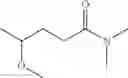
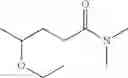
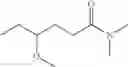
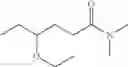

Sources:
- United States Patent and Trademark Office - verify current appl. status at the USPTO↗
Recent applications in this class:
- » 20250143290 2025-05-08
AGROCHEMICAL COMPOSITION COMPRISING AT LEAST ONE AGROCHEMICAL ACTIVE COMPONENT AND A SOLVENT - » 20250120392 2025-04-17
High Osmolarity Antimicrobial Composition Containing One or More Organic Solvents - » 20250120391 2025-04-17
BIOCIDAL PRODUCT WITH LUMINESCENT MARKER ADDITIVE AND APPLICATION OF SAME ON NON-POROUS HARD SURFACES - » 20250057153 2025-02-20
Maleated Natural Oil Derivatives As Agrochemical Inert Ingredients - » 20250031691 2025-01-30
STORAGE STABLE GLUFOSINATE FORMULATION - » 20250024834 2025-01-23
Herbicide Formulation - » 20250000085 2025-01-02
DRIFT REDUCTION ADJUVANT COMPOSITIONS AND METHODS OF USING SAME - » 20250000084 2025-01-02
DRIFT REDUCTION ADJUVANT COMPOSITIONS AND METHODS OF USING SAME - » 20240365780 2024-11-07
MICROBIAL INOCULANT COMPOSITIONS AND METHODS - » 20240276977 2024-08-22
MICROBIAL INOCULANT COMPOSITIONS AND METHODS
Recent applications for this Assignee:
- » 20250153145 2025-05-15
CERIUM- AND ZIRCONIUM-BASED MIXED OXIDES - » 20220361488 2022-11-17
Agricultural pesticide compositions - » 20220340841 2022-10-27
COPOLYMER COMPRISING UNITS OF TYPE A DERIVING FROM CARBOXYLIC ACID MONOMERS AND UNITS OF TYPE B DERIVING FROM SULFONIC ACID MONOMERS - » 20220306480 2022-09-29
Precipitated silica and process for its manufacture - » 20220098476 2022-03-31
Modified phosphors and compositions thereof - » 20220046916 2022-02-17
Stable high-load herbicidal compositions comprising mixed amine oxides - » 20210253491 2021-08-19
Stabilized DCD and/or alkyl thiophosphoric triamide solvent systems and use in agricultural applications - » 20210115256 2021-04-22
FLUXING AGENTS FOR HOT SURFACE DRESSINGS - » 20210114931 2021-04-22
INTERFACE AGENTS FOR THE PREPARATION OF COLD ROAD SURFACINGS - » 20210087068 2021-03-25
Precipitated silica and process for its manufacture