CLOTHING ADUSTMENT DEVICE
US20150208769A1
2015-07-30
14/605,770
2015-01-26
Abstract:
A clothing adjustment device. The clothing adjustment device has a male buckle piece with a protruding peg, and a female belt piece, with passages for the peg. The belt piece passes through a slot in the buckle, is positioned with a peg passage over a peg, and the peg is pressed into engagement with the peg passage. The belt piece is a short section which typically does not go around the waist if used as a belt.
Interested in similar patents?
Get notified when new applications in this technology area are published.
Classification:
A44B11/22 » CPC main
Buckles; Similar fasteners for interconnecting straps or the like, e.g. for safety belts engaging holes or the like in strap Buckle with fixed prong
Description
PRIORITY/CROSS-REFERENCE TO RELATED APPLICATIONS
This application claims the benefit of U.S. Provisional Application No. 61/931,372, filed Jan. 24, 2014 the disclosure of which is incorporated by reference.
TECHNICAL FIELD
The presently disclosed technology relates to adjustment straps for clothing, and more specifically, to an adjustment strap for clothing which is generally flat and has no moving parts.
BACKGROUND
Belt buckle, strap adjusters and fastener systems are an important clothing accessory for utilitarian, fashion, safety, and other desirable purposes. To improve on the typical belt buckle it is desirable to make the buckle as flat (two dimensional) as possible and easier to use, yet fasten securely. Adjustable belts are used on straps, as belts at the waist of garments, to adjust cuffs, and sizes of many parts of garments.
SUMMARY OF THE DISCLOSURE
The purpose of the Abstract is to enable the public, and especially the scientists, engineers, and practitioners in the art who are not familiar with patent or legal terms or phraseology, to determine quickly from a cursory inspection, the nature and essence of the technical disclosure of the application. The Abstract is neither intended to define the inventive concept(s) of the application, which is measured by the claims, nor is it intended to be limiting as to the scope of the inventive concept(s) in any way.
The disclosed technology is a belt or strap adjustment device, which could be used to adjust straps, a belt, a strap, or other adjustable closures. As an example, the disclosed technology will be described as a way to adjust a belt in clothing such as pants, like a belt and belt buckle. The disclosed technology will be described as a belt and a belt buckle, but any adjustable belt or strap would also be within the inventive concept of the technology. The belt and belt buckle together is a device which utilizes two pieces which may be attached to a garment, such as at the top edge of a pair of pants. The two pieces are designated a male buckle piece and a female belt piece. The female belt piece has a first end and a second end, with an anchor in the first end, and with one or preferably multiple peg passages defined in the elongated body of the female belt piece. The anchor may be a slot or hole, which is secured to the article of clothing. The anchor may be a slot which is transverse to the long axis of the female belt piece. The female belt piece may be anchored by an anchor strap which attaches to the anchor slot at one end and is sewn into the garment at the other end, such as in a region along the edge of the waistband of pants.
The male buckle piece can be any number of shapes, but is typically a generally rectangular piece, sized to fit along the edge of the garment, such as along the edge of the waistband of pants. The male buckle piece has an interior U-shape void, with the void defining a tab formed of the material of the male buckle piece. The tab is surrounded by the U-shape void and being of a flexible material is able to flex to a degree. The need to flex makes plastic a good material for both of the buckle pieces.
On the tab of the male buckle piece is positioned a protruding peg, which is configured to engage one of the peg passages of the female belt piece.
To be used as a buckling system such as for pants, the second end of the female belt piece passes through the U-shaped void of the male buckle piece, under the tab and peg, and at a selected position the peg of the male buckle piece is pressed into engagement with one of the peg passages of the female belt piece. In this manner the girth of the garment is adjustable, and can be locked in place.
The female belt piece can go all the way around a person's waist, and it can also be just a short section of strapping which is on one or both sides of a user's body. Thus it can have two buckles over the hip area or in any place in circumference of the waist. In one embodiment, the disclosed belt adjustment device is built into a tubular passage adjacent the waist belt of pants.
The protruding peg on the tab of the male buckle piece can be oriented so that it projects towards the user's body when the garment is worn, or it can be oriented so that it projects away from the user's body when it is worn.
One way in which the anchor slot in the female belt piece is attached to the garment is by an anchor strap. The anchor strap would pass through the anchor slot in the female belt piece, and at the other end would be sewn into a fixed position on the waist of the garment.
Besides being utilized as a buckling system in the waistband of garments, the disclosed belt adjustment device can be utilized in other areas of garment construction. For instance it can be used for the closure of the cuffs of gloves, it can be used to close shoes over a user's feet, it can be used to secure boots on a user's feet, and it can be used to secure the bottom of jackets and shirts, or to adjust straps, as well as to secure jackets and shirts along their seams. One preferred position of the belt adjustment device of the disclosed technology is on a user's waist belt in motorcycle riding pants, preferably mounted at a position in front of the user's hips.
Still other features and advantages of the presently disclosed and claimed inventive concept(s) will become readily apparent to those skilled in this art from the following detailed description describing preferred embodiments of the inventive concept(s), simply by way of illustration of the best mode contemplated by carrying out the inventive concept(s). As will be realized, the inventive concept(s) is capable of modification in various obvious respects all without departing from the inventive concept(s). Accordingly, the drawings and description of the preferred embodiments are to be regarded as illustrative in nature, and not as restrictive in nature.
BRIEF DESCRIPTION OF THE DRAWINGS
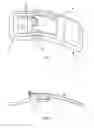
FIG. 1 is a perspective view of the male piece of the belt buckle.
FIG. 2 is a side view of the male piece of the belt buckle.
FIG. 3 is a view of the bottom side of the male piece of the belt buckle.
FIG. 4 is a perspective view of the female portion of the belt buckle.
FIG. 5 is a top view of the male and male portion of the belt buckle as they are mounted on a garment.
DETAILED DESCRIPTION OF THE PREFERRED EMBODIMENTS
While the presently disclosed inventive concept(s) is susceptible of various modifications and alternative constructions, certain illustrated embodiments thereof have been shown in the drawings and will be described below in detail. It should be understood, however, that there is no intention to limit the inventive concept(s) to the specific form disclosed, but, on the contrary, the presently disclosed and claimed inventive concept(s) is to cover all modifications, alternative constructions, and equivalents falling within the spirit and scope of the inventive concept(s) as defined in the claims.
A preferred embodiment of the figures is shown in FIGS. 1-5. FIG. 1 shows the male buckle piece 12 of the adjustment device 10. Shown is the outer periphery 32 of the male piece, the U shaped void 34 and the tab 36. The tab 36 is contiguous with the material of the male buckle piece 12, and provides a flexing attachment point 40 so that the tab 36 can move up and down under thumb pressure. A thumb lift 44 is provided which allows the user to lift up on the male buckle piece 12.
Shown in FIG. 2 is a side view of the male buckle piece 12, which shows a peg 38, which can have a ridge 42 on the end of the peg. The peg 38 is generally rectangular and fits inside a peg passage 30 on the female belt piece 14. Shown in FIG. 3 is the underside of the male buckle piece 12, which shows the tab 36, the peg 38, and the ridge on the peg 42. Also shown is the thumb lift 44. Also shown is the U shaped void 34 through which the female belt piece 14 extends.
FIG. 4 shows the female belt piece 14, which has a first end 16, a second end 18, a bottom side 20, and a top side 22. Shown in FIG. 4 is the anchor point 24 which may be an anchor slot 26, as shown. Peg passages 30 are shown in the female belt piece, which has a longitudinal axis L.
FIG. 5 shows the adjustment device 10, with a male buckle piece 12 and a female belt piece 14. The female belt piece 14 may be anchored to an article of clothing 28, by use of the anchor slot 26. In this case, the anchor slot is secured to the article of clothing 28 by an attachment strap 46. By use of the attachment strap 46 or something similar, the female belt piece 14 does not have to encircle a user's waist by 360 degrees. It can be placed in a position for taking up the length of a garment at any point desired, such as along the waistline of a garment.
While certain preferred embodiments are shown in the figures and described in this disclosure, it is to be distinctly understood that the presently disclosed inventive concept(s) is not limited thereto but may be variously embodied to practice within the scope of the following claims. From the foregoing description, it will be apparent that various changes may be made without departing from the spirit and scope of the disclosure as defined by the following claims.
Claims
I claim:1. A belt adjustment device comprising
a female belt piece comprising a length, a width, a thickness, a longitudinal axis, and a first end, a second end, a top side, and a bottom side, said first end of said female belt piece comprising an anchor point for anchoring said female belt piece to an article of clothing;
said second end of said female belt piece further defining at least one peg passage in said female belt piece; and
a male buckle piece having an outer periphery, and defining an inner U shaped void in said male buckle piece, with a tab formed of material of said male buckle piece surrounded by said u shaped void, with said tab having a protruding peg configured to engage said one or more peg passages in said female belt piece, with said tab having a flexing attachment to said male buckle piece;
with said male buckle piece and female belt piece attached to a garment and configured to be released, joined and adjusted by a user in order to connect said male buckle piece and said female belt pieces for adjusting said article of clothing.
2. The belt adjustment device of claim 1 in which said anchor point is a slot is a slot defined in said female belt piece, and attachment to said article of clothing by said
3. The belt adjustment device of claim 1 in which said female belt piece further comprises a plurality of peg passages, for providing multiple connection points to a user.
4. The belt adjustment device of claim 1 in which said anchor slot is anchored by an anchor strap to said garment.
5. The belt adjustment device of claim 1 in which said anchor slot is transverse to said long axis of said female belt piece.
6. The belt adjustment device of claim 1 in which said peg is generally cylindrical and comprises a ridge at a distal end of said peg.
7. The belt adjustment device of claim 1 in which said male buckle piece is generally curved to approximate a curved part of a user's body.
8. The belt adjustment device of claim 1 in which said male buckle piece is generally rectangular.
9. The belt adjustment device of claim 1 in which said peg is oriented to project toward a user's body.
10. A belt adjustment device comprising
a female belt piece comprising a length, a width, a thickness, a longitudinal axis, and a first end, a second end, a top side, and a bottom side, said first end of said female belt piece comprising an anchor point in the form of an anchor slot transverse to said long axis of said female belt piece, for anchoring said female belt piece to an article of clothing, with said anchor slot attached to said article of clothing by an anchor strap;
said second end of said female belt piece further defining a plurality of peg passages in said female belt piece; and
a male buckle piece having an outer periphery, and defining an inner U shaped void in said male buckle piece, with a tab formed of material of said male buckle piece surrounded by said u shaped void, with said tab having a protruding peg configured to engage said one or more peg passages in said female belt piece, with said tab having a flexing connection to said male buckle piece, and with said peg having a ridge at a distal end of said peg;
with said male buckle piece and female belt piece attached to a garment and configured to be released, joined and adjusted by a user in order to connect said male buckle piece and said female belt pieces for adjusting said article of clothing.
Images & Drawings included:



Sources:
- United States Patent and Trademark Office - verify current appl. status at the USPTO↗
Recent applications in this class:
- » 20220304427 2022-09-29
ULTRA-SLIM FASTENER - » 20210145129 2021-05-20
BELTS AND STRAPS EQUIPPED WITH A DEVICE FOR FASTENING THE EXCESS PART - » 20190191824 2019-06-27
Nonmetallic Belt Buckle Assembly - » 20190104809 2019-04-11
MODULAR LOCKING CONNECTORS FOR PORTABLE HARNESS SYSTEMS, METHODS AND DEVICES - » 20180279723 2018-10-04
Apparatus for fastening straps, method to fasten straps - » 20180092437 2018-04-05
Aquaculture basket clip and line protector - » 20170325549 2017-11-16
Strap buckle structure - » 20170150787 2017-06-01
Exchangeable belt buckle - » 20170065035 2017-03-09
Leather belt - » 20150257493 2015-09-17
Belt fastener system including a buckle mechanism