Force closer
US20150233160A1
2015-08-20
14/180,354
2014-02-14
✅ Patent granted
US 9,487,979 B2
2016-11-08
-
-
Carlos Lugo
2034-02-26
Abstract:
Placing a newborn in a crib and hoping for a full night of sleep can be difficult enough, but to have your child start crying because of the ‘click’ of a closing door latch can be frustrating.
Your five year old is having a ‘play date’ and their friend decides to press the button that locks the door to their room. Asking them to open the door and not getting a response can put you in a frenzy looking for something to unlock the door. Cover the door handle or replace the latch?
In both cases, something that could close the door quietly and without allowing it to lock would be ideal. The solution? The Force Closer. Replace the locking spring latch and strike plate with something designed to fit easily and exactly in its place. With a magnet in the door and a steel slug in the door frame, or a Force Closer in both locations for more closing power, there is a new way to close a door.
Applicant:
Interested in similar patents?
Get notified when new applications in this technology area are published.
Classification:
E05C19/16 » CPC main
Other devices specially designed for securing wings, e.g. with suction cups Devices holding the wing by magnetic or electromagnetic attraction
E05B17/0045 » CPC further
Accessories in connection with locks Silencing devices; Noise reduction
E05B17/00 IPC
Accessories in connection with locks
E05B63/0043 » CPC further
Locks or fastenings with special structural characteristics Dummy or simulated locks; Cover elements without lock function
Y10T292/11 » CPC further
Closure fasteners Magnetic
E05B63/00 IPC
Locks or fastenings with special structural characteristics or for special use
E05B63/00 IPC
Locks or fastenings with special structural characteristics
E05B15/02 » CPC further
Other details of locks; Parts for engagement by bolts of fastening devices Striking-plates; Keepers; Bolt staples; Escutcheons
E05C17/56 IPC
Devices for holding wings open; Devices for limiting opening of wings or for holding wings open by a movable member extending between frame and wing; Braking devices, stops or buffers, combined therewith by magnetic or electromagnetic attraction or operated by electric or electromagnetic means
Description
FEDERALLY SPONSORED RESEARCH
N/A
SEQUENCE LISTING
N/A
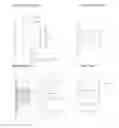
FIG. 1 Front Elevation: A view of the only exposed portion of a Force Closer once installed in the edge of a door opposite the side that includes the hinges, showing dimensions that match the typical cutout of a majority of interior doors (not including antique mortised latches). These dimensions should include variations including a 1⅛″ width and also squared corners.
FIG. 2 Side Elevation: The side view of a Force Closer consisting of a ⅛″ thick metal plate (typically brass, but may be another material including brass plated steel, or even plastic) with a ⅞″ diameter magnet of a varying length glued to said plate.
FIG. 3 Cutaway: A view showing the Force Closer in its intended position and its relation to the cutout of a typical interior residential door. The Force Closer has taken the position of a latch and this view does not show the door handle (which would be located in the 2⅛″ diameter hole marked by ‘door handle cutout’).
FIG. 4 Plan: A top down view of an interior residential door showing a theoretical cutaway view (FIG. 3) of the location of a Force Closer installed in the door latch positions (only the ‘face’ of the Force Closer would be exposed when installed—see FIG. 1
SUMMARY
Two Force Closers installed together will hold the door closed. If the magnet of one Force Closer is replaced with a ⅞″ diameter steel slug, it will still operate in a similar manner.
This latch replacement is created by adhering a magnet to a base plate (FIG. 2), both of which have dimensions (FIG. 1) sized to fit exactly the cutout made for a door latch, and found on most residential doors. It is intended as an improvement or replacement of mechanical latches and can be installed easily on new doors in conjunction with a door handle, or installed on doors with existing latches by removing the door handle, removing the door latch, installing the Force Closer (FIG. 3), then reinstalling the door handle. With the Force Closer installed, the door can be closed quietly simply by pushing it towards the closed position. Then the Force Closer will hold the door closed even if a gust of wind or a small animal pushed on it. This is beneficial in the case of a babies nursery because the door can be opened hands free (with the push of a hip) and closed quietly (so as not to disturb a sleeping baby) and still keep out small pets. A Force Closer would be beneficial on a childs bedroom door because it would prevent the door from being locked from the inside.
Claims
1. The Force Closer is the only magnetic closure designed as a latch replacement and sized to fit in the cutouts found in residential interior doors.
The ‘face’ or baseplate of the Force Closer can have varying widths, rounded or squared corners, and be made of varying materials whether metal or plastic.
The ‘body’ of the Force Closer can be made of steel or a magnet with any degree of magnetism.
Images & Drawings included:

Sources:
- United States Patent and Trademark Office - verify current appl. status at the USPTO↗
Similar patent applications:
- » 20200337218
Seeding machine including variable force trench closer - » 20170096848
Apparatus and method for control of spring force in a door closer or operator - » 20160097230
Apparatus and method for rotating tube adjustment and visually indicating spring force in a door operator or closer - » 20150322705
Door closer provided with unit for adding door-closing force
Recent applications in this class:
- » 20250084680 2025-03-13
OBJECT WITH MAGNETIC SWITCH MECHANISM - » 20250020008 2025-01-16
ENTRYWAY PANEL WITH MAGNETIC CLOSURE AND METHODS OF INSTALLATION - » 20240218717 2024-07-04
Magnetic Locking System for a Movable Door or Window - » 20240068283 2024-02-29
Magnetic door closure - » 20230399881 2023-12-14
SEGMENTED CLOSURE SYSTEM - » 20230147481 2023-05-11
MAGNETIC DOOR LOCK CONTROL SYSTEM AND METHOD - » 20210310285 2021-10-07
WATER-TIGHT SEALING SYSTEM FOR A BATHTUB DOOR - » 20210180376 2021-06-17
Pet door apparatus - » 20210062559 2021-03-04
Filter interconnects utilizing magnetic shear force generated by coded polymagnets - » 20200270920 2020-08-27
Vehicle interior component