Compound and organic electroluminescence device comprising same
US20150236271A1
2015-08-20
14/420,539
2013-08-07
✅ Patent granted
US 9,905,777 B2
2018-02-27
WO; PCT/KR2013/007138; 20130807
WO; WO2014/025209; 20140213
Robert S Loewe
Sughrue Mion, PLLC
2034-08-12
Abstract:
The present invention relates to a novel compound and an organic electroluminescence device including the same, and the compound according to the present invention may be used in an organic material layer, preferably a light-emitting layer of an organic electroluminescence device, thereby enhancing the light-emitting efficiency, driving voltage, lifespan, and the like of the organic electroluminescence device.
Inventors:
- Tae-Hyung Kim 39 🇰🇷 Yongin-si, South Korea
- Eun Jung Lee 46 🇰🇷 Seoul, South Korea
- Hoe Moon Kim 4 🇰🇷 Suwon-si, South Korea
- Ho Cheol Park 7 🇰🇷 Suwon-si, South Korea
- Chang Jun Lee 12 🇰🇷 Ansan-si, South Korea
- Jin Yong Shin 6 🇰🇷 Yongin-si, South Korea
- Young Mi Beak 6 🇰🇷 Yongin-si, South Korea
- In Hyuk Lee 3 🇰🇷 Yongin-si, South Korea
Assignee:
- DOOSAN CORPORATION 108 🇰🇷 Seoul, South Korea
Applicant:
Interested in similar patents?
Get notified when new applications in this technology area are published.
Classification:
H01L51/0072 » CPC main
Solid state devices using organic materials as the active part, or using a combination of organic materials with other materials as the active part; Processes or apparatus specially adapted for the manufacture or treatment of such devices, or of parts thereof; Selection of organic semiconducting materials, e.g. organic light sensitive or organic light emitting materials; Macromolecular systems with low molecular weight, e.g. cyanine dyes, coumarine dyes, tetrathiafulvalene aromatic compounds comprising a hetero atom, e.g.: N,P,S; Polycyclic condensed heteroaromatic hydrocarbons comprising only nitrogen in the heteroaromatic polycondensed ringsystem, e.g. phenanthroline, carbazole
C07D495/04 » CPC further
Heterocyclic compounds containing in the condensed system at least one hetero ring having sulfur atoms as the only ring hetero atoms in which the condensed system contains two hetero rings Ortho-condensed systems
C07F7/0816 » CPC further
Compounds containing elements of Groups 4 or 14 of the Periodic System; Silicon compounds; Compounds having one or more C—Si linkages; Compounds with Si-C or Si-Si linkages comprising at least one atom selected from the elements N, O, halogen, S, Se or Te comprising a heterocyclic ring said ring comprising Si as a ring atom
H01L51/0058 » CPC further
Solid state devices using organic materials as the active part, or using a combination of organic materials with other materials as the active part; Processes or apparatus specially adapted for the manufacture or treatment of such devices, or of parts thereof; Selection of organic semiconducting materials, e.g. organic light sensitive or organic light emitting materials; Macromolecular systems with low molecular weight, e.g. cyanine dyes, coumarine dyes, tetrathiafulvalene; Polycyclic condensed aromatic hydrocarbons, e.g. anthracene containing more than one polycyclic condensed aromatic rings, e.g. bis-anthracene
H01L51/0067 » CPC further
Solid state devices using organic materials as the active part, or using a combination of organic materials with other materials as the active part; Processes or apparatus specially adapted for the manufacture or treatment of such devices, or of parts thereof; Selection of organic semiconducting materials, e.g. organic light sensitive or organic light emitting materials; Macromolecular systems with low molecular weight, e.g. cyanine dyes, coumarine dyes, tetrathiafulvalene aromatic compounds comprising a hetero atom, e.g.: N,P,S comprising only nitrogen as heteroatom
H01L51/0094 » CPC further
Solid state devices using organic materials as the active part, or using a combination of organic materials with other materials as the active part; Processes or apparatus specially adapted for the manufacture or treatment of such devices, or of parts thereof; Selection of organic semiconducting materials, e.g. organic light sensitive or organic light emitting materials Silicon-containing organic semiconductors
C09K2211/107 » CPC further
Chemical nature of organic luminescent or tenebrescent compounds; Non-macromolecular compounds; Heterocyclic compounds characterised by ligands containing three nitrogen atoms as heteroatoms with other heteroatoms
C09K2211/1062 » CPC further
Chemical nature of organic luminescent or tenebrescent compounds; Non-macromolecular compounds; Heterocyclic compounds characterised by ligands containing three nitrogen atoms as heteroatoms with oxygen
C09K2211/1066 » CPC further
Chemical nature of organic luminescent or tenebrescent compounds; Non-macromolecular compounds; Heterocyclic compounds characterised by ligands containing three nitrogen atoms as heteroatoms with sulfur
C09K2211/1074 » CPC further
Chemical nature of organic luminescent or tenebrescent compounds; Non-macromolecular compounds; Heterocyclic compounds characterised by ligands containing more than three nitrogen atoms as heteroatoms
H01L51/5206 » CPC further
Solid state devices using organic materials as the active part, or using a combination of organic materials with other materials as the active part; Processes or apparatus specially adapted for the manufacture or treatment of such devices, or of parts thereof specially adapted for light emission, e.g. organic light emitting diodes [OLED] or polymer light emitting devices [PLED]; Details of devices; Electrodes Anodes, i.e. with high work-function material
H01L51/00 IPC
Solid state devices using organic materials as the active part, or using a combination of organic materials with other materials as the active part; Processes or apparatus specially adapted for the manufacture or treatment of such devices, or of parts thereof
C07D487/04 » CPC further
Heterocyclic compounds containing nitrogen atoms as the only ring hetero atoms in the condensed system, not provided for by groups - in which the condensed system contains two hetero rings Ortho-condensed systems
C07D491/048 » CPC further
Heterocyclic compounds containing in the condensed ring system both one or more rings having oxygen atoms as the only ring hetero atoms and one or more rings having nitrogen atoms as the only ring hetero atoms, not provided for by groups - , , or in which the condensed system contains two hetero rings; Ortho-condensed systems with only one oxygen atom as ring hetero atom in the oxygen-containing ring the oxygen-containing ring being five-membered
C07F7/08 IPC
Compounds containing elements of Groups 4 or 14 of the Periodic System; Silicon compounds Compounds having one or more C—Si linkages
C07D517/04 » CPC further
Heterocyclic compounds containing in the condensed system at least one hetero ring having selenium, tellurium, or halogen atoms as ring hetero atoms in which the condensed system contains two hetero rings Ortho-condensed systems
C07D403/14 » CPC further
Heterocyclic compounds containing two or more hetero rings, having nitrogen atoms as the only ring hetero atoms, not provided for by group containing three or more hetero rings
C09K11/06 » CPC further
Luminescent, e.g. electroluminescent, chemiluminescent materials containing organic luminescent materials
H01L51/0052 » CPC further
Solid state devices using organic materials as the active part, or using a combination of organic materials with other materials as the active part; Processes or apparatus specially adapted for the manufacture or treatment of such devices, or of parts thereof; Selection of organic semiconducting materials, e.g. organic light sensitive or organic light emitting materials; Macromolecular systems with low molecular weight, e.g. cyanine dyes, coumarine dyes, tetrathiafulvalene Polycyclic condensed aromatic hydrocarbons, e.g. anthracene
H01L51/5016 » CPC further
Solid state devices using organic materials as the active part, or using a combination of organic materials with other materials as the active part; Processes or apparatus specially adapted for the manufacture or treatment of such devices, or of parts thereof specially adapted for light emission, e.g. organic light emitting diodes [OLED] or polymer light emitting devices [PLED]; Electroluminescent [EL] layer Triplet emission
H01L51/5056 » CPC further
Solid state devices using organic materials as the active part, or using a combination of organic materials with other materials as the active part; Processes or apparatus specially adapted for the manufacture or treatment of such devices, or of parts thereof specially adapted for light emission, e.g. organic light emitting diodes [OLED] or polymer light emitting devices [PLED]; Carrier transporting layer Hole transporting layer
H01L51/5088 » CPC further
Solid state devices using organic materials as the active part, or using a combination of organic materials with other materials as the active part; Processes or apparatus specially adapted for the manufacture or treatment of such devices, or of parts thereof specially adapted for light emission, e.g. organic light emitting diodes [OLED] or polymer light emitting devices [PLED] Carrier injection layer
H01L51/5221 » CPC further
Solid state devices using organic materials as the active part, or using a combination of organic materials with other materials as the active part; Processes or apparatus specially adapted for the manufacture or treatment of such devices, or of parts thereof specially adapted for light emission, e.g. organic light emitting diodes [OLED] or polymer light emitting devices [PLED]; Details of devices; Electrodes Cathodes, i.e. with low work-function material
H01L2251/308 » CPC further
Indexing scheme relating to organic semiconductor devices covered by group; Materials; Inorganic materials; Oxides, e.g. metal oxides; Transparent conductive oxides [TCO] composed of indium oxides, e.g. ITO
H01L51/52 IPC
Solid state devices using organic materials as the active part, or using a combination of organic materials with other materials as the active part; Processes or apparatus specially adapted for the manufacture or treatment of such devices, or of parts thereof specially adapted for light emission, e.g. organic light emitting diodes [OLED] or polymer light emitting devices [PLED] Details of devices
H01L51/50 IPC
Solid state devices using organic materials as the active part, or using a combination of organic materials with other materials as the active part; Processes or apparatus specially adapted for the manufacture or treatment of such devices, or of parts thereof specially adapted for light emission, e.g. organic light emitting diodes [OLED] or polymer light emitting devices [PLED]
Description
TECHNICAL FIELD
The present invention relates to a novel compound and an organic electroluminescence device including the same.
BACKGROUND ART
When voltage is applied between two electrodes of the organic electroluminescence device, holes are injected into the organic material layer at the anode and electrons are injected into the organic material layer at the cathode, the injected holes and electrons meet each other to form an exciton, and when the formed exciton falls down to a bottom state, light is emitted. Materials used as the organic material layer may be classified into a light-emitting material, a hole injection material, a hole transporting material, an electron transporting material, an electron injection material, and the like according to the function.
The light-emitting materials may be divided into blue, green, and red light-emitting materials according to the light-emitting color, and into yellow and orange light-emitting materials required for implementing a much better natural color. Further, a host/dopant system may be used as a light-emitting material in order to enhance color purity and light-emitting efficiency through an energy transfer.
Dopant materials may be divided into a fluorescent dopant using an organic material and a phosphorescent dopant in which a metal complex compound including heavy atoms such as Ir and Pt is used. Since the development of the phosphorescent dopant may theoretically enhance light-emitting efficiency by up to 4 times compared to the development of the fluorescent dopant, studies on not only phosphorescent dopants, but also phosphorescent hosts have been conducted.
As the hole transporting material, the hole injection material, the electron transporting layer, and the like, NPB, BCP, Alq3 and the like have been widely known until now, and as the light-emitting material, anthracene derivatives have been used. In particular, metal complex compounds including Ir and having a great advantage in terms of enhancing the efficiency, such as Firpic, Ir(ppy)3 and (acac)Ir(btp)2, are used as blue, green and red phosphorescent dopant materials, and CBP is used as a phosphorescent host material. In addition, the official gazette of Korean Patent Application Laid-Open No. 2012-0020816 discloses an organic electroluminescence device which uses an indolo benzofluoranthene derivative as the host material.
However, since light-emitting materials in the related art have good light-emitting characteristics, but have low glass transition temperature, and thus poor thermal stability, these materials fall short of a level that sufficiently satisfies the lifespan of the organic electroluminescence device.
DISCLOSURE
Technical Problem
In order to solve the aforementioned problems, an object of the present invention is to provide a novel compound which may enhance the efficiency, lifespan, stability, and the like of an organic electroluminescence device, and an organic electroluminescence device including the compound.
Technical Solution
In order to achieve the aforementioned object, the present invention provides a compound represented by the following Formula 1.
In Formula 1,
A1 to A4 are each independently CR1 or N, and here, at least one thereof is N, and B1 to B4 are each independently CR2 or N,
R1 and R2 are each independently selected from the group consisting of hydrogen, deuterium, halogen, a cyano group, a nitro group, an amino group, a C1 to C40 alkyl group, a C2 to C40 alkenyl group, a C2 to C40 alkynyl group, a C3 to C40 cycloalkyl group, a heterocycloalkyl group having 3 to 40 nuclear atoms, a C6 to C60 aryl group, a heteroaryl group having 5 to 60 nuclear atoms, a C1 to C40 alkyloxy group, a C6 to C60 aryloxy group, a C1 to C40 alkylsilyl group, a C6 to C60 arylsilyl group, a C1 to C40 alkylboron group, a C6 to C60 arylboron group, a C6 to C60 arylphosphine group, a C6 to C60 arylphosphine oxide group and a C6 to C60 arylamine group, or may form a fused ring with an adjacent group.
L is a single bond, or a C6 to C30 arylene group or a heteroarylene group having 5 to 30 nuclear atoms,
Cy is a compound represented by the following Formula 2, and
In Formula 2,
Y1 to Y4 are each independently CR5 or N, and at least one of Y1 and Y2, Y2 and Y3 or Y3 and Y4 forms a fused ring represented by the following Formula 3;
In Formula 3,
the dotted line means a site where a fusion (condensation) with the compound of Formula 2 occurs, and Y5 to Y8 are each independently CR6 or N,
X1 and X2 are each independently selected from the group consisting of O, S, Se, N(Ar1), C(Ar2)(Ar3) and Si(Ar4)(Ar5), and here, at least one of X1 and X2 is N(Ar1), and
R3 to R6 are each independently selected from the group consisting of hydrogen, deuterium, halogen, a cyano group, a nitro group, an amino group, a C1 to C40 alkyl group, a C2 to C40 alkenyl group, a C2 to C40 alkynyl group, a C3 to C40 cycloalkyl group, a heterocycloalkyl group having 3 to 40 nuclear atoms, a C6 to C60 aryl group, a heteroaryl group having 5 to 60 nuclear atoms, a C1 to C40 alkyloxy group, a C6 to C60 aryloxy group, a C1 to C40 alkylsilyl group, a C6 to C60 arylsilyl group, a C1 to C40 alkylboron group, a C6 to C60 arylboron group, a C6 to C60 arylphosphine group, a C6 to C60 arylphosphine oxide group and a C6 to C60 arylamine group, or may form a fused ring with an adjacent group,
Ar1 to Ar5 are each independently selected from the group consisting of hydrogen, deuterium, halogen, a cyano group, a nitro group, a C1 to C40 alkyl group, a C2 to C40 alkenyl group, a C2 to C40 alkynyl group, a C3 to C40 cycloalkyl group, a heterocycloalkyl group having 3 to 40 nuclear atoms, a C6 to C60 aryl group, a heteroaryl group having 5 to 60 nuclear atoms, a C1 to C40 alkyloxy group, a C6 to C60 aryloxy group, a C1 to C40 alkylsilyl group, a C6 to C60 arylsilyl group, a C1 to C40 alkylboron group, a C6 to C60 arylboron group, a C6 to C60 arylphosphine group, a C6 to C60 arylphosphine oxide group and a C6 to C60 arylamine group,
the alkyl group, the alkenyl group, the alkynyl group, the cycloalkyl group, the heterocycloalkyl group, the aryl group, the heteroaryl group, the alkyloxy group, the aryloxy group, the alkylsilyl group, the arylsilyl group, the alkylboron group, the arylboron group, the arylphosphine group, the arylphosphine oxide group and the arylamine group of R1 to R6 and Ar1 to Ar5 may be each independently substituted with one or more selected from the group consisting of deuterium, halogen, a cyano group, a nitro group, an amino group, a C1 to C40 alkyl group (preferably a C1 to C10 alkyl group), a C2 to C40 alkenyl group (preferably a C2 to C10 alkenyl group), a C2 to C40 alkynyl group (preferably a C2 to C10 alkynyl group), a C3 to C40 cycloalkyl group (preferably a C3 to C18 cycloalkyl group), a heterocycloalkyl group having 3 to 40 nuclear atoms (preferably a heterocycloalkyl group having 3 to 18 nuclear atoms), a C6 to C40 aryl group (preferably a C6 to C18 aryl group), a heteroaryl group having 5 to 40 nuclear atoms (preferably a heteroaryl group having 5 to 18 nuclear atoms), C1 to C40 alkyloxy group (preferably a C1 to C10 alkyloxy group), a C6 to C60 aryloxy group (preferably a C6 to C18 aryloxy group), a C1 to C40 alkylsilyl group (preferably a C1 to C10 alkylsilyl group), a C6 to C60 arylsilyl group (preferably a C6 to C18 arylsilyl group), a C1 to C40 alkyl boron group (preferably a C1 to C10 alkyl boron group), a C6 to C60 aryl boron group (preferably a C6 to C18 aryl boron group), a C6 to C60 arylphosphone group (preferably C6 to C18 arylphosphine group), a C6 to C60 arylphosphine oxide group (preferably a C6 to C18 arylphosphine oxide group) and a C6 to C60 arylamine group (preferably a C6 to C20 arylamine group), and in this case, a plurality of substituents may be the same as or different from each other, and
L is linked to any one of A1 to A4 and B1 to B4 of Formula 1, and simultaneously to any one of X1, X2, R3, R4 and Y1 to Y8 of Formula 2.
The alkyl used in the present invention means a monovalent functional group obtained by removing a hydrogen atom from a linear or branched, saturated hydrocarbon having 1 to 40 carbon atoms, and non-limiting examples thereof include methyl, ethyl, propyl, isobutyl, sec-butyl, pentyl, iso-amyl, hexyl, and the like.
The alkenyl used in the present invention means a monovalent functional group obtained by removing a hydrogen atom from a linear or branched, unsaturated hydrocarbon having 2 to 40 carbon atoms, which has one or more carbon-carbon double bonds. Non-limiting examples thereof include vinyl, allyl, isopropenyl, 2-butenyl, and the like.
The alkynyl used in the present invention means a monovalent functional group obtained by removing a hydrogen atom from a linear or branched, unsaturated hydrocarbon having 2 to 40 carbon atoms, which has one or more carbon-carbon triple bonds. Non-limiting examples thereof include ethynyl, 2-propynyl, and the like.
The cycloalkyl used in the present invention means a monovalent functional group obtained by removing a hydrogen atom from a monocyclic or polycyclic non-aromatic hydrocarbon (saturated cyclic hydrocarbon) having 3 to 40 carbon atoms. Non-limiting examples thereof include cyclopropyl, cyclopentyl, cyclohexyl, norbornyl, adamantine, and the like.
The heterocycloalkyl used in the present invention means a monovalent functional group obtained by removing a hydrogen atom from a non-aromatic hydrocarbon (saturated cyclic hydrocarbon) having 3 to 40 nuclear atoms, and one or more carbons in the ring, preferably 1 to 3 carbons, are substituted with a heteroatom such as N, O, or S. Non-limiting examples thereof include morpholine, piperazine, and the like.
The aryl used in the present invention means a monovalent functional group obtained by removing a hydrogen atom from an aromatic hydrocarbon having 6 to 60 carbon atoms of a single ring or a combination of two or more rings. In this case, the two or more rings may be simply pendant to each other or pendant to each other in a fused form. Non-limiting examples thereof include phenyl, biphenyl, triphenyl, terphenyl, naphthyl, fluorenyl, phenanthryl, anthracenyl, indenyl, and the like.
The heteroaryl used in the present invention is a monovalent functional group obtained by removing a hydrogen atom from a monoheterocyclic or polyheterocyclic aromatic hydrocarbon having 5 to 60 nuclear atoms, and one or more carbons in the ring, preferably 1 to 3 carbons are substituted with a heteroatom such as nitrogen (N), oxygen (0), sulfur (S), or selenium (Se). In this case, the two or more rings may be simply pendant to each other or pendant to each other in a fused form in the heteroaryl, and furthermore, the heteroaryl may also include a fused form with an aryl group. Non-limiting examples of the heteroaryl include: a six-membered monocyclic ring such as pyridyl, pyrazinyl, pyrimidinyl, pyridazinyl, and triazinyl; a polycyclic ring such as phenoxathienyl, indolizinyl, indolyl, purinyl, quinolyl, benzothiazole, and carbazolyl; and 2-furanyl, N-imidazolyl, 2-isoxazolyl, 2-pyridinyl, 2-pyrimidinyl, and the like.
The alkyloxy used in the present invention means a monovalent functional group represented by RO—, and R is an alkyl having 1 to 40 carbon atoms, and may include a linear, branched, or cyclic structure. Non-limiting examples of the alkyloxy include methoxy, ethoxy, n-propoxy, 1-propoxy, t-butoxy, n-butoxy, pentoxy, and the like.
The aryloxy used in the present invention means a monovalent functional group represented by R′O—, and R′ is an aryl having 6 to 60 carbon atoms. Non-limiting examples of the aryloxy include phenyloxy, naphthyloxy, diphenyloxy, and the like.
The alkylsilyl used in the present invention means a silyl substituted with an alkyl having 1 to 40 carbon atoms, the arylsilyl means a silyl substituted with an aryl having 6 to 60 carbon atoms, and the arylamine means an amine substituted with an aryl having 6 to 60 carbon atoms.
The fused ring used in the present invention means a fused aliphatic ring, a fused aromatic ring, a fused heteroaliphatic ring, a fused heteroaromatic ring, or a combined form thereof.
Further, the present invention provides an organic electroluminescence device including: an anode; a cathode; and an organic material layer having one or more layers interposed between the anode and the cathode, in which at least one of the organic material layers having one or more layers includes the compound represented by Formula 1.
Here, the organic material layer including the compound represented by Formula 1 is selected from the group consisting of a hole injection layer, a hole transporting layer, and a light-emitting layer, and is preferably a light-emitting layer. In this case, the compound represented by Formula 1 may be used as a phosphorescent host material of the light-emitting layer.
Advantageous Effects
The compound represented by Formula 1 according to the present invention has excellent thermal stability and phosphorescent characteristics, and thus may be applied to an organic material layer, preferably a light-emitting layer of an organic electroluminescence device. Therefore, when the light-emitting layer of the organic electroluminescence device includes the compound represented by Formula 1 as a phosphorescent host material, the efficiency (light-emitting efficiency and power efficiency), lifespan, brightness, and driving voltage of the device may be enhanced as compared to the case in which a host material in the related art is included, and furthermore, performance and lifespan of a full-color organic electroluminescence panel may be greatly enhanced.
BEST MODE
Hereinafter, the present invention will be described in detail.
1. Novel Compound
A novel compound according to the present invention has a basic structure in which an indole group fusion compound is bonded to a naphthalene derivative including nitrogen (N), and is represented by Formula 1.
The compound represented by Formula 1 according to the present invention has excellent phosphorescent characteristics and excellent electron and/or hole transporting capabilities, and thus may be used as a material for any one of a hole injection layer, a hole transporting layer, a light-emitting layer, an electron transporting layer, and an electron injection layer, which are the organic material layers of an organic electroluminescence device. The compound may be used preferably as a material for any one of a hole injection layer, a hole transporting layer, and a light-emitting layer, and more preferably as a material (particularly, a phosphorescent host material) for a light-emitting layer.
Specifically, the compound represented by Formula 1 according to the present invention is a compound into which various substituents are introduced and in which a naphthalene derivative including nitrogen (N) and an indole group fusion compound are combined, and since the mobility balance between holes and electrons may be controlled by bipolar characteristics which the compound has, the recombination efficiency of holes and electrons may be enhanced, thereby exhibiting excellent phosphorescent characteristics. Furthermore, the compound represented by Formula 1 according to the present invention may have a wide energy band gap (sky blue to red) because the energy level is controlled by various substituents introduced into a basic structure composed of a naphthalene derivative and an indole group fusion compound. Therefore, when the compound of Formula 1 according to the present invention is used in an organic electroluminescence device, phosphorescent characteristics of the device are improved, and simultaneously, hole injection capabilities and/or transporting capabilities, light-emitting efficiency, driving voltage, lifespan characteristics, and the like may be improved.
Further, the molecular weight of the compound represented by Formula 1 according to the present invention is significantly increased due to various substituents introduced into the basic structure, so that the glass transition temperature is enhanced, and accordingly, the compound represented by Formula 1 according to the present invention may have higher thermal stability than that of a material (for example, CBP [4,4-dicarbazolybiphenyl]) for the organic electroluminescence device in the related art.
Therefore, the compound according to the present invention may greatly contribute to the improvement of performance and the enhancement of lifespan, of the organic electroluminescence device, and furthermore, the enhancement of lifespan of the organic electroluminescence device may maximize the performance of a full color organic light-emitting panel.
In the compound represented by Formula 1 of the present invention, A1 to A4 of the naphthalene derivative including nitrogen (N) are each independently CR1 or N, and in this case, it is preferred that at least one thereof is nitrogen (N), and it is more preferred that two thereof are nitrogen (N). In addition, B1 to B4 are each independently CR2 or N, and it is preferred that all of B1 to B4 are CR2, or one of B1 to B4 is nitrogen (N).
Here, it is preferred that
which is a naphthalene derivative including nitrogen (N), is selected from the group consisting of structures represented by the following S-1 to S-30.
In the structures represented by S-1 to S-30, R1 and R2 are the same as those defined above, a plurality of R1's may be the same as or different from each other, and a plurality of R2's may also be the same as or different from each other.
In this case, in consideration of efficiency and lifespan characteristics of the organic electroluminescence device, it is preferred that R1 and R2 are selected from the group consisting of hydrogen, a C6 to C60 (preferably C6 to C25) aryl group, a heteroaryl group having 5 to 40 nuclear atoms (preferably 5 to 32 nuclear atoms), and a C6 to C60 (preferably C6 to C20) arylamine group.
More preferably, R1 and R2 may be each independently selected from the group consisting of hydrogen, or structures represented by the following A1 to A70.
Meanwhile, in the compound represented by Formula 1 according to the present invention, it is preferred that the compound represented by Formula 2 which corresponds to Cy is selected from the group consisting of compounds represented by the following Formulae 2a to 2f.
In Formulae 2a to 2f, X1, X2 and R3 to R6 are the same as those defined above. In this case, a plurality of R5's may be the same as or different from each other, and a plurality of R6's may also be the same as or different from each other.
Meanwhile, in consideration of efficiency and lifespan characteristics of the organic electroluminescence device, in the compound represented by Formula 1 according to the present invention, it is preferred that L which links the naphthalene derivative including nitrogen (N) to one compound of the compounds represented by Formulae 2a to 2f is a single bond or phenylene.
In addition, in the compounds represented by Formulae 2a to 2f, it is preferred that both X1 and X2 are N(Ar1). In this case, Ar1 of N(Ar1) to be combined as X1 and Ar1 of N(Ar1) to be combined as X2 may be the same as or different from each other. It is preferred that Ar1 is selected from the group consisting of hydrogen, a C6 to C60 aryl group (preferably a C6 to C18 aryl group) and a heteroaryl group having 5 to 40 nuclear atoms (preferably a heteroaryl group having 5 to 18 nuclear atoms).
In the compound represented by Formula 1 according to the present invention, the linking position of L and the compound represented by Formula 2 is not particularly limited, but it is preferred that L is linked to any one of X1 and Y5 to Y8 of Formula 2.
The compound represented by Formula 1 according to the present invention may be specifically exemplified as the following compounds (C1 to C458), but is not limited thereto.
The compound represented by Formula 1 according to the present invention as described above may be synthesized in various manners with reference to the synthesis procedure of the following Examples.
2. Organic Electroluminescence Device
The present invention provides an organic electroluminescence device including the compound represented by Formula 1.
Specifically, the organic electroluminescent device according to the present invention includes (i) an anode, (ii) a cathode, and (iii) an organic material layer having one or more layers interposed between the anode and the cathode, in which at least one of the organic material layer having one or more layers includes the compound represented by Formula 1.
The organic material layer including the compound represented by Formula 1 may be one or more of a hole injection layer, a hole transporting layer, a light-emitting layer, an electron transporting layer, and an electron injection layer. The organic material layer including the compound of Formula 1 may be preferably a hole injection layer, a hole transporting layer, or a light-emitting layer, and more preferably a light-emitting layer.
The light-emitting layer of the organic electroluminescence device according to the present invention may contain a host material (preferably a phosphorescent host material), and in this case, as the host material, the compound represented by Formula 1 may be used. When the light-emitting layer includes the compound represented by Formula 1 as described above, hole transporting capabilities are increased, so that the binding force of holes and electrons is increased in the light-emitting layer, thereby providing an organic electroluminescence device having excellent efficiency (light-emitting efficiency and power efficiency), lifespan, brightness, driving voltage, and the like.
The structure of the organic electroluminescence device according to the present invention is not particularly limited, but as a non-limiting example thereof, the organic electroluminescence device may have a structure in which a substrate, an anode, a hole injection layer, a hole transporting layer, a light-emitting layer, an electron transporting layer, and a cathode are sequentially laminated. Here, an electron injection layer may also be additionally laminated on the electron transporting layer. Furthermore, the organic electroluminescence device according to the present invention may have a structure in which an anode, an organic material layer including one or more layers, and a cathode are sequentially laminated and may also have a structure in which an insulating layer or an adhesive layer may be inserted into the interface between the electrode and the organic material layer.
Meanwhile, a material which may be used as the anode included in the organic electroluminescence device according to the present invention is not particularly limited, but as non-limiting examples thereof, it is possible to use: a metal, such as vanadium, chromium, copper, zinc, and gold, or alloys thereof; a metal oxide, such as zinc oxide, indium oxide, indium tin oxide (ITO), and indium zinc oxide (IZO); a combination of metal and oxide, such as ZnO:Al or SnO2:Sb; an electrically conductive polymer, such as polythiophene, poly(3-methylthiophene), poly[3,4-(ethylene-1,2-dioxy)thiophene] (PEDT), polypyrrole, or polyaniline; and carbon black, and the like.
Furthermore, a material which may be used as the cathode included in the organic electroluminescence device according to the present invention is not particularly limited, but as non-limiting examples thereof, it is possible to use: a metal, such as magnesium, calcium, sodium, potassium, titanium, indium, yttrium, lithium, gadolinium, aluminum, silver, tin, and lead, or alloys thereof; and a multi-layer structured material, such as LiF/Al or LiO2/Al, and the like.
The organic material layer included in the organic electroluminescence device according to the present invention may be formed by using materials and methods known in the art, except that the compound represented by Formula 1 is used in any one of a hole injection layer, a hole transporting layer, a light-emitting layer, an electron transporting layer, and an electron injection layer, preferably any one of a hole injection layer, a hole transporting layer, and a light-emitting layer, and more preferably a light-emitting layer.
A material which may be used as a substrate included in the organic electroluminescence device according to the present invention is not particularly limited, but as non-limiting examples thereof, a silicon wafer, quartz, a glass plate, a metal plate, a plastic film, a sheet, and the like may be used.
The organic electroluminescence device of the present invention as described above may be manufactured by a method publicly known in the art, and in this case, the light-emitting layer included in the organic material layer may be manufactured by a vacuum deposition method or a solution application method. Here, examples of the solution application method include spin coating, dip coating, doctor blading, inkjet printing, or a thermal transfer method, but are not limited thereto.
Hereinafter, the present invention will be described in detail as follows through Examples. However, the following Examples are only for exemplifying the present invention, and the present invention is not limited by the following Examples.
Preparation Example 1
Synthesis of IC-1
<Step 1> Synthesis of 5-(4,4,5,5-tetramethyl-1,3,2-dioxaborolan-2-yl)-1H-indole
5-bromo-1H-indole (25 g, 0.128 mol), 4,4,4′,4′,5,5,5′,5′-octamethyl-2,2′-bi(1,3,2-dioxaborolane) (48.58 g, 0.191 mol), Pd(dppf)Cl2 (5.2 g, 5 mol %), KOAc (37.55 g, 0.383 mol), and 1,4-dioxane (500 ml) were mixed under nitrogen flow, and the resulting mixture was stirred at 130° C. for 12 hours.
After the reaction was terminated, 5-(4,4,5,5-tetramethyl-1,3,2-dioxaborolan-2-yl)-1H-indole (22.32 g, yield 72%) was obtained by performing extraction with ethyl acetate, removing moisture over MgSO4, and refinement was performed by column chromatography (Hexane:EA=10:1 (v/v)).
<Step 2> Synthesis of 5-(5-bromo-2-nitrophenyl)-1H-indole
2,4-dibromo-1-nitrobenzene (21.18 g, 75.41 mmol), the product (22 g, 90.49 mmol) in <Step 1>, NaOH (9.05 g, 226.24 mmol), and THF/H2O (400 ml/200 ml) were mixed under nitrogen flow, Pd(PPh3)4 (4.36 g, 5 mol %) was added thereto at 40° C., and the resulting mixture was stirred at 80° C. for 12 hours.
After the reaction was terminated, extraction was performed with methylene chloride, MgSO4 was added thereto, and the resulting product was filtered. 5-(5-bromo-2-nitrophenyl)-1H-indole (9.6 g, yield 40%) was obtained by removing the solvent from the obtained organic layer, and refinement was performed by column chromatography (Hexane:EA=3:1 (v/v)).
<Step 3> Synthesis of 5-(5-bromo-2-nitrophenyl)-1-phenyl-1H-indole
The product (14.64 g, 46.17 mmol) in <Step 2>, iodobenzene (14.13 g, 69.26 mmol), Cu powder (0.29 g, 4.62 mmol), K2CO3 (6.38 g, 46.17 mmol), Na2SO4 (6.56 g, 46.17 mmol), and nitrobenzene (200 ml) were mixed under nitrogen flow, and the resulting mixture was stirred at 190° C. for 12 hours.
After the reaction was terminated, nitrobenzene was removed, the organic layer was separated by methylene chloride, and water was removed by using MgSO4. 545-bromo-2-nitrophenyl)-1-phenyl-1H-indole (12.89 g, yield 71%) was obtained by removing the solvent from the organic layer which water had been removed, and refinement was performed by column chromatography (Hexane:MC=3:1 (v/v)).
<Step 4> Synthesis of 7-bromo-3-phenyl-3,10-dihydropyrrolo[3,2-a]carbazole
The product (6.25 g, 15.91 mmol) in <Step 3>, triphenylphosphine (10.43 g, 39.77 mmol), and 1,2-dichlorobenzene (50 ml) were mixed under nitrogen flow, and the resulting mixture was stirred for 12 hours.
After the reaction was terminated, 1,2-dichlorobenzene was removed, and extraction was performed with dichloromethane. 7-bromo-3-phenyl-3,10-dihydropyrrolo[3,2-a]carbazole (3.04 g, yield 53%) was obtained by removing water from the obtained organic layer over MgSO4, and refinement was performed by column chromatography (Hexane:MC=3:1 (v/v)).
<Step 5> Synthesis of 7-bromo-3,10-diphenyl-3,10-dihydropyrrolo[3,2-a]carbazole
The product (5 g, 13.84 mmol) in <Step 4>, iodobenzene (4.24 g, 20.76 mmol), Cu powder (0.09 g, 1.38 mmol), K2CO3 (1.91 g, 13.84 mmol), Na2SO4 (1.97 g, 13.84 mmol), and nitrobenzene (70 ml) were mixed under nitrogen flow, and the resulting mixture was stirred at 190° C. for 12 hours.
After the reaction was terminated, nitrobenzene was removed, the organic layer was separated by methylene chloride, and water was removed by using MgSO4. 7-bromo-3,10-diphenyl-3,10-dihydropyrrolo[3,2-a]carbazole (3.63 g, yield 60%) was obtained by removing the solvent from the organic layer which water had been removed, and refinement was performed by column chromatography (Hexane:MC=3:1 (v/v)).
<Step 6> Synthesis of IC-1
The product (10 g, 22.93 mmol) in <Step 5>, 4,4,4′,4′,5,5,5′,5′-octamethyl-2,2′-bi(1,3,2-dioxaborolane) (7 g, 27.52 mmol), Pd(dppf)Cl2 (0.8 g, 5 mol %), KOAc (6.75 g, 68.79 mmol), and 1,4-dioxane (250 ml) were mixed under nitrogen flow, and the resulting mixture was stirred at 130° C. for 12 hours.
After the reaction was terminated, IC-1 (7.77 g, yield 70%) was obtained by performing extraction with ethyl acetate, removing moisture over MgSO4, and refinement was performed by column chromatography (Hexane:EA=10:1 (v/v)).
Preparation Example 2
Synthesis of IC-2
<Step 1> Synthesis of 4-(4,4,5,5-tetramethyl-1,3,2-dioxaborolan-2-yl)-1H-indole
<Step 2> Synthesis of 4-(5-bromo-2-nitrophenyl)-1H-indole
<Step 3> Synthesis of 4-(5-bromo-2-nitrophenyl)-1-phenyl-1H-indole
<Step 4> Synthesis of 7-bromo-3-phenyl-3,10-dihydropyrrolo[3,2-a]carbazole
<Step 5> Synthesis of 3,6-diphenyl-9-(4,4,5,5-tetramethyl-1,3,2-dioxaborolan-2-yl)-3,6-dihydropyrrolo[2,3-c]carbazole
<Step 6> Synthesis of IC-2
IC-2 was obtained by performing the same procedure as in Preparation Example 1, except that 4-bromo-1H-indole was used instead of 5-bromo-1H-indole.
Preparation Example 3
Synthesis of IC-3
<Step 1> Synthesis of 5-(4,4,5,5-tetramethyl-1,3,2-dioxaborolan-2-yl)-1H-indole
<Step 2> Synthesis of 5-(5-bromo-2-nitrophenyl)-1H-indole
<Step 3> Synthesis of 5-(5-bromo-2-nitrophenyl)-1-phenyl-1H-indole
<Step 4> Synthesis of 6-bromo-1-phenyl-1,9-dihydropyrrolo[2,3-b]carbazole
<Step 5> Synthesis of 6-bromo-1,9-diphenyl-1,9-dihydropyrrolo[2,3-b]carbazole
<Step 6> Synthesis of IC-3
IC-3 was obtained by performing the same procedure as in Preparation Example 1, except that 7-bromo-3-phenyl-3,10-dihydropyrrolo[3,2-a]carbazole which is an isomer produced together with the product in <Step 4> of Preparation Example 1 was used.
Preparation Example 4
Synthesis of IC-4
<Step 1> Synthesis of 6-(4,4,5,5-tetramethyl-1,3,2-dioxaborolan-2-yl)-1H-indole
<Step 2> Synthesis of 6-(5-bromo-2-nitrophenyl)-1H-indole
<Step 3> Synthesis of 6-(5-bromo-2-nitrophenyl)-1-phenyl-1H-indole
<Step 4> Synthesis of 8-bromo-1-phenyl-1,5-dihydropyrrolo[3,2-b]carbazole
<Step 5> Synthesis of 8-bromo-1,5-diphenyl-1,5-dihydropyrrolo[3,2-b]carbazole
<Step 6> Synthesis of IC-4
IC-4 was obtained by performing the same procedure as in Preparation Example 1, except that 6-bromo-1H-indole was used instead of 5-bromo-1H-indole, and 8-bromo-1-phenyl-1,5-dihydropyrrolo[3,2-b]carbazole of the two isomers produced in <Step 4> was used.
Preparation Example 5
Synthesis of IC-5
<Step 1> Synthesis of 6-(4,4,5,5-tetramethyl-1,3,2-dioxaborolan-2-yl)-1H-indole
<Step 2> Synthesis of 6-(5-bromo-2-nitrophenyl)-1H-indole
<Step 3> Synthesis of 6-(5-bromo-2-nitrophenyl)-1-phenyl-1H-indole
<Step 4> Synthesis of 7-bromo-1-phenyl-1,10-dihydropyrrolo[2,3-a]carbazole
<Step 5> Synthesis of 7-bromo-1,10-diphenyl-1,10-dihydropyrrolo[2,3-a]carbazole
<Step 6> Synthesis of IC-5
IC-5 was obtained by performing the same procedure as in Preparation Example 1, except that 6-bromo-1H-indole was used instead of 5-bromo-1H-indole, and 7-bromo-1-phenyl-1,10-dihydropyrrolo[2,3-a]carbazole of the two isomers produced in <Step 4> was used.
Preparation Example 6
Synthesis of IC-6
<Step 1> Synthesis of 7-(4,4,5,5-tetramethyl-1,3,2-dioxaborolan-2-yl)-1H-indole
<Step 2> Synthesis of 7-(5-bromo-2-nitrophenyl)-1H-indole
<Step 3> Synthesis of 7-(5-bromo-2-nitrophenyl)-1-phenyl-1H-indole
<Step 4> Synthesis of 9-bromo-1-phenyl-1,6-dihydropyrrolo[3,2-c]carbazole
<Step 5> Synthesis of 9-bromo-1,6-diphenyl-1,6-dihydropyrrolo[3,2-c]carbazole
<Step 6> Synthesis of IC-6
IC-6 was obtained by performing the same procedure as in Preparation Example 1, except that 7-bromo-1H-indole was used instead of 5-bromo-1H-indole.
Preparation Example 7
Synthesis of IC-7
<Step 1> Synthesis of 5-(4,4,5,5-tetramethyl-1,3,2-dioxaborolan-2-yl)-1H-indole
5-(4,4,5,5-tetramethyl-1,3,2-dioxaborolan-2-yl)-1H-indole was obtained by performing the same procedure as in <Step 1> of Preparation Example 1.
<Step 2> Synthesis of 5-(2-nitrophenyl)-1H-indole
5-(2-nitrophenyl)-1H-indole was obtained by performing the same procedure as in <Step 2> of Preparation Example 1, except that 1-bromo-2-nitrobenzene was used instead of 2,4-dibromo-1-nitrobenzene.
<Step 3> Synthesis of 5-(2-nitrophenyl)-1-phenyl-1H-indole
5-(2-nitrophenyl)-1-phenyl-1H-indole was obtained by performing the same procedure as in <Step 3> of Preparation Example 1, except that 5-(2-nitrophenyl)-1H-indole was used instead of 5-(5-bromo-2-nitrophenyl)-1H-indole.
<Step 4> Synthesis of IC-7
IC-7 was obtained by performing the same procedure as in <Step 4> of Preparation Example 1, except that the product in <Step 3> was used instead of 5-(5-bromo-2-nitrophenyl)-1-phenyl-1H-indole.
Preparation Example 8
Synthesis of IC-8
<Step 1> Synthesis of 4-(4,4,5,5-tetramethyl-1,3,2-dioxaborolan-2-yl)-1H-indole
<Step 2> Synthesis of 4-(2-nitrophenyl)-1H-indole
<Step 3> Synthesis of 4-(2-nitrophenyl)-1-phenyl-1H-indole
<Step 4> Synthesis of IC-8
IC-8 was obtained by performing the same procedure as in Preparation Example 7, except that 4-bromo-1H-indole was used instead of 5-bromo-1H-indole.
Preparation Example 9
Synthesis of IC-9
<Step 1> Synthesis of 5-(4,4,5,5-tetramethyl-1,3,2-dioxaborolan-2-yl)-1H-indole
<Step 2> Synthesis of 5-(2-nitrophenyl)-1H-indole
<Step 3> Synthesis of 5-(2-nitrophenyl)-1-phenyl-1H-indole
<Step 4> Synthesis of IC-9
IC-9 which is the structural isomer of IC-7 was obtained by performing the same procedure as in Preparation Example 7.
Preparation Example 10
Synthesis of IC-10
<Step 1> Synthesis of 6-(4,4,5,5-tetramethyl-1,3,2-dioxaborolan-2-yl)-1H-indole
<Step 2> Synthesis of 6-(2-nitrophenyl)-1H-indole
<Step 3> Synthesis of 6-(2-nitrophenyl)-1-phenyl-1H-indole
<Step 4> Synthesis of IC-10
IC-10 was obtained by performing the same procedure as in Preparation Example 7, except that 6-bromo-1H-indole was used instead of 5-bromo-1H-indole.
Preparation Example 11
Synthesis of IC-11
<Step 1> Synthesis of 6-(4,4,5,5-tetramethyl-1,3,2-dioxaborolan-2-yl)-1H-indole
<Step 2> Synthesis of 6-(2-nitrophenyl)-1H-indole
<Step 3> Synthesis of 6-(2-nitrophenyl)-1-phenyl-1H-indole
<Step 4> Synthesis of IC-11
IC-11 which is the structural isomer of IC-10 was obtained by performing the same procedure as in Preparation Example 7, except that 6-bromo-1H-indole was used instead of 5-bromo-1H-indole.
Preparation Example 12
Synthesis of IC-12
<Step 1> Synthesis of 7-(4,4,5,5-tetramethyl-1,3,2-dioxaborolan-2-yl)-1H-indole
<Step 2> Synthesis of 7-(2-nitrophenyl)-1H-indole
<Step 3> Synthesis of 7-(2-nitrophenyl)-1-phenyl-1H-indole
<Step 4> Synthesis of IC-12
IC-12 was obtained by performing the same procedure as in Preparation Example 7, except that 7-bromo-1H-indole was used instead of 5-bromo-1H-indole.
Preparation Example 13
Synthesis of IC-13
<Step 1> Synthesis of 3,10-diphenyl-7-(4,4,5,5-tetramethyl-1,3,2-dioxaborolan-2-yl)-3,10-dihydropyrrolo[3,2-a]carbazole
3,10-diphenyl-7-(4,4,5,5-tetramethyl-1,3,2-dioxaborolan-2-yl)-3,10-dihydropyrrolo[3,2-a]carbazole was obtained by performing the same procedure as in <Step 1> of Preparation Example 1, except that IC-1 was used instead of 5-bromo-1H-indole.
<Step 2> Synthesis of 7-(4-bromophenyl)-3,10-diphenyl-3,10-dihydropyrrolo[3,2-a]carbazole
1-bromo-4-iodobenzene (6.98 g, 24.78 mmol), the product (10 g, 20.65 mmol) in <Step 1>, NaOH (2.48 g, 61.95 mmol), and THF/H2O (200 ml/30 ml) were mixed under nitrogen flow, Pd(PPh3)4 (0.72 g, 0.6195 mmol) was added thereto at 40° C., and the resulting mixture was stirred at 80° C. for 12 hours.
After the reaction was terminated, extraction was performed with methylene chloride, MgSO4 was added thereto, and the resulting product was filtered. 7-(4-bromophenyl)-3,10-diphenyl-3,10-dihydropyrrolo[3,2-a]carbazole (4.1 g, yield 40%) was obtained by removing the solvent from the obtained organic layer, and refinement was performed by recrystallization.
<Step 3> Synthesis of IC-13
IC-13 was obtained by performing the same procedure as in <Step 1> of Preparation Example 1, except that 7-(4-bromophenyl)-3,10-diphenyl-3,10-dihydropyrrolo[3,2-a]carbazole was used instead of 5-bromo-1H-indole.
Preparation Example 14
Synthesis of IC-14
<Step 1> Synthesis of 3,10-diphenyl-7-(4,4,5,5-tetramethyl-1,3,2-dioxaborolan-2-yl)-3,10-dihydropyrrolo[3,2-a]carbazole
<Step 2> Synthesis of 7-(3-bromophenyl)-3,10-diphenyl-3,10-dihydropyrrolo[3,2-a]carbazole
<Step 3> Synthesis of IC-14
IC-14 was obtained by performing the same procedure as in Preparation Example 13, except that 1-bromo-3-iodobenzene was used instead of 1-bromo-4-iodobenzene.
Preparation Example 15
Synthesis of IC-15
<Step 1> Synthesis of 3,10-diphenyl-7-(4,4,5,5-tetramethyl-1,3,2-dioxaborolan-2-yl)-3,10-dihydropyrrolo[3,2-a]carbazole
<Step 2> Synthesis of 7-(5-bromopyridin-2-yl)-3,10-diphenyl-3,10-dihydropyrrolo[3,2-a]carbazole
<Step 3> Synthesis of IC-15
IC-15 was obtained by performing the same procedure as in Preparation Example 13, except that 5-bromo-2-iodopyridine was used instead of 1-bromo-4-iodobenzene.
Preparation Example 16
Synthesis of IC-16
<Step 1> Synthesis of 1-(biphenyl-4-yl)-5-(5-bromo-2-nitrophenyl)-1H-indole
1-(biphenyl-4-yl)-5-(5-bromo-2-nitrophenyl)-1H-indole was obtained by performing the same procedure as in <Step 3> of Preparation Example 1, except that 4-iodobiphenyl was used instead of iodobenzene.
<Step 2> Synthesis of 3-(biphenyl-4-yl)-7-bromo-3,10-dihydropyrrolo[3,2-a]carbazole
3-(biphenyl-4-yl)-7-bromo-3,10-dihydropyrrolo[3,2-a]carbazole was obtained by performing the same procedure as in <Step 4> of Preparation Example 1, except that the product in <Step 1> was used instead of 5-(5-bromo-2-nitrophenyl)-1-phenyl-1H-indole.
<Step 3> Synthesis of 3-(biphenyl-4-yl)-7-bromo-10-phenyl-3,10-dihydropyrrolo[3,2-a]carbazole
3-(biphenyl-4-yl)-7-bromo-10-phenyl-3,10-dihydropyrrolo[3,2-a]carbazole was obtained by performing the same procedure as in <Step 5> of Preparation Example 1, except that the product in <Step 2> was used instead of 7-bromo-3-phenyl-3,10-dihydropyrrolo[3,2-a]carbazole.
<Step 4> Synthesis of IC-16
IC-16 was obtained by performing the same procedure as in <Step 6> of Preparation Example 1, except that the product in <Step 3> was used instead of 7-bromo-3,10-diphenyl-3,10-dihydropyrrolo[3,2-a]carbazole.
Preparation Example 17
Synthesis of IC-17
<Step 1> Synthesis of 3-(biphenyl-4-yl)-7-bromo-10-(9,9-dimethyl-9H-fluoren-2-yl)-3,10-dihydropyrrolo[3,2-a]carbazole
<Step 2> Synthesis of IC-17
IC-17 was obtained by performing the same procedure as in Preparation Example 16, except that 2-iodo-9,9-dimethyl-9H-fluorene was used instead of iodobenzene.
Preparation Example 18
Synthesis of IC-18
<Step 1> Synthesis of 5-(5-bromo-2-nitrophenyl)-1-(3-(pyridin-2-yl)phenyl)-1 H-indole
<Step 2> Synthesis of 7-bromo-3-(3-(pyridin-2-yl)phenyl)-3,10-dihydropyrrolo[3,2-a]carbazole
<Step 3> Synthesis of 7-bromo-10-phenyl-3-(3-(pyridin-2-yl)phenyl)-3,10-dihydropyrrolo[3,2-a]carbazole
<Step 4> Synthesis of IC-18
IC-18 was obtained by performing the same procedure as in Preparation Example 16, except that 2-(3-iodophenyl)pyridine was used instead of 4-iodobiphenyl.
Preparation Example 19
Synthesis of IC-19
<Step 1> Synthesis of 7-bromo-10-(naphthalen-2-yl)-3-phenyl-3,10-dihydropyrrolo[3,2-a]carbazole
<Step 2> Synthesis of IC-19
IC-19 was obtained by performing the same procedure as in Preparation Example 1, except that 2-iodonaphtalene was used instead of iodobenzene.
Preparation Example 20
Synthesis of IC-20
<Step 1> Synthesis of 6-(biphenyl-3-yl)-9-bromo-3-phenyl-3,6-dihydropyrrolo[2,3-c]carbazole
<Step 2> Synthesis of IC-20
IC-20 was obtained by performing the same procedure as in Preparation Example 2, except that 3-iodobiphenyl was used instead of iodobenzene.
Preparation Example 21
Synthesis of IC-21
<Step 1> Synthesis of 1-(4,6-diphenyl-1,3,5-triazin-2-yl)-5-(2-nitrophenyl)-1H-indole
1-(4,6-diphenyl-1,3,5-triazin-2-yl)-5-(2-nitrophenyl)-1H-indole was obtained by performing the same procedure as in <Step 3> of Preparation Example 7, except that 2-chloro-4,6-diphenyl-1,3,5-triazine was used instead of iodobenzene.
<Step 2> Synthesis of IC-21
IC-21 was obtained by performing the same procedure as in <Step 4> of Preparation Example 7, except that the product in <Step 1> was used instead of 5-(2-nitrophenyl)-1-phenyl-1H-indole.
Preparation Example 22
Synthesis of IC-22
<Step 1> Synthesis of 1-(4,6-diphenylpyrimidine-2-yl)-5-(2-nitrophenyl)-1H-indole
1-(4,6-diphenylpyrimidine-2-yl)-5-(2-nitrophenyl)-1H-indole was obtained by performing the same procedure as in <Step 3> of Preparation Example 7, except that 2-chloro-4,6-diphenylpyrimidine was used instead of iodobenzene.
<Step 2> Synthesis of IC-22
IC-22 was obtained by performing the same procedure as in <Step 4> of Preparation Example 7, except that the product in <Step 1> was used instead of 5-(2-nitrophenyl)-1-phenyl-1H-indole.
Preparation Example 23
Synthesis of IC-23
<Step 1> Synthesis of 1-(9,9-dimethyl-9H-fluoren-2-yl)-5-(2-nitrophenyl)-1H-indole
1-(9,9-dimethyl-9H-fluoren-2-yl)-5-(2-nitrophenyl)-1H-indole was obtained by performing the same procedure as in <Step 3> of Preparation Example 9, except that 2-iodo-9,9-dimethyl-9H-fluorene was used instead of iodobenzene.
<Step 2> Synthesis of IC-23
IC-23 was obtained by performing the same procedure as in <Step 4> of Preparation Example 9, except that the product in <Step 1> was used instead of 5-(2-nitrophenyl)-1-phenyl-1H-indole.
Preparation Example 24
Synthesis of IC-24
<Step 1> Synthesis of 1-(9,9-diphenyl-9H-fluoren-2-yl)-5-(2-nitrophenyl)-1H-indole
1-(9,9-diphenyl-9H-fluoren-2-yl)-5-(2-nitrophenyl)-1H-indole was obtained by performing the same procedure as in <Step 3> of Preparation Example 9, except that 2-iodo-9,9-diphenyl-9H-fluorene was used instead of iodobenzene.
<Step 2> Synthesis of IC-24
IC-24 was obtained by performing the same procedure as in <Step 4> of Preparation Example 9, except that the product in <Step 1> was used instead of 5-(2-nitrophenyl)-1-phenyl-1H-indole.
Preparation Example 25
Synthesis of IC-25
<Step 1> Synthesis of 5-(2-nitrophenyl)-1-(3-(trifluoromethyl)phenyl)-1H-indole
<Step 2> Synthesis of IC-25
IC-25 was obtained by performing the same procedure as in Preparation Example 24, except that 1-bromo-3-(trifluoromethyl)benzene was used instead of 2-iodo-9,9-diphenyl-9H-fluorene.
Preparation Example 26
Synthesis of IC-26
<Step 1> Synthesis of 5-bromo-2-phenyl-1H-indole
5-bromo-1H-indole (25 g, 0.13 mol), iodobenzene (31.22 g, 0.15 mol), Pd(OAc)2 (1.43 g, 5 mol %), triphenylphosphine (1.67 g, 5 mol %), KOAc (37.55 g, 0.38 mol), and H2O (300 ml) were mixed under nitrogen flow, and the resulting mixture was stirred at 110° C. for 24 hours.
After the reaction was terminated, 5-bromo-2-phenyl-1H-indole (16.66 g, yield 48%) was obtained by performing extraction with ethyl acetate, removing moisture over MgSO4, and refinement was performed by column chromatography (Hexane:EA=10:1 (v/v)).
<Step 2> Synthesis of 5-(2-nitrophenyl)-2-phenyl-1H-indole
2-nitrophenylboronic acid (11.04 g, 66.14 mmol), the 5-bromo-2-phenyl-1H-indole (15 g, 55.12 mmol) obtained in <Step 1>, NaOH (6.61 g, 165.36 mmol), and THF/H2O (200 ml/100 ml) were mixed under nitrogen flow, Pd(PPh3)4 (3.18 g, 5 mol) was added thereto at 40° C., and the resulting mixture was stirred at 80° C. for 12 hours.
After the reaction was terminated, extraction was performed with methylene chloride, MgSO4 was added thereto, and the resulting product was filtered. 5-(2-nitrophenyl)-2-phenyl-1H-indole (10.74 g, yield 62%) was obtained by removing the solvent from the obtained organic layer, and refinement was performed by column chromatography (Hexane:EA=5:1 (v/v)).
<Step 3> Synthesis of 5-(2-nitrophenyl)-1,2-diphenyl-1H-indole
5-(2-nitrophenyl)-1,2-diphenyl-1H-indole was obtained by performing the same procedure as in <Step 3> of Preparation Example 7, except that the product in <Step 2> was used instead of 5-(2-nitrophenyl)-1H-indole.
<Step 4> Synthesis of IC-26
IC-26 was obtained by performing the same procedure as in <Step 4> of Preparation example 7, except that the product in <Step 3> was used instead of 5-(2-nitrophenyl)-1-phenyl-1H-indole.
Preparation Example 27
Synthesis of IC-27
<Step 1> Synthesis of 6-bromo-2-phenyl-1H-indole
6-bromo-2-phenyl-1H-indole was obtained by performing the same procedure as in <Step 1> of Preparation Example 26, except that 6-bromo-1H-indole was used instead of 5-bromo-1H-indole.
<Step 2> Synthesis of 2-phenyl-6-(4,4,5,5-tetramethyl-1,3,2-dioxaborolan-2-yl)-1H-indole
2-phenyl-6-(4,4,5,5-tetramethyl-1,3,2-dioxaborolan-2-yl)-1H-indole was obtained by performing the same procedure as in <Step 1> of Preparation Example 4, except that the product in <Step 1> was used instead of 6-bromo-1H-indole.
<Step 3> Synthesis of 6-(5-bromo-2-nitrophenyl)-2-phenyl-1H-indole
6-(5-bromo-2-nitrophenyl)-2-phenyl-1H-indole was obtained by performing the same procedure as in <Step 2> of Preparation Example 4, except that the product in <Step 2> was used instead of 6-(4,4,5,5-tetramethyl-1,3,2-dioxaborolan-2-yl)-1H-indole.
<Step 4> Synthesis of 6-(5-bromo-2-nitrophenyl)-1,2-diphenyl-1H-indole
6-(5-bromo-2-nitrophenyl)-1,2-diphenyl-1H-indole was obtained by performing the same procedure as in <Step 3> of Preparation Example 4, except that the product in <Step 3> was used instead of 6-(5-bromo-2-nitrophenyl)-1H-indole.
<Step 5> Synthesis of 8-bromo-1,2-diphenyl-1,5-dihydropyrrolo[3,2-b]carbazole
8-bromo-1,2-diphenyl-1,5-dihydropyrrolo[3,2-b]carbazole was obtained by performing the same procedure as in <Step 4> of Preparation Example 4, except that the product in <Step 4> was used instead of 6-(5-bromo-2-nitrophenyl)-1-phenyl-1H-indole.
<Step 6> Synthesis of 8-bromo-1,2,5-triphenyl-1,5-dihydropyrrolo[3,2-b]carbazole
8-bromo-1,2,5-triphenyl-1,5-dihydropyrrolo[3,2-b]carbazole was obtained by performing the same procedure as in <Step 5> of Preparation Example 4, except that the product in <Step 5> was used instead of 8-bromo-1-phenyl-1,5-dihydropyrrolo[3,2-b]carbazole.
<Step 7> Synthesis of IC-27
IC-27 was obtained by performing the same procedure as in <Step 6> of Preparation Example 4, except that the product in <Step 6> was used instead of 8-bromo-1,5-diphenyl-1,5-dihydropyrrolo[3,2-b]carbazole.
Preparation Example 28
Synthesis of IC-28
<Step 1> Synthesis of 5-(biphenyl-4-yl)-8-bromo-1,2-diphenyl-1,5-dihydropyrrolo[3,2-b]carbazole
<Step 2> Synthesis of IC-28
IC-28 was obtained by performing the same procedure as in Preparation Example 27, except that 4-iodobiphenyl was used instead of iodobenzene.
Preparation Example 29
Synthesis of IC-29
<Step 1> Synthesis of 5-bromo-2,3-diphenyl-1H-indole
5-bromo-2,3-diphenyl-1H-indole was obtained by performing the same procedure as in <Step 1> of Preparation Example 26, except that 5-bromo-2-phenyl-1H-indole was used instead of 5-bromo-1H-indole.
<Step 2> Synthesis of 5-(2-nitrophenyl)-2,3-diphenyl-1H-indole
5-(2-nitrophenyl)-2,3-diphenyl-1H-indole was obtained by performing the same procedure as in <Step 2> of Preparation Example 26, except that the product in <Step 1> was used instead of 5-bromo-2-phenyl-1H-indole.
<Step 3> Synthesis of 5-(2-nitrophenyl)-1,2,3-triphenyl-1H-indole
5-(2-nitrophenyl)-1,2,3-triphenyl-1H-indole was obtained by performing the same procedure as in <Step 3> of Preparation Example 26, except that the product in <Step 2> was used instead of 5-(2-nitrophenyl)-2-phenyl-1H-indole.
<Step 4> Synthesis of IC-29
IC-29 was obtained by performing the same procedure as in <Step 4> of Preparation Example 26, except that the product in <Step 3> was used instead of 5-(2-nitrophenyl)-1,2-diphenyl-1H-indole.
Preparation Example 30
Synthesis of IC-30
<Step 1> Synthesis of 2,3-diphenyl-5-(4,4,5,5-tetramethyl-1,3,2-dioxaborolan-2-yl)-1H-indole
2,3-diphenyl-5-(4,4,5,5-tetramethyl-1,3,2-dioxaborolan-2-yl)-1H-indole was obtained by performing the same procedure as in <Step 1> of Preparation Example 1, except that 5-bromo-2,3-diphenyl-1H-indole was used instead of 5-bromo-1H-indole.
<Step 2> Synthesis of 5-(5-bromo-2-nitrophenyl)-2,3-diphenyl-1H-indole
5-(5-bromo-2-nitrophenyl)-2,3-diphenyl-1H-indole was obtained by performing the same procedure as in <Step 2> of Preparation Example 1, except that the product in <Step 1> was used instead of 5-(4,4,5,5-tetramethyl-1,3,2-dioxaborolan-2-yl)-1H-indole.
<Step 3> Synthesis of 5-(5-bromo-2-nitrophenyl)-1,2,3-triphenyl-1H-indole
5-(5-bromo-2-nitrophenyl)-1,2,3-triphenyl-1H-indole was obtained by performing the same procedure as in <Step 3> of Preparation Example 1, except that the product in <Step 2> was used instead of 5-(5-bromo-2-nitrophenyl)-1H-indole.
<Step 4> Synthesis of 7-bromo-1,2,3-triphenyl-3,10-dihydropyrrolo[3,2-a]carbazole
7-bromo-1,2,3-triphenyl-3,10-dihydropyrrolo[3,2-a]carbazole was obtained by performing the same procedure as in <Step 4> of Preparation Example 1, except that the product in <Step 3> was used instead of 5-(5-bromo-2-nitrophenyl)-1-phenyl-1H-indole.
<Step 5> Synthesis of 1,2,3,10-tetraphenyl-7-(4,4,5,5-tetramethyl-1,3,2-dioxaborolan-2-yl)-3,10-dihydropyrrolo[3,2-a]carbazole
1,2,3,10-tetraphenyl-7-(4,4,5,5-tetramethyl-1,3,2-dioxaborolan-2-yl)-3,10-dihydropyrrolo[3,2-a]carbazole was obtained by performing the same procedure as in <Step 5> of Preparation Example 1, except that the product in <Step 4> was used instead of 7-bromo-3-phenyl-3,10-dihydropyrrolo[3,2-a]carbazole.
<Step 6> Synthesis of IC-30
IC-30 was obtained by performing the same procedure as in <Step 6> of Preparation Example 1, except that the product in <Step 5> was used instead of 7-bromo-3,10-diphenyl-3,10-dihydropyrrolo[3,2-a]carbazole.
Preparation Example 31
Synthesis of IC-31
<Step 1> Synthesis of 7-(2-nitrophenyl)benzo[b]thiophene
12.2 g (35.2 mmol) of 7-bromobenzo[b]thiophene, 6.44 g (38.7 mmol) of 2-nitrophenylboronic acid, 4.22 g (105.6 mmol) of NaOH, and 300 ml/150 ml of THF/H2O were put thereinto under nitrogen flow, and the resulting mixture was stirred. 2.03 g (5 mol %) of Pd(PPh3)4 was added thereto at 40° C., and the resulting mixture was stirred at 80° C. for 12 hours. After the reaction was terminated, extraction was performed with methylene chloride, MgSO4 was added thereto, and the resulting product was filtered. 7.38 g (28.9 mmol, yield 82%) of 7-(2-nitrophenyl)benzo[b]thiophene was obtained by removing the solvent from the filtered organic layer, and then using column chromatography.
<Step 2> Synthesis of IC-31
The product (5.53 g, 21.7 mmol) in <Step 1>, triphenylphosphine (14.2 g, 54.2 mmol), and 100 ml of 1,2-dichlorobenzene were put thereinto under nitrogen flow, and then the resulting mixture was stirred for 12 hours. After the reaction was terminated, 1,2-dichlorobenzene was removed, and extraction was performed with dichloromethane. 3.29 g (14.8 mmol, yield: 68%) of IC-31 was obtained by removing water from the extracted organic layer over MgSO4 and using column chromatography.
Preparation Example 32
Synthesis of IC-32 and IC-33
<Step 1> Synthesis of 6-(2-nitrophenyl)benzo[b]thiophene
7.01 g (27.5 mmol, yield: 78%) of 6-(2-nitrophenyl)benzo[b]thiophene was obtained by performing the same procedure as in <Step 1> of Preparation Example 31, except that 6-bromobenzo[b]thiophene (12.2 g, 35.2 mmol) was used instead of 7-bromobenzo[b]thiophene.
<Step 2> Synthesis of IC-32 and IC-33
1.60 g (7.16 mmol, yield: 33%) of IC-32 and 1.79 g (8.03 mmol, yield: 37%) of IC-33 were obtained by performing the same procedure as in <Step 2> of Preparation Example 31, except that 5.53 g (21.7 mmol) of the product in <Step 1> was used instead of 7-(2-nitrophenyl)benzo[b]thiophene.
Preparation Example 33
Synthesis of IC-34 and IC-35
<Step 1> Synthesis of 5-(2-nitrophenyl)benzo[b]thiophene
6.83 g (26.8 mmol, yield: 76%) of 5-(2-nitrophenyl)benzo[b]thiophene was obtained by performing the same procedure as in <Step 1> of Preparation Example 31, except that 5-bromobenzo[b]thiophene (12.2 g, 35.2 mmol) was used instead of 7-bromobenzo[b]thiophene.
<Step 2> Synthesis of IC-34 and IC-35
1.70 g (7.60 mmol, yield: 35%) of IC-34 and 1.89 g (8.46 mmol, yield: 39%) of IC-35 were obtained by performing the same procedure as in <Step 2> of Preparation Example 31, except that the product (5.53 g, 21.7 mmol) in <Step 1> was used instead of 7-(2-nitrophenyl)benzo[b]thiophene.
Preparation Example 34
Synthesis of IC-36
<Step 1> Synthesis of 2-(benzofuran-5-yl)-4,4,5,5-tetramethyl-1,3,2-dioxaborolane
5-bromobenzofuran (25 g, 0.126 mol), 4,4,4′,4′,5,5,5′,5′-octamethyl-2,2′-bi(1,3,2-dioxaborolane) (38.67 g, 0.152 mol), Pd(dppf)Cl2 (3.11 g, 3 mol %), KOAc (37.36 g, 0.381 mol), and 1,4-dioxane (500 ml) were mixed under nitrogen flow, and the resulting mixture was stirred at 130° C. for 12 hours.
After the reaction was terminated, 2-(benzofuran-5-yl)-4,4,5,5-tetramethyl-1,3,2-dioxaborolane (23.23 g, yield 75%) was obtained by performing extraction with ethyl acetate, removing moisture over MgSO4, and purifying the residue with column chromatography (Hexane:EA=10:1 (v/v)).
<Step 2> Synthesis of 5-(2-nitrophenyl)benzofuran
1-bromo-2-nitrobenzene (15.86 g, 78.52 mmol), the product (23 g, 94.23 mmol) in <Step 1>, K2CO3 (32.56 g, 235.57 mmol), and 1,4-dioxane/H2O (400 ml/200 ml) were mixed under nitrogen flow, Pd(PPh3)4 (4.54 g, 5 mol %) was added thereto at 40° C., and the resulting mixture was stirred at 110° C. for 12 hours.
After the reaction was terminated, extraction was performed with methylene chloride, MgSO4 was added thereto, and the resulting product was filtered. 5-(2-nitrophenyl)benzofuran (12.40 g, yield 66%) was obtained by removing the solvent from the obtained organic layer, and refinement was performed by column chromatography (Hexane:EA=3:1 (v/v)).
<Step 3> Synthesis of IC-36
The product (10 g, 41.80 mmol) in <Step 2>, triphenylphosphine (27.41 g, 104.50 mmol), and 1,2-dichlorobenzene (150 ml) were mixed under nitrogen flow, and the resulting mixture was stirred for 12 hours.
After the reaction was terminated, 1,2-dichlorobenzene was removed, and extraction was performed with dichloromethane. IC-36 (4.76 g, yield 55%) was obtained by removing water from the obtained organic layer over MgSO4, and refinement was performed by column chromatography (Hexane:MC=3:1 (v/v)).
Preparation Example 35
Synthesis of IC-37
<Step 1> Synthesis of 5,5-dimethyl-5H-dibenzo[b,d]silole-3-amine
After 3-bromo-5,5-dimethyl-5H-dibenzo[b,d]silole (7.41 g, 30.0 mmol) was dissolved in 100 ml of THF under nitrogen flow, 28% aqueous ammonia (10.2 ml, 150 mmol) and Cu (0.10 g, 5 mol %) were added thereto, and the resulting mixture was stirred at 110° C. for 12 hours. After the reaction was terminated, extraction was performed with methylene chloride, MgSO4 was added thereto, and the resulting product was filtered. 4.45 g (yield: 81%) of 5,5-dimethyl-5H-dibenzo[b,d]silole-3-amine was obtained by removing the solvent from the filtered organic layer, and refinement was performed by column chromatography (Hexane:EA=10:1 (v/v)).
<Step 2> Synthesis of IC-37
The product (4.45 g, 24.29 mmol) in <Step 1> was dissolved in H2O/dioxane (10 ml/90 ml) under nitrogen flow, and then triethanolammonium chloride (0.45 g, 2.43 mmol), RuCl3.H2O (0.055 g, 0.2 mmol), PPh3 (0.191 g, 0.7 mmol), and SnCl2.2H2O (0.548 g, 2.43 mmol) were added thereto, and the resulting mixture was stirred at 180° C. for 20 hours. After the reaction was terminated, the reactant was poured into aqueous 5% HCl, extraction was performed with methylene chloride, MgSO4 was added thereto, and the resulting product was filtered. 2.7 g (yield: 53%) of IC-37 was obtained by removing the solvent from the filtered organic layer, and refinement was performed by column chromatography (Hexane:MC=1:1 (v/v)).
Preparation Example 36
Synthesis of IC-38
<Step 1> Synthesis of 2-(benzo[b]selenophen-5-yl)-4,4,5,5-tetramethyl-1,3,2-dioxaborolane
2-(benzo[b]selenophen-5-yl)-4,4,5,5-tetramethyl-1,3,2-dioxaborolane was obtained by performing the same procedure as in <Step 1> of Preparation Example 34, except that 5-bromobenzo[b]selenophene was used instead of 5-bromobenzofuran.
<Step 2> Synthesis of 5-(2-nitrophenyl)benzo[b]selenophene
5-(2-nitrophenyl)benzo[b]selenophene was obtained by performing the same procedure as in <Step 2> of Preparation Example 34, except that the product in <Step 1> was used instead of 2-(benzofuran-5-yl)-4,4,5,5-tetramethyl-1,3,2-dioxaborolane.
<Step 3> Synthesis of IC-38
IC-38 was obtained by performing the same procedure as in <Step 3> of Preparation Example 34, except that the product in <Step 2> was used instead of 5-(2-nitrophenyl)benzofuran.
Preparation Example 37
Synthesis of IC-39
<Step 1> Synthesis of 4-(2-isopropylphenyl)-1H-indole
4-(2-isopropylphenyl)-1H-indole was obtained by performing the same procedure as in <Step 2> of Preparation Example 1, except that 4-(4,4,5,5-tetramethyl-1,3,2-dioxaborolan-2-yl)-1H-indole was used instead of 5-(4,4,5,5-tetramethyl-1,3,2-dioxaborolan-2-yl)-1H-indole and 1-bromo-2-isopropylbenzene was used instead of 2,4-dibromo-1-nitrobenzene.
<Step 2> Synthesis of IC-39
The product (5 g, 21.25 mmol) obtained in <Step 1> and RhCl(PPh3)3 (98.3 mg, 0.5 mol %) were dissolved in 50 ml of 1,4-dioxane under nitrogen flow, and then the resulting mixture was stirred at 135° C. for 1 hour. After the reaction was terminated, IC-39 (4 g, yield 81%) was obtained by removing the solvent and refinement was performed by column chromatography (Hexane:MC=3:1 (v:v)).
Preparation Example 38
Synthesis of Sub-1
2,4-dichloroquinazoline (10 g, 50.51 mmol), phenylboronic acid (6.16 g, 50.51 mmol), tetrakis (triphenylphosphine)palladium(0) (1.75 g, 1.515 mmol), and potassium carbonate (20.6 g, 151.53 mmol) were added thereto under nitrogen flow, and then the resulting mixture was stirred in 500 ml of toluene and 75 ml of H2O.
After the reaction was terminated, the organic layer was separated by using ethyl acetate and water was removed by using MgSO4. Sub-1 (4.8 g, yield 40%) was obtained by removing the solvent from the organic layer which water had been removed, and refinement was performed by recrystallization.
Preparation Example 39
Synthesis of Sub-2
Sub-2 was obtained by performing the same procedure as in Preparation Example 38, except that 4-(naphthalen-1-yl)phenylboronic acid was used instead of phenylboronic acid.
Preparation Example 40
Synthesis of Sub-3
Sub-3 was obtained by performing the same procedure as in Preparation Example 38, except that 9,9-dimethyl-9H-fluoren-2-ylboronic acid was used instead of phenylboronic acid.
Preparation Example 41
Synthesis of Sub-4
Sub-4 was obtained by performing the same procedure as in Preparation Example 38, except that 4-(pyridin-2-yl)phenylboronic acid was used instead of phenylboronic acid.
Preparation Example 42
Synthesis of Sub-5
Sub-5 was obtained by performing the same procedure as in Preparation Example 38, except that 9-phenyl-9H-carbazol-3-ylboronic acid was used instead of phenylboronic acid.
Synthesis Example 1
Synthesis of Mat-1
IC-1 (10 g, 20.65 mmol), sub-1 (5.9 g, 24.78 mmol), tetrakis (triphenylphosphine)palladium(0) (1.19 g, 1.03 mmol), and potassium carbonate (8.56 g, 61.95 mmol) were added thereto under nitrogen flow, and then the resulting mixture was stirred under reflux in 200 ml of toluene and 30 ml of H2O.
After the reaction was terminated, the organic layer was separated with methylene chloride and water was removed by using MgSO4. Mat-1 (6.96 g, yield 60%) was obtained by removing the solvent from the organic layer which water had been removed, and refinement was performed by column chromatography (Hexane:MC=3:1 (v:v)).
Elemental Analysis: C, 85.38; H, 4.66; N, 9.96/HRMS [M]+: 562
Synthesis Example 2
Synthesis of Mat-2
IC-7 (10 g, 35.44 mmol), sub-1 (10.2 g, 42.53 mmol), Cu powder (0.22 g, 3.544 mmol), K2CO3 (9.8 g, 70.88 mmol), Na2SO4 (10 g, 70.88 mmol), and nitrobenzene (350 ml) were mixed under nitrogen flow, and the resulting mixture was stirred at 190° C. for 12 hours.
After the reaction was terminated, nitrobenzene was removed, the organic layer was separated by methylene chloride, and water was removed by using MgSO4. Mat-2 (8.6 g, yield 50%) was obtained by removing the solvent from the organic layer from which water had been removed, and refinement was performed by column chromatography (Hexane:MC=3:1 (v:v)).
Elemental Analysis: C, 83.93; H, 4.56; N, 11.51/HRMS [M]+: 486
Synthesis Example 3
Synthesis of Mat-3
Mat-3 was obtained by performing the same procedure as in Synthesis Example 1, except that sub-2 was used instead of sub-1.
Elemental Analysis: C, 87.18; H, 4.68; N, 8.13/HRMS [M]+: 688
Synthesis Example 4
Synthesis of Mat-4
Mat-4 was obtained by performing the same procedure as in Synthesis Example 1, except that sub-3 was used instead of sub-1.
Elemental Analysis: C, 86.70; H, 5.05; N, 8.25/HRMS [M]+: 678
Synthesis Example 5
Synthesis of Mat-5
Mat-5 was obtained by performing the same procedure as in Synthesis Example 1, except that sub-4 was used instead of sub-1.
Elemental Analysis: C, 84.48; H, 4.57; N, 10.95/HRMS [M]+: 639
Synthesis Example 6
Synthesis of Mat-6
Mat-6 was obtained by performing the same procedure as in Synthesis Example 1, except that sub-5 was used instead of sub-1.
Elemental Analysis: C, 85.81; H, 4.57; N, 9.62/HRMS [M]+: 727
Synthesis Example 7
Synthesis of Mat-7
Mat-7 was obtained by performing the same procedure as in Synthesis Example 1, except that IC-2 was used instead of IC-1.
Elemental Analysis: C, 85.38; H, 4.66; N, 9.96/HRMS [M]+: 562
Synthesis Example 8
Synthesis of Mat-8
Mat-8 was obtained by performing the same procedure as in Synthesis Example 1, except that IC-2 and sub-2 were used instead of IC-1 and sub-1, respectively.
Elemental Analysis: C, 87.18; H, 4.68; N, 8.13/HRMS [M]+: 688
Synthesis Example 9
Synthesis of Mat-9
Mat-9 was obtained by performing the same procedure as in Synthesis Example 1, except that IC-3 and sub-3 were used instead of IC-1 and sub-1, respectively.
Elemental Analysis: C, 86.70; H, 5.05; N, 8.25/HRMS [M]+: 678
Synthesis Example 10
Synthesis of Mat-10
Mat-10 was obtained by performing the same procedure as in Synthesis Example 1, except that IC-3 and sub-4 were used instead of IC-1 and sub-1, respectively.
Elemental Analysis: C, 84.48; H, 4.57; N, 10.95/HRMS [M]+: 639
Synthesis Example 11
Synthesis of Mat-11
Mat-11 was obtained by performing the same procedure as in Synthesis Example 1, except that IC-4 and sub-5 were used instead of IC-1 and sub-1, respectively.
Elemental Analysis: C, 85.81; H, 4.57; N, 9.62/HRMS [M]+: 727
Synthesis Example 12
Synthesis of Mat-12
Mat-12 was obtained by performing the same procedure as in Synthesis Example 1, except that IC-4 was used instead of IC-1.
Elemental Analysis: C, 85.38; H, 4.66; N, 9.96/HRMS [M]+: 562
Synthesis Example 13
Synthesis of Mat-13
Mat-13 was obtained by performing the same procedure as in Synthesis Example 1, except that IC-5 was used instead of IC-1.
Elemental Analysis: C, 85.38; H, 4.66; N, 9.96/HRMS [M]+: 562
Synthesis Example 14
Synthesis of Mat-14
Mat-14 was obtained by performing the same procedure as in Synthesis Example 1, except that IC-5 and sub-3 were used instead of IC-1 and sub-1, respectively.
Elemental Analysis: C, 86.70; H, 5.05; N, 8.25/HRMS [M]+: 678
Synthesis Example 15
Synthesis of Mat-15
Mat-15 was obtained by performing the same procedure as in Synthesis Example 1, except that IC-6 and sub-2 were used instead of IC-1 and sub-1, respectively.
Elemental Analysis: C, 87.18; H, 4.68; N, 8.13/HRMS [M]+: 688
Synthesis Example 16
Synthesis of Mat-16
Mat-16 was obtained by performing the same procedure as in Synthesis Example 1, except that IC-6 and sub-5 were used instead of IC-1 and sub-1, respectively.
Elemental Analysis: C, 85.81; H, 4.57; N, 9.62/HRMS [M]+: 727
Synthesis Example 17
Synthesis of Mat-17
Mat-17 was obtained by performing the same procedure as in Synthesis Example 2, except that sub-2 was used instead of sub-1.
Elemental Analysis: C, 86.25; H, 4.61; N, 9.14/HRMS [M]+: 612
Synthesis Example 18
Synthesis of Mat-18
Mat-18 was obtained by performing the same procedure as in Synthesis Example 2, except that IC-8 and sub-2 were used instead of IC-7 and sub-1, respectively.
Elemental Analysis: C, 86.25; H, 4.61; N, 9.14/HRMS [M]+: 612
Synthesis Example 19
Synthesis of Mat-19
Mat-19 was obtained by performing the same procedure as in Synthesis Example 2, except that IC-8 and sub-3 were used instead of IC-7 and sub-1, respectively.
Elemental Analysis: C, 85.69; H, 5.02; N, 9.30/HRMS [M]+: 602
Synthesis Example 20
Synthesis of Mat-20
Mat-20 was obtained by performing the same procedure as in Synthesis Example 2, except that IC-9 was used instead of IC-7.
Elemental Analysis: C, 83.93; H, 4.56; N, 11.51/HRMS [M]+: 486
Synthesis Example 21
Synthesis of Mat-21
Mat-21 was obtained by performing the same procedure as in Synthesis Example 2, except that IC-9 and sub-4 were used instead of IC-7 and sub-1, respectively.
Elemental Analysis: C, 83.10; H, 4.47; N, 12.43/HRMS [M]+: 563
Synthesis Example 22
Synthesis of Mat-22
Mat-22 was obtained by performing the same procedure as in Synthesis Example 2, except that IC-10 was used instead of IC-7.
Elemental Analysis: C, 83.93; H, 4.56; N, 11.51/HRMS [M]+: 486
Synthesis Example 23
Synthesis of Mat-23
Mat-23 was obtained by performing the same procedure as in Synthesis Example 2, except that IC-10 and sub-5 were used instead of IC-7 and sub-1, respectively.
Elemental Analysis: C, 84.77; H, 4.48; N, 10.75/HRMS [M]+: 651
Synthesis Example 24
Synthesis of Mat-24
Mat-24 was obtained by performing the same procedure as in Synthesis Example 2, except that IC-11 was used instead of IC-7.
Elemental Analysis: C, 83.93; H, 4.56; N, 11.51/HRMS [M]+: 486
Synthesis Example 25
Synthesis of Mat-25
Mat-25 was obtained by performing the same procedure as in Synthesis Example 2, except that IC-12 was used instead of IC-7.
Elemental Analysis: C, 83.93; H, 4.56; N, 11.51/HRMS [M]+: 486
Synthesis Example 26
Synthesis of Mat-26
Mat-26 was obtained by performing the same procedure as in Synthesis Example 2, except that IC-12 and sub-2 were used instead of IC-7 and sub-1, respectively.
Elemental Analysis: C, 86.25; H, 4.61; N, 9.14/HRMS [M]+: 616
Synthesis Example 27
Synthesis of Mat-27
Mat-27 was obtained by performing the same procedure as in Synthesis Example 1, except that IC-13 and sub-3 were used instead of IC-1 and sub-1, respectively.
Elemental Analysis: C, 87.50; H, 5.07; N, 7.42/HRMS [M]+: 754
Synthesis Example 28
Synthesis of Mat-28
Mat-28 was obtained by performing the same procedure as in Synthesis Example 1, except that IC-13 and sub-4 were used instead of IC-1 and sub-1, respectively.
Elemental Analysis: C, 85.57; H, 4.65; N, 9.78/HRMS [M]+: 715
Synthesis Example 29
Synthesis of Mat-29
Mat-29 was obtained by performing the same procedure as in Synthesis Example 1, except that IC-14 was used instead of IC-1.
Elemental Analysis: C, 86.49; H, 4.73; N, 8.77/HRMS [M]+: 638
Synthesis Example 30
Synthesis of Mat-30
Mat-30 was obtained by performing the same procedure as in Synthesis Example 1, except that IC-14 and sub-3 were used instead of IC-1 and sub-1, respectively.
Elemental Analysis: C, 87.50; H, 5.07; N, 7.42/HRMS [M]+: 754
Synthesis Example 31
Synthesis of Mat-31
Mat-31 was obtained by performing the same procedure as in Synthesis Example 1, except that IC-15 and sub-2 were used instead of IC-1 and sub-1, respectively.
Elemental Analysis: C, 86.25; H, 4.61; N, 9.14/HRMS [M]+: 765
Synthesis Example 32
Synthesis of Mat-32
Mat-32 was obtained by performing the same procedure as in Synthesis Example 1, except that IC-15 and sub-4 were used instead of IC-1 and sub-1, respectively.
Elemental Analysis: C, 83.78; H, 4.50; N, 11.72/HRMS [M]+: 716
Synthesis Example 33
Synthesis of Mat-33
Mat-33 was obtained by performing the same procedure as in Synthesis Example 1, except that IC-16 was used instead of IC-1.
Elemental Analysis: C, 86.49; H, 4.73; N, 8.77/HRMS [M]+: 638
Synthesis Example 34
Synthesis of Mat-34
Mat-34 was obtained by performing the same procedure as in Synthesis Example 1, except that IC-16 and sub-2 were used instead of IC-1 and sub-1, respectively.
Elemental Analysis: C, 87.93; H, 4.74; N, 7.32/HRMS [M]+: 764
Synthesis Example 35
Synthesis of Mat-35
Mat-35 was obtained by performing the same procedure as in Synthesis Example 1, except that IC-17 and sub-3 were used instead of IC-1 and sub-1, respectively.
Elemental Analysis: C, 88.25; H, 5.32; N, 6.43/HRMS [M]+: 870
Synthesis Example 36
Synthesis of Mat-36
Mat-36 was obtained by performing the same procedure as in Synthesis Example 1, except that IC-17 and sub-4 were used instead of IC-1 and sub-1, respectively.
Elemental Analysis: C, 86.62; H, 4.97; N, 8.42/HRMS [M]+: 831
Synthesis Example 37
Synthesis of Mat-37
Mat-37 was obtained by performing the same procedure as in Synthesis Example 1, except that IC-18 was used instead of IC-1.
Elemental Analysis: C, 84.48; H, 4.57; N, 10.95/HRMS [M]+: 639
Synthesis Example 38
Synthesis of Mat-38
Mat-38 was obtained by performing the same procedure as in Synthesis Example 1, except that IC-18 and sub-5 were used instead of IC-1 and sub-1, respectively.
Elemental Analysis: C, 85.05; H, 4.51; N, 10.44/HRMS [M]+: 804
Synthesis Example 39
Synthesis of Mat-39
Mat-39 was obtained by performing the same procedure as in Synthesis Example 1, except that IC-19 and sub-2 were used instead of IC-1 and sub-1, respectively.
Elemental Analysis: C, 87.78; H, 4.64; N, 7.58/HRMS [M]+: 738
Synthesis Example 40
Synthesis of Mat-40
Mat-40 was obtained by performing the same procedure as in Synthesis Example 1, except that IC-19 and sub-3 were used instead of IC-1 and sub-1, respectively.
Elemental Analysis: C, 87.33; H, 4.98; N, 7.69/HRMS [M]+: 728
Synthesis Example 41
Synthesis of Mat-41
Mat-41 was obtained by performing the same procedure as in Synthesis Example 1, except that IC-20 and sub-4 were used instead of IC-1 and sub-1, respectively.
Elemental Analysis: C, 85.57; H, 4.65; N, 9.78/HRMS [M]+: 715
Synthesis Example 42
Synthesis of Mat-42
Mat-42 was obtained by performing the same procedure as in Synthesis Example 1, except that IC-20 and sub-5 were used instead of IC-1 and sub-1, respectively.
Elemental Analysis: C, 86.65; H, 4.64; N, 8.71/HRMS [M]+: 803
Synthesis Example 43
Synthesis of Mat-43
Mat-43 was obtained by performing the same procedure as in Synthesis Example 2, except that IC-21 was used instead of IC-7.
Elemental Analysis: C, 80.48; H, 4.24; N, 15.28/HRMS [M]+: 641
Synthesis Example 44
Synthesis of Mat-44
Mat-44 was obtained by performing the same procedure as in Synthesis Example 2, except that IC-21 and sub-4 were used instead of IC-7 and sub-1, respectively.
Elemental Analysis: C, 80.20; H, 4.21; N, 15.59/HRMS [M]+: 718
Synthesis Example 45
Synthesis of Mat-45
Mat-45 was obtained by performing the same procedure as in Synthesis Example 2, except that IC-22 and sub-2 were used instead of IC-7 and sub-1, respectively.
Elemental Analysis: C, 84.57; H, 4.47; N, 10.96/HRMS [M]+: 766
Synthesis Example 46
Synthesis of Mat-46
Mat-46 was obtained by performing the same procedure as in Synthesis Example 2, except that IC-22 and sub-5 were used instead of IC-7 and sub-1, respectively.
Elemental Analysis: C, 83.46; H, 4.38; N, 12.17/HRMS [M]+: 805
Synthesis Example 47
Synthesis of Mat-47
Mat-47 was obtained by performing the same procedure as in Synthesis Example 2, except that IC-23 was used instead of IC-7.
Elemental Analysis: C, 85.69; H, 5.02; N, 9.30/HRMS [M]+: 602
Synthesis Example 48
Synthesis of Mat-48
Mat-48 was obtained by performing the same procedure as in Synthesis Example 2, except that IC-23 and sub-2 were used instead of IC-7 and sub-1, respectively.
Elemental Analysis: C, 87.33; H, 4.98; N, 7.69/HRMS [M]+: 728
Synthesis Example 49
Synthesis of Mat-49
Mat-49 was obtained by performing the same procedure as in Synthesis Example 2, except that IC-24 and sub-3 were used instead of IC-7 and sub-1, respectively.
Elemental Analysis: C, 88.33; H, 5.02; N, 6.65/HRMS [M]+: 842
Synthesis Example 50
Synthesis of Mat-50
Mat-50 was obtained by performing the same procedure as in Synthesis Example 2, except that IC-25 and sub-2 were used instead of IC-7 and sub-1, respectively.
Elemental Analysis: C, 79.40; H, 4.00; N, 8.23/HRMS [M]+: 680
Synthesis Example 51
Synthesis of Mat-51
Mat-51 was obtained by performing the same procedure as in Synthesis Example 2, except that IC-26 was used instead of IC-7.
Elemental Analysis: C, 85.38; H, 4.66; N, 9.96/HRMS [M]+: 562
Synthesis Example 52
Synthesis of Mat-52
Mat-52 was obtained by performing the same procedure as in Synthesis Example 1, except that IC-27 was used instead of IC-1.
Elemental Analysis: C, 86.49; H, 4.73; N, 8.77/HRMS [M]+: 638
Synthesis Example 53
Synthesis of Mat-53
Mat-53 was obtained by performing the same procedure as in Synthesis Example 1, except that IC-28 and sub-2 were used instead of IC-1 and sub-1, respectively.
Elemental Analysis: C, 88.54; H, 4.79; N, 6.66/HRMS [M]+: 840
Synthesis Example 54
Synthesis of Mat-54
Mat-54 was obtained by performing the same procedure as in Synthesis Example 2, except that IC-29 and sub-3 were used instead of IC-7 and sub-1, respectively.
Elemental Analysis: C, 87.50; H, 5.07; N, 7.42/HRMS [M]+: 754
Synthesis Example 55
Synthesis of Mat-55
Mat-55 was obtained by performing the same procedure as in Synthesis Example 1, except that IC-30 and sub-2 were used instead of IC-1 and sub-1, respectively.
Elemental Analysis: C, 88.54; H, 4.79; N, 6.66/HRMS [M]+: 840
Synthesis Example 56
Synthesis of Mat-56
Mat-56 was obtained by performing the same procedure as in Synthesis Example 2, except that IC-31 was used instead of IC-7.
Elemental Analysis: C, 78.66; H, 4.01; N, 9.83; S, 7.50/HRMS [M]+: 427
Synthesis Example 57
Synthesis of Mat-57
Mat-57 was obtained by performing the same procedure as in Synthesis Example 2, except that IC-32 was used instead of IC-7.
Elemental Analysis: C, 78.66; H, 4.01; N, 9.83; S, 7.50/HRMS [M]+: 427
Synthesis Example 58
Synthesis of Mat-58
Mat-58 was obtained by performing the same procedure as in Synthesis Example 2, except that IC-33 was used instead of IC-7.
Elemental Analysis: C, 78.66; H, 4.01; N, 9.83; S, 7.50/HRMS [M]+: 427
Synthesis Example 59
Synthesis of Mat-59
Mat-59 was obtained by performing the same procedure as in Synthesis Example 2, except that IC-34 was used instead of IC-7.
Elemental Analysis: C, 78.66; H, 4.01; N, 9.83; S, 7.50/HRMS [M]+: 427
Synthesis Example 60
Synthesis of Mat-60
Mat-60 was obtained by performing the same procedure as in Synthesis Example 2, except that IC-35 was used instead of IC-7.
Elemental Analysis: C, 78.66; H, 4.01; N, 9.83; S, 7.50/HRMS [M]+: 427
Synthesis Example 61
Synthesis of Mat-61
Mat-61 was obtained by performing the same procedure as in Synthesis Example 2, except that IC-36 and sub-2 were used instead of IC-7 and sub-1, respectively.
Elemental Analysis: C, 84.90; H, 4.31; N, 7.82; 0, 2.98/HRMS [M]+: 537
Synthesis Example 62
Synthesis of Mat-62
Mat-62 was obtained by performing the same procedure as in Synthesis Example 2, except that IC-37 and sub-3 were used instead of IC-7 and sub-1, respectively.
Elemental Analysis: C, 82.21; H, 5.48; N, 7.37; Si, 4.93 HRMS [M]+: 569
Synthesis Example 63
Synthesis of Mat-63
Mat-63 was obtained by performing the same procedure as in Synthesis Example 2, except that IC-38 and sub-4 were used instead of IC-7 and sub-1, respectively.
Elemental Analysis: C, 71.87; H, 3.66; N, 10.16; Se, 14.3 HRMS [M]+: 552
Synthesis Example 64
Synthesis of Mat-64
Mat-64 was obtained by performing the same procedure as in Synthesis Example 2, except that IC-39 and sub-5 were used instead of IC-7 and sub-1, respectively.
Elemental Analysis: C, 85.69; H, 5.02; N, 9.30 HRMS [M]+: 602
Examples 1 to 64
Manufacture of Red Organic Electroluminescence Device
Mat-1 to Mat-64, which are the compounds synthesized in Synthesis Examples 1 to 64, were subjected to highly-pure sublimation purification by a typically known method, and then red organic electroluminescence devices were manufactured according to the following procedure.
First, a glass substrate thinly coated with indium tin oxide (ITO) to have a thickness of 1,500 Å was ultrasonically washed with distilled water. When the ultrasonic washing with distilled water was completed, the substrate was ultrasonically washed with a solvent such as isopropyl alcohol, acetone, and methanol, dried, transferred to a UV ozone cleaner (Power sonic 405, manufactured by Hwashin Tech), washed for 5 minutes by using UV, and then transferred to a vacuum evaporator.
A red organic electroluminescence device was manufactured by laminating m-MTDATA (60 nm)/NPB (20 nm)/each compound of Mat-1 to Mat-64+10% (piq)2Ir(acac) (30 nm)/BCP (10 nm)/Alq3 (30 nm)/LiF (1 nm)/A1 (200 nm) on the ITO transparent substrate (electrode).
Comparative Example
Manufacture of Red Organic Electroluminescence Device
A red organic electroluminescence device was manufactured by the same procedure as in Example 1, except that when a light-emitting layer is formed, CBP was used as a light-emitting host material instead of Compound Mat-1.
The structures of m-MTDATA, NPB, (piq)2Ir(acac), BCP, and CBP used in Examples 1 to 64 and the Comparative Example are as follows.
Evaluation Example
For each of the organic electroluminescence devices manufactured in Examples 1 to 64 and the Comparative Example, the driving voltage, current efficiency, and light-emitting peaks thereof were measured at a current density of 10 mA/cm2, and the results are shown in the following Table 1.
| TABLE 1 | ||||
| Driving | Current | |||
| voltage | efficiency | |||
| Sample | Host | (V) | (cd/A) | |
| Example 1 | Mat-1 | 4.65 | 13.5 | |
| Example 2 | Mat-2 | 4.57 | 13.3 | |
| Example 3 | Mat-3 | 4.60 | 12.5 | |
| Example 4 | Mat-4 | 4.65 | 13.0 | |
| Example 5 | Mat-5 | 4.70 | 12.6 | |
| Example 6 | Mat-6 | 4.66 | 13.1 | |
| Example 7 | Mat-7 | 4.72 | 13.5 | |
| Example 8 | Mat-8 | 4.62 | 13.2 | |
| Example 9 | Mat-9 | 4.70 | 13.3 | |
| Example 10 | Mat-10 | 4.65 | 14.2 | |
| Example 11 | Mat-11 | 4.71 | 13.1 | |
| Example 12 | Mat-12 | 4.75 | 13.3 | |
| Example 13 | Mat-13 | 4.60 | 14.2 | |
| Example 14 | Mat-14 | 4.70 | 13.5 | |
| Example 15 | Mat-15 | 4.80 | 13.2 | |
| Example 16 | Mat-16 | 4.75 | 14.3 | |
| Example 17 | Mat-17 | 4.70 | 13.5 | |
| Example 18 | Mat-18 | 4.50 | 12.6 | |
| Example 19 | Mat-19 | 4.55 | 13.3 | |
| Example 20 | Mat-20 | 4.60 | 12.8 | |
| Example 21 | Mat-21 | 4.64 | 14.2 | |
| Example 22 | Mat-22 | 4.66 | 13.5 | |
| Example 23 | Mat-23 | 4.71 | 13.2 | |
| Example 24 | Mat-24 | 4.65 | 14.1 | |
| Example 25 | Mat-25 | 4.70 | 13.9 | |
| Example 26 | Mat-26 | 4.70 | 13.1 | |
| Example 27 | Mat-27 | 4.65 | 14.5 | |
| Example 28 | Mat-28 | 4.80 | 13.9 | |
| Example 29 | Mat-29 | 4.72 | 13.4 | |
| Example 30 | Mat-30 | 4.65 | 13.4 | |
| Example 31 | Mat-31 | 4.71 | 12.9 | |
| Example 32 | Mat-32 | 4.75 | 14.0 | |
| Comparative | CBP | 5.25 | 8.2 | |
| Example | ||||
| Example 33 | Mat-33 | 4.69 | 13.5 | |
| Example 34 | Mat-34 | 4.70 | 13.3 | |
| Example 35 | Mat-35 | 4.75 | 13.1 | |
| Example 36 | Mat-36 | 4.70 | 14.6 | |
| Example 37 | Mat-37 | 4.80 | 13.9 | |
| Example 38 | Mat-38 | 4.64 | 12.9 | |
| Example 39 | Mat-39 | 4.59 | 13.8 | |
| Example 40 | Mat-40 | 4.55 | 13.3 | |
| Example 41 | Mat-41 | 4.50 | 14.0 | |
| Example 42 | Mat-42 | 4.70 | 13.5 | |
| Example 43 | Mat-43 | 4.65 | 13.0 | |
| Example 44 | Mat-44 | 4.60 | 14.0 | |
| Example 45 | Mat-45 | 4.70 | 13.5 | |
| Example 46 | Mat-46 | 4.64 | 13.8 | |
| Example 47 | Mat-47 | 4.69 | 12.9 | |
| Example 48 | Mat-48 | 4.70 | 13.8 | |
| Example 49 | Mat-49 | 4.72 | 13.9 | |
| Example 50 | Mat-50 | 4.70 | 13.3 | |
| Example 51 | Mat-51 | 4.74 | 13.6 | |
| Example 52 | Mat-52 | 4.60 | 14.1 | |
| Example 53 | Mat-53 | 4.65 | 13.7 | |
| Example 54 | Mat-54 | 4.70 | 13.5 | |
| Example 55 | Mat-55 | 4.65 | 14.5 | |
| Example 56 | Mat-56 | 4.60 | 14.0 | |
| Example 57 | Mat-57 | 4.65 | 13.3 | |
| Example 58 | Mat-58 | 4.66 | 13.9 | |
| Example 59 | Mat-59 | 4.70 | 13.4 | |
| Example 60 | Mat-60 | 4.75 | 13.5 | |
| Example 61 | Mat-61 | 4.65 | 13.9 | |
| Example 62 | Mat-62 | 4.60 | 14.3 | |
| Example 63 | Mat-63 | 4.64 | 14.0 | |
| Example 64 | Mat-64 | 4.71 | 13.9 | |
As shown in Table 1, it can be seen that the cases where the compounds (Mat-1 to Mat-64) according to the present invention are used in a light-emitting layer of a red organic electroluminescence device (Examples 1 to 64) are excellent in efficiency and driving voltage as compared to the case (Comparative Example) where the CBP in the related art is used.
Claims
1. A compound represented by the following Formula 1:
in Formula 1,
A1 to A4 are each independently CR1 or N, and here, at least one or more thereof are N,
B1 to B4 are each independently CR2 or N,
R1 and R2 are each independently selected from the group consisting of hydrogen, deuterium, halogen, a cyano group, a nitro group, an amino group, a C1 to C40 alkyl group, a C2 to C40 alkenyl group, a C2 to C40 alkynyl group, a C3 to C40 cycloalkyl group, a heterocycloalkyl group having 3 to 40 nuclear atoms, a C6 to C60 aryl group, a heteroaryl group having 5 to 60 nuclear atoms, a C1 to C40 alkyloxy group, a C6 to C60 aryloxy group, a C1 to C40 alkylsilyl group, a C6 to C60 arylsilyl group, a C1 to C40 alkylboron group, a C6 to C60 arylboron group, a C6 to C60 arylphosphine group, a C6 to C60 arylphosphine oxide group and a C6 to C60 arylamine group, or adjacent group form a fused ring,
L is a single bond, or a C6 to C30 arylene group or a heteroarylene group having 5 to 30 nuclear atoms,
Cy is a compound represented by the following Formula 2, and
in Formula 2,
Y1 to Y4 are each independently CR5 or N, and one of Y1 and Y2, Y2 and Y3 or Y3 and Y4 forms a fused ring represented by the following Formula 3,
in Formula 3,
the dotted line means a site where a fusion with the compound of Formula 2 occurs,
Y5 to Y8 are each independently CR6 or N,
X1 and X2 are each independently selected from the group consisting of O, S, Se, N(Ar1), C(Ar2)(Ar3) and Si(Ar4)(Ar5), and here, at least one of X1 and X2 is N(Ar1),
R3 to R6 are each independently selected from the group consisting of hydrogen, deuterium, halogen, a cyano group, a nitro group, an amino group, a C1 to C40 alkyl group, a C2 to C40 alkenyl group, a C2 to C40 alkynyl group, a C3 to C40 cycloalkyl group, a heterocycloalkyl group having 3 to 40 nuclear atoms, a C6 to C60 aryl group, a heteroaryl group having 5 to 60 nuclear atoms, a C1 to C40 alkyloxy group, a C6 to C60 aryloxy group, a C1 to C40 alkylsilyl group, a C6 to C60 arylsilyl group, a C1 to C40 alkylboron group, a C6 to C60 arylboron group, a C6 to C60 arylphosphine group, a C6 to C60 arylphosphine oxide group and a C6 to C60 arylamine group, or adjacent group form a fused ring,
Ar1 to Ar5 are each independently selected from the group consisting of hydrogen, deuterium, halogen, a cyano group, a nitro group, an amino group, a C1 to C40 alkyl group, a C2 to C40 alkenyl group, a C2 to C40 alkynyl group, a C3 to C40 cycloalkyl group, a heterocycloalkyl group having 3 to 40 nuclear atoms, a C6 to C60 aryl group, a heteroaryl group having 5 to 60 nuclear atoms, a C1 to C40 alkyloxy group, a C6 to C60 aryloxy group, a C1 to C40 alkylsilyl group, a C6 to C60 arylsilyl group, a C1 to C40 alkylboron group, a C6 to C60 arylboron group, a C6 to C60 arylphosphine group, a C6 to C60 arylphosphine oxide group and a C6 to C60 arylamine group,
the alkyl group, the alkenyl group, the alkynyl group, the cycloalkyl group, the heterocycloalkyl group, the aryl group, the heteroaryl group, the alkyloxy group, the aryloxy group, the alkylsilyl group, the arylsilyl group, the alkylboron group, the arylboron group, the arylphosphine group, the arylphosphine oxide group and the arylamine group of R1 to R6 and Ar1 to Ar5 are each independently unsubstituted or substituted with one or more selected from the group consisting of deuterium, halogen, a cyano group, a nitro group, an amino group, a C1 to C40 alkyl group, a C2 to C40 alkenyl group, a C2 to C40 alkynyl group, a C3 to C40 cycloalkyl group, a heterocycloalkyl group having 3 to 40 nuclear atoms, a C6 to C40 aryl group, a heteroaryl group having 5 to 40 nuclear atoms, a C1 to C40 alkyloxy group, a C6 to C60 aryloxy group, a C1 to C40 alkylsilyl group, a C6 to C60 arylsilyl group, a C1 to C40 alkylboron group, a C6 to C60 arylboron group, a C6 to C60 arylphosphine group, a C6 to C60 arylphosphine oxide group and a C6 to C60 arylamine group, and
L is linked to any one of X1, X2, R3, R4 and Y1 to Y8 of Formula 2.
2. The compound of claim 1, wherein
of Formula 1 is selected from the group consisting of structures represented by the following S-1 to S-30:
in the structures represented by S-1 to S-30,
R1 and R2 are the same as those defined in claim 1, and a plurality of R1's is the same as or different from each other, and a plurality of R2's is the same as or different from each other.
3. The compound of claim 1, wherein R1 and R2 are each independently selected from the group consisting of hydrogen, a C6 to C60 aryl group, a heteroaryl group having 5 to 40 nuclear atoms and a C6 to C60 arylamine group.
4. The compound of claim 1, wherein R1 and R2 are each independently selected from the group consisting of hydrogen, or structures represented by the following A1 to A70:
5. The compound of claim 1, wherein the compound represented by Formula 2 is selected from the group consisting of compounds represented by the following Formulae 2a to 2f:
in Formulae 2a to 2f,
X1, X2, and R3 to R6 are the same as those defined in claim 1, and a plurality of R5's is the same as or different from each other, and a plurality of R6's is the same as or different from each other.
6. The compound of claim 5, wherein L of Formula 1 is a single bond or phenylene,
X1 and X2 are N(Ar1), and here, Ar1 is the same as or different from each other, and
Ar1 is selected from the group consisting of hydrogen, a C6 to C60 aryl group, and a heteroaryl group having 5 to 40 nuclear atoms.
7. The compound of claim 1, wherein L is linked to any one of X1 and Y5 to Y8 of Formula 2.
8. An organic electroluminescence device comprising:
an anode;
a cathode; and
an organic material layer having one or more layers interposed between the anode and the cathode,
wherein at least one of the organic material layer having one or more layers comprises the compound of claim 1.
9. The organic electroluminescence device of claim 8, wherein the organic material layer comprising the compound is selected from the group consisting of a hole injection layer, a hole transporting layer and a light-emitting layer.
10. The organic electroluminescence device of claim 8, wherein the organic material layer comprising the compound is a light-emitting layer, and the compound is a phosphorescent host material of the light-emitting layer.
Images & Drawings included:
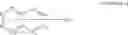
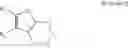
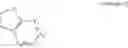
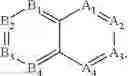



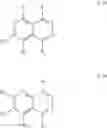











































































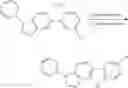
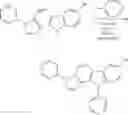

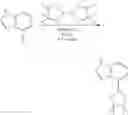

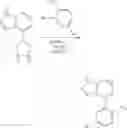
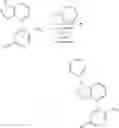


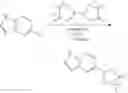


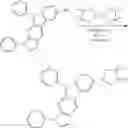
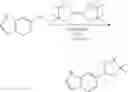


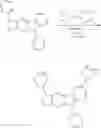





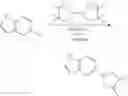


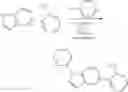
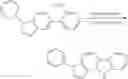
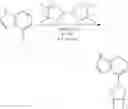






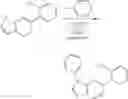





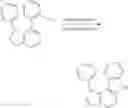
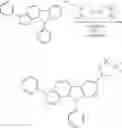

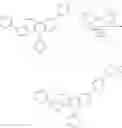
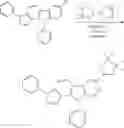

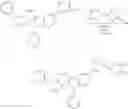



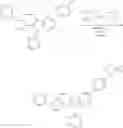
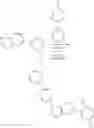
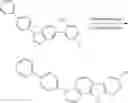
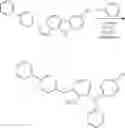
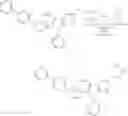



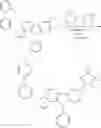

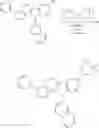



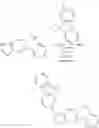
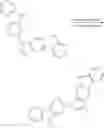
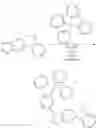


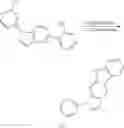
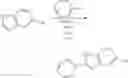


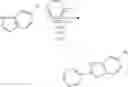


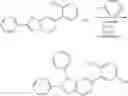
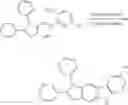

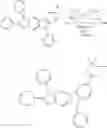


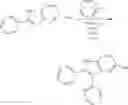



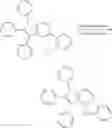
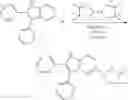


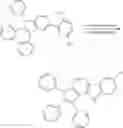
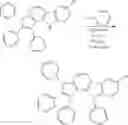





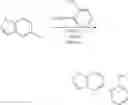



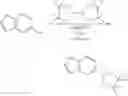
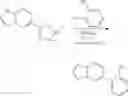



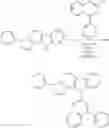


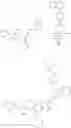


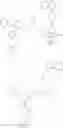

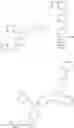

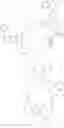
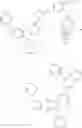


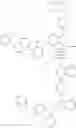
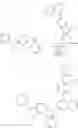




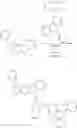


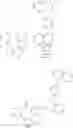
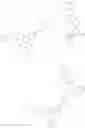





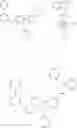
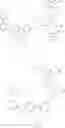




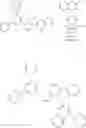


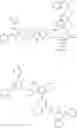


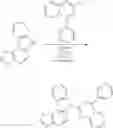


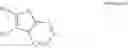

































































Sources:
- United States Patent and Trademark Office - verify current appl. status at the USPTO↗
Similar patent applications:
- » 20240130227
HETEROCYCLIC COMPOUND, ORGANIC ELECTROLUMINESCENT DEVICE COMPRISING SAME, AND COMPOSITION FOR ORGANIC LAYER - » 20190109284
CROSSLINKABLE DEUTERATED CHARGE TRANSPORTING COMPOUND, AN ORGANIC ELECTROLUMINESCENT DEVICE COMPRISING THE COMPOUND, AND A SOLUTION FORMULATION - » 20250057046
COMPOUND AND AN ORGANIC ELECTROLUMINESCENCE DEVICE COMPRISING THE COMPOUND - » 20240324459
COMPOUND AND AN ORGANIC ELECTROLUMINESCENCE DEVICE COMPRISING THE COMPOUND - » 20240389459
COMPOUND AND AN ORGANIC ELECTROLUMINESCENCE DEVICE COMPRISING THE COMPOUND - » 20240244972
COMPOUND AND AN ORGANIC ELECTROLUMINESCENCE DEVICE COMPRISING THE COMPOUND - » 20250089558
ORGANIC ELECTROLUMINESCENT DEVICE COMPRISING A COMPOUND OF FORMULA (I) AND AN ORGANIC ELECTRONIC DEVICE COMPRISING THE ORGANIC ELECTROLUMINESCENT DEVICE - » 20250098399
ORGANIC ELECTROLUMINESCENT DEVICE COMPRISING A COMPOUND OF FORMULA (I) AND A COMPOUND OF FORMULA (II), AND DISPLAY DEVICE COMPRISING THE ORGANIC ELECTROLUMINESCENT DEVICE - » 20250120309
ORGANIC ELECTROLUMINESCENT DEVICE COMPRISING A COMPOUND OF FORMULA (I) AND A COMPOUND OF FORMULA (II), AND DISPLAY DEVICE COMPRISING THE ORGANIC ELECTROLUMINESCENT DEVICE - » 20250204241
ORGANIC ELECTROLUMINESCENT DEVICE COMPRISING A COMPOUND OF FORMULA (I) AND A COMPOUND OF FORMULA (II), AND DISPLAY DEVICE COMPRISING THE ORGANIC ELECTROLUMINESCENT DEVICE
Recent applications in this class:
- » 20240107880 2024-03-28
ORGANIC ELECTROLUMINESCENT MATERIALS AND DEVICES - » 20240008362 2024-01-04
LIGHT-EMITTING LAYER, LIGHT-EMITTING DEVICE AND LIGHT-EMITTING APPARATUS - » 20230320207 2023-10-05
PLURALITY OF HOST MATERIALS, ORGANIC ELECTROLUMINESCENT COMPOUND, AND ORGANIC ELECTROLUMINESCENT DEVICE COMPRISING THE SAME - » 20230309390 2023-09-28
Organic light-emitting device comprising emission layer satisfying specific singlet excitation energy level conditions - » 20230255108 2023-08-10
Phenanthroline-based compound and optoelectronic device comprising the same - » 20230232715 2023-07-20
LIGHT EMITTING DEVICE - » 20230232714 2023-07-20
LIGHT EMITTING ELEMENT AND POLYCYCLIC COMPOUND FOR THE SAME - » 20230217823 2023-07-06
ORGANIC ELECTROLUMINESCENT DEVICE - » 20230217821 2023-07-06
Light Emitting Device and Light Emitting Display Device Including the Same - » 20230217820 2023-07-06
PLURALITY OF HOST MATERIALS AND ORGANIC ELECTROLUMINESCENT DEVICE COMPRISING THE SAME
Recent applications for this Assignee:
- » 20240186153 2024-06-06
Underfill film for semiconductor package and method for manufacturing semiconductor package using the same - » 20240034838 2024-02-01
POLYAMIC ACID RESIN AND POLYIMIDE FILM USING THE SAME - » 20230309222 2023-09-28
METHOD FOR MANUFACTURING FLEXIBLE PRINTED CIRCUIT BOARD AND FLEXIBLE PRINTED CIRCUIT BOARD MANUFACTURED BY SAME - » 20230135423 2023-05-04
ADHESIVE COMPOSITION, AND COVERLAY FILM AND PRINTED CIRCUIT BOARD THAT INCLUDE THE SAME - » 20230049939 2023-02-16
Laminator - » 20230027838 2023-01-26
UNDERFILL FILM FOR SEMICONDUCTOR PACKAGE AND METHOD FOR MANUFACTURING SEMICONDUCTOR PACKAGE USING SAME - » 20220353999 2022-11-03
System and method for manufacturing composite board - » 20220322536 2022-10-06
System and method for manufacturing composite substrate - » 20220251433 2022-08-11
ADHESIVE COMPOSITION, COVERLAY FILM COMPRISING SAME, AND PRINTED CIRCUIT BOARD - » 20220199430 2022-06-23
Underfill film for semiconductor package and method for manufacturing semiconductor package using the same