Composite sandwich panel with differential resin layers
US20150239200A1
2015-08-27
14/631,770
2015-02-25
✅ Patent granted
US 9,573,338 B2
2017-02-21
-
-
David Sample | Nicholas W Jordan
Oblon, McClelland, Maier & Neustadt, L.L.P.
2035-04-14
Abstract:
A composite panel includes a honeycomb core sandwiched by a pair of skins that are attached directly to the core with no separate adhesive layer. The skins are impregnated with a resin material that is unevenly distributed between first and second surfaces, and direct contact is established between the surfaces with the greater resin distribution and the core, reducing weight and eliminating the manufacturing step of incorporating an adhesive layer therebetween.
Assignee:
- B/E AEROSPACE, INC. 415 🇺🇸 Wellington, FL, United States
Applicant:
Interested in similar patents?
Get notified when new applications in this technology area are published.
Classification:
B32B5/02 » CPC further
Layered products characterised by the non- homogeneity or physical structure, i.e. comprising a fibrous, filamentary, particulate or foam layer; Layered products characterised by having a layer differing constitutionally or physically in different parts characterised by structural features of a layer
B32B27/28 » CPC further
Layered products comprising synthetic resin comprising synthetic resins not wholly covered by any one of the sub-groups -
B32B7/02 » CPC further
Layered products characterised by the relation between layers; Layered products characterised by the relative orientation of features between layers, or by the relative values of a measurable parameter between layers, i.e. products comprising layers having different physical, chemical or physicochemical properties; Layered products characterised by the interconnection of layers Physical, chemical or physicochemical properties
B32B2250/03 » CPC further
Layers arrangement 3 layers
B32B2262/106 » CPC further
Composition or structural features of fibres which form a fibrous or filamentary layer or are present as additives; Inorganic fibres Carbon fibres, e.g. graphite fibres
B32B2307/718 » CPC further
Properties of the layers or laminate; Other properties Weight, e.g. weight per square meter
B32B2307/738 » CPC further
Properties of the layers or laminate; Other properties Thermoformability
B32B2605/18 » CPC further
Vehicles Aircraft
B32B2607/00 » CPC further
Walls, panels
B32B3/12 » CPC main
Layered products comprising a layer with external or internal discontinuities or unevennesses, or a layer of non-planar form ; Layered products having particular features of form characterised by a discontinuous layer, i.e. formed of separate pieces of material characterised by a layer of regularly- arranged cells, e.g. a honeycomb structure
B32B5/145 » CPC further
Layered products characterised by the non- homogeneity or physical structure, i.e. comprising a fibrous, filamentary, particulate or foam layer; Layered products characterised by having a layer differing constitutionally or physically in different parts characterised by a layer differing constitutionally or physically in different parts, e.g. denser near its faces Variation across the thickness of the layer
B32B27/04 » CPC further
Layered products comprising synthetic resin as impregnant, bonding, or embedding substance
B32B37/146 » CPC further
Methods or apparatus for laminating, e.g. by curing or by ultrasonic bonding characterised by the properties of the layers whereby one or more of the layers is a honeycomb structure
B32B5/28 » CPC further
Layered products characterised by the non- homogeneity or physical structure, i.e. comprising a fibrous, filamentary, particulate or foam layer; Layered products characterised by having a layer differing constitutionally or physically in different parts characterised by the presence of two or more layers which are next to each other and are fibrous, filamentary, formed of particles or foamed one layer being a fibrous or filamentary layer impregnated with or embedded in a plastic substance
B32B7/04 » CPC further
Layered products characterised by the relation between layers; Layered products characterised by the relative orientation of features between layers, or by the relative values of a measurable parameter between layers, i.e. products comprising layers having different physical, chemical or physicochemical properties; Layered products characterised by the interconnection of layers Interconnection of layers
B32B27/42 » CPC further
Layered products comprising synthetic resin comprising condensation resins of aldehydes, e.g. with phenols, ureas or melamines
B32B2250/40 » CPC further
Layers arrangement Symmetrical or sandwich layers, e.g. ABA, ABCBA, ABCCBA
B32B2255/02 » CPC further
Coating on the layer surface on fibrous or filamentary layer
B32B2260/021 » CPC further
Layered product comprising an impregnated, embedded, or bonded layer wherein the layer comprises an impregnation, embedding, or binder material; Composition of the impregnated, bonded or embedded layer Fibrous or filamentary layer
B32B5/12 » CPC further
Layered products characterised by the non- homogeneity or physical structure, i.e. comprising a fibrous, filamentary, particulate or foam layer; Layered products characterised by having a layer differing constitutionally or physically in different parts characterised by structural features of a layer characterised by the relative arrangement of fibres or filaments of different layers, e.g. the fibres or filaments being parallel or perpendicular to each other
B32B2305/076 » CPC further
Condition, form or state of the layers or laminate; Parts immersed or impregnated in a matrix Prepregs
B32B2398/10 » CPC further
Unspecified macromolecular compounds Thermosetting resins
Y10T428/2495 » CPC further
Stock material or miscellaneous articles; Structurally defined web or sheet [e.g., overall dimension, etc.] including components having same physical characteristic in differing degree Thickness [relative or absolute]
B32B3/00 IPC
Layered products comprising a layer with external or internal discontinuities or unevennesses, or a layer of non-planar form ; Layered products having particular features of form
B32B5/14 IPC
Layered products characterised by the non- homogeneity or physical structure, i.e. comprising a fibrous, filamentary, particulate or foam layer; Layered products characterised by having a layer differing constitutionally or physically in different parts characterised by a layer differing constitutionally or physically in different parts, e.g. denser near its faces
B32B37/14 IPC
Methods or apparatus for laminating, e.g. by curing or by ultrasonic bonding characterised by the properties of the layers
B32B37/00 IPC
Methods or apparatus for making layered products; Treatment of the layers or of the layered products
B32B37/00 IPC
Methods or apparatus for laminating, e.g. by curing or by ultrasonic bonding
B32B2260/046 » CPC further
Layered product comprising an impregnated, embedded, or bonded layer wherein the layer comprises an impregnation, embedding, or binder material; Impregnation, embedding, or binder material Synthetic resin
Y10T428/24165 » CPC further
Stock material or miscellaneous articles; Structurally defined web or sheet [e.g., overall dimension, etc.]; Honeycomb-like Hexagonally shaped cavities
B32B2037/0092 » CPC further
Methods or apparatus for laminating, e.g. by curing or by ultrasonic bonding in which absence of adhesives is explicitly presented as an advantage
Description
CROSS-REFERENCES TO RELATED APPLICATIONS
This application is based upon and claims priority from U.S. Provisional Application No. 61/945,344, filed Feb. 27, 2014, incorporated by reference in its entirety.
BACKGROUND
Composite sandwich panels are used in a wide variety of applications where high strength and light weight are required. These panels may include a lightweight honeycomb core for greater strength because of its high strength to weight ratio and resistance to fatigue failures. These panels are particularly well suited for the aircraft industry. The honeycomb cores may be made from a wide variety of materials, as can the face sheets that sandwich the honeycomb structures.
Typically, an adhesive is used to bond the face sheets to the core. The adhesive must rigidly attach the facings or skins to the core in order for loads to be transmitted from one facing to the other. If the adhesive fails, the strength of the panel is severely compromised. The adhesive is especially critical in sandwich panels which use honeycomb as the core because of the relatively small surface area over which the edges of the honeycomb contact the face sheets.
One procedure for applying composite face sheets to honeycomb involves forming a prepreg sheet that includes at least one fibrous reinforcement layer and an uncured resin matrix. Prepreg is a common term for fabric reinforcement that has been pre-impregnated with a resin system. The resin system is typically an epoxy that already includes the proper curing agent. As a result, the fabric is ready to lay into a mold without the addition of additional resin and without the steps required of a typical hand lay-up. These pre-impregnated composite fabrics and tapes, or “prepregs,” are used in a large number of aircraft applications. A film adhesive is typically added to the prepreg honeycomb core and it is then bonded to the honeycomb by curing of both the prepreg resin and adhesive resin at an elevated temperature. The film adhesive can be applied as a separate ply layer or as an integral part of the prepreg sheet.
An alternative method of bonding the face sheets to honeycomb involves applying an adhesive to the edge of the honeycomb. The adhesive is typically applied by “dipping” the edge of the honeycomb in the adhesive. The adhesives used in this type bonding are typically referred to as “dip” resins or adhesives. The advantage of this method is that the adhesive is located only where the honeycomb contacts the face sheet, rather than being distributed over the entire face sheet. This method is generally used to bond non-adhesive face sheets, such as aluminum and other metallic face sheets, to the honeycomb.
One such composite panel is the A502 Panel intended for use in primary and secondary aerospace applications, offered by Teklam Corp. of Corona, Calif. The Teklam A502 panel includes a 2024T3 clad aluminum facings of a thickness of 0.02″ and a one quarter inch 5052-0015-3.4 aluminum honeycomb core. See http://www.teklam.com/teklam_A502_panel.html for data sheet and further information. This panel has an evenly distributed low resin content with an auxiliary film adhesive for bonding the layers. The film and adhesive can be represented as follows:
| Prepreg (fibers with resin) with 0.02 lbs/sq ft |
| adhesive evenly distributed throughout |
| Film Adhesive at 0.030 lbs/sq. ft |
| Honeycomb Core |
The overall weight of the reinforcement and resin in the foregoing example is 0.050 lbs/sq ft (0.02 prepreg and 0.03 adhesive). The manufacture of this panel requires cutting and laying up of the two materials onto the core, which adds to the manufacturing costs. From the foregoing, it can be seen that a layer resin is applied across the core in an even distribution despite the fact that it is not necessary to do so. The inclusion of the film adhesive is necessary but adds additional weight to the panel. There is a need in the aerospace industry for an improved panel that has a reduced weight through the optimization of the resin and adhesive weight and distribution along the core of the panel.
SUMMARY OF THE INVENTION
The present invention is a composite panel having a unidirectional prepreg composite panel with resin applied selectively on the contact surfaces of the mating materials in differing amounts to optimize the panel. The use of the differential resin application allows the adhesive film to be eliminated from the panel, improving the weight characteristics of the panel with no loss of strength. The resulting panel is optimized for a light-weight, high strength low cost composite panel with improved manufacturing efficiency.
BRIEF DESCRIPTION OF THE DRAWINGS
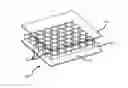
FIG. 1 is an elevated, perspective view of a prior art honeycomb core composite panel;
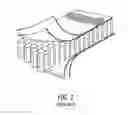
FIG. 2 is an elevated perspective view of a honeycomb core for a panel of the present invention; and
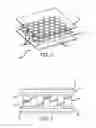
FIG. 3 is a cross-sectional view of the panel showing the differential distribution of resin on the skins.
DETAILED DESCRIPTION OF THE PREFERRED EMBODIMENTS
FIG. 1 illustrates a prior art honeycomb composite panel having a core of honeycomb material, sandwiched by two adhesive films that bond the outer skins to the panel. In this configuration, both the skins and the adhesive films must be cut and matched up precisely before the curing step. The details of the cutting and curing process is described generally in U.S. Pat. No. 7,186,310 entitled Method For Forming A Honeycomb Composite Sandwich Panel, the contents of which are fully incorporated herein by reference.
FIG. 2 illustrates an improved composite panel 20 comprising a honeycomb core 10 and a pair of prepreg resin fabric sheets or skins 14. The honeycomb core 10 comprises a thin walled lattice with repeating geometric shapes, e.g. hexagonals 12. Honeycomb core is an extremely lightweight, high strength structure manufactured with an aramid fiber paper impregnated with a heat resistant resin such as a phenolic resin in some cases, and aluminum, steel, polystyrene, or polypropylene cores in other cases. The core 10 provides the necessary rigidity and strength-to-weight ratio that are needed for aerospace applications, as well as other applications for composite sandwich panels.
FIG. 3 illustrates the panel of the present invention, where the honeycomb core 10 is sandwiched between plies of a unidirectional prepreg skin 14 in the present invention. The prepreg material is selected from a number of various high strength, low weight options and typically includes a selected fiber direction, weight, and overall resin content. In traditional resin fiber skins, the resin content has always been distributed evenly throughout the prepreg so that the amount of resin on one surface is equal to the amount of resin on the other surface. However, the present invention selectively establishes a different amount of resin on the outer surface of the prepreg and the inner surface with respect to the sandwich panel. This resin differential can result in significant weight savings when applied across the panel and throughout the aircraft structure.
The skins 14 are comprised of thin metallic or carbon reinforced unidirectional fabrics pre-impregnated with a resin material on both the inner and outer sides. The fabric on the present invention has an inner resin layer 18 having a thickness yielding a weight of 0.030 pounds of resin per square foot on the inner or interior surface, and an outer resin layer 16 having a thickness yielding a weight of 0.010 pounds of resin per square foot on the outer or exterior surface of the sandwich panel. By supplying a differential resin thickness, the panel can be cured without a separate adhesive sheet and the weight of the adhesive layer has thereby been eliminated from the panel 20.
In the preceding example, for example, the 0.050 lbs/sq ft of resin in the earlier example has been reduced by twenty percent to 0.040 lbs/sq ft. Moreover, elimination of the need for the application of an adhesive film greatly reduces the cost and time for manufacturing the composite panel. By allowing for differing amounts of resin on opposite sides of the fiber, the panel can reduce weight and costs by eliminate the adhesive film. An additional benefit is that there is only a single material (the prepreg 14) that requires cutting and laying up on the core, saving expense and time in the shaping process. The panel 20 of the present invention can be used to replace or substitute for any panel that incorporates the use of unidirectional prepreg and a film adhesive. Examples of such panels include aircraft floor paneling, but other examples are also replete in the industry.
The present invention allows for very purposeful placement of the resin throughout the skin material that was not available in the prior art. This yields a significant savings in cost and weight, critical factors in the aerospace industry, while maintaining optimal performance. It also obviates the need to design a panel around the use of a film adhesive to achieve adequate bond strengths.
The foregoing detailed description of the invention is not intended to be limited to any specific figure or described embodiment. One of ordinary skill would readily envision numerous modifications and variations of the foregoing examples, and the scope of the present invention is intended to encompass all such modifications and variations. Accordingly, the scope of the present invention is properly measured by the words of the appended claims using their ordinary meanings, consistent with the descriptions and depictions herein.
Claims
I claim:1. A composite panel, comprising:
a core having a repeating geometric shape;
a first skin attached directly to the core with no separate adhesive film, and a second skin attached directly to the core with no separate adhesive film, each of the first and second skins having a thermal setting resin on an inner and an outer surface; and
wherein a thickness of the thermal setting resin on the inner layer of the first and second skins is greater than a thickness of the thermal setting resin on the outer layer of the first and second skins.
2. The composite panel of claim 1, wherein the core is a honeycomb structure having repeating hexagonal shapes.
3. The composite panel of claim 1, wherein the first and second skins are unidirectional carbon fiber fabrics.
4. The composite panel of claim 1, wherein a layer of thermal setting resin on the inner surfaces of the first and second skins is at least 0.02 pounds per square foot greater than a layer of the thermal setting resin on the outer surfaces of the first and second skins.
The composite panel of claim 1, wherein the resin is a heat resistant phenolic resin.
5. The composite panel of claim 1, wherein the ratio of weight of an inner resin layer to weight of an outer resin layer is approximately 3:1.
Images & Drawings included:
Sources:
- United States Patent and Trademark Office - verify current appl. status at the USPTO↗
Similar patent applications:
Recent applications in this class:
- » 20250262837 2025-08-21
COMBINED MATERIAL HONEYCOMB CORE - » 20250256480 2025-08-14
Core Material Design For A Composite Construction - » 20250178306 2025-06-05
CORE MATERIAL, SKIN-CORE STRUCTURAL BODY, AIRCRAFT MANEUVERABLE WING, AIRCRAFT FLOOR PANEL, ROCKET FAIRING, AND ROCKET INTERSTAGE PORTION - » 20250128492 2025-04-24
DECORATIVE PANEL - » 20250091311 2025-03-20
COMPOSITE VEHICLE COMPONENT WITH CONTROLLED CRASH INITIATOR - » 20250083403 2025-03-13
IN MOLD PAINTING OF LIGHTWEIGHT CORE STRUCTURE ASSEMBLY WITH VEHICLE EXTERIOR SURFACE FINISH - » 20250042124 2025-02-06
REINFORCED VOID FILLER - » 20250026102 2025-01-23
Stretchable substrate having improved thickness deformation uniformity through control of spatial crosslinking degree and method of manufacturing the same - » 20250026101 2025-01-23
Stretchable substrate having improved stretching deformation uniformity through control of spatial crosslinking degree and method of manufacturing the same - » 20250018678 2025-01-16
MULTI-BLOCKS STRUCTURE AND METHOD FOR FORMING A COMPOSITE PART FROM SAID STRUCTURE
Recent applications for this Assignee:
- » 20190116642 2019-04-18
Flexible LED lighting element - » 20180263086 2018-09-13
LED bulb and method for operating same - » 20180257782 2018-09-13
Aircraft cabin LED lighting system and lighting assembly - » 20180222589 2018-08-09
Contoured class divider - » 20180198279 2018-07-12
Method and apparatus for correcting for power harmonics - » 20180123067 2018-05-03
Quantum dot-based lighting system for an aircraft - » 20180116030 2018-04-26
LED lighting assembly - » 20180063917 2018-03-01
Flexible LED lighting element - » 20170350517 2017-12-07
Valve assembly and method of operating same - » 20170328548 2017-11-16
Wearable light assembly and method for controlling same