RESIDENTIAL APARTMENT
US20150247338A1
2015-09-03
14/427,701
2013-09-12
Abstract:
A residential apartment uses mechanical or motorised systems to enable a primary room to be reconfigured to have multiple different functions, such as altering a sitting room to a dining room, to a bedroom, to a kitchen, and in which the apartment includes voids in one or more of the walls, ceiling and floor to incorporate the mechanical or motorized systems.
Interested in similar patents?
Get notified when new applications in this technology area are published.
Classification:
E04H14/00 » CPC main
Buildings for combinations of different purposes not covered in a single previous group of this subclass, e.g. for double purpose ; Buildings of the drive-in type
E04B1/35 » CPC further
Constructions in general; Structures which are not restricted either to walls, e.g. partitions, or floors or ceilings or roofs Extraordinary methods of construction, e.g. lift-slab, jack-block
E04H1/02 » CPC further
Buildings or groups of buildings for dwelling or office purposes; General layout, e.g. modular co-ordination, staggered storeys small buildings Dwelling houses; Buildings for temporary habitation, e.g. summer houses
E04B1/343 » CPC further
Constructions in general; Structures which are not restricted either to walls, e.g. partitions, or floors or ceilings or roofs Structures characterised by movable, separable, or collapsible parts, e.g. for transport
Description
BACKGROUND OF THE INVENTION
1. Field of the Invention
The field of the invention relates to a residential apartment that uses mechanical or motorised systems to enable a primary room to be reconfigured to have multiple different functions.
2. Discussion of Related Art
The price of land in city centres and other premium locations where people want to live (e.g. proximity to work place and cultural areas) can be very high, so that a typical 1 bedroom flat in these premium location can be very costly; the availability of affordable but reasonably high quality accommodation can be very limited in many cities and the problem is generally getting worse, as cities become increasingly over-crowded.
One important urban trend to combat the shortage of affordable accommodation is for micro-flats or micro-apartments—essentially a single, primary room, with furniture that can serve multiple functions, such as a bookshelf that can be swung around to reveal a vertically stored bed that can be lowered to the floor, or a futon sleeping mattress that can be re-configured as a sofa, or a more conventional sofa-bed. Combining this kind of dual use-furniture with other items, such as tables that fold down from the wall and highly compact kitchen equipment, can lead to a micro-apartment that is an effective use of a very small space. But these designs are not especially comfortable and rarely luxurious; multi-function furniture can be quite unattractive and obtrusive; they can be quite bulky too, defeating the object of elegant and effective utilization of a small footprint apartment.
Another approach, adopted by Hong Kong architect Gary Chang in a 330 sq feet tenement apartment is to add a number of internal walls mounted on ceiling tracks and wheels within a primary room—moving the walls allows the space to be re-configured to multiple different uses. The high quality of the design makes this space both attractive and luxurious; but the moving walls are costly and themselves occupy quite substantial floor space, so limiting the available free floor space.
What is needed is a new approach that enables a building, including for example serviced apartments/rentals/extended stays/hotel rooms, to include apartments with a single primary room (e.g. flats, apartments, hotel rooms) that can be reconfigured to have multiple different functions, such as altering a primary room to be a sitting room, or a dining room, or a bedroom, but to do so whilst maintaining a high quality appearance and a sense of space that cannot be readily achieved using conventional multi-function furniture.
SUMMARY OF THE INVENTION
A first aspect of the invention is a residential apartment that uses mechanical or motorised systems to enable a room, such as a primary room, to be reconfigured to have multiple different configurations or functions, such as altering a sitting room to a dining room, to a bedroom, to a kitchen, and in which the apartment includes voids in one or more of the walls, ceiling and floor to incorporate the mechanical or motorized systems.
Specific features in one implementation include the following:
In a bedroom configuration, a mechanical or motorised system operates a sleeping platform to move down from the ceiling to rest over a seating area; in a sitting room configuration the mechanical or motorised system operates the sleeping platform to move up from the seating area to the ceiling. Other optional features are that:
-
- Seating area has built-in seating that is fixed in position
- Sleeping platform substantially covers the seating area.
- Seating area is sunken into a void in the floor
- Seating area is shaped to fit together with the sleeping platform
- Sleeping platform when raised provides a ceiling over the seating area
- Storage areas are arranged in voids in the floor
- Sliding partition mounted in a void in the ceiling and/or floor, separates the primary room into two or more zones including, optionally, a walk-in wardrobe and a spare bed area
In a dining room configuration, a mechanical or motorised system moves a table into a position in which it forms a dining table. Other optional features are that:
-
- a mechanical or motorised system moves built-in seating to a position suitable for the dining table
- a table is concealed in a seat or in a void in the floor or wall
- a breakfast/preparation bar/counter folds down from wall
- a mechanical coffee table transforms to a dining table through a popup and open action
- folding, pocket kitchen doors may be used
- an office desk may convert to a bed
- there may be a fold down desk/bar/vanity unit next to bedroom
The apartment may include a shower with a shower tray on which a person may stand, and the tray may be moved to reveal a plunge bath.
To further distinguish over the prior art, in this invention the walls, ceiling or floor that contain the void or voids typically provide the respective functions of being a wall, ceiling and floor in a substantial portion of the primary room and are not merely part of an item of furniture that itself rests against or on a genuine (e.g. structural) part of a wall, ceiling or floor. The walls, ceilings or floors that contain the void or voids are typically, in whole or part, false walls, ceilings or floors.
The apartment can be a serviced apartment, rental apartment, extended stay apartment, hotel room, or apartment for long-term lease or purchase. It can be newly-built or converted from an existing building, such as a former commercial building, taking advantage of the floor to ceiling heights typically found in such buildings, which readily enable suitable voids in the floor and ceiling to be constructed.
Taking a more detailed look at optional features, the apartment:
-
- Includes a false ceiling into which a bed can be raised.
- Includes a false floor into which a table can be lowered.
- Includes a false floor and a sofa area below the level of the false floor.
- Enables a space to be re-purposed from a bedroom, to a living room, to a kitchen/diner, to a study by raising or lowering furniture into a false ceiling and false floor.
- Includes a projection screen that drops down from the ceiling and can be watched from a bed that can be lowered from the ceiling and also from a sofa that is positioned in a void under the bed.
- Includes a hot tub in the void beneath the level of the false floor.
- Includes a wine cellar in the void beneath the level of the false floor.
- Includes storage in the void beneath the level of the false floor.
- Includes a sitting area around a table in the void beneath the level of the false floor.
BRIEF DESCRIPTION OF THE FIGURES
Aspects of the invention will now be described, by way of example only, with reference to the following Figures, in which:
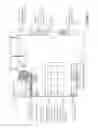
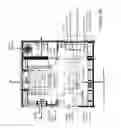
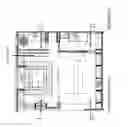
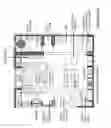
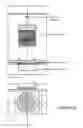
FIG. 1 shows a plan view of an apartment in sitting room format, in an office and kitchen configuration.
FIG. 2 shows a plan view of an apartment in a sitting room format, with a desk and office equipment and a dining table pulled out from a false floor.
FIG. 3 shows a plan view of an apartment in a master bedroom format, with a desk and office converted into guest bed and dining table stored in a false floor.
FIG. 4 shows a plan view of an apartment in a sitting room configuration, with a desk and office equipment and mobile island unit.
FIG. 5A shows an example of a plan of a master bedroom format; the arrows show a movable furniture member which can be moved to transform the room function.
FIG. 5B shows an example of a plan of a sitting room format; the arrows show a movable furniture member which can be moved to transform the room function.
FIG. 6A gives another example for a plan of a bedroom format with a Ken Bench and a sliding wall added.
FIG. 6B shows another example for a plan of a sitting room format with a Ken Bench and a sliding wall added.
FIG. 7A shows a finished plan view of a bedroom format.
FIG. 7B shows a finished plan view of a sitting room format.
FIG. 8 shows an example of an elevation view of a bedroom format.
FIG. 9A shows an example of an elevation view of a sitting room format
FIG. 9B shows an example of an elevation view of a stage format.
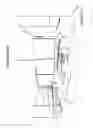
FIG. 10 shows an example of an elevation view of an entire room, in a configuration of a sitting room, dining room and kitchen. (Section A-A)
FIG. 11A shows an elevation view of an example of an entire room, in a configuration of a sitting room, dining room and kitchen, with Ken Bench and sliding wall added. (Section A-A)
FIG. 11B shows an example of an end view of an entire room, in a configuration of a kitchen, dining room and bedroom (Section B-B).
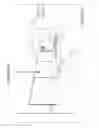
FIG. 12A shows an example of a side view for a bedroom and bathroom section (Section C-C).
FIG. 12B gives an example of a side view for a bedroom section, showing a lifting process of a bed.
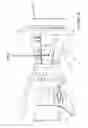
FIG. 13 shows an example of a rising bed frame, which includes a plan of a Rising Bed Unit, a front view of the bed (view on one side A), and a side view of the bed (view on side B perpendicular to view on side A).
FIG. 14A shows an example of the rising bed frame parts of FIG. 13, which includes the front view of back frame, the plan view and the end view.
FIG. 14B shows different views of the rising bed frame parts of FIG. 13, which includes the front view of back frame, the plan view, the end view, top frame and lower frame.
FIG. 14C shows a plan of a mattress frame of FIG. 13.
FIG. 15 shows different views of rising bed frame parts of FIG. 13, which includes plan view of left side frame, top frame, mid frame and bottom frame.
FIG. 16A shows different views of a header frame (above window) of rising bed central boxes, which include front view, plan view and end view.
FIG. 16B shows different views of a header frame (abovebelow window) of rising bed central boxes, which include front view, plan view and end view.
FIG. 17 shows examples of laser cut plates of a rising bed.
FIG. 18 shows an example of an exhibition layout of an entire room.
FIG. 19 shows a kitchen pull out island from a part of a counter.
FIG. 20 shows a part of a counter and a cabinet of a kitchen unit.
FIG. 21 shows an elevation and a plan view of a kitchen.
FIG. 22 shows an example of an elevation view of a kitchen, with pocket doors open and closed configurations. (Section D-D)
FIG. 23A shows an arrangement of kitchen pull out table and stools.
FIG. 23B shows different views and details of a kitchen sideboard.
FIG. 24 shows a lift mechanism and a Sofa back schematic for a dining table and a dining seat.
FIG. 25 shows elevation and plan views of a sunken bath-shower.
FIG. 26 shows a sequence of movements of a swivel action of a ‘Barbie’ unit.
FIG. 27 gives several options for a ‘Barbie’ unit, available for different uses and functions.
FIG. 28A shows an example of a master bedroom, with the bed down.
FIG. 28B shows an example of a sitting room format, with the storage floor open.
FIG. 29A shows another example of a master bedroom format, with the bed down.
FIG. 29B shows another example of a sitting room format, converted from the bedroom format.
FIG. 30 shows an example of a sitting room format, with the kitchen on the opposite.
FIG. 31 shows an example of a sitting room and a dining room, with a dining table and a seating set.
FIG. 32 shows an example of a cinema.
FIG. 33 shows an example of a dining room format, together with the kitchen and sitting room.
FIG. 34A shows an example of a kitchen, with different sections of a kitchen counter and a sliding wall in stored configuration.
FIG. 34B shows an example of a kitchen, with a sliding wall in closed configuration.
FIG. 35 shows an example of a kitchen counter, with pull out island and stools.
FIG. 36 shows an example of a sitting room and an office configuration.
FIG. 37 shows an example of an occasional bedroom (or guest room) configuration, converted from an office configuration in FIG. 36.
FIG. 38 shows an example of using a sliding wall to form a private occasional bedroom (or guest room) configuration.
FIG. 39 shows an example of a bathroom.
FIG. 40 shows another example of a bathroom.
FIG. 41 shows an example of an integrated section of a dining room, sitting room and occasional bedroom configuration.
FIG. 42 shows another example of an integrated section of a kitchen, dining room, sitting room and bathroom.
FIG. 43A shows an example of a side view and a top view of a small-sized room configuration at the day mode.
FIG. 43B shows an example of a side view and a top view of a small-sized room configuration at the night mode.
FIG. 44A shows an example of a side view and a top view of a mid-sized room configuration at the day mode.
FIG. 44B shows an example of a side view and a top view of a mid-sized room configuration at the night mode.
FIG. 45A shows an example of a top view of a different room configuration at the day/night mode, with the kitchen next to the sitting room/bedroom, and the guest room on the opposite.
FIG. 45B shows an example of a top view of a conversion of the room in FIG. 45A between office/dining configuration and guest room sleeping configuration.
FIG. 46 shows an example of an integrated section of the room in the FIGS. 45A and 45B, including a kitchen, sitting room and a bathroom.
FIG. 47 shows an example of a bedroom, a bathroom and a hidden guest room in FIG. 45B.
FIG. 48 shows an example of a bedroom, a bathroom and an office/dining configuration in FIGS. 45A and 45B.
FIG. 49 shows an example of a small or mid sized bedroom in FIGS. 43 and 44.
FIG. 50 shows an example of separated office/dining configuration in FIGS. 45A and 45B.
FIG. 51 shows a schematic example in which a room assembly is operable to present three different individual room configurations, which are a master bedroom suite configuration, a sunken sitting room configuration, and a cinema configuration.
In the Figures, all dimensions are in millimeters unless otherwise stated.
DETAILED DESCRIPTION
YO! Home Implementation of the Invention
YO! Home is a pioneering and intuitive living space set to revolutionise contemporary homes. This aims to transform the way we live. Homes help shape our lives. They are our refuge, and our rock. Since the invention of the city centre apartment, we've never really re-invented it. In one aspect, YO! Home is that new invention.
In an example, twelve moving parts allow the transformation of an eighty square metre space (the size of a one bedroom apartment) into a much bigger home.
In an example, at the pull of a wall (eg. a sliding wall), the opening of a floor or the press of a button one can transform an eighty square metre space into a home containing: a master bedroom suite; a second bedroom; a sunken sitting room; a cinema; a dining room; an office; a full size kitchen; a breakfast room; a bathroom/spa; a party room; a wine cellar, and additional hidden storage.
YO! Home acts as a precursor to the launch of new-build apartment blocks and office block conversions in cities around the world. Through a commitment to high quality without the relating high costs, it is believed this will attract buyers of all ages and backgrounds.
YO! Home—An apartment or dwelling, which through the use of mechanical furniture and false flooring and false ceiling can be adapted to different room functions, creating more useable space and functionality.
In an example, the property enables a master bedroom suite, a second bedroom, a sunken sitting room, a cinema, a dining room, an office, a full-size kitchen, a breakfast room, a bathroom, a party room and a wine cellar, etc, designed to fit within the space of one room.
In one example, twelve mechanical moving parts draw on a wealth of engineering technology taken from fields as diverse as yacht and automotive design and the mechanics of stage production, allowing the transformation of a bedroom (e.g. 80 sq/m) space into a much bigger home.
The architecture of the stage brings with it the basic principles of counter-weights and moving parts, allowing safe, easy and low-energy movement of large elements such as the bed and wall. More high-tech elements, such as sensors and electronics, make the concept easy to use and family-proof.
The hidden rooms, including a sunken sitting room, appear at the touch of a button. During the day this space could be used as an office before transforming into a bedroom.
Examples of Main Technical Features:
Master Bedroom
Master Bedroom in “Bed down” configuration (see for example FIG. 28A and 29A).
Cantilevered “lifting bed” operable to be stored in ceiling (see for example FIGS. 10, 11A and 12).
The Bedroom Elevator:
A motorised bed that descends from the ceiling on cantilevered supports; the supports run in vertical rails within the wall (see for example FIGS. 12A and 12B).
The Bedroom Elevator:
Bed down—back “rotating wall” from “bookshelf” becomes “headboard”.
Bed up—base of bed becomes “light ceiling” above sitting area; the Sunken Lounge with Flip Up Dining (see for example FIGS. 28 and 29).
Barbie Wall (See for Example FIG. 26).
The Barbie Dresser and the Ken Bench (see for example FIG. 6A and 6B).
“Vanity unit” rotates to “Shoe display” (see for example FIG. 26); pigeon holes and doors can be closed over. (see for example FIG. 27)
Sitting Room (See for Example FIGS. 28B, 29B, 30 and 31).
Bed up—reveals “sunken seating” area
Coffee “table top lift” to become occasional TV dining
Steps up are “step drawers” and “stair seats”
The Cellar Doors (incorporating a wine store)—The Hidden Hot Tub.
Cinema (See for Example FIG. 32).
The Cinema Surround
(1) “Electric Screen” (a projection screen (Y) and a projector)
(2) The “Electric Screen” screen drops down from the ceiling (X).
Disco
On base of bed is a detachable “light floor” which covers “sunken seating”.
Disco lighting above doubles as sitting area lighting.
Dining Room (See for Example FIG. 33).
The Mechanical Dining Room (see for example FIG. 24)
Japanese style “sunken table” and seating revealed from floor on lifting device (see for example FIG. 24)
The dining table comes up out of the floor.
Kitchen (See for Example FIGS. 34 and 35).
The Reveal Kitchen with wheeling Island (see for example FIG. 35)
Part of counter detaches and can be wheeled to become “kitchen island” unit
“Breakfast bar” with “stored stools” (see for example FIG. 35)
“Splash back fold downs” to disguise kitchen (see for example FIGS. 34A and 34B)
Storage “Flip downs”—a place for everything.
Office (See for Example FIG. 36).
The Office Desk Trick
Horizontal “Lifting office table” reveals “occasional bed”
Office equipment desk surface “pops up” from floor.
Occasional Bedroom (or Guest Room) (See for Example FIGS. 37, 38 and 45B).
The Moving Wall (see “Diving Wall” in FIG. 3; arrows show directions of movement)
Main “Sliding Wall ” with sub doors creates privacy (see for example FIG. 38 and item 60 in FIG. 7A).
The Disappearing Guest Bed (see for example FIGS. 38 and 47).
“Folding Bed” from under “Lifting office table”
Bathroom (See for Example FIGS. 39 and 40).
“Walk through shower” with “drying heated floor”
Bathroom uses technologies from yacht and automotive design as well as the mechanics of stage production and adapts them for the home.
The Integrated Home (See for Example FIGS. 45 and 42).
The items disclosed in the Figures may be used, alone or in combination, in an integrated home in the style of YO! Home.
Examples of Further Aspects and Combinations in the Integrated Home
Master Bedroom
In examples, the apartment includes a part in the configuration of a Master Bedroom. See eg. FIGS. 3, 5A, 6A and 7A, particularly the Double Bed part in FIG. 5A.
The Bed can descend from or rise up into the ceiling. See for example “bed lifts up into ceiling housing” in FIGS. 10 and 11A, and “bed in lowered position” in FIG. 11B. A void for bed storage is provided in the ceiling (see eg. FIGS. 8 and 11B).
When the double bed is lifted into the ceiling, the space previously occupied by the double bed reveals the sunken seating. See for example FIG. 5A in which the double bed is present, and FIG. 5B in which the sunken seating is revealed.
The Dividing wall can be put in a stored position, as shown for example in FIG. 1, or in a slide-out position, as shown for example in FIG. 3.
The back rotating wall can convert from bookshelf/storage to Headboard, or vice versa. See for example FIG. 8, in which the ‘Disco ’ floor is in a stored position, and in which the lighting display is directed downwards.
Sitting Room
The apartment is in the configuration of a sitting room. (See eg. FIGS. 2, 4, 5B, 6B and 7B) The bed is lifted through cantilevered supports, operable to be stored in the ceiling (See eg. FIGS. 10, 11A, 12A and 12B). Base of bed becomes light ceiling above sitting area (See eg. FIG. 29B).
When the bed is up, the sunken seating area is revealed.
Headboard converts to bookshelf/storage.
Storage and support for stage floor slides out.
Under floor storage, table with flip top is to become occasional TV dining. Table helps support ‘stage’ floor (see for example FIG. 9B).
Base is stepped to slide onto steps, steps up are “step drawers” and “stair seats” (see eg. FIG. 11A).
Reversible low level unit, storage cupboards and lift up flaps are revealed.
Demountable ‘stage’ floor drops down with bed frame and is unclipped in position (see for example FIG. 9B).
Combination of Bedroom (Sitting room) and Other Sections
See for example FIGS. 10, 11, 12 and 22.
A-A refers to section views of the room with bed-up.
B-B refers to section views of the room with bed-down.
C-C refers to section views of the partial room (bedroom/sitting room and bath room) with bed-up or bed down.
D-D refers to section views of the partial room (Dining room, office and kitchen).
An example of an elevation view of the entire room is provided (see eg. FIG. 10), in the configuration of sitting room, dining room and kitchen. (Section A-A)
Window with deep sill is revealed (see eg. FIG. 10).
The design provides opportunity for small lift concealing artwork (see eg. FIG. 10).
Bed lifts up into ceiling housing—Lift in progress (see eg. FIG. 10).
Sunken seating is revealed (see eg. FIG. 10).
Sliding wall is movable to divide the room (see eg. FIG. 10).
Projector screen mechanism and recessed curtain track is set in front of the double bed and sunken area (see eg. FIG. 10).
Stairs storage drawers are designed above the structural floor (see eg. FIG. 10). In the desk/bed section, structural soffit and suspended ceiling are revealed (see eg. FIG. 10).
Sunken dining table and benches are in stored position (see eg. FIG. 10).
An example of an end view of the entire room is provided (see eg. FIG. 11B), in the configuration of a sitting room, dining room and kitchen. (Section B-B).
Bed is in lowered position; storage for ceiling void is possible.
An example of elevation view of the entire room is provided (see eg. FIG. 11A), in the configuration of sitting room, dining room and kitchen, with ken bench, linen cupboard and sliding wall section added. (Section A-A)
Sunken dining table and benches are in a stored position.
An example of a side view is provided (see for example FIG. 12A), in the configuration of a Bedroom and bathroom. (Section C-C).
Bed section—showing lift (see for example FIG. 12B), the bed lifting is effected by recessed wall channel and cantilevered lift mechanism.
An example of an elevation view of a kitchen is provided (see eg. FIG. 22), with the pocket doors open or closed. (Section D-D).
In an elevation view of the kitchen, the pocket doors open or closed exhibit the Kitchen details through Pull out TV Cabinet and Sliding Wall.
Bathroom
The main design of Bathroom (see for example FIG. 25) includes:
-
- Shower head (raindance)
- Window with blinds
- Sliding shower floor
- Plunge Bath with step
Office/Second Bedroom(Guest Room)
In the office configuration, Desk and office may convert into a single guest bed (see eg. FIGS. 3 and 4).
Room for office storage, printer hanging and drawer space for guest TV can be revealed (see eg. FIGS. 1, 2, and 4).
Horizontal “Lifting office table” rotates to reveal “occasional bed” (see eg. FIGS. 36, 37 and 45B).
Office equipment desk surface “pops up” from floor (see eg. FIG. 36).
Occasional Bedroom(or Guest Room) (see eg. FIGS. 37 and 38) is formed by:
Main “Sliding Wall ” with sub doors creates privacy
“Folding Bed” from under “Lifting office table”
Barbie Unit
‘Barbie’ vanity cabinet is dual sided, also slides out and turns round to display shoes/accessories (see eg. FIGS. 1 to 4).
The Barbie Unit can be pulled out and rotate to change sides. A swivel action is provided (see eg. FIG. 26).
A sequence of movements includes:
-
- 1. Slide doors sidewards
- 2. Park pocket doors (variable)
- 3. Pull out and begin to rotate
- 4. Rotate through 90°
- 5. Continue to rotate
- 6. Push and slide back into position
- 7. Pull out pocket doors
- 8. Close doors
There are several design options for ‘Barbie’ unit, available for different uses and functions (see for example FIG. 27).
Option 1:
High storage ‘Chubby Hole’
High storage ‘Doors Closed’
Option 2:
High storage ‘Doors Closed’
High storage ‘Shelf Option’
Option 3:
High storage ‘Dressing Table Section’
High storage ‘Dressing Table Option’
High storage ‘Doors Closed’
Option 4:
High storage ‘Console Section’
High storage ‘Console Table/Artwork Option’
High storage ‘Doors Closed’
Bed Lifting Mechanism
An example of the rising bed frame is provided (see eg. FIG. 13), which includes a plan of Rising Bed Unit, a front view of the bed (view on A), and an a side view of the bed (view on B).
Different views of rising bed frame are provided (see eg. FIG. 15), which includes plan view of left side frame, top frame, mid frame and bottom frame.
FIG. 13 shows:
-
- View on A: with lifting arms
- Plan of rising bed unit, which include: Back frame, Mattress frame, Left side frame, Centre frame, Right side frame
- View on B: with a lifting arm
An example of the rising bed frame is provided (see eg. FIG. 14A), which includes the front view of back frame, the plan view and the end view.
Different views of the rising bed frame are provided (see eg. FIG. 14B), which includes the front view of back frame, the plan view, the end view, top frame and lower frame.
A plan view of a mattress frame is provided (see eg. FIG. 14C).
Different views of rising bed frame are provided (see eg. FIG. 15), which includes plan view of left side frame, top frame, mid frame and bottom frame.
FIG. 15 shows:
-
- View on B: Laser cut plates
- Plan view of left side frame
- Separate view for top frame, mid frame and bottom frame
Different views of header frame [above window] are provided (see eg. FIG. 16A)—the rising bed central boxes, which include front view, plan view and end view.
Different views of base frame [below window] are provided (see eg. FIG. 16B),—the rising bed central boxes, which include front view, plan view and end view.
Laser cut plates of the rising bed are provided (see eg. FIG. 17).
Kitchen
The arrangement of kitchen can be divided as (see eg FIGS. 1, 2 and 4):
Wet services dishwasher/washing machines/sink—fixed
Work top
Electrical appliance—Hob/Oven/microwave fridge
Equipment: Washer/dryer/Oven/coffee machine/high level storage
Mobile island unit (see eg. FIG. 4)
The pull out island of part of Kitchen counter is provided (see eg. FIG. 19).
The pull out island of part of counter, which can be detached and wheeled to become “kitchen island” unit, or can be randomly combined.
The counter top of the kitchen unit is provided (see eg. FIG. 20), in one example, it includes:
-
- High level cabinets
- Decorative furniture top
- Splash back in “UP” position—steel or glass visible
- Exposed worktop
An elevation and plan view of a kitchen is provided (see eg. FIG. 21).
-
- ‘Bob the builder’ cabinets behind coloured glass doors
- Wet services dishwasher
- Washing machines/sink-fixed
- Fold away top
- Flip up countertop becomes splash back. Stainless shell or glass on splashback side. Reverse to be furniture finish (eg timber/corian)
- Electrical appliances—hob/oven/fridge
- Decorative panel with storage behind: Might conceal microwave
- Pull out island unit
The Kitchen can be entirely hidden by the full height pocket sliding doors (see eg. FIGS. 22, 34A and 34B).
The Kitchen is detached by a sliding door to office storage (see eg. FIG. 23A).
FIG. 23A shows kitchen dining table details for pull out table and stools.
-
- Pull out table with stools—folding leaves down
- Pull out table with stools—folding leaves up
- Stools will be stackable for easy storage
Different views and details for kitchen sideboard are provided (see eg. FIG. 23B).
-
- Sliding ‘goal post’ top to bring height up to 770 mm
- Work surface is reversible
- Dining storage and office storage can be designed together.
Dining Room
The dining table comes up out of the floor.
Lift mechanism for dining table and dining seat (see eg. FIG. 24).
Position 1:
Lifting floor panel over the seat
Rising table in lowest position (at the same level as the main house floor)
Position 2:
Seat back+floor panel in transitional position
Rising table in raised position (higher than) main house floor
Position 3:
Lifting floor panel—seat back
Colour, Type and Finish
A plan view of a bedroom Format is provided (see eg. FIG. 7A). Suggested different areas, spay lacquer, wood block/stainless steel are provided. Recessed plinth may be in contrasting colour. The finish, colour and type of the furniture may be designed and arranged in this way:
Painted wall (90), colour—matt finish with clear lacquer if required.
Spray lacquer finish to wardrobe doors (10), colour and percentage gloss, wardrobe interior painted matt finish
Faux suede step (20) and frame surround.
Vinyl floor (30)—‘Amtico’ pattern
Carpet (80)—weave and colour
Barbie (40)—in general spray lacquer exterior with contrasting interior. Alternate colours for opposite sides of interior. Faux leather work surface for vanity with flip up mirror.
Spray lacquer finish to wardrobe doors (50), colour and percentage gloss. Wardrobe interior painted matt finish.
Curtain (330) fabric, weight and colour selected.
Spray laquer finish to kitchen doors (70), colour, percentage gloss and Worktop material selected.
Barisol or stretched fabric ceiling (100) over.
Roman blind (110), fabric detail.
Spay lacquer finish to sill surface (120)
Painted wall (130), colour, matt finish with clear lacquer if required.
Spray lacquer finish to wardrobe doors (140), colour and percentage gloss.
Wardrobe interior (140) painted matt finish. Ken bench (140) in contrasting spray lacquer finish.
Sliding wall (60) divider to be spay lacquer frame with translucent material panels (show screen).
Barlsol or stretched fabric ceiling (150) over.
Painted wall (160), colour, matt finish with clear lacquer if required.
Wooden block sliding doors to bath top (150). Open shower floor surface
Mosaic lined ‘muck up’ bath (150).
Walls (160) to be mosaic-type, finish and extent selectable.
Profiled rubber floor (170), pattern and colour selectable.
Cistern box (180) to have spray lacquer top surface. Mosaic to front surface.
Other wall surfaces (190) to be painted matt with clear lacquer.
Sliding doors (200) in spray lacquer finish, colour selectable.
Spray lacquer finish to wardrobe doors (210), colour and percentage gloss selectable.
Wardrobe interior painted with matt finish.
Barlsol or stretched fabric ceiling (220) over.
Spray laquer finish to wardrobe doors (230), colour and percentage gloss, wardrobe interior painted matt finish.
Bed/desk surfaces (240) to be all spray lacquer. Contrasting colours selectable.
Spray lacquer finish to TV cabinet and doors (250), colour and percentage, gloss. Interior painted matt finish.
FIG. 7B shows a plan view of an example of the sitting room format. In one example, finish, colour and type of the furniture are designed and arranged in this way:
Faux suede/fabric sofas (260)
Vinyl floor (270) —‘Amtico’ pattern
Carpet (280)—weave and colour, including steps down
Faux suede/fabric pad cushions (290)
Contrasting spray lacquer dining table top (300)
Finishes for pull out table and stools (310)
Finishes for pop up side board (320)
Change of Room Arrangement
The room configuration can be changed and adjusted in a flexible way. In one example, the room arrangement can be changed based on the size of a room, e.g. a small or medium size configuration. (see eg. FIGS. 43 and 44).
In another example, the room arrangement can be changed based on the space arrangement of the room, e.g. a kitchen opposite to the sitting room/bedroom, or a kitchen next to the sitting room/bedroom, or any other arrangement that is convenient for space arrangement. (see eg. FIGS. 45 to 50). Sliding walls can be used to create privacy or separate the room sections for different functions. (see eg. FIGS. 47 and 48).
In another example, the room configuration can be switched between day and night mode. (see eg. FIGS. 43A and 43B, or 44A and 44B, or 45A).
NOTE
It is to be understood that the above-referenced arrangements are only illustrative of the application for the principles of the present invention. Numerous modifications and alternative arrangements can be devised without departing from the spirit and scope of the present invention. While the present invention has been shown in the drawings and fully described above with particularity and detail in connection with what is presently deemed to be the most practical and preferred example(s) of the invention, it will be apparent to those of ordinary skill in the art that numerous modifications can be made without departing from the principles and concepts of the invention as set forth herein.
CONCEPTS
A residential apartment that uses mechanical or motorised systems to enable a primary room to be reconfigured to have multiple different functions, such as altering a sitting room to a dining room, to a bedroom, to a kitchen, and in which the apartment includes voids in one or more of the walls, ceiling and floor to incorporate the mechanical or motorized systems.
The apartment may include one or more of the following features, alone or in combination:
-
- the apartment comprises a plurality of movable connected parts, wherein the movable parts are operable to moved such that the apartment is reconfigurable to present different, individual room configurations.
- each individual room configuration corresponds to a different room function.
- the apartment is operable to present at least two different individual room configurations.
- the apartment is operable to present at least three different individual room configurations.
- the apartment is operable to present at least four different individual room configurations.
- the apartment is operable to present at least five different individual room configurations.
- the different individual room configurations include two or more of: a master bedroom suite; a second bedroom; a sunken sitting room; a cinema; a dining room; an office; a full size kitchen; a breakfast room; a bathroom/spa; a party room; a wine cellar, and additional hidden storage.
- the apartment includes a false floor.
- the false floor is one into which a table can be lowered.
- the false floor is such that a sofa area is included below the level of the false floor.
- the false floor is such that a hot tub is included in the void beneath the level of the false floor.
- the false floor is such that a wine cellar is included in the void beneath the level of the false floor.
- the false floor is such that storage is included in the void beneath the level of the false floor.
- the false floor is such that a sitting area around a table is included in the void beneath the level of the false floor.
- the apartment includes a false ceiling.
- the false ceiling is one into which a bed can be raised.
- the apartment includes mechanical furniture and the false floor and the ceiling, which are adaptable to provide different room functions, creating useable space and functionality.
- the apartment enables a space to be re-purposed from a bedroom, to a living room, to a kitchen/diner, or to a study by raising or lowering furniture into the false ceiling and the false floor.
- the apartment includes mechanical furniture.
- the apartment is operable to create useable functionality and space.
- the apartment includes a mechanism and structure for furniture arrangement.
- the apartment includes a structure which is suitable for a transformation of a space by providing an enormous storage space along with a space transformation feature.
- the apartment includes extra functions, styles and storage solutions.
- the apartment includes a structure which enables more space than a typical one-bedroom flat but with more room functions.
- the apartment provides a sitting room configuration.
- the sitting room configuration includes a desk and office equipment and a dining table pullable out from a false floor.
- the sitting room configuration includes a desk and office equipment and mobile island unit.
- the sitting room configuration includes a movable furniture member which can be moved to transform the room function.
- the sitting room configuration includes a sliding wall.
- the sitting room configuration includes a storage floor which is openable.
- the sitting room configuration includes a stage floor which can slide out.
- the sitting room configuration includes under floor storage and a table with a flip top for occasional TV dining.
- the sitting room configuration includes a base which is stepped to slide onto steps, wherein steps up are step drawers and stair seats.
- the sitting room configuration includes a reversible low level unit, including storage cupboards and lift up flaps.
- the apartment provides a master bedroom configuration.
- the master bedroom configuration includes a desk and office convertible into a guest bed and a dining table stored in a false floor.
- the apartment provides a cinema configuration.
- the cinema configuration includes a projector and a vertically movable screen.
- the cinema configuration includes a projection screen that drops down from the ceiling and can be watched from a bed that can be lowered from the ceiling and also from a sofa that is positioned in a void under the bed.
- the apartment provides a disco configuration.
- the apartment provides a dining room configuration.
- the dining room configuration is one wherein a dining table comes up out of the floor.
- the dining room configuration includes three adjustable configurations, comprising an adjustable table height, an adjustable seat back angle and a rotatable false floor.
- the apartment includes a configuration including a kitchen.
- the kitchen includes Splash back fold downs operable to disguise the kitchen.
- the kitchen includes a Pull out TV Cabinet and a Sliding Wall.
- the kitchen includes a Wet services dishwasher and a washing machines and a sink.
- the kitchen includes a Hob, an Oven, a microwave and a fridge.
- the kitchen includes a Washer, a dryer, a coffee machine and high level storage.
- the kitchen includes a Decorative furniture top and an exposed worktop.
- the kitchen includes a fold away top.
- the kitchen includes ‘Bob the builder’ cabinets behind coloured glass doors.
- the kitchen includes a reversible work surface.
- the kitchen includes stools stackable for easy storage.
- the kitchen can be entirely hidden by the full height pocket sliding doors.
- the kitchen includes a kitchen pull out island from a part of a counter.
- the kitchen includes a kitchen pull out island which can be detached and wheeled to become “kitchen island” unit, or can be randomly combined.
- the kitchen includes a kitchen pull out table and stools.
- the kitchen includes a kitchen counter, with pull out island and stools.
- the apartment includes a configuration including a bathroom.
- the bathroom includes one or more of: Shower head (raindance); Window with blinds; Sliding shower floor; Plunge Bath with step.
- the apartment is operable to convert between an office room configuration and a guest bedroom configuration.
- in the office room configuration, room for an office storage, a printer hanging and a drawer space for a guest TV is provided.
- in the office room configuration, an office equipment desk surface “pops up” from floor below the bed in the guest bedroom configuration.
- in the guest bedroom configuration, a sliding wall with sub-doors is provided and is operable to provide privacy.
- the apartment is operable to allow the transformation of a space a size of a one bedroom apartment into a much bigger home.
- apartment includes an office and kitchen configuration.
- apartment includes a configuration including a sitting room, dining room and kitchen.
- apartment includes a configuration including a kitchen, dining room and bedroom.
- apartment includes a configuration including a kitchen with a sliding wall.
- apartment includes a configuration including a bedroom and bathroom.
- apartment includes a liftable bed.
- the liftable bed includes a bed frame.
- the liftable bed includes a mattress frame.
- the liftable bed includes a bed frame including laser cut plates.
- the liftable bed is operable to be stored in a ceiling.
- the liftable bed is a motorised bed that lifts into or descends from the ceiling on levered supports.
- the supports run in vertical rails within a wall.
- the supports run in vertical rails within a wall in recessed wall channels.
- apartment includes a swivel action unit.
- apartment includes a sliding wall.
- apartment includes a window with a deep sill.
- apartment includes a small lift for concealing artwork.
- apartment includes sunken seating.
- apartment includes counter-weights and moving parts.
- apartment includes sensors and electronics.
- apartment includes a hidden room in that the hidden room can be hidden by movable parts, but not actually collapsed.
- apartment includes a back rotating wall rotatable from a bookshelf to become a headboard in a bedroom configuration.
- apartment includes a “light ceiling” above a sitting area in a sitting room configuration.
- apartment includes a “Vanity unit” rotatable to provide a “Shoe display”.
- apartment includes a vanity cabinet that is dual sided, and also slides out and turns round to display shoes or accessories.
- apartment includes a vanity cabinet operable to perform a swivel action including the following sequence of movements: Slide doors sidewards, Park pocket doors (variable), Pull out and begin to rotate, Rotate through 90°, Continue to rotate, Push and slide back into position, Pull out pocket doors, and Close doors.
- apartment is such that room assembly reconfiguration is performed in response to a pull of a wall.
- apartment is such that room assembly reconfiguration is performed in response to an opening of a floor.
- apartment is such that room assembly reconfiguration is performed in response to a press of a button.
The apartment can be in a newly-built apartment block, in an apartment conversion, in an office conversion, in an office block conversion, in an exhibition, within the floors of a re-furbished commercial building.
According to a further aspect, there is provided a kit of parts comprising parts operable to be assembled into a dwelling that constitutes an apartment as defined above.
In a final aspect, there is a method of constructing a dwelling, including the steps of newly building or converting an existing building into an apartment as defined above.
NOTE
It is to be understood that the above-referenced arrangements are only illustrative of the application for the principles of the present invention. Numerous modifications and alternative arrangements can be devised without departing from the spirit and scope of the present invention. While the present invention has been shown in the drawings and fully described above with particularity and detail in connection with what is presently deemed to be the most practical and preferred example(s) of the invention, it will be apparent to those of ordinary skill in the art that numerous modifications can be made without departing from the principles and concepts of the invention as set forth herein.
A portion of this specification includes material to which a claim for copyright is made and notice is hereby given: Copyright Yo! Limited 2012 and 2013 (pursuant to 17 USC 401 and equivalent laws). A claim to copyright protection is made to the plans and schematics of the YO! Home implementation. The copyright owner has no objection to the facsimile reproduction by anyone of the patent document or disclosure, as in appears in any Patent Office file, record or official publication, but reserves all other copyrights, rights in and to designs (whether protected through a design patent, registered design or unregistered design), trade dress rights and trademark rights. No express or implied license under any of these rights is granted.
Claims
1. A residential apartment that uses mechanical or motorised systems to enable a primary room to be reconfigured to have multiple different configurations or functions, such as altering a sitting room to a dining room, to a bedroom, to a kitchen, and in which the apartment includes voids in one or more of the walls, ceiling and floor to incorporate the mechanical or motorized systems.
2. The apartment of claim 1, in which, in a bedroom configuration, a mechanical or motorised system operates a sleeping platform to move down from the ceiling to rest over a seating area and in a sitting room configuration the mechanical system operates the sleeping platform to move up from the seating area to the ceiling.
3. The apartment of claim 2 in which the seating area has built-in seating that is fixed in position.
4. The apartment of claim 2 in which the sleeping platform substantially covers the seating area.
5. The apartment of claim 2 in which the seating area is sunken into a void in the floor.
6. The apartment of claim 5 in which the seating area is shaped to fit together with the sleeping platform.
7. The apartment of claim 2 in which the sleeping platform when raised provides a ceiling over the seating area.
8. The apartment of claim 1 in which one or more storage areas are arranged in voids in the floor.
9. The apartment of claim 1 in which a sliding partition mounted in a void in the ceiling and/or floor separates the primary room into two or more zones including, optionally, a walk-in wardrobe and a spare bed area.
10. The apartment of claim 1 in which a mechanical coffee table transforms to dining table through a popup and open action.
11. The apartment of claim 1 in which, in a dining room configuration, a mechanical or motorised system moves a table into a position in which it forms a dining table.
12. The apartment of claim 1 in which a mechanical or motorised system moves built-in seating to a position suitable for the dining table.
13. The apartment of claim 1 in which a table is concealed in a seat or in a void in the floor or wall.
14. The apartment of claim 1, in which a breakfast/preparation bar/counter folds down from wall.
15. The apartment of claim 1 in which folding, pocket kitchen doors are used.
16. The apartment of claim 1 in Which an office desk converts to a bed.
17. The apartment of claim 1 in which there is a fold down desk/bar/vanity unit next to the bedroom.
18. The apartment of claim 1 which includes a shower with a shower tray on which a person may stand, and in which the tray be moved to reveal a plunge bath.
19. The apartment of claim 1 in which the walls, ceiling or floor that contain the void or voids provide the respective functions of being a wall, ceiling and floor in a substantial portion of the primary room and are not merely part of an item of furniture that itself rests against or on a genuine (e.g. structural) part of a wall, ceiling or floor.
20. The apartment of a claim 1 in which the walls, ceilings or floors that contain the void or voids are false walls, ceilings or floors.
21. The apartment of claim 1 when formed in a former commercial building, taking advantage of the floor to ceiling heights in such building or new build or existing other use.
22. A kit of parts comprising parts operable to be assembled into a dwelling that constitutes an apartment as defined in claim 1.
23. A method of constructing a dwelling, including the steps of newly building or converting an existing building into an apartment as defined in claim 1.
Images & Drawings included:












Sources:
- United States Patent and Trademark Office - verify current appl. status at the USPTO↗
Similar patent applications:
- » 20060047578
Method and system for processing data related to home and apartment sales and rentals for providing combined and normalized residential data including home and apartment sales and rentals - » 20090139166
Arrangement of a store room for residential buildings comprising stacked apartments - » 20210358067
To provide the maximum 10-year holistic Length Of Stay (LOS) in a specialized residential care facility for persons to escape from a volatile domestic violence condition. This visionary concept will adequately rehabilitate and stabilize victims to re-enter society as productive citizens. Disjunct locations will consist of high-rise apartment buildings and living quarters for women, men and their children, respectively
Recent applications in this class:
- » 20250067079 2025-02-27
SYSTEMS AND METHODS FOR MIXED USE BUILDINGS - » 20200340266 2020-10-29
Starry Night Cinemas - » 20200040598 2020-02-06
Intelligent POD management and transport - » 20180320402 2018-11-08
Intelligent pod management and transport - » 20180283036 2018-10-04
Building system to enable placement and removal of housing units within a support structure - » 20170175413 2017-06-22
Multi-level fulfillment center for unmanned aerial vehicles - » 20160237713 2016-08-18
Passenger and vehicle elevator system - » 20160060895 2016-03-03
Temporary shelter - » 20150042822 2015-02-12
INFLATABLE PHOTO BOOTH - » 20140352229 2014-12-04
Cross street transit and multimodal multi-level station and pedestrian-oriented interchange