Teknical Practice Bat
US20150251069A1
2015-09-10
14/201,734
2014-03-07
Abstract:
The Teknical Practice Bat induces the ideal swing through conditioning multiple sections of the player's mechanics at once. From the knob, that forces one to stay fluent through the stroke, and not roll their wrists. To the flat barrel that displays a desirable flight of the ball, when the player squares up and connects correctly. Upon returning to the typical bat, The Teknical Practice Bat produces an improved skillset by conditioning the proper mechanics. The mechanics vary throughout the player's entire body; From the ideal positioning of the upper body to the lower halfs explosive rotation necessary to power the heavier Teknical practice bat through the strike zone. The mechanics are derived from the copyrighted Tek-Matic approach. The techniques utilized are disclosed along with the description of the Tek-Matic approach. This approach was developed over years of experience supported by statistical evidence. Some of these skills include consistent contact, power, and sound mechanical approach. The fashion in which one can harvest this tool varies. For example, one can practice through the mediums of still work (ie. batting tee), dry cuts, front-toss, direct simulation (over-hand) and several other applications. The ultimate outcome from using the apparatus is a holistic swing that will produce the maximum output of the player's physique and potential. The Teknical Practice Bat can be used in multiple fields, as well as encompassing a variety of reasons for application, including entertainment and others.
Interested in similar patents?
Get notified when new applications in this technology area are published.
Classification:
A63B69/0002 » CPC main
Training appliances or apparatus for special sports for baseball
A63B2069/0008 » CPC further
Training appliances or apparatus for special sports for baseball specially adapted for particular training aspects for batting
A63B69/00 IPC
Training appliances or apparatus for special sports
Description
FIELD OF THE INVENTION
The present invention is related to athletic equipment, more particularly to an athletic variation of a baseball bat that provides a medium for mechanical skill set improvement;
In particular the mechanical skillset includes maintaining firm wrists, creating maximum surface area upon contact by squaring up, improving stamina/strength, increasing force upon contact and creates a holistic/complete swing that utilizes the player's full potential as well as their body.
In the early days of baseball offense was centered around hitting for average and a consistent hitting approach. Stealing bases were more prevalent so reaching base with an accurate hitting approach was the ideal offense. As the game progressed the long ball became more and more desirable. Hitters did not only need to hit for average but be able to generate a considerable amount of power. This called for a new approach to preparation and game play. The next generations of baseball players and organizations were focused on gaining the upperhand in competition through utilizing one's maximum potential.
The game of baseball is growing every day, transcending skill sets to new levels of incredible performance. The current athlete spends the majority of their time preparing in the gym, on the practice field and in game time situations in order gain the upper edge on their competition. Countless hours are consumed practicing separate drills that focus on different aspects of the hitter's approach. Each drill focuses on a particular part of the player's swing. The one-handed drill is designed to focus on rotating one's hips through the strike zone while maintaining a straight front arm upon contact. This drill is usually utilized to improve one's consistency with contact, by focusing on one arm while maintaining one's wrist in a firm position. Another drill, that focuses on creating a greater force upon contact is, swinging with a weighted bat which improves one's power. The transition from the weighted bat to a typical baseball bat increases the player's freedom of motion, strength and stamina during competition. There are several examples of utilizing drills to improve individual aspects and techniques within the hitter's swing. There are multiple ways to accomplish building the player's skill or section of their swing/approach. Whether the medium for this skill/technique building is a tool, drill or other form of practice. Finding a medium of practice that attacks multiple problem areas would be extremely coveted and beneficial for the player.
The Teknical Practice Bat was built upon these premises of centralization and a holistic approach. The Teknical practice bat was first designed to complete the task of “squaring up”. The act of “squaring up” is to create the maximum surface area upon the barrel of the baseball bat. An additional task was alerting the player to the correct positioning of the barrel. In order to create this effect of “squaring up” the barrel of the bat was made flat. This directly imposed the desired technique/method and allowed a medium for noticing when the repetition was beneficial. Due to the flatness of the barrel the player must maintain a ninety degree positioning of the barrel in order to cause any form of beneficial/desired results (ie. line drive). Positioning the barrel either slightly up or down, out of the ideal ninety degree position, will cause the undersirable results of a ground ball or poop fly. In order to better achieve this positioning of the hands the handle, knob and shape were designed in a particular manner. These components that aid that positioning of the bat also produce incidental positive features when performed correctly. The large nature of the handle was orchestrated mainly to focus the correct grip in order to achieve the correct angle for the barrel upon contact. The larger handle allows an easier positioning due to its increase in area. The increase of area in the handle and knob also prevents one from “rolling their wrists.” “Rolling one's wrists” removes one from the ideal positioning of 90 degree barrel. Another incidental feature of the handle was developed from the notion of transitioning from the Teknical Bat to the traditional baseball bat. By swinging with a larger handle, when returning to a traditional baseball bat the decrease in area/weight will allow an easier/improved range of motion. The reasoning for this can be compared to using a weighted practice bat while swinging/training. When decreasing weight transitioning from the weighted bat to the baseball bat the range of motion and accessibility is increased. The very premise is also utilized in the overall shape of the bat. The increased weight of the Teknical Practice Bat influences the player to increase their force when making contact with the ball. This premise conditions multiple positive aspects in one motion. The Teknical Practice Bat increases the player's focus by centralizing several drills/techniques into one. Combining these drills allows the player to practice them in a more german fashion. Simulating a game time swing while combining multiple techniques into the overall approach is a difficult aspect of practice, that the Teknical Bat makes second nature. The Teknical Practice Bat was designed to bring a variety of approaches/techniques into one series of movements that summarizes a mechanical philosophy. The TekBat was designed to review and reinstate the methods taught by the copyrighted Tek-Matic approach. Although the mechanics conditioned by the practice bat can utilized by varying ideologies, schedules and approaches.
The limiting nature of human activity and time also influenced the creation of the bat. By Focusing the skill improvement one reduces time during the transition phase, from drill to drill. The current time devoted toward improving the various hitting mechanics, can be maximized with the use of the Teknical Practice Bat. The TekBat is engineered to embetter multiple mechanics of the swing in one session. The maximization of time intertwines with the nature of maximizing the player's entire potential.
BRIEF SUMMARY
The bat's weight is concentrated in the handle & the center leading up to the barrel which is supported by the The Teknical Knob. The Teknical Knob acts as the main force in preventing the player from rolling their wrist over during application. The intense weight causes one to exert a greater force, and in turn exhibit a greater amount of concentration when making contact with the The Teknical Practice Bat was built upon these premises of centralization and a holistic approach. The Teknical practice bat was first designed to complete the task of “squaring up.” The act of “squaring up” is to create the maximum surface area upon the barrel of the baseball bat. An additional task was alerting the player to the correct positioning of the barrel. In order to create this effect of “squaring up” the barrel of the bat was made flat. This directly imposed the desired technique/method and allowed a medium for noticing when the repetition was beneficial. Due to the flatness of the barrel the player must maintain a ninety degree positioning of the barrel in order to cause any form of beneficial/desired results (ie. line drive). Positioning the barrel either slightly up or down, out of the ideal ninety degree position, will cause the undesirable results of a ground ball or pop fly. In order to better achieve this positioning of the hands the handle, knob and shape were designed in a particular manner. These components that aid the positioning of the bat also produce incidental positive features when performed correctly. The large nature of the handle was orchestrated mainly to focus the correct grip in order to achieve the correct angle for the barrel upon contact. The larger handle allows an easier positioning due to it's increase in area. The increase of area in the handle and knob also prevents one from “rolling their wrists.” “Rolling one's wrists” removes one from the ideal positioning of 90 degree barrel. Another incidental feature of the handle was developed from the notion of transitioning from the Teknical Bat to the traditional baseball bat. By swinging with a larger handle, when returning to a traditional baseball bat the decrease in area/weight will allow an easier/improved range of motion. The reasoning for this can be compared to using a weighted practice bat while swinging/training. When decreasing weight transitioning from the weighted bat to the baseball bat the range of motion and accessibility is increased. The very premise is also utilized in the overall shape of the bat. The increased weight of the Teknical Practice Bat influences the player ball. The thickest part of the bat is located in the middle of the tool. The Center of the bat accounts for the majority of the tool's balance and to service the flat barrel. The flat barrel connects to the middle and is utilized to highlight the squaring up, aspect of the swing. The Teknical Practice Bat produces the desirable effect, a line drive, when the user squares up with the baseball. The player can clearly feel, see and hear when he/she is using the tool correctly. Due to this blatant example of positivity, the ideal swing is easily recognized and conditioned in the athlete's mind. Correct repetition improves various aspects of the swing, including staying inside the baseball. Staying inside the ball is complemented by the design of the bat which causes the player to be inclined to keep his back elbow connected his/her back hip and his/her front elbow straight. Staying inside the ball utilizes the conservation of angular momentum to create a larger force upon contact. Maintaining the correct positioning of the body produces the desirable outcomes. The success when transferring to typical procedure is induced by the Teknical Practice Bat's great resemblance to the ideal swing.
BRIEF DESCRIPTION OF THE SEVERAL VIEWS OF THE DRAWING
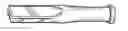
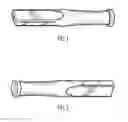
FIG. 1 is a front view of the apparatus, with one side of the barrel facing down and one up.
FIG. 2 is a front view of the apparatus, the side of the barrel is facing down leaving the other side up and one side of the flat portion of the barrel in a horizontal view. The bottom of the knob is also visible.
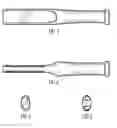
FIG. 3 is a side view of the apparatus, which is similar to FIG. 2. The flat barrel is displayed, along with the handle and the cylinder portion of the knob.
FIG. 4 is a side view of the apparatus, displaying the side of the barrel. The flat portion of the barrel is facing down and is not in view. The center portion's shape can be seen, along with the handle and cylinder portion of the knob.
FIG. 5 is a bottom view of the bat. The figure just displays the knob.
FIG. 6 is a top view of the bat. The figure displays the top portion of the barrel, along with an aerial view of the handle and knob.
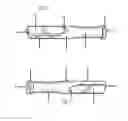
FIG. 1a: is a front view of the apparatus, the same as figure one only broken up into 8 sections. 1. is the top of the bat, 2. is the square barrel, 3. is the side of the barrel, 4. and 5. comprise the center. 6. is the handle, 7. is the side of the knob and 8. is the bottom of the knob.
FIG. 2a: is a front view of the apparatus, the same as figure two only broken up into 8 sections. The sections the figure is broken into label the same areas as in FIG. 1a.
DETAILED DESCRIPTION OF THE INVENTION
Although the present invention is herein described in terms of specific embodiments, it will be readily apparent to those skilled in this art that various modifications, rearrangements, and substitutions can be made without departing from the spirit of the invention. The scope of the present invention is thus only limited by the claims appended hereto. For purposes of example only, and not by way of limitation, the following embodiment of the present invention, and modifications thereto, are specifically described with regard to improving one's mechanical skill set in regards to hitting a baseball. The sections of the bat are comprised by FIGS. 1a and 2a. The following sections and components of the bat will be referred to in regard to the section numbers indicated in FIGS. 1a and 2a.
The Teknical Practice Bat is a simulation tool that conditions the ideal swing. With correct procedure the Practice bat improves several mechanical attributes in one interval of application. The tool's design inclines the user to practice swinging correctly, by producing desirable effects (ie. Line Drives). The flat barrel (2.) is the primary indicator of a positive repetition. The construction and design allows for main components of the swing to display success, as well as build incidental features within operation.
Design:
Design Patent Number: #29435086
The Teknical Knob:
Diameter: 2¾ Inches
Height: 1¼Inches
Handle:
Diameter: 2 to 2½ Inches
Length: 9-12 inches
Length from bottom of knob to end of handle: 13-16¼Inches (15¼)
Length of curving portion connecting to the barrel: ¾ to 3 Inches (1¾)
Angle of the curve to the barrel: 32 degrees
Incision length: 3-5 cm
Barrel:
Width: 2¾-4 Inches (2¾)
Length: 10-13 Inches (12)
Top of Barrel:
Width: 1% Inches
Length: 2¾Inches
Total Length: 24-30 Inches
Weight: 47 to 53 oz.
Dimensions and measurements vary with style of production.
Referring to FIGS. 1. and 2. The knob (7&8) is also partially seen in all other figures. 7&8 has a cylindrical shape. 7&8 is at the base of the bat, has a diameter of 3 in. and a height of 1¼ in. 7&8 is larger than traditional baseball bats to serve several functions. The main technical use is to prevent one from “rolling their wrists” over. When “rolling one's wrists” the participant is rotating one's knuckles towards the ground. When participating in “rolling the wrists” a great amount of force is lost. The force is lost due to the surface area of the bat being reduced a great deal. Also the angle of the bat when participating in this behavior is toward the ground. At such an angle the trajectory of the ball would not be favorable. When one remains firm with the wrists and squares up with the ball (barrel connecting at a 90 degree angle) the outcome is desirable. 7&8 aids in the ideal positioning of the hands. The size and shape of 7&8 helps the participant maintain their grip. The design of the 7&8 supports the structure of the entire bat. The majority of the weight is shifted towards the bottom of the bat(8), thus the engineering of the larger knob, allows for greater control and stability. Correct application has the participant place their bottom hand upon 7&8, while lining up the joints in the middle of their fingers. Upon contact the top hand should resemble a fist, to achieve the ideal squaring up approach. The feature of not rolling one's wrist could also be achieved through the variation of a smaller handle.
The Handle(6) has cylinder shape, with a diameter of 2½ in. and a length of 9 in. 6 is also larger than traditional baseball bats for multiple reasons. The process of constructing 6 is similar to the formation of a typical baseball bat. 6 is carved out using a lathe and is fitted to the correct specifications. The design of 6 allows for a simplified process when positioning one's hands. During application 6 forces the participant to maintain firm wrists throughout the swing. Not only is the angle upon contact compromised when someone “rolls their wrists” therefore causing the trajectory to be faulty. There is a slight pain when the participant does not maintain firm straight writs upon contact. The pain is an indicator of a negative application and repetition. The pain inflicted stems from the size and design of the bat. The pain is not made to injure the player but rather harvest the psychological principles of classical conditioning. In addition, there is a transitional effect that benefits the participant when returning to a typical bat. The transitional attribute of 6 allows for an easier swing when returning to a regular baseball bat. Due to the excess size of 6 there is a greater strain upon the muscles holding the bat. Repetition with the larger apparatus will have a improving transitional effect upon returning to the regular bat. This progression is due to the larger area/weight of 6. The traditional bat will feel lighter and the smaller handle will be able to be gripped with greater control after one application with The Teknical Practice Bat. A variation of the bat that could still serve the same function would be an even larger area in the handle. This could be achieved by adding a grip or cushion onto the handle. This could also be achieved by making 6 larger through construction.
The Center portion (4&5) of The Teknical Practice Bat has a parabola shape (ie. curve), that forms into the flat barrel(2). The process of constructing 4&5 is similar to the formation of a typical baseball bat. 4&5 is carved out using a lathe and is fitted to the correct specifications. 4&5 serves as a balancing feature and weight additive. The middle fixture allows for balance during revolution. 4&5 is the large fraction of the total weight, the entire piece is 38-50 ounces (depending on the size) while a typical baseball bat is 29-32 ounces. The heavier weight of the Tek bat induces a lightening effect during use of a typical bat. The increased weight of the Tek Bat compared to a typical bat forces the participant to keep both hands on the bat and follow through. The heavier weight also improves the player's stamina and in turn their focus.
The angle of the connecting component(4) is (32 degrees) and is 5 cm from the structure. This area usually serves no technical purpose, but rather unifies the center to the flat barrel.
The right angle barrel(2) has a length of 12 inches, width of 2¾ inches and height of about 1 inch. The process of constructing 2 is similar to the formation of a typical baseball bat. 2 is carved out using a lathe and is fitted to the correct specification. The main function of 2 is to produce the squaring up effect. When one's knuckles remain squared up on the barrel makes contact at a ninety degree angle. When the participant makes contact at a ninety degree angle, desirable results are initiated. The rectangle shaped barrel forces one to square up perfectly with the ball. If one shifts the point of contact in an angle too far from the desired angle of ninety degrees the flight of the ball will be defective. The reasoning behind squaring up with the 2 is to create maximum surface area on the point of contact. By practicing the correct method of squaring up with the Tek Bat the participant is conditioning the ideal position for creating the maximum surface area. When returning to a typical baseball bat the method of squaring up should remain fresh in the player's mind through muscle memory. The transition from the Tek Bat to a typical bat will produce a number of desirable effects including greater contact and consistency. In addition, the non-aerodynamic shape of bat forces one to use their whole body to generate a suffice amount of power. This involves one's hips and incorporating a holistic approach to every swing. The feature of alerting a player to the correct mechanic of squaring up could be achieved with series of variations. One could line the appropriate area of the barrel that produces hard hit balls with a series of materials. One could line the barrel with lights that light up when the correct area is hit. Also the desirable area could be lined with a metal or material that makes a different sound than the rest of the bat.
Example 1
The Teknical Practice is designed to condition the ideal swing. By beginning with the correct posture and stance, one gives themselves a chance to perform the designed application. The hands are to be loaded a few inches straight back from the initial position. The top hand's elbow is to be virtually connected to the back hip while straightening the leading elbow completely upon contact. One is to power through with the back hip first and the upper body connected but following the lower halfs lead. While maintaining a strong grip through the strike zone one is practicing to stay firm and not roll their wrists. This proper technique of keeping straight wrists and a tight first allows for the squaring up effect to take place. It is similar to a wall, the firmest structure will produce the greatest ricochet. On contact one must square up with the pitch and maintain a firm follow through. The false application of the tool will result in an undesirable sight, feeling &/or sound. The flat barrel is the attribute that displays the positive/negative result of squaring up. On the follow through the player must maintain the correct procedure or an unwanted sensation in the body (ie. wrist) will ensue, caused by the handle and knob. The weight of the apparatus forces one to maintain both hands on the bat and to garner the correct approach. Upon completion the player should finish with their sight down and their chin upon their front shoulder. This execution of a holistic approach is utilized in succession to condition the ideal process. The ultimate outcome from using the apparatus is an improved mechanical skillset within a holistic/complete swing upon returning to a typical bat. In turn the improved mechanical skillset will produce the maximum output of the player's potential.
Example 2
Acquire the necessary materials: Base(balls), Batting gloves, Partner/Coach, L-Screen, Teknical Practice Bat, and Appropriate space to hit into. Set up in batting stance parallel (north) to the person tossing the ball, partner should position themselves 15 to 25 feet away from the hitter. Line up knuckles with bottom hand touching the knob; maintain a strong grip before positioning the bat further. Maintain the bat with one's hands parallel to their back shoulder. Once in a comfortable, strong stance allow the coach/partner to toss the ball on a straight line into the strike zone. Focus on center of baseball. Load hips and hands back no more than two inches behind one's shoulder. Begin to step front foot forward. Land with front foot closed while maintaining the majority of strength and balance relatively behind the player's center of mass. Making sure to stay behind the ball despite increase/decrease in speed. Throw hip first at the ball while attempting to connect one's back elbow to the top of their back hip. Swing as connected as possible with the upper/lower body while staying closed on the front side and maintaining firm wrists all the way through the strike zone. The bottom half should fire first while remaining connected with upper half. Continue to focus on the center of the baseball. On contact square up with the right angle barrel. If one does not connect properly, the flight of the ball will not be desirable. Continue the swing completely through the strike zone, while maintaining strong/firm wrists and staying closed on the front side. One should finish with their chin on their back shoulder and one's back hip facing forward. Correct flaw(s) and repeat.
Ideology which the Teknical Practice Bat Brings Together: TekMatic Approach
Mechanical Focus
-
- Professional Approach at the Plate: Confidence in the correct mechanics, along with a professional mental approach allows TekMatic pupils to step to the plate with the ideal mindset.
- Closed Front Side with closed stance and straight front arm: The closed front side forces the player to focus all of their power into the point of contact. The closed position of one's lower half does not let their hips fly open, allowing them to direct their complete potential to the ball. The straight front arm inclines the player to keep their barrel in the strike zone for a longer period of time. The player is able to further harvest their complete potential by keeping a straight front arm, inturn utilizing their whole upper body with more efficiency and precision.
- Barrel through the strike zone for an elongated period of time: The barrel being in the zone for an elongated period of time increases the player's chances of getting on base. The longer the majority of the bat is in a beneficial area, the more likely a hard hit ball will be produced. A number of drills focus directly on this skill (ii. Tee in the zone, wrap, etc.), and various procedures aid this attribute incidentally.
- Maximum Efficiency from the bottom half of the body: The majority of power stems from the lower half of the body. TekMatic Instruction conditions the player to utilize their complete power by firing one's hips at the ball and allowing their hands to follow. A large portion of the drills are geared towards evoking the ideal output from one's lower half.
- Square barrel to the ball & making contact in the correct power position: By connecting one's back elbow, with their lower back hip they are setting up the correct power position. The ideal positioning produces the staple mechanic of TekMatic Instruction, squaring up. Squaring up maximizes the surface area on the barrel, in turn increasing the chances of the player making solid contact. If error is exhibited, the point of contact will be reduced from the size of a dime to that of a pencil eraser.
- Punching and Following through the ball after contact: Following through the ball effectively utilizes the player's complete potential and can increase distance to the flight of the ball.
Unique Nature:
TekMatic Instruction is unique in several facets, including production, order, mechanical focus, etc. A few drills and procedures encompassed in TekMatic Instruction may seem familiar. Although others may have created a few pieces of the regimen, the order in which the drills are administered and the logic/instruction behind them are one of a kind. The Instruction method is designed to attack problem areas in a particular order, often conditioning the same skill consecutively, thus increasing the chances of reconciliation. Each drill is taught to improve a mechanical focus listed above. The overall theme of TekMatic is to harvest the player's maximum, whether it be, potential, power, precision, intellect, barrel surface area, etc. . . . The author of TekMatic Instruction also owns multiple patents on tools within the procedure, further accentuating it's unique and fledging nature.
-
- Walk Through Drill: Utilized to warm up all muscles involved in hitting. The participant takes two to three steps to the tee and makes contact. Must follow thru completely and walk past point of contact. Is an exaggeration of the correct swing to prepare the body for the instruction.
Mechanical Drills
Tee Drills:
-
- Tee in the Zone: Two tees are used in this drill. A tip tee is placed in the strike zone behind the tee that is equipped with the ball. The player is suppose to graze the back tee and drive the ball of the front tee. The purpose is to condition the bat passing through a large area of the strike zone, allowing the player to stay behind the ball. With the majority of their force behind the ball, the maximum power is produced.
- Back Arm Taped Drill: The back arm of the player is strapped to their body to create a compact position. The participant is to swing with a regular range of motion while attempting to connect their back elbow and back hip.
- Extension Bat Drill: “The Extension Bat” is composed of two conjoining sections. The top section resembles a typical bat, 73 to 100 cm length. The protruding bottom section made of fiberglass is 56 to 70 cm in length and 1 to 2 cm in width. “The Extension Bat” measures 129 to 170 cm in length, all sizes are set to vary. The weight of the present prototype is about 20 to 30 ounces. This weight along with the mass are subject to change. “The Extension Bat's” design is structured to produce the ideal mechanics. When negative mechanics are exhibited, the bottom section often strikes the player. This brisk pain, varying in sensations, conditions the player to swing correctly. The ideal position is influenced by the clear alert, exhibited when performed incorrectly. The unfavorable feeling is intended to mold the correct process, and create a natural habit of positive repetition.“The Extension Bat” serves as a practicing device that enhances one's productivity when returning to a typical bat. The purpose encomposses improving one's technique and skill, through application of the tool. The time devoted to ideal activity with “The Extension Bat”, translates to positive performance in competition. Continued correct repetition with “The Extension Bat” is intended to improve mechanics along with statistics.
- Low Tee Drill: A ball is placed on a tee about 12 inches above the ground. The participant is to swing with an average exertion, keep their hands up and drop their barrel to the ball. The drill is designed to practice squaring up and driving a very low positioned pitch.
- Front Side Discus: A total of four frisbees are aimed toward the center and opposite field in relation to the hitter. The player maintains a straight front arm and closed batting stance. The focus upon the front section of the swing produces, maximum power when returning to competition, through a closed front side and straight front arm. Following through with the discus aids the similar action of following through when making contact with the ball, preventing one from cutting their swing short.
- Front Hand Drill: A small bat is held only in the front hand and is accelerated at a relaxed rate. The drill is centered on the front side of the upper body. Focusing on keeping the player closed, while squaring up and following through. The drill can be aided by the same wrap harvested in the Back Arm Tape Drill.
- Backhand Drill: A small bat is held only in the back hand and is accelerated at a relaxed rate. The ball is suppose to be tapped with a brisk follow through. The procedure is focused on connecting one's back elbow to their back hip, while squaring up. When connected in the power position the player is apt to swing with their hip first and let their hands follow in unison.
Soft Toss:
-
- Hitting Racket Drill: Utilizing an altered tennis racket (size varying with player) the player swings with only their front hand. The ball is delivered in a soft toss procedure. A finesse approach produces the ideal mechanics of a straight arm and square position of contact, while keeping their front shoulder tucked into their chest.
- Paddle Drill: Soft toss with aztec balls are hit with a boat oar, swung with both arms. Utilized to firmly square up to the ball and drive through the air resistance the shape of the paddle exhibits. The design of the paddle forces the player to swing with the correct surface area of the barrel.
- Small Paddle Drill: A solely front hand drill utilizing a small paddle. The tool is designed to condition squaring up and the correct position of the front hand.
- Split Bat Drill: Bat with similar shape to a typical bat besides both sides of the tool being flat. Used to square up to the ball and maintain the proper technique through the swing. Performed through soft toss with aztec balls.
- Dowel Drill: Front Hand: Wooden dowel with a diameter of 1 inch and 24 inch length (can vary) used to practice the proper mechanics for the front arm. Light weight of stick allows one to straighten their arm and maintain correct hand eye coordination upon connection. The design of the tool also focuses on conditioning the correct technique of staying behind the ball.
- Dowel Drill: BackHand: Wooden dowel with a diameter of 1 inch and a length of 34 inches (can vary) used for squaring up and punching through the ball. Both activities are performed through soft toss with aztec balls. All drills listed in the soft toss section, decreased in the size of their surface area/point of contact. This order is implemented to force the player to focus on squaring up correctly to the ball. In turn, producing hard hit repetitions.
Repetition:
-
- The Teknical Practice Bat: The Teknical Practice Bat induces the ideal swing through conditioning multiple sections of the player's mechanics at once. From the knob, that forces one to stay fluent through the stroke, and not roll their wrists. To the flat barrel that displays a desirable flight of the ball, when the player squares up and connects correctly. Upon returning to the typical bat, The Teknical Practice Bat produces improvement through consistent contact, power, and additional positive results. The ultimate outcome from using the apparatus is a holistic swing that will produce the maximum output of the player's potential. The ball is bounced or tossed to force the player to stay behind the ball, and utilize their whole body. The first repetitions are taken with one's backhand on the center portion of the bat. This is performed to emphasize the punching, squaring up and back hand to hip technique. The remainder of the application is taken with both hands connected by the knuckles with the bottom hand touching the knob. The back elbow is to be connected to one's back hip while allowing the weight of the bat to guide the player through the ball. The player is to stay closed, maintain a straight front arm, square up and punch through the ball
Claims
1. A method for improving the mechanical skill set in regards to hitting a baseball, said method comprising the steps of:
providing the knob & handle are of larger size than a typical bat, which provides adequate positioning, thus allowing the skill set the ability to improve;
along with the center maintaining balance, connecting to the flat barrel, the flat barrel is comprised of a ninety degree angle in order to harvest squaring up; the key feature of the apparatus;
With all components of the apparatus with correct dimensions and design elements the bat provides a medium for mechanical skill set improvement;
The mechanical skillset includes maintaining firm wrists, creating maximum surface area for contact by squaring up, improving stamina/strength, increasing force upon contact and creating a holistic/complete swing that utilizes the player's full potential/body.
2. The method set forth in claim 1, wherein said method includes the steps of:
applying the improved mechanical skillset when returning to the typical baseball bat.
3. The method set forth in claims 1 and 2, is further attained by the nature of the knob.
4. The methods set forth in claims 1, 2 and 3 are achieved by the size of the knob, which prevents one from rolling their wrist, while inclining the participant to partake in the correct positioning.
5. The methods set forth in claim 1-4 can also be attained with a varying size and/or different shaped knob; the shape (diamond, square, oval, etc.) must support the grip while still supporting the previous claim.
6. The method set forth in claims 1 and 2 of not allowing one to roll their wrist and maintain a squared up approach can be achieved by the large size and circular shape of the handle.
7. The method set forth in claims in 1, 2 and 6 can be achieved by an alternate shape of the handle, including a square, diamond, additive which further increases size or other shape that still fulfils the claims set forth.
8. The methods set forth in claims 1 and 2 are achieved by the square barrel, the 90 degree angle which forces one to square up creating a greater surface area upon contact.
9. The methods set forth in claims 1, 2 and 8 can also achieved by varying in size and somewhat of shape (one side being flat rather than both, one side being flat with another size/shape/option compromising the parallel side.), although the majority of the barrel must be flat to create the maximum surface area upon contact;
10. The methods set forth in claims 1, 2, 8 and 9 can be achieved with the variation of a material that makes a noticeable sound when one connects in the correct location.
11. The methods set forth in claims 1, 2, 8, 9, and 10 can be achieved by a similar approach in claim 9 although instead of a sonic indicating material, it is a material that lights up and visually alerts the player to the correct mechanics.
12. The methods set forth in claims 1-11 are supported by the center, which connects the components of the bat in design.
13. The methods set forth in claims 1 and 2 are further induced by the center which provides a substantial amount of weight which further induces claim 2 with a lightening transition effect upon returning to a typical bat.
14. The methods set forth in claims 1, 2, and 13 are achieved by the overall design which is of a greater weight than a typical bat and contains a design that is not aerodynamic thus further inducing lightening transition effect upon returning to a typical bat.
15. The methods set forth in all claims prior coordinate together in order to utilize the player's maximum potential and ability; Especially claims 12-14 highlight the nature of the bat to force the player to use their whole body, connecting their lower body with their upper body, to drive the ball
Images & Drawings included:
Sources:
- United States Patent and Trademark Office - verify current appl. status at the USPTO↗
Recent applications in this class:
- » 20250135311 2025-05-01
HITTING TOOL SELECTION DIAGNOSIS SYSTEM, HITTING TOOL SELECTION DIAGNOSIS METHOD, AND NON-TRANSITORY COMPUTER-READABLE MEDIUM STORING DIAGNOSIS PROGRAM - » 20250114680 2025-04-10
BATTING TEE ADAPTER AND SYSTEM - » 20250083017 2025-03-13
BASEBALL AND SOFTBALL TRAINING DEVICE FOR IMPROVED SPIN RATE AND EFFICIENCY - » 20250083016 2025-03-13
Throwing Footwork Trainer - » 20250073552 2025-03-06
BALL PRESSURE MEASUREMENT SYSTEM AND METHOD - » 20250065205 2025-02-27
Baseball Batting Training Assembly - » 20250065204 2025-02-27
PITCH TRAINING DEVICE - » 20250032877 2025-01-30
SHOCK ABSORBING DEFORMABLE SPORTING SUPPORT APPARATUS - » 20250032876 2025-01-30
TRAINING BAT APPARATUS - » 20250025759 2025-01-23
Baseball Grip Training Device