Flowpack tray
US20150251833A1
2015-09-10
14/433,829
2013-08-28
✅ Patent granted
US 9,790,014 B2
2017-10-17
WO; PCT/EP2013/067816; 20130828
WO; WO2014/056658; 20140417
King M Chu
Reinhart Boerner Van Deuren P.C.
2033-08-28
Abstract:
The present invention is related to a flowpack comprising a cross-sealed film, said film comprising one or more polymeric layer(s), said flowpack enclosing a tray comprising one or more cavity(ies), the film forming said flowpack being sealed against said tray and forming a lid closing the cavity(ies) of said tray, said lid being part of the initial film of the flowpack.
Assignee:
- AMCOR FLEXIBLES 5 🇨🇭 Kreuzlingen, Switzerland
Applicant:
Interested in similar patents?
Get notified when new applications in this technology area are published.
Classification:
B65D77/003 » CPC main
Packages formed by enclosing articles or materials in preformed containers, e.g. boxes, cartons, sacks or bags Articles enclosed in rigid or semi-rigid containers, the whole being wrapped
B65D2571/00672 » CPC further
Bundles of articles held together by packaging elements for convenience of storage or transport, e.g. portable segregating carrier for plural receptacles such as beer cans, pop bottles; Bales of material; Bundling wrappers or trays; Elements used to form the wrapper Films
B65D83/08 IPC
Containers or packages with special means for dispensing contents for dispensing thin flat articles in succession
B65D77/00 IPC
Packages formed by enclosing articles or materials in preformed containers, e.g. boxes, cartons, sacks or bags
B65D65/38 » CPC further
Wrappers or flexible covers; Packaging materials of special type or form Packaging materials of special type or form
B65D71/08 » CPC further
Bundles of articles held together by packaging elements for convenience of storage or transport, e.g. portable segregating carrier for plural receptacles such as beer cans or pop bottles; Bales of material; Packaging elements holding or encircling completely or almost completely the bundle of articles, e.g. wrappers Wrappers shrunk by heat or under tension, e.g. stretch films or films tensioned by compressed articles
B65D77/38 » CPC further
Packages formed by enclosing articles or materials in preformed containers, e.g. boxes, cartons, sacks or bags; Details; Opening or contents-removing devices added or incorporated during filling or closing of containers Weakened closure seams
Description
FIELD OF THE INVENTION
The present invention is related to a flowpack comprising a tray.
STATE OF THE ART
Packaging comprising a tray with one or more cavity(ies) closed by a lidding film are known in the art. The tray is usually produced by thermoforming a polymeric monolayer or a multiple layer film in a mould comprising one or more cavity(ies). Alternatively, such a tray can be performed by injection moulding.
Both thermoforming and injection moulding induce strong limitations in the performance of the tray. For example, films comprising an absolute barrier layer, such as a metallic layer or a metal oxide layer, cannot be thermoformed without losing the barrier properties. Technically speaking, such an absolute barrier layer can be added on the formed trays, but the complexity and cost of depositing such layers on three-dimensional structures limit their use to very specific applications.
Furthermore, those processes also exclude the use of pre-printed films, and printing the entire 3D structure is difficult.
For those reasons, tray/lidding packages comprising one or more cavity(ies) are usually overwrapped by a secondary package, this secondary package offering the possibilities of printed surfaces and/or barrier properties that are usually not available on a tray.
WO 2008/086388 A1 discloses a flowpack comprising a tray, wherein the cavities of the tray are closed by a separate label that is not part of the initial flowpack film.
The use of secondary packaging should nevertheless be avoided in order to globally reduce the packaging waste.
SUMMARY OF THE INVENTION
The present invention discloses a flowpack comprising a cross-sealed film, said film comprising one or more polymeric layer(s), said flowpack enclosing a tray comprising one or more cavity(ies), the film forming said flowpack being sealed against said tray and forming the lid closing the cavity(ies) of said tray, said lid being part of the initial film of the flowpack.
Preferred embodiments of the present invention disclose at least one or a suitable combination of the following features:
-
- The tray is a multiple-cavity tray;
- the film forming the flowpack comprises weakened lines, said weakened lines allowing, in use, the individual opening of each of said one or more cavity(ies);
- the cross-seals of the flowpack are cold seals;
- the seal of the multiple-cavity tray on the film forming the flowpack is a heat seal;
- the flowpack comprises a fin seal in addition to the cross-seals;
- the film is a multiple-layer film selected from the group consisting of heat-seal lacquer/PET/print layer/PE, or OPP/print layer/PE, or OPP/print layer/OPP, or print layer/OPP/metalized-OPP/seal layer or print layer/OPP/seal layer;
- the flowpack is label-free.
The flowpack of the invention can be produced by a process comprising the steps of:
-
- providing a tray comprising one or more cavity(ies);
- filling the cavity(ies) with goods to be packaged;
- providing a flowpack having at least one unsealed end;
- placing the filled tray in the flowpack;
- closing the at least one unsealed end of the flowpack by means of a cross-seal;
- sealing the flowpack on said tray for closing the cavity(ies), the flowpack thereby forming a lid closing the tray.
Advantageously, the step of providing a flowpack is performed by producing the flowpack around the filled tray on an horizontal form fill seal (HFFS) machine.
Alternatively, the flowpack of the invention can be produced by a process comprising the steps of:
-
- providing a tray comprising one or more cavity(ies);
- filling the cavity(ies) with goods to be packaged;
- sealing a lidding film on said tray for closing the cavity(ies);
- folding both sides of the lidding film hanging out of the tray and sealing them by a fin seal or a lap seal;
- cutting and cross-sealing both ends of the formed flowpack.
BRIEF DESCRIPTION OF THE DRAWINGS
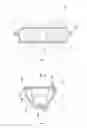
FIG. 1 represents a cross-section of a multiple-cavity flowpack according to one embodiment of the invention.
FIG. 2 represents the cross-section of a multiple-cavity flowpack of FIG. 1 along the A-A plane.
FIG. 3 represents a top view of a multiple-cavity flowpack according to one embodiment of the invention.
KEYS
- 1: multiple-cavity flowpack
- 2: weakened line
- 3: seal between tray and film
- 4: cross-seal
- 5: multiple-cavity tray
- 6: film forming the flowpack (used as lidding film closing the multiple-cavity tray) in FIG. 1
- 7: packaged goods
- 8: fin seal
- 9: cavity
DETAILED DESCRIPTION OF THE INVENTION
The present invention is related to a flowpack 1 enclosing a tray 5 comprising one or more cavity(ies), the film 6 forming said flowpack 1 being sealed against said tray 5 and forming a lid closing the individual cavity(ies) 9, said lid being part of the initial film of the flowpack.
Such flowpack 1 presents several advantages in comparison with prior-art tray packaging. As a first advantage, there is no need for a secondary packaging, as the flowrap film 6 completely encloses the tray 5.
As a further advantage, the flowpack 1 of the invention can be easily produced on modified horizontal form fill and seal machines or thermoform fill seal machines.
For example, filled trays can be fed to an horizontal form fill seal machine, wherein the flowpack 1 is formed and sealed around the filled tray, the inner surface of the flowpack 1 being sealed in a subsequent step on the top surface of the tray, thereby closing the individual cavities.
Alternatively, it is also possible to modify a thermoform fill seal (TFFS) process to produce the flowpack of the invention. In that case, a bottom film is fed to the modified TFFS machine, thermoformed in a tray mould comprising one or more cavity(ies) and cut into the desired dimensions. Alternatively, a tray 5 can be directly fed to the machine.
The goods 7 to be packed are then distributed in the cavity(ies) 9, and the film 6 forming the flowpack 1 is sealed onto the upper surface of the tray, as a lidding would be sealed on a tray 5 in standard thermoform fill and seal processes or in a tray/lidding process, the sole difference being that the film 6 is wider than the tray 5, so that it can be subsequently folded and cross-sealed for forming the flowpack 1.
On a further station known from horizontal form fill and seal machines, the film 6 can be folded and sealed under the tray by means of a fin seal 8 or a lap seal.
A last station also known from horizontal form fill and seal machines seal and cut the cross-seals 4 to close the flowpacks 1.
Such a process simplifies the general process known in the prior art, as usually the secondary packaging is added on a separate device.
In order to ease the individual opening of the cavities 9, the film 6 forming the flowpack 1 preferably comprises weakened lines 2 crossing the cavities. Advantageously, said weakened lines 2 are located around the top of the cavities 9. Such weakened lines 2 can be for example produced by laser scoring at the lidding-sealing station. Alternatively, the weakened lines 2 can be produced on the film before the packing process. In that case, optical marks are preferably present on the film 6 in order to have the weakened lines 2 correctly positioned with regard to the cavities 9.
Preferably, the transverse seals 4 and the fin seal 8 or lap seal are cold seals.
Advantageously, the seal between the tray and the film forming the flowpack 1 is a heat seal.
Typical film-tray compositions are monolayer thermoformed or moulded trays comprising polyester or polyolefins such as PET, PETG or a-PET, PP, or HDPE. Optionally the tray can be a multilayer tray comprising a sealant layer.
Suitable flowpack/lidding films are selected from the group consisting of:
-
- heat-seal lacquer/PET/print layer/PE,
- OPP/print layer/PE,
- OPP/print layer/OPP,
- print layer/OPP/metalized-OPP/seal layer,
- print layer/OPP/seal layer.
Claims
1. Flowpack (1) comprising a cross-sealed film (6), said film comprising one or more polymeric layer(s), said flowpack (1) enclosing a tray (5) comprising one or more cavities, the film (6) forming said flowpack (1) being sealed against said tray (5) and forming the lid closing the cavity(ies) (9) of said tray (5), said lid being part of the initial film of the flowpack.
2. Flowpack (1) according to claim 1, characterised in that the tray (5) is a multiple-cavity tray (5).
3. Flowpack (1) according to claim 1, characterised in that the film (6) forming the flowpack (1) comprises weakened lines (2), said weakened lines (2) allowing, in use, the individual opening of each of said one or more cavity(ies)(9).
4. Flowpack according to claim 1, characterised in that the cross-seals (4) of the flowpack (1) are cold seals.
5. Flowpack according to claim 1, characterised in that the seal of the multiple-cavity tray (5) on the film (6) forming the flowpack (1) is a heat seal.
6. Flowpack according to claim 1, comprising, in addition to the cross-seals (4), a fin seal (8).
7. Flowpack according to claim 1, characterised in that the film (6) is a multiple layer film selected from the group consisting of heat-seal lacquer/PET/print layer/PE, or OPP/print layer/PE, or OPP/print layer/OPP, or print layer/OPP/metalized-OPP/seal layer or print layer/OPP/seal layer.
8. Flowpack according to claim 1, characterised in that said flowpack is label-free.
9. Process for the production of a flowpack (1) according to claim 1 comprising the steps of:
providing a tray (5) comprising one or more cavity(ies) (6),
filling the cavity(ies) (6) with goods to be packaged (7),
providing a flowpack (1) having at least one unsealed end,
placing the filled tray (5) in the flowpack (1),
closing the at least one unsealed end of the flowpack (1) by means of a cross-seal (4),
sealing the flowpack (1) on said tray (5) for closing the cavity(ies)(6), the flowpack thereby forming a lid closing the tray (5).
Images & Drawings included:


Sources:
- United States Patent and Trademark Office - verify current appl. status at the USPTO↗
Recent applications in this class:
- » 20250250085 2025-08-07
CONTAINER FOR CONSUMER GOODS HAVING HOUSING AND OUTER WRAPPER - » 20240300719 2024-09-12
Transport container for packaging a beverage-filled cup - » 20240190635 2024-06-13
PACKAGING CONTAINER-FILLER MEMBER, PACKAGING CONTAINER, CONTENTS-FILLED PACKAGING CONTAINER, AND METHOD OF MANUFACTURING CONTENTS-FILLED PACKAGING CONTAINER - » 20230415970 2023-12-28
PACK OF TISSUE PAPER ROLLS AND METHOD - » 20230139409 2023-05-04
PACKAGE, ARTICLE CARRIER AND BLANK THEREFOR - » 20230109321 2023-04-06
Package for food and related method of packaging - » 20230024964 2023-01-26
PACKAGING - » 20220081179 2022-03-17
System and method for packaging medical containers - » 20220041359 2022-02-10
Packaging for microarrays - » 20210347548 2021-11-11
Packaging and process for the sterile packaging of objects for medical, pharmaceutical or cosmetic applications
Recent applications for this Assignee:
- » 20160159541 2016-06-09
Gas and light proof, double-shell blister packs for medicinal contents - » 20150375923 2015-12-31
Easy opening reclose systems for cigarette packaging - » 20150374033 2015-12-31
Easy-opening reclose systems for cigarette packaging - » 20150298880 2015-10-22
Reclosable package