Sealant and method of preparing the same
US20150252208A1
2015-09-10
14/361,859
2013-05-31
✅ Patent granted
US 9,540,534 B2
2017-01-10
WO; PCT/CN2013/076599; 20130531
WO; WO2014/153835; 20141002
Ling Choi | Jessica E Whiteley
Ladas & Parry LLP
2033-05-31
Abstract:
Embodiments of the present invention provide a frame sealant and a method of preparing the same. The frame sealant includes 60-70 wt % of a low-viscous epoxy-acrylic photocurable resin, 1-5 wt % of an epoxy resin, 0.5-1 wt % of a photoinitiator, 5-10 wt % of a thermocuring agent, 1-2 wt % of a coupling agent, 5-10 wt % of organic powders, 5-10 wt % of inorganic powders, and 1-5 wt % of porous glass microspheres treated with a safe gas. The method includes: mixing the components of the frame sealant to produce a mixture; compounding the mixture; and debubbling the compounded mixture.
Inventors:
- Ang Xiao 48 🇨🇳 Beijing, China
- Shanshan Wang 11 🇨🇳 Beijing, China
- Dengguo Xia 2 🇨🇳 Beijing, China
Assignee:
- Beijing BOE Optoelectronics Technology Co., Ltd. 2,409 🇨🇳 Beijing, China
- BOE TECHNOLOGY GROUP CO., LTD. 20,350 🇨🇳 Beijing, China
Applicant:
Interested in similar patents?
Get notified when new applications in this technology area are published.
Classification:
G02F1/1339 » CPC further
Devices or arrangements for the control of the intensity, colour, phase, polarisation or direction of light arriving from an independent light source, e.g. switching, gating or modulating; Non-linear optics for the control of the intensity, phase, polarisation or colour based on liquid crystals, e.g. single liquid crystal display cells; Constructional arrangements; Operation of liquid crystal cells; Circuit arrangements; Constructional arrangements; Manufacturing methods Gaskets; Spacers; Sealing of cells
C08K7/28 » CPC further
Use of ingredients characterised by shape; Expanded, porous or hollow particles inorganic Glass
C09D133/14 » CPC main
Coating compositions based on homopolymers or copolymers of compounds having one or more unsaturated aliphatic radicals, each having only one carbon-to-carbon double bond, and at least one being terminated by only one carboxyl radical, or of salts, anhydrides, esters, amides, imides, or nitriles thereof; Coating compositions based on derivatives of such polymers; Homopolymers or copolymers of esters of esters containing halogen, nitrogen, sulfur or oxygen atoms in addition to the carboxy oxygen
C08F2/46 IPC
Processes of polymerisation Polymerisation initiated by wave energy or particle radiation
C09J133/06 » CPC further
Adhesives based on homopolymers or copolymers of compounds having one or more unsaturated aliphatic radicals, each having only one carbon-to-carbon double bond, and at least one being terminated by only one carboxyl radical, or of salts, anhydrides, esters, amides, imides, or nitriles thereof; Adhesives based on derivatives of such polymers; Homopolymers or copolymers of esters of esters containing only carbon, hydrogen and oxygen, the oxygen atom being present only as part of the carboxyl radical
C08G61/04 IPC
Macromolecular compounds obtained by reactions forming a carbon-to-carbon link in the main chain of the macromolecule; Macromolecular compounds containing only carbon atoms in the main chain of the macromolecule, e.g. polyxylylenes only aliphatic carbon atoms
C09J4/06 » CPC further
Adhesives based on organic non-macromolecular compounds having at least one polymerisable carbon-to-carbon unsaturated bond ; adhesives, based on monomers of macromolecular compounds of groups - in combination with a macromolecular compound other than an unsaturated polymer of groups - Organic non-macromolecular compounds having at least one polymerisable carbon-to-carbon unsaturated bond
C08F2/50 IPC
Processes of polymerisation; Polymerisation initiated by wave energy or particle radiation by ultra-violet or visible light with sensitising agents
Description
TECHNICAL FIELD
An embodiment of the present invention relates to a frame sealant and a method of preparing the same.
BACKGROUND
Frame sealant is a key material during cell assembly process of liquid crystal panels. Frame sealant applied onto different sites will produce different effects. As shown in FIG. 1, the reference sign 1 represents edges of the whole glass substrate; 2 represents a substrate peripheral frame sealant (i.e., a frame sealant applied at the periphery of the whole substrate); 2′ represents a sub-substrate peripheral frame sealant (i.e., frame sealants applied at the peripheries of a plurality of small substrates attached to the same substrate) for preventing the edges of substrates and sub-substrates from bending deformation due to the self-weight of glass; 3 represents a primary frame sealant (i.e., a frame sealant applied at the periphery of the liquid crystal) serving as sealing the liquid crystal panels, reducing the contamination of the liquid crystal within the cell caused by external environment, and bonding the color film substrate and the array substrate.
During the cell assembly process, a color substrate (or an array substrate) having a frame sealant applied thereon, together with an array substrate (or a color film substrate) having liquid crystal applied thereon is first subject to cell assembling under vacuum, and then the frame sealant undergoes photo-curing and thermal curing with UV radiation and heating, thereby completing the cell assembling process. Moreover, during the cell assembling under vacuum, it should be ensured that there is only liquid crystal, without any residual gas, present in the sealing space formed by the primary frame sealant. As neither the substrate frame sealant nor the sub-substrate frame sealant has an opening, each of the space between the substrate peripheral frame sealant 2 and the sub-substrate peripheral frame sealant 2′ and the space between the sub-substrate peripheral frame sealant 2′ and the primary sealant 3 are under vacuum. Before the UV radiation and heating, the frame sealant is not yet cured, and the liquid crystal at the inner side of the primary frame sealant applies a certain pressure to the sealant, thereby resulting in that the pressure at the inner side the primary frame sealant is greater than that at the outer side of the primary frame sealant. The pressure difference between both sides will causes many problems, such as, impact of liquid crystal on un-cured frame sealant (briefly referred to as “liquid crystal puncture”), deformation (or even breakdown) of frame sealant, decreasing of the bonding force of frame sealant, and contamination of frame sealant to liquid crystal.
For solving the aforesaid problems caused by the pressure difference between the inner and outer sides of the primary frame sealant, it is conventional means to design openings in the substrate peripheral frame sealant and the sub-substrate peripheral frame sealant, through which external gases enter into all the regions except the inside of the primary frame sealant, so that the pressures inside and outside the primary frame sealant tends to equilibrium, thereby avoiding or alleviating the aforesaid problems of liquid crystal puncture.
However, for preventing the etching solution from entering into the sub-substrates to corrode the substrate during subsequent reduction process, the openings in the substrate peripheral frame sealant and the sub-substrate peripheral frame sealant need to be re-sealed, thereby complicating the process and increasing the cost.
SUMMARY
An embodiment of the present invention is capable of inhibiting the occurrence of liquid crystal puncture in the liquid crystal panel and reducing the contamination of the liquid crystal within the cell caused by external environment by providing a frame sealant comprising porous glass microspheres treated with a safe gas and a method of preparing the same. An embodiment of the present invention provides a frame sealant comprising 1 to 5 wt % of porous glass microspheres treated with a safe gas.
For instance, the frame sealant of the present invention can comprise 60-70 wt % of a low-viscous epoxy-acrylic photocurable resin; 1-5 wt % of an epoxy resin; 0.5-1 wt % of a photoinitiator; 5-10 wt % of a thermocuring agent; 1-2 wt % of a coupling agent; 5-10 wt % of organic powders; 5-10 wt % of inorganic powders; and 1-5 wt % of porous glass microspheres treated with a safe gas.
For instance, the aforesaid frame sealant can comprise 60-70 wt % of a low-viscous epoxy-acrylic photocurable resin; 3-5 wt % of an epoxy resin; 0.5-1 wt % of a photoinitiator; 8-10 wt % of a thermocuring agent; 1-2 wt % of a coupling agent; 5-8 wt % of organic powders; 7-10 wt % of inorganic powders; and 2-5 wt % of porous glass microspheres treated with a safe gas.
In the porous glass microspheres treated with a safe gas, the gas can comprise 3-5% by volume of the porous glass microspheres.
The safe gas can be nitrogen, an inert gas, carbon dioxide, or air.
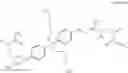
The low-viscous epoxy-acrylic photocurable resin can be represented by the following Formula I, and has a viscosity of 100±50 Pa·s at room temperature:
wherein, each R can be the same or different, and represents H, methyl, or ethyl, respectively.
The frame sealant of the embodiments of the present invention has a viscosity of 250±50 Pa·s at room temperature.
An embodiment of the present invention further relates to a method of preparing the aforesaid frame sealant comprising the steps of:
- (1) mixing the components of the frame sealant to produce a mixture;
- (2) compounding the mixture; and
- (3) debubbling the compounded mixture.
The method can further comprise the step of:
- (4) adjusting the viscosity of the debubbled mixture to 250±50 Pa·s at room temperature.
An embodiment of the present invention further relates to use of the aforesaid frame sealant in the production of a liquid crystal panel.
Moreover, an embodiment of the present invention relates to a liquid crystal panel, wherein the aforesaid frame sealant serves as a substrate peripheral frame sealant and/or a sub-substrate peripheral frame sealant.
BRIEF DESCRIPTION OF THE DRAWINGS
FIG. 1 shows a schematic view of the application sites of the frame sealant on the substrate.
DETAILED DESCRIPTION
The embodiments of the present invention will be described clearly and completely hereinafter. It is apparent that the described embodiments represent only a portion of, rather than all of the embodiments of the present invention. Based on the embodiments of the present invention, persons of ordinary skill in the art can obtain other embodiments without creative work, all of which are encompassed within the present invention.
The present disclosure provides a frame sealant comprising 1-5 wt % of porous glass microspheres treated with a safe gas. For instance, the frame sealant can comprise 60-70 wt % of a low-viscous epoxy-acrylic photocurable resin; 1-5 wt % of an epoxy resin, 0.5-1 wt % of a photoinitiator; 5-10 wt % of a thermocuring agent; 1-2 wt % of a coupling agent; 5-10 wt % of organic powders; 5-10 wt % of inorganic powders; and 1-5 wt % of porous glass microspheres treated with a safe gas. For instance, the sealant can comprise 60-70 wt % of a low-viscous epoxy-acrylic photocurable resin; 3-5 wt % of an epoxy resin, 0.5-1 wt % of a photoinitiator; 8-10 wt % of a thermocuring agent; 1-2 wt % of a coupling agent; 5-8 wt % of organic powders; 7-10 wt % of inorganic powders; and 2-5 wt % of porous glass microspheres treated with a safe gas. Moreover, the frame sealant of the present disclosure has a viscosity in a range of 250±50 Pa·s at room temperature.
The porous glass microspheres treated with a safe gas in the frame sealant of the present disclosure can be any porous glass microspheres known in the art that are suitable for being used in a sealant. The safe gas refers to a gas which does not react with any component of the frame sealant or the liquid crystal under light radiation and heat. For instance, the safe gas can be nitrogen, an inert gas, carbon dioxide, air, etc. For instance, the safe gas can be nitrogen. Also, the safe gas can comprise 3-5% by volume of the porous glass microspheres. If the volume percent of the safe gas is less than 3%, its effect of equilibrating the pressures at the inner and outer sides of the primary frame sealant is not significant. If the volume percent is greater than 5%, it is likely to deteriorate the applicability of the frame sealant. Thus, the volume percent of the safe gas is preferably less than 5%. Moreover, the porous glass microspheres can have a diameter of, for example, 1 to 2 microns.
The low-viscous epoxy-acrylic photocurable resin of the frame sealant of the present disclosure can be represented by the following Formula I (see, e.g., CN 102766047A), and has a viscosity of 100±50 Pa·s at room temperature:
wherein each R can be the same or different, and can represent H, or C1-C4 alkyl, such as, methyl or ethyl, respectively.
The epoxy resin of the frame sealant of the present disclosure can be any epoxy resin that is commonly used in the art, such as, epoxy resin E-41, E-51, or an epoxy resin represented by the following Formula II:
wherein n represents an integer of 1 to 4.
Moreover, the photoinitiator, thermocuring agent, coupling agent, organic powders, and inorganic powders used in the frame sealant of the present disclosure can be those commonly used in the art, respectively. For instance, The photoinitiator can be alkylphenones, such as, α,α-diethoxy acetophenone, α-hydroxyalkyl phenone, or α-aminoalkyl phenone. The thermocuring agent can be aliphatic polyamines, such as, diaminodiphenylmethane, etc. The coupling agent can be silane-based coupling agents, such as, KH550, KH560, or KH 570 (manufactured by UCC), and the like. The organic powders can be elastic microspheres. The inorganic powder can be silica microspheres.
The present disclosure further relates to a method of preparing the aforesaid frame sealant comprising the steps of:
- (1) mixing the components of the frame sealant to produce a mixture;
- (2) compounding the mixture; and
- (3) debubbling the compounded mixture.
For instance, the mixture can be compounded twice or three times at a temperature of 30° C. to 50° C., and the compounding time can vary appropriately depending on the weight of the final frame sealant. For instance, the compounding time can be about 30 min to 60 min. Moreover, the compounded mixture can be debubbled once or many times. For instance, the pressure in the debubbling box can be less than 500 Pa, and the debubbling time can be about 20 min to 40 min.
For instance, the aforesaid method can further comprise the step of:
- (4) adjusting the viscosity of the debubbled mixture to 250±50 Pa·s at room temperature.
In general, within the content ranges of the components of the frame sealant disclosed, the viscosity of the debubbled mixture can be slightly adjusted by using low-viscous epoxy-acrylic photocurable resins having different viscosities as well as organic or inorganic powders, such that the viscosity of the frame sealant can achieve a given value.
The present disclosure further relates use of the aforesaid frame sealant in the production of a liquid crystal panel. In the liquid crystal panel of the present disclosure, the aforesaid frame sealant is used as a substrate peripheral frame sealant and/or a sub-substrate peripheral frame sealant.
The frame sealant of the present disclosure comprises porous glass microspheres treated with a safe gas. Thus, when the frame sealant of the present disclosure is used as a substrate peripheral frame sealant and/or a sub-substrate peripheral frame sealant, during the pressing process of vacuum cell assembling and the process of UV radiation and heating immediately after the vacuum cell assembling, the frame sealant can release the safe gas to resist the pressure at the inner side of the primary sealant caused by the liquid crystal, thereby inhibiting the occurrence of liquid crystal puncture in the liquid crystal panel, and reducing in turn the contamination of the liquid crystal within the cell caused by external environment.
The frame sealants of the present invention will be described with reference to examples Hereinafter. These examples are only illustrative, and should not be interpreted as limiting the scope of the disclosure. It is indicated that all the percents as used herein mean a weight percent, unless otherwise specified.
EXAMPLE 1
At room temperature, 60% of a low-viscous epoxy-acrylic photocurable resin represented by the following Formula III, 5% of an epoxy resin E-41 (manufacture by Jiangsu Yangnong), 0.5% of α,α-diethoxy acetophenone as a photoinitiator, 10% of diaminodiphenylmethane as a thermocuring agent, 1.5% of a silane-based coupling agent KH550 (manufactured by UCC), 8% of resinous elastic microspheres (manufactured by MSE, America) as organic powders, 10% of silica microspheres (manufactured by 3M, America) as inorganic powders, and 5% of glass microspheres (manufactured by 3M, America, G200) treated with a gas were mixed so that the final frame sealant has a total weight of 200 g. The aforesaid mixture was stirred at room temperature for 30 to 60 minutes (about 40 minutes in this example), and then compounded twice at a temperature of 30° C. to 50° C. (about 40° C. in this example), 30 min to 60 min each time (about 30 minutes in this example). The compounded mixture was debubbled at room temperature for 20 minutes under a pressure of less than 500 Pa in the debubbling box to give the frame sealant of Example 1. The frame sealant has a viscosity in a range of 250+50 Pa·s at a temperature of 23° C. to 25° C.
EXAMPLE 2
At room temperature, 66% of a low-viscous epoxy-acrylic photocurable resin represented by the above Formula III, 3 wt % of an epoxy resin E-41 (manufactured by Jiangsu Yangnong), 1% of α,α-diethoxy acetophenone as a photoinitiator, 8% of diaminodiphenylmethane as a thermocuring agent, 2% of a silane-based coupling agent KH550, 8% of resinous microspheres as organic powders, 7% of silica microspheres as inorganic powders, and 5% of glass microspheres (manufactured by 3M, America, G200) treated with a gas were mixed so that the final frame sealant has a total weight of 200 g. The aforesaid mixture was stirred at room temperature for 30 to 60 minutes (about 30 minutes in this example), and then compounded twice at a temperature of 30° C. to 50° C. (about 50° C. in this example), 30 min to 60 min each time (about 40 minutes in this example). The compounded mixture was debubbled at room temperature for 20 minutes under a pressure of less than 500 Pa in the debubbling box to give the frame sealant of Example 2. The frame sealant has a viscosity in a range of 250±50 Pa·s at a temperature of 23° C. to 25° C.
EXAMPLE 3
At room temperature, 70% of a low-viscous epoxy-acrylic photocurable resin represented by the above Formula III, 5 wt % of an epoxy resin E-41, 1% of α,α-diethoxy acetophenone as a photoinitiator, 8% of diaminodiphenylmethane as a thermocuring agent, 1% of a silane-based coupling agent KH550, 5% of resinous microspheres as organic powders, 8% of silica microspheres as inorganic powders, 2% of glass microspheres (manufactured by 3M, America, G200) treated with a gas were mixed so that the final frame sealant has a total weight of 200 g. The aforesaid mixture was stirred at room temperature for 30 to 60 minutes (about 40 minutes in this example), and then compounded twice at a temperature of 30° C. to 50° C. (about 40° C. in this example), 30 min to 60 min each time (about 30 minutes in this example). The compounded mixture was debubbled at room temperature for 20 minutes under a pressure of less than 500 Pa in the debubbling box to give the frame sealant of Example 3. The frame sealant has a viscosity in a range of 250±50 Pa·s at a temperature of 23° C. to 25° C.
Text of Puncture Resistance
The frame sealants of Examples 1 to 3 of the present disclosure were used to produce 3.97-inch liquid crystal panels, and observed punctures under a microscope. For instance, the frame sealants of Examples 1 to 3 were used as the substrate peripheral frame sealant and the sub-substrate peripheral frame sealant, respectively, and a conventional frame sealant UR-2920 (manufactured by Nippon Mitsui Chemistry) was used as the primary frame sealant. The sealants were applied at a rate of 120 mm/sec, and the width after dryness was controlled to 0.5±0.2 mm. Moreover, the amount of liquid crystal of each liquid crystal panel was 2.55 mg. Thus, the liquid crystal panels 1 to 3 of the present invention were prepared, respectively.
In a comparative experiment, each of the primary frame sealant, the substrate peripheral frame sealant and the sub-substrate peripheral frame sealant was the conventional sealant UR-2920, and other conditions were the same as above, and a comparative liquid crystal panel was prepared.
Results of Puncture Resistance Test
In the liquid crystal panels 1 to 3 prepared with the frame sealants of the examples of the present invention, there was no liquid crystal puncture at the inner side of the primary frame sealant, i.e., the whole edge of the liquid crystal side. However, in the comparative liquid crystal panel prepared with the conventional frame sealant UR-2920 as the substrate peripheral frame sealant and the sub-substrate peripheral frame sealant, there were dendritric irregular patterns at the edge of liquid crystal side of the primary frame sealant, i.e., liquid crystal punctures. Such liquid crystal punctures can cause the contamination of liquid crystal within the cell, thereby affecting the peripheral display of the display panel. Thus, it can be seen that using the frame sealants of the embodiments of the present invention can effectively prevent liquid crystal puncture, thereby improving the display effect of liquid crystal.
It is apparent that person of ordinary skill in the art can make various modifications and variations to the present invention without departing from the spirit and scope of the present invention. Thus, provided that such modifications and variations of the present invention are encompassed by the appended claims and the equivalents thereof, the present invention is also intended to encompass these modifications and variations.
Claims
1. A frame sealant comprising 1-5 wt % of porous glass microspheres treated with a safe gas.
2. The frame sealant of claim 1, wherein the frame sealant comprises 60-70 wt % of a low-viscous epoxy-acrylic photocurable resin, 1-5 wt % of an epoxy resin, 0.5-1 wt % of a photoinitiator, 5-10 wt % of a thermocuring agent, 1-2 wt % of a coupling agent, 5-10 wt % of organic powders, 5-10 wt % of inorganic powders, and 1-5 wt % of porous glass microspheres treated with a safe gas.
3. The frame sealant of claim 1, wherein the frame sealant comprises 60-70 wt % of a low-viscous epoxy-acrylic photocurable resin, 3-5 wt % of an epoxy resin, 0.5-1 wt % of a photoinitiator, 8-10 wt % of a thermocuring agent, 1-2 wt % of a coupling agent, 5-8 wt % of organic powders, 7-10 wt % of inorganic powders, and 2-5 wt % of porous glass microspheres treated with a safe gas.
4. The sealant of claim 1, wherein, in the porous glass microspheres treated with the safe gas, the gas comprises 3-5% by volume of the porous glass microspheres.
5. The frame sealant of claim 1, wherein the safe gas is nitrogen, an inert gas, carbon dioxide, or air.
6. The frame sealant of claim 2, wherein the low-viscous epoxy-acrylic photocurable resin is represented by the following Formula I, and has a viscosity of 100±50 Pa·s at room temperature:
wherein each R is the same or different, and represented by H, methyl, or ethyl, respectively.
7. The frame sealant of claim 1, wherein the frame sealant has a viscosity of 250±50 Pa·s at room temperature.
8. A method of preparing the frame sealant of claim 1 comprising the steps of:
(1) mixing the components of the frame sealant to produce a mixture;
(2) compounding the mixture; and
(3) debubbling the compounded mixture.
9. The method of claim 8, further comprising the step of:
(4) adjusting the viscosity of the debubbled mixture to 250±50 Pa·s at room temperature.
10. A liquid crystal panel wherein the frame sealant of claim 1 is used as a substrate peripheral frame sealant and/or a sub-substrate peripheral frame sealant.
11. The sealant of claim 2, wherein, in the porous glass microspheres treated with the safe gas, the gas comprises 3-5% by volume of the porous glass microspheres.
12. The sealant of claim 3, wherein, in the porous glass microspheres treated with the safe gas, the gas comprises 3-5% by volume of the porous glass microspheres.
13. The frame sealant of claim 3, wherein the low-viscous epoxy-acrylic photocurable resin is represented by the following Formula I, and has a viscosity of 100±50 Pa·s at room temperature:
wherein each R is the same or different, and represented by H, methyl, or ethyl, respectively.
Images & Drawings included:


Sources:
- United States Patent and Trademark Office - verify current appl. status at the USPTO↗
Similar patent applications:
- » 20150316798
SEALANT, PREPARING METHOD AND USE METHOD THEREOF AND LIQUID CRYSTAL DISPLAY PANEL - » 20230057812
FRAME SEALANT, PREPARATION METHOD THEREOF AND DISPLAY PANEL - » 20200332159
FRAME SEALANT, PREPARATION METHOD THEREFOR, AND DISPLAY MOTHER SUBSTRATE AND DISPLAY DEVICE USING SAME - » 20160304774
Sealant, preparation method thereof, curing method, and display apparatus - » 20150184041
Sealant compositions, methods of preparing sealant compositions and display panel including sealants - » 20140221535
Tire Sealant and Preparation Method Thereof - » 20170265310
Sealant and preparation method thereof, and display panel motherboard and manufacturing method thereof - » 20190241751
Hydroxyl graphene-modified plating sealants and preparation methods thereof - » 20210017338
SILANE-MODIFIED POLYETHER SEALANT AND PREPARATION METHOD AND USE THEREOF - » 20240309256
POLYURETHANE PHASE-CHANGE NANOCAPSULE, PHASE-CHANGE POLYURETHANE POURING SEALANT AND PREPARATION METHOD THEREFOR
Recent applications in this class:
- » 20250289974 2025-09-18
COATING COMPOSITION AND PREPARATION FOR THE SAME - » 20250270418 2025-08-28
THERMOSETTING RESIN COMPOSITION AND CURED FILM - » 20250223460 2025-07-10
PHOTOCURABLE COMPOSITIONS FOR ADDITIVE MANUFACTURING AND USE THEREOF - » 20250122400 2025-04-17
DISPERANT, COMPOSITION, AND PRESSURE-SENSITIVE FILM - » 20250002746 2025-01-02
HARD COAT FILM - » 20240409768 2024-12-12
METHOD OF PRODUCING POLYMER-COATED SUBSTRATE FOR CAPTURING CANCER CELLS - » 20240392154 2024-11-28
DUAL-CURE EPOXY RESINS FOR 3D PRINTING OF HIGH-PERFORMANCE MATERIALS - » 20240352273 2024-10-24
COATING COMPOSITIONS, METHODS FOR USING THEM AND SYSTEMS THAT INCLUDE THEM - » 20240343934 2024-10-17
POLYMER-COATED GLASS SUBSTRATE - » 20240327669 2024-10-03
DAYLIGHT CURING CONCRETE PRIMER COMPOSITION
Recent applications for this Assignee:
- » 20250295022 2025-09-18
QUANTUM DOT COMPOSITION, LIGHT-EMITTING ELEMENT, DISPLAY PANEL AND PREPARATION METHOD THEREOF - » 20250295019 2025-09-18
HEAT DISSIPATION FILM, DISPLAY MODULE AND DISPLAY DEVICE - » 20250294987 2025-09-18
DISPLAY PANEL, DISPLAY DEVICE - » 20250294983 2025-09-18
DISPLAY PANEL AND DISPLAY DEVICE - » 20250292736 2025-09-18
DRIVING CIRCUIT, DRIVING METHOD, DRIVING MODULE AND DISPLAY DEVICE - » 20250291336 2025-09-18
COMPUTER-IMPLEMENTED METHOD, APPARATUS FOR MANAGING PRODUCTION OF ONE OR MORE PRODUCTS, AND COMPUTER-PROGRAM PRODUCT - » 20250291215 2025-09-18
CIRCUIT BOARD AND METHOD FOR MANUFACTURING THE SAME, LIGHT-EMITTING SUBSTRATE, BACKLIGHT MODULE, DISPLAY PANEL AND DISPLAY APPARATUS - » 20250287801 2025-09-11
ARRAY SUBSTRATE AND DISPLAY APPARATUS - » 20250287695 2025-09-11
ARRAY PANEL, METHOD OF MANUFACTURING THE SAME AND DISPLAY DEVICE - » 20250285597 2025-09-11
DISPLAY SUBSTRATE AND DISPLAY DEVICE