Method of controlling electronic parking brake of vehicle having dual clutch transmission
US20150258971A1
2015-09-17
14/436,212
2013-10-23
✅ Patent granted
US 9,555,780 B2
2017-01-31
WO; PCT/EP2013/072184; 20131023
WO; WO2014/064158; 20140501
Calvin Cheung | Luis A Martinez Borrero
RatnerPrestia
2033-10-23
Abstract:
A method of controlling an electronic parking brake of a vehicle having a dual clutch transmission. The method includes: identifying a slope of an area in which the vehicle is located in order to determine whether the identified slope exceeds a predetermined slope value; determining whether both of two clutches are opened in a safe mode when the identified slope exceeds the predetermined slope value; determining whether the vehicle moves upward in a front direction when both of the two clutches are opened; and operating the electronic parking brake when the vehicle moves upward in the front direction. When the vehicle moves upward in the front direction on the inclined road, the electronic parking brake is automatically operated to prevent the vehicle from slipping in the rear direction. Therefore, the method can effectively improve the safety of the driver and vehicle even when the driver is inept in pedal operation.
Assignee:
- CONTINENTAL TEVES AG &CO. OHG 845 🇩🇪 Frankfurt, Germany
- Continental Automotive Systems Corporation 1 🇰🇷 Icheon-Si, South Korea
Applicant:
Interested in similar patents?
Get notified when new applications in this technology area are published.
Classification:
B60T7/122 » CPC main
Brake-action initiating means for automatic initiation; for initiation not subject to will of driver or passenger for locking of reverse movement
B60T8/245 » CPC further
Arrangements for adjusting wheel-braking force to meet varying vehicular or ground-surface conditions, e.g. limiting or varying distribution of braking force responsive to vehicle inclination or change of direction, e.g. negotiating bends Longitudinal vehicle inclination
B60T8/3205 » CPC further
Arrangements for adjusting wheel-braking force to meet varying vehicular or ground-surface conditions, e.g. limiting or varying distribution of braking force responsive to a speed condition, e.g. acceleration or deceleration acceleration
B60T7/12 IPC
Brake-action initiating means for automatic initiation; for initiation not subject to will of driver or passenger
B60T8/24 IPC
Arrangements for adjusting wheel-braking force to meet varying vehicular or ground-surface conditions, e.g. limiting or varying distribution of braking force responsive to vehicle inclination or change of direction, e.g. negotiating bends
B60T8/32 IPC
Arrangements for adjusting wheel-braking force to meet varying vehicular or ground-surface conditions, e.g. limiting or varying distribution of braking force responsive to a speed condition, e.g. acceleration or deceleration
F16H63/48 » CPC further
Control outputs to change-speed- or reversing-gearings for conveying rotary motion comprising signals other than signals for actuating the final output mechanisms Signals to a parking brake or parking lock; Control of parking locks or brakes being part of the transmission
B60W10/182 » CPC further
Conjoint control of vehicle sub-units of different type or different function including control of braking systems including control of parking brakes
B60W30/18118 » CPC further
Purposes of road vehicle drive control systems not related to the control of a particular sub-unit, e.g. of systems using conjoint control of vehicle sub-units, or advanced driver assistance systems for ensuring comfort, stability and safety or drive control systems for propelling or retarding the vehicle; Propelling the vehicle related to particular drive situations; Braking Hill holding
B60T2201/06 » CPC further
Particular use of vehicle brake systems; Special systems using also the brakes; Special software modules within the brake system controller Hill holder; Start aid systems on inclined road
B60W2520/10 » CPC further
Input parameters relating to overall vehicle dynamics Longitudinal speed
B60W10/113 » CPC further
Conjoint control of vehicle sub-units of different type or different function including control of change-speed gearings; Stepped gearings with two input flow paths, e.g. double clutch transmission selection of one of the torque flow paths by the corresponding input clutch
G06F7/70 IPC
Methods or arrangements for processing data by operating upon the order or content of the data handled; Methods or arrangements for performing computations using a digital non-denominational number representation, i.e. number representation without radix; Computing devices using combinations of denominational and non-denominational quantity representations, e.g. using difunction pulse trains, STEELE computers, phase computers using stochastic pulse trains, i.e. randomly occurring pulses the average pulse rates of which represent numbers
G06G7/00 IPC
Devices in which the computing operation is performed by varying electric or magnetic quantities
G06G7/76 IPC
Devices in which the computing operation is performed by varying electric or magnetic quantities; Analogue computers for specific processes, systems or devices, e.g. simulators for traffic
B60W10/18 IPC
Conjoint control of vehicle sub-units of different type or different function including control of braking systems
B60W30/18 IPC
Purposes of road vehicle drive control systems not related to the control of a particular sub-unit, e.g. of systems using conjoint control of vehicle sub-units, or advanced driver assistance systems for ensuring comfort, stability and safety or drive control systems for propelling or retarding the vehicle Propelling the vehicle
B60W2710/186 » CPC further
Output or target parameters relating to a particular sub-units; Braking system Status of parking brakes
B60W2520/06 » CPC further
Input parameters relating to overall vehicle dynamics Direction of travel
Description
CROSS REFERENCE TO RELATED APPLICATIONS
This application is the U.S. National Phase Application of PCT International Application No. PCT/EP2013/072184, filed Oct. 23, 2013, which claims priority to Korean Patent Application No. 10-2012-0117794, filed Oct. 23, 2012, the contents of such applications being incorporated by reference herein.
BACKGROUND OF THE INVENTION
1. Field of the Invention
The present disclosure relates to a method of controlling an electronic parking brake of a vehicle having a dual clutch transmission, and more particularly to a method of controlling an electronic parking brake of a vehicle having a dual clutch transmission which is capable of preventing a slip phenomenon on an inclined road.
2. Description of the Prior Art
With the increase of methods of electronically controlling various kinds of devices provided in a vehicle, although mechanical brakes, in which a gear ratio is changed by shifting a lever, had been used as a vehicle brake in the past, there is also a tendency of increase in use of electronic parking brakes, each of which is connected to a brake pedal only to be electrically controllable.
The electronic parking brake, which is a system configured to control a brake of a vehicle by determining the current state of the vehicle and the intention of a driver after sensing a pedal operating value by the driver, may be controlled based on the information transferred through a Controller Area Network (CAN) communication between a transmission control unit configured to control a transmission and an engine management system.
Meanwhile, a dual clutch transmission, which has been recently developed for more exact and rapid control of the transmission of a vehicle, enables individual controls of odd gear sets and even gear sets.
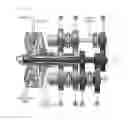
FIG. 1 is a schematic view showing a dual clutch transmission according to the prior art.
As shown in FIG. 1, the dual clutch transmission includes two clutches, a shaft controllably connected to the odd and even gear sets, and four synchronizers configured to synchronize with the gear sets.
In order to control a dual clutch transmission, a transmission control unit may change gear ratios by controlling the two clutches such that a vehicle travelling state corresponds to preset information about vehicle speeds and a driver's accelerator pedal operating rate.
In the case of a dual clutch transmission according to the prior art, if a dangerous situation occurs, all clutches are separated from the shaft, so that the driving power generated from an engine may be cut off from a driving shaft.
However, in this case, a vehicle slip phenomenon may occur on an inclined road and if a driver does not recognize the fact and thus fails to execute a proper brake operation, a big traffic accident may occur in a dangerous situation.
SUMMARY OF THE INVENTION
Accordingly, the present disclosure has been made to solve the above-mentioned problems occurring in the prior art, and an aspect of the present disclosure is to provide a method of controlling an electronic parking brake of a vehicle having a dual clutch transmission which is capable of preventing a vehicle from slipping rearward on an inclined road.
The present disclosure is not limited to the above aspect, and other aspects of the present disclosure will be clearly comprehended based on the following description by those skilled in the art.
In order to accomplish this, there is provided a method of controlling an electronic parking brake of a vehicle having a dual clutch transmission. The method includes identifying a slope of an area in which the vehicle is located in order to determine whether the identified slope exceeds a predetermined slope value; determining whether both of two clutches are opened in a safe mode when the identified slope exceeds the predetermined slope value; determining whether the vehicle moves upward in a front direction when both of the two clutches are opened; and operating the electronic parking brake when the vehicle moves upward in the front direction.
The method may further include determining whether a travelling speed of the vehicle exceeds a predetermined speed; and operating the electronic parking brake when the travelling speed of the vehicle exceeds the predetermined speed.
Meanwhile, the method may further include terminating an operation of the electronic parking brake when a signal of releasing an automatic control of the electronic parking brake according to an intention of a driver is transferred.
According to an aspect of the present disclosure, a method of controlling an electronic parking brake of a vehicle having a dual clutch transmission is provided. By the method, when the vehicle moves upward in the front direction on the inclined road, the electronic parking brake is automatically operated to prevent the vehicle from slipping in the rear direction. As a result, the method can effectively improve the safety of a driver and a vehicle even when the driver is inept in pedal operation.
BRIEF DESCRIPTION OF THE DRAWINGS
The above and other aspects, features and advantages of the present disclose will be more apparent from the following detailed description taken in conjunction with the accompanying drawings, in which:
FIG. 1 is a schematic view showing a dual clutch transmission according to the prior art; and
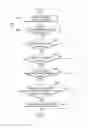
FIG. 2 is a flowchart illustrating a method of controlling an electronic parking brake of a vehicle having a dual clutch transmission according to one embodiment of the present disclosure.
DETAILED DESCRIPTION OF THE EXEMPLARY EMBODIMENTS
Hereinafter, an exemplary embodiment of the present disclose will be described with reference to the accompanying drawings. In the following description, a detailed description of known functions and configurations incorporated herein will be omitted when it may make the subject matter of the present invention rather unclear.
FIG. 2 is a flowchart illustrating a method of controlling an electronic parking brake of a vehicle having a dual clutch transmission according to one embodiment of the present disclosure.
As shown in FIG. 2, a method of controlling an electronic parking brake of a vehicle having a dual clutch transmission according to one embodiment of the present disclosure includes: determining whether an identified slope exceeds a predetermined slope value (step S100), determining whether both of two clutches are opened in a safe mode (step S200), determining whether the vehicle is moving in a forward-and-upward direction when both of the two clutches are opened (step S300), and operating the electronic parking brake (step S600).
The step of determining whether an identified slope exceeds a predetermined slope value (step S100) includes: identifying the slope of an area in which the vehicle is located (step S110); and determining whether the identified slope exceeds a predetermined slope value so that a clutch operating situation for preventing slipping of the vehicle may occur (step S120).
The method of controlling an electronic parking brake of a vehicle according to one embodiment of the present disclosure may prevent the vehicle from slipping rearward due to the clutch operation and the transmission gear shifting of the vehicle when the vehicle passes through the slope area having a predetermined angle or more.
Accordingly, in step S100, a slope value of a predetermined angle, at which the vehicle may slip rearward, is preset and a slope value of an area in which the vehicle is currently located is input (step S110), and it may be then determined whether the input slope value exceeds the preset slope value (step S120).
When the slope value of the current located area of the vehicle exceeds the preset slop value, it may be determined whether both of the two clutches are opened in a safe mode (step S200).
In the step of determining whether both of the two clutches are opened in a safe mode (step S200), it is determined whether both of the two clutches are opened to prevent the revolution power transferred from the vehicle engine from being transferred to the driving shaft in the safe mode of the electronic parking brake when the vehicle enters the inclined area of a predetermined angle or more so that a slip phenomenon may occur.
When the slip phenomenon occurs while the vehicle is being driven in the inclined area, if both of the two clutches are opened and the driver makes a mistake in operating a brake pedal, there is a danger of causing a big traffic accident.
Thus, it is determined in step S200 whether both of the two clutches are opened due to the execution of the safe mode rather than the intention of the driver. Then, when both clutches are opened so that the slip phenomenon may occur, the next step (step S300) is performed as follows.
If both clutches are opened in the safe mode, it may be determined whether the vehicle moves upward in a front direction (step S300).
In the step of determining whether the vehicle moves upward in a front direction (step S300), since the slip phenomenon of the vehicle occurs while the vehicle is moving on the upward inclined road in the front direction, even though it is identified in the previous step that the vehicle exists on the inclined road at the predetermined angle or more, it is determined whether the vehicle moves upward in a front direction.
In order to determine whether the vehicle moves in a front direction, it is possible to determine whether the gear of the vehicle is in a drive mode. The determining of whether the vehicle moves upward is performed based on the slope angle determined through the previous step (step S100) or by using a device such as a gravitation sensor.
However, this is only one embodiment of the present disclosure and various methods which can determine whether the vehicle is moving upward in a front direction may be included within the scope of the present disclosure.
In this case, when the vehicle is moving upward in a front direction (step S300), a step of operating the electronic parking brake may be performed(step S600).
In the step of operating the electronic parking brake (step S600), since an accident may occur if the driver does not properly operate a brake pedal when both clutches are opened in the safe mode and the vehicle slips rearward on the inclined road while the vehicle having the dual clutch transmission is moving upward in the front direction on the inclined road, the electronic parking brake is operated to allow a brake to be automatically operated.
In this case, the method of controlling an electronic parking brake of a vehicle having a dual clutch transmission according to one embodiment of the present disclosure may further include the steps of: determining whether a travelling speed of the vehicle exceeds a predetermined speed (step S400); and operating the electronic parking brake when the travelling speed of the vehicle exceeds the predetermined speed (step S600).
In the step of determining of whether the travelling speed of the vehicle exceeds the predetermined speed (step S400), since there is a need to operate the electronic parking brake according to the embodiment when the vehicle is moving at the predetermined speed or above, it is determined whether the travelling speed of the vehicle exceeds the predetermined speed in order to determine whether there is a need to operate the electronic parking brake.
If the speed of the vehicle does not exceed the predetermined speed, the possibility of causing an accident is low. In this case, an accident may be sufficiently prevented only by the operation of the brake according to the brake pedal operation by the driver.
When the vehicle speed exceeds the predetermined speed so that there is a need to operate the electronic parking brake, the step of operating the electronic parking brake may be performed(step S600).
Meanwhile, in the electronic parking brake control method of the vehicle including a dual clutch transmission according to the embodiment of the present disclosure, it is determined whether a signal of releasing an automatic control of the electronic parking brake is transferred according to the intention of a driver and the operation of the electronic parking brake may be then terminated when the signal has been transferred (step S500).
The driver may not desire to automatically control the electronic parking brake. In this case, the signal of releasing the automatic control of the electronic parking brake may be transferred to the vehicle by operating a device, for example, pressing a button.
If the signal of releasing the automatic control of the electronic parking brake is transferred from the driver, the intention of the driver is accepted and the operation of the electronic parking brake is terminated. Then, even when all of the conditions described above are met, the electronic parking brake may not be operated.
To the contrary, when it is determined that the signal of releasing the automatic control of the electronic parking brake is not transferred from the driver, if all of the conditions described above are met, the electronic parking brake may be operated to prevent the occurrence of an accident in advance.
A method of controlling an electronic parking brake of a vehicle having a dual clutch transmission according to one embodiment of the present disclosure has been described in detail.
According to the present disclosure, when the vehicle moves upward in the front direction on the inclined road, the electronic parking brake is automatically operated to prevent the vehicle from slipping in the rear direction. As a result, a method according to the present disclosure can effectively improve the safety of a driver and a vehicle even when the driver is inept in pedal operation.
Although an exemplary embodiment of the present disclosure has been described for illustrative purposes, those skilled in the art will appreciate that various modifications, additions and substitutions are possible, without departing from the scope and spirit of the disclosure as disclosed in the accompanying claims.
Claims
1. A method of controlling an electronic parking brake of a vehicle having a dual clutch transmission, the method comprising:
identifying a slope of an area in which the vehicle is located in order to determine whether the identified slope exceeds a predetermined slope value;
determining whether both of two clutches are opened in a safe mode when the identified slope exceeds the predetermined slope value;
determining whether the vehicle moves upward in a front direction when both of the two clutches are opened; and
operating the electronic parking brake when the vehicle moves upward in the front direction.
2. The method of claim 1, further comprising:
determining whether a travelling speed of the vehicle exceeds a predetermined speed; and
operating the electronic parking brake when the travelling speed of the vehicle exceeds the predetermined speed.
3. The method of claim 1, further comprising:
terminating an operation of the electronic parking brake when a signal for releasing an automatic control of the electronic parking brake according to an intention of a driver is transferred.
4. The method of claim 2, further comprising:
terminating an operation of the electronic parking brake when a signal for releasing an automatic control of the electronic parking brake according to an intention of a driver is transferred.
Images & Drawings included:

Sources:
- United States Patent and Trademark Office - verify current appl. status at the USPTO↗
Recent applications in this class:
- » 20250121804 2025-04-17
DRIVING ASSISTANCE APPARATUS, DRIVING ASSISTANCE METHOD, AND NON-TRANSITORY STORAGE MEDIUM - » 20230202433 2023-06-29
Rotation restriction control device, rotation restriction device, and vehicle - » 20220258704 2022-08-18
System and method for vehicle stop control - » 20220242376 2022-08-04
Braking control device - » 20220185245 2022-06-16
Hill-hold assist - » 20210380084 2021-12-09
Method and control system for controlling machine - » 20210009093 2021-01-14
Device/method for parking brake assistance - » 20200114885 2020-04-16
Method and system for vehicle control - » 20180319379 2018-11-08
VEHICLE SAFETY BRAKING SYSTEM - » 20180065602 2018-03-08
Electronic control brake system and method for controlling the same
Recent applications for this Assignee:
- » 20210321232 2021-10-14
Vehicle-to-X communication in the USA and Europe using a standard transmitter - » 20210210248 2021-07-08
Seal mold divided structure for combination cable and method for manufacturing the same - » 20210190812 2021-06-24
Method for determining the direction of travel of a vehicle - » 20210179045 2021-06-17
Method for controlling a brake system of a vehicle - » 20210178847 2021-06-17
METHOD FOR OPERATING AN AIR SUSPENSION SYSTEM, AND AIR SUSPENSION SYSTEM - » 20210031800 2021-02-04
Method and apparatus for cooperatively coordinating future driving maneuvers of a vehicle with foreign maneuvers of at least one foreign vehicle - » 20200406897 2020-12-31
Method and device for recognizing and evaluating roadway conditions and weather-related environmental influences - » 20200393848 2020-12-17
Method for detecting a road class - » 20200317199 2020-10-08
Method and system for avoiding lateral collisions - » 20200300636 2020-09-24
Method for determining correction values, method for determining a position of a motor vehicle