White or colored cementitious coating with hydrochromatic properties
US20150266784A1
2015-09-24
14/437,235
2013-10-21
✅ Patent granted
US 9,260,350 B2
2016-02-16
WO; PCT/PT2013/000060; 20131021
WO; WO2014/065684; 20140501
Kelechi Egwim
Sughrue Mion, PLLC
2033-10-21
Abstract:
The present invention relates to a cementitious coating with hydrochromatic properties for micro-concrete or normal concrete, mortar, or other construction materials based on cement and ceramics. This cementitious coating in acrylic solution changes its opacity depending on the presence of water and moisture. This color change is reversible after some drying time leaving invisible the markings already existing on the substrate. This cementitious coating comprises the following components, in percentage in weight of the components relative to the total weight of the composition: a) 0.5-30% of hydrochromatic acrylic copolymer emulsion; b) 5-30% of white or gray Portland cement; c) 0.1-30% of finely ground limestone filler; d) 0.01-2% of powdered super-plasticizer; e) 0.01-3% of modified polyvinyl resins; f) 0.01-5% of dispersant of vinyl acetate and ethylene copolymers; g) 15-70% of aqueous acrylic emulsion; and optionally h) 0.1-15% of inorganic pigments.
Assignee:
- SECIL S.A.- COMPANHIA GERAL DE CAL E CIMENTO 2 🇵🇹 Setubal, Portugal
- SECIL, S.A.—Companhia Geral de Cal e Cimento of Outao 1 🇵🇹 Setubal, Portugal
Applicant:
Interested in similar patents?
Get notified when new applications in this technology area are published.
Classification:
C04B41/483 » CPC further
After-treatment of mortars, concrete, artificial stone or ceramics; Treatment of natural stone; Coating or impregnating e.g. injection in masonry, partial coating of green or fired ceramics, organic coating compositions for adhering together two concrete elements, with organic materials; Macromolecular compounds Polyacrylates
C04B41/50 IPC
After-treatment of mortars, concrete, artificial stone or ceramics; Treatment of natural stone; Coating or impregnating e.g. injection in masonry, partial coating of green or fired ceramics, organic coating compositions for adhering together two concrete elements, with inorganic materials
C04B41/48 IPC
After-treatment of mortars, concrete, artificial stone or ceramics; Treatment of natural stone; Coating or impregnating e.g. injection in masonry, partial coating of green or fired ceramics, organic coating compositions for adhering together two concrete elements, with organic materials Macromolecular compounds
C04B2111/00482 » CPC further
Mortars, concrete or artificial stone or mixtures to prepare them, characterised by specific function, property or use; Uses not provided for elsewhere in Coating or impregnation materials
C04B40/0039 » CPC further
Processes, in general, for influencing or modifying the properties of mortars, concrete or artificial stone compositions, e.g. their setting or hardening ability; Aspects relating to the mixing step of the mortar preparation Premixtures of ingredients
C04B41/5079 » CPC main
After-treatment of mortars, concrete, artificial stone or ceramics; Treatment of natural stone; Coating or impregnating e.g. injection in masonry, partial coating of green or fired ceramics, organic coating compositions for adhering together two concrete elements, with inorganic materials with masses bonded by inorganic cements Portland cements
C04B40/00 IPC
Processes, in general, for influencing or modifying the properties of mortars, concrete or artificial stone compositions, e.g. their setting or hardening ability
C04B2111/802 » CPC further
Mortars, concrete or artificial stone or mixtures to prepare them, characterised by specific function, property or use; Optical properties, e.g. transparency or reflexibility White cement
C04B28/04 » CPC further
Compositions of mortars, concrete or artificial stone, containing inorganic binders or the reaction product of an inorganic and an organic binder, e.g. polycarboxylate cements containing hydraulic cements other than calcium sulfates Portland cements
Description
FIELD OF THE INVENTION
The present invention falls in the field of new building materials, particularly in surface coatings with hydrochromatic properties for concrete and micro-concrete, mortar or other construction materials based on cement and ceramics. There is a large number of applications on structural and architectural concrete, such as façades, walls, urban furniture and other decorative elements, exposed to weather. Such coated parts, while wet, can exhibit colors already existing on the substrate, or even drawings, texts and all kind of desired markings, being hidden once more after the coating has dried.
BACKGROUND OF THE INVENTION
Exposed concrete, i.e. with high performance at architectural level, is nowadays a widely used material in architecture and civil engineering, helping to answer to many technical and aesthetic challenges required by current architectonic trends. The same happens with coating mortars and finishing pastes generally covering actual buildings.
The possibility of transmitting changes, due to the presence of water, to the surface appearance of concrete and plaster or other mortars has the largest interest in architectural area, as well as in the communication and information areas.
Patent KR100890863 describes a thermochromatic concrete, i.e., a product obtained by the introduction of a thermochromatic pigment in a normal concrete, allowing the color to change as a function of temperature.
Also patent KR20100072530 refers to the use of thermochromatic pigments for insertion into concrete surface during its casting, by surface coating of the mold, so as to change surface color by the effect of temperature.
BRIEF DESCRIPTION OF THE FIGURES
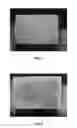
FIG. 1 shows the concrete plates coated with hydrochromatic cement coating, while dried.
FIG. 2 shows the concrete plates coated with hydrochromatic cement coating after being wetted, wherein the markings already existing on the substrate are now visible.
SUMMARY OF THE INVENTION
This invention allows solving the technical problem consisting on having a white or colored coating to micro-concrete, concrete, mortar and other cementitious and ceramic materials which allow the exhibition of different appearances depending on the fact they are dry or wet. This can be a change in color, when the substrate exhibits a homogeneous color different from the application, drawings, paintings, markings or other, which become invisible after the surface has dried once more.
A technical solution has been found which allows, departing from aqueous acrylic solutions with white or colored cementitious fillers and hydrochromatic pigments properly stabilized, to prepare a coating for surfaces of concrete, mortar and similar with high adhesion and durability, which can transmit an homogeneous appearance to the surface while dried, and can exhibit, when wetted, the patterns already existing on the coating substrate.
DETAILED DESCRIPTION OF THE INVENTION
The present invention relates to a surface coating with hydrochromatic properties for concrete and micro-concrete, mortar or other construction materials based on cement and ceramics. There is a large number of applications on structural and architectural concrete, such as façades, walls, urban furniture and other coating decorative elements, exposed to weather. Such coated parts and plasters, while dry, show an homogeneous appearance with the color transmitted by the coating and, when wetted, can exhibit colors already existing on the substrate, or even drawings, texts, and all kind of desired markings, being again hidden after the coating dries once more.
The process is therefore reversible, very durable and resistant to the weather.
Among generic processes and general applications are included:
Coatings in walls or other structural elements cast in situ or prefabricated in concrete
Façades of buildings (large façade elements or prefabricated panels)
Viaduct superstructures and edge beams
Urban furniture and other interior and exterior decorative elements
Information and communication panels invisible when dry
Thin layer coatings of walls such as plasters and tinplating pastes.
Compared to products of similar performance, those herein described stand out by the possibility of becoming invisible in the presence of water, making it possible to read all patterns present in the substrate, keeping dry the texture and appearance of the most homogeneous architectural concrete, mortar, or ceramic and cement material where it is applied.
It is an aqueous acrylic solution with cementitious fillers usually consisting in white cement of high brightness and strength, modified by polymers and copolymers so as to allow stabilization of a hydrochromatic acrylic copolymer.
On the other hand the addition of a series of super-plasticizers based on polycarboxylates, melamine and others with waterproofing effect, such as calcium and zinc stearates, as well as modified polyvinyl resins, makes it possible to obtain an effective reduction of the mixing water and high compactness compatible with the desired mechanical performance, also helping stability and action of the pigment of the copolymer, as well as enhancing the coating adhesion and durability.
OBJECT OF THE INVENTION
The object of present invention is therefore a white or colored surface coating with hydrochromatic properties, homogeneous, with appearance similar to demolded concrete or with the texture of supporting mortar, for covering micro-concrete and concrete, mortar or other building materials based on cement and ceramics. Therefore those materials are able, while dry, to show an homogeneous appearance with the color transmitted by the coating and, when wetted, they can exhibit colors already existing on the substrate, as well as drawings, text, and all kind of desired inscriptions, being again hidden after the coating dry once more, wherein the color change is reversible and very durable and resistant to the weather. Said coating comprises the following components, in percentage in weight of the components relative to the total weight of the composition:
a) 0.5-30% of hydrochromatic acrylic copolymer emulsion;
b) 5-30% of Portland cement;
c) 0.1-30% of finely ground limestone filler;
d) 0.01-2% of super-plasticizer;
e) 0.01-3% of modified polyvinyl resins;
f) 0.01-5% of dispersant of vinyl acetate and ethylene copolymers;
g) 15-70% of aqueous acrylic emulsion; and optionally
h) 0.1-15% of inorganic pigments.
The Portland cement b) may be gray or white depending on the hue desired to the coating.
The component c) typically has a particle size less than 90 microns.
Usually component d) consists of sulfonated melamine condensates, or equivalent.
The component e) is generally present in a percentage by weight of 0.2-1.0%, component f) is present in a weight percentage often between 0.5% and 1.0%, and component g) is present in a percentage by weight usually of 50-60%.
The component h) is present in a usual dosage of 1-5% and may present itself in various hues, normally consisting of metal oxides.
PREPARATION EXAMPLES
An example is given of preparing a coating for white concrete with graffiti to be coated according to the invention so as to become invisible in dry weather. This example is intended to better illustrate the invention without any limitation on the content thereof.
Example 1
Hydrochromatic Cementitious Coating for Concrete in White Hue:
| Component | Weight % | |
| 1 | White Portland cement | 10.0 |
| 2 | Finely ground limestone filler | 10.0 |
| 3 | Condensate of sulfonated melamine | 0.2 |
| 4 | Modified polyvinyl resin | 0.04 |
| 5 | Dispersant of vinyl acetate and ethylene copolymers | 0.6 |
| 6 | Hydrochromatic acrylic copolymer emulsion | 19.16 |
| 7 | Aqueous acrylic emulsion | 60.0 |
Manufacturing Steps:
Place the components 1, 2, 3 and 4 in the mixer, subsequently add component 5. Mix separately components 6, 7 and add to previous mixture. Mix for at least 120 s. The coating is ready to use. Apply on the surface with a paint roller in at least two coats, in the absence of rain, excessive humidity or temperatures below 5° C., in a clean surface.
Claims
1. A white or colored surface coating with hydrochromatic properties, homogeneous, for covering micro-concrete and concrete, mortars, or other construction materials based on cement and ceramics, characterized in that it comprises the following components, in percentage in weight of the components relative to the total weight of the composition:
a) 0.5-30% of hydrochromatic acrylic copolymer emulsion;
b) 5-30% of Portland cement;
c) 0.1-30% of finely ground limestone filler;
d) 0.01-2% of super-plasticizer;
e) 0.01-3% of modified polyvinyl resins;
f) 0.01-5% of dispersant of vinyl acetate and ethylene copolymers;
g) 15-70% of aqueous acrylic emulsion;
and optionally
h) 0.1-15% of inorganic pigments.
2. The coating according to claim 1, characterized in that the component b) is white or gray Portland cement.
3. The coating according to claim 1, characterized in that the component c) typically has a particle size less than 90 microns.
4. The coating according to claim 1, characterized in that the component d) is composed of sulfonated melamine condensates.
5. The coating according to claim 1, characterized in that the component e) is present in a percentage by weight of 0.2-1.0%, component f) is present in a percentage by weight of 0.5-1%, and component g) is present in a percentage by weight of 50-60%.
6. The coating according to claim 1, characterized in that the component h) consists of inorganic pigments based on metal oxides and is present in a percentage by weight of 1-5%.
Images & Drawings included:

Sources:
- United States Patent and Trademark Office - verify current appl. status at the USPTO↗
Recent applications in this class:
- » 20250289769 2025-09-18
CONCRETE FORMULATIONS, STRUCTURES, AND INLAYS AND METHODS THEREFORE - » 20240166568 2024-05-23
CONCRETE FORMULATIONS, STRUCTURES, AND INLAYS AND METHODS THEREFORE - » 20220098123 2022-03-31
MARKING TRAFFICKED PAVEMENT SUBSTRATES USING A DRY POLYMER MODIFIED CEMENT - » 20200377425 2020-12-03
LIGHTWEIGHT COMPOSITE MATERIALS