ORTHOTIC INSOLE
US20150272273A1
2015-10-01
14/666,543
2015-03-24
Abstract:
An orthotic insole includes a body positioned in an item of footwear underneath the sole of a foot to support the foot. The upper surface of the insole is contoured provide a medial arch support zone. There is a lateral arch support zone and an anterior arch support zone to provide additional support for the medial, lateral and anterior arches of the mid-foot.
Interested in similar patents?
Get notified when new applications in this technology area are published.
Classification:
A43B13/38 » CPC main
Soles; Sole-and-heel integral units Built-in insoles joined to uppers during the manufacturing process, e.g. structural insoles; Insoles glued to shoes during the manufacturing process
Description
RELATED U.S. APPLICATIONS
Not applicable.
STATEMENT REGARDING FEDERALLY SPONSORED RESEARCH OR DEVELOPMENT
Not applicable.
REFERENCE TO MICROFICHE APPENDIX
Not applicable.
BACKGROUND OF THE INVENTION
1. Field of the Invention
The present invention relates to an orthotic insole.
2. Description of Related Art Including Information Disclosed Under 37 CFR 1.97 and 37 CFR 1.98.
The human foot is a complex anatomical structure, responsible for bearing weight and enabling balance and locomotion. Tendons in the lower leg and foot work together to form an upward curve or arch in the centre of the foot. When the tendons do not work together properly, the arch flattens, causing a condition known as flat foot or fallen arch. This can result in a lack of stability when standing, and can lead to straining of the ligaments under the feet as well as problems throughout the leg and lower back. To compensate and correct for this, orthotic insoles can be placed in footwear to support the underside of the foot and prevent the arch flattening as a user stands and moves. Rigid and firm orthotics assist in retaining feet in an anatomically desirable state when stationary, but they do not assist the natural foot function as they can inhibit the arches in performing their natural spring-like action when a user is walking, running or jumping. Natural foot function involves a spring like action through the arches, which not only acts to absorb shock, but also stimulates proprioceptive nerve fibers that provide information to the brain, critical for both stability and agility.
The present invention seeks to overcome or substantially ameliorate at least some of the deficiencies of the prior art, or to at least provide an alternative.
It is to be understood that, if any prior art information is referred to herein, such reference does not constitute an admission that the information forms part of the common general knowledge in the art, in Australia or any other country.
SUMMARY OF THE INVENTION
According to a first aspect, the present invention provides an orthotic insole comprising a body configured to be positioned in an item of footwear underneath the sole of a foot to support the foot, the upper surface of the insole contoured to provide additional support for the medial, lateral and anterior arches of the mid-foot.
Preferably, the upper surface of the body is contoured to provide a medial arch support zone, a lateral arch support zone and an anterior arch support zone.
Preferably, the medial arch support zone comprises an upwardly and outwardly curving bulge having an inner face angled towards the outer edge of the body and an outer face that extends towards the outer edge of the body from the top edge of the inner face and the front and rear ends of the medial arch support zone.
Preferably, the medial arch support zone is substantially D-shaped in plan view.
Preferably, the inner face is substantially flat.
Preferably, the lateral arch support zone is substantially smoothly domed and generally ovoid in shape.
Preferably, the lateral arch support zone has a flattened outer edge coincident with the outer edge of the body, the front and rear ends of the ovoid being rounded.
Preferably, the lateral arch support zone is generally kidney shaped.
Preferably, the anterior arch support zone is a smooth dome.
Preferably, the anterior arch support zone extends forwards from within a notch formed between the front end of the medial arch support zone and the front end of the lateral arch support zone.
Preferably, the anterior arch support zone has the shape of an ovoid with the longer axis substantially aligned with the front-to-rear axis of the insole body.
Preferably, the upper surface of the body is contoured to provide a heel support zone.
Preferably, the heel support zone is raised and substantially flat-topped.
Preferably, the heel support zone has a rear edge coincident with the curved rear edge of the insole body, the front end forming a triangular point that extends between the rear end of the medial arch support zone and the rear end of the lateral arch support zone.
Preferably, the upper surface of the body further comprises a first metatarso-phalange joint support.
Preferably, the first metatarso-phalange joint support is a smoothly shaped dome.
Preferably, the upper surface of the body further comprises a distal phalange support.
Preferably, the distal phalange support is a smoothly shaped dome.
The preferred embodiment provides six zones of support providing proprioceptive facilitation. Zone 1 provides support and reduction of impact stress for the calcaneus. Zones 2, 3 and 4 provide support for the medial, lateral and anterior arches respectively. Zone 5 supports the first metatarso-phalange joint and zone 6 provides support for the distal phalange of the big toe.
The material chosen for the six zones of support are designed to be able to absorb shock from impact whilst also having good recoil properties to enhance the natural foot action during gait by providing a “trampoline effect”. This helps biomechanical function as well as proprioceptive neurological input to the brain.
Other aspects of the invention are also disclosed.
BRIEF DESCRIPTION OF THE DRAWINGS
Notwithstanding any other forms which may fall within the scope of the present invention, preferred embodiments of the present invention will now be described, by way of examples only, with reference to the accompanying drawings in which:
FIG. 1a shows a schematic view from directly below of the positions of the arches in a typical left foot; line A-B showing the anterior transverse arch, line B-C showing the lateral longitudinal arch, and line A-C showing the medial longitudinal arch.
FIG. 1b shows a schematic view of the foot of FIG. 1a viewed from the side.
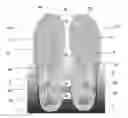
FIG. 2 shows a top plan view of a pair of orthotic footwear insoles side by side according to an embodiment of the invention.
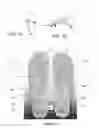
FIG. 3 shows another top plan view of the pair of orthotic footwear insoles in another relative orientation.
FIG. 4 is a side perspective view of a right foot orthotic insole.
DETAILED DESCRIPTION OF THE DRAWINGS
It should be noted in the following description that like or the same reference numerals in different embodiments denote the same or similar features.
In the description below, ‘outer’ and ‘inner’ are used to refer to the sides of the insole relative to one foot of a pair of feet: the side adjacent to or closest to the other foot when a person is standing with their feet together is the inner side, and the other or opposite side of the same insole is the outer side. “Outer” corresponds to the anatomical lateral aspect of the foot whilst “inner” corresponds to the anatomical medial aspect of the foot. These terms are not intended to apply as they would to a single insole in isolation, where the ‘outer edge’ would be the entire perimeter and the ‘inner portion’ or part would be anything inside this perimeter.
FIGS. 2 and 3 shows a pair of orthotic insoles 1 according to a first embodiment of the present invention, the pair comprising a left insole 1a and a right insole 1b. FIG. 4 shows the right insole 1b. Each orthotic insole 1 has a main body portion 2 shaped and sized to fit inside and rest against the upper surface of the sole of an item of footwear. Each of the orthotic insoles 1a, 1b is generally the same shape and size as the sole of a user's foot, and substantially covers the upper surface of the sole of their footwear when inserted so that when a user is wearing the item of footwear, the sole of their foot rests against and is supported by the orthotic insole 1. As well as generally supporting the whole foot, the upper surface of the orthotic insole 1 is particularly contoured to provide additional support for the medial, lateral and anterior arches of the mid-foot.
For ladies shoes, ¾ length orthotic insoles are designed for open shoes or heels. The orthotic insole is placed in contact with the upper surface of the sole of the shoe. It fits from the heel to ¾ of the length of the sole and is held in place by a hook and loops (Velcro) tab under the heel section of the orthotic.
The medial arch A-C runs along the instep of the foot (from the calcaneus, the talus, the navicular, the three cuneiforms, and the first, second, and third metatarsals). The lateral arch A-B runs along the outside of the foot (calcaneus, the cuboid, and the fourth and fifth metatarsals). The anterior arch B-C supports under the middle three toes at their base (cuneiforms, cuboid and the second, third and fourth metatarsals). The purpose of the arches is to provide stability whilst standing, and the ability to absorb stress whilst walking, running and jumping in a similar manner to a shock absorber, as well as providing valuable neurological input.
The orthotic insole 1 is formed as a unitary item from a material of a particular density (or from an assembled layers of materials) that provides the necessary support for the foot and particularly the medial, lateral and anterior arches of the mid-foot, while providing shock absorption in such a manner that the body 2 of the orthotic insole 1 works with this process, flexing and rebounding as weight is transferred through the foot during movement such as walking and running, rather than merely supporting the arch or arches in the correct position when stationary as in prior art insoles.
The orthotic insole 1 has three arch support zones: medial arch support zone 4, lateral arch support zone 5, and anterior arch support zone 6. These are shaped, and spaced over the top surface of the insole body 2, in a manner that offers maximum or additional support when standing and during the full gait cycle, over and above that that would be provided by a non-contoured insert, or one contoured in a manner that does not provide specific support for all three arches. As well as support for the three mid-arches, support is provided for the heel (calcaneus) by a heel support zone 7, and for the first metatarsal head and phalangeal joint by a head support zone 8, and a base support zone 9.
The medial arch support zone 4 is formed on the orthotic insole 1 so that in use it will be located under the medial arch of a user's foot. That is, on the inner side of the orthotic insole 1 just in front of the heel. The medial arch support zone 4 appears as an upwardly curving arced bulge when viewed from the inner side of the orthotic insole 1. The medial arch support zone 4 has an inner face 4a that has a lower edge generally coincident with the inner edge of the orthotic insole 1. The inner face 4a is substantially planar and slightly inwardly curved at each end (front and rear ends 4c and 4e) and is angled over the body 2, slightly towards the outer edge of the body 2 when viewed from above the orthotic insole 1. An outer face 4b extends towards the outer edge of the body 2 from the top edge 4c of the inner face 4a. When viewed from above, the outer face 4b appears as an outwardly curving arced bulge, the front end 4d of the outer face 4b appearing elongated in comparison to the rear end 4e of the outer face 4b. The outer face 4b is generally shaped as a curved mound. In other words, the medial arch support zone 4 in plan view has substantially the form of a letter “D” for the right insole 1b and a reversed letter “D” for the left insole 1a, with the medial arch support zone 4 appearing as an upwardly arched bulge from perimeter edges thereof.
The lateral arch support zone 5 is located on the body 2 so that in use it will be under the lateral arch of a user's foot. When viewed from above, the lateral arch support zone 5 has a generally ovoid appearance, with a flattened outer edge generally coincident or adjacent with the outer edge of the body 2. The front and rear ends 5a, 5b of the ovoid that forms the lateral arch support zone 5 are rounded, and from above, the inner edge of the lateral arch support zone 5 curves towards the outer edge of the body 2. From the side, the lateral arch support zone 5 curves upwards so that the overall appearance is smoothly domed. From above, the lateral arch support zone 5 can be regarded as generally kidney or oval shaped. A curved ridge is provided between the medial arch support zone 4 and the lateral arch support zone 5.
The anterior arch support zone 6 is located so that it extends forwards in the notch formed between the outer edge of the front end 4d of the medial arch support zone 4 and the inner edge of the front end 5a of the lateral arch support zone 5. The anterior arch support zone 6 is close in to the medial arch support zone 4, with a gap between the anterior arch support zone 6 and the lateral arch support zone 5. That is, generally below the anterior arch of a user's foot in use. From above, the anterior arch support zone 6 has the form of an ovoid with the longer axis aligned substantially along or parallel with the longer, or front/rear axis of the body 2. From the side, the lateral arch support zone 5 appears upwardly smoothly domed. Alternatively, the anterior arch support zone 6 can be generally circular in plan view.
The heel support zone 7 is located on the body 2 so that it will be under the heel of a user when the sole 1 is in position for use. The heel support zone 7 has a rear edge that is coincident with and which curves around with the curved rear edge of the body 2. From above, the front end 7a of the heel support zone 7 forms a triangular point that extends closely alongside the outer edge of the rear end 4e of the medial arch support zone 4 and beside the inner edge of the rear end 5b of the lateral arch support zone 5, with a gap between the inner edge of the rear end 5b and the outer side of the triangular point of the heel support zone 7. The point of the triangle between the medial arch support zone 4 and the lateral arch support zone 5 is rounded. From the side, the heel support zone 7 appears as a raised area (raised above the main or lower part of the body 2), the heel support zone 7 is substantially flat-topped.
The head support zone 8 and the base support zone 9 are located on the upper surface of the insole body 2 adjacent the inner edge towards the toe or front so that they will be located under the distal phalange of the big toe and the metatarso-phalangeal joint of a user in use. From above, the head support zone 8 and the base support zone 9 both appear substantially circular, and both appear as smooth upwardly extending domes when viewed from the side. The head support zone 8 and the base support zone 9 are spaced from each other.
In terms of thickness, the heel support zone 7 is the thickets, the medial arch support zone 4 is next in thickness, the anterior arch support zone 6, head support zone 8 and the base support zone 9 are then next in thickness, and the lateral arch support zone 5 is least in thickness.
The embodiments of the present invention provide multiple advantages over existing insoles:
-
- The three arch support system provides shock absorption in such a manner that the insole flexes and rebounds as weight is transferred through the foot during movement such as walking and running, rather than merely supporting the arch or arches in the correct position when stationary as in prior art insoles.
- The rebound or trampoline effect also increase stimulation of the proprioceptive nerves, enhancing brain stimulation throughout the gait cycle.
- As well as arch support, support is provided under the first metatarsal and first phalanx which helps support the foot during “toe off” (the final phase of gait), and along with the arch support system this helps to prevent the formation of bunions.
- The insoles help reduce stress on the plantar fascia so heel spurs and plantar fasciitis can be overcome more quickly and even prevented from occurring in the first place.
- Providing support during heel strike also helps with conditions such as heel spurs.
- The orthotic insole can also help prevent foot problems such as plantar fasciitis, heel spurs, Morten's neuroma and bunions.
- The orthotic insoles provides 6 zones of support designed to offer maximum support when standing and during the full gait cycle
- The orthotic insoles provides support for all three arches in the mid-foot.
- To help the foot overcome the stresses involved with standing, walking and running on hard surfaces such as concrete, wooden floors and tiles, the orthotic insoles provides support for the heel (calcaneus) as well as the first metatarsal head and base. Providing support during heel strike helps with conditions such as heel spurs, whilst the three arch support system helps reduce stress on the plantar fascia so heel spurs and plantar fasciitis can be overcome more quickly and even prevented from occurring in the first place. Having support under the first metatarsal helps support the foot during “toe off” (the final phase of gait), and along with the three arch support system they help to prevent the formation of bunions.
- The orthotic insoles are not designed to push or lift the arches up. They are designed to enhance the stability of the feet by not allowing the arches to collapse, whilst enhancing the spring like action of the arches through the trampoline like action of the supports whilst in motion.
- The orthotic insoles provides six zones of support providing proprioceptive facilitation. Zone 1 provides support and reduction of impact stress for the calcaneus. Zones 2, 3 and 4 provide support for the medial, lateral and anterior arches respectively. Zone 5 supports the first metatarso-phalangeal joint and zone 6 provides support for the distal phalange of the big toe.
- The material chosen for the six zones of support are designed to be able to absorb shock from impact whilst also having good recoil properties to enhance the natural foot action during gait by providing a “trampoline effect”. This helps biomechanical function as well as proprioceptive neurological input to the brain.
Claims
1. An orthotic insole comprising:
a body configured to be positioned in an item of footwear underneath a sole of a foot to support the foot, said body having an upper surface contoured to provide additional support for medial, lateral and anterior arches of a mid-foot.
2. The orthotic insole as claimed, in claim 1, wherein the upper surface of the body is contoured to provide a medial arch support zone, a lateral arch support zone and an anterior arch support zone.
3. The orthotic insole, as claimed in claim 2, wherein the medial arch support zone comprises an upwardly and outwardly curving bulge having an inner face angled towards the an outer edge of the body and an outer face extending towards the outer edge of the body from the top edge of the inner face and front and rear ends of the medial arch support zone.
4. The orthotic insole as claimed in claim 3, wherein medial arch support zone is D-shaped in plan view.
5. The orthotic insole as claimed in claim 2, wherein the lateral arch support zone is smoothly domed and ovoid in shape.
6. The orthotic insole as claimed in claim 5, wherein the lateral arch support zone has a flattened outer edge coincident with the outer edge of the body, the front and rear ends of the ovoid being rounded.
7. The orthotic insole as claimed in claim 2, wherein the lateral arch support zone is kidney shaped.
8. The orthotic insole as claimed in claim 2, wherein the anterior arch support zone is a smooth dome.
9. The orthotic insole as claimed in claim 8, wherein the anterior arch support zone extends forwards from within a notch formed between the front end of the medial arch support zone and the front end of the lateral arch support zone.
10. The orthotic insole as claimed in claim 8, wherein the anterior arch support zone has the shape of an ovoid with the longer axis aligned with the front-to-rear axis of the insole body.
11. The orthotic insole as claimed in claim 1, wherein the upper surface of the body is contoured to provide a heel support zone.
12. The orthotic insole as claimed in claim 11, wherein the heel support zone is raised and flat-topped.
13. The orthotic insole as claimed in claim 12, wherein the heel support zone has a rear edge coincident with the curved rear edge of the insole body, the front end forming a triangular point that extends between the rear end of the medial arch support zone and the rear end of the lateral arch support zone.
14. The orthotic insole as claimed in claim 1, wherein the upper surface of the body further comprises a first metatarso-phalange joint support.
15. The orthotic insole as claimed in claim 14, wherein the first metatarso-phalange joint support is a smoothly shaped dome.
16. The orthotic insole as claimed in claim 1, wherein the upper surface of the body further comprises a distal phalange support.
17. The orthotic insole as claimed in claim 16, wherein the distal phalange support is a shaped dome.
Images & Drawings included:

Sources:
- United States Patent and Trademark Office - verify current appl. status at the USPTO↗
Similar patent applications:
- » 20070294922
Adjustable orthotic insole and a method of application the same - » 20090025254
ORTHOTIC INSOLE ASSEMBLY - » 20100004566
INTELLIGENT ORTHOTIC INSOLES - » 20110275956
Intelligent Orthotic Insoles - » 20170006961
Orthotic insole for footwear with an attachable angle insert for correcting over pronation or supination of a foot - » 20170231318
Orthotic insole for footwear with an attachable angle insert for correcting over pronation or supination of a foot - » 20190021449
Methods and apparatuses for making custom orthotics, insoles and other footwear inserts - » 20230284734
AN INNOVATIVE SOOTHING ORTHOTIC INSOLE WITH A NEW NATURAL HUMAN CORRECTIVE ALIGNMENT GEOMETRY TO IMPROVE FOOT AND BODY ALIGNMENT USING AN IN-DEPTH BIOMECHANICS ANALYSIS AND STATE OF THE ART 3D MODELLING, REPRESENTING A NEW STANDARD OF CARE AND QUALITY - » 20140053430
ORTHOTIC INSOLE - » 20150096192
PLANTAR FASCIITIS ORTHOTIC INSOLE
Recent applications in this class:
- » 20250169574 2025-05-29
STRUCTURE AND PROCEDURE FOR MAKING A SHOE WITH KNITTED UPPER - » 20250000210 2025-01-02
UPPER FOR AN ARTICLE OF FOOTWEAR AND METHOD OF LASTING THE UPPER - » 20240148108 2024-05-09
STROBEL FOR AN ARTICLE OF FOOTWEAR, AN ARTICLE OF FOOTWEAR AND PROCESS FOR MANUFACTURING THE ARTICLE OF FOOTWEAR - » 20230091843 2023-03-23
WATERPROOF AND BREATHABLE FOOTWEAR RESISTANT TO POST-TREATMENT - » 20230066102 2023-03-02
Upper for an article of footwear and method of lasting the upper - » 20230055536 2023-02-23
Structure and procedure for making a shoe with knitted upper - » 20220287410 2022-09-15
System And Method For Embedding A Tracking Device In A Footwear Insole - » 20210235814 2021-08-05
SOLE ASSEMBLY AND A HIGH HEEL FOOTWEAR HAVING THE SAME - » 20200405010 2020-12-31
System and method for embedding a tracking device in a footwear insole - » 20200054094 2020-02-20
Fencing Shoe Product with Asymmetric Front Foot Shoe and Rear Foot Shoe