PROCESS FOR PRODUCING A TURBINE WHEEL
US20150283656A1
2015-10-08
14/437,392
2013-10-22
Abstract:
A process for producing a turbine wheel (10), including the following process steps: casting a bar-shaped primary material (3); treating the primary material (3) in a hot isostatic pressing process (HIP process); dividing the HIP-treated primary material (3) into primary shaped parts (4 to 8); forging a blank (9) from each of the primary shaped parts (4 to 8); and creating, in particular milling, a turbine wheel (10) from the blank (9).
Inventors:
- Gerald Schall 27 🇩🇪 Bobenheim-Roxheim, Germany
- Frank Scherrer 10 🇩🇪 Frankenthal, Germany
- Michael Loewenberg 6 🇩🇪 Weierhof/Bolanden, Germany
- Menno Roder 4 🇩🇪 Kirchheimbolanden, Germany
- Juergen Strelbitski 4 🇩🇪 Orbis, Germany
- Stefan Eisinger 5 🇩🇪 Bornheim, Germany
- Adnan Adilovic 2 🇩🇪 Darmstadt, Germany
- Dominik Kuss 2 🇩🇪 Weisenheim am Berg, Germany
- Christian Cudel 1 🇫🇷 Strasbourg, France
Interested in similar patents?
Get notified when new applications in this technology area are published.
Classification:
B23P15/006 » CPC main
Making specific metal objects by operations not covered by a single other subclass or a group in this subclass turbine wheels
B22D21/022 » CPC further
Casting non-ferrous metals or metallic compounds so far as their metallurgical properties are of importance for the casting procedure; Selection of compositions therefor; Casting exceedingly oxidisable non-ferrous metals, e.g. in inert atmosphere Casting heavy metals, with exceedingly high melting points, i.e. more than 1600 degrees C, e.g. W 3380 degrees C, Ta 3000 degrees C, Mo 2620 degrees C, Zr 1860 degrees C, Cr 1765 degrees C, V 1715 degrees C
F05D2230/42 » CPC further
Manufacture; Heat treatment by hot isostatic pressing
B23P15/00 IPC
Making specific metal objects by operations not covered by a single other subclass or a group in this subclass
B22D25/02 » CPC further
Special casting characterised by the nature of the product by its peculiarity of shape; of works of art
B22D21/02 IPC
Casting non-ferrous metals or metallic compounds so far as their metallurgical properties are of importance for the casting procedure; Selection of compositions therefor Casting exceedingly oxidisable non-ferrous metals, e.g. in inert atmosphere
F01D5/02 » CPC further
Blades; Blade-carrying members ; Heating, heat-insulating, cooling or antivibration means on the blades or the members Blade-carrying members, e.g. rotors
C22C14/00 » CPC further
Alloys based on titanium
Description
The invention relates to a process for producing a turbine wheel as claimed in claim 1.
It is known to produce turbine wheels by casting. In the case of cast components of this type, however, the formation of defects during the casting process cannot be ruled out. If such components are subjected to a strong temperature variation during operation, for example in an exhaust-gas turbocharger, stress peaks can occur at these defects. In the case of very brittle materials, these stress peaks lead to critical states which can lead to the failure of the components. In the case of cast turbine wheels, the formation of voids is a known effect. If titanium aluminide is used as the base material for a turbine wheel, a very brittle material is used. Here, it is necessary to completely avoid defects—primarily voids and porosities.
It is an object of the present invention, therefore, to provide a process for producing a turbine wheel which is free from defects, in particular from voids.
This object is achieved by the features of claim 1. According to the invention, the turbine wheel is subjected to an HIP process after the casting of primary material, as a result of which most of the voids can be removed. An HIP process is understood to mean hot isostatic pressing, in which the material is subjected to a pressing operation at high temperatures. Should defects still be present after the HIP process, they are removed in the subsequent forging step or forging process. Defects are removed completely by the high temperature and the deformation caused by the influence of force during forging. The “HIP—Forging” combination therefore makes it possible to also eliminate last defects and therefore to considerably increase the service life of the turbine wheel, which preferably consists of titanium aluminide.
The dependent claims contain advantageous developments of the invention.
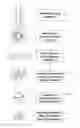
The process according to the invention for producing a turbine wheel, preferably for use in an exhaust-gas turbocharger, will be explained in more detail hereinbelow with reference to the single figure of the drawing.
Accordingly, in a first process step VS1, a suitable alloy material 1, in particular titanium aluminide, is melted. In process step VS2, a primary material blank 2 which can be seen in the figure is melted, giving a plurality of bar-shaped primary materials, such as, in the example of the figure, fifteen bars.
In process step VS3, each of these primary materials 3 or each of these bars 3 is subjected to an HIP treatment, by means of which a multiplicity of defects, in particular voids, which may be present can already be eliminated.
In process step VS4, the thus treated primary materials or bars 3 are divided, for example cut up, so that a plurality of individual parts, in the example five individual parts 4 to 8, are formed, depending on the length of the bars 3.
In process step VS5, a blank 9 can be forged from each of these individual parts 4 to 8, where, in this forging operation, voids or defects which may still be present can be eliminated to the greatest possible extent.
In process step VS6, the blank 9 is given the finished shape of the turbine wheel 10 by machining, in particular a milling operation.
In addition to the above written disclosure of the invention, reference is hereby explicitly made to the drawing, to supplement said written disclosure.
LIST OF REFERENCE SIGNS
- 1 Alloy material
- 2 Primary material/blank
- 3 Primary material/bar
- 4 to 8 Individual parts/primary shaped parts
- 9 Forged blank
- 10 Finished turbine wheel
Claims
1. A process for producing a turbine wheel (10), comprising the following process steps:
casting a bar-shaped primary material (3);
treating the primary material (3) in a hot isostatic pressing process (HIP process);
dividing the HIP-treated primary material (3) into primary shaped parts (4 to 8);
forging a blank (9) from each of the primary shaped parts (4 to 8); and
creating a turbine wheel (10) from the blank (9).
2. The process as claimed in claim 1, wherein the primary material (3) is divided by a machining operation.
3. The process as claimed in claim 1, wherein the primary material (3) is produced from titanium aluminide.
4. The process as claimed in claim 1, wherein the primary material (3) is divided by sawing or water jet cutting.
5. A process for producing a turbine wheel (10), comprising the following process steps:
casting a bar-shaped primary material (3);
treating the primary material (3) in a hot isostatic pressing process (HIP process);
dividing the HIP-treated primary material (3) into primary shaped parts (4 to 8);
forging a blank (9) from each of the primary shaped parts (4 to 8); and
milling a turbine wheel (10) from the blank (9).
6. The process as claimed in claim 5, wherein the primary material (3) is divided by a machining operation.
7. The process as claimed in claim 5, wherein the primary material (3) is divided by sawing or water jet cutting.
8. The process as claimed in claim 1 wherein the primary material (3) is produced from titanium aluminide.
Images & Drawings included:

Sources:
- United States Patent and Trademark Office - verify current appl. status at the USPTO↗
Similar patent applications:
Recent applications in this class:
- » 20230158618 2023-05-25
Treatment process for a centrifugal compressor wheel to extend low-cycle fatigue life - » 20220048145 2022-02-17
TURBINE AIRFOIL DESIGN - » 20200353577 2020-11-12
TURBINE WHEELS, TURBINE ENGINES INCLUDING THE SAME, AND METHODS OF FABRICATING TURBINE WHEELS WITH IMPROVED BOND LINE GEOMETRY - » 20190308285 2019-10-10
Method for producing a turbomachine impeller - » 20190076970 2019-03-14
Method of making integrally bladed rotor - » 20190047095 2019-02-14
Method for manufacturing bladed rings for radial turbomachines and bladed ring obtained by this method - » 20190030659 2019-01-31
TURBINE WHEEL PROCESS IMPROVEMENT THAT REDUCES THE INCOMING IMBALANCE AND LOWERING THE IMPACT ON PERFORMANCE AND DURABILITY WHILE KEEPING THE SCRAP LOW - » 20190001448 2019-01-03
Turbine wheels, turbine engines including the same, and methods of fabricating turbine wheels with improved bond line geometry - » 20180257184 2018-09-13
IMPELLER SHELL WITH THICKENED JUNCTION AND METHOD THEREOF - » 20160311072 2016-10-27
METHOD OF MANUFACTURING AXIAL FAN WHEEL