Display system using system level resources to calculate compensation parameters for a display module in a portable device
US20150287356A1
2015-10-08
14/681,371
2015-04-08
✅ Patent granted
US 10,192,479 B2
2019-01-29
-
-
Keith Crawley
Stratford Managers Corporation
2035-04-08
Abstract:
A system including a display module and a system module. The display module is integrated in a portable device with a display communicatively coupled to one or more of a driver unit, a measurement unit, a timing controller, a compensation sub-module, and a display memory unit. The system module is communicatively coupled to the display module and has one or more interface modules, one or more processing units, and one or more system memory units. At least one of the processing units and the system memory units is programmable to calculate new compensation parameters for the display module during an offline operation.
Assignee:
- Ignis Innovation Inc. 9 Waterloo, Ontario, un
Applicant:
Interested in similar patents?
Get notified when new applications in this technology area are published.
Classification:
G09G3/32 IPC
Control arrangements or circuits, of interest only in connection with visual indicators other than cathode-ray tubes for presentation of an assembly of a number of characters, e.g. a page, by composing the assembly by combination of individual elements arranged in a matrix no fixed position being assigned to or needed to be assigned to the individual characters or partial characters using controlled light sources using electroluminescent panels semiconductive, e.g. using light-emitting diodes [LED]
G09G2330/021 » CPC further
Aspects of power supply; Aspects of display protection and defect management; Details of power systems and of start or stop of display operation Power management, e.g. power saving
G09G2330/027 » CPC further
Aspects of power supply; Aspects of display protection and defect management; Details of power systems and of start or stop of display operation Arrangements or methods related to powering off a display
G09G3/3208 » CPC main
Control arrangements or circuits, of interest only in connection with visual indicators other than cathode-ray tubes for presentation of an assembly of a number of characters, e.g. a page, by composing the assembly by combination of individual elements arranged in a matrix no fixed position being assigned to or needed to be assigned to the individual characters or partial characters using controlled light sources using electroluminescent panels semiconductive, e.g. using light-emitting diodes [LED] organic, e.g. using organic light-emitting diodes [OLED]
G09G3/006 » CPC further
Control arrangements or circuits, of interest only in connection with visual indicators other than cathode-ray tubes Electronic inspection or testing of displays and display drivers, e.g. of LED or LCD displays
G09G2320/043 » CPC further
Control of display operating conditions; Maintaining the quality of display appearance Preventing or counteracting the effects of ageing
G09G3/00 IPC
Control arrangements or circuits, of interest only in connection with visual indicators other than cathode-ray tubes
G09G2320/0693 » CPC further
Control of display operating conditions; Adjustment of display parameters Calibration of display systems
Description
CROSS-REFERENCE TO RELATED APPLICATION
This application claims the benefit of U.S. Provisional Patent Application No. 61/976,910, filed Apr. 8, 2014, entitled “Display System with Shared Level Resources for Portable Devices”.
BACKGROUND OF THE INVENTION
As discussed in previous documents and patents, IGNIS Maxlife™ implementations can compensate for both organic light emitting device (OLED) and backplane issues including aging, non-uniformity, temperature, and so on. Calculations of compensation factors are performed with dedicated resources of an electronic video display.
BRIEF SUMMARY
To bring MaxLife™ complexity to a comfort level of portable electronic device applications, measurement of an electronic video display panel (such as an organic light emitting or OLED display) is moved to an offline stage. Accordingly, such a timing controller (“TCON”), a measurement scheduler, a calculation module, a driver circuitry, and a memory interface become much simpler.
BRIEF DESCRIPTION OF THE DRAWINGS
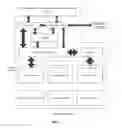
FIG. 1 is a diagrammatic illustrating integration of a MaxLife™ display into portable electronic devices, such as mobile devices (smartphones) or handheld tablet computers.
DETAILED DESCRIPTION
A system level simplification includes a plurality of possible modifications and simplifications, as described in the following table according to each module or block by way of example:
| Example Functions | |
| TCON | Only focused on either driving the OLED pixels or |
| measurement of the pixel circuits at a time | |
| No correction is needed to eliminate the effect of | |
| measurement on driving and vice versa. | |
| Measurement | Everything can happen sequentially and so |
| Scheduler | switching between different measurement methods |
| is very simple. | |
| Calculation module | System resources can be used to calculate part of |
| (or all of) the new compensation value for each | |
| pixel circuit during offline modes. | |
| Driver Circuitry | Drivers that drive each of the pixel circuits do not |
| need to support different timing at the same time. | |
| Memory interface | System memory can be used for calculations and so |
| only storage memory will be needed. | |
While the electronic video display of the portable electronic device can have dedicated blocks for all the functions such as calculating the compensation values, and controlling the measurement scheduler, some of the above blocks can be shared with or offloaded to system level resources to simplify the overall integrated system. In reference to FIG. 1, a system configuration is illustrated in connection with electronic displays. According to the example of FIG. 1, a typical system of a portable electronic device includes multiple processing units such as generic processors, graphic processors, etc. Additionally, multiple memory blocks are used in a typical system. The data can be sent from the system through interface blocks to one or more electronic displays. There are two main sections in the system configuration shown in FIG. 1: a display module and a system block. The display module includes a substrate that carries the pixels used to display information from the portable electronic device. The system block is physically arranged on one or more substrates separate from the substrate carrying the display module. One or more connector cables can interface the display module with the system block to communicate information, power, and/or data therebetween.
The electronic display can include a compensation block, a timing controller, a memory unit, and a measurement unit that can be shared with other interface modules, such as an electronic touch screen. During offline operation of the portable electronic device (e.g., when the portable electronic device is in a standby mode), the system processing and memory units of the portable electronic device can be used to perform display or pixel measurements (e.g., measurements of individual or sets of pixel circuits in the OLED display of the portable electronic device) and to calculate new compensation parameters while the portable electronic device is in an offline operation (e.g., the display is dark or not emitting light). Additionally, at least one or more of the pixel measurements can be done during an inline operation (e.g., while pixels of the electronic video display are emitting light) of the portable electronic device, using system resources or display resources. The measurements and compensations can be carried out using any conventional technique previously described, such as in previous documents and patents assigned to Ignis Innovation Inc.
The interface between system block diagram and display memory for updating some of the parameters can be achieved through the main memory bus or through the display video interface. When the OLED display is in a compensation mode, the main video interface can be used to transfer the parameters to the display memory or to receive the measurement values from the display. Additionally, some of these interfaces can be shared with other blocks, such as an electronic touch screen commonly found on mobile devices and tablet computers.
To reduce the power consumption during calibration of the electronic display of the portable electronic device, only those resources required for calibration stay powered ON, with the reset going to power saving mode (where the applicable resources work at lower operating frequency or lower operating voltage) or shutting down completely. The terms measurement, driving, calibration, and compensation have the meanings as those of ordinary skill in the art of OLED display technology would understand and use those terms. They refer to different functions, each of which is well known to the OLED display designer.
In addition, the available resources, such as battery range, can be a factor to enable the display calibration. For example, if the battery charge is less than a threshold, the display calibration can be put on hold until the battery is charged or the battery of the portable electronic device is being charged. According to another example, a multi-tiered compensation system depends on available resources that include having a battery lower priority compensation (or calibration), which can be postponed. In other words, compensations can be carried out according to their assigned priority level and available battery charge (and, by implication, available resources).
The compensation or calibration or both can be prioritized based on one or more parameters, area, color, or last calibration time. For example, in reference to emissive displays, blue OLED sub-pixels age faster than other sub-pixels (such as red and green), and, as such, blue OLED sub-pixels can have a higher priority than other sub-pixels (which are assigned respective lower priorities).
According to another feature, priority can be assigned based on static images. For example, some areas of the portable electronic display can have static images most of the time (e.g., in a periphery area of the display panel, such as a top or bottom section). These areas can have higher priority for calibration (compensation) purposes.
Claims
What is claimed is:1. A system comprising:
a display module integrated in a portable electronic device and having an electronic video display communicatively coupled to at least one of a driver unit, a measurement unit, a timing controller, a compensation sub-module, or a display memory unit; and
a system module communicatively coupled to the display module and having one or more interface modules, one or more processing units, and one or more system memory units, at least one of the processing units in conjunction with at least one of the system memory units being configured to calculate new compensation parameters for the display module during an offline operation in which the electronic video display is off.
Images & Drawings included:

Sources:
- United States Patent and Trademark Office - verify current appl. status at the USPTO↗
Similar patent applications:
- » 20190122605
Display system using system level resources to calculate compensation parameters for a display module in a portable device - » 20210407393
Display system using system level resources to calculate compensation parameters for a display module in a portable device - » 20230081884
Display system using system level resources to calculate compensation parameters for a display module in a portable device
Recent applications in this class:
- » 20250292731 2025-09-18
DISPLAY DEVICE WITH COMBINED DRIVING METHODS - » 20250292730 2025-09-18
DISPLAY DEVICE AND METHOD OF PREDICTING DETERIORATION OF DISPLAY PANEL - » 20250292729 2025-09-18
DISPLAY COMPATIBLE AMBIENT LIGHT SENSOR - » 20250285588 2025-09-11
LUMINANCE COMPENSATION METHOD AND APPARATUS FOR DISPLAY PANEL, AND DISPLAY APPARATUS - » 20250285587 2025-09-11
DISPLAY DEVICE AND METHOD FOR MANUFACTURING THEREOF - » 20250285586 2025-09-11
METHOD OF DRIVING DISPLAY DEVICE, DISPLAY DEVICE PERFORMING THE SAME, ELECTRONIC APPARATUS INCLUDING THE SAME - » 20250279044 2025-09-04
DISPLAY APPARATUS - » 20250273136 2025-08-28
NOISE CONTROL IN HORIZONTAL BLANKING PERIODS - » 20250265981 2025-08-21
ELECTRONIC DEVICE - » 20250246134 2025-07-31
DISPLAY DEVICE
Recent applications for this Assignee:
- » 20180350299 2018-12-06
Systems and methods of pixel calibration based on improved reference values - » 20180261159 2018-09-13
Pixel circuits for amoled displays - » 20180204541 2018-07-19
Systems and methods for operating pixels in a display to mitigate image flicker - » 20180197447 2018-07-12
Display systems with compensation for line propagation delay - » 20180040269 2018-02-08
Re-interpolation with edge detection for extracting an aging pattern for AMOLED displays - » 20170116900 2017-04-27
High density pixel pattern - » 20160329016 2016-11-10
Systems and methods of optical feedback - » 20150269883 2015-09-24
Integrated gate driver