CONTROL DEVICE, COMMUNICATION SYSTEM, COMMUNICATION CONTROL METHOD, AND NON-TRANSITORY COMPUTER READABLE MEDIUM STORING PROGRAM
US20150289271A1
2015-10-08
14/438,618
2013-07-09
Abstract:
A throughput calculation unit (201) receives the information of a transmission rate change and calculates a predicted end-to-end throughput of each of a plurality of pieces of traffic on the basis of said information and a traffic table (204) that includes the priority and band index of each piece of traffic. An adjustment unit (202) calculates a missing band of each piece of traffic and/or an unused band of a radio link connecting communication devices to each other in a case where a band setting is performed on the basis of the predicted throughput. The adjustment unit (202) determines a band distribution for each piece of traffic on the basis of the missing band and/or unused band as well as on the basis of the traffic table (204). A band setting transmission unit (203) transmits, to the communication apparatuses, the band distribution determined by the adjustment unit (202).
Assignee:
- NEC CORPORATION 6,220 🇯🇵 Minato-ku, Tokyo, Japan
Interested in similar patents?
Get notified when new applications in this technology area are published.
Classification:
H04W72/0453 » CPC main
Local resource management, e.g. wireless traffic scheduling or selection or allocation of wireless resources; Wireless resource allocation where an allocation plan is defined based on the type of the allocated resource the resource being a frequency, carrier or frequency band
H04W72/04 IPC
Local resource management, e.g. wireless traffic scheduling or selection or allocation of wireless resources Wireless resource allocation
H04W24/08 » CPC further
Supervisory, monitoring or testing arrangements Testing, supervising or monitoring using real traffic
Description
TECHNICAL FIELD
The present invention relates to a control device, a communication system, a communication control method, and a non-transitory computer readable medium storing a program.
BACKGROUND ART
As the information technology progresses in recent years, a demand for data communication traffic is increasing. Under this circumstance, broadband communication in a network and reduction in operation cost have been required.
In wireless systems utilizing a frequency of a millimeter wave band or the like, broadband transmission can be performed. A network constituted of radio links such as an FWA (Fixed broadband Wireless Access) employing these wireless systems is utilized in a mobile phone network or the like.
Communication quality of a radio link varies depending on an SNR (Signal to Noise Ratio) of a receiving signal. In order to implement further broadband communication using a radio link, an adaptive modulation technique has been paid attention to. The adaptive modulation technique is a technique, in which a modulation method having a highest transmission efficiency is adaptively obtained from a radio condition of a radio link for using the modulation method. Use of the adaptive modulation technique makes it possible to perform optimum wireless communication depending on the radio environment.
Enhancement of frequency efficiency can be expected by performing optimum wireless communication depending on the radio environment.
CITATION LIST
Patent Literature
- PTL 1: Japanese Laid-open Patent Publication No. 2012-65135
SUMMARY OF INVENTION
Technical Problem
In a radio link having an adaptive modulation function, the transmission rate changes by an external factor such as the weather. When band control is not performed when the transmission rate is lowered in a radio link, a band that is consumed by a piece of traffic lost in the radio link, which turns out to be a bottle neck, may be wasted.
PTL 1 discloses a transport control system, in which the amount of traffic flowing through a network is monitored, and a difference in traffic amount between the start node and the end node is measured to find a piece of traffic wasted in the network. This technique, however, requires constant monitoring of the traffic amount, and takes time to specify the radio link, which turns out to be a bottle neck.
In other words, in the aforementioned technique, when the transmission rate of a radio link changes, it is not possible to efficiently perform band control.
In view of the above-described circumstances, the present invention has been made, and a main object of the invention is to provide a control device, a communication system, a communication control method, and a non-transitory computer-readable medium storing a program, which enable to efficiently perform band control when the transmission rate of a radio link changes.
Solution to Problem
A control device according to an aspect of the present invention is a control device for controlling a band of each piece of traffic between communication devices having an adaptive modulation function, including:
a throughput calculation means which receives information relating to a transmission rate change, and calculates a predicted end-to-end throughput of each piece of traffic, on the basis of the information and a table which includes a degree of priority and a band index of each piece of traffic;
an adjustment means which calculates a missing band of each piece of traffic and/or an unused band of a radio link connecting between the communication devices, when band setting is performed on the basis of the predicted throughput, and decides band distribution with respect to each piece of traffic, on the basis of the table and the missing band and/or the unused band; and
a setting transmission means which transmits the band distribution decided by the adjustment means to the communication devices.
A communication system according to another aspect of the present invention includes a plurality of communication devices having an adaptive modulation function, and a control device which controls a band of each piece of traffic between the plurality of communication devices, wherein
each of the plurality of communication devices executes the adaptive modulation function, and transmits a transmission rate change to the control device, and
the control device includes:
-
- a throughput calculation means which receives information relating to a transmission rate change, and calculates a predicted end-to-end throughput of each piece of traffic, on the basis of the information and a table which includes a degree of priority and a band index of each piece of traffic;
- an adjustment means which calculates a missing band of each piece of traffic and/or an unused band of a radio link connecting between the communication devices, when band setting is performed on the basis of the predicted throughput, and decides band distribution with respect to each piece of traffic, on the basis of the table and the missing band and/or the unused band; and
- a setting transmission means which transmits the band distribution decided by the adjustment unit to the plurality of communication devices.
A communication control method according to yet another aspect of the present invention is a communication control method for setting a band of each piece of traffic between communication devices having an adaptive modulation function, including:
receiving information relating to a transmission rate change, and calculating a predicted end-to-end throughput of each piece of traffic, on the basis of the information and a table which includes a degree of priority and a band index of each piece of traffic; and
calculating a missing band of each piece of traffic and/or an unused band of a radio link connecting between the communication devices, when band setting is performed on the basis of the predicted throughput, and deciding band distribution with respect to each piece of traffic, on the basis of the table and the missing band and/or the unused band.
A non-transitory computer-readable medium storing a program according to still another aspect of the present invention is a non-transitory computer-readable medium storing a program which causes a computer to calculate a band of each piece of traffic between communication devices having an adaptive modulation function, the program causing the computer to execute:
a throughput calculating step of receiving information relating to a transmission rate change, and calculating a predicted end-to-end throughput of each piece of traffic, on the basis of the information and a table which includes a degree of priority and a band index of each piece of traffic; and
an adjusting step of calculating a missing band of each piece of traffic and/or an unused band of a radio link connecting between the communication devices, when band setting is performed on the basis of the predicted throughput, and deciding band distribution with respect to each piece of traffic, on the basis of the table and the missing band and/or the unused band.
Advantageous Effects of Invention
According to the invention, it is possible to provide a control device, a communication system, a communication control method, and a non-transitory computer-readable medium storing a program, which enable to efficiently control band control when the transmission rate of a radio link changes.
BRIEF DESCRIPTION OF DRAWINGS
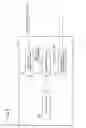
FIG. 1 is a block diagram illustrating a configuration of a wireless system in a first exemplary embodiment;
FIG. 2 is a diagram illustrating a relationship between a modulation method of a radio link and a transmission rate in the first exemplary embodiment;
FIG. 3 is a diagram illustrating an example of traffic to be handled in the wireless system in the first exemplary embodiment;
FIG. 4 is a block diagram illustrating a configuration of a path control device 101 in the first exemplary embodiment;
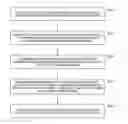
FIG. 5 is a flowchart illustrating a flow of a process to be carried out by the path control device 101 in the first exemplary embodiment;
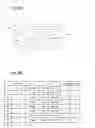
FIG. 6A is a conceptual diagram illustrating a communication state in the first exemplary embodiment;
FIG. 6B is a diagram illustrating a band of each piece of traffic in the first exemplary embodiment;
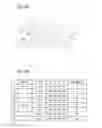
FIG. 7A is a conceptual diagram illustrating a communication state in the first exemplary embodiment;
FIG. 7B is a diagram illustrating a band of each piece of traffic in the first exemplary embodiment;
FIG. 8A is a conceptual diagram illustrating a communication state in the first exemplary embodiment; and
FIG. 8B is a diagram illustrating a band of each piece of traffic in the first exemplary embodiment.
DESCRIPTION OF EMBODIMENTS
First Exemplary Embodiment
Hereinafter, an exemplary embodiment of the present invention is described referring to the drawings. First of all, a wireless system in the exemplary embodiment is described referring to FIG. 1.
As illustrated in the drawings, the wireless system in the exemplary embodiment includes a path control device 101, and communication devices 102 to 106. The number of the devices is merely an example. Actually, the number of the devices may be any number. The devices are connected to each other by a radio link.
The path control device 101 receives a notice indicating a transmission rate change from each of the communication devices. The path control device 101 calculates setting of band control with respect to each piece of traffic in accordance with the received transmission rate change, and notifies the calculation result to each of the communication devices. The details and the operation to be performed by the path control device 101 will be described later referring to FIG. 4 and the relevant drawings.
The communication devices 102 to 106 have an existing adaptive modulation function, and notify the path control device 101, when the transmission rate of a radio link changes. Further, the communication devices 102 to 106 receive setting of band control with respect to each piece of traffic from the path control device 101, and perform band control based on the setting.
A relationship between a modulation method of a radio link and a transmission rate in the wireless system is illustrated in FIG. 2. For instance, when the modulation method is a QPSK (Quadrature Phase Shift Keying), a band of 40 Mbps is secured. Likewise, when the modulation method is a 16 QAM (Quadrature Amplitude Modulation), a band of 80 Mbps is secured. The communication devices 102 to 106 execute an adaptive modulation function to change the modulation method (in other words, the transmission rate) depending on the weather or the like.
Next, an example of traffic to be handled by the wireless system illustrated in FIG. 1 is illustrated in FIG. 3. In the exemplary embodiment, four types of traffic (Signaling, Voice, Video, and Data) are used. Each piece of the traffic has a degree of priority, a requested band, and a lowest band. For instance, in the case of Voice type traffic, the degree of priority is 2 (second highest to Signaling), and the requested band and the lowest band are respectively 20 Mbps. The path control device 101 manages the traffic table (see FIG. 3) in a memory provided therein.
Next, an exemplified configuration of the path control device 101 is described referring to FIG. 4. FIG. 4 is a block diagram illustrating a configuration of the path control device 101. The path control device 101 is provided with a throughput calculation unit 201, an adjustment unit 202, a band setting transmission unit 203, and a traffic table 204.
The throughput calculation unit 201 receives a transmission rate change of a radio link from each of the communication devices. The throughput calculation unit 201 calculates a predicted end-to-end throughput of traffic which may be affected by the transmission rate change. The throughput calculation unit 201 calculates a predicted throughput by sequentially allocating a band to the pieces of traffic from a piece of traffic whose degree of priority is highest in the descending order of the degree of priority, referring to the traffic table 204 described above (see FIG. 3). An exemplified method for calculating a predicted throughput is described referring to FIG. 6A to FIG. 8B.
The traffic table 204 stores therein a degree of priority and a band index (in the example of FIG. 3, a requested band and a lowest band) of each piece of traffic. The path control device 101 may not need to internally include the traffic table 204. For instance, the traffic table 204 may be stored in a storage device (such as a USB (Universal Serial Bus) memory), which is detachably attachable to the path control device 101.
The throughput calculation unit 201 inputs a calculated predicted throughput of each piece of traffic to the adjustment unit 202. The adjustment unit 202 calculates a traffic amount, assuming that band control is performed on the basis of the input predicted throughput, and determines whether there is an unused band in each of the radio links. Then, the adjustment unit 202 determines whether it is possible to enhance the band by sequentially allocating the unused band to the pieces of traffic from a piece of traffic whose degree of priority is highest in the descending order of the degree of priority.
Further, the adjustment unit 202 determines whether there is a piece of traffic that does not satisfy the lowest band in the predicted throughput. When there is a piece of traffic that does not satisfy the lowest band, the adjustment unit 202 determines whether it is possible to transfer a band from another piece of traffic to the piece of traffic that does not satisfy the lowest band. This allows for the adjustment unit 202 to allocate the unused band and to decide the final band setting after adjustment on transfer of a band.
The band setting transmission unit 203 transmits the band setting decided by the adjustment unit 202 to each of the communication devices.
Next, an operation to be performed by the path control device 101 is described in detail referring to FIG. 5. FIG. 5 is a flowchart illustrating a processing to be carried out by the path control device 101.
The throughput calculation unit 201 receives a transmission rate change from each of the communication devices. The throughput calculation unit 201 calculates an end-to-end-throughput (a predicted throughput) of each piece of traffic in accordance with the transmission rate change (Step S201).
The adjustment unit 202 calculates a traffic amount, assuming that band control is performed on the basis of the predicted throughput, and determines whether there is an unused band in each of the radio links (Step S202). When there is an unused band, the adjustment unit 202 determines whether it is possible to enhance the band state by allocating the unused band to a piece of traffic that does not satisfy a requested band (Step S203). When it is determined that the band state is enhanced, the adjustment unit 202 allocates the unused band to the piece of traffic that does not satisfy the requested band.
The adjustment unit 202 determines whether there is a piece of traffic that does not satisfy the lowest band in accordance with a transmission rate change (Step S204). When it is determined that there is a piece of traffic that does not satisfy the lowest band, the adjustment unit 202 determines whether it is possible to satisfy the lowest band by transferring a band of another piece of traffic to the piece of traffic that does not satisfy the lowest band (Step S204). When it is determined that the lowest band is satisfied, the adjustment unit 202 decides the band value of each piece of traffic after the transfer (including a piece of traffic that does not satisfy the lowest band, and a piece of traffic serving as a transfer source) (Step S204). The adjustment unit 202 decides band distribution with respect to each piece of traffic by performing the processing of Steps S202 to S204.
The band setting transmission unit 203 transmits setting of band distribution decided by the adjustment unit 202 to each of the communication devices relating to setting change. Upon receiving a notice on the setting change, the communication device changes setting of a radio link in accordance with the setting contents (Step S205).
Next, an exemplified configuration of band control to be performed by the path control device 101 is described referring to FIG. 6A to FIG. 8B. FIG. 6A is a system conceptual diagram illustrating a communication state for use in the exemplified configuration In the exemplified configuration, four types of traffic paths are set between the communication terminal 102 and the communication terminal 105, and four types of traffic paths are set between the communication terminal 102 and the communication terminal 106.
FIG. 6B illustrates a band of each piece of traffic, when a 256 QAM (180 Mbps) is selected as a modulation method of all the radio links in the communication paths illustrated in FIG. 6A. The path control device 101 allocates the band of 180 Mbps to each piece of traffic, referring to the traffic table 204 (see FIG. 3). When the band of 180 Mbps is allocated, it is possible to allocate the requested band to all the pieces of traffic.
Next, there is described a case, in which a radio link is degraded between the communication device 103 and the communication device 104, and between the communication device 104 and the communication device 105, and the modulation method is changed to a 32 QAM (108 Mbps). FIG. 7A is a system conceptual diagram illustrating a communication state after the link degradation. FIG. 7B is a diagram illustrating band setting of each piece of traffic when the radio links are degraded. The path control device 101 receives a change in the modulation method.
The path control device 101 calculates a throughput of each piece of traffic in accordance with a degree of priority in the traffic table 204 (see FIG. 3) (Step S201). Regarding the pieces of traffic whose degrees of priority are 1 to 3 (Signaling (A1, B1), Voice (A2, B2), Video (A3, B3)), it is possible to satisfy the requested band between the communication control devices 102 to 105, and between the communication control devices 102 to 106. However, the data traffics (A4, B4) between the communication control devices 103 and 104 cannot satisfy the requested band of 28 Mbps, and the data traffics share the band of the remaining 24 Mbps (=108−2×(2+20+20)). Specifically, as illustrated in FIG. 7B, the data traffic between the communication control devices 102 and 105 has a band of 12 Mbps, and the data traffic between the communication control devices 102 and 106 has a band of 12 Mbps (Step S202).
Subsequently, the path control device 101 checks whether it is possible to allocate an unused band generated by band control (Step S202). When the aforementioned band control is performed in accordance with a throughput, an unused band is generated between the radio links 102 to 103. However, there is no degraded piece of traffic capable of using the unused band. Therefore, the path control device 101 does not perform any control in this stage (Step S203).
The path control device 101 determines whether each piece of traffic satisfies the lowest band, and when there is a piece of traffic that does not satisfy the lowest band, the path control device 101 checks whether it is possible to transfer a band from another piece of traffic (Step S204). In this example, since all the pieces of traffic satisfy the lowest band, the path control device 101 does not transfer a band.
The path control device 101 notifies the communication device 102 of the band control of narrowing the bands of A4 and B4 (data traffics) to 12 Mbps (Step S205).
Next, there is described a case, in which a radio link is degraded between the communication device 104 and the communication device 105, and the modulation method is set to a QPSK (40 Mbps). FIG. 8A is a system conceptual diagram illustrating a communication state after the radio link is degraded. FIG. 8B is a diagram illustrating band setting with respect to each piece of traffic when the radio link is degraded. The path control device 101 receives a change in the modulation method. In this case, in the traffics indicated by the reference signs A1 to A4 in FIG. 8B, the radio link between the communication device 104 and the communication device 105 turns out to be a bottle neck on the communication.
The path control device 101 calculates a throughput of each piece of traffic, referring to the traffic table 204 (see FIG. 3), as the transmission rate is lowered. The path control device 101 sequentially allocates 40 Mbps to the pieces of traffic in the descending order of the degree of priority, referring to the traffic table 204 (see FIG. 3). By this control, the throughputs of A1 (Signaling) and A2 (Voice) can maintain the requested band, but the throughput of A3 (Video) is 18 Mbps, which is equal to or lower than the requested band, and the throughput of A4 (Data) is 0 Mbps (Step S201).
The path control device 101 calculates a traffic amount of each radio link, when band control is performed between the communication devices 102 and 105, on the basis of a predicted throughput calculated in Step S201. In this case, the sum of traffic amounts relating to the radio link between the communication devices 103 and 104 is 94 Mbps (=2+20+18+0+2+20+20+12). The path control device 101 determines that there is an unused band of 14 Mbps, because the sum of bands of the radio link between the communication devices 103 and 104 is 108 Mbps (Step S202).
The path control device 101 determines whether it is possible to enhance the throughput by allocating the unused band to each piece of traffic (B1 to B4) between the communication device 102 and the communication device 106. Note that, between the communication device 102 and the communication device 106, the band of the radio link between the communication device 103 and the communication device 104 is 108 Mbps, and the bands of the radio links between the communication devices other than between the communication device 103 and the communication device 104 are 180 Mbps.
The path control device 101 decides to allocate, to B4 (Data), 14 Mbps out of the unused band of the radio link between the communication device 103 and the communication device 104, and of the radio link between the communication device 102 and the communication device 103. This makes it possible to increase the band of B4 (Data) from 12 Mbps to 26 Mbps (Step S203).
There is no traffic requesting a band regarding the other unused band of the radio link between the communication device 102 and the communication device 103. Therefore, the path control device 101 does not perform any control in this stage.
Next, there is described a case, in which the path control device 101 transfers a band to a piece of traffic that does not satisfy the lowest band. In this example, the band of A4 (Data) is 0 Mbps so that A4 (Data) cannot satisfy the lowest band (2 Mbps). In this case, the path control device 101 determines whether there is a transferable band in the other pieces of traffic between the communication devices 102 and 106 in the ascending order of the degree of priority. In this example, the band (18 Mbps) of A3 (Video) is wider than the lowest band (14 Mbps). In other words, it is possible to transfer 4 Mbps. Therefore, the path control device 101 decides to transfer, to A4 (Data), 2 Mbps out of the band of A3 (Video) (Step S204). The path control device 101 can save the degraded piece of traffic without adversely affecting the piece of traffic whose degree of priority is high by sequentially designating the pieces of traffic that satisfy the lowest band in the ascending order of the degree of priority, as a transfer source, when a band is transferred.
In view of the processing as described above, the path control device 101 performs the respective band settings illustrated in FIG. 8B with respect to the communication device 102 (Step S205).
Next, the advantageous effects of the wireless system in the present exemplary embodiment are described. Unlike link faults, when the transmission rate changes due to an adaptive modulation, there remains a certain amount of band even after the transmission rate is lowered. The path control device 101 performs band adjustment, taking advantage of this property. Specifically, as described above, the path control device 101 calculates a predicted end-to-end throughput of each piece of traffic when the transmission rate changes, and performs band adjustment of each piece of traffic, on the basis of a piece of traffic that does not satisfy the lowest band, or on the basis of an unused band in the calculated predicted throughput. This makes it possible to promptly perform band setting when the transmission rate changes, and to allocate a band appropriate for each piece of traffic to each piece of traffic.
For instance, the path control device 101 allocates, to a piece of traffic that does not satisfy a requested band, an unused band to be obtained when band setting is performed in accordance with a predicted throughput. This allows for the path control device 101 to reduce a band which may be wasted, and to enhance communication quality of each piece of traffic.
Further, the path control device 101 transfers a band to a piece of traffic that does not satisfy the lowest band when band setting is performed in accordance with a predicted throughput, from a piece of traffic whose degree of priority is higher than the degree of priority of the piece of traffic that does not satisfy the lowest band. This allows for the path control device 101 to eliminate a piece of traffic that does not satisfy the lowest band, and to eliminate a piece of traffic which may be unable to communicate. According to this configuration, the path control device 101 can avoid degradation of the quality of a piece of traffic whose degree of priority is high by designating a piece of traffic whose degree of priority is lowest among the pieces of traffic having a transferable band, as a transfer source.
The invention is not limited to the exemplary embodiment described above, but may be modified as necessary, as far as such modifications do not depart from the gist of the invention. For instance, in the foregoing description, the path control device 101 calculates band setting of each piece of traffic. Alternatively, a wireless system may not include a path control device 101, and each communication device may be configured to execute the aforementioned processing (the processing illustrated in FIG. 5). Specifically, a communication device may be provided with a band adjustment function (see FIG. 5), in addition to a general communication function (including an adaptive modulation function).
Preferably, the aforementioned adjustment unit 202 may perform both of the processing, i.e. processing of allocating an unused band and processing of transferring a band. However, even when the adjustment unit 202 performs any one of the processing, it is possible to perform efficient band control, as compared with the conventional art as described above.
The processing of the processing units (the throughput calculation unit 201, the adjustment unit 202, the band setting transmission unit 203) in the path control device 101 may be implemented as a program to be operated in any computer. The program may be stored using various types of non-transitory computer readable medium, and may be supplied to a computer. The non-transitory computer readable medium includes various types of tangible storage medium. Examples of the non-transitory computer readable medium are a magnetic recording medium (e.g. a flexible disk, a magnetic tape, a hard disk drive), a magneto-optical recording medium (e.g. a magneto-optical disk), a CD-ROM (Read Only Memory), a CD-R, a CD-R/W, and a semiconductor memory (e.g. a mask ROM, a PROM (Programmable ROM), an EPROM (Erasable PROM), a flash ROM, and a RAM (Random Access memory)).
Further, the program may be supplied to a computer by various types of transitory computer readable medium. Examples of the transitory computer readable medium include an electrical signal, a light signal, and an electromagnetic wave. A transitory computer readable medium is capable of supplying a program to a computer via a wired communication path such as a power line and an optical fiber, or via a wireless communication path.
INDUSTRIAL APPLICABILITY
The present invention is applicable to a mobile backhaul network in a mobile phone network, for instance.
This application claims the priority based on Japanese Patent Application No. 2012-238584 filed on Oct. 30, 2012, and all of the disclosure of which is hereby incorporated.
REFERENCE SIGNS LIST
- 101 Path control device
- 102 to 106 Communication devices
- 201 Throughput calculation unit
- 202 Adjustment unit
- 203 Band setting transmission unit
- 204 Traffic table
Claims
1. A control device for controlling a band of each piece of traffic between communication devices having an adaptive modulation function, comprising:
a throughput calculation unit which receives information relating to a transmission rate change, and calculates a predicted end-to-end throughput of each piece of traffic, on the basis of the information and a table which includes a degree of priority and a band index of each piece of traffic;
an adjustment unit which calculates at least one of a missing band of each piece of traffic and an unused band of a radio link connecting between the communication devices, when band setting is performed on the basis of the predicted throughput, and decides band distribution with respect to each piece of traffic, on the basis of the table and at least one of the missing band and the unused band; and
a setting transmission unit which transmits the band distribution decided by the adjustment unit to the communication devices.
2. The control device according to claim 1, wherein
the table stores parameters relating to a requested band and a lowest band of each piece of traffic, and
the adjustment unit performs band adjustment by setting, as the unused band, a value obtained by subtracting the predicted throughput of each piece of traffic from a transmission rate of a radio link between the communication devices, and by allocating the unused band to a piece of traffic that does not satisfy the requested band.
3. The control device according to claim 1, wherein
the table stores parameters relating to a requested band and a lowest band of each piece of traffic, and
the adjustment unit performs band adjustment by transferring a band of a piece of traffic that satisfies the lowest band to a piece of traffic that does not satisfy the lowest band.
4. The control device according to claim 3, wherein
the adjustment unit designates the pieces of traffic as a transfer source of a band in the ascending order of the degree of priority.
5. The control device according to claim 1, wherein
the control device is also operated as the communication device.
6. A communication system, comprising:
a plurality of communication devices having an adaptive modulation function; and
a control device for controlling a band of each piece of traffic between the plurality of communication devices, wherein
each of the plurality of communication devices executes the adaptive modulation function, and transmits a transmission rate change to the control device, and
the control device includes:
a throughput calculation unit which receives information relating to a transmission rate change, and calculates a predicted end-to-end throughput of each piece of traffic, on the basis of the information and a table which includes a degree of priority and a band index of each piece of traffic;
an adjustment unit which calculates at least one of a missing band of each piece of traffic and an unused band of a radio link connecting between the communication devices, when band setting is performed on the basis of the predicted throughput, and decides band distribution with respect to each piece of traffic, on the basis of the table and at least one of the missing band and the unused band; and
a setting transmission unit which transmits the band distribution decided by the adjustment unit to the plurality of communication devices.
7. A communication control method for setting a band of each piece of traffic between communication devices having an adaptive modulation function, the method comprising:
receiving information relating to a transmission rate change, and calculating a predicted end-to-end throughput of each piece of traffic, on the basis of the information and a table which includes a degree of priority and a band index of each piece of traffic; and
calculating at least one of a missing band of each piece of traffic and an unused band of a radio link connecting between the communication devices, when band setting is performed on the basis of the predicted throughput, and deciding band distribution with respect to each piece of traffic, on the basis of the table and at least one of the missing band and the unused band.
8. A non-transitory computer readable medium storing a program which causes a computer to calculate a band of each piece of traffic between communication devices having an adaptive modulation function, the program causing the computer to execute:
receiving information relating to a transmission rate change, and calculating a predicted end-to-end throughput of each piece of traffic, on the basis of the information and a table which includes a degree of priority and a band index of each piece of traffic; and
calculating at least one of a missing band of each piece of traffic and an unused band of a radio link connecting between the communication devices, when band setting is performed on the basis of the predicted throughput, and deciding band distribution with respect to each piece of traffic, on the basis of the table and at least one of the missing band and the unused band.
Images & Drawings included:




Sources:
- United States Patent and Trademark Office - verify current appl. status at the USPTO↗
Similar patent applications:
- » 20170150465
Communication device, communication system, control method, and non-transitory computer readable medium storing communication program - » 20170223574
COMMUNICATION DEVICE, COMMUNICATION SYSTEM, CONTROL METHOD, AND NON-TRANSITORY COMPUTER READABLE MEDIUM STORING COMMUNICATION PROGRAM - » 20240031535
Communication control device, communication control system, communication control method, and non-transitory computer-readable medium storing program - » 20140221010
PROCESSING DEVICE, COMMUNICATION SYSTEM, COMMUNICATION TERMINAL, TERMINAL DEVICE CONTROL METHOD, AND NON-TRANSITORY COMPUTER READABLE MEDIUM STORING PROGRAM - » 20150071128
MOBILE COMMUNICATION SYSTEM, GATEWAY DEVICE, CHARGING POLICY CONTROL METHOD, AND NON-TRANSITORY COMPUTER READABLE MEDIUM STORING PROGRAM - » 20170295514
Communication aggregation system, control device, processing load control method and non-transitory computer readable medium storing program - » 20210286568
Information processing system, communication connection control method of information processing device, and non-transitory computer-readable storage medium storing program - » 20130324130
Mobile communication system and relay node control method, relay node management device and control method thereof, and non-transitory computer readable medium storing control program
Recent applications in this class:
- » 20250175962 2025-05-29
RESOURCE CONFIGURATION METHOD AND COMMUNICATION APPARATUS - » 20250175961 2025-05-29
DETERMINING METHOD AND TERMINAL - » 20250175960 2025-05-29
SYSTEMS, APPARATUSES, METHODS, AND NON-TRANSITORY COMPUTER-READABLE STORAGE DEVICES FOR WIRELESS COMMUNICATION EMPLOYING DISTRIBUTIVE RESOURCE UNITS - » 20250175959 2025-05-29
METHOD AND SYSTEM FOR PROVIDING MULTIPLE RESOURCE UNITS AND MULTIPLE DISTRIBUTIVE RESOURCE UNITS IN IEEE 802.11 - » 20250175958 2025-05-29
REDUCED COMPLEXITY CAPABILITY FOR UPLINK TRANSMIT SWITCHING - » 20250175957 2025-05-29
SIGNALING FOR AGGREGATED CHANNEL BANDWIDTH FOR CARRIER AGGREGATION - » 20250168836 2025-05-22
REMOTELY RECONFIGURABLE DISTRIBUTED ANTENNA SYSTEM AND METHODS - » 20250168835 2025-05-22
SIDELINK RESOURCE SELECTION METHOD AND APPARATUS, AND TERMINAL - » 20250168834 2025-05-22
DATA TRANSMISSION METHOD, TERMINAL, BASE STATION AND STORAGE MEDIUM - » 20250168833 2025-05-22
Method and Apparatus for Implementing Dynamic Frequency Selection
Recent applications for this Assignee:
- » 20250175856 2025-05-29
RAN NODE AND METHOD - » 20250175850 2025-05-29
RADIO TERMINAL, RADIO ACCESS NETWORK NODE, AND METHODS THEREFOR - » 20250175778 2025-05-29
NOTIFICATION CONTROL DEVICE, NOTIFICATION CONTROL METHOD, AND COMPUTER-READABLE STORAGE MEDIUM - » 20250175241 2025-05-29
CONTROL APPARATUS, TERMINAL APPARATUS, CONTROL METHOD, AND NON-TRANSITORY COMPUTER-READABLE MEDIUM - » 20250174511 2025-05-29
METHOD FOR MANUFACTURING SUBSTRATE COOLING MECHANISM AND SUBSTRATE COOLING MECHANISM - » 20250174138 2025-05-29
UNMANNED AERIAL VEHICLE INFORMATION ACQUISITION SYSTEM AND UNMANNED AERIAL VEHICLE INFORMATION ACQUISITION METHOD - » 20250174119 2025-05-29
DE-NOISING DEVICE, DE-NOISING METHOD, AND COMPUTER-READABLE MEDIUM - » 20250174094 2025-05-29
INFORMATION PROCESSING APPARATUS, CONTROL METHOD OF INFORMATION PROCESSING APPARATUS, AND STORAGE MEDIUM - » 20250174042 2025-05-29
AUTHENTICATION APPARATUS, AUTHENTICATION METHOD, AND RECORDING MEDIUM - » 20250174034 2025-05-29
POSTURE ESTIMATION APPARATUS, POSTURE ESTIMATION SYSTEM, POSTURE ESTIMATION METHOD, AND NON-TRANSITORY COMPUTER-READABLE MEDIUM STORING PROGRAM