Automatic regulated parking system and method
US20150294567A1
2015-10-15
14/411,464
2013-06-27
✅ Patent granted
US 9,589,467 B2
2017-03-07
WO; PCT/ES2013/070433; 20130627
WO; WO2014/006248; 20140109
Curtis King
Cahn & Samuels, LLP
2033-06-27
Abstract:
The invention relates to a system, method and equipments for the control, management and administration of regulated vehicles parking, on public and private roads, in an automatic and integrated manner, where the parked vehicles identification, as well as the parked time control and parking permits, including all related parking incidences, are detected and handled without the need of parking meters or permanent parking wardens, and the information is automatically transmitted to a Management Centre, for its processing and administration. The Automatic Regulated Parking System (10) includes: A set of User Devices (11) which communicate with the User Management Centre (16) by means of Smart Network Terminals (12), a set Smart Network Terminals (12), a set of network Access Nodes (13), a set of Network Nodes (14), a Network Control Centre (15), a User Management Centre (16) and a reduced set of Agent Mobile Terminals
Applicant:
Interested in similar patents?
Get notified when new applications in this technology area are published.
Classification:
G08G1/144 » CPC main
Traffic control systems for road vehicles indicating individual free spaces in parking areas with means giving the indication of available parking spaces on portable or mobile units, e.g. personal digital assistant [PDA]
G08G1/147 » CPC further
Traffic control systems for road vehicles indicating individual free spaces in parking areas where the indication depends on the parking areas where the parking area is within an open public zone, e.g. city centre
G08G1/148 » CPC further
Traffic control systems for road vehicles indicating individual free spaces in parking areas where the indication depends on the parking areas Management of a network of parking areas
G08G1/14 IPC
Traffic control systems for road vehicles indicating individual free spaces in parking areas
B60Q1/48 IPC
Arrangement of optical signalling or lighting devices, the mounting or supporting thereof or circuits therefor the devices being primarily intended to indicate the vehicle, or parts thereof, or to give signals, to other traffic for parking purposes
Description
1. DESCRIPTION OF THE INVENTION
1.1 Field of the Invention
The present invention relates to the technical sector of Parking Management Systems on public and private roads, where the parking spaces are not delineated, proposing in this invention an automatic and integrated solution, where are not necessary parking meters neither permanent wardens for the accomplishment of the parking rules and regulations.
1.2 Background of the Invention
One of the major municipality problems, mainly in the big cities, is the vehicles parking. Initially the control and regulation was performed by means of Municipal Policemen, but, from some years, is being performed by permanent wardens belonging to contracted enterprises, on the basis of the deployment of parking meters all over the city streets, where a big number of wardens, by means of a data terminal, are transmitting the vehicle user identification and associated infractions to a Management Centre.
That system approach implies the installation and maintenance of very costly Parking Meters posts and the creation of big personnel staffs, with all the complexity and labour problematic for the contracting enterprises and the compliance of the service guarantee required by the Municipality.
The various Systems are evolving from the paper tickets release, up to RFID tickets and user devices with interaction capacity, in communication with a control centre, based on permanent wardens vigilance.
There are a lot of Invention Patents, dealing with different parking aspects, but it does not exists any automatic and integrated solution for the public/private parking management, with non-delineated neither numbered parking spaces.
In the following are summarised some Systems actually under patent:
- 1. W05000010MX, it uses a portable device allocated inside the vehicle, in such a way that an agent is able to supervise the identification and control data.
- 2. 2010/0328104, it is based on a parking meter in communication with a management centre, by means of RF access, with a high position allocated terminal, that accesses by a gateway and internet to a parking management centre. The main objective is the complete management of the parking resources, within a determined area.
- 3. US2006/0043176, it is oriented to public superficial parking based on the RFID ticket emission, communicating with a central server by LAN access. The parking spaces are delineated, it is performed an automatic control and an agent acts in case of violation.
- 4. WO02/063570, it is based on the installation of sensors in delineated parking spaces and automatic control of time and spaces.
- 5. US2006/0255119, it uses a RFID device, communicated with a portable or fixed reader, in connection with a management system for parking permits. It is not specified the time control and the violations shall be detected by an agent with a portable terminal. It includes also a violation execution module based on vehicle blocking.
- 6. ES2276642, the identification is based on a proprietary RF terminal, in communication with a control centre, by means of a WiFi access, it includes a permanent agent able to interact with the terminal, changing state and operation. Only includes a generic description and the abnormal cases are detected by the agent.
- 7. ES2008/000306, it is based on the number plate data and a photo by PDA, to be sent to a control centre.
- 8. WO2006080830, it is based on a card allocated in the vehicle and a portable terminal, for reading directly the card.
- 9. EP2299409, it is based on a vehicle detector and a remote RFID reader, with delineated individual parking spaces and Internet communication with a control Server and data base. The vehicle detection can be performed by different methods.
- 10. US20100328104, it consists of a set of parking meters, with vehicle detection loops, transmitting information by a network based on traffic light posts to a control centre. It also provides traffic information by public panels.
- 11. US2006212344, it is a generic system for general application, using delineated spaces, specifying the various subsystems, where the sensor subsystem may be based on any device without definition of a particular one.
- 12. EP0952557, it determines the vehicle position comparing, by a mobile on board unit, its location using a parking map, when the vehicle is stopped. An information geographic system processes data and computes the parking cost.
- 13. CA2417060, it sends the position obtained by GPS, using a GPRS, to a processing centre, that uses parking maps for cost computing.
- 14. US 20110143779, it is a generic system to provide city services which comprises: a cellular mobile device, sensor nodes and remote servers. Its objective is to inform the Vehicle users, by means of the sensor nodes, about the parking space availability, in order to perform a manual purchase of parking time by the Vehicle driver, using his cellular mobile device. In addition, a sensor allocated on the delineated parking space can send a signal to a camera to indicate the status change in the parking, and to get a picture of the vehicle that can be sent to a remote Server in order to compare with an image base, for the case of infraction.
It is not an automatic system, since it requires the vehicle driver action, in particular for the fundamental operations as to purchase, control and pay the effective parking time. It is not an integrated system, neither is valid for non-delineated spaces, it is only a generic and partial solution, since the parking functions are incomplete and distributed through the various elements.
The RFID option, is a simple RF emitter, which is not integrated in the access subsystem, and without interactive functionality.
The Mobile devices are not associated and integrated in the Vehicle, within an access network, in a Machine to Machine (M2M) context that is required for an automatic and integrated parking service. Such a service shall include from the basic parking functions up to the follow up and information on the vehicle and driver status, operation and security, all along the parking operation as well as during the time that the vehicle is parked.
The sensor nodes have not Network Terminal functions, including at least access control, communication control, vehicle identification, user devices updating, all of them required by the automatic and integrated parking service.
It does not exist a proper network architecture with a global system view, neither an specific control layer for the network services, on the base of a Control Centre, and an specific user control layer, on the basis of a User Management Centre, according to a real time dynamic communication scenario for all System Units.
It does not exist an objective of automatic parking, neither the system and units architecture solution, to achieve the performances and service dimensioning of the automatic and integrated parking service required by a city, with a big range of population and type of users.
- 15. US 20070029825, it is a system and method to detect parking infractions, that is based on an infraction control device, that is carried on a municipal agent vehicle, and that interacts with the parked vehicles, in an area of parking meters associated to delineated and numbered parking spaces. The parking permit may be a RFID tag.
- 16. U.S. Pat. No. 6,295,540, it is an enhanced network management system, oriented to to loging of communications links and related equipments, aimed to utilize in effective way the network resources, but only for the stack physical layer.
- 17. US 20120130872, it is a parking management method based on the association of payment to a vehicle identifier and an event initiation, within a determinate location.
- 18. US 20120092190, it is a system and method for the management of parking reservations by means of a server, based on occupation sensors and parking meters with visual information, associated directly to delineated parking spaces.
The present Patent of Invention belongs to a Communication Integrated System for the Automatic Regulated Parking in the Public road, that is also applicable for Private Areas, where the identification of the parked vehicles, as well as the parking time control and the parking permits, including all related incidences, are detected without the need of parking meters neither watcher personnel, and transmitted automatically to a management centre, for processing and execution. This System includes all partial aspects indicated in the referenced previous Patents, and many other additional aspects still not covered, all of them integrated within an advanced new generation architecture, within a Machine to Machine context.
In this way they are achieved a set of economical advantages, due to the high cost of installation and maintenance of the existing parking meters and the very high cost of the personnel for the contracted enterprises, the social impact, due to the labour problems, potential strikes, and the enterprise responsibility for the service provision and user quality of service. By means of the present system it is provided an automatic service for the parking devices, authorizations, payments and infractions management and other services.
1.3 Object of the Invention
The present Patent of Invention, Automatic Regulated Parking System, refers to the system, method and equipments for the control, management and administration of the regulated parking of vehicles in the public road, also applicable to private areas, proposing an automatic and integrated approach. It is based on the communication between network units using radiofrequency (RF) technology, and optionally physical cabling from the Access Node, and the use of RF User devices, being the basic user device and the simplest one a RFID card. It includes tracking of the parking devices state, identification of vehicles illegally parked, data processing of the belonging proprietary vehicles, and determination and execution of the actions on the owners of the vehicles, when the current rules and regulations are violated, all of those constitute the Basic System Services.
The Automatic Regulated Parking System (10) comprises: A set of User Devices (11) that communicate by means of Smart Network Terminals (12), a set of Smart Network Terminals (12) that communicate with a Network Control Centre (15) by means of an Access Node (13), a set of Network Access Nodes connected to Network Nodes (14), a set of Network Nodes connected to a Network Control Centre (15), a Network Control Centre (15), a User Management Centre (16) connected to the Network Control Centre (15) and a reduced set of Agent Mobile Terminals(17) for user management. The Network Node between the Access Node and the Network Control Centre may be saved for the coverage of reduced areas.
The user device (11) allows the user information and data communication to the user management centre (16), by RF access to the network through the smart network terminal. The Smart Network Terminal (SNT) (12) controls the location and identification of the user devices set (11) within its coverage area, the network Access Node (13) allows the communication of the smart network terminals, within its area, with the network control centre (15), this unit configures, handles and operates the set of SNTs in the global System. The User Management Centre UMC (16) defines and manages the user profile, and it controls in real time the parking process and parking time, in order to perform charges belonging to the parking service and to apply the corrective actions in case of infraction of the established regulations.
Although the parking system (10) is fully automatic, in addition, by means of an agent Mobile Terminal AMT (17), a user management agent of the Municipality has access to the user devices (11) to obtain user data, being in communication with the UMC (16), through the network node (13) and the network control centre (15).
Two types of RF user devices are distinguished: The basic type, constituted by an RFID card, and the advanced user device that is equipped with additional functions as screen, keyboard (even tactile), GPS data, vehicle data interface and Multimedia communication, it may be installed in the vehicle or portable. The user device is acquired by the users, being authorized by the Municipality, and having a profile according to the parking rights of the user. The users are responsible for the allocation of the device on the front panel of the vehicle, in case of RFID card, and in any case accessible by radio, as well as for its activation and interaction for the parking operations.
Two types of services are distinguished: Basic Services, which are those indicated above, and the Supplementary Services which allow the management of additional functions for free spaces state, public information, provided by panels and fixed and mobile terminals, free space guiding, positioning, watching and tracking of authorized vehicles, and other services for persons and things, located within the Smart Network Terminals coverage area, provided that they are carrying the user device, all those services are implemented using the information resources available in the System Data Base.
The system architecture (10) is scalable and the system dimension is configurable from the Network Control Centre (15) and the User Management Centre (16), according to the number of users to regulate, achieving, with the present architecture, a service range from hundred of vehicles up to ten million vehicles, and from some tenths of parking spaces up to one million of parking spaces.
1.4 Detailed Description of the Invention
-
- The present solution is based on the delivery of RF user devices, which are RFID cards, in its basic mode, and small equipments for advanced devices, without a limitation in the parking busy time, that is determined exactly when the parking space is released. There are different configurations of user devices for resident users, authorized users, visiting users and other user types. The user devices, which are parking RFID cards in the basic mode and are allocated on the vehicle frontal part, contains all the user information, and communicates with the Smart Network Terminal, in normal operation, and with the management agent mobile terminal for specific operations.
The parking meter posts are eliminated, with the corresponding reduction in the maintenance personnel, thief actions and fraud cases. The control functions and time counting, location determination, user devices validation, parking cost charging and other functions are realised automatically through the SNT, in communication with the user management centre, by means of the network control centre, without the need of coins, credit cards or another manual payment media.
-
- All the information on the network configuration and status, including all elements, parking operations, user profiles, applicable rates and others are stored in the network control centre and the user management centre.
All the regulations belonging to parking renewal, parking rates, parking areas classification, parking timetables and others are applied in automatic way, with the approval of the user management centre.
-
- The present invention allows the Municipality to avoid: the big posts of the parking meters, with the big installation and maintenance costs, the controller wardens required for the parked vehicles, with the very high cost for the contracting enterprises and with the risk of personnel strikes, having a big impact on the quality of service, the moving of users to obtain the parking tickets, the use of coin payment, and to allow: the application of the exact parking time, to receive detailed information about all parking operations, to provide specific image and video information on authorized operations and to develop Supplementary Services, on the same System architecture.
- The Smart Network Terminal realises the communication functions with the RF user devices and, through the corresponding network access, communicates with the network control centre in order to support all the network system functions, including at least the following:
- In relation with the user devices it performs at least:
a. Periodic scanning of its area devices, solving the coverage overlapping with other smart network terminals. The access node and the network node are transparent for the user management information.
b. Vehicle identification by means of the plate number.
c. Profile and rights verification for the vehicle owner, at the network access level
d. Parking device validation and
e. Data transmission and reception with the network control centre and the user management centre - With respect to the vehicle identification, within its parking area, there are at least two cases: the Normal case, when the RF user device is correct, in which case it receives the complete information from the user device, performing a normal data processing, and the Abnormal case, due to lack of user RF device, no activation, no updating, fraud, false release, forbidden area and others, in which cases the smart network terminal identifies the vehicle that has been parked, by means of its plate number, sending through the network control centre the obtained information, in order the user management centre to take the corresponding actions. The user management centre may send a control agent, if necessary, in order to verify the infraction and to take in short time inmediate actions, the user management centre performs a notification identifying the vehicle.
- The Smart Network Terminal is allocated at a place from which it is possible to perform the RF communication functions, the identification of the parking spaces, the vehicles location and the vehicles identification. That place may be a public lamppost, another type of public post, as a traffic light, or a public street building front.
With the initiation and end parking data the user management centre proceeds to the corresponding charging and invoicing, including all details required by the payment media chosen by the vehicle owner (bank account, personal or another media). The Network Control Centre performs, in automatic way, all the control, maintenance and operation functions of the system, at the network level, having its architecture been configured with the adequate level of redundancy to assure the quality and service reliability performances. Given the high complexity of such a centre, they are differentiated the real time process functions and the management functions, that belong to the non-real time processes, but having a close coordination between both. To support the maintenance functions, a network control centre operator has access by RF to the user devices, and to the smart network terminals, in order to perform some configuration data monitoring and verification, identification and operation status control, in direct communication with the Network Control Centre (NCC).
-
- By means of the present System, only a minimum number of personnel are needed, either in the NCC as well as in the public road for maintenance tasks, monitoring and equipment failure detection, within the coverage area.
The NCC has the control and storage media to handle the full set of smart network terminals, access nodes and network nodes, in order to support up to ten million vehicles and more than one million of parking spaces.
The User Management Centre (UMC) has the processing and storage media to manage a set of users up to the dimension above indicated, including all vehicles owner information as well as all parking spaces specified by the Municipality. A minimum number of user management agents are required for specific corrective action cases, or authorized watching and tracking activities.
-
- In addition, the present System allows the Supplementary Services related to free spaces management, public information, provided by panels and fixed and mobile terminals, free space guiding, positioning, watching and tracking of authorized vehicles, and other services for persons and things, located within the SNTs coverage area, provided that they are carrying the user device, all those services are implemented using the information resources available in the System Data Base.
On the other hand, it is possible to support an interactive Multimedia Communication between the UMC and the interested Users, which are carrying the Advanced User Device.
-
- The Network part implementation may be performed either by means of:
a. A Private network, incorporating the System Units described as Access Nodes and Network Nodes.
b. The Mobile Public Network, on the basis of SMS messages, or another new generation media, with the Smart Network Terminal (SNT) accessing to the Base Station, as an Access Node
c. By the Internet Network, with the SNT accessing to a WLAN, e.g. WiFi
- The Network part implementation may be performed either by means of:
1.5 Implementation Example
In FIG. 2 it is shown a five levels system architecture, for the case of big areas, but the present concept of invention, designed in the context of a Machine to Machine architecture (M2M), may be reduced to four levels in case of lower coverage areas, by cancelling the Network Node (FIG. 3), since the information communication with the Network Control Centre and User Management Centre is transparent through it.
-
- The preferred implementation, based on the specified multilevel architecture design, is that of Private Network System, on the basis of proprietary Communications Equipments, however the proposed multilevel architecture may be implemented by means of the Mobile Cellular Network Infrastructure, by access through the Base Station, or using the Internet Infrastructure with access through a WLAN station, e.g. WiFi.
- The Basic regulation will be usually unique, for a given Municipality, in such a way that it will be possible to use the RF user devices anywhere within the Municipal area, however the system flexibility allows the application of different requirements.
- It is possible to configure the user information, as well as the network control centre and user management centre, such that the same user can utilize his device in different municipalities, provided that they use the system proposed in the present invention.
- The basic User Device has the characteristics of an active RFID device, including a control element adapted and configured for the communication with the smart network terminal, according to the messages, states and timers defined in the present invention, it is therefore a bidirectional device, interactive and integrated in the system access network
- The advanced User Device, as shown in FIG. 12, it is associated and integrated in the vehicle by means of its Data Interface, allowing the interaction with the vehicle and driver operative, in the context of a Machine to Machine system, as required for an advanced automatic parking service. This includes from the basic parking functions up to follow up and state, operation and security information of the vehicle and driver, both during the parking phase as well as during all the parked time. It has at least the following functional blocks:
User Device transceiver, it realises the radiofrequency link with the Smart Network Terminal (SNT), within the allowed frequency band for the public parking, or private parking.
Modem, for the signals modulation and demodulation of the sent and received digital information to/from the SNT, on its configuration, identification, profile and state, as well as the corresponding to the additional services of location, vehicle data and user interactive communication.
Multimedia Processor, it performs the control and communication functions of the User Device, and it allows the device data and programmes updating from the network.
User Memory, it stores the data and programmes for control and operation. Integrated GPS Detector, it generates and facilitates the vehicle location data, in order to be sent to the SNT and UMC.
Data Interface, it collects the vehicle state, operation and maintenance data, including the driver state, being provided by the specific vehicle devices. The Data Interface allows the interaction of the System Units with the User Device, according to the state, operation, maintenance, vehicle and driver security data, in a context of smart and connected vehicle.
Screen, it presents the management information, optionally with multimedia performance.
Optical Minicamera, for transmission of image and video on the different user informations.
Keyboard and audio, even tactile, it allows the interactive access of the User to the UMC and AMT.
The Data Interface, Optical Minicamera, Screen and Multimedia Processor, allow the user audio, video or data communication, and also the Integrated Multimedia Communication, in order to provide the System Supplementary Services.
-
- The Network System Architecture to implement comprises:
- 1. The Smart Network terminal (SNT), as shown in FIG. 1 (12), is allocated in an adequate place for the vehicles detection. When a driver is parking his vehicle, he must foresee that the RF user device is activated and operative, and in the case of RFID card, this shall be placed on the front part of the vehicle on a visible place, behind the windglass.
The main SNT performances are the following:
a. The SNT is installed in a public or private road place that allows the transmission and reception with the RF user devices, within its vehicles detection area, and the visualization of the vehicles plate numbers, in the parking places, during the parking phase. The SNT is typically allocated in a public lamppost, in such a way that there is a direct sight of the plate number for the parked vehicles, although other allocations as traffic light post or building front may be also adequate.
b. The SNT communicates with a set of user devices, located on the vehicle frontal part, in case of RFID card, verifying by means of periodic interrogation the RF device validity, if the device is not valid it will be reported to the User Management Centre (UMC) in order to take adequate actions.
c. In case of any incidence, due to lack of RF user device, device not active, device malfunctioning and others, the SNT identifies, through radiofrequency radiation or optical radiation, GPS (optionally only), optical camera and other detection and processing media, the parked vehicle, reporting to the User Management Centre, through the Network Control Centre (NCC), about the vehicle plate number, in order to make the adequate search and take the corresponding actions, it may the case of the vehicle 11c within FIG. 1.
d. The SNT sends the plate number directly, once been processed, to the UMC, through the NCC.
e. The SNT may send the plate number identification to the UMC, and, under UMC or NCC request, it may send fixed image or video information, on an authorized specific operation, that is realised for a parking area and a determinate vehicle.
f. The SNT incorporates a scanning and monitoring programme for the user devices, being under its coverage area, in such a way that when a parking space is taken by a new vehicle, it detects its presence and proceeds to the identification. The SNT initiates a process of identification and validation, the identification Normal Mode is carried out by the RF communication with the user device, if that is not possible, due to device unavailability or incorrect operation, the SNT realises the identification by means of the plate number detection, initiating the infraction process. Even in the case of being possible the RF user communication, the infraction process will be also started if the device data are not corresponding with the applicable regulations. All that information will be received in the UMC to take the adequate actions.
g. The SNT has RF communications media, a radio detection equipment (e.g. Radar) or alternatively an optical radiation equipment (e.g. Laser), to identify the busy parking spaces, a user GPS data processor (as optional location information support) and an optical camera to obtain general image information, and in particular the plate number information, within its coverage area. The various elements will operate in coordination, under the Digital Multiprocessor control, in order to identify the illegally parked vehicles and to transmit the corresponding information through the NCC to the UMC.
h. The SNT, as shown in FIG. 8, has an architecture that comprises at least:
-
- An RF transceiver to realise the RF link for the user device communications, working in the allowed frequency band for the public/private road parking applications.
- A modulator/codec and a demodulator/decoder for sending the digital information signals to the user device and receiving on its identification, profile and status.
- A network transceiver to realise the RF link with the access node, in the frequency band allowed for the public/private road parking.
- A network modulator for modulation and coding of the information generated and integrated by the SNT.
- A network demodulator for the demodulation and decoding of information received from the NCC, related to the own SNT and to the users set, within its coverage area.
- A radio detector or optical detector, with optional user GPS data support, that is a detection functional block based on radiofrequency (e.g. Radar) or optical radiation (e.g. Laser), as a part of the SNT, for the detection of parking spaces state, operating in coordination with the RF user identification and the visual identification optical camera.
- An optical camera for getting the vehicles image and video information during the parking operation phase, parking space stay and parking space release.
- A video interface which allows to adapt, to manage and to select the detection media information, and sending the data and image information to the High Performances Digital Multiprocessor and the fixed image information or video to the network modulator, in order to be received by the NCC and the UMC.This interface allows to send selected and authorised information, on the parking operation, the parking environment, vehicle state, driver state and other informations, to the Network Control Center and the User Management Center, in real time or delayed, when it is required, and on Smart Network Terminal identified specific events.
- A High Performances Digital Multiprocessor, as shown in FIG. 9, that realises the processing, coding and framing of the data handled by the SNT, related to the set of users and user devices within its coverage area, and also on the own equipment, to support identification, validation, configuration and monitoring functions, as well as other network functions. It performs, on the set of users, the detection and validation of the parking spaces, plate number identification, image and video signal handling, to be sent to the NCC and UMC, as well as the monitoring information that is generated by the own SNT and all elements, within its coverage area.
The High Performance feature refers to the advanced functionality required for the coordinated and integrated control, of the parking operation, on the basis of the location media provided by the RF or the optical radiation detector, in order to detect a released or busy space, with the support of the optical camera, in order to get a higher accuracy, and optionally the GPS data provided by User Device, and to get the plate number by means of the optical camera.
The parking operation control, as well as the signal and image processing on the parking space busy and release, obtained by the radio or optical detector and the optical camera, is realised by the Digital Multiprocessor, that, using the adequate signal and image analysis algorithms, allows the vehicle identification, when an incorrect parking has been produced, sending such information, in real time or delayed, to the UMC. On the other hand, it controls the state of the parked vehicle during its parking phase, to detect if any abnormal event happens.
The detection media, RF or optical radiation detector, the optical camera and the optional GPS data, are used in a combined way, to determine the space parking busy state and the related parking zone, either in case of Normal parking as well in case of Abnormal parking, since a priori it is not known how the parking will be carry out.
The only optical camera is able the determine the busy state of a parking space, however, the RF or the optical radiation detector are used for cases when the parking processing is less complex, reducing the optical camera tasks and the processing load associated to the Digital Multiprocessor.
The High Performances Digital Multiprocessor, of low cost and power consumption, is functionally constituted by:
a). A Hardware part, with Multiprocessor architecture, that consists of 4 Processors for the User Access, Location, Network Communication and Generic functions, with their related private memories, private busses, common busses and user, detection and network communication interfaces.
b). A Software part, that consists of the operating system, able to manage the elements of the hardware architecture, and the applications part, in correspondence with the functions of: RF Access Control, Image, Video and Location (including capture, processing, analysis and data transfer), the Communication with the Network and the Generic functions of configuration, maintenance, operation and updating of the own software.
By means of the equipment architecture above described, the plate number information is obtained in the SNT, for its transmission, once it has been locally processed, to the UMC.
It is possible to realise the remote programming and configuration of the SNTs, on the basis of the incorporated High Performance Digital Multiprocessor.
-
- Timing generator and Synchronizer, it is a functional block to generate the digital control timing and the parking use counting, performing the synchronization of all SNT elements and the synchronization of the own SNT with the NCC, within the SNTs global network and the system access nodes.
- Power supply subsystem, to obtain and to manage the power supply of the SNT functional blocks, based on the combination of public network electrical energy and photovoltaic energy.
- 2. The Access Node (AN), it allows the transparent communication of the SNTs, belonging to its area, with the NCC and UMC, the preferred implementation is a private access node, but it may be public mobile access node or an Internet WiFi access.
- 3. The Network Node, it allows the transparent communication of the access nodes with the NCC, within its coverage area, performing the routing and multiplexing of the signals received from the access nodes.
- 4. The Network Control Centre (NCC), as shown in FIG. 10, is a fundamental part of the Communication Network, within the Machine to Machine architecture that is required by the integrated system, and controlling the real time functions of the Network Service Layer. It has an architecture that comprises at least the following functional blocks, all of them specific for the communication with the SNTs defined in the present patent:
- Initialization and Synchronization, it realises the start of the own NCC and it controls the start of the depending network units (smart network terminals, access nodes and network nodes), when they are incorporated to the present network.
- Connections Control, it manages the depending network units connections, on the basis of a routing map for its proper execution, and it realises the traffic management, and the assignment of bandwidth and transmission speed for each communication channel.
- Operation, it realises the automatic functions related to the parking operation, according to the defined communication scenarios between units, and it allows the states presentation and the access of the operators to the network system, by means of the operation consoles.
It is possible to realise the data and programmes updating and the remote configuration of the user devices and the SNTs, on the basis of the High Performances Digital Multiprocessor incorporated in the SNTs.
It realises the data updating in the Access Nodes and Network Nodes.
It also realises the network Configuration, according to a Management Information Base (MIB).
-
- Maintenance, Redundancy and Security, it realises the monitoring and reconfiguration in case of failure, of the Network Units, in a centralized way, to achieve the reliability performances and the Network System Security requirements. A network control centre operator has RF access to the user devices and the SNTs, in order to monitor and verify the configuration, identification and operation state data, in communication with the NCC.
- Data Base, it is a general data base for the registration of all the network elements, for the state control of all elements, the configuration management, the failure state, performances achievement, security level and to obtain traffic statistics, in order to get the best network resources assignment.
- Network Nodes/Access Nodes Interface, it manages the connection, for the various network stack levels, with the Network Nodes, or the Access Nodes in case of reduced configuration.
- User Management Centre Interface, it manages the connection, for the various network stack levels, with the User Management Centre.
The Functional Blocks Modular Architecture allows to scale the Network Control Centre up to its maximum dimension.
The presented architecture allows determining easily the number of Racks for the equipments support, according to the network dimension, the number of users, the number of parked vehicles and the number of parking spaces.
In addition, the present architecture allows a flexible assignment of the number of parking spaces per SNT, the number of SNTs per Access Node, the number of Access Nodes per Network Node and the number of Network nodes per NCC, achieving a service capability above ten million vehicles and above one million parking spaces.
- 5. The User Management Centre (UMC), it is a fundamental part for the real time control and the user services, at global system level, and for the support of the system Supplementary Services, within an integrated Machine to Machine architecture. It has an architecture that comprises at least the following functional Blocks, all of them specific for the communication with the User Devices by means of the Smart Network Terminals, defined in the present patent:
- User registration, it allows to determine the user types and the corresponding profiles.
- Identification and Service Control, it realises the identification and service related functions for users and vehicles, according to the communication scenarios.
- Corrective actions, it determines, communicates and manages the adequate actions in case of infraction.
- Agents Management, it supports the User Management Agents communication for specific and authorized actions.
- Reports edition, it comprises the information functions related to the parking Service Users.
- Data Base, it is a general data base for the registration of all elements that are going to be managed (profiles, configurations, performances, security and others), it allows to obtain space occupation statistics, within a parking zone, and to support the set of Supplementary Services defined in this patent.
- Regulation, it comprises the storage, management and communication of all regulations applicable to the parking Management.
In FIG. 11 are shown the Functional Blocks of its architecture.
- 6. Agent Mobile Terminal (AMT), it is an specific mobile device for the proposed system, different from a cellular mobile terminal, that interacts with the basic user device (RFID) and with the advanced user device, and it allows the communication of the Management Agent with the User Device and User Management Centre, for the management of specific applications, at the same time that the Smart Network Terminal. It incorporates audio, video and data services in multimedia configuration.
- Supplementary Services
In addition to the Basic Services, they are implemented a set of Supplementary
Services, available 24 Hours a day, that at least includes: Free Space Management, Space Public Information, in panels and in fixed and mobile (personal/on board) terminals, Free Spaces guidance, Location, Watching and Tracking of authorized vehicles, and other services, not associated to vehicles, as the Communication, Watching and Tracking of authorized Persons and Things, within the SNT coverage area, provided that they are carrying the User Device. All the above services are implemented by the User Management Centre using the information resources available in the System Data Bases.
Due to the System functional flexibility that has been described, they can be incorporated new functions and services, according to some additional requirements that may be specified.
1.6 DESCRIPTION OF THE DRAWINGS
The functionality, performances and advantages of the present invention are illustrated in the following Figures:
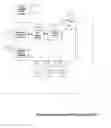
FIG. 1 shows the Automatic Regulated Parking System, in the Public Street of a generic Municipality, including the Units types that compose the System: User Device (11), Smart Network Terminal (12), Access Node (13), Network Node (14), Network Control Centre (15), User Management Centre (16) and Agent Mobile Terminal (17) for Users Management.
The vehicle user has an updated RF device, that is allocated on the vehicle frontal part, at a visible place, in case of being a RF Card. The user device is activated by the user and it starts to transmit/receive when the user realises it activation, before leaving the vehicle, in any case.
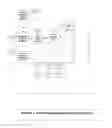
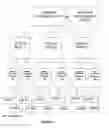
FIG. 2 shows the architecture of the system communication network, in 5 levels configuration, for the case of big parking areas.
FIG. 3 shows the architecture of the system communication network, in 4 levels configuration, for the case of reduced parking areas.
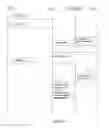
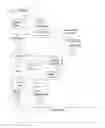
FIG. 4 shows the Communication Scenario between the Units that constitute the System, on the basis of the multifunction messages interchanged among units, for such purpose the messages have different fields in order to code each related functions. The Normal parking process starts when a driver parks the vehicle within the regulated public parking zone, activating the updated RF device, and placing the RF card on the vehicle frontal panel, if that is the case. This scenario shows how the SNT communicates with the RF device to interrogate on the identification data, to proceed to identification and to realise its validation, in Normal case, in order to be reported to the UMC, trough the NCC, if the identification is valid or not. The basic identification tasks are the following:
a. User access request to parking
b. Parking User identification
c. Busy space parking detection
d. Free space parking detection
FIG. 5 shows the Communication Scenario of the Agent Mobile Terminal (AMT) with the UMC, for specific authorized local actions. That includes, among others, the communication of an AMT with the UMC, due to a vehicle without RF device, either not active device or not valid device, to perform an authorized verification action, in interaction with the User Device.
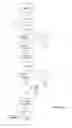
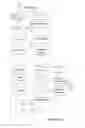
FIG. 6a. and FIG. 6b. show the basic states diagram for the user management, taking the SNT as reference point. They show the various SNT states, the input and output messages, for each state, the applicable timers and the associated actions, for each case.
FIG. 7 shows the location states diagram for the user management, in case of Abnormal identification, taking the SNT as reference point. In addition they are included the internal SNT messages related to the occupation detection and release of spaces, which are generated by the SNT detection and identification media.
FIG. 8 shows the Smart Network Terminal architecture, detailing its functional blocks and interfaces.
FIG. 9 shows the High Performances Digital Processor architecture, detailing its functional blocks and interfaces.
FIG. 10 shows the Network Control Centre architecture, detailing its functional blocks and interfaces.
FIG. 11 shows the User Management Centre architecture, detailing its functional blocks.
FIG. 12 shows the Advanced User Device architecture, detailing its functional blocks and interfaces.
1.7 INDUSTRIAL APPLICATION
The Industrial Application of the present invention derives, in evident way, from the nature of the own invention and the performed description of the System Definition, with its different Units, the Communication Network Architecture in its different levels, the System Units Description and the component Functional Blocks, as well as the functionalities and performances of each System Units, including the High Performances Digital Multiprocessor description, as a fundamental part of the Unit named Smart Network Terminal.
Claims
1. A System for Automatic Regulated Parking in integrated manner, without parking meters neither parking wardens and without intervening vehicle driver, on public and private roads, with non-delineated parking spaces, the system comprising:
A set of User Devices, that, in their Basic form, are an RFID Card, with bidirectional and interactive performances, and in their Advanced form are a small RF equipment, either installed in the vehicle or a portable one. They are connected by RF with the Smart Network Terminal, within its coverage area, and they communicate with the Users Management Centre, in basic mode, and additionally in multimedia mode, if it is an Advanced User Device.
The User Devices are associated to the vehicle, and functionally integrated in the vehicle, within the system access network, in a Machine to Machine context, to achieve an automatic and integrated parking service. They include from the parking basic functions up to the follow up and information on the state, operation and security of the vehicle and the driver, during the parking operation as well as during the complete parking time.
A set of Smart Network Terminals, that realise access control functions, communication control, identification of the user devices set, updating of user devices and others, required by the automatic and integrated parking service, within their access network and coverage area.
They allow to identify the users in case of Normal parking, correct user device, and in Abnormal case, incorrect user device, for the various types of incidences.
A set of Access Nodes that allow the transparent communication of parking information from the Smart Network Terminals, within their coverage area, with the Network Control Centre and the User Management Centre.
A set of Network Nodes that allow the transparent communication of parking information from the Access Nodes, within their coverage area, with the Network Control Centre and the User Management Centre.
A Network Control Centre, that realises the control, maintenance and operation functions of the system elements, at the global network level. It is the Communication Network Core, within the Machine to Machine architecture required by the proposed integrated system, it controls the real time functions of the Network Service Layer.
A User Management Centre that realises the real time control of the communication and identification of the user devices, according to the System Communication Scenario, within the User Application Layer. It defines and manages the user profiles, at the global level, in order to charge and invoice the corresponding services belonging to the parking use, and to apply the corresponding corrective actions in case of violation of the current rules and regulations, allowing to support other Supplementary Services, in addition to the proper parking services.
A reduced set of Agent Mobile Terminals for the users Management which is a specific mobile device for the proposed system, different from a cellular mobile device, interacting with the basic user device (RFID) and with the advanced user device.
2. A System as in claim 1, wherein the various Units are connected by radiofrequency, or optionally by physical line (cable or optical fibre), from the Access Node up to the Users Management Centre, according to five levels architecture, for the maximum configuration and four levels architecture, for the reduced configuration, these configurations can be dimensioned according to the number of system users.
3. A System as in claim 1, wherein the User Device (UD), in its Advanced form, has an architecture that comprises: RF Transceiver, Modem, Multimedia Processor, User Memory, GPS Detector, Keyboard, Display, Data Interface and Optical Minicamera. The Vehicle Data Interface allows the interaction of other system units with the User Device, based on the state, operation, maintenance and security data of the vehicle and the driver, within an intelligent and connected car context.
4. A System as in claim 1, wherein the Multimedia communication between the User and the User Management Centre is performed by the coordinated and integrated operation of the Optical Minicamera, Vehicle Data Interface, GPS Detector and Multimedia Processor, within the Supplementary Services provided by the System.
5. A System as in claim 1, wherein the Smart Network Terminal (SNT) has an architecture that comprises: User transceiver, Modulator/Coder, Demodulator/Decoder, Network transceiver, Network modulator, Network demodulator, Radiofrequency or Optical radiation Detector, Optical Camera, Video Interface, High Performances Digital Multiprocessor, Timing and Synchronization Generator and Power Supply Subsystem.
6. A System as in claim 1, wherein the Digital Multiprocessor has a high performances architecture to support the Normal and Abnormal parking control cases, comprising:
Private Processing and Memory Units for User, Location, Network Communication and Generic Functions.
Common Memory and Common Busses
User Interfaces, Detection Interfaces and Network Interfaces
7. A System as in claim 1, wherein the user identification, within its parking area, in Normal Case, without incidences, is performed directly by the Digital Multiprocessor of the Smart Network Terminal, according to the information received from the User Device.
8. A System as in claim 1, wherein the user identification, within its parking area, in Abnormal Case, including the incidences of User Device not activated, not present or incorrect functioning, Forbidden Zone and False release, is realised by the coordinated and integrated operation of the Radiofrequency Detector, or alternatively the Optical radiation Detector, the Optical Camera and the Digital Multiprocessor, within the Smart Network Terminal Unit.
9. A System as in claim 1, wherein the Smart Network Terminal sends authorized image and video information, previously selected and authorized, about the parking operation, parking environment, vehicle state, driver state and other informations, to the Network Control Centre and User Management Centre, in real time or delayed, when it is required, and about specific events identified by the Smart Network Terminal, through the Video Interface.
10. A System as in claim 1, wherein the Network Control Centre has an scalable and modular architecture, that comprises the following functional blocks, all of them specific for the communication of the Smart Network Terminals defined in the present Patent, within the Machine to Machine architecture that requires the proposed automatic and integrated parking system: Initialization and Synchronization, Operation, Connection Control, Maintenance, Redundancy and Security, Data Base and User Management Centre Interface.
11. A System as in claim 1, wherein the Network Control Centre realises the differential functions and has the specific performances, with respect to a generic Network Control Centre, as follows:
Initialization and Synchronization of the Smart Network Terminals, on the basis of the Digital Multiprocessor.
Connections Control for the routing of signals from the User Devices and the Smart Network terminals to the Users Management Centre, according to the users profile.
Remote Configuration of the User Devices and the Smart Network Terminals
Updating data and programmes load, for the User Devices and Smart Network Terminals, based on the Digital Multiprocessor incorporated by the Smart Network Terminals.
Control capability, through the Smart Network Terminals, of above ten million vehicles and above one million parking spaces.
12. A System as in claim 1, wherein the User Management Centre has an architecture that comprises the following functional blocks, all of them specific for the communication of the User Devices by means of the Smart Network Terminals, defined in the present Patent, within the context of Machine to Machine architecture that requires the proposed automatic and integrated parking system: User Registration, Identification and Service Control, Corrective Actions, Agents Management, Reports Editing, Data Base and Regulations.
13. A System as in claim 1, wherein the User Management Centre, in addition to support the parking functions and services, in automatic way, provides a set of Supplementary Services, 24 hours a day, including the following: Free Space Management, Space Public Information, in panels and in fixed and mobile terminals (personal/on board), and Free Spaces guidance, Location, Watching and Tracking of authorized vehicles, as well as Interactive Multimedia information between the User Management Centre and the interested Users, including all parking information.
In addition, it can support another Supplementary Services as the Communication, Watching and Tracking of authorized Persons and Things, provided that they are carrying the User Device.
14. A Method for the Communication between the System Units: User Devices (UD), Smart Network Terminals (SNT), Agent Mobile Terminals (AMT), Access Nodes (AN), Network Nodes (NN), Network Control Centre(NCC) and User Management Centre(UMC), according to the Basic Communication Scenario, defined for the Machine to Machine architecture of the proposed automatic and integrated parking system, based on multifunction messages, including the States Sequence at the Smart Network Terminal, and comprising, in the Normal Case, the following stages:
a. The SNT sends, from the initial state, a broadcast message to the User Devices within its coverage area, each UD replies to the SNT with an access request message, the SNT sends to the UD the communication channel assignment and waits for the device identity.
b. The UD sends a user identity message to the SNT and SNT reports to UMC on the UD identity.
c. UMC sends to SNT accepted identity message (in case of correct identity) and SNT indicates correct identity to UD, going to busy state.
d. In case of not correct identity:
If it is detected by the SNT, SNT sends an incorrect identity message to UD, and the not correct information identity to UMC.
If it is detected by the UMC, UMC sends to the SNT a not correct identity, and SNT sends to UD a not correct message.
e. The SNT performs a periodic scanning of the UD State, sending to the UD the scanning message, and UD replies to SNT with a Busy message, in case that the vehicle remains in the parking space, or with a Free message, if the parking space has been released.
f. When the parking release has not been performed correctly, the SNT sends an incorrect release message to NNC/UMC, and it goes to the pending release state.
g. Along the parking period, and by means of the busy message, the Vehicle User may interchange either Basic or Multimedia information with the UMC, replying the UMC to the UD by means of the notification message.
h. Along the a. up to g. stages, in any moment and for any network information, the SNT may communicate with the NCC, by means of the request message, to which the NCC replies with the corresponding response message.
i. Along the stages a. up to h., in any moment and for specific user management actions, the AMT may communicate with the UD and UMC according to the following steps:
AMT sends a request message to the UD, then the UD replies with the corresponding response message
AMT sends to UMC an information message, and the UMC replies with the corresponding response message
Following, the UMC may proceed to a complex information request to AMT, to which the AMT replies with complex audio, video, data or multimedia message.
15. A Method as in claim 14, for the Communication and States Sequence, taking as reference point the SNT, for the case of Abnormal parking, operating in Location mode, with the following complementary stages:
a. Operation initial state, in which the SNT generates internally, by means of its detection media, the message that a parking space has been occupied, it analysis the received identity and sends an information message to the UMC.
b. If the identification is correct it goes to the busy state, and if it is not correct, or if it is not able to perform the plate number detection, it waits for a UMC action.
c. When the parking space is released, the SNT generates internally, by means of its detection media, a message on the free parking space, and it sends an information message to the UMC.
Images & Drawings included:




Sources:
- United States Patent and Trademark Office - verify current appl. status at the USPTO↗
Recent applications in this class:
- » 20250252853 2025-08-07
AUTOMATED VALET PARKING MANAGEMENT SYSTEM - » 20250239159 2025-07-24
EVALUATION METHOD OF LOCATIONS, ANALYSIS METHOD OF DRIVING BEHAVIOR, AND DRIVER MANAGEMENT SYSTEM - » 20250140117 2025-05-01
Vehicle Searching Method and Apparatus, and Electronic Device - » 20240420572 2024-12-19
METHOD AND SYSTEM FOR AUTOMATICALLY RECORDING AND TRANSMITTING PARKING SPACE NUMBERS - » 20240331540 2024-10-03
CONTROL METHOD, INFORMATION PROCESSING APPARATUS, AND CONTROL APPARATUS - » 20240296738 2024-09-05
INFORMATION PROVISION METHOD AND PARKING LOT MANAGEMENT SYSTEM - » 20240296737 2024-09-05
METHOD FOR DETERMINING VIRTUAL PARKING SLOT, DISPLAY METHOD, APPARATUS, DEVICE, MEDIUM, AND PROGRAM - » 20240257641 2024-08-01
INFORMATION PROVIDING METHOD, INFORMATION DISPLAY METHOD, AND COMPUTER PROGRAM PRODUCT - » 20240194071 2024-06-13
Parking area recommendation method and apparatus, and medium - » 20240161619 2024-05-16
Systems and methods for providing multi-camera vehicle tracking and navigation to a vehicle location