Aircraft turbomachine computer
US20150296650A1
2015-10-15
14/441,882
2013-11-12
✅ Patent granted
US 10,362,700 B2
2019-07-23
WO; PCT/FR2013/052701; 20131112
WO; WO2014/076400; 20140522
Jerry Wu | Stephen S Sul
Oblon, McClelland, Maier & Neustadt, L.L.P.
2033-11-12
Abstract:
An aircraft turbomachine calculator including a parallelepiped metal casing including an electronic circuit wherein a control channel and a monitoring channel are integrated. The casing includes a first cavity wherein a first electronic board is provided for managing the control channel and a second cavity, independent of the first cavity, wherein a second electronic board is provided for managing the monitoring channel, these electronic boards being provided in two planes oriented with respect to each other at an angle of 90°.
Inventors:
- Ludovic Pasquier 2 🇫🇷 Bruguieres, France
- Remi Joachim 3 🇫🇷 Dremil-Lafage, France
- Daniel Averous 1 🇫🇷 Mont Joire, France
Assignee:
- SAFRAN POWER UNITS 54 🇫🇷 Toulouse, France
Applicant:
Interested in similar patents?
Get notified when new applications in this technology area are published.
Classification:
H05K7/1417 » CPC main
Constructional details common to different types of electric apparatus; Mounting supporting structure in casing or on frame or rack having securing means for mounting boards, plates or wiring boards
H05K7/1417 » CPC main
Constructional details common to different types of electric apparatus; Mounting supporting structure in casing or on frame or rack having securing means for mounting boards, plates or wiring boards
F01D21/045 » CPC further
Shutting-down of machines or engines, e.g. in emergency; Regulating, controlling, or safety means not otherwise provided for responsive to undesired position of rotor relative to stator or to breaking-off of a part of the rotor , e.g. indicating such position special arrangements in stators or in rotors dealing with breaking-off of part of rotor
F05D2270/09 » CPC further
Control; Purpose of the control system to cope with emergencies
F01D21/04 IPC
Shutting-down of machines or engines, e.g. in emergency; Regulating, controlling, or safety means not otherwise provided for responsive to undesired position of rotor relative to stator or to breaking-off of a part of the rotor , e.g. indicating such position
H05K7/14 IPC
Constructional details common to different types of electric apparatus Mounting supporting structure in casing or on frame or rack
H05K7/14 IPC
Constructional details common to different types of electric apparatus Mounting supporting structure in casing or on frame or rack
F02C9/46 » CPC further
Controlling gas-turbine plants; Controlling fuel supply in air- breathing jet-propulsion plants; Control of fuel supply Emergency fuel control
F01D21/02 » CPC further
Shutting-down of machines or engines, e.g. in emergency; Regulating, controlling, or safety means not otherwise provided for Shutting-down responsive to overspeed
H05K5/04 » CPC further
Casings, cabinets or drawers for electric apparatus Metal casings
H05K5/04 » CPC further
Casings, cabinets or drawers for electric apparatus Metal casings
Description
TECHNICAL FIELD
The invention relates to a turbomachine calculator, for example an Auxiliary Power Unit (APU), aboard an aircraft, for example a helicopter.
STATE OF PRIOR ART
The field of the invention is that of aircraft turbomachines, in particular that of aircraft turbomachine calculators used to regulate the behavior of these turbomachines. Such calculators can gather in a same casing a regulation channel and a monitoring or overspeed protection channel, which allows to obtain a cheaper cost and a lower mass than a solution wherein these channels would be set in two separated casings.
The regulation channel has the function to regulate the turbomachine speed. But a failure of this regulation channel can cause an overspeed of the turbine shaft. Indeed, when this shaft is breaking, the power provided by gases to the turbine is no longer absorbed by the equipment driven by this shaft and the rotational speed of the turbine increases extremely quickly. Such an overspeed results very quickly in breaking the turning parts and/or the separation thereof from the turbine disk. These turning parts are then violently outwardly projected because of the centrifugal force and can pass through the case surrounding the turbine, causing very significant damage in the engine, and able to put the aircraft and its passengers at risk.
The overspeed protection channel has the object to avert the consequences of such an overspeed. The overspeed protection channel includes an electronic member associated with a hydromechanical member. The electronic member measures the rotational speed of the rotor. If the electronic member detects an overspeed, it then controls the hydromechanical member, which cuts off the fuel supply to the turbomachine.
The invention has the object to provide a solution to a technical problem difficult to be solved which is that of a common mode failure, that is both a failure of the regulation channel and a failure of the overspeed protection channel, in particular those due to an origin external to the calculator (so-called “local events”).
DISCLOSURE OF THE INVENTION
The invention relates to an aircraft turbomachine calculator, comprising a parallelepiped metal casing containing an electronic circuit wherein a control channel and a monitoring channel are integrated, characterized in that the casing comprises a first cavity wherein a first electronic board is provided for managing the control channel and a second cavity, independent of the first cavity, wherein a second electronic board is provided for managing the monitoring channel, these electronic boards being provided in two planes oriented with respect to each other at an angle of 90°.
Advantageously, each board is connected to at least one connector located on a face of the casing. Each connector can be a multipin connector.
Advantageously, the calculator of the invention comprises a third electronic board provided in the first cavity, this third board being electrically connected to the first electronic board.
Advantageously, the first and second electronic boards are galvanically isolated from each other. The first and second electronic boards can thus be connected to each other by an optical link.
Advantageously, the casing is made of aluminum or titanium. It can have a width between 10 and 40 cm, typically 30 cm, a height between 10 and 30 cm, typically 10 cm and a thickness between 3 and 10 cm, typically 5 cm.
The calculator of the invention can be a calculator of an Auxiliary Power Unit (APU). The invention can relate to an aircraft, for example a helicopter, implementing such a calculator.
BRIEF DESCRIPTION OF THE DRAWINGS
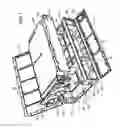
FIGS. 1 to 4 illustrate the aircraft turbomachine calculator according to the invention; FIGS. 1 and 2 are isometric exploded views, FIG. 3 being a front view and FIG. 4 a cross section view along the line A-A, the broken line A-A being represented in FIG. 3.
DETAILED DISCLOSURE OF PARTICULAR EMBODIMENTS
The aircraft turbomachine calculator of the invention comprises a parallelepiped metal casing 10 containing independent first and second parallelepiped cavities 14 and 15 wherein a first and a second electronic boards 20 and 21 are respectively provided wherein a control channel and a monitoring channel are respectively integrated. These boards are provided in two planes oriented with respect to each other to form a determined angle, for example 90°.
As illustrated in FIGS. 1 to 4, the casing 10 consists of a parallelepiped mount 11 and two covers 12 and 13 which are respectively attached to the upper face and a side face of the mount 11 to form two independent parallelepiped cavities 14 and 15. The covers 12 and 13 can be attached by screwing onto the mount 11, through holes 31 and 32, wherein seals 33 can be provided in interstitial spaces.
The first cavity 14 divided into two by a wall 16 is designed to receive the first electronic board 20 for managing the control channel. The second cavity 15 is designed to receive the second electronic board 21 for managing the monitoring channel.
The first cavity 14 can also contain a third electronic board 30, provided in the bottom of the first cavity 14 as illustrated in FIG. 4, that can be electrically connected to the first board 20 by pin connectors. Such a third electronic board 30 therefore has the object to operationally complete the first electronic board.
The first electronic board 20 is connected by a flexible conductor 22 to a small board 23, wherein two multipin connectors 24 and 25 are attached, and which fits into the front part of the mount 11. The second electronic board 21 is connected to a multipin connector 26 by a flexible conductor 27. This connector 26 is attached in an aperture 28 provided on the front part of the mount 11.
As represented in FIG. 4, spacers 34 enable the first electronic board 20 to be spaced apart from the third electronic board 30.
The first electronic board is connected to the second electronic board by a flexible conductor 35 ending with a connector 35′ ensuring a galvanic link, this conductor being intended to pass through the aperture 42 made in the mount 11. The partition walls 40 and 41 between the first cavity 14 and the second cavity ensure their independency.
The calculator of the invention is thus comprised of two electronic boards 20 (possibly completed by the third board 30) and 21 accommodated into two independent volumes, oriented at a determined angle with respect to each other, advantageously, at an angle of 90° ensuring the absence of a vibratory type failure common mode. Both these volumes ensure the absence of a physical, thermodynamical, chemical, electric . . . type failure common mode.
Such a solution facilitates accommodating independent connectors for each board. It also facilitates the use of two independent power supplies.
In an advantageous embodiment, the calculator has the dimensions represented in FIGS. 3 and 4 (figures at the 1:1 scale).
Both electronic boards 20 and 21 are connected to each other by a minimalized interface ensured for example by opto-couplers ensuring the electrical independency of the two control and safety channels.
The calculator of the invention enables all the common causes of breakdowns to be eliminated, by allowing a great flexibility:
-
- The external manufacture of one of the electronic boards 20 (30) and 21 enables the common manufacture causes to be solved.
- The sealing between both cavities 14 and 15 enables the common thermodynamic causes of mutual heating or exposure to a simultaneous over-temperature of the electronic boards 20 (30) and 21 to be solved.
- The sealing between both cavities 14 and 15 enables the common physicochemical or exposure to a mechanical risk causes to be solved. The risk of run off on the electronic boards 20 (30) and 21 is solved. The risk of using a screw which causes a simultaneous short circuit is solved.
- The independency of the cavities 14 and 15 allows a high electrical insulation of the electronic boards 20 (30) and 21 by avoiding cascade electric breakdowns from one board to the other, these breakdowns can be related to the lightning strike, to the electric supply variations by the electrical network.
- The perpendicular arrangement of the electronic boards 20 (30) and 21 solves the mechanical resonances by modifying the exposure to vibration and ensures a non-simultaneous breaking of these boards.
- An electrical problem existing on an electronic board 20 (30) does not electrically propagate to the other board 21.
- A breakdown of the link between the electronic boards has the only impact to put the calculator into safety: the monitoring channel turns off the calculator or prevents it from being booted.
Claims
1-9. (canceled)
10. An aircraft turbomachine calculator comprising:
a parallelepiped metal casing including an electronic circuit, wherein a control channel and a monitoring channel are integrated;
the casing comprising a first cavity wherein a first electronic board is provided for managing the control channel and a second cavity, independent of the first cavity, wherein a second electronic board is provided for managing the monitoring channel, the electronic boards being provided in two planes oriented with respect to each other at an angle of 90°.
11. The calculator according to claim 10, wherein each electronic board is connected to at least one connector located on a face of the casing.
12. The calculator according to claim 11, wherein each connector is a multipin connector.
13. The calculator according to claim 10, further comprising a third electronic board provided in the first cavity, the third electronic board being electrically connected to the first electronic board.
14. The calculator according to claim 10, wherein the first and second electronic boards are galvanically isolated from each other.
15. The calculator according to claim 14, wherein the first and second electronic boards are connected to each other by an optical link.
16. The calculator according to claim 10, wherein the casing is made of aluminum or titanium.
17. The calculator according to claim 10, wherein the casing has a width between 10 and 40 cm, a height between 10 and 30 cm, and a thickness between 3 and 10 cm.
18. An aircraft comprising a calculator according to claim 10.
Images & Drawings included:



Sources:
- United States Patent and Trademark Office - verify current appl. status at the USPTO↗
Similar patent applications:
Recent applications in this class:
- » 20250287521 2025-09-11
LOCKING DEVICE AND LOCKING STRUCTURE USING SAME - » 20250234472 2025-07-17
SYSTEMS AND METHODS FOR LOW-PROFILE COUPLING OF AN INFORMATION HANDLING RESOURCE TO AN INFORMATION HANDLING SYSTEM CHASSIS - » 20250024623 2025-01-16
CONNECTION MECHANISM AND DISPLAY DEVICE - » 20240407121 2024-12-05
MAIN BOARD ASSEMBLY - » 20240389257 2024-11-21
MOUNTING BRACKET AND ELECTRONIC DEVICE AND DISPLAY APPARATUS INCLUDING THE SAME - » 20240389256 2024-11-21
IMAGING APPARATUS - » 20240284626 2024-08-22
Chassis ear apparatus and mounting method thereof - » 20240276667 2024-08-15
FIXING STRUCTURE OF CIRCUIT BOARD AND PUMP DEVICE - » 20240268053 2024-08-08
RISER CAGE FASTENERS FOR AN INFORMATION HANDLING SYSTEM - » 20240268052 2024-08-08
Sliding latch for retention of peripheral device
Recent applications for this Assignee:
- » 20250132367 2025-04-24
FUEL CELL COMPRISING AN END PLATE COMPRISING A MAIN DEVICE AND AN AUXILIARY DEVICE, METHOD FOR ACCESSING A FUEL CELL SHAFT - » 20240282986 2024-08-22
METHOD AND MODULE FOR CONTROLLING A VALVE FOR REGULATING THE INTERNAL PRESSURE OF A FLUID CIRCUIT IN AN ELECTROCHEMICAL DEVICE - » 20240209752 2024-06-27
Lubrication of bearings of a turbomachine shaft - » 20240200493 2024-06-20
Removable mechanical part for acoustic insulation of an air inlet casing - » 20240175397 2024-05-30
METHOD FOR THE PILOTED START-UP OF A GAS TURBINE OF AN AIRCRAFT, AND CORRESPONDING SYSTEM - » 20240159164 2024-05-16
Lubrication reservoir for a turbine engine for an aircraft or self-propelled flying machine - » 20240002059 2024-01-04
Method and architecture for supplying air to an auxiliary power unit of an aircraft - » 20230378488 2023-11-23
FUEL CELL AND FUEL CELL CONTROL METHOD - » 20230317979 2023-10-05
FUEL CELL, SYSTEM COMPRISING A FUEL CELL AND METHOD FOR CONTROLLING THE SYSTEM - » 20230258129 2023-08-17
HYBRID TURBOMACHINE FOR AIRCRAFT WITH AN ACTIVE ACOUSTIC CONTROL SYSTEM