Organotemplate-free solid-state synthetic method for zeolite molecular sieves
US20150298983A1
2015-10-22
14/649,637
2013-12-05
✅ Patent granted
US 10,160,656 B2
2018-12-25
WO; PCT/CN2013/088654; 20131205
WO; WO2014/086300; 20140612
David M Brunsman
Oblon, McClelland, Maier & Neustadt, L.L.P.
2035-08-09
Abstract:
Described is a preparation method for zeolite molecular sieves by means of solid-state reactions without the usage of organic templates. The method comprises the following steps: grinding and mixing the solid raw materials comprising the silicon source, the aluminum source and the alkali source, transferring the obtained mixture into an autoclave, conducting the crystallization for a period of 5 hours-20 days at a temperature of 50-200° C. After filtering and drying the crystallized products, molecular sieves in a powder form can be obtained. The method provides different molecular sieves, including ZSM-5 zeolite, Beta zeolite, FAU zeolite, MOR zeolite, LTA zeolite, and GIS zeolite, with a high crystallinity and an adjustable Si/Al ratio within a certain range. The obtained products exhibit a high crystallinity and a high purity, and the method does not require the use of organic templates and solvents, which avoids unnecessary consumptions during the production, simplifies the synthetic process, and also increases the yield from the autoclave reactor.
Inventors:
- Ulrich Müller 132 🇩🇪 Neustadt, Germany
- Feng-Shou XIAO 22 🇨🇳 Changchun, China
- Stefan Maurer 5 🇨🇳 Shanghai Pudong, China
- Xiangju Meng 1 🇨🇳 Hangzhou Zhejiang Province, China
- Qinming Wu 4 🇨🇳 Hangzhou, China
- Xiangju Meng 1 🇨🇳 Hangzhou Zejiang Province, China
Assignee:
- BASF SE 6,681 🇩🇪 Ludwigshafen, Germany
Applicant:
Interested in similar patents?
Get notified when new applications in this technology area are published.
Classification:
C01B39/46 » CPC main
Compounds having molecular sieve and base-exchange properties, e.g. crystalline zeolites; Their preparation; After-treatment, e.g. ion-exchange or dealumination; Crystalline aluminosilicate zeolites; Isomorphous compounds thereof; Direct preparation thereof; Preparation thereof starting from a reaction mixture containing a crystalline zeolite of another type, or from preformed reactants; After-treatment thereof Other types characterised by their X-ray diffraction pattern and their defined composition
B01J37/04 » CPC further
Processes, in general, for preparing catalysts; Processes, in general, for activation of catalysts Mixing
C01B39/14 » CPC further
Compounds having molecular sieve and base-exchange properties, e.g. crystalline zeolites; Their preparation; After-treatment, e.g. ion-exchange or dealumination; Crystalline aluminosilicate zeolites; Isomorphous compounds thereof; Direct preparation thereof; Preparation thereof starting from a reaction mixture containing a crystalline zeolite of another type, or from preformed reactants; After-treatment thereof Type A
C01B39/26 » CPC further
Compounds having molecular sieve and base-exchange properties, e.g. crystalline zeolites; Their preparation; After-treatment, e.g. ion-exchange or dealumination; Crystalline aluminosilicate zeolites; Isomorphous compounds thereof; Direct preparation thereof; Preparation thereof starting from a reaction mixture containing a crystalline zeolite of another type, or from preformed reactants; After-treatment thereof Mordenite type
C01B39/38 » CPC further
Compounds having molecular sieve and base-exchange properties, e.g. crystalline zeolites; Their preparation; After-treatment, e.g. ion-exchange or dealumination; Crystalline aluminosilicate zeolites; Isomorphous compounds thereof; Direct preparation thereof; Preparation thereof starting from a reaction mixture containing a crystalline zeolite of another type, or from preformed reactants; After-treatment thereof; Pentasil type, e.g. types ZSM-5, ZSM-8 or ZSM-11 Type ZSM-5
C01B39/20 » CPC further
Compounds having molecular sieve and base-exchange properties, e.g. crystalline zeolites; Their preparation; After-treatment, e.g. ion-exchange or dealumination; Crystalline aluminosilicate zeolites; Isomorphous compounds thereof; Direct preparation thereof; Preparation thereof starting from a reaction mixture containing a crystalline zeolite of another type, or from preformed reactants; After-treatment thereof Faujasite type, e.g. type X or Y
B01J37/009 » CPC further
Processes, in general, for preparing catalysts; Processes, in general, for activation of catalysts Preparation by separation, e.g. by filtration, decantation, screening
B01J29/40 » CPC further
Catalysts comprising molecular sieves having base-exchange properties, e.g. crystalline zeolites; Crystalline aluminosilicate zeolites; Isomorphous compounds thereof of the pentasil type, e.g. types ZSM-5, ZSM-8 or ZSM-11, as exemplified by patent documents US3702886, GB1334243 and US3709979, respectively
B01J37/00 IPC
Processes, in general, for preparing catalysts; Processes, in general, for activation of catalysts
B01J29/18 » CPC further
Catalysts comprising molecular sieves having base-exchange properties, e.g. crystalline zeolites; Crystalline aluminosilicate zeolites; Isomorphous compounds thereof of the mordenite type
C01B39/02 » CPC further
Compounds having molecular sieve and base-exchange properties, e.g. crystalline zeolites; Their preparation; After-treatment, e.g. ion-exchange or dealumination Crystalline aluminosilicate zeolites; Isomorphous compounds thereof; Direct preparation thereof; Preparation thereof starting from a reaction mixture containing a crystalline zeolite of another type, or from preformed reactants; After-treatment thereof
B01J29/70 » CPC further
Catalysts comprising molecular sieves having base-exchange properties, e.g. crystalline zeolites; Crystalline aluminosilicate zeolites; Isomorphous compounds thereof of types characterised by their specific structure not provided for in groups -
B01J35/00 IPC
Catalysts, in general, characterised by their form or physical properties
B01J35/002 » CPC further
Catalysts, in general, characterised by their form or physical properties Catalysts characterised by their physical properties
B01J35/1023 » CPC further
Catalysts, in general, characterised by their form or physical properties; Solids characterised by their surface properties or porosity; Surface area 500-1000 m2/g
B01J35/1038 » CPC further
Catalysts, in general, characterised by their form or physical properties; Solids characterised by their surface properties or porosity; Pore volume less than 0.5 ml/g
B01J29/08 » CPC further
Catalysts comprising molecular sieves having base-exchange properties, e.g. crystalline zeolites; Crystalline aluminosilicate zeolites; Isomorphous compounds thereof of the faujasite type, e.g. type X or Y
B01J35/10 IPC
Catalysts, in general, characterised by their form or physical properties; Solids characterised by their surface properties or porosity
Description
CROSS-REFERENCE TO RELATED APPLICATIONS
This application is the National Stage Entry of PCT/CN2013/088654, filed on Dec. 5, 2013, which claims priority to Chinese Patent Application No. 201210535629.7, filed on Dec. 9, 2012, the disclosures of which are incorporated herein by reference in their entireties.
TECHNICAL FIELD
The present invention relates to the field of molecular sieve synthesis, and especially relates to the method combining the solid-state and organotemplate-free approaches for the synthesis of molecular sieves.
BACKGROUND
Due to their open structure and large surface area, molecular sieves have been widely used in catalysis, ion exchange, adsorption, separation and so on. Therefore, the research on molecular sieves is of high importance for the chemical industry, and there is a strong need to develop new synthetic routes for molecular sieves. In the early stage of the molecular sieve research, molecular sieves were synthesized under hydrothermal conditions, and only limited types of molecular sieves were synthesized including zeolites A, X, Y, L, and so on. In the late 1960s, the introduction of organic template agents led to the synthesis of various novel molecular sieves, such as ZSM-5, Beta, which are of high importance in the chemical industry.
In recent years, researchers started to use organotemplate-free methods for the synthesis of zeolite molecular sieves, such as ECR-1, ZSM-34, Beta, ZSM-12, RuB-13 and so on. The organotemplate-free method avoids several issues related to the use of organic templates in the zeolite synthesis, for example, unfavorable costs, waste of energy and release of hazardous gases from the template calcination process as well as the inherent toxicity of many organic template agents. More recently, the group of Xiao has successfully synthesized Silicate-1, ZSM-5, ZSM-39 and other zeolites by using a novel synthetic method which includes grinding the raw materials in a solid-state under solvent-free conditions and subsequent crystallization (called solid-state method for short). This solid-state method minimizes the consumption of aqueous solvents, and simplifies the molecular sieve synthesis, which has the potential to reduce the overall production cost as well as the waste that has to be discharged.
However, the above two synthetic methods both have their own disadvantages. The organotemplate-free synthetic method containing a hydrothermal process requires the consumption of a large amount of aqueous solvent; whereas for the solid-state method, organic template with all inherent issues has to be employed. The present invention provides a novel organotemplate-free and solid-state synthetic method which enables a “green” synthetic route for molecular sieves, leading to a low cost production, low energy consumption and almost zero pollution.
SUMMARY
A first aspect of the present invention is directed to an organotemplate-free solid-state method for the synthesis of zeolite molecular sieves. In a first embodiment, an organotemplate-free solid-state method for the synthesis of zeolite molecular sieves, comprises grinding and mixing the weighed solid raw materials comprising the silicon source, the aluminum source and the alkali source; transferring the mixture into an autoclave; crystallizing the mixture at temperatures of between 50-200° C. for a time period of from 5 hours to 20 days; and filtering and drying the product for obtaining powders of molecular sieves; wherein each raw material is added within a molar ratio range of SiO2:(0.016-0.5) Al2O3:(0.1-0.7) Na2O:(1.5-3) H2O.
In a second embodiment, the method of the first embodiment is modified, wherein each raw material is added within a molar ratio range of SiO2:0.25 Al2O3:0.39 Na2O:(2-3) H2O.
In a third embodiment, the method of the first and second embodiments is modified, wherein each raw material is added within a molar ratio range of SiO2:0.05 Al2O3:(0.1-0.16) Na2O:(2-3) H2O.
In a fourth embodiment, the method of the first through third embodiments is modified, wherein each raw material is added within a molar ratio range of SiO2:0.1 Al2O3:0.39 Na2O:(2-3) H2O.
In a fifth embodiment, the method of the first through fourth embodiments is modified, wherein each raw material is added within a molar ratio range of SiO2:0.5 Al2O3:0.7 Na2O:(3-4) H2O.
In a sixth embodiment, the method of the first through fifth embodiments is modified, wherein molecular sieve seed crystals are added and grinded together with the solid raw materials before crystallization, and wherein the mass ratio of the molecular sieve seed crystals to the raw silicon source is in a range of 1-10%.
In a seventh embodiment, the method of the sixth embodiment is modified, wherein each raw material is added within a molar ratio range of SiO2:(0.016-0.05) Al2O3:(0.14-0.25) Na2O:(1.5-3) H2O.
In an eighth embodiment, the method of the sixth and seventh embodiments is modified, wherein each raw material is added within a molar ratio range of SiO2:(0.056-0.083) Al2O3:(0.14-0.2) Na2O:(2-3) H2O.
In a ninth embodiment, the method of the first through eighth embodiments is modified, wherein the aluminum source is selected from aluminum sulfate or sodium aluminate; the silicon source is selected from sodium silicate, solid silica gel, white carbon black or amorphous silica powder; and the alkali source is selected from sodium hydroxide or sodium silicate.
BRIEF DESCRIPTION OF THE FIGURES
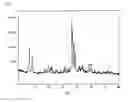
FIG. 1: XRD spectrum of the product obtained from Example 1;
FIG. 2: SEM image of the product obtained from Example 1;
FIG. 3: Nitrogen adsorption sorption isotherm of the product obtained from Example 1;
FIG. 4: XRD pattern of the product obtained from Example 2;
FIG. 5: SEM image of the product obtained from Example 2;
FIG. 6: XRD pattern of the product obtained from Example 9;
FIG. 7: SEM image of the product obtained from Example 9;
FIG. 8: XRD pattern of the product obtained from Example 13;
FIG. 9: SEM image of the product obtained from Example 13;
FIG. 10: Nitrogen sorption isotherm of the product obtained from Example 13;
FIG. 11: XRD pattern of the product obtained from Example 16;
FIG. 12: SEM image of the product obtained from Example 16;
FIG. 13: XRD pattern of the product obtained from Example 19;
FIG. 14: SEM image of the product obtained from Example 19;
FIG. 15: XRD pattern of the product obtained from Example 20;
FIG. 16: XRD pattern of the as-synthesized product obtained according to Example 27;
FIG. 17: SEM image of the as-synthesized product obtained according to Example 27;
FIG. 18: N2 sorption isotherms of the product (H-form) obtained according to Example 27;
FIG. 19: 29Si MAS NMR spectrum of the as-synthesized product obtained according to Example 27, including the result from deconvolution thereof;
FIG. 20: XRD pattern of the as-synthesized product obtained according to Example 28;
FIG. 21: SEM image of the as-synthesized product obtained according to Example 28;
FIG. 22: N2 sorption isotherms of the product (H-form) obtained according to Example 28;
FIG. 23: 29Si MAS NMR spectrum of the as-synthesized product obtained according to Example 28, including the result from deconvolution thereof;
FIG. 24: Results from catalytic testing of Beta zeolite obtained from Example 27 (“□”) and compared to conventional Beta zeolite (“▪”) in cumene cracking, wherein the abscissa indicates the conversion of cumene in %, whereas the ordinate indicates the run number in which one pulse injection was applied to the tested material; and
FIG. 25: Results from catalytic testing of ZSM-5 obtained from Example 28 compared to conventional ZSM-5 in the isomerization of m-xylene to p-xylene, wherein the abscissa to the left indicates the conversion of m-xylene in % for ZSM-5 obtained from Example 28 (“□”) and conventional ZSM-5 (“◯”), and the abscissa to the right indicates the selectivity of ZSM-5 obtained from Example 28 (“▪”) and conventional ZSM-5 (“”) towards the p-xylene product in %. The ordinate indicates the duration of the catalytic testing experiment in hours.
DETAILED DESCRIPTION
Provided is an organotemplate-free solid-state synthetic method overcomes the disadvantages of the molecular sieve synthesis known in the prior art and provides for zeolites including ZSM-5, Beta, FAU, MOR, LTA, and GIS molecular sieves.
The organotemplate-free solid-state synthetic method for molecular sieves provided by the present invention comprises the following steps:
Grinding and mixing the weighed solid raw materials comprising the silicon source, the aluminum source and the alkali source, then transferring the solid mixture into an autoclave and conducting crystallization for a time period from 5 hours to 20 days at temperatures of 50-200° C., and after a suction filtration and subsequent drying of the products, powders of molecular sieves can be obtained. In one or more embodiments, each raw material shall be added within a molar ratio range of SiO2:(0.016-0.5) Al2O3:(0.1-0.7) Na2O:(1.5-3) H2O.
According to one or more embodiments of the present invention, each raw material shall be added within a molar ratio range of SiO2:0.25 Al2O3:0.39 Na2O:(2-3) H2O.
According to one or more specific embodiments of the present invention, each raw material shall be added within a molar ratio range of SiO2:0.05 Al2O3:(0.1-0.16) Na2O:(2-3) H2O.
According to other specific embodiments of the present invention, each raw material shall be added within a molar ratio range of SiO2:0.1 Al2O3:0.39 Na2O:(2-3) H2O.
According to further specific embodiments of the present invention, each raw material shall be added within a molar ratio range of SiO2:0.5 Al2O3:0.7 Na2O:(3-4) H2O.
According to one or more embodiments of the present invention, molecular sieve seed crystals are mixed and grinded together with the solid raw materials before crystallization. The mass ratio of said molecular sieve seed crystals to the silicon source is within a range of 1-10%.
According to one or more embodiments, when molecular sieve seed crystals are added during the synthesis, each raw material shall be added within a molar ratio range of SiO2:(0.016-0.05) Al2O3:(0.14-0.25) Na2O:(1.5-3) H2O.
According to one or more specific embodiments, when molecular sieve seed crystals are added during the synthesis, each raw material shall be added within a molar ratio range of SiO2:(0.056-0.083) Al2O3:(0.14-0.2) Na2O:(2-3) H2O.
According to one or more embodiments, the aluminum source is aluminum sulfate or sodium aluminate; the silicon source is hydrated sodium silicate (Na2SiO4.9H2O), solid silica gel, white carbon black or amorphous silica powder; and the alkali source is sodium hydroxide or hydrated sodium silicate.
The present invention has the following beneficial technical effects:
Based on the solution of the present invention, ZSM-5 zeolite, Beta zeolite, FAU zeolite, MOR zeolite, LTA zeolite, and GIS zeolite with a high crystallinity and an adjustable Si/Al ratio within a certain range can be obtained.
Compared to the prior art, the zeolite products obtained by the present invention have a high crystallinity and a high phase purity, and the whole production process is free of organic template agents and solvents, thus avoiding unnecessary consumption during the production process. Moreover, the synthetic method of the present invention simplifies the production of zeolites, and improves the yield of the zeolitic products obtained from the autoclave reactor. Therefore, this “green” synthetic route will significantly reduce the production costs, which may find potential application in the production of zeolites in the chemical industry.
The invention is now described with reference to the following examples. Before describing several exemplary embodiments of the invention, it is to be understood that the invention is not limited to the details of construction or process steps set forth in the following description. The invention is capable of other embodiments and of being practiced or being carried out in various ways.
EXAMPLES
X-ray powder diffraction (XRD) patterns were measured with a Rigaku Ultimate VI X-ray diffractometer (40 kV, 40 mA) using CuKα (λ=1.5406 Å) radiation. The N2 sorption isotherms at the temperature of liquid nitrogen were measured using Micromeritics ASAP 2020M and Tristar system. The sample composition was determined by inductively coupled plasma (ICP) with a Perkin-Elmer 3300DV emission spectrometer. Scanning electron microscopy (SEM) experiments were performed on Hitachi SU-1510 electron microscopes. 29Si MAS NMR spectra were recorded on a Varian Infinity Plus 400 spectrometer.
Example 1
Synthesis of Low Si/Al Ratio ZSM-5 Zeolite by the Organotemplate-Free Solid-State Method
2 g of Na2SiO3.9H2O, 0.92 g of Al2(SO4)3.18H2O, 1.3 g of solid silica gel and 0.17 g of ZSM-5 seed crystals (the amount of seed crystals is calculated with respect to the amount of raw silicon source) were poured into a mortar and mixed by grinding for 10 minutes. The mixture was then transferred into a polytetrafluorethylene lined stainless steel autoclave and the crystallization was conducted at 180° C. for 15 hours until the crystallization was complete. The product was filtered by suction filtration and followed by a drying step to obtain the final product in a powder form. The composition of the synthetic mixture is as follows:
SiO2:0.05 Al2O3:0.25 Na2O:3 H2O. The mass ratio of seed crystals to the raw silicon source is 10%.
It is determined by the X-ray diffraction analysis that the obtained product is a ZSM-5 zeolite.
FIG. 1 and FIG. 2 show respectively the XRD pattern and SEM image of the product synthesized accordingly to Example 1.
Example 2
Utilization of the ZSM-5 Zeolite Synthesized by the Organotemplate-Free Solid-State Method of Example 1 as Seed Crystals
2 g of Na2SiO3.9H2O, 0.92 g of Al2(SO4)3.18H2O, 1.3 g of solid silica gel and 0.17 g of ZSM-5 seed crystals obtained from Example 1 were poured into a mortar and mixed by grinding for 10 minutes. The mixture than was transferred into a polytetrafluorethylene lined stainless steel autoclave and crystallization was conducted at 180° C. for 15 hours until the crystallization was complete. The product was filtered off by suction filtration followed by a drying step to obtain the final product in a powder form. The composition of the synthetic mixture is as follows:
SiO2:0.05 Al2O3:0.25 Na2O:3 H2O. The mass ratio of seed crystals to the raw silicon source is 10%.
It is determined by the X-ray diffraction analysis that the obtained product is a ZSM-5 zeolite FIG. 4 and FIG. 5 show respectively the XRD pattern and SEM image of the product synthesized according to Example 2, indicating that the ZSM-5 zeolite synthesized by the described method can be used as seed crystals in further syntheses.
Example 3
Synthesis of High Si/Al Ratio ZSM-5 Zeolite by the Organotemplate-Free Solid-State Method
1.1 g of Na2SiO3.9H2O, 0.3 g of Al2(SO4)3.18H2O, 1.4 g of solid silica gel and 0.17 g of ZSM-5 seed crystals (the amount of seed crystals is calculated with respect to the amount of raw silicon source) were poured into a mortar and mixed by grinding for 10 minutes. The mixture was then transferred into a polytetrafluorethylene lined stainless steel autoclave and crystallization was conducted at 180° C. for 15 hours until the crystallization was complete. The product was filtered by suction filtration and followed by a drying step to obtain the final product in a powder form. The composition of the synthetic mixture is as follows:
SiO2:0.016 Al2O3:0.14 Na2O:1.5 H2O. The mass ratio of seed crystals to the raw silicon source is 10%. It is determined by the X-ray diffraction analysis that the obtained product is a ZSM-5 zeolite.
Example 4
Synthesis of ZSM-5 Zeolite by the Organotemplate-Free Solid-State Method
1.5 g of Na2SiO3.9H2O, 0.65 g of Al2(SO4)3.18H2O, 1.35 g of solid silica gel and 0.17 g of ZSM-5 seed crystals (the amount of seed crystals is calculated with respect to the amount of raw silicon source) were poured into a mortar and mixed by grinding for 10 minutes. The mixture was then transferred into a polytetrafluorethylene lined stainless steel autoclave and crystallization was conducted at 180° C. for 15 hours until the crystallization was completed. The product was filtered by suction filtration and followed by a drying step to obtain the final product in a powder form. The composition of the synthetic mixture is as follows:
SiO2:0.034 Al2O3:0.19 Na2O:2.3 H2O. The mass ratio of seed crystals to the raw silicon source is 10%. It is determined by the X-ray diffraction analysis that the obtained product is a ZSM-5 zeolite.
Example 5
Synthesis of ZSM-5 Zeolite at a High Temperature in a Short Time
1.5 g of Na2SiO3.9H2O, 0.65 g of Al2(SO4)3.18H2O, 1.35 g of solid silica gel and 0.17 g of ZSM-5 seed crystals (the amount of seed crystals is calculated with respect to the amount of raw silicon source) were poured into a mortar and mixed by grinding for 10 minutes. The mixture than was transferred into a polytetrafluorethylene lined stainless steel autoclave and the crystallization was conducted at 200° C. for 5 hours until the crystallization was complete. The product was filtered by suction filtration followed by a drying step to obtain the final product in a powder form. The composition of the synthetic mixture is as follows:
SiO2:0.034 Al2O3:0.19 Na2O:2.3 H2O. The mass ratio of seed crystals to the raw silicon source is 10%. It is determined by the X-ray diffraction analysis that the obtained product is a ZSM-5 zeolite.
Example 6
Synthesis of ZSM-5 Zeolite at a Low Temperature in a Short Time
1.5 g of Na2SiO3.9H2O, 0.65 g of Al2(SO4)3.18H2O, 1.35 g of solid silica gel and 0.17 g of ZSM-5 seed crystals (the amount of seed crystals is calculated with respect to the amount of raw silicon source) were poured into a mortar and mixed by grinding for 10 minutes. The mixture than was transferred into a polytetrafluorethylene lined stainless steel autoclave and the crystallization was conducted at 150° C. for 4 days until the crystallization was complete. The product was filtered by suction filtration and followed by a drying step to obtain the final product in a powder form. The composition of the synthetic mixture is as follows:
SiO2:0.034 Al2O3:0.19 Na2O:2.3 H2O. The mass ratio of seed crystals to the raw silicon source is 10%. It is determined by the X-ray diffraction analysis that the obtained product is a ZSM-5 zeolite.
Example 7
Synthesis of ZSM-5 Zeolite Using 1% Seed Crystals
1.5 g of Na2SiO3.9H2O, 0.65 g of Al2(SO4)3.18H2O, 1.35 g of solid silica gel and 0.017 g of ZSM-5 seed crystals (the amount of seed crystals is calculated with respect to the amount of raw silicon source) were poured into a mortar and mixed by grinding for 10 minutes. The mixture than was transferred into a polytetrafluorethylene lined stainless steel autoclave and the crystallization was conducted at 180° C. for 1 day until the crystallization was complete. The product was filtered by suction filtration and followed by a drying step to obtain the final product in a powder form. The composition of the synthetic mixture is as follows:
SiO2:0.034 Al2O3:0.19 Na2O:2.3 H2O. The mass ratio of seed crystals to the raw silicon source is 1%. It is determined by the X-ray diffraction analysis that the obtained product is a ZSM-5 zeolite.
Example 8
Synthesis of ZSM-5 Zeolite Using 5% Seed Crystals
1.5 g of Na2SiO3.9H2O, 0.65 g of Al2(SO4)3.18H2O, 1.35 g of solid silica gel and 0.085 g of ZSM-5 seed crystals (the amount of seed crystals is calculated with respect to the amount of raw silicon source) were poured into a mortar and mixed by grinding for 10 minutes. The mixture was then transferred into a polytetrafluorethylene lined stainless steel autoclave and the crystallization was conducted at 180° C. for 20 hours until the crystallization was complete. The product was filtered by suction filtration and followed by a drying step to obtain the final product in a powder form. The composition of the synthetic mixture is as follows:
SiO2:0.034 Al2O3:0.19 Na2O:2.3 H2O. The mass ratio of seed crystals to the raw silicon source is 5%. It is determined by the X-ray diffraction analysis that the obtained product is a ZSM-5 zeolite.
Example 9
Synthesis of Beta Zeolite at a Low Temperature by the Organotemplate-Free Solid-State Method
6.34 g of SiO2.3H2O, 0.73 g of NaAlO2, 0.48 g of NaOH and 0.34 g of Beta seed crystals (the amount of seed crystals is calculated with respect to the amount of raw silicon source) were poured into a mortar and mixed by grinding for 10 minutes. The mixture was then transferred into a polytetrafluorethylene lined stainless steel autoclave and the crystallization was conducted at 120° C. for 10 days until the crystallization was complete. The product was filtered by suction filtration and followed by a drying step to obtain the final product in a powder form. The composition of the synthetic mixture is as follows:
SiO2:0.056 Al2O3:0.2 Na2O:3 H2O. The mass ratio of seed crystals to the raw silicon source is 10%. It is determined by the X-ray diffraction analysis that the obtained product is a Beta zeolite.
Example 10
Synthesis of Beta Zeolite at a High Temperature by the Organotemplate-Free Solid-State Method
6 g of SiO2.3H2O, 1.09 g of NaAlO2, 0.19 g of NaOH and 0.4 g of Beta seed crystals (the amount of seed crystals is calculated with respect to the amount of raw silicon source) were poured into a mortar and mixed by grinding for 10 minutes. The mixture than was transferred into a polytetrafluorethylene lined stainless steel autoclave and the crystallization was conducted at 140° C. for 3 days until the crystallization was complete. The product was filtered by suction filtration and followed by a drying step to obtain the final product in a powder form. The composition of the synthetic mixture is as follows:
SiO2:0.083 Al2O3:0.14 Na2O:2.5 H2O. The mass ratio of seed crystals to the raw silicon source is 10%. It is determined by the X-ray diffraction analysis that the obtained product is a Beta zeolite.
Example 11
Synthesis of Beta Zeolite Using 5% Seed Crystals
6.34 g of SiO2.3H2O, 0.76 g of NaAlO2, 0.45 g of NaOH and 0.17 g of Beta seed crystals (the amount of seed crystals is calculated with respect to the amount of raw silicon source) were poured into a mortar and mixed by grinding for 10 minutes. The mixture was then transferred into a polytetrafluorethylene lined stainless steel autoclave and the crystallization was conducted at 120° C. for 15 days until the crystallization was complete. The product was filtered by suction filtration and followed by a drying step to obtain the final product in a powder form. The composition of the synthetic mixture is as follows:
SiO2:0.06 Al2O3:0.18 Na2O:3 H2O. The mass ratio of seed crystals to the raw silicon source is 5%. It is determined by the X-ray diffraction analysis that the obtained product is a Beta zeolite.
Example 12
Synthesis of Beta zeolite using 1% seed crystals
6.34 g of SiO2.3H2O, 0.73 g of NaAlO2, 0.48 g of NaOH and 0.034 g of Beta seed crystals (the amount of seed crystals is calculated with respect to the amount of raw silicon source) were poured into a mortar and mixed by grinding for 10 minutes. The mixture was then transferred into a polytetrafluorethylene lined stainless steel autoclave and the crystallization was conducted at 120° C. for 20 days until the crystallization was complete. The product was filtered by suction filtration and followed by a drying step to obtain the final product in a powder form. The composition of the synthesis gel is as follows:
SiO2:0.056 Al2O3:0.19 Na2O:3 H2O. The mass ratio of seed crystals to silicon source is 1%. It is determined by the X-ray diffraction analysis that the obtained product is a Beta zeolite.
Example 13
Synthesis of FAU Zeolite by the Organotemplate-Free Solid-State Method
3.17 g of SiO2.3H2O and 1.64 g of NaAlO2 were poured into a mortar and mixed by grinding for 10 minutes. The mixture was then transferred into a polytetrafluorethylene lined stainless steel autoclave and aged for 20 hours. The crystallization was conducted at 100° C. for 1 day until the crystallization was complete. The product was filtered by suction filtration and followed by a drying step to obtain the final product in a powder form. The composition of the synthetic mixture is as follows:
SiO2:0.25 Al2O3:0.39 Na2O:3 H2O. It is determined by the X-ray diffraction analysis that the obtained product is a FAU zeolite.
Example 14
Synthesis of FAU Zeolite by the Organotemplate-Free Solid-State Method
3 g of SiO2.2.5H2O and 1.64 g of NaAlO2 were poured into a mortar and mixed by grinding for 10 minutes. The mixture was then placed into a polytetrafluorethylene lined stainless steel autoclave and aged for 20 hours. The crystallization was conducted at 100° C. for 1 day until the crystallization was complete. The product was filtered by suction filtration and followed by a drying step to obtain the final product in a powder form. The composition of the synthetic mixture is as follows:
SiO2:0.25 Al2O3:0.39 Na2O:2.5 H2O. It is determined by the X-ray diffraction analysis that the obtained product is a FAU zeolite.
Example 15
Synthesis of FAU Zeolite at a High Temperature by the Organotemplate-Free Solid-State Method
2.67 g of SiO2.2H2O and 1.64 g of NaAlO2 were poured into a mortar and mixed by grinding for 10 minutes. The mixture was then transferred into a polytetrafluorethylene lined stainless steel autoclave and aged for 20 hours. The crystallization was conducted at 120° C. for 12 hours until the crystallization was complete. The product was filtered by suction filtration and followed by a drying step to obtain the final product in a powder form. The composition of the synthetic mixture is as follows:
SiO2:0.25 Al2O3:0.39 Na2O:2 H2O. It is determined by the X-ray diffraction analysis that the obtained product is a FAU zeolite.
Example 16
Synthesis of FAU Zeolite at a Low Temperature by the Organotemplate-Free Solid-State Method
3.17 g of SiO2.3H2O and 1.64 g of NaAlO2 were poured into a mortar and mixed by grinding for 10 minutes. The mixture was then placed into a polytetrafluorethylene lined stainless steel autoclave and aged for 20 hours. The crystallization was conducted at 80° C. for 3 days until the crystallization was complete. The product was filtered by suction filtration and followed by a drying step to obtain the final product in a powder form. The composition of the synthetic mixture is as follows:
SiO2:0.25 Al2O3:0.39 Na2O:3 H2O. It is determined by the X-ray diffraction analysis that the obtained product is a FAU zeolite.
Example 17
Synthesis of MOR Zeolite by the Organotemplate-Free Solid-State Method
3.27 g of SiO2.3H2O, 0.363 g of NaAlO2 and 0.125 g of NaOH were poured into a mortar and mixed by grinding for 10 minutes. The mixture was then transferred into a polytetrafluorethylene lined stainless steel autoclave and the crystallization was conducted at 160° C. for 2.5 days until the crystallization was complete. The product was filtered by suction filtration and followed by a drying step to obtain the final product in a powder form. The composition of the synthetic mixture is as follows:
SiO2:0.05 Al2O3:0.15 Na2O:3 H2O. It is determined by the X-ray diffraction analysis that the obtained product is a MOR zeolite.
Example 18
Synthesis of MOR Zeolite by the Organotemplate-Free Solid-State Method
3 g of SiO2.2.5H2O, 0.363 g of NaAlO2 and 0.13 g of NaOH were poured into a mortar and mixed by grinding for 10 minutes. The mixture was then placed into a polytetrafluorethylene lined stainless steel autoclave and the crystallization was conducted at 160° C. for 2.5 days until the crystallization was complete. The product was filtered by suction filtration and followed by a drying step to obtain the final product in a powder form. The composition of the synthetic mixture is as follows:
SiO2:0.05 Al2O3:0.16 Na2O:2.5 H2O. It is determined by the X-ray diffraction analysis that the obtained product is a MOR zeolite.
Example 19
Synthesis of MOR Zeolite at a Low Temperature by the Organotemplate-Free Solid-State Method
3.17 g of SiO2.3H2O, 0.363 g of NaAlO2 and 0.125 g of NaOH were poured into a mortar and mixed by grinding for 10 minutes. The mixture was then placed into a polytetrafluorethylene lined stainless steel autoclave and the crystallization was conducted at 140° C. for 7 days until the crystallization was complete. The product was filtered by suction filtration and followed by a drying step to obtain the final product in a powder form. The composition of the synthetic mixture is as follows:
SiO2:0.05 Al2O3:0.15 Na2O:2 H2O. It is determined by the X-ray diffraction analysis that the obtained product is a MOR zeolite.
Example 20
Synthesis of MOR Zeolite at a Relatively High Temperature by the Organotemplate-Free Solid-State Method
3.17 g of SiO2.3H2O, 0.363 g of NaAlO2 and 0.08 g of NaOH were poured into a mortar and mixed by grinding for 10 minutes. The mixture was then transferred into a polytetrafluorethylene lined stainless steel autoclave and the crystallization was conducted at 180° C. for 1.5 days until the crystallization was complete. The product was filtered by suction filtration and followed by a drying step to obtain the final product in a powder form. The composition of the synthetic mixture is as follows:
SiO2:0.05 Al2O3:0.1 Na2O:2 H2O. It is determined by the X-ray diffraction analysis that the obtained product is a MOR zeolite.
Example 21
Synthesis of GIS Zeolite by the Organotemplate-Free Solid-State Method
2 g of NaSiO3.9H2O, 0.655 g of NaAlO2 and 1.25 g of SiO2 were poured into a mortar and mixed by grinding for 10 minutes. The mixture was then transferred into a polytetrafluorethylene lined stainless steel autoclave and the crystallization was conducted at 120° C. for 10 hours until the crystallization was complete. The product was filtered by suction filtration and followed by a drying step to obtain the final product in a powder form. The composition of the synthetic mixture is as follows:
SiO2:0.1 Al2O3:0.39 Na2O:2.5 H2O. It is determined by the X-ray diffraction analysis that the obtained product is a GIS zeolite.
Example 22
Synthesis of GIS Zeolite by the Organotemplate-Free Solid-State Method
1.7 g of NaSiO3.9H2O, 0.655 g of NaAlO2 and 1.25 g of SiO2 were poured into a mortar and mixed by grinding for 10 minutes. The mixture was then transferred into a polytetrafluorethylene lined stainless steel autoclave and the crystallization was conducted at 120° C. for 10 hours until the crystallization was complete. The product was filtered by suction filtration and followed by a drying step to obtain the final product in a powder form. The composition of the synthetic mixture is as follows:
SiO2:0.1 Al2O3:0.39 Na2O:2 H2O. It is determined by the X-ray diffraction analysis that the obtained product is a GIS zeolite.
Example 23
Synthesis of GIS Zeolite by the Organotemplate-Free Solid-State Method
2.5 g of NaSiO3.9H2O, 0.655 g of NaAlO2 and 1.25 g of SiO2 were poured into a mortar and mixed by grinding for 10 minutes. The mixture than was placed into a polytetrafluorethylene lined stainless steel autoclave and the crystallization was conducted at 120° C. for 10 hours until the crystallization was complete. The product was filtered by suction filtration and followed by a drying step to obtain the final product in a powder form. The composition of the synthetic mixture is as follows:
SiO2:0.1 Al2O3:0.39 Na2O:3 H2O. It is determined by the X-ray diffraction analysis that the obtained product is a GIS zeolite.
Example 24
Synthesis of LTA Zeolite by the Organotemplate-Free Solid-State Method
3.67 g of SiO2.4H2O and 3.27 g of NaAlO2 were poured into a mortar and mixed by grinding for 10 minutes. The mixture was then transferred into a polytetrafluorethylene lined stainless steel autoclave and the crystallization was conducted at 50° C. for 35 hours until the crystallization was complete. The product was filtered by suction filtration and followed by a drying step to obtain the final product in a powder form. The composition of the synthetic mixture is as follows:
SiO2:0.5 Al2O3:0.69 Na2O:4 H2O. It is determined by the X-ray diffraction analysis that the obtained product is a LTA zeolite.
Example 25
Synthesis of LTA Zeolite by the Organotemplate-Free Solid-State Method
3.17 g of SiO2.3H2O and 3.27 g of NaAlO2 were poured into a mortar and mixed by grinding for 10 minutes. The mixture was then transferred into a polytetrafluorethylene lined stainless steel autoclave and the crystallization was conducted at 50° C. for 35 hours until the crystallization was complete. The product was filtered by suction filtration and followed by a drying step to obtain the final product in a powder form. The composition of the synthetic mixture is as follows:
SiO2:0.5 Al2O3:0.69 Na2O:3 H2O. It is determined by the X-ray diffraction analysis that the obtained product is a LTA zeolite.
Example 26
Synthesis of LTA Zeolite by the Organotemplate-Free Solid-State Method
3.42 g of SiO2.3.5H2O and 3.27 g of NaAlO2 were poured into a mortar and mixed by grinding for 10 minutes. The mixture was then transferred into a polytetrafluorethylene lined stainless steel autoclave and the crystallization was conducted at 50° C. for 35 hours until the crystallization was complete. The product was filtered by suction filtration and followed by a drying step to obtain the final product in a powder form. The composition of the synthetic mixture is as follows:
SiO2:0.5 Al2O3:0.69 Na2O:3.5 H2O. It is determined by the X-ray diffraction analysis that the obtained product is a LTA zeolite.
Example 27
Organotemplate-Free Synthesis of Beta Zeolite without Addition of Water as Solvent
6.34 g of SiO2.3H2O (hydrated form of solid silica gel), 0.73 g of NaAlO2, 0.48 g of NaOH, and 0.34 g of Beta seeds were added together. After grinding for 10-20 minutes, the powder mixture was transferred to an autoclave and sealed. After heating at 120° C. for 9 days, the sample was completely crystallized. The H-form of the sample was prepared by ion-exchange with 1 M NH4NO3 solution and calcination at 500° C. for 4 hours. The ion-exchange procedure was repeated for 1 time.
FIGS. 16, 17, 18, and 19 respectively show XRD pattern, SEM image, N2 sorption isotherms, and 29Si MAS NMR spectrum of Beta zeolite synthesized without addition of both organotemplate and water according to Example 27. The XRD pattern shows a series of characteristic peaks associated with BEA structure (FIG. 16). The SEM image exhibits almost perfect crystals (FIG. 17), confirming relatively high crystallinity. The N2 sorption isotherm displays typical Langmuir-type curve (FIG. 18). Typical for microporous materials a steep increase at low relative pressure 10−6<P/P0<0.01, due to the filling of micropores by N2 is observed. Correspondingly, the sample BET surface area and micropore volume are 464 m2/g and 0.21 cm3/g, respectively, in good agreement with those (445 m2/g and 0.21 cm3/g) of Beta zeolite synthesized in the presence of water under hydrothermal conditions. The 29Si NMR spectrum (FIG. 19) exhibits peaks at about −115.0, −110.3, −104.7 and −98.2 ppm. The peaks at −115 and −110.3 ppm are assigned to Si(4Si) species; the peak at −104.7 ppm is assigned to Si(3Si,1Al) and/or Si(3Si,1OH); the peak at −98.2 ppm is assigned to Si(2Si,2Al), Si(2Si,1Al,1OH), and/or Si(2Si,2OH). ICP analysis shows that Si/Al ratio in the product is about 5.9.
Beta zeolite obtained from Example 27 was further tested with respect to its catalytic activity in cumene cracking, which was performed at 300° C. by pulse injections. In each run, 50 mg of the zeolite sample was used as the catalyst, the pulse injection of the reactant was 0.4 μmL, and the reaction flow rate was 55 mL/min. For comparison, a Beta zeolite sample obtained according to a conventional procedure employing an organotemplate was also tested under the same conditions. As may be taken from the results from catalytic testing of both samples under the given conditions which are displayed in FIG. 24, these reveal practically the same activity with respect to the conversion of cumene, thus indicating that Beta zeolite obtained from organotemplate-free synthesis without addition of water as solvent has comparable catalytic properties compared to conventional Beta zeolite.
Example 28
Organotemplate-Free Synthesis of ZSM-5 Zeolite without Addition of Water as Solvent
1.5 g of NaSiO3.9H2O (SiO2, 20 wt. %), 0.65 g of Al2(SO4)3.18H2O, 1.35 g of solid silica gel, and 0.17 g of ZSM-5 seeds were added together. After grinding for 10-20 minutes, the powder mixture was transferred to an autoclave and sealed. After heating at 180° C. for 13 hours, the sample was completely crystallized. The H-form of the sample was prepared from ion-exchange with 1 M NH4NO3 solution and calcination at 500° C. for 4 hours. The ion-exchange procedure was repeated for 1 time.
FIGS. 20, 21, 22, and 23 respectively show XRD pattern, SEM image, N2 sorption isotherms, and 29Si MAS NMR spectrum of ZSM-5 zeolite synthesized without addition of both organotemplate and water according to Example 28. The XRD pattern gives a series of characteristic peaks associated with MFI structure (FIG. 20). The SEM image shows typical MFI crystal morphology (FIG. 21). FIG. 22 shows N2 sorption isotherms, giving Langmuir-type curve. Typical for microporous materials a steep increase at low relative pressure 10−6<P/P0<0.01, due to the filling of micropores by N2 is observed The sample BET surface area and micropore volume are 345 m2/g and 0.16 cm3/g, which is comparable with those (350 m2/g and 0.16 cm3/g) of conventional MFI zeolite. The 29Si NMR spectrum (FIG. 23) shows signals at −114.8, −112.2, and −106.7 ppm. The peaks at −114.8 and −112.2 ppm are assigned to Si(4Si) species; the peak at −106.7 ppm is assigned to Si(3Si,1Al) and/or Si(3Si,1OH). ICP analysis shows that Si/Al ratio of S-ZSM-5 is about 13.
ZSM-5 obtained from Example 28 was further tested with respect to its catalytic activity in m-xylene isomerization to p-xylene, which was carried out in a fixed-bed reactor. The zeolite sample (200 mg, 20-40 mesh) was first activated in dry air at 450° C. for 2 h and then cooled to reaction temperature (350° C.) in a flow of dry nitrogen. m-xylene was fed (WHSV=3 h−1) by a metering pump, vaporized in a preheated assembly and then passed through the catalyst. The product was analyzed by on-line gas chromatography (GC1690) with FID detector using HP-FFAP column. For comparison, a ZSM-5 sample obtained according to a conventional procedure employing an organotemplate was also tested under the same conditions. As may be taken from the results from catalytic testing of both samples under the given conditions which are displayed in FIG. 25, these reveal practically the same activity in the conversion of m-xylene, the same selectivity with respect to p-xylene, and a very similar catalyst lifetime, thus indicating that ZSM-5 obtained from organotemplate-free synthesis without addition of water as solvent has comparable catalytic properties compared to conventional Beta zeolite.
Claims
1. An organotemplate-free solid-state method for the synthesis of zeolite molecular sieves, the method comprising:
grinding and mixing the weighed solid raw materials comprising the silicon source, the aluminum source and the alkali source;
transferring the mixture into an autoclave;
crystallizing the mixture at temperatures of between 50-200° C. for a time period of from 5 hours to 20 days; and
filtering and drying the product for obtaining powders of molecular sieves;
wherein each raw material is added within a molar ratio range of SiO2:(0.016-0.5) Al2O3:(0.1-0.7) Na2O:(1.5-3) H2O.
2. The method of claim 1, wherein each raw material is added within a molar ratio range of SiO2:0.25 Al2O3:0.39 Na2O:(2-3) H2O.
3. The method of claim 1, wherein each raw material is added within a molar ratio range of SiO2:0.05 Al2O3:(0.1-0.16) Na2O:(2-3) H2O.
4. The method of claim 1, wherein each raw material is added within a molar ratio range of SiO2:0.1 Al2O3:0.39 Na2O:(2-3) H2O.
5. The method of claim 1, wherein each raw material is added within a molar ratio range of SiO2:0.5 Al2O3:0.7 Na2O:(3-4) H2O.
6. The method of claim 1, wherein molecular sieve seed crystals are added and grinded together with the solid raw materials before crystallization, and wherein the mass ratio of the molecular sieve seed crystals to the raw silicon source is in a range of 1-10%.
7. The method of claim 6, wherein each raw material is added within a molar ratio range of SiO2:(0.016-0.05) Al2O3:(0.14-0.25) Na2O:(1.5-3) H2O.
8. The method of claim 6, wherein each raw material is added within a molar ratio range of SiO2:(0.056-0.083) Al2O3:(0.14-0.2) Na2O:(2-3) H2O.
9. The method of claim 1, wherein the aluminum source is selected from aluminum sulfate or sodium aluminate; the silicon source is selected from sodium silicate, solid silica gel, white carbon black or amorphous silica powder; and the alkali source is selected from sodium hydroxide or sodium silicate.
Images & Drawings included:


Sources:
- United States Patent and Trademark Office - verify current appl. status at the USPTO↗
Recent applications in this class:
- » 20250206624 2025-06-26
GIS-TYPE ZEOLITE, ZEOLITE MOLDED BODY, ADSORPTION DEVICE, AND PURIFIED GAS PRODUCTION METHOD - » 20250206623 2025-06-26
CYCLOHEXYLENEDIAMINIUM SALT, USE THEREOF, AND MSE-TYPE ZEOLITE OBTAINED THEREFROM - » 20250197230 2025-06-19
PROCESS FOR THE PRODUCTION OF THE CHA-AFT ZEOLITE INTERGROWTH COE-10 AND USE THEREOF IN HETEROGENEOUS CATALYSIS - » 20250059056 2025-02-20
METAL ORGANIC FRAMEWORK AND GAS ADSORBING MATERIAL - » 20250051174 2025-02-13
MODIFIED ZEOLITES THAT INCLUDE TITANIUM ATOMS BONDED TO BRIDGING OXYGEN ATOMS AND METHODS FOR MAKING SUCH - » 20240174523 2024-05-30
SYNTHESIS OF ZEOLITIC MATERIAL HAVING AFT FRAMEWORK STRUCTURE AND SCR CATALYSTS COMPRISING THE SAME - » 20240124317 2024-04-18
PROCESSES OF PRODUCING MESOPOROUS BETA ZEOLITES - » 20240059573 2024-02-22
ZSM-23 ZEOLITE AND PREPARATION PROCESS AND USE THEREOF - » 20230373799 2023-11-23
ZEOLITE MEMBRANE COMPLEX, SEPARATION APPARATUS, MEMBRANE REACTOR, AND METHOD OF PRODUCING ZEOLITE MEMBRANE COMPLEX - » 20230339766 2023-10-26
RHO-TYPE ZEOLITE AND METHOD OF PRODUCING RHO-TYPE ZEOLITE
Recent applications for this Assignee:
- » 20250185653 2025-06-12
Herbicidal compositions comprising 2,4-D - » 20250040553 2025-02-06
Herbicidal compositions comprising trifludimoxazin - » 20240402694 2024-12-05
METHOD FOR MONITORING AND/OR CONTROLLING ONE OR MORE CHEMICAL PLANT(S) - » 20240402684 2024-12-05
MANUFACTURING SYSTEM FOR MONITORING AND/OR CONTROLLING ONE OR MORE CHEMICAL PLANT(S) - » 20240360314 2024-10-31
PROCESS FOR PREPARATION OF ASPHALT MIX COMPOSITION - » 20240309409 2024-09-19
Methods for making L-glufosinate - » 20240301452 2024-09-12
Methods for making L-glufosinate - » 20240239728 2024-07-18
Method and Plant for Producing Ethylene and/or Other Olefins by Steam Cracking - » 20240211517 2024-06-27
KNOWLEDGE INSIGHT CAPTURING SYSTEM - » 20240130221 2024-04-18
HETEROLEPTIC CARBENE COMPLEXES AND THE USE THEREOF IN ORGANIC ELECTRONICS