DOUBLE PRONGED PICK
US20150313393A1
2015-11-05
14/698,931
2015-04-29
Abstract:
A double pronged pick is provided. The double pronged pick may include a wide handle with a first and second prong extending from the handle. Each of the prongs may include barbs. Therefore, when the pick is attached to hors d'oeurves, the prongs are retained within the food when the user grabs the hors d'oeurves off of a tray.
Interested in similar patents?
Get notified when new applications in this technology area are published.
Classification:
A47G21/023 » CPC main
Table-ware; Forks; Forks with ejectors; Combined forks and spoons; Salad servers Forks; Forks with ejectors
A47G21/02 IPC
Table-ware Forks; Forks with ejectors; Combined forks and spoons; Salad servers
Description
CROSS-REFERENCE TO RELATED APPLICATION
This application claims the benefit of priority of U.S. provisional application No. 61/986,652, filed Apr. 30, 2014, the contents of which are herein incorporated by reference.
BACKGROUND OF THE INVENTION
The present invention relates to a pick and, more particularly, to a double pronged pick.
A pick is a small stick of wood, plastic, bamboo, metal, bone or other substance. A pick usually has one or two sharp ends. picks may be used for cleaning teeth and can also be used for picking up small appetizers (like cheese cubes or olives) or as a cocktail stick. Straight picks are difficult to handle and the single shaft allows food to twist, slip, and fall. Current picks have no features to allow ease of handling, item retention, and avoidance of spillage.
As can be seen, there is a need for a pick that is easy to hold and retains attached food.
SUMMARY OF THE INVENTION
In one aspect of the present invention, a double prong pick comprises: a handle portion comprising a front surface, a rear surface opposite the front surface, a bottom end and a top end opposite the bottom end; a first prong comprising a proximal end and a distal end, wherein the proximal end extends from the bottom end of the handle portion and distal end comprises a pointed tip; and a second prong comprising a proximal end and a distal end, wherein the proximal end extends from the bottom end of the handle portion and distal end comprises a pointed tip, wherein the first prong and the second prong are substantially parallel relative to each other and form a slot in between.
These and other features, aspects and advantages of the present invention will become better understood with reference to the following drawings, description and claims.
BRIEF DESCRIPTION OF THE DRAWINGS
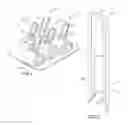
FIG. 1 is a perspective view of an embodiment of the present invention, shown in use;
FIG. 2 is a perspective view of an embodiment of the present invention;
FIG. 3 is a section view of the present invention, taken along line 3-3 of FIG. 2; and
FIG. 4 is a section view of the present invention, taken along line 4-4 in FIG. 3.
DETAILED DESCRIPTION OF THE INVENTION
The following detailed description is of the best currently contemplated modes of carrying out exemplary embodiments of the invention. The description is not to be taken in a limiting sense, but is made merely for the purpose of illustrating the general principles of the invention, since the scope of the invention is best defined by the appended claims.
Referring to FIGS. 1 through 4, the present invention includes a double pronged pick 10. The pick 10 includes a handle portion 12 having a front surface, a rear surface opposite the front surface, a bottom end, and a top end opposite the bottom end. A first prong 16 includes a proximal end and a distal end. The proximal end of the first prong 16 extends from the bottom end of the handle portion 14. The distal end of the first prong 16 includes a pointed tip. A second prong 18 includes a proximal end and a distal end. The proximal end of the second prong 18 extends from the bottom end of the handle portion 14. The distal end of the second prong 18 includes a pointed tip.
In certain embodiments, the first prong 16 extends from a first side of the bottom end, and the second prong 18 extends from a second side of the bottom end opposite the first side. The first prong 16 and the second prong 18 are substantially parallel relative to each other and form a slot in between. In certain embodiments, the first prong 16 and the second prong 18 taper from the proximal end to the distal end.
In certain embodiments, at least one of the first prong 16 and the second prong 18 include a barb 20, 22 extending away from the pointed tip. As illustrated in the Figures, the first prong 16 may include a first barb 20 and the second prong 18 may include a second barb 22. In certain embodiments, the barbs 20, 22 of the first prong 16 and the second prong 18 are pointed within the slot formed in between the first prong 16 and the second prong 18.
The present invention may include a handle 12 that may be easily gripped. For example, the front surface and the rear surface of the handle 12 may be substantially flat, and may include substantially parallel planes. The flat grip provides additional surface area for a user to grasp. Further, the front surface and the rear surface may each include a recessed grip 14 forming ridges about the perimeter. The recessed grip 14 prevents the handle 12 from slipping out of a user's grasp.
The double barbed pronged pick 10 of the present invention is used for the serving of hors d′oeuvres 24 and other food products. The dual prongs 16, 18 prevents turning, and the interior barbs 20, 22 prevent slippage and prevent food product from falling from the pick 10. The barbs 20, 22 may be faced inward towards one another to prevent mouth injury. The design allows for a better grip and control of the food product.
The present invention may be made of bio-plastics that are bio-degradable and heat resistant. However, the present invention may be made of metal or wood, such as bamboo and the like. The present invention may be made by a single molded plastic or may be carved or molded pieces of wood. The color, length and width of the present invention may vary For example, larger double pronged picks may be used for kabobs and the like.
It should be understood, of course, that the foregoing relates to exemplary embodiments of the invention and that modifications may be made without departing from the spirit and scope of the invention as set forth in the following claims.
Claims
What is claimed is:1. A double prong pick comprising:
a handle portion comprising a front surface, a rear surface opposite the front surface, a bottom end and a top end opposite the bottom end;
a first prong comprising a proximal end and a distal end, wherein the proximal end extends from the bottom end of the handle portion and distal end comprises a pointed tip; and
a second prong comprising a proximal end and a distal end, wherein the proximal end extends from the bottom end of the handle portion and distal end comprises a pointed tip,
wherein the first prong and the second prong are substantially parallel relative to each other and form a slot in between.
2. The double prong pick of claim 1, wherein first prong is extending from a first side of the bottom end, and the second prong is extending from a second side of the bottom end opposite the first side.
3. The double prong pick of claim 1, wherein at least one of the first prong and the second prong comprise a barb extending away from the pointed tip.
4. The double prong pick of claim 3, wherein the first prong and the second prong each comprise a barb extending away from the pointed tip.
5. The double prong pick of claim 4, wherein the bard of the first prong and the second prong are pointed within the slot.
6. The double prong pick of claim 1, wherein the front surface and the rear surface each comprise a recessed grip portion.
7. The double prong pick of claim 1, wherein the front surface and the rear surface are substantially flat and comprise substantially parallel planes.
8. The double prong pick of claim 1, wherein the first prong and the second prong taper from the proximal end to the distal end.
Images & Drawings included:


Sources:
- United States Patent and Trademark Office - verify current appl. status at the USPTO↗
Recent applications in this class:
- » 20240324803 2024-10-03
INJECTION MOLDED CUTLERY AND METHOD AND SYSTEM THEREFOR - » 20240215742 2024-07-04
HIGH-STRENGTH ENVIRONMENTALLY-FRIENDLY TABLEWARE - » 20230292944 2023-09-21
Covering for an item of cutlery - » 20230284807 2023-09-14
Environment-Friendly Tableware - » 20220408950 2022-12-29
UTENSIL HOLDING DEVICES - » 20220338651 2022-10-27
DISPOSABLE PAPER PULP FAST FOOD CUTLERY - » 20220322856 2022-10-13
UTENSIL FOR EATING A CHOCOLATE COVERED STRAWBERRY - » 20220079362 2022-03-17
FORK WITH EMBEDDED SUPPORT - » 20210315398 2021-10-14
Fork - » 20210085108 2021-03-25
SPIRAL TINE FORK