Method for improving small disturbance stability after double-fed unit gets access to the system
US20150318697A1
2015-11-05
14/649,532
2014-03-28
✅ Patent granted
US 9,793,713 B2
2017-10-17
WO; PCT/CN2014/000347; 20140328
WO; WO2014/154027; 20141002
Michael D Masinick
Jiwen Chen
2034-09-21
Abstract:
A method for improving system small disturbance stability after double-fed unit gets access to the system belongs to the field of electric power system operation and control technology. A sensitivity analysis is adopted to optimize parameter, through making sensitivity analysis on the non-ideal dominant mode happens to the system to find out several nonzero elements that are most sensitive to this mode in system matrix; elements of state matrix is adopted to replace the elements of system matrix to make analysis so as to find out the most relevant parameter set; setting parameters change in the interval to observe track for the change of eigenvalues of corresponding mode and then balancing and optimizing system parameters comprehensively according to the change of eigenvalues. Without adding other control means, the present invention can improve dominant modal damping caused by selecting improper controller parameters or system parameters after double-fed unit gets access to the system without increasing cost; as this method is also highly targeted, exhaustive efforts for all the adjustable parameters of the system can be avoided, which not only greatly decreases workload, but also improves computational efficiency, so that it is very instructive.
Inventors:
- NINGBO WANG 7 🇨🇳 LANZHOU, GANSU PROVINCE, China
- YANHONG MA 7 🇨🇳 LANZHOU, GANSU PROVINCE, China
- LONG ZHAO 7 🇨🇳 LANZHOU, GANSU PROVINCE, China
- QIANG ZHOU 7 🇨🇳 LANZHOU, GANSU PROVINCE, China
- CHONGRU LIU 1 🇨🇳 LANZHOU, GANSU PROVINCE, China
- YI DING 1 🇨🇳 LANZHOU, GANSU PROVINCE, China
- ZHONGYI LIU 1 🇨🇳 LANZHOU, GANSU PROVINCE, China
- DAN WANG 1 🇨🇳 LANZHOU, GANSU PROVINCE, China
- DAN JIN 4 🇨🇳 LANZHOU, GANSU PROVINCE, China
- WENYING LIU 3 🇨🇳 LANZHOU, GANSU PROVINCE, China
- SHIYUAN ZHOU 3 🇨🇳 LANZHOU, GANSU PROVINCE, China
- KUN DING 3 🇨🇳 LANZHOU, GANSU PROVINCE, China
- JIN LI 4 🇨🇳 LANZHOU, GANSU PROVINCE, China
- Qiang Zhou 7 🇨🇳 Lanzhou, China
- Yanhong Ma 7 🇨🇳 Lanzhou, China
- Ningbo Wang 8 🇨🇳 Lanzhou, China
- Long Zhao 7 🇨🇳 Lanzhou, China
- Jin Li 7 🇨🇳 Lanzhou, China
- Wenying Liu 3 🇨🇳 Lanzhou, China
- Dan Jin 4 🇨🇳 Lanzhou, China
- Shiyuan Zhou 5 🇨🇳 Lanzhou, China
- Kun Ding 5 🇨🇳 Lanzhou, China
- Chongru Liu 1 🇨🇳 Lanzhou, China
- Yi Ding 1 🇨🇳 Lanzhou, China
- Zhongyi Liu 1 🇨🇳 Lanzhou, China
- Dan Wang 1 🇨🇳 Lanzhou, China
Assignee:
- GANSU ELECTRIC POWER CORPORATION WIND POWER TECHNOLOGY CENTER 1 🇨🇳 Lanzhou, China
Applicant:
Interested in similar patents?
Get notified when new applications in this technology area are published.
Classification:
G06F17/16 » CPC further
Digital computing or data processing equipment or methods, specially adapted for specific functions; Complex mathematical operations Matrix or vector computation, e.g. matrix-matrix or matrix-vector multiplication, matrix factorization
G05B13/04 » CPC further
Adaptive control systems, i.e. systems automatically adjusting themselves to have a performance which is optimum according to some preassigned criterion electric involving the use of models or simulators
H02J3/00 » CPC main
Circuit arrangements for ac mains or ac distribution networks
Description
TECHNICAL FIELD
The present invention relates to a method for improving small disturbance stability after double-fed unit gets access to a system, especially a method with sensitivity analysis to improve disturbance stability after double-fed unit gets access to a system, which belongs to the field of operation and control technology of an electric power system.
BACKGROUND TECHNOLOGY
With reserves of fossil fuel decrease, environmental pollution and energy shortage have been predominant and highly concerned. In order to solve the above problem, China is now striving to develop new energies such as wind power, and wind power generation has stepped into steady development after rapid growth for many years. Although the problem of wind power grid connection has been eased to a certain extent in recent years, after wind power gets access into the system, it will still cause a series of problems, which limits the further development of the wind power. Among the problems, small disturbance stability problem generated after grid connection of wind power is especially acute. At present, the mainstream model of wind turbines in China is double-fed induction generator. After getting access to the system, the generators will lead to weak damping mode, reduce system small disturbance stability margin and increase the risks for the system to operate normally. Therefore, it is very urgent to research how to improve small disturbance stability after double-fed unit gets access to the system.
Traditional methods for improving small disturbance stability after wind turbines get access to the system mainly include adopting some algorithm to optimize overall parameters or adding PSS device. The former method is of a large workload with modest effect and it cannot effectively control certain several dominant modes; the latter one is of obvious effect, but the parameter adjustment is complex and the investment cost will also rise. For the method of using sensitivity analysis to optimize system parameters mentioned in the present invention, sensitivity analysis can be made on the weak damping mode and relevant parameters can be comprehensively selected through analyzing change of eigenvalues according to analysis results of system characteristic matrixes. In this way, for a series of unstable modes or weak damping modes generated for selecting parameters unreasonably, relevant modal damping can be improved without adding other devices. Besides, this method also can greatly decrease the workload generated by unnecessary try, so that it is instructive for how to set system parameters.
SUMMARY OF THE INVENTION
The present invention, first, obtains the system matrix A′ by using eigenvalue analysis after double-fed unit gets access to the system, then through eigenvalue analysis finds out the dominant mode that requires special attention (the dominant mode includes unstable modes or weak damping modes), determines sensitivity of the elements in matrix A′ of the above modes and selects one to two nonzero elements with the highest sensitivity; then sequentially changes the changeable parameters of the elements with the best sensitivity (the specific elements need to be determined according to the sensitivity analysis results) within a certain interval (the interval is related to the elements that need to be changed; if the elements are electric parameters, the interval is the parameter value range of the actual electric components; if the elements are control parameters, the interval is the upper and lower limits of the specific controller parameters; if no upper and lower limits are provided for the parameters, the interval can be chosen freely under the condition that the lower limit is not negative) and observes the trend for eigenvalues of the dominant mode to determine optimal value of all parameters.
Technical solution of the present invention refers to a method for improving small disturbance stability after double-fed unit gets access to the system through adopting sensitivity analysis to optimize controller and system parameters, comprising the following steps:
Step 1: building complete mathematical models for double-fed unit, which mainly include aerodynamic model, generator model, mechanical model and control system model, listing a system state equation and an output equation and then building small disturbance mathematical model Δ{dot over (x)}=A′Δx by integrating system power flow equation after double-fed unit gets access to the system. The system power flow equation is current technology, where the specific format relates to the selection of the system output variable and the object is to constitute simultaneous equations with the output equation in order to offset the output variable and set up the relationship between the state variable and the input variable.
Step 2: calculating a left modal matrix ψ and a right modal matrix φ of a matrix A′, determining the sensitivity of unstable modes or weak damping modes to the matrix A′ with the formula
∂ λ i ∂ a k j = ψ ik φ ji
and finding out one to two nonzero elements a′ij with the highest sensitivity in the matrix; analysis indicates that at the low and middle frequency band concerned by small disturbance stability of the system, the difference between eigenvalue of the matrix A′ and that of a state matrix A is not very large and as expression of A′ is very complex, element aij in A is used to make sensitivity analysis instead of the element a′ij in A′. The formula is the sensitivity calculation formula where ∂ is a partial derivative, λi is the i-th mode, a′kj, ψkj, φkj are elements at the k-th row and j-th column of the system matrix, the left mode matrix and right mode matrix, respectively.
Step 3: for controller or system parameters that can be set in aij, changing value of these parameters within a certain interval, observing steady-state value of the variable required while calculating eigenvalue of matrix A′ in simulation results, then putting the steady-state value in A′ to solve the eigenvalues that correspond to each group of parameters and drawing a chart on the change track of eigenvalues. If eigenvalues are disperse, a part of the overlapped eigenvalues need to be locally enlarged to observe the trend for eigenvalues of dominant modes of the system.
Step 4: if there are other parameters that can be set in aij, then repeating Step 3.
Step 5: comprehensively analyzing the chart on modal eigenvalues change with the track of parameters in Step 4, adjusting the parameters in Step 4, then selecting appropriate parameter combination upon comparison, with which both dominant modal damping and small disturbance stability margin of the system can be obviously improved.
The system matrix A′ illustrated in the Step 1 is built in the following methods:
Selecting appropriate state variable, input variable and output variable; the state equation, output equation and power flow equation of the system can be expressed in the following general forms:
{dot over (x)}=f(x,u)
y=g(x,u)
y=h(x,u) (1)
Linearizing Equation (1) at steady-state operating point, it can be concluded as:
Δ{dot over (x)}=AΔx+BΔu
Δy=CΔx+DΔu
Δy=EΔx+FΔu (2)
Wherein,
A = [ ∂ f 1 ∂ x 1 … ∂ f 1 ∂ x n … … … ∂ f n ∂ x 1 … ∂ f n ∂ x n ] B = [ ∂ f 1 ∂ u 1 … ∂ f 1 ∂ u n … … … ∂ f n ∂ u 1 … ∂ f n ∂ u n ] C = [ ∂ g 1 ∂ x 1 … ∂ g 1 ∂ x n … … … ∂ g n ∂ x 1 … ∂ g n ∂ x n ] D = [ ∂ g 1 ∂ u 1 … ∂ g 1 ∂ u n … … … ∂ g n ∂ u 1 … ∂ g n ∂ u n ] E = [ ∂ h 1 ∂ x 1 … ∂ h 1 ∂ x n … … … ∂ h n ∂ x 1 … ∂ h n ∂ x n ] F = [ ∂ h 1 ∂ u 1 … ∂ h 1 ∂ u n … … … ∂ h n ∂ u 1 … ∂ h n ∂ u n ] ( 3 )
Joining with Equation (2), it can be concluded as:
Δ{dot over (x)}=A′Δx (4)
wherein,
A′=A+B(F−D)−1(C−E) (5)
In Step 2, on the basis of the system matrix A′ obtained from Step 1, finding out the mode λi, i=1, 2, . . . , m that needs to be focused, wherein, “m” refers to the number of unstable or weak damping modes. Then finding out left modal matrix ψ′ and right modal matrix φ′ of matrix A′:
For left modal matrix ψ′:
ψ′=[ψ′1Tψ′2T . . . ψ′nT]T (6)
wherein,
ψ′iA′=λiψ′i,i=1,2, . . . , n (7)
“n” is the number of state variables;
For right modal matrix φ′:
φ′=[φ′1φ′2 . . . φ′n] (8)
wherein,
A′φ′i=λiφ′i,i=1,2, . . . , n (9)
The sensitivity of eigenvalue λi to the element of A′ can be expressed as:
∂ λ i ∂ a kj ′ = ψ i ′ ∂ A ′ ∂ a kj ′ φ i ′ = ψ ik ′ φ ji ′ ( 10 )
The sensitivity of eigenvalue λi to a′kj quantizes the change scope of λi when a′kj changes, namely, when a′kj changes,
∂ λ i ∂ a kj ′
is larger, λi changes more obviously. Thus, after obtaining eigenvalues of A′, for the unstable mode, weak damping evanescent mode and weak damping ratio oscillation mode that may influence small disturbance stability of the system directly, the nonzero element that is most sensitive to this mode can be found according to the above method. However, it can be concluded from Equation (5) that A′ is obtained through a series of operations like matrix multiplication and inversion, but specific expression is hard to get. Equation (5) can be adapted to:
A′=A+Aother (11)
wherein,
Aother=B(F−D)−1(C−E) (12)
From Equation (11), it can be visually seen that the state matrix A is a component of the system matrix A′, so that the corresponding elements of A also exist in A′. Then after obtaining
∂ λ i ∂ a kj ′ ,
i=1, 2, . . . , m and finding out the highly sensitive set of the elements {a′kj} that are correspond to mode λi, i=1, 2, . . . , m, analyzing with the component {akj} of the state matrix that shares the same code with the elements in {a′kj}.
The reason for finding nonzero element is that: for a system with a fixed structure, the structure of its system matrix A′ is also fixed. If akj=0, no matter how to change parameters, akj remains unchanged.
In the Step 3, on the basis of finding out the set {akj} of elements with high sensitivity in Step 2, finding out the adjustable controller parameters or system parameters in {akj}. Wherein, ki, i=1, 2, . . . , t, “t” refers to the number of adjustable variables in {akj}. Setting k1 as an example, letting k1 change within the set interval [a,b], selecting several parameter nodes within this interval and then observing steady-state value of the variables required while calculating eigenvalues of A′. If the steady-state value basically remains unchanged, then selecting small step size Δks and cycle calculating eigenvalues of A′ while ki, i=1, 2, . . . , t is changing; if steady-state value changes obviously, then selecting large step size Δki, taking down each simulation steady-state value and calculating eigenvalue of A′.
After working out the eigenvalues of each group of A′ while k1 is changing, arranging these eigenvalues in a certain order (such as λ1, λ2, . . . , λn) and drawing the chart on the track for changes of eigenvalues. For similar eigenvalues, please use different marks (“*”, “Δ”, “⋆”, “∘”) while drawing to avoid confusion. Then selecting optimal {circumflex over (k)}1 from the chart on the track for changes. What needs to be noted is that k1 might be related to certain several modes, so that it needs to balance changes of other dominant modes while selecting {circumflex over (k)}1.
In Step 4, on the basis of selecting {circumflex over (k)}1, repeating Step 3 for other adjustable parameters ki, i=2, . . . , t, until all the adjustable parameters are set.
In Step 5, comprehensively compare analysis results of the eigenvalues of optimal parameter set {circumflex over (k)}i, i=1, 2, . . . , t and original parameter set ki, i=1, 2, . . . , t. Upon analysis, modal damping of the system can be greatly improved and small disturbance stability margin of the system can be intensified after optimizing parameters with sensitivity analysis.
The present invention is to improve the dominant modal damping generated by selecting improper controller parameters or system parameters after double-fed unit gets access to the system without adding other control means. Traditional methods for optimizing parameters are not highly targeted and for a large-scale system, traditional methods are of large workload, low efficiency and relatively blindness. For the method mentioned in the present invention, sensitivity analysis can be made on the non-ideal dominant mode λi, i=1, 2, . . . , m happened to this system directly to find out the set of state matrix elements with highest sensitivity {akj} of this mode, so as to find out the set of most relevant parameters ki, i=1, 2, . . . , t. Then, it only needs to optimize the parameters in this set, which will greatly reduce workload. Parameter ki, i=1, 2, . . . , t can be analyzed through optimizing one by one, through which the track for the change of eigenvalue that corresponds to mode λi, i=1, 2, . . . , m while each parameter is changing can be obtained visually. Finally, comprehensively analyzing change tracks of all the parameters can confirm a group of appropriate parameter set {circumflex over (k)}i, i=1, 2, . . . , t. This group of parameters can be used to improve damping characteristic of this system obviously. This method has not increased cost, avoided BruteForee/exhaustive efforts on all adjustable parameters of the system and improved working efficiency, which is instructive for how to set system parameters from improving small disturbance stability.
BRIEF DESCRIPTION OF THE DRAWINGS
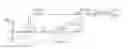
FIG. 1 is a system structure drawing for double-fed wind turbine-infinite system under the PSCAD/EMTDC of the present invention;
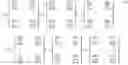
FIGS. 2a and 2b are the tendency charts for eigenvalues of the system mode while Tissc is changing of the present invention;
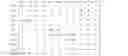
FIGS. 3a and 3b are the tendency charts for eigenvalues of the system mode while Kpssc is changing of the present invention;
FIGS. 4a and 4b are the tendency chart for eigenvalues of the system mode while L is changing of the present invention; and
FIG. 5 is a flow chart of the method to improve disturbance stability after double-fed unit gets access to a system according to the present invention.
SPECIFIC EMBODIMENTS OF THE PRESENT INVENTION
With reference to the drawings and embodiments, the present invention is illustrated in details below. It should be noted that the following illustrations are only examples, but not to limit the range and applications of the present invention.
The present invention adopts the model that is commonly used in researching characteristics of grid-connected operation of double-fed unit in PSCAD/EMTDC: DFIG—2010—11 (WIND FARM Vector Controlled Doubly-Fed Induction Generator) as a template to make the following improvements on this model:
1) adjusting reference frequency of the system from 60 Hz to 50 Hz;
2) removing “crowbar” circuit to make it suitable for small disturbance stability analysis after double-fed unit connects to the grid.
This model is double-fed wind turbine-infinite system. Correctness and practicability of the present invention will be verified with this model below. The system structure of this model shall refer to FIG. 1.
In Step 1, system matrix A′ is formed in the following process:
First, building a state equation and an output equation of the double-fed unit. The system state equation is expressed as:
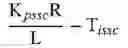
ω . m ′ = 1 T j ( C p A blade ρ v 3 2 S B ω m ′ - γ u s L m i qr α L s S B - D ω m ′ ) ω . ref ′ = - 1 T v ω . ref ′ + 1 λ eq T v v i . qr = ( T i 2 - DK p 2 T j ) ω m + K p 2 kv 3 T j ω m - ( T i 2 - K p 2 T v ) ω ref - K p 2 γ u s0 L m α T j S B L s i qr - K p 2 λ eq T v v i . dr = α T il L s α L s + K pl γ u s L m [ Q ref - γ u s L s ( i dr L m α - u s ω s ) ] x . 1 = 1 T x ( u dc - x 1 ) i . 1 dref = ( K pcvc T x - T icvc ) x 1 - K pcvc T x u dc + T icvc u dcref u . 1 dref = K pssc ( K pcvc T x - T icvc ) x 1 + T issc i 1 dref - K pssc L u 1 dref + ( K pssc R L - T issc ) i 1 d - K pssc K pcvc T x u dc + K pssc T icvc u dcref i . 1 d = 1 L u 1 dref - R L i 1 d u . 1 qref = ( K pssc R L - T issc ) i 1 q - K pssc L u 1 qref + T issc i 1 qref i . 1 q = 1 L u 1 qref - R L i 1 q u . dc = γ u s [ i 1 d - ( 1 - ω m ) K m α L s i qr ] Cu dc ( 13 )
In Equation (13), Tj is an inertia time constant of the generator; ωs and ω′m refer to synchronous speed and mechanical speed of the generator; Cp is a rotor power coefficient; Ablade is a blade area; ρ is the air density; v is wind speed; SB is benchmark capacity of the system; γ is coordinate transformation coefficient; α is stator-rotor turns ratio; us is phase voltage amplitude of generator stator; Ls and Lm refer to generator stator self-inductance, stator-rotor mutual inductance and generator rotator self-inductance; D is generator damping coefficient; ω′ref is reference wind speed used to realize MPT; λeq is equivalent tip speed ratio; Tv and Tx refer to time constants during inertia loop; idr and iqr refer to the current of rotator at axis “d” and axis “q”; i1d and i1q refer to the current of grid-side converter at axis “d” and axis “q”; R and L refer to converter resistance and reactance; Kp1, Ti1, Kp2, Ti2, Kpcvc, Ticvc, Kpssc and Tissc are PI controller parameters; udcref, udc and x1 refer to reference value, actual value and measured value of DC voltage; u1dref and u1qref refer to inner ring PI output of grid-side controller; i1dref and i1qref refer to outer ring PI output of grid-side controller; C is a DC capacitor.
The output equation is expressed as:
P g = 1.5 u s ( L m i qr α L s - i 1 d ) Q g = - 1.5 u s ( au s - ω s L m i dr αω s L s - i 1 q ) ( 14 )
The power flow equation of the system is expressed as:
Pg=U2Gline−UE(Gline cos θ+Bline sin θ)
Qg=U2Bline−UE(Gline sin θ−Bline cos θ) (15)
In Equation (15), U and θ refer to an effective value and a phase angle of a high-side voltage of a transformer; E is an effective value of a line voltage of an infinite electric power bus; Gline and Bline refer to overall equivalent conductance and susceptance of the transformer and line.
Referring to the method in (2)-(3), linearizing and organizing Equations (13)-(15) at steady-state operation point, it can be concluded as:
A′=A+B(F−D)−1(C−E) (16)
wherein, state variable Δx, input variable Δu and output variable Δy can be expressed as:
Δx=[Δω*mΔω*refΔidrΔiqrΔx1Δi1drefΔu1drefΔi1dΔu1drefΔi1qΔudc]T
Δu=[ΔusΔθ]T
Δy=[ΔPgΔQg]T
The matrix that corresponds to Equation (16) is shown as:
A = [ Δ ω . m * a 0101 0 0 a 0104 0 0 0 0 0 0 0 Δ ω . ref * 0 a 0202 0 0 0 0 0 0 0 0 0 Δ i . dr 0 0 a 0303 0 0 0 0 0 0 0 0 Δ i . qr a 0401 a 0402 0 a 0404 0 0 0 0 0 0 0 Δ x . 1 0 0 0 0 a 0505 0 0 0 0 0 a 0511 Δ i . 1 dref 0 0 0 0 a 0605 0 0 0 0 0 a 0611 Δ u . 1 dref 0 0 0 0 a 0705 a 0706 a 0707 a 0708 0 0 a 0711 Δ i . 1 d 0 0 0 0 0 0 a 0807 a 0808 0 0 0 Δ u . 1 dref 0 0 0 0 0 0 0 0 a 0909 a 0910 0 Δ i . 1 q 0 0 0 0 0 0 0 0 a 1009 a 1010 0 Δ u . dc a 1101 0 0 a 1104 0 0 0 a 1108 0 0 a 1111 ] Δω m * Δω ref * Δ i dr Δ i qr Δ x 1 Δ i 1 dref Δ u 1 dref Δ i 1 d Δ u 1 dref Δ i 1 q Δ u dc
The subscript “0” represents steady-state value of relevant variable and superscript “*” represents per unit value. The corresponding matrix elements are shown as:
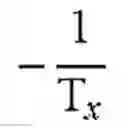
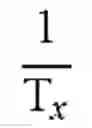
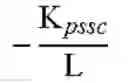
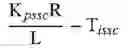
a 0101 = - 1 T j ( kv 3 ω m 0 2 + D ) , a 0104 = - γ u s 0 L m α T j S B L s , a 0202 = - 1 T v , a 0303 = - γ T i 1 u s 0 L m α L s + K p 1 γ u s 0 L m , a 0401 = T i 2 - K p 2 D T j - K p 2 kv 3 T j ω m 0 2 , a 0402 = K p 2 T v - T i 2 , a 0404 = - K p 2 γ u s 0 L m α T j S B L s a 0505 = - 1 T x , a 0511 = 1 T x , a 0605 = K pcvc T x - T icvc , a 0611 = - K pcvc T x , a 0705 = K pssc ( K pcvc T x - T icvc ) , a 0706 = T issc , a 0707 = - K pssc L , a 0708 = K pssc R L - T issc , a 0711 = - K pssc K pcvc T x , a 0807 = 1 L , a 0808 = - R L , a 0909 = - K pssc L , a 0910 = K pssc R L - T issc , a 1009 = 1 L , a 1010 = - R L , a 1101 = γ u s 0 L m i qr 0 α Cu dc 0 L s , a 1104 = γ u s 0 L m ( 1 - ω m 0 ) α Cu dc 0 L s , a 1108 = γ u s 0 Cu dc 0 , a 1111 = - γ u s 0 [ i 1 d 0 - ( 1 - ω m 0 ) L m i qr 0 α L s ] Cu dc 0 2
wherein, m is the ratio between effective value of high-side voltage of transformer and phase voltage amplitude of a generator stator. kT is the kT boosting transformer ratio.
A part of system parameters of this simulation model are shown in the following table.
| TABLE 1 |
| System Parameter Table |
| Value/ | |||||
| Parameter | Value/unit | Parameter | Value/unit | Parameter | unit |
| Rs | 0.0054 p.u. | Rr | 0.00607 p.u. | Lsσ | 0.1 p.u. |
| Lrσ | 0.11 p.u. | Lm | 4.5 p.u. | ωs | 314.15 |
| rad/s | |||||
| D | 0.0001 p.u. | Ablade | 5026.55 m2 | P | 1.225 |
| kg/m3 | |||||
| Cp | 0.28 | C | 0.0078 F | L | 1 mH |
| Kpssc | 1 p.u. | Tissc | 0.1 p.u. | Tx | 0.04 μs |
Analysis results of eigenvalues of system matrix A′ should refer to Table 2.
| TABLE 2 |
| Analysis Results of Eigenvalues of A′ |
| Oscillation | Most | Second | |||
| Damping | frequency/ | relevant | relevant | ||
| No. | Eigenvalue | ratio | Hz | variable | variable |
| λ1 | −1214.3316 | 1 | 0 | u1dref | i1d |
| λ2,3 | −4.8122 ± 130.8084i | 0.0368 | 20.8188 | udc | i1d |
| λ4 | −1199.9167 | 1 | 0 | u1qref | i1q |
| λ5,6 | −0.7275 ± 1.0064i | 0.5858 | 0.1602 | ω*m | iqr |
| λ7 | −0.0010 | 1 | 0 | x1 | |
| λ8 | −0.1000 | 1 | 0 | i1dref | |
| λ9 | −0.0833 | 1 | 0 | i1q | u1qref |
| λ10 | −20 | 1 | 0 | ω*ref | |
| λ11 | −0.8193 | 1 | 0 | idr | |
From the analysis results of Table 2, all the eigenvalues of the system matrix A′ have negative real part, which represents the system is of small disturbance stability at this steady-state operation point. However, upon careful observation, it can figure out that the eigenvalues that correspond to evanescent modes λ7, λ8 and λ9 are close to origin, so that unstability is easy to happen. Besides, damping of oscillation mode λ2,3 is small, which is only 0.0368, so that it is weak damping mode. For the above modes, it can figure out that small disturbance stability margin of this system is relatively low and when steady-state operating point shifts, unstability might happen.
After finding out the mode needs to be focused, taking Step 2 to solve sensitivities of the modes λ2,3, and λ7, λ8 and λ9 to the nonzero elements in A′. For the expression of elements, the state matrix A can be used instead. Detailed results should refer to Table 3.
| TABLE 3 |
| Sensitivity of Weak Damping Mode to the Elements in A′ |
| Corresponding | ||||
| Mode | Element | expression in A | Sensitivity | Abandon or not |
| λ2,3 | a0706′ | Tissc | 0.4950 − 0.0716i | No |
| a0708′ | K pssc R L - T issc | 0.4028 − 0.1041i | No | |
| a1106′ | 0 | −0.0013 + 0.9443i | Yes | |
| λ7 | a0505′ | - 1 T x | 1.0011 | No |
| a0511′ | 1 T x | 1.0011 | No | |
| λ8 | a0606′ | 0 | 1.0013 | Yes |
| a0706′ | Tissc | −1.0015 | No | |
| a0806′ | 0 | −1.0014 | Yes | |
| λ9 | a0909′ | - K pssc L | 0.8334 | No |
| a0910′ | K pssc R L - T issc | −0.8334 | No | |
It can be concluded from Table 3 that Tissc, Kpssc, Tx, L and R are relatively more sensitive to the weak damping mode happened to this system. Conditions about the changes of different system modes are researched below when the above parameters change (the initial parameter values should refer to Table 1):
1) Conditions about the Changes of System Eigenvalues when Tissc Changes
Taking the change interval of Tissc as [0, 10], selecting parameter nodes as Tissc=0.1, 1, 5, 10 and observing simulation steady-state solution. It is concluded from the results that when Tissc changes, simulation steady-state solution is basically unchanged. Take ΔTissc=1, change track of system eigenvalues should refer to FIGS. 2a and 2b.
It can be concluded from FIGS. 2a and 2b that when Tissc=0, the system will have a zero eigenvalue. With Tissc increases, damping ratio λ2,3 of oscillation mode will decrease slightly and damping of evanescent modes λ8 and λ9 will increase obviously. As when Tissc increases, damping ratio of oscillation mode λ2,3 decreases little, but damping of evanescent modes λ8 and λ9 increases obviously, so that Tissc can be increased properly to improve small disturbance stability of the system, taking {circumflex over (T)}issc=10.
2) Conditions about the Changes of System Eigenvalues when Kpssc Changes
Replacing original Tissc with {circumflex over (T)}issc=10 obtained from 1), setting the change interval of Kpssc as [0, 10], selecting parameter nodes as Kpssc=0.1, 1, 5, 10 and observing simulation steady-state solution. It is concluded from the results that when Kpssc changes, simulation steady-state solution is basically unchanged. Setting ΔKpssc−1, the changing track of the system eigenvalues should refer to FIGS. 3a and 3b.
It can be concluded from FIGS. 3a and 3b that when Kpssc=0, positive real part happens to oscillation mode λ2,3 (λ2,3=35.0110±16.4581i), the steady-state of the system becomes unstable and evanescent modes λ1 and λ4 become a group of oscillation modes. With Kpssc increases, damping of oscillation mode λ2,3 will increase, but the eigenvalues that correspond to weak evanescent modes λ8 and λ9 move from negative real axis to origin point and its degree of stability decreases. Thus, if Kpssc is too big or too small, the degree of stability of the system will be decreased. It can be figured out from FIGS. 3a and 3b that when Kpssc>3, damping of mode λ2,3 will increase slowly, but λ8 and λ9 still move to the origin point, so that take {circumflex over (K)}pssc=2.
3) Conditions about the Changes of System Eigenvalues when T Changes
It can be concluded from Table 3 that Tx is only highly sensitive to λ7. Tx is an inertia time constant while measuring DC voltage, the value of which is small. Setting the change interval as [0.01,0.1], it can be concluded from the results that when Tx changes, the simulation stability solution is basically unchanged. When ΔTx=0.01, from simulation results, it figures out that the system eigenvalue that changes Tx is also basically unchanged, which indicates that weak damping of mode λ7 is unrelated to system parameters and it is caused by system structure. Thus, if value of Tx does not change, keeping Tx=0.04.
4) Conditions about the Changes of System Eigenvalues when L Changes
L is the equivalent conversion inductance of a grid-side converter, setting change interval of L as [0.5,2] mH, selecting parameter nodes as L=0.5, 1, 1.5, 2 and observing simulation steady-state solution. It is concluded from the results that when Kpssc changes, simulation steady-state solution is basically unchanged. Setting ΔL=0.1 mH, the change track of system eigenvalues should refer to FIGS. 4a and 4b.
It can be concluded from FIGS. 4a and 4b that with L increases, damping of oscillation mode λ2,3 will decrease obviously and damping ratio also reduces; eigenvalue that corresponds to evanescent mode λ9 tends to move away from an imaginary axis, but it is not obvious and can be ignored; strong evanescent modes λ1 and λ4 move towards the origin rapidly and damping decreases, but it still does not belong to strong damping and influence little on system stability. Therefore, if it is allowed, L is smaller, the stability margin of the system is higher. Take {circumflex over (L)}=0.5 mH here.
5) Conditions about the Changes of System Eigenvalues when R Changes
R is the AC side equivalent resistance of a grid-side converter. Upon analysis, it indicates that when R>0.5Ω, oscillation will happen to the system; when R<0.5Ω, value of R has very little influence on system eigenvalues. On the basis of the above conclusions, take {circumflex over (R)}=0.2Ω.
Until now, optimization for the parameters that correspond to the four concerned modes is completed. Table 4 is about the comparison between key mode eigenvalues of initial parameters and optimal parameters of the system. It can be concluded through analyzing the above contents, Tx and R influence little on eigenvalues. Thus, in Table 4, initial parameters and optimal parameters are set as Tx=0.04 and R=0.2Ω.
| TABLE 4 |
| Comparison between Key Mode Eigenvalues of Initial Parameters |
| and Optimal Parameters |
| Parameter |
| Initial parameter | Optimal parameter | |
| Mode | Tissc = 0.1 {circumflex over (K)}pssc = 1 {circumflex over (L)} = 1 mH | {circumflex over (T)}issc = 10 {circumflex over (K)}pssc = 2 {circumflex over (L)} = 0.5 mH |
| λ2,3 | −4.8122 ± 130.8084i | −9.6379 ± 137.1746i |
| λ7 | −0.0010 | −0.0010 |
| λ8 | −0.1000 | −5.0028 |
| λ9 | −0.0833 | −4.5502 |
It can be concluded from Table 4 that except mode λ7, damping of other dominant modes has been raised for a certain extent. For λ7, its weak damping is not caused for selecting improper parameters, so that it needs to be improved through changing system control structure or adding other control devices; for oscillation λ2,3, its damping has been raised from 0.0368 to 0.0701; λ8 and λ9 have changed from weak damping mode to strong damping mode and small disturbance stability margin of the system has been improved obviously.
What is said above has totally verified that while researching the weak damping mode generated after double-fed unit gets access to power grid, system damping can be effectively improved without adding other control means through optimizing system parameters with sensitivity analysis. Compared with traditional optimization methods. The present invention will greatly decrease unnecessary calculated amount and improve efficiency.
This test system is only a preferred embodiment of the present invention, but protection scope of the present invention is not confined to the embodiment. Any changes or replacements that the person of ordinary skill in the art can figure out easily within the technical range disclosed by the present invention should be included in the protection scope of the present invention.
Claims
1. A method for improving small disturbance stability after a double-fed unit gets access to the system characterized in that the method comprises the following steps:
step 1: building complete mathematical models for the double-fed unit, the mathematical models mainly include an aerodynamic model, a power generator model, a mechanical model and a control system model; listing a system state equation and an output equation and then building a small disturbance mathematical model Δ{dot over (x)}=A′Δx by integrating power flow equation of the system after double-fed unit gets access to the system;
step 2: calculating a left modal matrix ψ and a right modal matrix φ of a matrix A′, determining the sensitivity of unstable modes or weak damping modes to matrix A′ with the formula
∂ λ i ∂ a k j = ψ ik φ ji
and finding out one to two nonzero elements a′ij with the highest sensitivity in the matrix; analysis indicating that at a low and middle frequency band concerned by small disturbance stability of the system, the difference between eigenvalue of the matrix A′ and that of the state matrix A is not very large and as expression of A′ is very complex, element aij in A is used to make sensitivity analysis instead of the element a′ij in A′;
step 3: for controller or system parameters that can be set in aij, changing value of these parameters within a certain interval, observing steady-state value of the variable required while calculating eigenvalue of matrix A′ in simulation results, then put the steady-state value in A′ to solve the eigenvalues that correspond to each group of parameters and drawing a chart on the change track of eigenvalues; if eigenvalues are disperse, a part of the overlapped eigenvalues need to be locally enlarged to observe the trend for eigenvalues of dominant modes of the system;
step 4: if there are other parameters that can be set in aij, then repeating Step 3;
step 5: comprehensively analyzing the chart on modal eigenvalues change with the track of parameters in Step 4, adjusting the parameters in Step 4, then selecting appropriate parameter combination upon comparison, with which both dominant modal damping and small disturbance stability margin of the system can be obviously improved.
2. The method for improving small disturbance stability after double-fed unit gets access to the system according to claim 1 characterized in that the system matrix A′ is built in the following methods:
selecting an appropriate state variable, an input variable and an output variable, state equation, output equation and power flow equation of the system can be expressed in the following general forms:
{dot over (x)}=f(x,u)
y=g(x,u)
y=h(x,u) (18),
wherein χ is a state variable matrix, u is an input variable matrix, y is an output matrix;
wherein linearizing an equation (1) at a steady-state operating point, it can be concluded as:
Δ{dot over (x)}=AΔx+BΔu
Δy=CΔx+DΔu
Δy=EΔx+FΔu (19),
wherein,
A = [ ∂ f 1 ∂ x 1 … ∂ f 1 ∂ x n … … … ∂ f n ∂ x 1 … ∂ f n ∂ x n ] B = [ ∂ f 1 ∂ u 1 … ∂ f 1 ∂ u n … … … ∂ f n ∂ u 1 … ∂ f n ∂ u n ] C = [ ∂ g 1 ∂ x 1 … ∂ g 1 ∂ x n … … … ∂ g n ∂ x 1 … ∂ g n ∂ x n ] D = [ ∂ g 1 ∂ u 1 … ∂ g 1 ∂ u n … … … ∂ g n ∂ u 1 … ∂ g n ∂ u n ] E = [ ∂ h 1 ∂ x 1 … ∂ h 1 ∂ x n … … … ∂ h n ∂ x 1 … ∂ h n ∂ x n ] F = [ ∂ h 1 ∂ u 1 … ∂ h 1 ∂ u n … … … ∂ h n ∂ u 1 … ∂ h n ∂ u n ] ( 20 )
joining with the Equation (2), it can be concluded as:
Δ{dot over (x)}=A′Δx (21)
wherein,
A′=A+B(F−D)−1(C−E) (22).
3. The methods for improving small disturbance stability after double-fed unit gets access to the system comprising claim 1 characterized in that, in the Step 2, on the basis of the system matrix A′ obtained from Step 1, finding out the mode λi, i=1, 2, . . . , m that needs to be focused, wherein “m” refers to the number of unstable or weak damping modes; then finding. Then finding out left modal matrix ψ′ and right modal matrix φ′ of matrix A′:
for the left modal matrix ψ′:
ψ′=[ψ′1Tψ′2T . . . ψ′nT]T (23)
wherein,
ψ′iA′=λiψ′i,i=1,2, . . . , n (24)
“n” is the number of state variables;
for right modal matrix ψ′:
φ′=[φ′1φ′2 . . . φ′n] (25),
wherein,
A′φ′i=λiφ′i,i=1,2, . . . , n (26)
sensitivity of eigenvalue λi to the element of A′ can be expressed as:
∂ λ i ∂ a kj ′ = ψ i ′ ∂ A ′ ∂ a kj ′ φ i ′ = ψ ik ′ φ ji ′ ( 27 )
the sensitivity of eigenvalue λi to a′kj quantizes the change scope of λi when a′kj changes, namely, when a′kj changes,
∂ λ i ∂ a kj ′
is larger, λi changes more obviously; thus after getting eigenvalues of A′, for the unstable mode, weak damping evanescent mode and weak damping ratio oscillation mode that may influence small disturbance stability of the system directly, the nonzero element that is most sensitive to this mode can be found according to the above method;
adapting an Equation (5) into:
A′=A+Aother (28)
wherein,
Aother=B(F−D)−1(C−E) (29)
from Equation (11), it can be visually seen that state matrix A is a component of system matrix A′, so that corresponding elements of A also exist in A′; then after obtaining
∂ λ i ∂ a kj ′ ,
i=1, 2, . . . , m and finding out set of the elements that are highly sensitive to mode λi, i=1, 2, . . . , m, analyzing with the component {akj} of state matrix that shares the same code with the elements in {a′kj};
the reason for finding nonzero element is that: for a system with fixed structure, structure of its system matrix A′ is also fixed; if akj=0, no matter how to change parameters, akj remains unchanged.
4. The method for improving small disturbance stability after double-fed unit gets access to the system according to claim 1 characterized in that, in the Step 3, on the basis of finding out the set {akj} of elements with high sensitivity in Step 2, finding out the adjustable controller parameters or system parameters in {akj}, wherein, ki, i=1, 2, . . . , t, “t” refers to the number of adjustable variables in {akj}.
5. The method for improving small disturbance stability after double-fed unit gets access to the system according to claim 4 characterized in that, the k1 refers that: letting k1 change within set interval [a, b] and selecting several parameter nodes within this interval, then cycling calculate eigenvalues of A′ while k1 is changing and select the optimal one {circumflex over (k)}1.
6. The method for improving small disturbance stability after double-fed unit gets access to the system according to claim 1 characterized in that, in the Step 4, on the basis of selecting {circumflex over (k)}1, repeating Step 3 for other adjustable parameters ki, i=2, . . . , t, until all the adjustable parameters are set.
7. The method for improving small disturbance stability after double-fed unit gets access to the system input variable claim 1 characterized in that, in the Step 5, comprehensively comparing analysis results of the eigenvalues of optimal parameter set {circumflex over (k)}i, i=1, 2, . . . , t and original parameter set ki=1, 2, . . . , t; upon analysis, obtaining modal damping of the system and small disturbance stability margin of the system before and after using optimizing parameters with sensitivity analysis.
Images & Drawings included:











Sources:
- United States Patent and Trademark Office - verify current appl. status at the USPTO↗
Recent applications in this class:
- » 20250253654 2025-08-07
ENERGY CONTROL UTILIZING A VIRTUAL POWER PLANT - » 20250226653 2025-07-10
A COORDINATION METHOD OF ELECTRICITY SUPPLY AND RECIPIENT MARKET DAY-AHEAD SPOT CLEARING CONSIDERING HYDROPOWER ABSORPTION - » 20250202230 2025-06-19
ELECTRICALLY DRIVEN DISTRIBUTED PROPULSION SYSTEM - » 20250158396 2025-05-15
ENERGY CONTROL - » 20250132562 2025-04-24
APPARATUS, METHOD, AND DEVICE FOR REGULATING CONTROL PARAMETER OF EXCITATION SYSTEM, AND MEDIUM - » 20250023347 2025-01-16
MEASUREMENT APPARATUS, MEASUREMENT SYSTEM AND METHOD FOR SUPPLYING ELECTRICITY - » 20240388086 2024-11-21
Multi-port magnetic network energy router, control method and device - » 20240364107 2024-10-31
MIXED INTEGER PROGRAMMING-BASED LOAD DISAGGREGATION METHOD AND APPARATUS FOR INDUSTRIAL FACILITY - » 20240322565 2024-09-26
Method for managing the electric power supply to devices - » 20240275165 2024-08-15
CONTROL DEVICE AND POWER CONVERSION DEVICE