Heater and method for manufacturing a heater
US20150319807A1
2015-11-05
14/699,069
2015-04-29
✅ Patent granted
US 9,942,947 B2
2018-04-10
-
-
David Angwin | Biniam Asmelash
Bose McKinney & Evans LLP
2035-10-01
Abstract:
Disclosed is a heater comprising a PTC heating resistor based on barium titanate. The PTC heating resistor is printed onto a substrate. Also disclosed is a method for manufacturing such a heater.
Inventors:
- Katherine O'Sullivan 2 🇮🇪 Farranfore, Ireland
- Anthony Maher 3 🇮🇪 Limerick, Ireland
- Steven Sweeney 1 🇮🇪 Farranfore, Ireland
- William O'Connor 1 🇮🇪 Killarney, Ireland
Assignee:
- BorgWarner Ludwigsburg GmbH 93 🇩🇪 Ludwigsburg, Germany
Applicant:
Interested in similar patents?
Get notified when new applications in this technology area are published.
Classification:
H05B3/262 » CPC further
Ohmic-resistance heating; Heating elements having extended surface area substantially in a two-dimensional plane, e.g. plate-heater non-flexible heating conductor mounted on insulating base the insulating base being an insulated metal plate
H05B2203/013 » CPC further
Aspects relating to Ohmic resistive heating covered by group Heaters using resistive films or coatings
H05B2203/02 » CPC further
Aspects relating to Ohmic resistive heating covered by group Heaters using heating elements having a positive temperature coefficient
H05B2203/023 » CPC further
Aspects relating to Ohmic resistive heating covered by group; Heaters specially adapted for heating gaseous material Heaters of the type used for electrically heating the air blown in a vehicle compartment by the vehicle heating system
Y10T29/49085 » CPC further
Metal working; Method of mechanical manufacture; Electrical device making; Resistor making Thermally variable
H05B3/26 IPC
Ohmic-resistance heating; Heating elements having extended surface area substantially in a two-dimensional plane, e.g. plate-heater non-flexible heating conductor mounted on insulating base
B60H1/2225 » CPC further
Heating, cooling or ventilating [HVAC] devices the heat being derived otherwise than from the propulsion plant the heat being derived from electric heaters arrangements of electric heaters for heating air
F24H3/0429 » CPC further
Air heaters with forced circulation the air being in direct contact with the heating medium, e.g. electric heating element using electric energy supply, e.g. the heating medium being a resistive element; Heating by direct contact, i.e. with resistive elements, electrodes and fins being bonded together without additional element in-between For vehicles
H01C17/065 » CPC further
Apparatus or processes specially adapted for manufacturing resistors adapted for coating resistive material on a base by thick film techniques, e.g. serigraphy
H05B3/46 » CPC further
Ohmic-resistance heating; Heating elements having the shape of rods or tubes non-flexible heating conductor mounted on insulating base
H05B3/44 » CPC main
Ohmic-resistance heating; Heating elements having the shape of rods or tubes non-flexible heating conductor arranged within rods or tubes of insulating material
B60H1/22 IPC
Heating, cooling or ventilating [HVAC] devices the heat being derived otherwise than from the propulsion plant
F24H3/04 IPC
Air heaters with forced circulation the air being in direct contact with the heating medium, e.g. electric heating element
Description
RELATED APPLICATIONS
This application claims priority to DE 10 2014 106 157.8, filed May 2, 2014, and also claims priority to DE 10 2014 110 164.2, filed Jul. 18, 2014, both of which are hereby incorporated herein by reference in their entireties.
BACKGROUND
The invention relates to a heater rod of the type generally within the features listed in the preamble of claim 1. Such a heater rod is known from DE 198 48 169 A1.
Heater rods of this kind are used for heating the interior of cars. The heater rods are attached to heat sinks for transferring heat to an air flow, as disclosed in DE 10 2006 018 784 Al and DE 10 2012 109 801 A1.
SUMMARY
The present invention demonstrates how heaters for automotive applications can be produced more cost efficiently.
Whereas prior art heater rods comprise individual PTC pellets that are positioned on a strip of sheet metal by a polymeric frame, this disclosure uses a PTC heating resistor which is printed onto a substrate. This greatly facilitates the manufacturing process. Handling of individual PTC pellets is no longer necessary, nor is a frame needed for positioning PTC pellets. The printed PTC resistor is based on barium titanate.
The substrate may be a sheet metal strip, e.g., an aluminum strip. The metal strip can be insulated from a surrounding metal tube by means of an insulating layer, for example a separate strip of electrically insulating ceramic, e.g., alumina. Another possibility is to use a polymer film or to anodize the metal strip on one side and to print the PTC heating resistor onto the opposite side.
The substrate may also be an electrically insulating ceramic strip. One or more contact pads connected to the PTC resistor can be printed onto the ceramic strip. Preferably an electrically conducting layer is arranged between the PTC heating resistor and the ceramic strip. The electrically conducting layer is preferably a metallic layer. The conducting layer can be printed onto the ceramic strip or deposited by chemical or physical deposition methods, e.g., by vapor deposition. The PTC resistor can then be printed onto the conducting layer.
It is possible to print several PTC heating resistor layers on top of each other. Thereby PTC heating resistors of almost any thickness and resistance can be produced. PTC heating resistor layers can be printed as a paste or ink. After such a printing step the substrate can be fired causing the newly printed layer to dry and to sinter. After such a firing step another PTC heating resistor layer can be printed on top of the present PTC heating resistor layer. There is no limit to the number of PTC heating resistor layers that can be printed on top of each other.
An advantageous refinement of this disclosure is to print the PTC heating resistor by screen printing.
BRIEF DESCRIPTION OF THE DRAWINGS
The above-mentioned aspects of exemplary embodiments will become more apparent and will be better understood by reference to the following description of the embodiments taken in conjunction with the accompanying drawings, wherein:
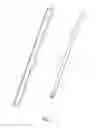
FIG. 1 shows an exploded view of a heater rod.
DESCRIPTION
The embodiments described below are not intended to be exhaustive or to limit the invention to the precise forms disclosed in the following description. Rather, the embodiments are chosen and described so that others skilled in the art may appreciate and understand the principles and practices of this disclosure.
The heater rod comprises a flat tube 1 made of metal, e.g., aluminum, and one or several PTC heating resistors 2 arranged inside the tube 1. The heating resistor 2 is provided as one or several layers that is/are screen printed onto a substrate 3.
The substrate 3 can be a strip of sheet metal, e.g., aluminum. The PTC heating resistor 2 can be screen printed onto a front side of a sheet metal strip. The sheet metal strip can be electrically insulated from the metallic tube 1 by an electrically insulating layer, e.g., a strip of electrically insulating ceramic like alumina or a polymer film. Instead of a separate insulating layer, like an additional strip or film, the insulating layer may also be part of the metal strip, e.g., an anodized surface.
Another possibility is to use a ceramic strip as a substrate. For example the PTC heating resistor 2 can be screen printed onto a strip of electrically insulating ceramic like alumina. If the substrate is a strip of electrically insulating ceramic, the substrate may be prepared by depositing an electrically conducting layer, e.g., a metallic layer, onto the strip of electrically insulating ceramic. The PTC heating resistor is then printed onto the electrically conducting layer. The electrically conducting layer may be deposited by printing conductor paste onto one side of the ceramic strip. Another possibility is to use chemical or physical deposition methods, e.g., vapor deposition, for depositing a metallic layer onto one side of the ceramic strip.
After the substrate 3 and the at least one PTC heating resistor 2 are placed inside the flat tube 1, tube 1 is compressed. Thereby the tube 1 is made even flatter by plastic deformation. Thermal contact between the PTC heating resistor 2 and the metal tube 1 is improved by compression. The flat tube 1 is a profile tube which can be produced by extrusion. The flat tube 1 preferably has generally rectangular interior.
The PTC heating resistor 2 is based on barium titanate. Some of the barium and or titanium atoms of the PTC heating resistor 2 may be substituted by calcium, strontium and/or lead for example. For example, the metal atoms of the sintered PTC heating resistor 2 may comprise 30 to 40% Ba, 50 to 60% Ti, up to 10% Pb, and 0.5 to 5% other metal atoms. These percentages are atomic percentages of metal atoms present in the PTC heating resistor, i.e. neglecting the oxygen atoms. The screen printing is done with a paste or ink. After the printing process the substrate is fired. Additional PTC heating layers can be printed on top of each other. Thereby the heating rod can be produced with a desired heating power and/or precisely defined resistance levels.
While exemplary embodiments have been disclosed hereinabove, the present invention is not limited to the disclosed embodiments. Instead, this application is intended to cover any variations, uses, or adaptations of this disclosure using its general principles. Further, this application is intended to cover such departures from the present disclosure as come within known or customary practice in the art to which this invention pertains and which fall within the limits of the appended claims.
Claims
What is claimed is:1. A heater rod comprising:
a PTC heating resistor based on barium titanate, wherein the PTC heating resistor is a printed layer on a substrate.
2. Heater rod according to claim 1, wherein the PTC heating resistor is printed onto an electrically conductive surface of the substrate.
3. Heater rod according to claim 1, wherein the PTC heating resistor is printed onto a metallic surface of the substrate.
4. Heater rod according to claim 1, wherein the PTC heating resistor is arranged in a tube.
5. Heater rod according to claim 1, wherein the substrate is an electrically insulating ceramic strip.
6. Heater rod according to claim 5, wherein an electrically conducting layer is arranged between the PTC heating resistor and the electrically insulating ceramic strip.
7. Heater rod according to claim 1, wherein the substrate is a sheet metal strip.
8. Heater rod according to claim 1, wherein the heater comprises several PTC heating resistor layers printed on top of each other
9. A method for manufacturing a heater rod, comprising:
printing a PTC heating resistor onto a substrate; and
arranging the substrate with the PTC heating resistor in a flat tube.
10. Method according to claim 9, further comprising compressing the tube after arranging the substrate with a PTC heating resistor in the tube.
11. Method according to claim 9, wherein the PTC heating resistor is screen printed onto the substrate.
12. Method according to claim 9, wherein the substrate is prepared by depositing an electrically conducting layer onto a strip of electrically insulating ceramic and wherein the PTC heating resistor is printed onto the electrically conductive layer.
13. Method according to claim 12, wherein the electrically conductive layer is deposited by printing conductor paste onto the strip.
14. Method according to claim 9, wherein the substrate is a sheet metal strip, the PTC heating resistor is printed onto a side of the sheet metal strip and an insulating layer is placed onto the opposite side of the sheet metal strip.
15. Method according to claim 14, wherein the insulating layer is a sheet of electrically insulating ceramic.
16. Method according to claim 9, wherein several PTC heating resistor layers are printed on top of each other.
Images & Drawings included:

Sources:
- United States Patent and Trademark Office - verify current appl. status at the USPTO↗
Similar patent applications:
- » 20140117991
GLOW PLUG INSPECTING METHOD, GLOW PLUG MANUFACTURING METHOD, SHEATHED HEATER INSPECTING METHOD, AND SHEATHED HEATER MANUFACTURING METHOD - » 20130287379
HOT-WATER HEATER MANUFACTURING METHOD AND HOT-WATER HEATER MANUFACTURED BY THE SAME - » 20050184050
Pipe heater manufacturing method and pipe heater - » 20150014302
Ceramic heater, glow plug, method of manufacturing ceramic heater and method of manufacturing glow plug - » 20110099838
Fluid heater, manufacturing method thereof, substrate processing apparatus including fluid heater, and substrate processing method - » 20060011602
Ceramic heater, glow plug, and ceramic heater manufacturing method - » 20240023619
FLAVOUR INHALER, AND HEATER MANUFACTURING METHOD - » 10343833
Ceramic heater and manufacturing method of ceramic heater - » 20160070225
Heater, image heating apparatus including the heater and manufacturing method of the heater - » 20160070217
Heater, image heating apparatus including the heater and manufacturing method of the heater
Recent applications in this class:
- » 20250287470 2025-09-11
Fluid Heating Device - » 20250142678 2025-05-01
HEAT LAMP - » 20250113411 2025-04-03
ELECTRIC HEATING ASSEMBLY AND MOISTURE MITIGATION FOR THE SAME - » 20250098037 2025-03-20
MULTI-COMPONENT AEROSOL-GENERATING DEVICE WITH IMPACT ABSORBING PART - » 20250056680 2025-02-13
RESERVOIR FILLING SYSTEM FOR AN ELECTRONIC VAPING DEVICE - » 20240430991 2024-12-26
CARTRIDGE INCLUDING A LIQUID STORAGE PORTION WITH A FLEXIBLE WALL - » 20240414815 2024-12-12
ELECTRONIC CIGARETTE AND ATOMIZING ASSEMBLY AND ATOMIZING ELEMENT THEREOF - » 20240306267 2024-09-12
Heater and Heating Unit - » 20240121861 2024-04-11
METHOD FOR PRODUCING A TUBULAR HEATING CARTRIDGE FOR ELECTRICAL HEATING DEVICES, HEATING ELEMENT BLANK FOR SUCH A HEATING CARTRIDGE, AND A HEATING CARTRIDGE - » 20240064870 2024-02-22
PLANAR HEATING ELEMENT, AND CLOTHING MANAGEMENT APPARATUS, HOT/COLD WATER PURIFIER AND FLOOR HEATING PANEL FOR BUILDING, COMPRISING THE SAME
Recent applications for this Assignee:
- » 20220099336 2022-03-31
Flow heater with bypass passage - » 20220082297 2022-03-17
Flow heater with corrugations - » 20210214019 2021-07-15
Automotive component with flange and mounting screw - » 20210148606 2021-05-20
Electric liquid heater for vehicles with plug connector including vent duct - » 20210148603 2021-05-20
Flow heater - » 20210108830 2021-04-15
Heating plate and flow heater having heating plate - » 20210108826 2021-04-15
Continuous-flow heater, and a method for the manufacture of a continuous-flow heater - » 20200363269 2020-11-19
Temperature sensor - » 20200319235 2020-10-08
Method for determining the resistance temperature characteristic of a ceramic glow plug - » 20200284691 2020-09-10
Method for the detection of a glow plug replacement