Composite materials
US20150333337A1
2015-11-19
14/653,051
2014-01-16
✅ Patent granted
US 9,634,332 B2
2017-04-25
WO; PCT/GB2014/050119; 20140116
WO; WO2014/111715; 20140724
Patrick Ryan | Ben Lewis
Brinks Gilson & Lione
2034-01-16
Abstract:
A mixed metal oxide material of tungsten and titanium is provided for use in a fuel cell. The material may comprise less than approximately 30 at.% tungsten. The mixed metal oxide may form the core of a core-shell composite material, used as a catalyst support, in which a catalyst such as platinum forms the shell. The catalyst may be applied as a single monolayer, or up to 20 monolayers.
Inventors:
- Brian Elliott HAYDEN 4 🇬🇧 Chilworth, Southampton Hampshire, United Kingdom
- Claire MORMICHE 1 🇬🇧 Chilworth, Southampton Hampshire, United Kingdom
- Jonathan Conrad DAVIES 4 🇬🇧 Chilworth, Southampton Hampshire, United Kingdom
- Laura Jane OFFIN 4 🇬🇧 Chilworth Southampton Hampshire, United Kingdom
- Brian Elliott HAYDEN 3 🇬🇧 Chilworth, United Kingdom
- Jonathan Conrad DAVIES 3 🇬🇧 Chilworth, United Kingdom
- Laura Jane OFFIN 3 🇬🇧 Chilworth, United Kingdom
- Claire Mormiche 1 🇬🇧 Chilworth, United Kingdom
Assignee:
- Ilika Technologies, Ltd. 4 🇬🇧 Southampton Hampshire, United Kingdom
Applicant:
Interested in similar patents?
Get notified when new applications in this technology area are published.
Classification:
H01M4/9075 » CPC main
Electrodes; Inert electrodes with catalytic activity, e.g. for fuel cells; Selection of catalytic material Catalytic material supported on carriers, e.g. powder carriers
H01M4/92 IPC
Electrodes; Inert electrodes with catalytic activity, e.g. for fuel cells; Selection of catalytic material Metals of platinum group
H01M4/925 » CPC further
Electrodes; Inert electrodes with catalytic activity, e.g. for fuel cells; Selection of catalytic material; Metals of platinum group supported on carriers, e.g. powder carriers
H01M4/90 IPC
Electrodes; Inert electrodes with catalytic activity, e.g. for fuel cells Selection of catalytic material
C01G41/00 » CPC further
Compounds of tungsten
H01M8/1018 IPC
Fuel cells; Manufacture thereof; Fuel cells with solid electrolytes characterised by the electrolyte material Polymeric electrolyte materials
B01J37/347 » CPC further
Processes, in general, for preparing catalysts; Processes, in general, for activation of catalysts; Irradiation by, or application of, electric, magnetic or wave energy, e.g. ultrasonic waves ; Ionic sputtering; Flame or plasma spraying; Particle radiation making use of electric or magnetic fields, wave energy or particle radiation Ionic or cathodic spraying; Electric discharge
B01J35/008 » CPC further
Catalysts, in general, characterised by their form or physical properties; Catalysts characterised by their physical properties; Distribution of the active metal ingredient egg-shell like
B01J35/0033 » CPC further
Catalysts, in general, characterised by their form or physical properties; Catalysts characterised by their physical properties Electric or magnetic properties
B01J35/00 IPC
Catalysts, in general, characterised by their form or physical properties
B01J2523/00 » CPC further
Constitutive chemical elements of heterogeneous catalysts
C01P2002/54 » CPC further
Crystal-structural characteristics; Solid solutions containing elements as dopants one element only
H01M4/02 IPC
Electrodes Electrodes composed of, or comprising, active material
C01G23/047 » CPC further
Compounds of titanium; Oxides; Hydroxides Titanium dioxide
B01J23/652 IPC
Catalysts comprising metals or metal oxides or hydroxides, not provided for in group of noble metals combined with metals, oxides or hydroxides provided for in groups - ; Platinum group metals with arsenic, antimony, bismuth, vanadium, niobium, tantalum, polonium, chromium, molybdenum, tungsten, manganese, technetium or rhenium Chromium, molybdenum or tungsten
B01J37/34 IPC
Processes, in general, for preparing catalysts; Processes, in general, for activation of catalysts Irradiation by, or application of, electric, magnetic or wave energy, e.g. ultrasonic waves ; Ionic sputtering; Flame or plasma spraying; Particle radiation
B01J23/30 » CPC further
Catalysts comprising metals or metal oxides or hydroxides, not provided for in group of arsenic, antimony, bismuth, vanadium, niobium, tantalum, polonium, chromium, molybdenum, tungsten, manganese, technetium or rhenium; Chromium, molybdenum or tungsten Tungsten
B01J23/6527 » CPC further
Catalysts comprising metals or metal oxides or hydroxides, not provided for in group of noble metals combined with metals, oxides or hydroxides provided for in groups - ; Platinum group metals with arsenic, antimony, bismuth, vanadium, niobium, tantalum, polonium, chromium, molybdenum, tungsten, manganese, technetium or rhenium; Chromium, molybdenum or tungsten Tungsten
H01M2008/1095 » CPC further
Fuel cells; Manufacture thereof; Fuel cells with solid electrolytes Fuel cells with polymeric electrolytes
Description
The present invention relates to materials for use in a fuel cell and particularly to core-shell composite materials for use in a fuel cell.
A fuel cell comprises an anode for oxidation of a fuel and a cathode where an oxidising agent, such as oxygen, is reduced. Ions are transported between the two electrodes by means of an electrolyte. Fuel supplied to the cell is oxidised at the anode, releasing electrons which pass through an external circuit to the cathode, where they are consumed during reduction of the oxidising species. In a polymer electrolyte membrane fuel cell (PEMFC), the fuel is usually hydrogen and the oxidising species is usually oxygen. A polymer electrolyte allows protons to flow from the anode to the cathode.
Platinum-containing catalysts are one of the most efficient catalysts for facilitating the oxygen reduction reaction (ORR) at the cathode of a fuel cell. Platinum, however, is a costly material and so methods for reducing the quantity of platinum required for an effective fuel cell are highly sought-after. Traditionally, platinum is dispersed over a carbon support to increase the surface area of the platinum, relative to its mass. A maximum in mass activity is produced with a platinum particle size of approximately 3-4 nm [References 1-4]. In this system, if the particle size of platinum is further reduced, oxygen reduction activity is also sharply reduced, limiting the advantages that can be achieved by dispersion. An additional disadvantage with the system is that the carbon support can become oxidised under fuel cell operating conditions. This oxidation leads to degradation of the catalyst, which limits the lifetime of the fuel cell [5].
Metal oxides have previously been investigated for use as fuel cell catalyst supports [6-18]. Metal oxides are less prone to oxidative corrosion than carbon, and can, therefore, be more stable in a fuel cell environment. The use of metal oxides as supports for fuel cell catalysts and methods of synthesising suitable oxides has been described in, for example, US2009/0065738A1, US2006/0263675, U.S. Pat. No. 7,704,918B2, US2007/0037041A1, WO2008/025751 and WO2009/152003 [14-18].
Core-shell catalysts with Pt as the shell material are reported in the literature [17-28]. A core-shell structure is represented schematically in FIG. 1. Many of the systems described in the literature contain a precious metal core, such as Au or Pd [19-22, 24-26, 28]. Consequently, although there is a potential reduction in the quantity of platinum required to produce an effective catalyst, use of another expensive metal within the core, keeps costs high. Other reported core materials include base metals (Cu in reference 27, for example), which are more cost-effective than platinum, but likely to be unstable in a fuel cell. Adzic et al [17, 18] disclose a core-shell type structure with a NaWO3 core. WO2008/025751 [29] discloses a Pt-coated zirconia and cerium-doped zirconia core-shell system.
The present invention is based upon the determination that a mixed metal oxide based on tungsten combined with titanium can be used as a core supporting material. The loading of platinum at which bulk platinum like oxygen reduction behaviour is achieved has been identified by the present inventors. This is believed to be when discrete particles of platinum start to coalesce to form layers (i.e. a core-shell structure) and is evidenced by an overpotential for the oxygen reduction reaction equivalent to that seen for bulk platinum.
In particular, the inventors have found that when tungsten is added to a titanium oxide (also known as titania) support, the specific activity for oxygen reduction is increased at low platinum loadings. This suggests that the tungsten aids the wetting of the platinum onto the oxide surface allowing improved formation of core-shell structures.
The present inventors have also found that when the support is crystallised (to the anatase form of titanium oxide), the critical thickness (dcrit), at which bulk platinum like activity is achieved, is lowered—compared to a support comprising amorphous titanium oxide.
Accordingly, in its broadest aspect, the present invention provides a mixed metal oxide material of tungsten and titanium.
In a preferred embodiment, the mixed metal oxide material comprises less than approximately 30 atomic % tungsten (based on the total amount of metal, i.e. 30 at % W and 70 at % Ti).
Advantageously, the mixed metal oxide material comprises less than approximately 15 atomic % tungsten.
More advantageously, the mixed metal oxide material comprises from 6 to 11 atomic % tungsten, preferably between 7 and 9 atomic %.
Suitably, the mixed metal oxide material comprises titanium oxide doped with tungsten.
Suitably, the titanium oxide is crystalline, preferably the anatase form.
Another aspect of the present invention provides a catalyst support comprising a mixed metal oxide as described above.
A further aspect provides a catalytic medium comprising a mixed metal oxide material as described above and a catalyst applied to a surface of the mixed metal oxide material.
Preferably, the catalyst is applied as a catalytic layer to the mixed metal oxide material.
Preferably, the mixed metal oxide material is formed as a core particle.
Preferably, the core particle has a diameter of from 10-50 nm, more preferably 10-25 nm.
Ideally, the catalyst is applied as a shell on the core particle.
Alternatively, the mixed metal oxide material is formed as a layer structure.
In a preferred embodiment, the catalyst comprises platinum or platinum alloy.
Preferably, the catalyst comprises at least 1 ML (monolayer) of platinum or platinum alloy and 20 ML or fewer. More preferably, the catalyst comprises 14 ML or fewer of platinum or platinum alloy.
Another aspect of the present invention provides a method of producing a catalytic medium, the method comprising: forming a mixed metal oxide material as described above; and forming a catalytic layer comprising at least one monolayer of catalyst on the mixed metal oxide material.
Preferably the method comprises forming a catalytic layer of between 1 and 20 ML of platinum or platinum alloy.
More preferably, the catalytic layer is fewer than about 6 ML of catalyst.
A further aspect of the present invention provides a catalyst for a fuel cell, the catalyst comprising a mixed metal oxide material as described above.
The present invention also provides a fuel cell comprising a catalytic medium as described above.
A yet further aspect of the present invention provides use of a mixed metal oxide material as described above or a catalytic medium as described above in a fuel cell.
The term monolayer (ML) as used herein is used to mean the equivalent amount of catalytic material which would form a uniform layer of 1 atom thickness on a flat surface. It will be appreciated that, in practice, a surface of the mixed metal oxide is unlikely to be perfectly automatically flat. Accordingly, it will be understood that a 1 ML layer of catalyst on the mixed metal oxide substrate will have areas where there are a plurality of catalyst atoms in a layer and areas where there are no atoms of catalyst.
As used herein, the term mixed metal oxide indicates an oxide of a mixture of metals; a mixture of metal oxides; or a combination thereof.
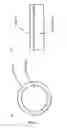
FIG. 1 is a schematic cross-section of a core-shell structure and an equivalent layer structure used to model the core shell particle behavior;
FIG. 2 is a schematic representation of particle growth and nucleation onto supports with a low number of nucleation sites and an increased number of nucleation sites;
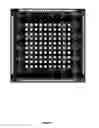
FIG. 3 is a schematic view of an electrochemical array substrate;
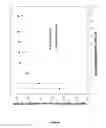
FIG. 4 is a chart showing the potential at which 1 μA raw current is reached during the oxygen reduction slow cycling experiment for Pt supported on amorphous and anatase titanium oxide. Error bars are plus and minus one standard deviation;
FIG. 5 is a chart showing the potential at which 3 μA raw current is reached during the oxygen reduction slow cycling experiment for amorphous and anatase titanium oxide. Error bars are plus and minus one standard deviation;
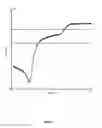
FIG. 6 is a chart showing an example O2 reduction slow cycling CV for 0.7 ML of Pt supported on amorphous TiOx indicating the two different potentials where ignition potentials have been compared; and
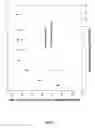
FIG. 7 is a chart showing the potential at which 1 μA raw current is reached during the oxygen reduction slow cycling experiment for Pt supported on anatase tungsten doped titanium oxide. Error bars are plus and minus one standard deviation.
For ease of reference, the mixed metal oxide of tungsten and titanium is represented as TiWOx. However, it will be appreciated that this is not a chemical formula indicating any specific stoichiometry, but merely a shorthand indication of the elemental composition of the material and is not to be taken as limiting on the stoichiometry of the material.
Thin film models of core-shell systems were produced with different platinum loadings and using titanium oxide supports with different crystallinity and varying levels of tungsten. The thin film models were tested for their activity towards the oxygen reduction reaction.
Thin film models of core-shell structures (see FIG. 1) with a tungsten-doped titanium oxide core and a platinum shell have been produced, which have the same (or similar) activity for oxygen reduction as bulk platinum. Traditionally, dopants have been added to metal oxides in order to increase conductivity by creating defects (such as oxygen vacancies). However, in addition to increased conductivity, dopants can also help to create defects on the surface of the metal oxides and therefore create more sites for nucleation of a metal overlayer. This would cause smaller particles to be formed and lead to a more complete metal film at a lower equivalent thickness (see FIG. 2). A film of platinum should approach the oxygen reduction capacity of bulk platinum, since a significant number of platinum atoms will be in contact.
Metal oxides also offer a stable alternative to carbon supports (which are prone to oxidative destruction) and would therefore increase the lifetime of fuel cells. One may also expect a more effective utilisation (activity per mass of platinum).
The inventors found that, as the loading of platinum was decreased on all of the support materials studied, the ignition potential (see below) for the oxygen reduction reaction initially remained constant. However, below a certain critical thickness (dcrit), the ignition potential (see below) started to decrease (i.e. the overpotential for the oxygen reduction reaction increases, or the electrodes are less active for the oxygen reduction reaction). At high loadings of platinum, the ignition potential was similar to a bulk platinum electrode. This suggests a core-shell model structure, where enough Pt atoms are in contact to behave as the bulk metal. As the platinum started to break into discrete particles, the ignition potential decreased.
The anatase form of titanium oxide allowed the loading of platinum to be reduced further than amorphous titanium oxide before the oxygen reduction behaviour shifted away from the bulk behaviour. This occurred below approximately 5 ML equivalent thickness of Pt.
The addition of tungsten to the anatase titanium oxide support showed evidence of improved activity at low loadings of platinum. This suggests that the tungsten aided the wetting of platinum onto the titanium oxide surface. That is to say, the results produced by the present inventors suggest that core-shell structures can be more easily formed when tungsten is present in the core.
EXAMPLE 1
Synthesis of samples
Thin film samples were deposited using a high-throughput PVD (Physical Vapour Deposition) system to model core-shell structures (see FIG. 1b). The PVD system used is described in detail in reference 30. A range of oxide samples were synthesised onto different substrates including silicon wafers, quartz wafers and electrochemical arrays (10×10 arrays of gold contact pads as represented in FIG. 3). Titanium and tungsten were deposited from electron gun (E-gun) sources. The TiWOx films were deposited in the presence of an atomic oxygen source (operating at 400 W power) with a pressure of approximately 5×10⁻⁵ Torr. These oxide films were heated in a tube furnace to 450° C. in the presence of oxygen. Such conditions allowed the anatase structure of the undoped titanium oxide to form and would lead to high oxygen stoichiometry materials.
The platinum was deposited onto the pre-deposited oxide thin films from an E-gun source. During deposition the oxide substrates were heated to 200° C. to dehydroxylate the surface. A shutter that was moved during deposition allowed different equivalent thicknesses of platinum to be deposited onto different fields. The amount of platinum deposited was calibrated by: depositing thicker films onto silicon substrates, measuring the thickness of the films by AFM (Atomic Force Microscopy), and producing a calibration curve against deposition time.
EXAMPLE 2
Oxide Characterisation
The composition of the oxide films was determined using a Laser Ablation Inductively Coupled Plasma Mass Spectrometer (LA-ICP-MS, New Wave 213 nm laser & Perkin Elmer Elan 9000). This method gives the relative composition of the metallic elements, but is not capable of measuring the oxygen concentration. As the ICP-MS measurements are destructive, composition measurements were made on samples deposited onto silicon wafers. The same deposition conditions were then used to deposit onto equivalent electrochemical arrays.
X-Ray diffraction (XRD) patterns were obtained using the Bruker D8 Discover diffractometer, a powerful XRD tool with a high-precision, two-circle goniometer with independent stepper motors and optical encoders for the Theta and 2 Theta circles. The D8 diffractometer system is equipped with a GADDS detector operating at 45 kV and 0.65 mA. A high intensity X-ray IμS Incoatec source (with Cu Kα radiation) is incorporated allowing high intensity and collimated X-rays to be localised on thin film materials providing an efficient high throughput structural analysis. This analysis was carried out on oxide films deposited onto Si substrates.
EXAMPLE 3
Electrochemical Screening
The high-throughput electrochemical screening equipment enables electrochemical experiments on 100 independently addressable electrodes arranged in a 10×10 array in a parallel screening mode to be conducted. The equipment has been described in detail elsewhere [2, 31]. The geometric areas of the individual working electrodes on the electrochemical array are 1.0 mm2.
The design of the cell and socket assembly provides a clean electrochemical environment with control of the temperature during experiments. In the experiments described, the temperature was maintained at 25° C. and a mercury/mercury sulphate (MMSE) reference electrode was used. The potential of the MMSE was measured vs. a hydrogen reference electrode prior to screening experiments and all potentials are quoted vs. the reversible hydrogen electrode (RHE). A Pt mesh counter electrode was used, in a glass compartment separated from the working electrode compartment by a glass frit. Various sweep rates were used for different experiments which are outlined in Table 1.
| TABLE 1 |
| Electrochemical screening procedure. |
| Potential limits/ | Sweep rate/ | ||
| Experiment | Gas | V vs. RHE | mV s−1 |
| Bubbling Ar | |||
| 20 min | |||
| 3 CVs in deoxygenated | Ar above solution | 0.025-1.200 | 100 |
| solution | |||
| O2 saturation | Bubbling Ar 60 s | At 1.000 | |
| Bubbling O2 | At 1.000 | ||
| 10 min | |||
| O2 reduction steps | Bubbling O2 in | Step from 1.00 to 0.60 | |
| solution | and back to 1.00 in 50 | ||
| mV increments every 90 s | |||
| 3 CVs in O2 saturated | O2 above solution | 0.025-1.200 | 5 |
| solution | |||
| Bubbling Ar | |||
| 20 min | |||
| 200 CVs stability testing | Ar above solution | 0.025-1.200 | 100 |
| Bubbling with O2 for | At 1.000 | ||
| 20 min | |||
| 3 CVs in O2 saturated | O2 above solution | 0.025-1.200 | 5 |
| solution | |||
| O2 reduction steps | Bubbling O2 in | Step from 1.00 to 0.60 | |
| solution | and back to 1.00 in 50 | ||
| mV increments every 90 | |||
| s | |||
| Bubbling CO | At 0.075 | ||
| 15 min | |||
| Bubbling Ar | At 0.075 | ||
| 20 min | |||
| CO stripping | Ar above solution | 0.025-1.200 | 100 |
The electrolyte used for all experiments was 0.5 M HClO4 prepared from concentrated HClO4 (double distilled, GFS) and ultrapure water (ELGA, 18 MΩ cm). The gases used (Ar, O2 and CO) were of the highest commercially available purity (Air Products). Unless stated otherwise, experiments were performed under an atmosphere of argon. Oxygen reduction experiments were performed under an atmosphere of O2. During potential step measurements, oxygen was bubbled through the electrolyte. Unless otherwise noted, the maximum potential applied to the electrodes was 1.2 V vs. RHE. The screening procedure carried out on each array is outline in Table 1.
EXAMPLE 4
Anatase and Amorphous Titanium Oxide
To compare amorphous and crystalline titanium oxide as a support for Pt, separate electrochemical arrays were synthesised. The as-deposited titanium oxide was amorphous. The titanium oxide was crystallised by heating in a tube furnace at 450° C. for 6 hours in the presence of oxygen. XRD confirmed the titanium oxide had been crystallised in the anatase form.
FIG. 4 shows the potential at which 1 μA raw current is reached (threshold value used to measure the ignition or onset potential) during the oxygen reduction slow cycling experiment (i.e. cycling at 20 mV s−1 in oxygenated 0.5 M HClO4) for various equivalent thicknesses of Pt supported on amorphous and anatase titanium oxide. An ignition or onset potential is defined as the potential at which the absolute value of the current starts to increase from the background (double layer) level in a cyclic voltammetry experiment, indicating that an oxidation or reduction reaction is taking place. Average results were taken across an array row for identical Pt equivalent thicknesses. This provides a measure of the onset potential of the oxygen reduction reaction—the higher the onset potential, the more active the catalyst for the oxygen reduction reaction. It can be seen that at high equivalent thicknesses of Pt, the ignition potential remains fairly constant with decreasing equivalent thickness of Pt. This is similar for both supports.
However, between 5 and 6 ML (monolayers) equivalent thickness of Pt, the ignition potential starts to decrease on both support materials. The effect on the amorphous material is more significant. Under this equivalent thickness for both supports the ignition potential decreases further. On the amorphous titanium oxide at low equivalent thicknesses, there is a large amount of scatter in the data. FIG. 5 shows the potential at which 3 μA raw current is reached in the oxygen reduction slow cycling experiment for the same set of data. At this current it is even clearer that the reduction wave is shifted more significantly negative on the amorphous support. This suggests that the anatase support provides better wetting for the platinum, and therefore higher activity, down to a lower equivalent thickness of Pt.
FIG. 6 shows the voltammetry for one electrode during the oxygen reduction reaction with 0.7 ML equivalent thickness of Pt supported on amorphous titanium oxide. The two currents at which ignition potentials have been measured are indicated by grey lines. Two reduction features are seen, a small feature with a high onset potential and a larger feature with a low onset potential. These two features are probably due to inhomogeneity within the sample, i.e. some large islands of platinum leading to a high ignition potential and some smaller particles leading to the lower ignition potential. The ignition potential measured at 1 μA raw current gives an indication of the onset of the first reduction feature and the ignition potential measured at 3 μA raw current gives an indication of the onset of the second reduction feature.
These results suggest that the platinum shows better wetting on the anatase titanium oxide, allowing bulk platinum like oxygen reduction activity to a lower equivalent thickness.
EXAMPLE 5
Anatase Tungsten Titanium Oxide
FIG. 7 shows the ignition potentials (potential at which 1 μA raw current is reached) for the second negative cycle of the oxygen reduction slow cycling experiment. Various equivalent thicknesses of Pt were deposited onto anatase TiWOx, with varying W content. At low Pt equivalent thicknesses, the arrays containing W had higher ignition potentials (i.e. lower overpotentials). However, by the equivalent thicknesses (˜4.3 ML) where the highest ignition potentials are reached (the lowest overpotentials), all of the samples have similar ignition potentials. This suggests that there is better wetting of the Pt onto the tungsten-doped titanium oxide at low loadings.
As indicated above, atomic percentage values given are on the total metal content. That is to say, 30 at % W indicates 70 at % Ti. The exact stoichiometry including oxygen atoms is undefined but is at or close to stoichiometric, thereby maintains oxide properties.
Use as a Core-Shell Catalyst
The materials described in the present application are readily scaled up from the model thin film samples to bulk core shell powder materials using known techniques, such as those described in US2010/0197490, US2007/0031722, US2009/0117257, US2006/0263675 and CN101455970. Other techniques will be readily apparent to the skilled person. The stability of the materials described is such that they are effective for use in fuel cells.
REFERENCES
- 1. Peuckert, M., et al., Oxygen Reduction on Small Supported Platinum Particles. Journal of The Electrochemical Society, 1986. 133(5): p. 944-947.
- 2. Guerin, S., et al., Combinatorial Electrochemical Screening of Fuel Cell Electrocatalysts. Journal of Combinatorial Chemistry, 2003. 6(1): p. 149-158.
- 3. Gasteiger, H. A., et al., Activity benchmarks and requirements for Pt, Pt-alloy, and non-Pt oxygen reduction catalysts for PEMFCs. Applied Catalysis B: Environmental, 2005. 56(1-2): p. 9-35.
- 4. Xu, Z., et al., Effect of particle size on the activity and durability of the Pt/C electrocatalyst for proton exchange membrane fuel cells. Applied Catalysis B: Environmental, 2012. 111-112(0): p. 264-270.
- 5. de Bruijn, F. A., V. A. T. Dam, and G. J. M. Janssen, Review: Durability and Degradation Issues of PEM Fuel Cell Components. Fuel Cells, 2008. 8(1): p. 3-22.
- 6. Huang, S.-Y., et al., Development of a Titanium Dioxide-Supported Platinum Catalyst with Ultrahigh Stability for Polymer Electrolyte Membrane Fuel Cell Applications. Journal of the American Chemical Society, 2009. 131(39): p. 13898-13899.
- 7. Hayden, B. E., et al., The influence of support and particle size on the platinum catalysed oxygen reduction reaction. Physical Chemistry Chemical Physics, 2009. 11(40): p. 9141-9148.
- 8. Huang, S.-Y., P. Ganesan, and B. N. Popov, Electrocatalytic activity and stability of niobium-doped titanium oxide supported platinum catalyst for polymer electrolyte membrane fuel cells. Applied Catalysis B: Environmental, 2010. 96(1-2): p. 224-231.
- 9. Antolini, E. and E. R. Gonzalez, Ceramic materials as supports for low-temperature fuel cell catalysts. Solid State Ionics, 2009. 180(9-10): p. 746-763.
- 10. Chen, Y., et al., Atomic layer deposition assisted Pt—SnO2 hybrid catalysts on nitrogen-doped CNTs with enhanced electrocatalytic activities for low temperature fuel cells. International Journal of Hydrogen Energy, 2011. 36(17): p. 11085-11092.
- 11. Cui, X., et al., Graphitized mesoporous carbon supported Pt—SnO2 nanoparticles as a catalyst for methanol oxidation. Fuel, 2010. 89(2): p. 372-377.
- 12. Guo, D.-J. and J.-M. You, Highly catalytic activity of Pt electrocatalyst supported on sulphated SnO2/multi-walled carbon nanotube composites for methanol electro-oxidation. Journal of Power Sources, 2012. 198(0): p. 127-131.
- 13. Ye, J., et al., Preparation of Pt supported on WO3-C with enhanced catalytic activity by microwave-pyrolysis method. Journal of Power Sources, 2010. 195(9): p. 2633-2637.
- 14. Weidner, J. W. and B. L. Garcia, Electrocatalyst support and catalyst supported thereon US 2009/0065738 A1, 2009: United States.
- 15. Cai, M., et al., Electrocatalyst Supports for Fuel Cells US 2007/0037041 A1, 2007: United States.
- 16. Do, T. B., M. Cai, and M. S. Ruthkosky, Mesoporous electrically conductive metal oxide catalyst supports WO 2009/152003 A2, 2009.
- 17. Adzic, R., J. Zhang, and M. Vukmirovic, Electrocatalyst for oxygen reduction with reduced platinum oxidation and dissolution rates US 2006/0263675 A1, 2006: United States.
- 18. Adzic, R., M. Vukmirovic, and K. Sasaki, Synthesis of metal-metal oxide catalysts and electrocatalysts using a metal cation adsorption/reduction and adatom replacement by more noble ones U.S. Pat. No. 7,704,918 B2, 2010: United States.
- 19. Hartl, K., et al., AuPt core-shell nanocatalysts with bulk Pt activity. Electrochemistry Communications, 2010. 12(11): p. 1487-1489.
- 20. Ma, Y., et al., High active PtAu/C catalyst with core-shell structure for oxygen reduction reaction. Catalysis Communications, 2010. 11(5): p. 434-437.
- 21. Sasaki, K., et al., Core-Protected Platinum Monolayer Shell High-Stability Electrocatalysts for Fuel-Cell Cathodes. Angewandte Chemie International Edition, 2010. 49(46): p. 8602-8607.
- 22. Shuangyin, W., et al., Controlled synthesis of dendritic Au@Pt core-shell nanomaterials for use as an effective fuel cell electrocatalyst. Nanotechnology, 2009. 20(2): p. 025605.
- 23. Silva, J. C. M., et al., Ethanol oxidation reactions using SnO2@Pt/C as an electrocatalyst. Applied Catalysis B: Environmental, 2010. 99(1-2): p. 265-271.
- 24. Wang, R., et al., Carbon supported Pt-shell modified PdCo-core with electrocatalyst for methanol oxidation. International Journal of Hydrogen Energy, 2010. 35(19): p. 10081-10086.
- 25. Wang, R., et al., Preparation of carbon-supported core@shell PdCu@PtRu nanoparticles for methanol oxidation. Journal of Power Sources, 2010. 195(4): p. 1099-1102.
- 26. Wang, W., et al., Pt overgrowth on carbon supported PdFe seeds in the preparation of core-shell electrocatalysts for the oxygen reduction reaction. Journal of Power Sources, 2010. 195(11): p. 3498-3503.
- 27. Wei, Z. D., et al., Electrochemically synthesized Cu/Pt core-shell catalysts on a porous carbon electrode for polymer electrolyte membrane fuel cells. Journal of Power Sources, 2008. 180(1): p. 84-91.
- 28. Wu, Y.-N., et al., High-performance core-shell PdPt@Pt/C catalysts via decorating PdPt alloy cores with Pt. Journal of Power Sources, 2009. 194(2): p. 805-810.
- 29. Lopez, M., et al., Core/Shell-type catalyst particles comprising metal or ceramic core materials and methods for their preparation, WO2008/025751. 2008.
- 30. Guerin, S. and B. E. Hayden, Physical Vapor Deposition Method for the High-Throughput Synthesis of Solid-State Material Libraries. Journal of Combinatorial Chemistry, 2006. 8(1): p. 66-73.
- 31. Guerin, S., et al., High-Throughput Synthesis and Screening of Ternary Metal Alloys for Electrocatalysis. The Journal of Physical Chemistry B, 2006. 110(29): p. 14355-14362.
Claims
1-18. (canceled)
19. A mixed metal oxide material of tungsten and titanium, wherein the material comprises less than approximately 30 atomic % tungsten, calculated on a metals only basis.
20. The mixed metal oxide material as claimed in claim 19, comprising less than approximately 15 atomic % tungsten.
21. The mixed metal oxide as claimed in claim 19, comprising an oxide of titanium doped with tungsten.
22. The mixed metal oxide material as claimed in claim 21, wherein the titanium oxide is in a crystalline form.
23. A catalyst support comprising a mixed metal oxide material of tungsten and titanium.
24. A catalyst support comprising the mixed metal oxide material as claimed in claim 19.
25. A catalytic medium comprising the catalyst support as claimed in claim 23, and a catalyst applied to a surface of the catalyst support.
26. The catalytic medium as claimed in claim 25, wherein the catalyst support is formed as a core particle.
27. The catalytic medium as claimed in claim 26, wherein the catalyst is applied as a shell on the core particle.
28. The catalytic medium as claimed in claim 25, wherein the catalyst support is formed as a layer.
29. The catalytic medium as claimed in claim 25, wherein the catalyst comprises platinum or platinum alloy.
30. The catalytic medium as claimed in claim 25, wherein the catalyst comprises between 1 and 20 ML (monolayers) of platinum or platinum alloy.
31. New) The catalytic medium as claimed in claim 25, wherein the catalyst comprises fewer than about 14 ML of platinum or platinum alloy.
32. A method of producing a catalytic medium, the method comprising: forming the catalyst support as claimed in claim 23, and forming a catalytic layer comprising at least one monolayer of catalyst on the catalyst support.
33. The method as claimed in claim 32, comprising forming a catalytic layer of between 1 and 20 ML of platinum or platinum alloy.
34. A catalyst for a fuel cell, the catalyst comprising the catalytic medium as claimed in claim 25.
35. A fuel cell comprising the catalytic medium as claimed in claim 25.
36. A fuel cell comprising the mixed metal oxide material as claimed in claim 19.
37. A fuel cell comprising the catalyst support as claimed in claim 23.
Images & Drawings included:



Sources:
- United States Patent and Trademark Office - verify current appl. status at the USPTO↗
Similar patent applications:
- » 20170121178
Method for producing carbon nanotube dispersion liquid, carbon nanotube dispersion liquid, method for producing composite material composition, method for producing composite material, composite material, and composite material shaped product - » 20160159652
Method for producing carbon nanotube dispersion liquid, method for producing composite material composition, method for producing composite material, composite material, and composite-material shaped product - » 20160369132
Precursor composite material, method for producing a precursor composite material, method for producing a composite material and use of a precursor composite material and of a composite material - » 20230064166
COATING AGENT, SHEET-LIKE INTERMEDIATE BASE MATERIAL, PHOTOCURABLE RESIN FILM, FIBER-REINFORCED COMPOSITE MATERIAL INTERMEDIATE, FIBER-REINFORCED COMPOSITE MATERIAL, METHOD FOR PRODUCING FIBER-REINFORCED COMPOSITE MATERIAL INTERMEDIATE, AND METHOD FOR PRODUCING FIBER-REINFORCED COMPOSITE MATERIAL - » 20160201211
Composite material, method for forming the composite material, electrode plated with the composite material, and connection structure having the composite material - » 20090209415
Composite material, composite material substrate, composite material dispersed fluid, and manufacturing methods thereof - » 20100004358
Method for production of molded article of plant-derived composite material, molded article of plant-derived composite material, method for production of plant-derived composite material, and plant-derived composite material - » 20120164441
Ceramic carbon composite material, method for producing ceramic carbon composite material, ceramic-coated ceramic carbon composite material, and method for producing ceramic-coated ceramic carbon composite material - » 20250282628
POROUS SILICA-CLAY COMPOSITE MATERIAL, WATER PURIFYING AGENT CONTAINING POROUS SILICA-CLAY COMPOSITE MATERIAL, SOIL TREATMENT POWDER CONTAINING POROUS SILICA-CLAY COMPOSITE MATERIAL, AND METHOD OF PRODUCING POROUS SILICA-CLAY COMPOSITE MATERIAL - » 20170348875
Method for modifying surface of composite material, method for bonding composite material, composite material, and bonded structure
Recent applications in this class:
- » 20240128473 2024-04-18
IONIC-LIQUID-IMPREGNATED CATALYST PARTICLES, MEMBRANE ELECTRODE ASSEMBLY FOR FUEL CELLS, AND FUEL CELL - » 20230420691 2023-12-28
METHOD OF MANUFACTURING NANOLAYERED CATHODES FOR SOLID OXIDE FUEL CELL USING ULTRASONIC SPRAY INFILTRATION AND SOLID OXIDE FUEL CELL MANUFACTURED USING SAME - » 20230197974 2023-06-22
POROUS SILICON OXYCARBIDE COMPOSITE MATERIAL AND METHOD FOR MANUFACTURING SAME - » 20230187657 2023-06-15
CARRIER-NANOPARTICLE COMPLEX, CATALYST COMPRISING SAME, ELECTROCHEMICAL BATTERY COMPRISING CATALYST, AND METHOD FOR PRODUCING CARRIER-NANOPARTICLE COMPLEX - » 20220190356 2022-06-16
Atomically dispersed platinum-group metal-free catalysts and method for synthesis of the same - » 20210013520 2021-01-14
Electrode catalyst layer, membrane electrode assembly, and polymer electrolyte fuel cell - » 20200350596 2020-11-05
Oxidized surface layer on transition metal nitrides: active catalysts for the oxygen reduction reaction - » 20200335799 2020-10-22
Nanostructured electrode for polymer electrolyte membrane fuel cell, and manufacturing method therefor - » 20200251747 2020-08-06
CARRIER-NANOPARTICLE COMPLEX, CATALYST COMPRISING SAME, ELECTROCHEMICAL BATTERY COMPRISING CATALYST, AND METHOD FOR PRODUCING CARRIER-NANOPARTICLE COMPLEX - » 20180006312 2018-01-04
Fuel cell electrode catalyst, production method thereof, and fuel cell
Recent applications for this Assignee:
- » 20150372316 2015-12-24
Composite materials - » 20150333338 2015-11-19
Mixed metal oxide material of tin and titanium - » 20140193746 2014-07-10
Cost-effective core-shell catalyst with high electrochemical stability