Electrical connector assembly having guiding means
US20150333448A1
2015-11-19
14/710,930
2015-05-13
✅ Patent granted
US 9,490,578 B2
2016-11-08
-
-
Tulsidas C Patel | Marcus Harcum
Wei Te Chung | Ming Chieh Chang
2035-05-13
Abstract:
An electrical connector assembly includes: a first connector including a mating section, a first magnetic element having a cavity, and a number of first contacts accommodated in the mating section and the cavity; a second connector for mating with the mating section, the second connector including a second magnetic element and a number of second contacts accommodated in the second magnetic element; and an anti-mismating structure located at a front end of the second connector. The structure includes a number of anti-mismating elements and an anti-mismating hole surrounded by the anti-mismating elements for receiving the mating section. The anti-mismating hole is asymmetric in one of an up-to-down direction and a left-to-right direction, and the periphery of the mating section corresponds to the anti-mismating hole.
Inventors:
- QING-MAN ZHU 71 🇨🇳 Kunshan, China
- JERRY WU 381 🇺🇸 Irvine, CA, United States
- JIAN-JUN ZHU 13 🇨🇳 Kunshan, China
Assignee:
- FOXCONN INTERCONNECT TECHNOLOGY LIMITED 922 Grand Cayman, Cayman Islands
Applicant:
Interested in similar patents?
Get notified when new applications in this technology area are published.
Classification:
H01R13/6205 » CPC further
Details of coupling devices of the kinds covered by groups or -; Means for facilitating engagement or disengagement of coupling parts or for holding them in engagement Two-part coupling devices held in engagement by a magnet
H01R12/724 » CPC further
Structural associations of a plurality of mutually-insulated electrical connecting elements, specially adapted for printed circuits, e.g. printed circuit boards [PCBs], flat or ribbon cables, or like generally planar structures, e.g. terminal strips, terminal blocks; Coupling devices specially adapted for printed circuits, flat or ribbon cables, or like generally planar structures; Terminals specially adapted for contact with, or insertion into, printed circuits, flat or ribbon cables, or like generally planar structures; Coupling devices for rigid printing circuits or like structures coupling with the edge of the rigid printed circuits or like structures coupling devices mounted on the edge of the printed circuits containing contact members forming a right angle
H01R13/642 » CPC main
Details of coupling devices of the kinds covered by groups or -; Means for preventing incorrect coupling by position or shape of contact members
H01R13/24 » CPC further
Details of coupling devices of the kinds covered by groups or -; Contact members; Contacts for co-operating by abutting resilient; resiliently-mounted
H01R13/62 IPC
Details of coupling devices of the kinds covered by groups or - Means for facilitating engagement or disengagement of coupling parts or for holding them in engagement
H01R12/72 IPC
Structural associations of a plurality of mutually-insulated electrical connecting elements, specially adapted for printed circuits, e.g. printed circuit boards [PCBs], flat or ribbon cables, or like generally planar structures, e.g. terminal strips, terminal blocks; Coupling devices specially adapted for printed circuits, flat or ribbon cables, or like generally planar structures; Terminals specially adapted for contact with, or insertion into, printed circuits, flat or ribbon cables, or like generally planar structures; Coupling devices for rigid printing circuits or like structures coupling with the edge of the rigid printed circuits or like structures
Description
BACKGROUND OF THE INVENTION
1. Field of the Invention
The present invention relates generally to an electrical connector assembly, and more particularly to an electrical connector assembly having guiding means.
2. Description of Related Arts
U.S. Pat. No. 7,632,134, issued on Dec. 15, 2009, discloses a magnetic connector including a mating section, a magnetic element having a cavity, and a number of retractable, POGO-type contacts accommodated in the mating section and the cavity. The magnetic connector further includes a terminal block receiving the contacts, an internal printed circuit board, and a protective member.
U.S. Pat. No. 7,311,526, issued on Dec. 25, 2007, discloses an electrical plug and receptacle relying on magnetic force to maintain coupling. Each of the plug and the receptacle comprises a magnetic element and a plurality of contacts accommodated in the magnetic member. Also disclosed are complementary guides that allow for only one way of coupling the plug and receptacle together to ensure proper alignment of the plug contacts with the receptacle contacts. An electrical connector assembly having guiding means is desired.
SUMMARY OF THE INVENTION
Accordingly, an object of the present invention is to provide an electrical connector assembly having guiding means.
To achieve the above object, an electrical connector assembly comprises: a first connector comprising a mating section, a first magnetic element having a cavity, and a plurality of first contacts accommodated in the mating section and the cavity; a second connector for mating with the mating section, the second connector comprising a second magnetic element and a plurality of second contacts accommodated in the second magnetic element; and an anti-mismating structure located at a front end of the second connector, the structure comprising a plurality of anti-mismating elements and an anti-mismating hole surrounded by the anti-mismating elements, the anti-mismating hole for receiving the mating section, wherein the anti-mismating hole is asymmetric in one of an up-to-down direction and a left-to-right direction, and the periphery of the mating section corresponds to the anti-mismating hole.
Other objects, advantages and novel features of the invention will become more apparent from the following detailed description when taken in conjunction with the accompanying drawings.
BRIEF DESCRIPTION OF THE DRAWINGS
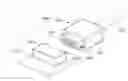
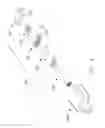
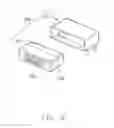
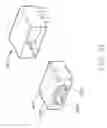
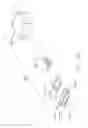
FIG. 1 is a perspective, assembled view of an electrical connector assembly when a first connector is not mated with a second connector in accordance with the first embodiment of the present invention;
FIG. 2 is a perspective, assembled view of the electrical connector assembly, taken from a different view shown in FIG. 1;
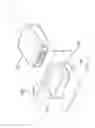
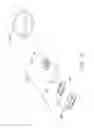
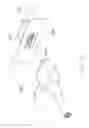
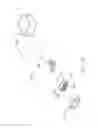
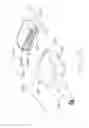
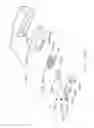
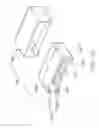
FIG. 3 is a perspective, exploded view of the first connector of the electrical connector assembly shown in FIG. 2;
FIG. 4 is a perspective, exploded view of the first connector taken from a different view shown in FIG. 3;
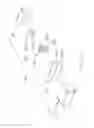
FIG. 5 is a perspective, partially assembled view of the first connector shown in FIG. 3;
FIG. 6 is a perspective, further assembled view of the first connector shown in FIG. 5;
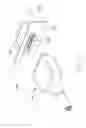
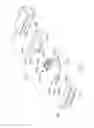
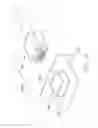
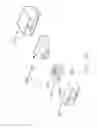
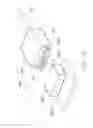
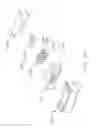
FIG. 7 is a perspective, exploded view of the second connector of the electrical connector assembly shown in FIG. 2;
FIG. 8 is a perspective, exploded view of the second connector of the electrical connector assembly taken from a different view shown in FIG. 7;
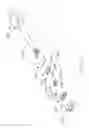
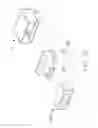
FIG. 9 is a perspective, partially assembled view of the second connector of the electrical connector assembly shown in FIG. 7;
FIG. 10 is a perspective, further assembled view of the second connector of the electrical connector assembly shown in FIG. 8;
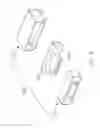
FIG. 11 is a perspective, assembled view of an electrical connector assembly when a first connector is not mated with a second connector in accordance with the second embodiment of the present invention;
FIG. 12 is a perspective, assembled view of the electrical connector assembly, taken from a different view shown in FIG. 11;
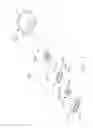
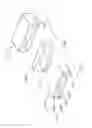
FIG. 13 is a perspective, exploded view of the first connector of the electrical connector assembly shown in FIG. 12;
FIG. 14 is a perspective, exploded view of the first connector taken from a different view shown in FIG. 13;
FIG. 15 is a perspective, partially assembled view of the first connector shown in FIG. 13;
FIG. 16 is a perspective, further assembled view of the first connector shown in FIG. 15;
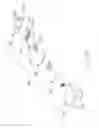
FIG. 17 is a perspective, exploded view of the second connector of the electrical connector assembly shown in FIG. 11;
FIG. 18 is a perspective, exploded view of the second connector of the electrical connector assembly taken from a different view shown in FIG. 17;
FIG. 19 is a perspective, partially assembled view of the second connector of the electrical connector assembly shown in FIG. 17; and
FIG. 20 is a perspective, further assembled view of the second connector of the electrical connector assembly shown in FIG. 19.
FIG. 21 is a perspective, further assembled view of the second connector of the electrical connector assembly shown in FIG. 20.
FIG. 22 is a perspective, assembled view of an electrical connector assembly when a first connector is not mated with a second connector in accordance with the third embodiment of the present invention;
FIG. 23 is a perspective, assembled view of the electrical connector assembly, taken from a different view shown in FIG. 22;
FIG. 24 is a perspective, exploded view of the first connector of the electrical connector assembly shown in FIG. 23;
FIG. 25 is a perspective, exploded view of the first connector taken from a different view shown in FIG. 24;
FIG. 26 is a perspective, partially assembled view of the first connector shown in FIG. 25;
FIG. 27 is a perspective, further assembled view of the first connector shown in FIG. 26;
FIG. 28 is a perspective, exploded view of the second connector of the electrical connector assembly shown in FIG. 22;
FIG. 29 is a perspective, exploded view of the second connector of the electrical connector assembly taken from a different view shown in FIG. 28;
FIG. 30 is a perspective, partially assembled view of the second connector of the electrical connector assembly shown in FIG. 28;
FIG. 31 is a perspective, further assembled view of the second connector of the electrical connector assembly shown in FIG. 30; and
FIG. 32 is a perspective, further assembled view of the second connector of the electrical connector assembly shown in FIG. 31.
DETAILED DESCRIPTION OF THE PREFERRED EMBODIMENT
Reference will now be made in detail to the preferred embodiment of the present invention.
Referring to FIGS. 1-10, an electrical connector assembly 1000 in accordance with the first embodiment of the present invention is disclosed. Referring to FIGS. 1 to 2, an electrical connector assembly 1000 of the present embodiment comprises a first connector 100, a second connector 200, a printed circuit board 230 and a panel 220 located at a front end of the second connector 200 for protecting the second connector 200. The panel 220 defines a port 2201.
Referring to FIGS. 3 to 6, the first connector 100 comprises a plurality of first contacts 113 arranged along the transverse direction, a first spacer/housing 114 accommodating the first contacts 113, a first magnetic element 112 assembled to the first spacer 114, a printed circuit board 115 connecting with the first contacts 113 electrically, a cable 130 connecting with the printed circuit board 115 and a cover 120 assembled to a rear end of the first magnetic element 112 and a front end of the cable 130. The first magnetic element 112 defines a cavity 1121, and the first contacts 113 and the first spacer 114 are accommodated in the cavity 1121.
The first contacts 113 are retractable, and comprise a first signal contact 113b, a pair of first power contacts 113a located at two sides of the first signal contact 113b, and a pair of first grounding contacts 113c located at two sides of the pair of first power contacts 113a.
The first spacer 114 is made of plastic material, and comprises a main portion 1141 and a rear portion 1142 extending rearwardly from the main portion 1141. The rear portion 1142 is wider than the main portion 1141. The first spacer 114 defines a plurality of grooves 1140 extending through the main portion 1141 and the rear portion 1142 and receiving the first contacts 113. A front surface of the first contact 113 reach out of the grooves 1140.
The first magnetic element 112 surrounds the main portion 1141 and defines a receiving chamber 1121 extending through a front surface and a rear surface thereof.
In assembly, the first contact 113 is assembled to the first spacer 114 with the front surface of the contact 113 exceeding a front end of the first spacer 114. The first magnetic element 112 is assembled to the main portion 1141 of the first spacer 114 with the front surface of the contact 113 not exceeding a front end of the first magnetic element 112. The first contact 113 and the cable 130 are assembled to the printed circuit board 115 electrically. The cover 120 is assembled to the rear end of the first magnetic element 112 and the front end of the cable 130.
Referring to FIGS. 7 to 10, the second connector 200 comprises a plurality of second contacts 213, a second spacer 214 receiving the second contacts 213, a second magnetic element 212 assembled to the second spacer 214, a second metal shell 211 assembled to the second magnetic element 212. The second magnetic element 212 can attract the first magnetic element 112. The second contacts 213 are accommodated to the second magnetic element 212. A front surface of the second contact 213 exceed a front surface of the second magnetic element 212.
The second contacts 213 are unretractable, and comprise a second signal contact 213b, a pair of second power contacts 213a located at two sides of the second signal contact 213b, and a pair of second grounding contacts 213c located at two sides of the pair of second power contacts 213a. Each second contact 213 comprises a front contact 2131 and a rear contact 2132. The front contact 2131 and the rear contact 2132 are unretractable. The rear contact 2132 comprises a holding portion 2135, a mating portion 2134 bent forwardly from the holding portion 2135 and mating with the first connector 100, and a connecting portion 2136 bent rearwardly from the holding portion 2135 and connected with the printed circuit board 230 electrically. The mating portion 2134 and the connecting portion 2136 are perpendicular to the holding portion 2135 respectively. A rear surface of the front contact 2131 resist against a front surface of the rear contact 2132.
The second spacer 214 is made of plastic material, and comprises a main portion 2141 and a rear portion 2142 extending rearwardly from the main portion 2141. The rear portion 2142 is wider than the main portion 2141. The second spacer 214 defines a plurality of grooves 2140 extending through the main portion 2141 and the rear portion 2142 and receiving the second contacts 213. The front contact 2131 reach out the grooves 2140. The second magnetic element 212 surrounds the main portion 2141 and defines a receiving chamber 2124 extending through a front surface and a rear surface thereof The second metal shell 211 surrounds the second magnetic element 212 and defines a receiving space 2112 receiving the second magnetic element 212 and the second spacer 214.
In assembly, the second contact 213 is assembled to the second spacer 214. The second magnetic element 212 is assembled to the main portion 2141 of the second spacer 214. The front surface of the second contacts 213 exceeds a front surface of the second spacer 214 and the second magnetic element 212. At last, the second metal shell 211 is assembled to the second magnetic element 212 and the second spacer 214. The front surface of the second contacts 213 does not exceed a front surface of the panel 220 for protecting the second contacts 213.
The panel 220 defines an asymmetric port in the up-to-down direction thereof The first connector 100 comprises a mating section. The periphery of the mating section corresponds to the port 2201 of the panel 220, so that the mating section can enter into the port 2201 along a single direction. In the embodiment, the periphery of the mating section is the periphery of the first magnetic element 112. In another embodiment, the panel defines an asymmetric port in the left-to-right direction thereof, and the periphery of the mating section corresponds to the port 2201 of the panel 220, so that the mating section can enter into the port 2201 along a single direction.
When the first connector 100 enters into the second connector 200 in a right way, the first magnetic element 112 of the first connector 100 can enter into the second connector 200 along the port 2201 of the panel 220 and mates with the second connector 200. When the first connector 100 enters into the second connector 200 in a wrong way, the first magnetic element 112 of the first connector 100 can not enter into the port 2201 and then can not mate with the second connector 200.
The first magnetic element 112 includes a “N” pole and a “S” pole located at two ends thereof along a mating direction of the first magnetic element 112 and the second magnetic element 212. The second magnetic element 212 includes a “S” pole and a “N” pole located at two sides thereof along the corresponding direction. When the first connector 100 mates with the second connector 200, the “S” pole of the first magnetic element 112 attracts at the “N” pole of the second magnetic element 212. The poles of the corresponding ends of the first magnetic element 112 and the second magnetic element 212 are opposite and attract each other, so that the first connector 100 succeeds in mating with the second connector 200.
Referring to FIGS. 11-21, an electrical connector assembly 1000′ in accordance with the second embodiment of the present invention is disclosed. Referring to FIGS. 11 to 12, an electrical connector assembly 1000′ of the present embodiment comprises a first connector 100′, a second connector 200′ and a printed circuit board 230′.
Referring to FIGS. 13 to 16, the first connector 100′ comprises a plurality of first contacts 113′ arranged along the transverse direction, a first spacer 114′ accommodating the first contacts 113′, a first magnetic element 112′ assembled to the first spacer 114′, a first metal shell 110′ assembled to the first magnetic element 112′, a printed circuit board 115′ connecting with the first contacts 113′ electrically, a cable 130′ connecting with the printed circuit board 115′ and a cover 120′ assembled to a rear end of the first metal shell 110′ and a front end of the cable 130′. The first magnetic element 112′ defines a cavity 1121′, and the first contacts 113′ and the first spacer 114′ are accommodated in the cavity 1121′.
The first contacts 113′ are unretractable, and comprise a first power contact 113a′, a first grounding contact 113c′ and a first signal contact 113b′ located between the first power contact 113a′ and the first grounding contact 113c′. Each first contact 113′ comprises a mating portion 1131′ mating with the second connector 200′ electrically, a holding portion 1132′ extending rearwardly from the mating portion 1131′ and fixing the first contact 113′, and a connecting portion 1133′ extending rearwardly from the holding portion 1132′ and connected with the printed circuit board 115′. The holding portion 1132′ is thicker than the mating portion 1131′ and the connecting portion 1133′.
The first spacer 114′ is made of plastic material, and comprises a main portion 1141′ and a rear portion 1142′ extending rearwardly from the main portion 1141′. The rear portion 1142′ is wider than the main portion 1141′. The first spacer 114′ defines a plurality of grooves 1140′ extending through the main portion 1141′ and the rear portion 1142′ and receiving the first contacts 113′. The mating portions 1131′ of the first contacts 113′ do not exceed the grooves 1140′.
The first magnetic element 112′ surrounds the main portion 1141′ and defines a receiving chamber 1121′ extending through a front surface and a rear surface thereof The first metal shell 110′ surrounds the first magnetic element 112′ and defines a receiving space 1101′ receiving the first magnetic element 112′ and the first spacer 114′. The port 2201′ is an asymmetric port in an up-to-down direction of the panel 220′. The periphery of the first metal shell 110′ corresponds to the port 2201′ of the panel 220′, so that the first metal shell 110′ can enter into the port 2201′ of the panel 220′ along a single direction. In present embodiment, the periphery of the first metal shell 110′ and the port 2201′ are trapezidal respectively. In another embodiment, the port 2201′ is an asymmetric port in a left-to-down direction of the panel 220′. The periphery of the first metal shell 110′ is asymmetric in the left-to-down direction corresponding to the port 2201′, so that the first metal shell 110′ can enter into the port 2201′ of the panel 220′ along a single direction.
In assembly, the first contact 113′ is assembled to the first spacer 114′. The first magnetic element 112′ is assembled to the main portion 1141′ of the first spacer 114′. The front surface of the first contacts 113′ does not exceed a front surface of the first spacer 114′ and the first magnetic element 112′. The front surface of the first spacer 114′ does not exceed the front surface of the first magnetic element 112′. The first contact 113′ and the cable 130′ are assembled to the printed circuit board 115′ electrically. The first metal shell 110′ is assembled to the first magnetic element 112′ and the first spacer 114′. The front surface of the first magnetic element 112′ does not exceed a front surface of the first metal shell 110′. The cover 120′ is assembled to the rear end of the first metal shell 110′ and the front end of the cable 130′.
Referring to FIGS. 17 to 21, the second connector 200′ comprises a plurality of second contacts 213′, a second spacer 214′ receiving the second contacts 213′, a second magnetic element 212′ assembled to the second spacer 214′, a second metal shell 211′ assembled to the second magnetic element 212′. The second magnetic element 212′ can attract the first magnetic element 112′. The second contacts 213′ are accommodated to the second magnetic element 212′.
The second contacts 213′ comprise a second power contact 213a′, a second grounding contact 213c′ and a second signal contact 213b′ located between the second power contact 213a′ and the second grounding contact 213c′. Each second contact 213′ comprises a front contact 2131′ and a rear contact 2132′. The front contact 2131′ is an retractable and cylindrical contact. The rear contact 2132′ is an unretractable contact, and comprises a holding portion 2135′, a mating portion 2134′ bent forwardly from the holding portion 2135′ and mating with the first connector 100′, and a connecting portion 2136′ bent rearwardly from the holding portion 2135′ and connected with the printed circuit board 230′ electrically. The mating portion 2134′ and the connecting portion 2136′ are perpendicular to the holding portion 2135′ respectively. A rear surface of the front contact 2131′ resist against a front surface of the rear contact 2132′.
The second spacer 214′ is made of plastic material, and comprises a main portion 2141′ and a rear portion 2142′ extending rearwardly from the main portion 2141. The rear portion 2142′ is wider than the main portion 2141′. The second spacer 214′ defines a plurality of grooves 2140′ extending through the main portion 2141′ and the rear portion 2142′ and receiving the second contacts 213′. The front contact 2131′ reach out the grooves 2140′. The second magnetic element 212′ surrounds the main portion 2141′ and defines a receiving chamber 2124′ extending through a front surface and a rear surface thereof The second metal shell 211′ surrounds the second magnetic element 212′ and defines a receiving space 2112′ receiving the second magnetic element 212′ and the second spacer 214′.
In assembly, the second contact 213′ is assembled to the second spacer 214′. The second magnetic element 212′ is assembled to the main portion 2141′ of the second spacer 214′. A front surface of the second contact 213′ exceeds a front surface of the second spacer 214′ and the second magnetic element 212′. At last, the second metal shell 211′ is assembled to the second magnetic element 212′ and the second spacer 214′. The front surface of the second contacts 213′ does not exceed a front surface of the panel 220′ for protecting the second contacts 213′.
The panel 220′ defines an asymmetric port in the up-to-down direction thereof The first connector 100′ comprises a mating section. The periphery of the mating section corresponds to the port 2201′ of the panel 220′, so that the mating section can enter into the port 2201′ along a single direction. In the embodiment, the periphery of the mating section is the periphery of the first metal shell 110′. In another embodiment, the panel defines an asymmetric port in the left-to-right direction thereof, and the periphery of the mating section corresponds to the port 2201′ of the panel 220′, so that the mating section can enter into the port 2201′ along a single direction.
When the first connector 100′ enters into the second connector 200′ in a right way, the first metal shell 110′ of the first connector 100′ can enter into the second connector 200′ along the port 2201′ of the panel 220′ and mates with the second connector 200′. When the first connector 100′ enters into the second connector 200′ in a wrong way, the first metal shell 110′ of the first connector 100′ can not enter into the port 2201′ and then can not mate with the second connector 200′.
Referring to FIGS. 22-32, an electrical connector assembly 1000″ in accordance with the third embodiment of the present invention is disclosed. Referring to FIGS. 22 to 23, an electrical connector assembly 1000″ of the present embodiment comprises a first connector 100″, a second connector 200″ and a printed circuit board 230″.
Referring to FIGS. 24 to 27, the first connector 100″ comprises a plurality of first contacts 113″ arranged along the transverse direction, a first spacer 114″ accommodating the first contacts 113″, a first magnetic element 112″ assembled to the first spacer 114″, a printed circuit board 115″ connecting with the first contacts 113″ electrically, a cable 130″ connecting with the printed circuit board 115″ and a cover 120″ assembled to a rear end of the first magnetic element 112″ and a front end of the cable 130″. The first magnetic element 112″ defines a cavity 1121″, and the first contacts 113″ and the first spacer 114″ are accommodated in the cavity 1121″.
The first contacts 113″ are unretractable, and comprise a first signal contact 113b″, a pair of first power contacts 113a″ located on two sides of the first signal contact 113b″ and a pair of first grounding contacts 113c″ located on two sides of the first power contacts 113a″. Each first contact 113″ comprises a mating portion 1131″ mating with the second connector 200″ electrically, a holding portion 1132″ extending rearwardly from the mating portion 1131′ and fixing the first contact 113″, and a connecting portion 1133″ extending rearwardly from the holding portion 1132″ and connected with the printed circuit board 115″. The holding portion 1132″ is thicker than the mating portion 1131″ and the connecting portion 1133″.
The first spacer 114″ is made of plastic material, and comprises a main portion 1141″ and a rear portion 1142″ extending rearwardly from the main portion 1141″. The rear portion 1142″ is wider than the main portion 1141″. The first spacer 114″ defines a plurality of grooves 1140″ extending through the main portion 1141″ and the rear portion 1142″ and receiving the first contacts 113″. The mating portions 1131″ of the first contacts 113″ do not exceed the grooves 1140″.
The first magnetic element 112″ surrounds the main portion 1141″, and comprises a base section 1123″, a mating section 1122″ extending forwardly from the base section 1123″ and mating with the second connector 200″ and a receiving chamber 1121″ extending through the base section 1123″ and the mating section 1122″. The base section 1123″ is thicker than the mating section 1122″. The periphery of the mating section 1122″ is unsymmetrical in a left-to-right direction. In the embodiment, the mating section 1122″ has two different side surfaces in the left-to-right direction. In another embodiment, the periphery of the mating section 1122″ can be unsymmetrical in an up-to-down direction.
In assembly, the first contact 113″ is assembled to the first spacer 114″ with the mating portions 1131″ of the first contacts 113″ not exceeding a front end of the first spacer 114″. The first magnetic element 112″ is assembled to the main portion 1141″ of the first spacer 114″. The first contact 113″ and the cable 130″ are assembled to the printed circuit board 115″ electrically. The cover 120″ is assembled to the rear end of the first magnetic element 112″ and the front end of the cable 130″.
Referring to FIGS. 28 to 32, the second connector 200″ comprises a plurality of second contacts 213″, a second spacer 214″ receiving the second contacts 213″, a second magnetic element 212″ assembled to the second spacer 214″, a second metal shell 211″ assembled to the second magnetic element 212″. The second magnetic element 212″ can attract the first magnetic element 112″. The second contacts 213″ are accommodated to the second magnetic element 212″.
The second contacts 213″ comprise a second signal contact 213b″, a pair of second power contacts 213a″ located at two sides of the second signal contact 213b″ and a pair of second grounding contacts 213c″ located at two sides of the two second power contacts 213a″. Each second contact 213″ comprises a front contact 2131″ and a rear contact 2132″. The front contact 2131″ is a retractable and cylindrical contact. The rear contact 2132″ is an unretractable contact, and comprises a holding portion 2135″, a mating portion 2134″ bent forwardly from the holding portion 2135″ and mating with the first connector 100″, and a connecting portion 2136″ bent rearwardly from the holding portion 2135″ and connected with the printed circuit board 230″ electrically. The mating portion 2134″ and the connecting portion 2136″ are perpendicular to the holding portion 2135″ respectively. A rear surface of the front contact 2131″ resist against a front surface of the rear contact 2132″.
The second spacer 214″ is made of plastic material, and comprises a main portion 2141″ and a rear portion 2142″ extending rearwardly from the main portion 2141″. The rear portion 2142″ is wider than the main portion 2141″. The second spacer 214″ defines a plurality of grooves 2140″ extending through the main portion 2141″ and the rear portion 2142″ and receiving the second contacts 213″. The second magnetic element 212″ surrounds the main portion 2141″ and defines an anti-mismating hole or receiving cavity 2121″ receiving the mating section 1122″ of the first connector 100″ and a receiving chamber 2124″ extending through a front surface and a rear surface thereof The anti-mismating hole 2121″ is unsymmetrical in a left-to-right direction corresponding to the periphery of the mating section 1122″, so that the mating section 1122″ can enter into the anti-mismating hole 2121″ along a signal direction. In the embodiment, the second connector comprises a plurality of first projecting members 2123″ and a plurality of second projecting members 2127″ extending outwardly from left and right sides of a front surface thereof respectively. The structure of the first projecting members 2123″ are different from the structure of the second projecting member 2127″. The second projecting member 2127″ is a monolithic structure, and the first projecting members 2123″ comprises an up projecting member 2126″ and a down projecting member 2125″ apart from the up projecting member 2126″. The anti-mismating hole 2121″ is surrounded by the first projecting members 2123′ and the second projecting members 2127″. The second metal shell 211″ surrounds the second magnetic element 212″ and defines a receiving space 2112″ receiving the second magnetic element 212″ and the second spacer 214″. In another embodiment, the anti-mismating hole 2121″ is unsymmetrical in an up-to-down direction corresponding to the periphery of the mating section 1122″.
In assembly, the second contact 213″ is assembled to the second spacer 214″ with a front end of the second contact 213″ exceeding a front end of the second spacer 214″. The second magnetic element 212″ is assembled to the main portion 2141″ of the second spacer 214″. At last, the second metal shell 211″ is assembled to the second magnetic element 212″ and the second spacer 214″.
In the third embodiment of the invention, the periphery of the mating section 1122″ is unsymmetrical in an up-to-down direction or a left-left direction corresponding to the anti-mismating hole 2121″, so that the mating section 1122″ can enter into the anti-mismating hole 2121″ along a single direction. When the first connector 100″ enters into the second connector 200″ in a right way, the mating section 1122″ of the first connector 100″ corresponds to the anti-mismating hole 2121″ and mates with the second connector 200″. When the first connector 100″ enters into the second connector 200″ in a wrong way, the mating section 1122″ of the first connector 100″ can not enter into anti-mismating hole 2121″ and then can not mate with the second connector 200″.
In the first, second and third embodiments of the invention, the panel (220, 220′) and a whole structure comprising the anti-mismating hole 2121″ and the projecting members (2123″, 2127″) are collectively called an anti-mismating structure. The port (2201, 2201′) is also called an anti-mismating hole. A structure surrounding the port (2201, 2201′) and the projecting members (2123″, 2137″) surrounding the anti-mismating hole 2121″ are collectively called anti-mismating elements.
Claims
What is claimed is:1. An electrical connector assembly comprising:
a first connector comprising a mating section, a first magnetic element having a cavity, and a plurality of first contacts accommodated in the mating section and the cavity;
a second connector for mating with the mating section, the second connector comprising a second magnetic element and a plurality of second contacts accommodated in the second magnetic element; and
an anti-mismating structure located at a front end of the second connector, the structure comprising a plurality of anti-mismating elements and an anti-mismating hole surrounded by the anti-mismating elements, the anti-mismating hole for receiving the mating section;
wherein the anti-mismating hole is asymmetric in one of an up-to-down direction and a left-to-right direction, and the periphery of the mating section corresponds to the anti-mismating hole.
2. The electrical connector assembly as claimed in claim 1, wherein the anti-mismating structure comprises a panel having a port and located at a front end of the second connector, the anti-mismating hole is defined in the port, and the periphery of the mating section corresponds to the port for entering into the port along a single direction.
3. The electrical connector assembly as claimed in claim 1, wherein the anti-mismating elements comprise a plurality of projecting members projecting from a front surface of the second magnetic element, and the anti-mismating hole is surrounded by the projecting members.
4. The electrical connector assembly as claimed in claim 3, wherein the projecting members comprise a plurality of first projecting members and a plurality of second projecting members projecting from left and right sides of a front surface of the second magnetic element respectively.
5. The electrical connector assembly as claimed in claim 1, wherein each of the first contacts has a front surface rearwardly of a front surface of the first magnetic element, and each of the second contacts has a front surface forwardly of a front surface of the second magnetic element.
6. The electrical connector assembly as claimed in claim 5, wherein the first connector and the second connector comprise a first spacer and a second spacer receiving the first contacts and the second contacts, respectively.
7. The electrical connector assembly as claimed in claim 6, wherein the first contacts are retractable, the second contacts are unretractable, and the front surface of the first contact is located forwardly of a front surface of the first spacer.
8. The electrical connector assembly as claimed in claim 6, wherein the first contacts are unretractable, the second contacts are retractable, and the front surface of the first contact is located rearwardly a front surface of the first spacer.
9. The electrical connector assembly as claimed in claim 1, wherein the mating section is defined into the first magnetic element, and the periphery of the first magnetic element is asymmetric in one of an up-to-down direction and a left-to-right direction and corresponds to the anti-mismating structure for entering into the second connector along a single direction.
10. The electrical connector assembly as claimed in claim 1, wherein the first connector and the second connector comprise a first metal shell and a second metal shell assembled to first magnetic element and the second magnetic element, respectively, and the mating section is defined into the first metal shell.
11. The electrical connector assembly as claimed in claim 1, wherein the first contacts and the second contacts comprise a power contact, a grounding contact, and a signal contact located between the power contact and the grounding contact respectively, each second contact comprises a front contact and a rear contact, and a rear surface of the front contact resists against a front surface of the rear contact.
12. The electrical connector assembly as claimed in claim 1, wherein the first connector comprises a printed circuit board connecting with the first contacts, a cable connecting with the printed circuit board, and a cover assembled to a rear end of the first magnetic element and a front end of the cable.
13. An electrical connector assembly comprising:
a first connector comprising a plurality of first contacts arranged along a transverse direction, a first magnetic element receiving the first contacts, and a mating section receiving the first contacts; and
a second connector comprising a plurality of second contacts arranged along the transverse direction, a second magnetic element for attracting the first magnetic element, a plurality of anti-mismating elements formed at a front end of the second connector for guiding the mating section;
wherein the periphery of the mating section is asymmetric in one of an up-to-down direction and a left-to-right direction, and the anti-mismating elements corresponds to the periphery of the mating section.
14. The electrical connector assembly as claimed in claim 13, wherein the anti-mismating elements project from a front surface of the second magnetic element.
15. An electrical connector assembly comprising:
an insulative housing defining an outer contour which is essentially symmetrically arranged in both a longitudinal direction and a vertical direction perpendicular to each other;
a plurality of contacts disposed in the housing with corresponding contacting sections extending forwardly out of a front face of the housing and retractable along a front-to-back direction perpendicular to both said longitudinal direction and said vertical direction, said contacting sections being symmetrically arranged along said longitudinal direction;
a magnetic element enclosing said housing with a front receiving cavity into which the retractable contacting sections extend forwardly; and
a panel located in front of the magnetic element with a through opening aligned with the receiving cavity in said front-to-back direction; wherein
either the through opening or the receiving cavity is asymmetrically arranged in one of the longitudinal direction and the longitudinal direction for assuring only one orientation is allowed for insertion of a corresponding plug connector during mating wherein said plug connector extending through the through opening and occupies the receiving cavity.
16. The electrical connector assembly as claimed in claim 15, wherein different protrusions are formed on the magnetic element to define the receiving cavity to perform said one orientation for anti-mismating.
17. The electrical connector assembly as claimed in claim 15, wherein the through opening forms an asymmetrical arrangement in the vertical direction to perform said one orientation for anti-mismating.
Images & Drawings included:








Sources:
- United States Patent and Trademark Office - verify current appl. status at the USPTO↗
Recent applications in this class:
- » 20250149830 2025-05-08
COAXIAL CABLE CONNECTOR INTERFACE FOR PREVENTING MATING WITH INCORRECT CONNECTOR - » 20250112406 2025-04-03
Contact of a Connector - » 20250087942 2025-03-13
CONNECTING ASSEMBLY AND ELECTRONIC APPARATUS THEREWITH - » 20240388039 2024-11-21
ELECTRICAL CONNECTOR WITH FOOL-PROOF FUNCTION AND IMPROVED STRUCTURAL STABILITY - » 20240347974 2024-10-17
Connector Locking Device - » 20240322493 2024-09-26
FITTING STRUCTURE - » 20240266783 2024-08-08
CONNECTION STRUCTURE OF WIRING MATERIALS - » 20240213719 2024-06-27
Hands-Free Connectors - » 20240063578 2024-02-22
NON-DIRECTIONAL DOCKING ELECTRICAL CONNECTOR AND BASE THEREOF - » 20230420887 2023-12-28
PLUG TAB AND CONTACTOR
Recent applications for this Assignee:
- » 20240199157 2024-06-20
METHOD OF CONTROLLING STATE OF ELECTRIC ASSIST BICYCLE, CONTROL SYSTEM, AND ELECTRONIC DEVICE - » 20240177887 2024-05-30
CORE WIRE AND METHOD OF MAKING SAME AND CABLE INCLUDING THE CORE WIRE - » 20240072477 2024-02-29
ELECTRICAL CONNECTOR WITH IMPROVED CONTACTS - » 20240055792 2024-02-15
Electrical connector having an angled part and a U-shaped plate together defining a tubular structure - » 20230352880 2023-11-02
ELECTRICAL CONNECTOR WITH IMPROVED INSERTING MEMBER - » 20230335934 2023-10-19
ELECTRICAL CONNECTOR - » 20230307870 2023-09-28
Electrical connector assembly having improved locking elements - » 20230283018 2023-09-07
ELECTRICAL CONNECTOR ASSEMBLY WITH IMPROVED TERMINALS - » 20230268679 2023-08-24
Electrical connector assembly - » 20230238732 2023-07-27
ELECTRICAL CONNECTOR ASSEMBLY HAVING A METAL PLATE FOR MOUNTING A CONNECTOR TO A HOUSING