Sliding block puzzle game with laser beam
US20150367229A1
2015-12-24
14/745,691
2015-06-22
Abstract:
A square game box with an open top and mirrored interior walls, a laser, a beam entry point, and a beam exit point comprises a sliding block puzzle game with a laser beam. The entry and exit points, and the angle of incidence of the laser beam are optionally configurable to adjust the challenge level and refresh the game. The apparatus further comprises a plurality of transparent and translucent refracting blocks of various shapes and sizes. Players may slide the blocks laterally, but may not rotate them or lift them vertically. The goal of the game is to direct the beam out of the exit point, using the reflecting and refracting properties of the blocks and the reflecting property of the interior walls, while avoiding the possibility of total internal reflection.
Interested in similar patents?
Get notified when new applications in this technology area are published.
Classification:
A63F3/00643 » CPC main
Board games; Raffle games Electric board games; Electric features of board games
A63F3/0457 » CPC further
Board games; Raffle games; Geographical or like games ; Educational games concerning science or technology, e.g. geology, chemistry, statistics, computer flow charts, radio, telephone
A63F9/0807 » CPC further
Games not otherwise provided for; Patience; Other games for self-amusement; Puzzles provided with elements movable in relation, i.e. movably connected , to each other; Two-dimensional puzzles with slideable or rotatable elements or groups of elements, the main configuration remaining unchanged requiring vacant positions or gap migration, e.g. two-dimensional sliding puzzles
A63F11/0074 » CPC further
Game accessories of general use, e.g. score counters, boxes Game concepts, rules or strategies
A63F9/0613 » CPC further
Games not otherwise provided for; Patience; Other games for self-amusement Puzzles or games based on the use of optical filters or elements, e.g. coloured filters, polaroid filters, transparent sheets with opaque parts
A63F2003/0471 » CPC further
Board games; Raffle games; Geographical or like games ; Educational games concerning science or technology, e.g. geology, chemistry, statistics, computer flow charts, radio, telephone Physics
A63F2009/0884 » CPC further
Games not otherwise provided for; Patience; Other games for self-amusement; Puzzles provided with elements movable in relation, i.e. movably connected , to each other with means for immobilising or stabilising a configuration, e.g. the solution
A63F2011/0076 » CPC further
Game accessories of general use, e.g. score counters, boxes; Game concepts, rules or strategies with means for changing the level of difficulty
A63F2009/0623 » CPC further
Games not otherwise provided for; Patience; Other games for self-amusement; Puzzles or games based on the use of optical filters or elements, e.g. coloured filters, polaroid filters, transparent sheets with opaque parts with mirrors
A63F2003/00646 » CPC further
Board games; Raffle games; Electric board games; Electric features of board games with illumination of playing field or playing piece
A63F3/00 IPC
Board games; Raffle games
A63F9/06 IPC
Games not otherwise provided for Patience; Other games for self-amusement
A63F11/00 IPC
Game accessories of general use, e.g. score counters, boxes
A63F3/04 IPC
Board games; Raffle games Geographical or like games ; Educational games
A63F9/08 IPC
Games not otherwise provided for; Patience; Other games for self-amusement Puzzles provided with elements movable in relation, i.e. movably connected , to each other
Description
CROSS-REFERENCE TO RELATED APPLICATIONS
This Application claims the benefit of U.S. Provisional Application No. 62/015,487, filed Jun. 22, 2014, which is hereby incorporated by reference.
STATEMENT REGARDING FEDERALLY SPONSORED RESEARCH OR DEVELOPMENT
Not Applicable
PARTIES TO A JOINT RESEARCH AGREEMENT
Not Applicable
REFERENCE TO SEQUENCE LISTING, A TABLE, OR A COMPUTER PROGRAM LISTING COMPACT DISK APPENDIX
Not Applicable
BACKGROUND OF THE INVENTION
The invention relates generally to teaching toys and games, and in particular to a sliding block puzzle game with a laser beam. Klotski™ is a family of sliding block puzzle games wherein the aim is to move a specific block to some predefined location. The blocks are provided in an open-topped box, and the players may only slide the blocks in two dimensions; lifting blocks vertically is not permitted. The games teach spatial relationships. However, players can be elevated to a higher level by introducing a light beam, and challenging the players to make the light beam escape the box. The science of optics, including reflection and refraction of light, would govern such a teaching game and physics instructors would welcome the development of such a game. A sliding block puzzle game with a laser beam, using transparent blocks and reflective surfaces to redirect the laser beam to an exit point, would satisfy this demand.
SUMMARY OF THE INVENTION
Accordingly, the invention is directed to a sliding block puzzle game with a laser beam. The game apparatus comprises a square game box with an open top and mirrored interior walls, a laser, a beam entry point, and a beam exit point. The entry and exit points, and the angle of incidence of the laser beam are optionally configurable to adjust the challenge level and refresh the game. The apparatus further comprises a plurality of transparent and translucent refracting blocks of various shapes and sizes. Players may slide the blocks laterally, but may not rotate them or lift them vertically. The goal of the game is to direct the beam out of the exit point, using the reflecting and refracting properties of the blocks and the reflecting property of the interior walls, while avoiding the possibility of total internal reflection.
Additional features and advantages of the invention will be set forth in the description which follows, and will be apparent from the description, or may be learned by practice of the invention. The foregoing general description and the following detailed description are exemplary and explanatory and are intended to provide further explanation of the invention.
BRIEF DESCRIPTION OF THE DRAWINGS
The accompanying drawings are included to provide a further understanding of the invention and are incorporated into and constitute a part of the specification. They illustrate one embodiment of the invention and, together with the description, serve to explain the principles of the invention.
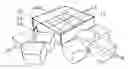
FIG. 1 is a top perspective view of the first exemplary embodiment, displaying the game box 10, the grid 10A, the interior walls 11, the entry point 12, the exit point 13, the laser 14, the translucent blocks 15, and the transparent blocks 16.
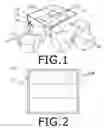
FIG. 2 is a top view of the game box component of the first exemplary embodiment, displaying the game box 10, the grid 10A, and the laser 14.
DETAILED DESCRIPTION OF THE INVENTION
Referring now to the invention in more detail, the invention is directed to a sliding block puzzle game with a laser beam. The game apparatus comprises a square game box 10 with an open top and mirrored interior walls 11, a laser 14, a beam entry point 12, and a beam exit point 13. The entry point 12, the exit point 13, and the angle of incidence of the laser beam are optionally configurable to adjust the challenge level and refresh the game. The apparatus further comprises a plurality of transparent and translucent refracting blocks of various shapes and sizes. Players may slide the blocks laterally, but may not rotate them or lift them vertically. The goal of the game is to direct the beam out of the exit point, using the reflecting and refracting properties of the blocks and the reflecting property of the interior walls, while avoiding the possibility of total internal reflection, which comprises a beam-loss condition.
The first exemplary embodiment provides a game box 10, with an open top. Preferably, the interior dimensions of the game box 10 are 3 inches long, 3 inches wide, and 1 inch tall. A grid 10A of 1-inch squares is provided on the interior surface of the bottom of the game box 10. Alternate embodiments, providing game boxes 10 with different interior dimensions, are contemplated.
The first exemplary embodiment further provides three translucent blocks 15 and four transparent blocks 16. Preferably, all of the blocks are 1 inch long and 1 inch wide, the transparent blocks 16 are 1 inch tall, and the translucent blocks 15 are 0.5 inch tall. Alternate embodiments, providing different quantities and different sizes of translucent blocks 15 and four transparent blocks 16, are also contemplated. Some of the transparent blocks 16 provide one or more reflective side surfaces.
To use the first exemplary embodiment, the user slides the transparent blocks 16 and the translucent blocks 15 to direct the laser beam out of the game box 10 through the exit point 13. The player uses the interior walls 11 and the reflective sides of the transparent blocks 16 to reflect the laser beam as necessary. Blocks may not be rotated and each block must occupy a square on the grid 10A. The user may also change the angle of incidence using refraction through the transparent blocks 16. Each time the player slides a block from one square to another, it counts as a turn. Directing the laser beam through the exit point 13 in fewer turns provides a greater number of points. The laser beam should be directed through the exit point 13 in a minimum number of steps for maximum points.
The game box 10 is preferably manufactured from a rigid, durable material such as wood, plastic, or fiberglass. The interior walls 11, and the reflective surfaces of the transparent blocks 16, are preferably manufactured from a rigid, durable material which is reflective. The laser 14 is preferably manufactured from rigid, durable materials such as steel, aluminum alloy, plastic, and brass. The translucent blocks 15 and the transparent blocks 16 are preferably manufactured from a rigid, durable material which is transparent, such as acrylic polymer. Components, component sizes, and materials listed above are preferable, but artisans will recognize that alternate components and materials could be selected without altering the scope of the invention.
While the foregoing written description of the invention enables one of ordinary skill to make and use what is presently considered to be the best mode thereof, those of ordinary skill in the art will understand and appreciate the existence of variations, combinations, and equivalents of the specific embodiment, method, and examples herein. The invention should, therefore, not be limited by the above described embodiment, method, and examples, but by all embodiments and methods within the scope and spirit of the invention.
Claims
I claim:1. An apparatus for playing a sliding block puzzle game comprising:
(a) a square game box;
(b) said square game box having an open top and reflective interior walls;
(c) a laser;
(d) said square game box further comprising a beam entry point;
(e) said beam entry point being a hole in said reflective interior walls;
(f) said square game box further comprising a beam exit point;
(g) said beam exit point being a hole in said reflective interior walls;
(h) a plurality of transparent refracting blocks; and
(i) a plurality of translucent refracting blocks.
2. The apparatus for playing a sliding block puzzle game of claim 1 wherein said square game box has dimensions of three inches by three inches.
3. The apparatus for playing a sliding block puzzle game of claim 2 further comprising a grid; said grid being located on the bottom of said square game box.
4. The apparatus for playing a sliding block puzzle game of claim 1 further comprising a grid; said grid being located on the bottom of said square game box.
5. The apparatus for playing a sliding block puzzle game of claim 1 wherein said plurality of transparent refracting blocks is three in number; said transparent refracting blocks having dimensions of one inch by one inch by one inch.
6. The apparatus for playing a sliding block puzzle game of claim 1 wherein said plurality of translucent refracting blocks is four in number; said translucent refracting blocks having dimensions of one inch by one inch by one half inch.
7. The apparatus for playing a sliding block puzzle game of claim 1 wherein a plurality of said plurality of translucent refracting blocks have one or more reflective side surfaces.
8. A method of playing a sliding block puzzle game comprising:
(a) a square game box;
(b) said square game box having an open top and reflective interior walls;
(c) a laser;
(d) said square game box further comprising a beam entry point;
(e) said beam entry point being a hole in said reflective interior walls;
(f) said square game box further comprising a beam exit point;
(g) said beam exit point being a hole in said reflective interior walls;
(h) a plurality of transparent refracting blocks; and
(i) a plurality of translucent refracting blocks;
and a method comprising:
(j) a player placing said transparent refracting blocks and said translucent refracting blocks in said square game box;
(k) said player turning on said laser
(l) said laser projecting a laser beam through said beam entry point into said square game box;
(m) said player sliding said plurality of transparent refracting blocks and said plurality of translucent refracting blocks to direct said laser out of said beam exit point;
(n) said player using said reflective interior walls, said translucent refracting blocks, and said transparent refracting blocks to reflect and redirect said laser beam;
(o) said player counting a turn for each moving of said transparent refracting blocks or said translucent refracting blocks;
(p) said player directing said laser beam through said beam exit point in the least number of turns winning said game.
9. The method of claim 8 wherein said square game box has dimensions of three inches by three inches.
10. The method of claim 9 further comprising a grid; said grid being located on the bottom of said square game box.
11. The method of claim 8 further comprising a grid; said grid being located on the bottom of said square game box.
12. The method of claim 8 wherein said plurality of transparent refracting blocks is three in number; said transparent refracting blocks having dimensions of one inch by one inch by one inch.
13. The method of claim 8 wherein said plurality of translucent refracting blocks is four in number; said translucent refracting blocks having dimensions of one inch by one inch by one half inch.
14. The method of claim 8 wherein a plurality of said plurality of translucent refracting blocks have one or more reflective side surfaces.
15. The method of claim 8 wherein said translucent refracting blocks and said transparent refracting blocks may only be slid and may not be rotated.
16. The method of claim 11 wherein said translucent refracting blocks and said transparent refracting blocks must occupy a square in said grid.
17. The apparatus for playing a sliding block puzzle game of claim 1 wherein said beam exit point further comprises a light detection device; said light detection device being configured to measure the amount of light present at said beam exit point; said light detection device being configured to make noise when said amount of light present exceeds a specified threshold.
18. The method of claim 8 wherein said beam exit point further comprises a light detection device; said light detection device being configured to measure the amount of light present at said beam exit point; said light detection device being configured to make noise when said amount of light present exceeds a specified threshold.
Images & Drawings included:
Sources:
- United States Patent and Trademark Office - verify current appl. status at the USPTO↗
Recent applications in this class:
- » 20250083029 2025-03-13
INTELLIGENT DEVELOPMENTAL TOY BASED ON MACHINE ADDRESSING - » 20250065216 2025-02-27
APPARATUS AND METHOD FOR IDENTIFYING IDENTITY AND POSITION OF CHESS-LIKE GAME PIECE BY MEANS OF WEIGHT - » 20250025769 2025-01-23
GAME BOARD AND METHODS OF PLAY - » 20250018277 2025-01-16
ELECTRONIC GAME - » 20240374986 2024-11-14
A GAMING HARDWARE DEVICE, A BOARD GAME KIT AND RELATED CONTROL METHOD - » 20240181334 2024-06-06
BOARD GAME SET - » 20240108970 2024-04-04
Chessboard and chess - » 20230415027 2023-12-28
DIGITAL THERAPEUTIC CUSTOMIZABLE GAME BOARD SYSTEM - » 20230381634 2023-11-30
APPARATUS FOR AN ELECTRONICALLY-ENABLED BOARD GAME - » 20230249054 2023-08-10
KLOTSKI CHESS