One-pot process for the production of biodiesel and glycerol ether mixtures useful as biofuels
US20160024408A1
2016-01-28
14/765,745
2014-02-04
✅ Patent granted
US 9,873,843 B2
2018-01-23
WO; PCT/IB2014/058783; 20140204
WO; WO2014/122579; 20140814
Keith Hendricks | Colleen M Raphael
Young & Thompson
2034-03-30
Abstract:
A process for the conversion of a feedstock containing one or more fatty acid triglycerides to a mixture containing one or more fatty acid alkyl esters and t-alkyl glycerols, including reacting the feedstock with a compound of formula (I):
R—O—RI (I)
wherein:
RI is an alkyl, alkenyl or alkynyl having 1-18 carbon atoms;
R is H or a tertiary alkyl group, wherein the reaction takes place in the presence of an acid transesterification catalyst by irradiation with microwaves and/or ultrasound and/or radio waves.
Inventors:
- Giovanni NICOLOSI 2 🇮🇹 Catania, Italy
- Carmelo DRAGO 2 🇮🇹 Catania, Italy
- Leonarda, Francesca LIOTTA 1 🇮🇹 Catania, Italy
- Valeria LA PAROLA 1 🇮🇹 Catania, Italy
- Maria, Luisa TESTA 1 🇮🇹 Catania, Italy
Assignee:
- CONSIGLIO NAZIONALE DELLE RICERCHE 131 🇮🇹 Rome, Italy
Applicant:
Interested in similar patents?
Get notified when new applications in this technology area are published.
Classification:
C10L1/026 » CPC main
Liquid carbonaceous fuels essentially based on components consisting of carbon, hydrogen, and oxygen only for compression ignition
B01J19/12 IPC
Chemical, physical or physico-chemical processes in general; Their relevant apparatus; Processes employing the direct application of electric or wave energy, or particle radiation; Apparatus therefor employing electromagnetic waves
B01J19/126 » CPC further
Chemical, physical or physico-chemical processes in general; Their relevant apparatus; Processes employing the direct application of electric or wave energy, or particle radiation; Apparatus therefor employing electromagnetic waves; Incoherent waves Microwaves
C07C41/09 » CPC further
Preparation of ethers; Preparation of compounds having groups, groups or groups; Preparation of ethers by dehydration of compounds containing hydroxy groups
B01J19/129 » CPC further
Chemical, physical or physico-chemical processes in general; Their relevant apparatus; Processes employing the direct application of electric or wave energy, or particle radiation; Apparatus therefor employing electromagnetic waves; Incoherent waves Radiofrequency
C07C67/297 » CPC further
Preparation of carboxylic acid esters by modifying the hydroxylic moiety of the ester, such modification not being an introduction of an ester group by splitting-off hydrogen or functional groups; by hydrogenolysis of functional groups
C10L1/1852 » CPC further
Liquid carbonaceous fuels containing additives; Organic compounds containing oxygen; Ethers; Acetals; Ketals; Aldehydes; Ketones Ethers; Acetals; Ketals; Orthoesters
C10L2200/0476 » CPC further
Components of fuel compositions; Organic compounds; Fractions defined by their origin; Renewables or materials of biological origin Biodiesel, i.e. defined lower alkyl esters of fatty acids first generation biodiesel
C10L2270/026 » CPC further
Specifically adapted fuels for internal combustion engines for diesel engines, e.g. automobiles, stationary, marine
C10L2290/34 » CPC further
Fuel preparation or upgrading, processes or apparatus therefore, comprising specific process steps or apparatus units Applying ultrasonic energy
C10L2290/36 » CPC further
Fuel preparation or upgrading, processes or apparatus therefore, comprising specific process steps or apparatus units Applying radiation such as microwave, IR, UV
C10L1/02 IPC
Liquid carbonaceous fuels essentially based on components consisting of carbon, hydrogen, and oxygen only
B01J19/10 » CPC further
Chemical, physical or physico-chemical processes in general; Their relevant apparatus; Processes employing the direct application of electric or wave energy, or particle radiation; Apparatus therefor employing sonic or ultrasonic vibrations
C10L1/185 IPC
Liquid carbonaceous fuels containing additives; Organic compounds containing oxygen Ethers; Acetals; Ketals; Aldehydes; Ketones
C11C3/003 » CPC further
Fats, oils, or fatty acids by chemical modification of fats, oils, or fatty acids obtained therefrom by esterification of fatty acids with alcohols
C07C41/14 » CPC further
Preparation of ethers; Preparation of compounds having groups, groups or groups; Preparation of ethers by exchange of organic parts on the ether-oxygen for other organic parts, e.g. by trans-etherification
C11C3/00 IPC
Fats, oils, or fatty acids by chemical modification of fats, oils, or fatty acids obtained therefrom
C10L2200/0254 » CPC further
Components of fuel compositions; Inorganic or organic compounds containing atoms other than C, H or O, e.g. organic compounds containing heteroatoms or metal organic complexes Oxygen containing compounds
C07C67/24 » CPC further
Preparation of carboxylic acid esters by reacting carboxylic acids or derivatives thereof with a carbon-to-oxygen ether bond, e.g. acetal, tetrahydrofuran
Description
The present invention relates to a “one-pot” process for the conversion of oils and fats of various origins to mixtures containing fatty acid methyl esters and tert-butyl glycerols, which are useful as biofuels.
Biodiesel is a non-toxic, biodegradable alternative fuel obtained from renewable sources. The exhaust gases deriving from biodiesel combustion do not contain sulphur, and contain a lower quantity of particulate matter than conventional diesel; biodiesel is therefore an excellent alternative to fossil fuels with a view to reducing greenhouse gas emissions. Biodiesel is a mixture of fatty acid methyl esters (FAME) obtained from the transesterification reaction of vegetable oils, mainly triglycerides, with methanol, in the presence of acid, basic or enzymatic catalysis.
The transesterification reaction with an alcohol leads to the formation of FAME and glycerin. The glycerin produced by the reaction must be removed from the reaction mixture or recovered by a further conversion. The production of glycerin therefore has a considerable effect on the economy of the process.
Glycerol is used in the synthesis of acrolein, propylene glycol, 1,3-propanediol, glyceric acid and glycerol carbonate. However, in view of the enormous amount of glycerol produced nowadays, the most convenient use may be to convert it to fuel additives. For that purpose, in order to make glycerol volatile, direct acetylation processes catalysed by Amberlyst-15®, mesostructured silica functionalised with sulphonic groups, and hydroxylated magnesium fluorides, have been developed to obtain triacetin in a satisfactory manner. However, the etherification of glycerol remains the best solution for the production of additives for both internal combustion and diesel engines. In particular, glycerol tert-butyl ethers (GTBE) are the most widely used today, the most convenient being diethers, because monoethers are less soluble in normal fuels, while triethers are not particularly economical due to the high isobutene content required for their preparation.
In the synthesis of GTBE, carried out using isobutene or t-butanol as reagent, the acidity of the catalyst is crucial, and catalysts such as sulphuric acid or mesostructured silica functionalised with sulphonic groups have been studied in this context (J. A. Melero et al. Advances in the Synthesis and Catalytic Applications of Organosulfonic-Functionalized Mesostructured Materials. Chem. Rev., 106, 2006, 3790; J. A. Melero et al., Acid-catalyzed etherification of bio-glycerol and isobutylene over sulfonic mesostructured silicas. Appl. Catal. A-Gen., 346 (2008) 44-51; F. Frusteri et al., Catalytic etherification of glycerol by tert-butyl alcohol to produce oxygenated additives for diesel fuel. Appl. Catal. A: Gen., 367 (2009), 77-83).
Patent application WO2009/115274 discloses a process for the production of biodiesel which comprises the reaction of a mixture of biological origin containing fatty acid triglycerides with methyl-t-butyl-ether, in the presence of an acid catalyst, to give a mixture containing fatty acid methyl esters and t-butyl glycerols. The reaction is conducted in two stages at different temperatures; the first at a temperature ranging between 120° and 150° C. for 2-3 hours, and the second at a temperature ranging between 50° and 100° C. for 5-6 hours (p. 8, lines 1-9). The examples demonstrate that the conversion of glycerin to ethers is between 30 and 40%, and the unreacted glycerin must therefore be separated from the final reaction mixture.
It has now been found that by irradiating a reaction mixture containing fatty acid triglycerides and methyl-t-butyl-ether in the presence of an acid catalyst with electromagnetic waves such as microwaves, ultrasound and/or radio waves, almost total conversion to fatty acid methyl esters and t-butyl glycerols is obtained without glycerin formation. The reaction times are also considerably reduced. This process therefore offers considerable advantages from the industrial standpoint, because it eliminates the final stage of glycerin separation, and energy consumption is lower than in the known processes.
It has also been observed that the conversion proceeds efficiently with oils containing large amounts of free fatty acids, which usually limit the use of conventional industrial processes for biodiesel production, unless the oils are pre-treated to remove them. This advantage confirms the versatility of the process, allowing the use of inedible and waste vegetable oils containing amounts of free fatty acids, such as exhausted frying oils from the catering industry. The object of the present invention is a process for the conversion of a feedstock containing one or more fatty acid triglycerides to a mixture containing one or more fatty acid alkyl esters and t-alkyl glycerols, comprising the reaction of said feedstock with a compound of formula (I):
R—O—RI (I)
wherein:
RI is an alkyl, alkenyl or alkynyl having 1-18 carbon atoms;
R is H or a tertiary alkyl group of formula (II):
wherein RIII, RIV and RV are independently a straight or branched alkyl, alkenyl or alkynyl group having 1 to 6 carbon atoms;
wherein said reaction takes place in the presence of an acid transesterification catalyst by irradiation with microwaves and/or ultrasound and/or radio waves, provided that when R is H, an alcohol of formula R—OH is added wherein R is as defined above in an equimolar quantity to RI—OH.
RIII, RIV and RV are preferably selected from the group consisting of methyl, ethyl, propyl, isopropyl, butyl, t-butyl, ethenyl, propenyl, isopropenyl, butenyl, isobutenyl, hexenyl, ethynyl, propynyl and butynyl. RIII, RIV and RV are more preferably methyl.
R is preferably t-butyl.
RI is preferably a methyl, ethyl, propyl, isopropyl or butyl. RI is more preferably methyl.
The reaction is schematically illustrated in the Scheme below:
wherein R and le are as defined above;
RII is a saturated or unsaturated acyl group, present in the glyceric structure in a structurally homogenous or heterogeneous way, so as to constitute tripalmitin or palm oil, for example.
When RI is H, an equal quantity of RI—OH alcohol must be added.
In the specific case wherein biodiesel is to be obtained as a final mixture, the triglyceride can be one of the vegetable oils commonly used in the production of biodiesel, and t-butyl methyl ether can be used as ether. If the corresponding t-butyl alcohol is used instead of t-butyl ether, an equal quantity of methanol must be added.
The feedstock containing one or more fatty acid triglycerides can contain:
-
- vegetable oils, such as those selected from the following group:
coconut oil, corn oil, cottonseed oil, olive oil, palm oil, peanut oil, rapeseed oil, canola oil, safflower oil, sesame oil, soybean oil, sunflower oil, almond oil, beechnut oil, cashew oil, hazelnut oil, macadamia oil, pine nut oil, pistachio oil, walnut oil, citrus oils, grapefruit seed oil, lemon oil, orange oil, castor oil, hemp oil, mustard oil, radish oil, rice bran oil, salicornia oil, jatropha oil, jojoba oil, linseed oil, poppy oil, stillingia oil, fruit tree oil, artichoke oil, carrot seed oil, mango oil and sea-buckthorn oil;
-
- animal fats, such as those selected from the following group: beef tallow, lard, poultry fat and fish oils;
- waste oils and fats of various origins, such as those selected from the following group: oils and fats used in restaurants and the catering industry in general, present in waste from the agrifood and fish industries, etc.
The acid catalysts, free or immobilised on a support, are preferably selected from the following group:
-
- strong mineral acids, such as H2SO4, HNO3, HCl and HF, and organic acids, such as CH3COOH, p-toluenesulphonic acid and derivatives, alkyl sulphonic acids and derivatives;
- zeolites, molecular sieves, phosphates, zirconates, kaolinite, montmorillonite, pillared clays, hydrotalcites, and acid ion-exchange resins;
- solid acid or suitably acid-functionalised materials such as perfluorinated oxides and/or polymers, silicas and silicas doped with Al, Ti or Zr, in different morphologies such as amorphous and mesostructured, heteropolyacids adsorbed and/or covalently bonded to metal oxides; metal oxides, such as Al2O3 and ZrO2, functionalised with phosphate and/or sulphate groups; organic sulphonic and/or organic carboxylic acids immobilised on amorphous silica and/or meso- and microstructured silica; polyoxymetalates stabilised on silica and/or titania; Keggin structures containing niobium ions, ionic liquids and/or carbon nanotubes (single and multiwalled) functionalised with organic sulphonic and/or organic carboxylic acids.
Irradiation can take place at microwave, ultrasound or radio wave electromagnetic frequencies or at different types of electromagnetic frequencies, simultaneously or in succession.
“Microwaves” means electromagnetic radiation with a frequency ranging from 0.3 to 300 GHz; microwaves with a frequency ranging from 0.9 to 25 GHz, and in particular from 2 to 3 GHz, are preferably used.
“Ultrasound” means mechanical sound waves with a frequency exceeding 20 KHz; radiation with a frequency ranging between 20 and 100 KHz is preferably used.
“Radio waves” means electromagnetic radiation with a frequency ranging from 0 to 300 GHz; radio waves with a frequency ranging from 1 to 100 MHz, more preferably from 10 to 50 MHz, are preferably used.
The reaction mixture is preferably irradiated for between 0.15 and 3-4 hours.
The acid catalyst used in the reaction can be a free acid catalyst or immobilised on a support.
The acid catalyst is preferably selected from the group consisting of:
-
- strong mineral acids, such as H2SO4, HNO3, HCl and HF, and organic acids, such as CH3COOH, p-toluenesulphonic acid and derivatives, alkyl sulphonic acids and derivatives;
- zeolites, such as ZSM-5, mordenite, Y, USY and beta zeolites, SAPO-11, SAPO-34, molecular sieves, phosphates, zirconates, kaolinite, montmorillonite, pillared clays, hydrotalcites, and acid ion-exchange resins such as Amberlyst-15®, and −35®, Nafion SAC-13®, etc.;
- solid acid or suitably acid-functionalised materials such as perfluorinated oxides and/or polymers like Nafion SAC-13, immobilised on silica; silicas and silicas doped with Al, Ti or Zr in different morphologies such as amorphous xerogel or aerogel, meso- and microstructured, like MCM41, MCM48, SBA-15 and HMS, heteropolyacids (HPAs), acids adsorbed and/or covalently bonded to metal oxides such as Al2O3 and/or ZrO2 oxides functionalised with phosphate and/or sulphate groups; organic sulphonic and/or organic carboxylic acids immobilised on amorphous silica and/or meso- and microstructured silica; polyoxymetalates stabilised on silica and/or titania; Keggin structures containing niobium ions; niobium oxides; ionic liquids and/or carbon nanotubes (single and multiwalled) functionalised with organic sulphonic and/or organic carboxylic acid.
EXAMPLES
Example 1
Conversion of Tripalmitin to a Mixture of Methyl Palmitate and Glycerol Tert-Butyl Ethers
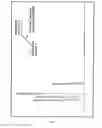
500 mg of glycerol tripalmitate (MW 807.32, 0.619 mmol), dissolved in 1.6 ml of tert-butyl-methyl ether (d 0.744 mg/ml, MW 88.15, 24.5 mmol), is placed in a microwave test tube, and 30 mg of catalyst, consisting of amorphous silica 10% functionalised with sulphonic groups, is added to the solution. The reaction mixture is irradiated by 20 watt microwaves, under stirring, for a reaction time of up to 3 hours. The HPLC assay demonstrates the almost total conversion of glycerol tripalmitate to methyl palmitate and a mixture of mono- and di-tert-butyl glycerol ethers, in a 70:30 ratio. There is no formation of free glycerol, as shown in FIG. 1.
Example 2
Conversion of Soybean Oil to a Mixture of FAMEs and Glycerol Tert-Butyl Ethers
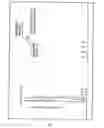
1 g of soybean oil (d 0.917 mg/ml, 0.619 mmol), dissolved in 3.2 ml of tert-butyl-methyl ether (d 0.744 mg/ml, MW 88.15, 24.5 mmol), is placed in a microwave vial, and 30 mg of catalyst, consisting of amorphous silica 10% functionalised with sulphonic groups, is added to the solution. The reaction mixture is irradiated by 20 watt microwaves, under stirring, for a reaction time of up to 3 hours. The HPLC assay demonstrates the almost total conversion of soybean oil to a mixture of fatty acid methyl esters, FAME, mono- and di-tert-butyl glycerol ethers, the latter in a 70:30 ratio. There is no formation of free glycerol, as shown in FIG. 2.
Claims
1. A process for the conversion of a feedstock containing one or more triglycerides of fatty acids to a mixture containing one or more alkyl esters of fatty acids and t-alkyl glycerols, comprising the reaction of said feedstock with a compound of formula (I):
R—O—RI (I)
wherein:
RI is an alkyl, alkenyl or alkynyl having 1-18 carbon atoms;
R is H or a tertiary alkyl group of formula (II):
wherein RIII, RIV and RV are independently a straight or branched alkyl, alkenyl or alkynyl group having 1 to 6 carbon atoms;
wherein said reaction is carried out in the presence of an acid transesterification catalyst by irradiation with microwaves and/or ultrasound and/or radio waves, provided that when R is H, an alcohol of formula R—OH is added, wherein R is as defined above, in an equimolar amount to RI—OH.
2. The process according to claim 1, wherein RIII, RIV and RV in formula (II) are selected from the group consisting of methyl, ethyl, propyl, isopropyl, butyl, t-butyl, ethenyl, propenyl, isopropenyl, butenyl, isobutenyl, hexenyl, ethynyl, propynyl and butynyl.
3. The process according to claim 2, wherein RIII, RIV and RV in formula (II) are methyl.
4. The process according to claim 1, wherein RI in formula (I) is selected from the group consisting of methyl, ethyl, propyl, isopropyl and butyl.
5. The process according to claim 4, wherein RI in formula (I) is methyl.
6. The process according to claim 1, wherein the compound of formula (I) is tert-butyl methyl ether.
7. The process according to claim 1, wherein the feedstock is selected from the group consisting of:
vegetable oils such as coconut oil, corn oil, cottonseed oil, olive oil, palm oil, peanut oil, rapeseed oil, canola oil, safflower oil, sesame oil, soybean oil, sunflower oil, almond oil, beech nut oil, cashew oil, hazelnut oil, macadamia oil, pine nut oil, pistachio oil, walnut oil, citrus oils, grapefruit seed oil, lemon oil, orange oil, castor oil,
hemp oil, mustard oil, radish oil, rice bran oil, salicornia oil, soybean oil, Jatropha oil, jojoba oil, linseed oil, poppy oil, stillingia oil, fruit tree oil, artichoke oil, carrot seed oil, mango oil and sea-buckthorn oil;
animal fats such as beef tallow, lard, poultry fat and fish oils;
waste oils and fats from various sources, such as oils and fats used in restaurants and the catering industry in
general, and present in the waste of the agrifood and seafood industries.
8. The method according to claim 1, wherein irradiation takes place with only one type of electromagnetic frequency chosen among microwaves, ultrasound or radio waves or with different types of said electromagnetic frequencies, simultaneously or in succession.
9. The method according to claim 1, wherein the acid catalyst used in the reaction may be a free acid catalyst or immobilised on a support.
10. The process according to claim 9, wherein the acid catalyst is selected from the group consisting of:
strong mineral acids and organic acids;
zeolites, molecular sieves, phosphates, zirconates, kaolinite, montmorillonite, pillared clays, hydrotalcites and acid ion-exchange resins;
solid acid or suitably acid-functionalised materials such as perfluorinated oxides and/or polymers; silicas and silicas doped with Al, Ti or Zr in different morphologies, heteropolyacids, acids adsorbed and/or covalently bonded to metal oxides; organic sulphonic and/or organic carboxylic acids immobilised on amorphous silica and/or meso- and microstructured silica; polyoxymetalates stabilised on silica and/or titania;
Keggin structures containing niobium ions; niobium oxides; ionic liquids and/or carbon nanotubes functionalised with organic sulphonic acids and/or organic carboxylic acids.
11. The process according to claim 10, wherein the acid catalyst is alkylsulphonic acid bound to amorphous silica.
12. The process according to claim 2, wherein RI in formula (I) is selected from the group consisting of methyl, ethyl, propyl, isopropyl and butyl.
13. The process according to claim 3, wherein RI in formula (I) is selected from the group consisting of methyl, ethyl, propyl, isopropyl and butyl.
Images & Drawings included:

Sources:
- United States Patent and Trademark Office - verify current appl. status at the USPTO↗
Recent applications in this class:
- » 20250263612 2025-08-21
Hydrodeoxygenation of Phenolic Lipids and Renewable Hydrocarbon Fuels Produced Therefrom - » 20250207049 2025-06-26
METHOD FOR PRETREATING WASTE FAT, OIL AND GREASE AND CO-PRODUCING FIRST-GENERATION BIODIESEL - » 20250101326 2025-03-27
PROCESS FOR MAKING ETHERS FROM ETHANOL - » 20240409832 2024-12-12
Renewable Methanol-Ethanol Blend Fuels for Use in Internal Combustion Engines - » 20240368488 2024-11-07
A MARINE FUEL BLEND - » 20240352363 2024-10-24
TALL DIESEL COMPOSITION - » 20240287398 2024-08-29
Method and system for preparing fuel by using high acid value biological oil and fat - » 20240124791 2024-04-18
Hydrodeoxygenation of phenolic lipids and renewable hydrocarbon fuels produced therefrom - » 20240117260 2024-04-11
Methods for Producing Reduced Carbon Footprint Biofuels - » 20240101916 2024-03-28
Micro-reaction device and method for preparing biodiesel by base catalysis
Recent applications for this Assignee:
- » 20240148745 2024-05-09
COMPOUNDS FOR USE IN PROGRESSIVE MULTIPLE SCLEROSIS - » 20230390203 2023-12-07
POWDER COMPOSITION BASED ON MICROPARTICLES EMBEDDING NANOPARTICLES FOR THE DELIVERY OF THERAPEUTIC/DIAGNOSTIC COMPOUNDS - » 20230366805 2023-11-16
OPTOACOUSTIC MONITORING DEVICE FOR CELL CHARACTERIZATION - » 20230291474 2023-09-14
Device for multipole phase division demultiplexing/multiplexing and spatial division telecommunications system thereof - » 20230273278 2023-08-31
Atomic vapor cell, an integrated atomic/photonic device and apparatus comprising the atomic vapor cell, and a method for fabricating an atomic vapor cell - » 20230273138 2023-08-31
Microfluidic patch and electrochemical sensing device - » 20230181763 2023-06-15
APPLICATION OF AAV44.9 VECTOR IN GENE THERAPY FOR THE INNER EAR - » 20230161056 2023-05-25
Directional gamma detector - » 20230101466 2023-03-30
Method for producing a polyphenolic composition from barley malt - » 20230020133 2023-01-19
Optical device for controlling light from an external light source