Touch system and display device for preventing misoperation on edge area
US20160034090A1
2016-02-04
14/422,266
2014-05-30
✅ Patent granted
US 9,916,028 B2
2018-03-13
WO; PCT/CN2014/078887; 20140530
WO; WO2015/070590; 20150521
Pegeman Karimi
Nath, Goldberg & Meyer | Joshua B. Goldberg | Annie J. Kock
2034-07-29
Abstract:
The present invention provides a touch system and a display device, belongs to the technical field of display, and can solve the problem that misoperation is caused as an existing touch screen has a narrow frame and the edge area of the screen is easy to touch mistakenly. The touch system comprises a touch screen, a touch position analysis unit and a switch unit, wherein the touch screen comprises a center touch area and an edge touch area, and the touch position analysis unit is used for analyzing a position of a touch on the touch screen; and the switch unit is used for controlling whether a touch on the edge touch area is effective.
Inventors:
- Hongyu Zhao 36 🇨🇳 Beijing, China
- Qian Zhang 134 🇨🇳 Beijing, China
- Yutao HAO 28 🇨🇳 Beijing, China
- Bin ZOU 21 🇨🇳 Beijing, China
Assignee:
- BEIJING BOE DISPLAY TECHNOLOGY CO., LTD. 1,501 🇨🇳 Beijing, China
- BOE TECHNOLOGY GROUP CO., LTD. 20,350 🇨🇳 Beijing, China
Applicant:
Interested in similar patents?
Get notified when new applications in this technology area are published.
Classification:
G09G3/32 IPC
Control arrangements or circuits, of interest only in connection with visual indicators other than cathode-ray tubes for presentation of an assembly of a number of characters, e.g. a page, by composing the assembly by combination of individual elements arranged in a matrix no fixed position being assigned to or needed to be assigned to the individual characters or partial characters using controlled light sources using electroluminescent panels semiconductive, e.g. using light-emitting diodes [LED]
G06F3/0416 » CPC main
Input arrangements for transferring data to be processed into a form capable of being handled by the computer; Output arrangements for transferring data from processing unit to output unit, e.g. interface arrangements; Input arrangements or combined input and output arrangements for interaction between user and computer; Arrangements for converting the position or the displacement of a member into a coded form; Digitisers, e.g. for touch screens or touch pads, characterised by the transducing means Control or interface arrangements specially adapted for digitisers
G06F3/045 » CPC further
Input arrangements for transferring data to be processed into a form capable of being handled by the computer; Output arrangements for transferring data from processing unit to output unit, e.g. interface arrangements; Input arrangements or combined input and output arrangements for interaction between user and computer; Arrangements for converting the position or the displacement of a member into a coded form; Digitisers, e.g. for touch screens or touch pads, characterised by the transducing means using resistive elements, e.g. a single continuous surface or two parallel surfaces put in contact
G09G3/3208 » CPC further
Control arrangements or circuits, of interest only in connection with visual indicators other than cathode-ray tubes for presentation of an assembly of a number of characters, e.g. a page, by composing the assembly by combination of individual elements arranged in a matrix no fixed position being assigned to or needed to be assigned to the individual characters or partial characters using controlled light sources using electroluminescent panels semiconductive, e.g. using light-emitting diodes [LED] organic, e.g. using organic light-emitting diodes [OLED]
G06F3/0412 » CPC further
Input arrangements for transferring data to be processed into a form capable of being handled by the computer; Output arrangements for transferring data from processing unit to output unit, e.g. interface arrangements; Input arrangements or combined input and output arrangements for interaction between user and computer; Arrangements for converting the position or the displacement of a member into a coded form; Digitisers, e.g. for touch screens or touch pads, characterised by the transducing means Digitisers structurally integrated in a display
G06F3/044 » CPC further
Input arrangements for transferring data to be processed into a form capable of being handled by the computer; Output arrangements for transferring data from processing unit to output unit, e.g. interface arrangements; Input arrangements or combined input and output arrangements for interaction between user and computer; Arrangements for converting the position or the displacement of a member into a coded form; Digitisers, e.g. for touch screens or touch pads, characterised by the transducing means by capacitive means
G06F3/04886 » CPC further
Input arrangements for transferring data to be processed into a form capable of being handled by the computer; Output arrangements for transferring data from processing unit to output unit, e.g. interface arrangements; Input arrangements or combined input and output arrangements for interaction between user and computer; Interaction techniques based on graphical user interfaces [GUI] using specific features provided by the input device, e.g. functions controlled by the rotation of a mouse with dual sensing arrangements, or of the nature of the input device, e.g. tap gestures based on pressure sensed by a digitiser using a touch-screen or digitiser, e.g. input of commands through traced gestures by partitioning the display area of the touch-screen or the surface of the digitising tablet into independently controllable areas, e.g. virtual keyboards or menus
G09G3/36 » CPC further
Control arrangements or circuits, of interest only in connection with visual indicators other than cathode-ray tubes for presentation of an assembly of a number of characters, e.g. a page, by composing the assembly by combination of individual elements arranged in a matrix no fixed position being assigned to or needed to be assigned to the individual characters or partial characters by control of light from an independent source using liquid crystals
G06F2203/04104 » CPC further
Indexing scheme relating to -; Indexing scheme relating to - Multi-touch detection in digitiser, i.e. details about the simultaneous detection of a plurality of touching locations, e.g. multiple fingers or pen and finger
G06F2203/04808 » CPC further
Indexing scheme relating to -; Indexing scheme relating to Several contacts: gestures triggering a specific function, e.g. scrolling, zooming, right-click, when the user establishes several contacts with the surface simultaneously; e.g. using several fingers or a combination of fingers and pen
G06F3/041 IPC
Input arrangements for transferring data to be processed into a form capable of being handled by the computer; Output arrangements for transferring data from processing unit to output unit, e.g. interface arrangements; Input arrangements or combined input and output arrangements for interaction between user and computer; Arrangements for converting the position or the displacement of a member into a coded form Digitisers, e.g. for touch screens or touch pads, characterised by the transducing means
G06F3/0488 » CPC further
Input arrangements for transferring data to be processed into a form capable of being handled by the computer; Output arrangements for transferring data from processing unit to output unit, e.g. interface arrangements; Input arrangements or combined input and output arrangements for interaction between user and computer; Interaction techniques based on graphical user interfaces [GUI] using specific features provided by the input device, e.g. functions controlled by the rotation of a mouse with dual sensing arrangements, or of the nature of the input device, e.g. tap gestures based on pressure sensed by a digitiser using a touch-screen or digitiser, e.g. input of commands through traced gestures
G06F2203/04106 » CPC further
Indexing scheme relating to -; Indexing scheme relating to - Multi-sensing digitiser, i.e. digitiser using at least two different sensing technologies simultaneously or alternatively, e.g. for detecting pen and finger, for saving power or for improving position detection
Description
FIELD OF THE INVENTION
The present invention belongs to the technical field of display, and particularly relates to a touch system and a display device.
BACKGROUND OF THE INVENTION
Touch screens are recently developing electronic input device, and are widely applied to electronic equipment such as smart phones, tablet computers or the like. The frame of a display screen (phone screen) of electronic equipment is increasingly narrow, and when a user holds the equipment, a finger easily touches the edge area of the display screen to mistakenly touch a program which should not be touched, so as to cause misoperation.
SUMMARY OF THE INVENTION
For solving the technical problem that misoperation tends to be caused as an existing touch screen has an increasingly narrow frame and the edge of the screen is easy to touch mistakenly, the present invention provides a touch system capable of effectively avoiding misoperation caused when the edge of the screen is touched and a display device.
The technical solutions adopted for solving the above technical problem involve a touch system, including a touch screen, a touch position analysis unit and a switch unit, wherein the touch screen includes a center touch area and an edge touch area,
the touch position analysis unit is used for analyzing a position of a touch on the touch screen;
the switch unit is used for controlling whether a touch on the edge touch area is effective.
The touch screen of the touch system of the present invention is divided into the center touch area and the edge touch area, the switch unit may control whether the touch on the edge touch area is effective. The switch unit may be turned off when a control command to be executed is not in the edge touch area, and then the touch on the edge touch area is ineffective, so that misoperation caused as the edge touch area is touched due to the narrow frame of the touch screen may be effectively avoided.
Preferably, the touch position analysis unit includes a storage unit and a query unit,
the storage unit is stored therein position information corresponding to the center touch area and the edge touch area respectively;
the query unit is used for judging whether position information corresponding to current touched position of the touch screen belongs to the center touch area or the edge touch area.
Preferably, the touch screen includes a display unit for displaying and a touch unit for sensing touch.
Further preferably, the display unit is an LCD or an OLED display.
Further preferably, the touch unit is a resistive touch unit or a capacitive touch unit.
Preferably, the switch unit is arranged on a side of a frame of the touch screen.
Preferably, the touch screen is divided into the center touch area and the edge touch area by hardware;
or
divided into the center touch area and the edge touch area under control of software.
The technical solutions adopted for solving the above technical problem involve a display device, including the above-mentioned touch system.
Since the display device includes the above-mentioned touch system, misoperation caused as the edge touch area is touched may be effectively avoided.
BRIEF DESCRIPTION OF THE DRAWINGS
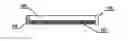
FIG. 1 is a schematic diagram of a touch system of embodiment 1 of the present invention;
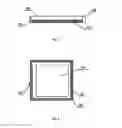
FIG. 2 is a top view of the touch system of embodiment 1 of the present invention.
DETAILED DESCRIPTION OF THE EMBODIMENTS
To make those skilled in the art better understand the technical solutions of the present invention, the present invention will be further described in detail below in combination with the accompanying drawings and specific embodiments.
Embodiment 1
As shown in FIGS. 1 and 2, this embodiment provides a touch system, including a touch screen, a touch position analysis unit 103 and a switch unit 104. The touch screen includes a center touch area Si and an edge touch area S2, the touch position analysis unit 103 is used for analyzing a position of a touch on the touch screen, and the switch unit 104 is used for controlling whether a touch on the edge touch area S2 is effective.
The touch screen provided by this embodiment is divided into the center touch area S1 and the edge touch area S2, and the switch unit 104 controls whether the touch on the edge touch area S2 is effective. Thus, misoperation caused as software or a program on the edge touch area S2 is mistakenly touched may be effectively avoided. That is to say, when the position of software or a program to be touched is in the edge touch area S2, the switch unit 104 is turned on, then the touch on the edge touch area S2 is effective, and the software or the program may be driven or opened to execute a command; and when the position of software or a program to be touched is in the center touch area S1, the switch unit 104 is turned off, then the touch on the edge touch area S2 is ineffective, and even if software or a program in the edge touch area S2 is touched, the software or the program in the edge touch area S2 is not opened.
The touch position analysis unit 103 of the touch system of this embodiment preferably includes a storage unit and a query unit, and position information corresponding to the center touch area S1 and the edge touch area S2 respectively is stored in the storage unit; and specifically, the whole touch screen is stored in the storage unit in a form of coordinates, that is, a group of coordinates corresponds to a touch point (position information). Preferably, the coordinates of the center touch area S1 and the coordinates of the edge touch area S2 may be independently stored in the storage unit respectively. The query unit is used for judging whether position information corresponding to current touched position of the touch screen belongs to the center touch area S1 or the edge touch area S2.
When a certain position of the touch screen is touched, whether the touch position is in the center touch area S1 or the edge touch area S2 may be judged according to the coordinate information of the position; when it is judged that the touch position is in the center touch area S1, a touch command is normally executed; when it is judged that the touch position is in the edge touch area S2, whether the switch unit 104 is turned off or on is judged, and at the moment, if the touch command which needs to be executed is in the edge touch area S2, the switch unit 104 is turned on and the touch command is executed; and if the touch command to be executed is in the center touch area S1, the switch unit 104 is kept off.
Preferably, the touch screen of the touch system of this embodiment includes a display unit 101 for displaying and a touch unit 102 for sensing a touch position. The touch unit 102 may be arranged above the display unit 101 or integrated with the display unit 101. Further preferably, the display unit 101 is an LCD or an OLED display, of course, may be a display of other types. The touch unit 102 is a resistive touch unit or a capacitive touch unit. The display 101 is combined with the resistive touch unit to form a resistive touch screen, in which contents on the touch screen are operated and controlled mainly on the basis of the principle of pressure sensing. The display 101 is combined with the capacitive touch unit to form a capacitive touch screen, and the transmittance and definition of the capacitive touch screen are superior to those of the resistive touch screen. When a finger of a user touches the capacitive touch screen, the finger and the surface of the capacitive touch screen form a coupling capacitor, so as to realize a touch function.
Preferably, the switch unit 104 is arranged on a side of a frame 105 of the touch screen. Generally, the switch unit 104 is a control button, namely a simple high and low level switch, high level is obtained when the switch is turned on, and low level is obtained when the switch is turned off. The switch unit 104 which is arranged on the side of the touch screen does not occupy the area of the display area (an area for displaying images), so that the frame 105 is narrower and more attractive in appearance. Of course, the switch unit 104 may also be arranged in other position of the touch system.
Preferably, the touch screen is directly divided into the center touch area S1 and the edge touch area S2 by hardware, that is to say, the touch screen is divided into the center touch area S1 and the edge touch area S2 when being manufactured, or the touch screen is preferably divided into the center touch area S1 and the edge touch area S2 under control of software, and the proportion of the center touch area Si and the edge touch area S2 to the whole touch screen may be adjusted according to different conditions.
Embodiment 2
This embodiment provides a display device, including the touch system of embodiment 1. The display device may be any product or component with a display function such as a mobile phone, a tablet computer, a television, a display, a notebook computer, a digital photo frame, a navigator or the like.
Since the display device of this embodiment includes the touch system of embodiment 1, misoperation caused as the edge area of the touch screen is touched due to too narrow frame may be avoided.
Of course, the display device of this embodiment may further include other conventional structures, such as a power unit, a display drive unit and the like.
It could be understood that, the above embodiments are merely exemplary implementations adopted for describing the principle of the present invention, rather than limiting the present invention. Various modifications and improvements may be made for those of ordinary skill in the art without departing from the spirit and essence of the present invention, and these modifications and improvements are regarded within the protection scope of the present invention.
Claims
1. A touch system, comprising a touch screen, and further comprising a touch position analysis unit and a switch unit, wherein the touch screen comprises a center touch area and an edge touch area,
the touch position analysis unit is used for analyzing a position of a touch on the touch screen;
the switch unit is used for controlling whether a touch on the edge touch area is effective.
2. The touch system of claim 1, wherein the touch position analysis unit comprises a storage unit and a query unit,
the storage unit is stored therein position information corresponding to the center touch area and the edge touch area respectively;
the query unit is used for judging whether position information corresponding to current touched position of the touch screen belongs to the center touch area or the edge touch area.
3. The touch system of claim 1, wherein the touch screen comprises a display unit for displaying and a touch unit for sensing touch.
4. The touch system of claim 3, wherein the display unit is an LCD display panel or an OLED display panel.
5. The touch system of claim 3, wherein the touch unit is a resistive touch unit or a capacitive touch unit.
6. The touch system of claim 1, wherein the switch unit is arranged on a side of a frame of the touch screen.
7. The touch system of claim 1, wherein the touch screen is divided into the center touch area and the edge touch area by hardware.
8. (canceled)
9. The touch system of claim 1, wherein the touch screen is divided into the center touch area and the edge touch area under control of software.
10. A display device, comprising a touch system, wherein the touch system comprises a touch screen, and further comprises a touch position analysis unit and a switch unit, wherein the touch screen comprises a center touch area and an edge touch area,
the touch position analysis unit is used for analyzing a position of a touch on the touch screen;
the switch unit is used for controlling whether a touch on the edge touch area is effective.
11. A display device of claim 10, wherein the touch position analysis unit comprises a storage unit and a query unit,
the storage unit is stored therein position information corresponding to the center touch area and the edge touch area respectively;
the query unit is used for judging whether position information corresponding to current touched position of the touch screen belongs to the center touch area or the edge touch area.
12. A display device of claim 10, wherein the touch screen comprises a display unit for displaying and a touch unit for sensing touch.
13. A display device of claim 12, wherein the display unit is an LCD display panel or an OLED display panel.
14. A display device of claim 12, wherein the touch unit is a resistive touch unit or a capacitive touch unit.
15. A display device of claim 10, wherein the switch unit is arranged on a side of a frame of the touch screen.
16. A display device of claim 10, wherein the touch screen is divided into the center touch area and the edge touch area by hardware.
17. A display device of claim 10, wherein the touch screen is divided into the center touch area and the edge touch area under control of software.
Images & Drawings included:
Sources:
- United States Patent and Trademark Office - verify current appl. status at the USPTO↗
Recent applications in this class:
- » 20250284359 2025-09-11
DISPLAY DEVICE - » 20250271959 2025-08-28
LIGHTING TOUCHPAD - » 20250271958 2025-08-28
DISPLAY DEVICE - » 20250264954 2025-08-21
WEARABLE DEVICE AND METHOD FOR IDENTIFYING TOUCH INPUT, AND NON-TRANSITORY COMPUTER-READABLE STORAGE MEDIUM - » 20250264953 2025-08-21
STATIC ELECTRICITY PREVENTION METHOD, AND ELECTRONIC DEVICE THEREFOR - » 20250264952 2025-08-21
Touch Display Device - » 20250258560 2025-08-14
INDICATED POSITION DETECTING DEVICE AND INDICATED POSITION DETECTING METHOD - » 20250258559 2025-08-14
Electronic Device - » 20250251816 2025-08-07
ELECTRONIC DEVICE WITH GLASS ENCLOSURE - » 20250251815 2025-08-07
ELECTRONIC DEVICE
Recent applications for this Assignee:
- » 20250295022 2025-09-18
QUANTUM DOT COMPOSITION, LIGHT-EMITTING ELEMENT, DISPLAY PANEL AND PREPARATION METHOD THEREOF - » 20250295019 2025-09-18
HEAT DISSIPATION FILM, DISPLAY MODULE AND DISPLAY DEVICE - » 20250294987 2025-09-18
DISPLAY PANEL, DISPLAY DEVICE - » 20250294983 2025-09-18
DISPLAY PANEL AND DISPLAY DEVICE - » 20250292736 2025-09-18
DRIVING CIRCUIT, DRIVING METHOD, DRIVING MODULE AND DISPLAY DEVICE - » 20250291336 2025-09-18
COMPUTER-IMPLEMENTED METHOD, APPARATUS FOR MANAGING PRODUCTION OF ONE OR MORE PRODUCTS, AND COMPUTER-PROGRAM PRODUCT - » 20250291215 2025-09-18
CIRCUIT BOARD AND METHOD FOR MANUFACTURING THE SAME, LIGHT-EMITTING SUBSTRATE, BACKLIGHT MODULE, DISPLAY PANEL AND DISPLAY APPARATUS - » 20250287801 2025-09-11
ARRAY SUBSTRATE AND DISPLAY APPARATUS - » 20250287695 2025-09-11
ARRAY PANEL, METHOD OF MANUFACTURING THE SAME AND DISPLAY DEVICE - » 20250287695 2025-09-11
ARRAY PANEL, METHOD OF MANUFACTURING THE SAME AND DISPLAY DEVICE