Rebroadcasting system
US20160037198A1
2016-02-04
14/775,498
2014-02-27
✅ Patent granted
US 9,554,172 B2
2017-01-24
WO; PCT/JP2014/054888; 20140227
WO; WO2014/167909; 20141016
Pankaj Kumar | Charles N Hicks
Harness, Dickey & Pierce, PLC
2034-02-27
Abstract:
A rebroadcasting system for retransmitting a television broadcast, which was received from a satellite, in a segment broadcasting, such as one-segment broadcasting and three-segment broadcasting, comprises: charging a solar battery during the daytime; recording broadcasts during the retransmission halt time; retransmitting television broadcasts, which are received from the satellite, in real time by use of central (one or three) segments and the charged power during any time when the output of the solar battery is low, for example, during the night, before sunset, after sunrise, or a rainy day; reproducing the recorded broadcasts; and retransmitting the reproduced recorded programs by use of any remaining segments, for example, segments adjacent to the central segments.
Inventors:
- Jun Abe 10 🇯🇵 Tokyo, Japan
- Satoshi SAKATA 18 🇯🇵 Tokyo, Japan
- Nobuo HIROSE 1 🇯🇵 Tokyo, Japan
Assignee:
- HITACHI KOKUSAI ELECTRIC INC. 1,439 🇯🇵 Tokyo, Japan
Applicant:
Interested in similar patents?
Get notified when new applications in this technology area are published.
Classification:
H04N21/222 » CPC further
Selective content distribution, e.g. interactive television or video on demand [VOD]; Servers specifically adapted for the distribution of content, e.g. VOD servers; Operations thereof; Server components or server architectures Secondary servers, e.g. proxy server, cable television Head-end
H02J7/35 » CPC further
Circuit arrangements for charging or depolarising batteries or for supplying loads from batteries; Parallel operation in networks using both storage and other dc sources, e.g. providing buffering with light sensitive cells
H04N21/61 IPC
Selective content distribution, e.g. interactive television or video on demand [VOD]; Network structure or processes for video distribution between server and client or between remote clients; Control signalling between clients, server and network components; Transmission of management data between server and client, e.g. sending from server to client commands for recording incoming content stream ; Communication details between server and client Network physical structure; Signal processing
H04N21/231 » CPC further
Selective content distribution, e.g. interactive television or video on demand [VOD]; Servers specifically adapted for the distribution of content, e.g. VOD servers; Operations thereof; Processing of content or additional data; Elementary server operations; Server middleware Content storage operation, e.g. caching movies for short term storage, replicating data over plural servers, prioritizing data for deletion
G11B27/10 » CPC further
Editing; Indexing; Addressing; Timing or synchronising; Monitoring; Measuring tape travel Indexing; Addressing; Timing or synchronising; Measuring tape travel
H04N21/6143 » CPC further
Selective content distribution, e.g. interactive television or video on demand [VOD]; Network structure or processes for video distribution between server and client or between remote clients; Control signalling between clients, server and network components; Transmission of management data between server and client, e.g. sending from server to client commands for recording incoming content stream ; Communication details between server and client ; Network physical structure; Signal processing specially adapted to the downstream path of the transmission network involving transmission via a satellite
H04N21/8456 » CPC further
Selective content distribution, e.g. interactive television or video on demand [VOD]; Generation or processing of content or additional data by content creator independently of the distribution process; Content; Generation or processing of protective or descriptive data associated with content; Content structuring; Structuring of content, e.g. decomposing content into time segments by decomposing the content in the time domain, e.g. in time segments
H04N21/262 » CPC main
Selective content distribution, e.g. interactive television or video on demand [VOD]; Servers specifically adapted for the distribution of content, e.g. VOD servers; Operations thereof; Management operations performed by the server for facilitating the content distribution or administrating data related to end-users or client devices, e.g. end-user or client device authentication, learning user preferences for recommending movies Content or additional data distribution scheduling, e.g. sending additional data at off-peak times, updating software modules, calculating the carousel transmission frequency, delaying a video stream transmission, generating play-lists
H04N21/845 IPC
Selective content distribution, e.g. interactive television or video on demand [VOD]; Generation or processing of content or additional data by content creator independently of the distribution process; Content; Generation or processing of protective or descriptive data associated with content; Content structuring Structuring of content, e.g. decomposing content into time segments
H04H20/40 » CPC further
Arrangements for broadcast or for distribution combined with broadcast Arrangements for broadcast specially adapted for accumulation-type receivers
H04N21/26241 » CPC further
Selective content distribution, e.g. interactive television or video on demand [VOD]; Servers specifically adapted for the distribution of content, e.g. VOD servers; Operations thereof; Management operations performed by the server for facilitating the content distribution or administrating data related to end-users or client devices, e.g. end-user or client device authentication, learning user preferences for recommending movies; Content or additional data distribution scheduling, e.g. sending additional data at off-peak times, updating software modules, calculating the carousel transmission frequency, delaying a video stream transmission, generating play-lists the scheduling operation being performed under constraints involving the time of distribution, e.g. the best time of the day for inserting an advertisement or airing a children program
H02S40/38 » CPC further
Components or accessories in combination with PV modules, not provided for in groups -; Electrical components Energy storage means, e.g. batteries, structurally associated with PV modules
H04N21/2365 » CPC further
Selective content distribution, e.g. interactive television or video on demand [VOD]; Servers specifically adapted for the distribution of content, e.g. VOD servers; Operations thereof; Processing of content or additional data; Elementary server operations; Server middleware; Assembling of a multiplex stream, e.g. transport stream, by combining a video stream with other content or additional data, e.g. inserting a URL [Uniform Resource Locator] into a video stream, multiplexing software data into a video stream; Remultiplexing of multiplex streams; Insertion of stuffing bits into the multiplex stream, e.g. to obtain a constant bit-rate; Assembling of a packetised elementary stream Multiplexing of several video streams
H04N21/426 IPC
Selective content distribution, e.g. interactive television or video on demand [VOD]; Client devices specifically adapted for the reception of or interaction with content, e.g. set-top-box [STB]; Operations thereof; Structure of client; Structure of client peripherals Internal components of the client ; Characteristics thereof
H04N21/42676 » CPC further
Selective content distribution, e.g. interactive television or video on demand [VOD]; Client devices specifically adapted for the reception of or interaction with content, e.g. set-top-box [STB]; Operations thereof; Structure of client; Structure of client peripherals; Internal components of the client ; Characteristics thereof for modulating an analogue carrier signal to encode digital information or demodulating it to decode digital information, e.g. ADSL or cable modem
H04N21/4344 » CPC further
Selective content distribution, e.g. interactive television or video on demand [VOD]; Client devices specifically adapted for the reception of or interaction with content, e.g. set-top-box [STB]; Operations thereof; Processing of content or additional data, e.g. demultiplexing additional data from a digital video stream; Elementary client operations, e.g. monitoring of home network or synchronising decoder's clock; Client middleware; Disassembling of a multiplex stream, e.g. demultiplexing audio and video streams, extraction of additional data from a video stream; Remultiplexing of multiplex streams; Extraction or processing of SI; Disassembling of packetised elementary stream Remultiplexing of multiplex streams, e.g. by modifying time stamps or remapping the packet identifiers
H04N7/20 IPC
Television systems Adaptations for transmission via a GHz frequency band, e.g. via satellite
H04N21/234 » CPC further
Selective content distribution, e.g. interactive television or video on demand [VOD]; Servers specifically adapted for the distribution of content, e.g. VOD servers; Operations thereof; Processing of content or additional data; Elementary server operations; Server middleware Processing of video elementary streams, e.g. splicing of video streams, manipulating MPEG-4 scene graphs
H04N21/434 IPC
Selective content distribution, e.g. interactive television or video on demand [VOD]; Client devices specifically adapted for the reception of or interaction with content, e.g. set-top-box [STB]; Operations thereof; Processing of content or additional data, e.g. demultiplexing additional data from a digital video stream; Elementary client operations, e.g. monitoring of home network or synchronising decoder's clock; Client middleware Disassembling of a multiplex stream, e.g. demultiplexing audio and video streams, extraction of additional data from a video stream; Remultiplexing of multiplex streams; Extraction or processing of SI; Disassembling of packetised elementary stream
H04H20/63 » CPC further
Arrangements for broadcast or for distribution combined with broadcast; Arrangements specially adapted for specific applications, e.g. for traffic information or for mobile receivers for local area broadcast, e.g. instore broadcast to plural spots in a confined site, e.g. MATV [Master Antenna Television]
Description
CROSS REFERENCE TO RELATED APPLICATIONS
This application is a U.S. National Phase Application under 35 U.S.C. 371 of International Application No. PCT/JP2014/054888 filed on Feb. 27, 2014 and published in Japanese as WO 2014/167909 A1 on Oct. 16, 2014. This application is based on and claims the benefit of priority from Japanese Patent Application No. 2013-082165 filed Apr. 10, 2013. The entire disclosures of all of the above applications are incorporated herein by reference.
TECHNICAL FIELD
The present invention relates to a technique suitably used for a rebroadcasting system that retransmits a broadcast wave having broadcast data carried on a prescribed segment (frequency), and covers an area (for example, an island of Indonesia) where no mains power supply is provided.
BACKGROUND ART
Here, a concept of a segment for a particular frequency in a transmission channel of digital terrestrial broadcasting ISDB-T (Integrated Services Digital Broadcasting-Terrestrial) is described.
As shown in FIG. 3, in a channel of digital terrestrial broadcasting (13 segments having each 6 MHz in Japan divided into 14 and each 0.5 segment at both ends used as a guard band in the shown example), a one-segment broadcast wave provides broadcasting services by emitting a broadcast wave with broadcast data such as H.264 compressed video information carried by QPSK (Quadrature Phase Shift Keying) of one segment (segment number 0). Receivers of one-segment broadcasting used for broadcasting or the like for portable terminals receive the broadcast wave of the segment number 0 to receive video, audio and data. Each 6 segments (a total of 12 segments) at both sides are used to perform MPEG2 compressed HDTV (High Definition TeleVision: high definition television) broadcasting by 64QAM (Quadrature Amplitude Modulation).
There are also SDTV (Standard Definition TeleVision) educational television broadcasting of 4 segments resulting from dividing 12 segments into three and so-called digital radio broadcasting (digital terrestrial audio broadcasting) of 3 segs (3 segments) having 12 segments divided into four.
Here, a method of broadcasting by a partial segment of the number of all segments in transmission channels of broadcasting such as one-segment broadcasting, four-segment broadcasting and three-segment broadcasting is called as a partial segment broadcasting hereinbelow.
And, the partial segment broadcasting such as one-segment broadcasting is suitable for implementation by an SFN (Single Frequency Network) system and implementation by a broadcasting system (area broadcasting) covering a relatively small area by very small transmission power, and further expansion of use in future is expected.
And, one channel is 6 MHz in Japan, 7 MHz in Brazil, and 8 MHz in Indonesia. Japan also has multimedia broadcasting that gathers much more segments.
JP-A-2010-118903 proposes a broadcasting system that can eliminate or reduce dead zones in the area broadcasting by so-called frequency diversity by simultaneously transmitting a signal with the same content in a possible transmission frequency band part other than a usable transmission frequency band to solve a problem that the dead zones are easily caused in a service area by a broadcasting system (area broadcasting) covering a particular area by very small transmission power by use of a one-segment broadcasting system.
In recent years, similar to the area one segment, it is considered to make effective use of a frequency by allotting a service to one central segment only or to individual segments. And, it is also considered overseas that the central segment only is used so to put the retransmission of television broadcasting into practical use. It is specially considered that a solar battery and a one-segment transmission apparatus are installed in combination in overseas villages where no electricity is available to provide services to areas where television broadcasting is not spread sufficiently. Specifically explaining a summary of the system, it has a structure that the solar battery is charged during the daytime, the one-segment transmission apparatus is operated by the charged power during the night, and a television broadcast received from a satellite is retransmitted in real time, so that the television broadcast is enjoyed.
FIG. 4 is a block diagram showing a configuration of a one-segment retransmission system for conventional satellite broadcasting. A program is transmitted from a television station 1, and television broadcasting waves are transmitted from an antenna 2 to a satellite 3. The received signals are retransmitted to each region by the satellite and received as television broadcasting by a shared receiving antenna 4 and a set-top box 5. Video and audio of the program obtained by the set-top box are input to an encoder 6 and converted into a signal form (broadcasting TS) conforming to the ISDB-T system by a ReMUX 7. The broadcasting TS is modulated by an ISDB-T modulator 8 and allotted to one central segment of the channel. Thus, the retransmission signal modulated to one segment is transmitted to a one-segment receiving terminal of each home or portable terminals via a power amplifier 9 and a transmitting antenna 10.
In a system for performing retransmission of broadcasting in real time by use of a one-segment transmission apparatus, retransmitting time is limited sometimes. For example, a case that the one-segment transmission apparatus is operated by the solar battery is taken as an example. There is considered a method of retransmitting television broadcasting by charging the solar battery in the daytime and using the power charged during the daytime to activate the one-segment transmission apparatus during the night. By such a retransmission system, television broadcasting cannot be watched during the daytime when the solar battery is charged, and a program was missed sometimes.
SUMMARY OF THE INVENTION
Technical Problem
The present invention aims to rebroadcast broadcast programs in an area, where no mains power supply is provided, even during the nighttime.
Solution to the Problem
To solve the above problem, the present invention is a rebroadcasting system for retransmitting a television broadcast, which was received from a satellite, in a segment broadcasting, such as one-segment broadcasting and three-segment broadcasting, comprising charging a solar battery during the daytime; recording broadcasts during the retransmission halt time; retransmitting television broadcasts, which are received from the satellite, in real time by use of central (one or three) segments and the charged power during any time when the output of the solar battery is low, for example, during the night, before sunset, after sunrise, or a rainy day; reproducing the recorded video broadcasts; and retransmitting the reproduced recorded programs by use of any remaining segments, for example, segments adjacent to the central segments.
And, a rebroadcasting system for retransmitting a television broadcast, which was received from a satellite, in a segment broadcasting, such as one-segment broadcasting and three-segment broadcasting, comprises charging a solar battery during the daytime; recording broadcasts during plural time zones; retransmitting television broadcasts, which are received from the satellite, in real time by use of central (one or three) segments and the charged power during any time when the output of the solar battery is low, for example, during the night, before sunset, after sunrise, or a rainy day; reproducing simultaneously the programs recorded during the plural time zones; and retransmitting the plural simultaneously reproduced recorded programs by use of any remaining plural segments, for example, segments adjacent to the central segments.
In addition, a rebroadcasting system for retransmitting a television broadcast, which was received from a satellite, in a segment broadcasting, such as one-segment broadcasting and three-segment broadcasting, comprises charging a solar battery during the daytime; recording broadcasts during the retransmission halt time; reproducing the recorded video broadcasts by use of the charged power during any time when the output of the solar battery is low (for example, during the night, before sunset, after sunrise, or a rainy day); and retransmitting the reproduced recorded programs by use of any segment.
Advantageous Effects of the Invention
According to the present invention, a program whose broadcast is recorded during the retransmission halt time and which is retransmitted in real time when it becomes a time zone to perform the retransmission and a program recorded during the halt time are respectively retransmitted by use of a different segment. A rebroadcasting system that enables to view the program broadcast during the retransmission halt time by selecting a channel of a receiving terminal and a segment in a broadcast service area can be realized.
BRIEF DESCRIPTION OF THE DRAWINGS
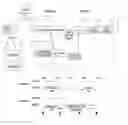
FIG. 1A is a schematic view of a configuration and a temporal control example of one embodiment of the invention.
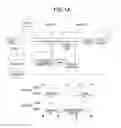
FIG. 1B is a schematic view of a configuration, a temporal control example and a digital terrestrial broadcast channel of another embodiment of the invention (in 1 segment of a 6 MHz channel, QVGA when H.264 by QPSK, and SDTV by the next generation video encoding technology of H.265 by 64QAM).
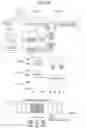
FIG. 1C is a schematic view of a configuration, a temporal control example and a digital terrestrial broadcast channel of another embodiment of the invention (in 3 segments of a 6 MHz channel by 64QAM, SDTV by MPEG2, HDTV by H.265, and 4K by the video encoding technology which is next-next generation of H.265)
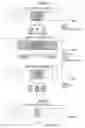
FIG. 1D is a schematic view of a configuration, a temporal control example and a digital terrestrial broadcast channel of another embodiment of the invention (rebroadcasting of one-segment recorded video only).
FIG. 2 is a schematic view of a channel of a one-segment retransmission system for satellite broadcasting of one embodiment of the invention.
FIG. 3 is a schematic view of a digital terrestrial broadcast channel of an ISDB-T system.
FIG. 4 is a block diagram showing a configuration of a one-segment retransmission system for conventional satellite broadcasting.
DESCRIPTION OF THE PREFERRED EMBODIMENTS
One embodiment according to the present invention is described with reference to FIG. 1A to FIG. 1D and FIG. 2.
Embodiment 1
FIG. 1A is a schematic view of a configuration and a temporal control example according to one embodiment of the invention.
Up to the output of a set-top box 5 is the same as in FIG. 4 which is a block diagram showing a configuration of a one-segment retransmission system for a conventional satellite broadcasting of prior art.
A program is transmitted from a television station 1 and television broadcasting waves are transmitted to a satellite 3 by an antenna 2. The received signal is retransmitted by the satellite to each region and received as television broadcast by a shared receiving antenna 4 and a set-top box 5. Video and audio of the program obtained by the set-top box are input to an encoder 6 and converted by a ReMUX 7 into a signal form (broadcasting TS) conforming to the ISTD-T system. The broadcasting TS is modulated by an ISDB-T modulator 8 and allotted to one central segment of the channel. Thus, the retransmission signal modulated to one segment is transmitted to a one-segment receiving terminal of each home or portable terminals via a power amplifier 9 and a transmitting antenna 10.
The signal obtained from the set-top box 5 is divided into a system via a television broadcast recorder/reproducer 20 and an encoder 21, and a system via the encoder 6. For example, a charging time from a solar battery 24 to a charging unit 25 during the daytime is controlled such that the encoder and subsequent devices are stopped to deliver the power for charging from the solar battery 24 to the charging unit 25. At this time, the set-top box 5 and the television broadcast recorder/reproducer 20 are kept operating to record the program during the daytime. When it becomes the retransmission time of the television broadcast, the encoder and subsequent devices are operated. In accordance with the above, the video recording operation of the television broadcast recorder/reproducer 20 is stopped, and reproduction of the recorded program is started. The recorded video program reproduced from the television broadcast recorder/reproducer 20 is input to and encoded by the encoder 21 (defined as program A). On the other hand, the output of the set-top box 5 is input to the encoder 6 to encode the real time program (program B). The encoded results of the program A and the program B are input to the ReMUX 7 to multiplex the programs A, B so as to generate the broadcasting TS. Regarding the multiplexing of the programs, for example, the program B is allotted to one central segment of the channel, and the other program A is allotted to any one segment in the remaining 12 segments to perform multiplexing. The operation of the ReMUX 7 and later is omitted because it is the same as prior art.
In FIG. 1A which is a schematic view of a configuration and a temporal control example according to one embodiment of the present invention, a case assuming that a television broadcast is retransmitted for seven hours from 18:00 is considered. When it becomes 18:00 (time A), power sources of device groups A, B from the charging unit 25 are turned on, and television broadcasts in real time and of the recorded video are retransmitted. When it becomes 1:00 (time B) in the midnight, retransmission of the television broadcasts is stopped, and the power sources of the device groups A, B are turned off to suppress waste of power. The power source of the device group A from the solar battery 24 is turned on at 11:00 A.M. (Time C), and recording of television broadcast is started and continued for seven hours. At this time, the device group B is kept with the power source OFF, and a minimum operation is performed so to deliver the power for charging the solar battery while suppressing power consumption. At 18:00 (time D), the power sources of the device groups A, B from the charging unit 25 are turned on to start television retransmission. Thus, the power consumption of the device during the charging time is suppressed. The broadcast time may be varied depending on an area or suppliable power.
Thus, the real time broadcast and the recorded video broadcast are output simultaneously at the retransmission time, so that broadcasting during the retransmission halt time can also be transmitted, and services and channels can be increased even when no large system is added or changed.
In the above example, the programs A, B which were respectively allotted to different segments and retransmitted were described. ISDB-T (ISDB-Tsb) has a concept that services (programs) of the same segment are multiplexed. For example, it is also possible to realize by using three segments at the center of the channel to multiplex the programs A, B to the three segments, and transmitting as multichannels.
Embodiment 2
Embodiment 2 is a rebroadcasting system for retransmitting a television broadcast, which was received from a satellite, in a segment broadcasting, such as one-segment broadcasting and three-segment broadcasting, comprising charging a solar battery during the daytime; recording broadcasts in plural time zones; retransmitting television broadcasts, which are received from the satellite, in real time by use of central (one or three) segments and the charged power during any time when the output of the solar battery is low, for example, during the night, before sunset, after sunrise, or a rainy day; reproducing simultaneously the programs recorded in plural time zones; and retransmitting the plural simultaneously reproduced recorded programs by use of any remaining plural segments such as segments vertically adjacent to the central segments.
FIG. 1B shows a schematic view of a configuration, a temporal control example and a digital terrestrial broadcast channel of another embodiment of the present invention (in 1 segment of a 6 MHz channel, QVGA when H.264 by QPSK, and SDTV by the next generation video encoding technology of H.265 by 64QAM). And, FIG. 1C shows a schematic view of a configuration, a temporal control example and a digital terrestrial broadcast channel of another embodiment of the present invention (in 3 segments of a 6 MHz channel by 64QAM, SDTV by MPEG2, HDTV by H.265, and 4K by the video encoding technology which is next-next generation of H.265).
Description is omitted because of similarity to the block diagram showing the configuration of one embodiment of the present invention of FIG. 1A excepting a configuration that a television broadcast recorder/reproducer 22 and an encoder (for transmission of recorded programs) 23 were added.
A case assuming that a television broadcast is retransmitted for six hours from 18:00 is considered. When it becomes 18:00 (time A) in the evening, the power sources of the device groups A, B from the charging unit 25 are turned on, and television broadcasts in real time, of the recorded videos taken during the morning and of the recorded videos taken during the daytime are retransmitted. When it becomes 0:00 (time B) in the midnight, retransmission of the television broadcasts is stopped, the power sources of the device groups A, B from the charging unit 25 are turned off to suppress waste of power. The power source of the device group B is kept OFF from 6:00 (time E) to 9:00 (time F) in the morning, and the power source of the device group A from the solar battery 24 or the charging unit 25 is turned on to record the television broadcast for three hours. The power source of the device group B is kept OFF from 12:00 (time C) to 15:00 (time D) during the daytime, and the power source of the device group A from the solar battery 24 is turned on to record the television broadcast for three hours. At this time, the power source of the device group B is kept OFF, and a minimum operation is performed so to deliver the power for charging from the solar battery 24 to the charging unit 25 while suppressing power consumption. At 18:00 (time D) in the evening, the power sources of the device groups A, B from the charging unit 25 are turned on to start retransmission of television.
That is, the three-hour recorded video is reproduced two times.
The retransmission of television may be started not only in the night but also in any time when the output of the solar battery is low, such as before sunset, after sunrise, or a rainy day.
Embodiment 3
Embodiment 3 is a rebroadcasting system for retransmitting a television broadcast, which was received from a satellite, in a segment broadcasting, such as one-segment broadcasting and three-segment broadcasting, comprising charging a solar battery during the daytime; recording broadcasts during the retransmission halt time; reproducing the recorded video broadcasts by use of the charged power during the nighttime; and retransmitting the reproduced recorded programs by use of any segment.
FIG. 1D shows a schematic view of a configuration, a temporal control example and a digital terrestrial broadcast channel of another embodiment of the invention (rebroadcast of one-segment recorded video only)).
Description is omitted because of similarity to the block diagram showing the configuration of one embodiment of the present invention of FIG. 1A excepting that television broadcast recorder/reproducers 22 and 24 and an encoder 23 (for transmission of recorded programs) were added, and the input of the encoder 6 was changed from the output of the set-top box 5 to the output of the television broadcast recorder/reproducer 24.
A case assuming that a television broadcast is retransmitted for six hours from 19:00 in the night is considered. When it becomes 19:00 (time A) in the night, the power sources of the device groups A, B from the charging unit 25 are turned on, and television broadcasts in real time, of the recorded videos taken during the morning and of the recorded videos taken during the daytime are retransmitted. When it becomes 1:00 (time B) in the midnight, the retransmission of the television broadcasts is stopped, and the power sources of the device groups A, B are turned off to suppress waste of power. The power source of the device group B is kept OFF from 6:00 (time E) to 8:00 (time F) during the morning, and the power source of the device group A from the solar battery 24 or the charging unit 25 is turned on to record the television broadcast for two hours. The power source of the device group B is kept OFF from 12:00 (time C) to 14:00 (time D) during the daytime, and the power source of the device group A from the solar battery 24 is turned on to record the television broadcast for two hours. At this time, the power source of the device group B is kept OFF, and a minimum operation is performed so to deliver the power for charging from the solar battery 24 to the charging unit 25 while suppressing power consumption. The power source of the device group B is kept OFF from 17:00 (time G) to 19:00 (time H) in the evening, and the power source of the device group A from the charging unit 25 is turned on to record the television broadcast for two hours. At this time, the power source of the device group B is kept OFF, and a minimum operation is performed so to deliver the power for charging from the solar battery 24 to the charging unit 25 while suppressing power consumption.
The power sources of the device groups A, B from the charging unit 25 are turned on at 19:00 (time D) in the night, and retransmission of television is started with the recorded video taken in the morning determined as a central segment, the recorded video taken in the daytime as a central adjacent segment, and the recorded video taken in the evening as a central reverse adjacent segment. The two-hour recorded video is reproduced three times.
The retransmission of television may be started not only in the night but also in any time when the output of the solar battery is low, such as before sunset, after sunrise, or a rainy day.
First, a distance of 64QAM can also be extended by improvement of four-diversity reception at the four corners of a large screen. Therefore, the present invention can be applied not only to QPSK only of one-segment broadcasting which is used for broadcasting toward portable terminals, but also to 64QAM. In addition, when an organic EL image receiver is commercialized, large screen reception by solar power generation and a rechargeable battery also becomes easy. Therefore, the present invention can also be applied not only to one-segment relay broadcasting, but also to relay broadcasting of SDTV, and HDTV of 1080/60i, 1080/50i, 720/60p or 720/50p.
Here, in a schematic view of relay broadcasting of a segment in a terrestrial broadcast channel according to one embodiment of the invention of FIG. 2, there are 13 segments at 428 kHz when 6 MHz is divided into 14 in Japan and old NTSC (National Television System Committee) region, 13 segments at 500 kHz when 7 MHz is divided into 14 in most of EU and old PAL (Phase Alternation by Line) region and most of old SECAM (Sequential Couleur a Memoire) region, and 13 segments at 571 kHz when 8 MHz is divided into 14 in parts of Indonesia and old PAL region and parts of old SECAM region. In other words, the segment band is proportional to the channel band, and the number of segments is 13.
And, the necessary transmission band in 3:1:0 sampling by 64QAM of digital terrestrial broadcast becomes a half with H.264 and ¼ with HEVC (High Efficiency Video Codec) having H.265 with respect to MPEG-2 with the improvement of video encoding technology. In a case of the next generation video encoding technology of H.265, it is predicted to become H.266 which is 1/8 with respect to MPEG-2, and to become H.267 which is ⅛ with respect to MPEG-2 by the video encoding technology which is next-next generation of H.265.
Therefore, in the necessary transmission band of 1080/60i, MPEG-2 has 5.14 MHz (12 segments) made to 1.29 MHz by HEVC. Transmission can be made by three segments 1.29 MHz in 428 kHz segment of a 6 MHz channel in Japan or the old NTSC region.
And, the necessary transmission band of 1080/50i is 4.285 MHz according to MPEG-2 and becomes 1.071 MHz by HEVC, and a 571 kHz segment of an 8 MHz channel can be transmitted by 2 segments in Indonesia, a part of the old PAL region or a part of the old SECAM region. A 500 kHz segment of a 7 MHz channel in EU, most of the old PAL region or most of the old SECAM region can be transmitted by 3 segments 1.5 MHz. By the next generation video encoding technology making ⅛ with respect to MPEG-2, the necessary transmission band of 1080/50i becomes 536 kHz, and a 571 kHz segment of the 8 MHz channel can be transmitted by one segment in Indonesia, a part of the old PAL region or a part of the old SECAM region.
Incidentally, by 64QAM of digital terrestrial broadcast, the necessary transmission band of SDTV is 1.71 MHz (4 segments) according to MPEG-2 and becomes 428 kHz by HEVC. Even in the 6 MHz channel in Japan, the 7 MHz channel in EU, or the 8 MHz channel in Indonesia, transmission can be made by 1 segment by 64QAM.
And, transmission can be made to 1080/50i by HEVC by 2 segments 1 MHz or less in 500 kHz segments of the 7 MHz channel using an LDPC (Low Density Parity Check) code. By the next generation video encoding technology having ⅛ with respect to MPEG-2, transmission can be made by 1 segment in the 500 kHz segments of the 7 MHz channel.
In addition, even with 1080/60i, transmission can be made by 2 segments 856 kHz or less in 428 kHz segments of the 6 MHz channel in polarization MIMO (Multi In Multi Out).
And, when a loss of the high-speed transmission optical cable reduces, it also becomes easy to install parasitic submarine optical cables for islands. Therefore, the present invention can be applied not only to relay broadcasting for receiving satellite broadcasts, but also to relay broadcasting for optical cable receiving.
INDUSTRIAL APPLICABILITY
According to the present invention, a system for retransmitting satellite broadcasting in real time enables to view a broadcasted program during the retransmission halt time without missing the broadcast even if the retransmission halt time occurs when the retransmission time is limited to any time when the output of a solar battery is low, such as during the night, before sunset, after sunrise, or a rainy day.
Claims
What is claimed is:1. A rebroadcasting system for retransmitting a television broadcast received from a satellite, in a segment broadcast such as one-segment broadcast and three-segment broadcast, comprising:
charging a solar battery during daytime, and recording the broadcast during a retransmission halt time;
retransmitting the television broadcast received from the satellite in real time by use of central (one or three) segments, with power charged in the solar battery during any time when an output of the solar battery is low;
reproducing the recorded broadcast; and
retransmitting the reproduced recorded program by use of any remaining segments such as segments adjacent to the central segments.
2. A rebroadcasting system for retransmitting a television broadcast received from a satellite, in a segment broadcasting such as one-segment broadcasting and three-segment broadcasting, comprising:
charging a solar battery during daytime, and recording the broadcast during plural time zones;
retransmitting the television broadcast received from the satellite in real time by use of central (one or three) segments, with power charged in the solar battery during any time when an output of the solar battery is low;
reproducing simultaneously programs recorded during plural time zones; and
retransmitting the plural simultaneously reproduced recorded programs by use of any remaining plural segments such as segments adjacent to the central segments.
3. A rebroadcasting system for retransmitting a television broadcast received from a satellite, in a segment broadcast such as one-segment broadcast and three-segment broadcast, comprising:
charging a solar battery during daytime, and recording broadcasts during a retransmission halt time; and
reproducing the recorded broadcast with power charged in the solar battery during any time when an output of the solar battery is low, and retransmitting the reproduced recorded program by use of any segment.
Images & Drawings included:


Sources:
- United States Patent and Trademark Office - verify current appl. status at the USPTO↗
Similar patent applications:
- » 20070054613
Receiving device, rebroadcast content scheduling device, reception state notifying method, rebroadcast content scheduling method, rebroadcast content scheduling system, rebroadcast content scheduling program, and recording medium - » 20090106795
Receiving device, rebroadcast content scheduling device, reception state notifying method, rebroadcast content scheduling method, rebroadcast content scheduling system, rebroadcast content scheduling program, and recording medium - » 20090153358
Data logger having detachable battery for supplying power for outer sensors and rebroadcasting system using thereof - » 9844920
Communication system for rebroadcasting electronic content within local area network - » 20170104550
System for media rebroadcasting for synchronized rendering across multiple devices - » 20160309234
METHOD AND SYSTEM FOR DISPLAYING REBROADCAST WATERMARK - » 20110001668
REBROADCASTING METHOD AND SYSTEM FOR NAVIGATION SIGNALS - » 20050242994
Rebroadcasting method and system for navigation signals - » 20220131628
Device, system and method for rebroadcasting communication data with additional context data - » 20130031574
Method of and system for fact checking rebroadcast information
Recent applications in this class:
- » 20250274624 2025-08-28
Panel and Universe Estimate Based Demographic Distribution Target Calculation for Assignment Models - » 20250119608 2025-04-10
PREDICTION-DRIVEN MOBILE BROADCAST - » 20250056076 2025-02-13
SERVER, METHOD, AND NON-TRANSITORY STORAGE MEDIUM - » 20250056075 2025-02-13
Methods, Devices, and Systems for Mid-Stream Content Delivery Network (CDN) Steering - » 20240292046 2024-08-29
Livestream key moment identification - » 20240223829 2024-07-04
CORRECTING AD MARKERS IN MEDIA CONTENT - » 20240089524 2024-03-14
DYNAMIC SCHEDULING AND CHANNEL CREATION BASED ON EXTERNAL DATA - » 20240073467 2024-02-29
DYNAMIC SCHEDULING AND CHANNEL CREATION BASED ON EXTERNAL DATA - » 20240064357 2024-02-22
Content-modification system with probability-based selection feature - » 20240064356 2024-02-22
User Chosen Watch Parties
Recent applications for this Assignee:
- » 20240073776 2024-02-29
Radio communication system and radio communication method - » 20230386188 2023-11-30
IMAGE ANALYSIS SYSTEM AN UPDATE METHOD FOR MACHINE LEARNING MODEL - » 20230362349 2023-11-09
Monitoring system and camera - » 20230298205 2023-09-21
SKELETON DETECTION SYSTEM - » 20230125890 2023-04-27
Image analysis system, image analysis method, and image analysis program - » 20230109474 2023-04-06
Substrate processing apparatus and method of manufacturing semiconductor device - » 20230073565 2023-03-09
Image capturing system, image processing program, and image processing method - » 20230072008 2023-03-09
Terminal device and RF power supply device - » 20230048435 2023-02-16
Wireless communication system, wireless communication method, and mobile vehicle - » 20220377255 2022-11-24
Image capturing device and image processing method that enlarges a selected region within an image