Side Wager Advantage Conveyance Method
US20160038828A1
2016-02-11
14/887,613
2015-10-20
Abstract:
A general method to persuade more blackjack players to place side wagers is disclosed. This method can be applied to improve a variety of blackjack games and side wagers games.
Placing a side wager of this method: (a) always activate one or more blackjack rule enhancements that increase the statistical rate of return on the player's blackjack wager, (b) never creates or activates any blackjack rule that could reduce the statistical rate of return on the player's blackjack wager, and (c) always activates a proposition game that is unrelated to any above rule enhancement.
A novel benefit of this invention is the player's perception of a free blackjack rule enhancement upon placing a side wager. This perceived free rule enhancement will persuade more players to place side wagers, thus increasing player enjoyment and casino revenues. Relative to this invention, a side wager is defined as an optional wager placed by a player prior to beginning the blackjack game.
Interested in similar patents?
Get notified when new applications in this technology area are published.
Classification:
A63F3/00157 » CPC further
Board games; Raffle games; Types of board games Casino or betting games
A63F2001/001 » CPC further
Card games Bridge or baccarat
A63F2001/003 » CPC further
Card games Blackjack; Twenty one
A63F9/00 » CPC main
Games not otherwise provided for
A63F9/04 » CPC further
Games not otherwise provided for Dice ; Dice-boxes; Mechanical dice-throwing devices
A63F3/00 IPC
Board games; Raffle games
A63F5/00 » CPC further
Roulette games
A63F1/00 » CPC further
Card games
Description
CROSS REFERENCE TO RELATED APPLICATIONS
Reference is hereby made to the following U.S> Provisional patent applications and the protection afforded by these applications is requested:
| U.S. Provisional | |||
| Application No. | Filing Date | Inventor | |
| 62/106,913 | Jan. 23, 2015 | Phillip C. Schultz | |
| 62/078,646 | Nov. 12, 2014 | Phillip C. Schultz | |
| 61/943,742 | Feb. 24, 2014 | Phillip C. Schultz | |
| 61/886,036 | Oct. 2, 2013 | Phillip C. Schultz | |
STATEMENT REGARDING FEDERALLY SPONSORED RESEARCH OR DEVELOPMENT
Not Applicable
BACKGROUND OF THE INVENTION
1. Field of the Invention
This invention generally relates to the field of casino games and in particular to the game of blackjack. USPTO Classes related to this invention are: 463/10-13, 463/16-19 and 273/292.
For purposes of this invention, a blackjack side wager is defined as an optional wager placed by a player prior to beginning a blackjack game. While the overwhelming majority of blackjack side wagers fit this description, some of the prior art reviewed for this application either offer a side wager after the blackjack game begins or require an additional wager to be placed before the blackjack game begins. Both of these wager types are outside the scope of this invention. Also, for this prior art review, the terms “side wager” and “side bet” were taken to have the same meaning.
2. Prior Art Review
The prior art review for this application covered 458 side wager/side bet games which include blackjack, poker, video poker, baccarat, keno, bingo, craps, and roulette. Of these games, 69% were USPTO issued patents and the remainder were found through internet website searches.
Eleven of these side wager games were found to have at least one feature relevant to this invention and were noted to be typical of the many prior art games reviewed. Each of these is summarized below along with reasons why each does not describe the invention of this application.
Prior Art Reference #1: “in Between” Blackjack Side Wager
This is a blackjack side wager marketed by AGS Corporation (see http://www.playaags.com). The “In Between” side wager pays awards if the dealer's up card falls in between the players first two blackjack cards, and the game pays the maximum award if the player's first two blackjack cards and the dealer's up card are all the same rank (e.g. three 7's). Incrementally higher awards are paid for winning hands when the player's first two blackjack cards are closer together.
While the “In Between” side wager proposition pays awards based on an event within the blackjack game, no part of the side wager funds an increase in the rate of return on the player's blackjack game wager. Because this side wager game lacks the highly attractive increase in the rate of return for the player's blackjack game wager, it does not describe the invention of this application.
Reference
Prior Art Reference #2: “King's Bounty” (TM) Blackjack Side Wager
This is a blackjack side wager marketed by Bally Technologies (see http://www.ballytech.com). “King's Bounty” pays awards if the player's first two blackjack cards total 20 blackjack points, and the game pays the maximum award if the player's first two blackjack cards are two King's of Spades and the dealer's hand is a blackjack (or natural 21). Incremental awards are paid for two-card hands that that have varying composition and total 20 blackjack points (e.g. two King's, but not two King's of Spades, would pay less than the maximum award).
While the “King's Bounty” side wager proposition pays awards based on an event within the blackjack game, no part of the side wager funds an increase in the rate of return on the player's blackjack game wager. Because this side wager game lacks the highly attractive increase in the rate of return for the blackjack game, it does not describe the invention of this application.
Prior All Reference #3: “Lucky Ladies” (TM) Blackjack Side Wager
This is a blackjack side wager marketed by Galaxy Gaming (see http://www.galaxygaming.com/games/side-bets/lucky-ladies/). “Lucky Ladies” pays awards based on the player's first two blackjack cards, and the game pays the maximum award if the player's first two blackjack cards are two Queen's of Hearts in a multi-deck blackjack game. Several smaller awards are paid for other two-card hands that total 20 blackjack points.
While the “Lucky Ladies” side wager proposition pays awards based on an event within the blackjack game, no part of the side wager funds an increase in the rate of return on the player's blackjack game wager. Because this side wager game lacks the highly attractive increase in the rate of return for the blackjack game, it does not describe the invention of this application.
Prior Art Reference #4: “Field” Side Bet in Craps
The game of craps is a public domain game described in the gaming website Wizard Of Odds (see www.wizardofodds.com/games/craps). The “Field” side bet in this game is a single-throw side wager that the next roll will yield a 2, 3, 4, 9, 10, 11 or 12. The player wins if any of these numbers come up and loses the side bet if any other number is rolled.
As in Example 1 above, the “Field” side wager proposition pays awards based on an event within the basic game. However, no part of this side bet funds an increase in the rate of return on the player's basic craps game wager. Because this side wager game lacks the highly attractive increase in the rate of return for the craps game, it does not describe the invention of this application.
Prior Art Reference #5: “Free Draw Blackjack” Wager
“Free Draw Blackjack” is marketed by Gaming Edge Concepts, LLC of Las Vegas, Nev. In this game, the “Free Draw” wager is only offered after the blackjack game begins. As such, this is an “additional” wager as opposed to a conventional side wager, and it is outside the scope of this invention.
This additional wager pays an award if the dealer “busts”. Also, placing the additional wager gives the player the option to reject a first “hit” card, but only if the player's first two cards are within a specified range of blackjack points. Furthermore, placing this additional wager activates a restrictive basic game rule that the player may not double down on his first two cards. This restriction reduces the statistical rate of return on the player's blackjack wager, so it creates reasonable doubt in a player's mind as to the net value of the option to reject a first “hit” card.
In summary, the additional wager in “Free Draw Blackjack” (1) is only offered after the blackjack game begins (2) is restricted to being offered only if certain opening hand point count combinations are met, and (3) triggers a restrictive basic game rule that reduce the statistical rate of return on the player's blackjack wager and offsets the value of being able to reject a first “hit” card. For these several reasons, this game does not describe the invention of this application.
Prior Art Reference #6: “Blackjack Switch” Game
In “Blackjack Switch” (ref: U.S. Pat. No. 5,322,295 and patents pending), what may be termed a “second wager” creates a second blackjack hand for the player. It also conveys a player advantage in that the player may switch cards between the original and second hands. However, this wager is not optional; it is mandatory and does not fall within the scope of this invention. Since there is no “opt out” for this “second wager”, it is more correctly the second part of a two-part wagering game to play two blackjack hands.
Additionally, placing this second wager activates two restrictive blackjack rules. The first is that the player and dealer hands are said to “push” if the dealer's blackjack hand totals 22 blackjack points. (In conventional blackjack a dealer point count of 22 is a “bust”, or losing dealer hand.) The second restrictive rule is that a player's Blackjack (or natural 21) pays 1-to-1 (verses 3-to-2 in conventional blackjack). These restrictive rules create justifiable doubt in player's minds as to the residual value of being able to switch cards.
All claims in the referenced U.S. Pat. No. 5,322,295 describe games in which the “second hand” wager is mandatory and not optional.
-
- Note: “Blackjack Switch” is included here because it conceivably could be restructured as an optional side wager game at some point.
- However if the game was restructured to make the second hand wager optional, in order to maintain original casino profit margins, the two above restrictive blackjack rules would have to be triggered upon placing the side wager: (1) a tie between the player and dealer would be declared if the dealer's point count reached 22 (vs. a point count of 22 is a player win in traditional blackjack), and (2) the payout for a Blackjack (or natural 21) would be reduced to 1-to-1 (vs. 3-to 2 in traditional blackjack).
- These restrictive blackjack rules would create reasonable doubt in a player's mind regarding the true value of the card switching option.
In summary, the “second wager” in “Blackjack Switch” (1) is mandatory (i.e. not optional) and (2) activates restrictive basic game blackjack rules that statistically offset the conveyed advantage to switch cards. For both these reasons, this game does not describe the invention of this application.
Prior Art Reference #7: “Blackjack Only” Blackjack Side Wager
This blackjack side wager is described in the gaming website Wizard Of Odds (see http://wizardofodds.com/games/blackjack/appendix/8/) as a “common domain” side wager game. Depending on individual casino applications, this side wager pays from 15-to-1 up to 19-to-1 if the player's first two blackjack cards are a Blackjack (or natural 21). There is no other side wager proposition except the above promise to pay “odds” on the occurrence of a Blackjack (or natural 21).
-
- Notably, the above “odds” are paid based on the amount of the players side wager.
- So if a player's blackjack wager was $10 and side wager was $1, a Blackjack (or natural 21) would pay $15 (assuming a 15-to-1 pay table), not $150 based on the $10 blackjack wager.
Also, this side wager does not activate any stated side wager proposition game. That is, It only pays based on a naturally occurring event in the blackjack game. Additionally, no part of the side wager funds an increase in the rate of return on the player's original blackjack game wager. This is because all side wager payouts are based only on the value of the side wager itself. So this side wager is essentially equivalent to a “added fee” that only funds added payouts for a naturally occurring blackjack game event. For these several reasons, this side wager does not describe the invention of this application.
Prior Art Reference #8: “21+3” Blackjack Side Wager
With a “21+3” side wager (ref: U.S. Pat. No. 7,175,180 and other similar patents, payouts are made for the poker value of the player's first two card and the dealer's up card using a paytable that lists several increasing payouts for increasingly rare three card poker hands.
While the “21+3” side wager pays awards based on the poker value of cards dealt in the blackjack game, no part of the “21+3” side wager funds an increase in the rate of return on the player's blackjack game wager. Because this side wager game lacks the highly attractive increase in the rate of return for the blackjack game, it does not describe the invention of this application.
Prior Art Reference #9: “Black Jack Bonus Poker” Video Poker Side Wager
The video poker game, “Black Jack Bonus Poker” (TM) is marketed by IGT Corporation (see http://www.igt.com/us-en/games/video-poker.aspx). In this game, the side wager funds several different awards based on different video poker game outcomes. The largest award is for a final video poker hand of Four Ace's with a fifth kicker card of a black Jack (i.e. Jack of Spades or Jack of Clubs). Smaller awards are paid for other four's-of-a-kind with a black Jack kicker or even for four Jack's.
This side wager activates a proposition that pays premiums for certain video poker game outcomes. It could be simply described as an “optional added fee” to enhance payouts for naturally occurring game outcomes. There is no side wager proposition that depends on anything except a basic video poker game outcome. No part of the side wager enhances the return on the player's original video poker game wager. For these several reasons, this side wager does not describe the invention of this application.
Prior Art Reference #10: “Super Times Play” Video Poker Side Wager
Another video poker example is “Super Times Play” (TM) video poker game distributed by IGT Corporation (see http://www.igt.com/us-en/games/video-poker.aspx). In this game, a side wager triggers what is essentially a virtual “spinning wheel” that selects multipliers ranging from 1× to 10×. As designed, the large majority of the selected multipliers are 1×, and relatively few are above 1×. The selected multiplier is then mathematically applied to payouts for a winning video poker hand.
Although the “Super Times Play” side wager pseudo-randomly selects a payout multiplier, side wager awards always depend on an outcome of the basic video poker game. There is no side wager proposition that depends on anything except the basic video poker game outcome. No part of the side wager enhances the return on the player's original video poker game wager. For these several reasons, this side wager does not describe the invention of this application
Prior Art Reference #11: “Ultimate X Poker” Side Wager
A third video poker example, “Ultimate X Poker” (TM), is distributed by IGT Corporation (see http://www.igt.com/us-en/games/video-poker.aspx). Like “Super Times Play”, this side wager also assigns a multiplier. Its range is 1× to 12×, and it is assigned based on the outcome of the basic game. Higher basic game final hands are generally assigned higher multipliers. These multipliers are then applied the very next video poker game's payout, which essentially is the average expected-value of a future randomly dealt hand.
The “Ultimate X Poker” side wager assigns a multiplier based only on the outcome of the initial video poker game and it then applies that multiplier to an award for a for favorable outcome of a future game. No part of this side wager conveys any advantage to the basic video poker wager. The side wager only funds bonus awards for winning future games if the initial game itself has a favorable outcome. No part of the side wager enhances the return on the player's original video poker game wager. For these several reasons, this side wager does not describe the invention of this application.
In summary, no prior art has described the invention of this application. Upon placing an optional side wager of this invention,
-
- 1. at least one rule enhancement is activated in the blackjack game which increases the statistical rate of return on the player's blackjack wager,
- 2. no rule is activated that could reduce the statistical rate of return on the player's blackjack wager, and
- 3. a separate side wager proposition game is activated that is unrelated to any above rule enhancement.
This new method results in an uniquely unexpected player attraction in that the basic game advantage appears to be free to the player. This is primarily because the advantage is unencumbered by take-back rules and secondarily because the side wager also activates a separate and unique side wager proposition game. This method will persuade more players to place more side wagers; and as a result, it will expand the state of the art in a new and useful direction.
REFERENCES CITED
U.S. Patent Documents
| 5,322,295 | June, 1994 | Cabot and Fulton | |
| 5,673,917 | October, 1997 | Vancura | |
| 6,182,969 | February, 2001 | Green | |
| 6,503,145 | January, 2003 | Webb | |
| 6,808,173 | October, 2004 | Snow | |
| 6,902,167 | June, 2005 | Webb | |
| 7,175,180 | February, 2007 | Webb | |
| 7,380,794 | June, 2008 | Nayes | |
| 7,950,992 | May, 2011 | Fairhurst | |
| 8,182,323 | May, 2012 | Okada | |
| 8,413,989 | April, 2013 | Sprago | |
| 8,403,737 | March, 2013 | Friedman | |
-
- See next page for “Other References”
Other References
- “Free Draw Blackjack”, Product Sheet, 1 page (2012), Gaming Edge Concepts LLC, P.O. Box 30245, Las Vegas, Nev., cited by applicant.
- “Rules of Blackjack”, (retrieved, Nov. 7, 2014); <URL:http://wizardofodds.com/games/--blackjack/>, cited by applicant.
- Craps For Beginners”, Product Sheet, 1 pages, retrieved May 11, 2015; <URL:http://--wizardofodds.com/games/craps>, cited by applicant.
- “Blackjack House Edge Calculator”, 1 page, (retrieved Jun. 7, 2014); <URL:http://--wizardofodds.com/games/blackjack/--calculator/>, cited by applicant.
- “In Between”, Product Sheet, 2 pages, retrieved Jul. 4, 2014; <URL:http://--wizardofodds.com/games/blackjack/appendix/8/>, cited by applicant.
- “Blackjack Only”, Product Sheet, 1 pages, retrieved May 9, 2015; <URL:http://--wizardofodds.com/games/blackjack/appendix/8/>, cited by applicant.
- “Acey Deucey (card game)”, 3 pages, retrieved Sep. 16, 2014, <URL:http://--en.wikipedia,org/wiki/Acey_Deucey_--(card_game)>, cited by applicant.
- “Proposition bet”, 3 pages, retrieved Nov. 7, 2014, <URL:http://en.wikipedia.--org/wiki/Proposition_bet>, cited by applicant.
- “Blackjack Switch”, Product Sheet, 1 page, retrieved Nov. 7, 2014; <URL:http://--www.blackjackswitch.com/casinf/--HarrahsReno-RackCard.pdf>, cited by applicant.
- “Ultimate X Poker”, Product Sheet, 1 page, retrieved Nov. 7, 2014; <URL:http://www--.igt.com/us-en/games/game-page.--aspx?type_id=6244&showtab=1>, cited by applicant.
- “Lucky Ladies”, Product Sheet, 2 pages, retrieved Nov. 7, 2014; <URL:http://www--.galaxygaming.com/galaxy-games/33/lucky-ladies>, cited by applicant.
- “Black Jack Bonus Poker”, Product Sheet, 1 page, retrieved Nov. 7, 2014; <URL:http://www.igt.com/us-en/games/game-page.aspx?type_id=8803&showtab=1>, cited by applicant.
- “Super Times Play” Video Poker, Product Sheet, 1 page, retrieved Nov. 7, 2014; <URL:http://www.igt.com/us-en/games/game-page.aspx?type_id=4598&showtab=1>, cited by applicant.
BRIEF SUMMARY OF THE INVENTION
This invention is a general method which can be applied to a blackjack/side wager game combination and which will persuade more players to place side wagers. The invention is not a specific game or combination of games. Rather it is a method that can be applied to various combinations of blackjack games and side wager games.
The preferred embodiments of this invention show how two existing blackjack/side wager game combinations can be made more appealing by applying the method of this invention. Those skilled in the art will recognize that this general method can also be applied to other blackjack games with other specific rules and/or to other side wager proposition games.
For purposes of this invention, a side wager is defined as an optional wager placed by a player before the blackjack game begins. While the overwhelming majority of blackjack side wagers fit this definition, a few prior art blackjack games either offer a side wager after the blackjack game begins or require an additional wager before the blackjack game begins. Both of these side wager types are outside the scope of this invention.
This invention employs three blackjack gaming elements that have never been combined before. In combination, they convey to a player the perception of a free blackjack game rule enhancement upon placing a side wager. This perception makes it much more desirable for the player to place a side wager.
The three blackjack gaming elements are:
-
- 1) Placing a side wager of this method always activates at least one blackjack game rule enhancement that improves the statistical rate of return on the player's blackjack wager.
- Item 2), below, guarantees an unencumbered improvement in the statistical rate of return on the player's blackjack wager.
- In the preferred embodiments, the payout for a Blackjack (or natural 21) is increased to 2-to-1 from a baseline payout of 3-to-2.
- This higher payout for a Blackjack (or natural 21) changes the house advantage for the blackjack game from 0.45% in favor of the house to 1.97% in favor of the player. (Note: derivations of these numbers are shown in “DETAILED DESCRIPTION OF INVENTION”.)
- This “player advantage” blackjack game will persuade more players to place side wagers, thus increasing player enjoyment.
- Notably, the payout for a Blackjack (or natural 21) remains at 3-to-2 if the player does not place a side wager.
- 2) Placing a side wager of this method never creates, activates or modifies any blackjack rule that could reduce the statistical rate of return on the player's blackjack wager.
- 3) Placing a side wager of this method always activates a proposition game that is not related to any above rule enhancement.
- Since the side wager proposition is not related to any blackjack rule enhancement, it creates a desirable separation between the side wager proposition and the rule enhancement.
- 1) Placing a side wager of this method always activates at least one blackjack game rule enhancement that improves the statistical rate of return on the player's blackjack wager.
The key differentiator, and advantage, of this method relative to prior art blackjack/side wagers game combinations is that placing the side wager automatically activates a blackjack rule enhancement which is unencumbered by any blackjack rule that could reduce the statistical rate of return on the blackjack wager while also activating a separate side wager proposition game that is unrelated to any rule enhancement.
Players will perceive the blackjack rule enhancement to be “free” because:
-
- 1) It is an automatic benefit of placing the side wager. That is, the rule enhancement costs the player nothing extra.
- 2) It is unrestricted.
- That is, no additional blackjack rules are introduced that could reduce the statistical rate of return on the player's blackjack wager.
- 3) A separate side wager proposition game that is not related to any rule enhancement is activated.
- A player chooses to place his/her optional side wager on a sufficiently attractive and separate side wager proposition game, while the blackjack rule enhancement is viewed as a free bonus.
From the monetary viewpoint of the casino and game designer, a side wager of this method funds payouts for the side wager proposition game itself as well as the blackjack game rule enhancement.
In general, casino house advantages for side wager games are much higher than for casino blackjack games. So when applying the method of this invention to existing games, some reduction in side wager game house advantages may be tolerated in exchange for higher player participation rates in still very profitable side wager games. Alternately, as shown in the preferred embodiments, the payout structure of the side wager proposition game can be transparently adjusted to offset the cost to the casino of any blackjack game rule enhancement.
DRAWINGS
-
- (see next two pages)
Brief Description of the Several Views of the Drawings and Tables
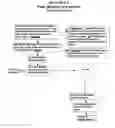
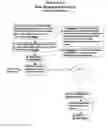
Drawing 1—A is part of a flow diagram showing the invention of this application. This drawing shows Steps 10 through 64. Brief descriptions of these steps follow:
| Step | |
| No. | Description |
| 10. | Declares that a set of Basic Rules and Modified Rules are |
| displayed prior to beginning a blackjack game. The set of Basic | |
| Rules are in effect while the set of Modified Rules are not in effect | |
| at this point. | |
| 12. | Declares two key qualifications placed on the set of Modified |
| Rules. | |
| 20. | Declares that a set of Side Wager Rules is displayed prior to |
| beginning a blackjack game, and these rules are in effect. | |
| 22. | Declares a key qualification placed on the set of Side Wager |
| Rules. | |
| 30. | Player places a blackjack wager to begin the blackjack game. |
| 40. | Player makes a “Yes”/“No” decision whether or not to place an |
| optional side wager. | |
| 50. | Depicts a “No” decision to place a side wager. That is, player |
| decides to not place an optional side wager. | |
| 60. | Player plays the blackjack game using the set of Basic Rules |
| (declared in Step 10). | |
| 62. | Player's blackjack wager is resolved using the set of Basic Rules. |
| 64. | The blackjack game is declared to be at an end. |
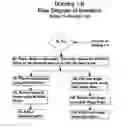
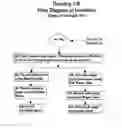
Drawing 1-B is the second part of a flow diagram showing the invention of this application. This drawing shows Steps 70 through 104. Brief descriptions of these steps follow:
| Step | |
| No. | Description |
| 70. | Depicts a “Yes” decision to place a side wager. That is, player |
| decides to place an optional side wager. (This is one of the | |
| possible outcomes from Step 40. of Drawing 1-A.) | |
| 80. | Player places an optional side wager to play the side wager |
| proposition game. Placing this wager causes the blackjack game | |
| set of Modified Rules to replace the set of Basic Rules. (These | |
| rule sets are declared in Steps 10. and 12. of Drawing 1-A.) | |
| 90. | Player plays the blackjack game using the set of Modified Rules. |
| 94. | Player's blackjack wager is resolved using the set of Modified |
| Rules. | |
| 96. | The blackjack game is declared to be at an end. |
| 100. | Player plays the side wager proposition game using Side Wager |
| Rules. (These rules are declared in Step 20 of Drawing 1-A.) | |
| 102. | Player's side wager is resolved using the set of Side Wager Rules. |
| 104. | The side wager proposition game is declared to be at an end, |
Table 1-A depicts relevant blackjack game rules and statistics for the BASELINE game configuration for Example #1.
Table 1-B depicts relevant “In Between” side wager game rules and statistics for the BASELINE game configuration for Example #1.
Table 1-C depicts relevant blackjack game rules and statistics for the MODIFIED game configuration for Example #1.
Table 1-D depicts relevant “In Between” side wager game rules and statistics for the MODIFIED game configuration for Example #1.
Table 2-A depicts relevant blackjack game rules and statistics for the BASELINE game configuration for Example #2.
Table 2-B depicts relevant “King's Bounty” side wager game rules and statistics for the BASELINE game configuration for Example #2.
Table 2-C depicts relevant blackjack game rules and statistics for the MODIFIED game configuration for Example #2.
Table 2-D depicts relevant “King's Bounty” side wager game rules and statistics for the MODIFIED game configuration for Example #2.
Table 3 depicts a set of typical blackjack rules for U.S. casinos.
Table 4 depicts a typical set of blackjack statistics and detailed rules for U.S. casinos.
Table 5 depicts player basic strategy for blackjack in U.S. casinos.
Table 6 depicts the derivation of the house advantage for the MODIFIED blackjack game used in Examples #1 and #2.
DETAILED DESCRIPTION OF INVENTION
Introduction
Blackjack side wagers are numerous and popular because they are attractive to players and quite profitable for casinos. From a player standpoint, side wagers offer a simple and refreshing alternative to the repetitive decision-making required to play the blackjack game as well as the nearly 1-to-1, or “even money”, blackjack payouts. Over time, players can find repeated decision-making and “even money” payouts tiring and tedious. On the other hand, side wager games historically do not require any player decisions and are decided quickly. Many of them also offer a variety of escalating payouts that culminate in a jackpot-type payout. Indeed, side wagers have the same instant jackpot appeal as buying a lottery ticket.
From a casino standpoint, blackjack side wagers are attractive because they carry a much higher house advantage than the underlying blackjack game. The house advantage for blackjack is 0.45% when players use basic strategy (see Table 4). The main reason for this low house advantage is that the game is incredibly popular so there is competition among casinos for these players. In contrast, house advantages for blackjack side wagers typically range from 3% to 25%, or even higher. Casinos have discovered that some players will accept these higher house advantages in exchange for an exciting, quickly-decided chance at a jackpot payout. A goal of this invention is to increase the number of players who place blackjack side wagers.
To summarize, blackjack side wagers are powerfully attractive to both players and casinos. As a result, casinos are always interested in attracting more blackjack side wager play.
DEFINITION
Relative to this invention, a blackjack side wager is defined as an optional wager placed by a player prior to beginning a blackjack game. While the overwhelming majority of blackjack side wagers fit this definition, a few of the prior art games examined for this application either allow a side wager after the blackjack game begins or require an additional wager before the blackjack game begins. Both of these side wager types are outside the scope of this invention.
THE INVENTION
This invention is a general method for a blackjack game and side wager game combination which will persuade more players to place side wagers. It is not a specific game or combination of games. Rather it is a method that can be applied to various combinations of blackjack games and side wager games.
The method employs three blackjack gaming elements that have never been combined before. These elements uniquely impart to a blackjack player the perception of a free blackjack game rule enhancement upon placing a side wager: The appeal of a free blackjack game rule enhancement will persuade more players to place side wagers—thus providing increased entertainment for players and increased revenue for casinos.
As outlined in “BRIEF SUMMARY OF INVENTION”, these elements are:
-
- 1) Placing a side wager of this method always activates at least one blackjack rule enhancement that improves the statistical rate of return on a player's blackjack wager.
- 2) Placing a side wager of this method never modifies or creates any blackjack game rule that could reduce the statistical rate of return on the player's blackjack wager.
- 3) Placing the side wager of this method always activates a proposition game that is not related to any above blackjack game rule enhancement.
Drawings 1-A and 1-B at the end of this section are a flow diagram of this invention. Drawing 1-A shows Steps 10 through 64 while drawing 1-B shows Steps 70 through 104. These drawings are also replicated in the “DRAWINGS” section.
Importantly, this invention is a method that can be applied to many blackjack side wager propositions and/or to many blackjack games with rules different than those cited here. Also, rule enhancements other than the one in the preferred embodiment examples may be used without departing from the spirit of this invention.
Those skilled in the art of casino game design will appreciate how this method may be usefully applied to other casino table games which offer side wager games. Finally, it is within the scope of this invention that, if a particular casino game offers more than one side wager, one of the side wagers may convey a rule enhancement to another side wager thus encouraging players to place both side wagers.
Preferred Embodiments
The preferred embodiment examples below show how two existing blackjack/side wager game combinations can be made more appealing by applying the method of this invention. While these embodiment examples show how the method can be applied to existing blackjack/side wager game combinations, the method is not limited to application to existing game combinations. The method is equally applicable to new blackjack side wager proposition games as long as the side wager is placed prior to beginning the blackjack game.
Structure of the Preferred Embodiment Examples
First are shown the rules and statistics for games as they currently exist; that is, without the method of this invention. These are termed “BASELINE” game configurations. Next shown are rules and statistics for these games after applying the method of this invention. These are termed “MODIFIED” game configurations. Each of the two examples concludes with a section entitled “HOUSE ADVANTAGE ANALYSIS AND SUMMARY” which details the advantages and benefits of this new method.
Example #1
First Preferred Embodiment
The blackjack game in this example is a public domain version of blackjack that is commonly played in United States casinos. Rules and statistics used in this example are shown in Tables 3, 4 and 5 at the end of this section and are taken from http://wizardofodds.com/games/blackjack/ and http://wizardofodds.com/games/blackjack/calculator/ under the main page heading “Blackjack”.
The side wager proposition game in this example is the game “In Between” which is described in http://wizardofodds.com/games/blackjack/appendix/8/. Also reference is made to U.S. patent application Ser. No. 12/471,033 by LaDuca and Santoro on May 22, 2009 and to the side wager game “In Between” marketed by AGS Corporation. Finally, reference is made to the game “Acey Deucey” as described in Wikipedia (see www://wikipedia.org/wiki/Acey_Deucey_(card_game).
To summarize the rules for “In Between” that are relevant to this example, the side wager wins any one of several awards if the blackjack dealer's up card is in between the player's first two blackjack cards (Ace's are always high). Payouts are higher when the “spread” between the player's two cards is less than four (see Table 1-B). The maximum award is paid if all three cards are the same rank (e.g. three 7's). No player skill or strategy is involved in this side wager proposition game, as is common to virtually all side wager games. Finally, the “In Between” side wager must be placed prior to beginning the blackjack game.
Baseline Games
Only the rules and statistics that are relevant to this invention are shown in Table 1-A below (for blackjack) and 1-B (for “In Between”). Additional blackjack rules, statistics and playing strategy are shown in Tables 3, 4 and 5.
| TABLE 1-A |
| Example #1 |
| Blackjack Game |
| - BASELINE Game Rules and Statistics - |
| Player's Blackjack (or natural 21) pays 3-to-2 |
| House Advantage (with or w/o side wager) = 0.44686% (see Table 4) |
| (Basic strategy and all other rules are in Tables 3 and 5.) |
| TABLE 1-B |
| Example #1 |
| “In Between” Side Wager |
| - BASELINE Game Rules and Statistics - |
| Payout | |||
| Event | (x to 1) | Probability | Return |
| Trips (all cards same rank) | 30 | 0.005248 | 0.157440 |
| Spread = 1 | 12 | 0.010111 | 0.121332 |
| Spread = 2 | 6 | 0.018383 | 0.110298 |
| Spread = 3 | 4 | 0.024817 | 0.099268 |
| Spread = 4 or Greater | 1 | 0.209567 | 0.209567 |
| Lose (None Of Above) | −1 | 0.731874 | −.731874 |
| Totals | 1.000000 | −.0339690 |
| House Advantage = | 3.39690% |
The house advantage of approximately 3.40% for the “In Between” game compared to the house advantage of approximately 0.45% for the blackjack game shows why casinos are eager to promote side wager games. Indeed, this side wager game is more than seven times more profitable for the casino that the basic blackjack game when using the basic strategy in Table 5.
Modified Games:
The following modifications show how the BASELINE game combination is improved by applying the method of this invention:
-
- The first modification is a blackjack rule enhancement that automatically takes effect when the player places an “In Between” side wager. This enhanced rule states: “Upon placing an “In Between” wager that is at least equal to the blackjack game wager, a Blackjack (or natural “21”) in the basic blackjack game pays 2-to-1”.
- Notably, if the player does not place an “In Between” wager at least equal to the initial blackjack wager, the payout for a Blackjack (or natural 21) remains at 3-to-2.
- Also note that the rule enhancement is not related to the “In Between” side wager proposition in any way.
- The second modification reduces one of the payouts in the “In Between” payoff table. The payout for “Spread=3” is reduced from 4-to-1 to 3-to-1.
- The reason for this payout reduction is explained in the “HOUSE ADVANTAGE ANALYSIS AND SUMMARY” section below.
- The first modification is a blackjack rule enhancement that automatically takes effect when the player places an “In Between” side wager. This enhanced rule states: “Upon placing an “In Between” wager that is at least equal to the blackjack game wager, a Blackjack (or natural “21”) in the basic blackjack game pays 2-to-1”.
Tables 1-C and 1-D below show rules and statistics for these modifications: Notably a Blackjack (or natural 21) is a purely random event because it occurs only with the player's first two dealt cards. That is, no player “hit”, “stand”, “split”, or “double down” decisions come into play, consequently blackjack basic strategy as shown in Table 5 is not affected.
| TABLE 1-C |
| Example #1 |
| Blackjack Game |
| - MODIFIED Game Rules and Statistics - |
| Upon placing an “In Between” wager that is at least equal to the blackjack |
| wager, a Blackjack (or natural 21) in the blackjack game pays 2-to-1 |
| House Advantage (with side wager) = −1.96641% |
| (For derivation of −1.96641%, see Table 6 at the end of this section.) |
| House Advantage (without side wager) = 0.44686% (See Table 4) |
| (All other rules and basic strategy are included in Tables 3 and 5.) |
| TABLE 1-D |
| Example #1 |
| “In Between” Side Wager |
| - MODIFIED Game Rules and Statistics - |
| Event | Payout | Probability | Return |
| Trips (all cards same rank) | 30 | 0.005248 | 0.157440 |
| Spread = 1 | 12 | 0.010111 | 0.121332 |
| Spread = 2 | 6 | 0.018383 | 0.110298 |
| Spread = 3 | 3 | 0.024817 | 0.074451 |
| Spread = 4 or Greater | 1 | 0.209567 | 0.209567 |
| Loser (None Of Above) | −1 | 0.731874 | −.731874 |
| Totals | 1.000000 | −.0587860 |
| House Advantage = | 5.87860% |
House Advantage Analysis and Summary
-
- 1. The house advantage for the blackjack game in the BASELINE configuration is about 0.45% and about −1.93% in the MODIFIED configuration. (note: −1.93% corresponds to a player advantage)
- This dramatic reversal in the house advantage will make the MODIFIED blackjack game far more attractive to players, thus players will place “In Between” side wars more often.
- The reduced payout of 3-to-1 for “Spread=3” in the “In Between” game is completely transparent to players since the original BASELINE 4-to-1 payout is known only to the game designer and possibly the casino.
- The player only perceives a free blackjack game rule enhancement when choosing to play an attractive “In Between” side wager game, thus players will place more “In Between” side wagers.
- 2. Every time a player does not place a side wager, the blackjack house advantage is about 0.45% for both the BASELING and the MODIFIED configurations.
- This is because, as noted above, the MODIFIED configuration does not convey any blackjack game rule enhancement in the absence of an “In Between” side wager.
- 3. In the BASELINE configuration, every time the player does place a side wager, the “combined house advantage” for the Blackjack and “In Between” games is 1.92188% (the numerical average of 0.44686% and 3.39690%).
- “combined house advantage” is defined here as the numerical average of the blackjack game house advantage and the “In Between” game house advantage assuming the two wagers are equal.
- 4. Now looking at the MODIFIED configuration, every time the player does place an “In Between” side wager, the combined house advantage is 1.95610% (the numerical average of −1.96641% and 5.87860%).
- 5. This 1.95610% is virtually equal to the above 1.92188% for the BASELINE configuration (see Step 3 above).
- 6. Virtual equality provides a sound mathematical basis for modifying the BASELINE games to the method of this invention.
- In the MODIFIED configuration virtual equality is achieved by transparently increasing the house advantage for the “In Between” game to offset the reduced house advantage in the blackjack game.
- 7. So on a “per game” basis, the combined house advantages are virtually equal in both configurations.
- 8. Since the method of this invention has been shown in Item 1 above to be more attractive to players, more “In Between” side wagers will be placed, thus casino gross revenues will increase.
- 1. The house advantage for the blackjack game in the BASELINE configuration is about 0.45% and about −1.93% in the MODIFIED configuration. (note: −1.93% corresponds to a player advantage)
Example #2
Second Preferred Embodiment
As in the first example, the blackjack game is a public domain version commonly played in United States casinos. Rules and statistics used in this example are in Tables 3, 4 and 5 at the end of this section and are taken from http://wizardofodds.com/games/blackjack/ and http://wizardofodds.com/games/blackjack/calculator/ under the main page heading “Blackjack”.
The side wager in this example is “King's Bounty”, a blackjack side wager game marketed by Bally Technologies. Rules and statistics can be found in URL http://wizardofodds.com/games/blackjack/appendix/8. To summarize the rules for “King's Bounty” that are relevant to this example, the side wager pays one of several awards based on the player's first two blackjack cards if they total 20 blackjack points. In a special jackpot case, the dealer's first two cards are also used (see Table 2-B). Also, no player skill or strategy is involved in the “King's Bounty” side wager game, as is common to virtually all side wager games. Finally, the “King's Bounty” side wager must be placed prior to beginning the blackjack game.
Baseline Blackjack & “King's Bounty” Games
Only the rules and statistics that are relevant to this invention are shown below in Table 2-A (for blackjack) and 2-B (for “King's Bounty”). Additional blackjack rules, statistics and playing strategy are shown in Tables 3, 4 and 5.
| TABLE 2-A |
| Example #2 |
| Blackjack Game |
| - BASELINE Game Rules and Statistics - |
| Player's Blackjack (or natural 21) pays 3-to-2 | |
| House Advantage (with or w/o side wager) 0.44686% (see Table) | |
| (Basic strategy and all other rules are in Tables 3 and 5.) | |
| TABLE 2-B |
| Example #2 |
| “King's Bounty” Side Wager |
| - BASELINE Game Rules and Statistics - |
| Payout | Probability | Return | |
| Event | (x to 1) | (%) | (%) |
| Pair K's (Spades) + Dealer BJ | 1000 | 0.0015% | 1.4578% |
| Pair K's (Spades) | 100 | 0.0295% | 2.9756% |
| Pair K's - Suited exc. Spades | 30 | 0.0928% | 2.8753% |
| Pair Suited Q's, J's, 10's | 20 | 0.3710% | 7.7912% |
| Suited 20 | 9 | 2.0777% | 20.7767% |
| Pair - Unsuited K's | 6 | 0.4452% | 3.1165% |
| Unsuited 20 | 4 | 7.5686% | 37.8432% |
| Totals | 10.5862% | 76.8363% |
| House Advantage = | 23.1637% |
Modified Blackjack and “King's Bounty” Games
The following modifications show how the BASELINE GAMES are improved by applying the method of this submission:
-
- Table 2-C shows the first modification which adds an enhanced rule to the blackjack game. The new rule states that “Upon placing an optional “King's Bounty” wager that is at least equal to the blackjack wager, a Blackjack (or natural 21) pays 2-to-1”.
- Notably, if the player does not place the optional “King's Bounty” wager, the payout for a Blackjack (or natural “21”) remains at 3-to-2.
- Also note that the rule enhancement is not related to the “King's Bounty” side wager proposition in any way.
- Table 2-D shows the second modification which reduces two payouts in the “King's Bounty” payout table. Payouts for a “Pair K's (Spades)” and “Suited 20” are reduced from 100-to-1 to 90-to-1 and 9-to-1 to 8-to-1 respectively.
- The reason for this payout reduction is explained in the “HOUSE ADVANTAGE ANALYSIS AND SUMMARY” section below.
- Table 2-C shows the first modification which adds an enhanced rule to the blackjack game. The new rule states that “Upon placing an optional “King's Bounty” wager that is at least equal to the blackjack wager, a Blackjack (or natural 21) pays 2-to-1”.
| TABLE 2-C |
| Example #2 |
| Blackjack Game |
| - MODIFIED Game Rules and Statistics Per This Patent Application - |
| Upon placing an optional “King's Bounty” wager that is at least equal to |
| the Blackjack wager, a Blackjack (or natural 21) pays 2-to- |
| House Advantage (with side wager) = −1.96641% |
| (For derivation of −1.96641%, see Table 6 at the end of this section.) |
| House Advantage (without side wager) = 0.44686% (See Table 4) |
| (All other rules and basic strategy are included in Tables 3 and 5.) |
| TABLE 2-D |
| Example #2 |
| “King's Bounty” Side Wager |
| - MODIFIED Game Rules and Statistics - |
| Payout | Probability | Return | |
| Event | (x to 1) | (%) | (%) |
| Pair K's (Spades) + Dealer BJ | 1000 | 0.0015% | 1.4578% |
| Pair K's (Spades) | 90 | 0.0295% | 2.6810% |
| Pair K's - Suited exc. Spades | 30 | 0.0928% | 2.8753% |
| Pair Suited Q's, J's, 10's | 20 | 0.3710% | 7.7912% |
| Suited 20 | 8 | 2.0777% | 18.6990% |
| Pair - Unsuited K's | 6 | 0.4452% | 3.1165% |
| Unsuited 20 | 4 | 7.5686% | 37.8432% |
| Totals | 10.5862% | 74.4640% |
| House Advantage = | 25.5360% |
House Advantage Analysis and Summary
-
- 1. The house advantage for the blackjack game in the BASELINE configuration is about 0.45% and about −1.93% in the MODIFIED configuration. (Note: −1.93% corresponds to a player advantage)
- This dramatic reversal in the house advantage will make the MODIFIED blackjack game far more attractive to players.
- The reduced payouts in the “King's Bounty” game is completely transparent to players since the BASELINE 100-to-1 and 9-to-1 payouts are known only to the game designer and possibly the casino.
- The player only perceives a free blackjack game rule enhancement when choosing to play an attractive “King's Bounty” side wager game, thus players will place more “King's Bounty” side wars.
- 2. Every time a player does not place a side wager, the blackjack house advantage is about 0.45% for both the BASELING and the MODIFIED configurations.
- This is because, as noted above, the MODIFIED configuration does not convey any blackjack game rule enhancement in the absence of an “King's Bounty” side wager.
- 3. In the BASELINE configuration, every time the player does place a side wager, the “combined house advantage” for the blackjack and “King's Bounty” games is 11.8053% (the numerical average of 0.44686% and 23.1637%).
- “combined house advantage” is defined here as the numerical average of the blackjack game house advantage and the “King's Bounty” game house advantage assuming the two wagers are equal.
- 4. Now looking at the MODIFIED configuration, every time the player does place a “King's Bounty” side wager, the combined house advantage is 11.7898% (the average of −1.96641% and 25.5360%).
- 5. This 11.7898% is virtually equal to the above 11.8053% for the BASELINE configuration (see Step 3 above).
- 6. Virtual equality provides a sound mathematical basis for modifying the BASELINE games to the method of this invention.
- In the MODIFIED configuration virtual equality is achieved by transparently increasing the house advantage for the “King's Bounty” game to offset the reduced house advantage in the blackjack game.
- 7. So on a “per game” basis, the combined house advantage percentages are virtually equal in both configurations.
- 8. Since the method of this invention has been shown in Item 1 above to be more attractive to players, more “King's Bounty” side wagers will be placed, thus casino gross revenues will increase.
- 1. The house advantage for the blackjack game in the BASELINE configuration is about 0.45% and about −1.93% in the MODIFIED configuration. (Note: −1.93% corresponds to a player advantage)
While many additional examples could be included here that are based on blackjack games with different rules and/or additional side wager proposition games, the above examples demonstrate (a) how this method works, (b) why it will persuade more blackjack players to place side wagers, and (c) how it can increase casino revenues.
In summary, this side wager method is unique because it provides a side wager proposition game which is independent of a blackjack rule enhancement that is triggered by placing the side wager. Furthermore, the blackjack game rule enhancement is unencumbered by any additional blackjack rule that could reduce the statistical rate of return on the player's blackjack wager. This invention is also unique to the gaming industry because the side wager conveys a tangible rule enhancement to the blackjack game while offsetting the casino cost for the enhancement by transparently reducing side wager proposition payouts. For these several reasons, this invention advances the state of the art by uniquely benefiting both players and casinos.
Preferable Additional Elements
These preferable additional elements will enable the method of this invention to reach its maximum commercial potential:
-
- 1. A high profile blackjack game event is chosen for the rule enhancement. In the preferred embodiment this is a Blackjack (or natural 21).
- Enhancing a high profile blackjack event creates an additional desirable linkage between a player's natural interest in high profile blackjack events and the side wager.
- 2. The side wager is at least equal to the player's blackjack wager.
- This element simplifies both player instructions and payout procedures, and thus increases game speed.
- 1. A high profile blackjack game event is chosen for the rule enhancement. In the preferred embodiment this is a Blackjack (or natural 21).
| TABLE 3 |
| Typical Basic Blackjack Rules For U.S. Casinos |
| 1. | Blackjack may be played with one to eight decks of 52-card decks. |
| 2. | Aces may be counted as 1 or 11 points, 2 to 9 according to pip value, and tens |
| and face cards count as ten points. | |
| 3. | The value of a hand is the sum of the point values of the individual cards. Except, |
| a “blackjack” is the highest hand, consisting of an ace and any 10-point card, and | |
| it outranks all other 21-point hands. | |
| 4. | After the players have bet, the dealer will give two cards to each player and two |
| cards to himself. One of the dealer cards is dealt face up. The facedown card is | |
| called the “hole card.” | |
| 5. | If the dealer has an ace showing, he will offer a side bet called “insurance.” This |
| side wager pays 2 to 1 if the dealer's hole card is any 10-point card. Insurance | |
| wagers are optional and may not exceed half the original wager. | |
| 6. | If the dealer has a ten or an ace showing (after offering insurance with an ace |
| showing), then he will peek at his facedown card to see if he has a blackjack. If he | |
| does, then he will turn it over immediately. | |
| 7. | If the dealer does have a blackjack, then all wagers (except insurance) will lose, |
| unless the player also has a blackjack, which will result in a push. The dealer will | |
| resolve insurance wagers at this time. | |
| 8. | Play begins with Blackjack may be played with one to eight decks of 52-card |
| decks. | |
| 9. | Aces may be counted as 1 or 11 points, 2 to 9 according to pip value, and tens |
| and face cards count as ten points. | |
| 10. | The value of a hand is the sum of the point values of the individual cards. Except, |
| a “blackjack” is the highest hand, consisting of an ace and any 10-point card, and | |
| it outranks all other 21-point hands. | |
| 11. | After the players have bet, the dealer will give two cards to each player and two |
| cards to himself. One of the dealer cards is dealt face up. The facedown card is | |
| called the “hole card.” | |
| 12. | If the dealer has an ace showing, he will offer a side bet called “insurance.” This |
| side wager pays 2 to 1 if the dealer's hole card is any 10-point card. Insurance | |
| wagers are optional and may not exceed half the original wager. | |
| 13. | If the dealer has a ten or an ace showing (after offering insurance with an ace |
| showing), then he will peek at his facedown card to see if he has a blackjack. If he | |
| does, then he will turn it over immediately. | |
| 14. | If the dealer does have a blackjack, then all wagers (except insurance) will lose, |
| unless the player also has a blackjack, which will result in a push. The dealer will | |
| resolve insurance wagers at this time. | |
| 15. | Play begins with the player to the dealer's left. The following are the choices |
| available to the player: |
| a. | Stand: Player stands pat with his cards. | |
| b. | Hit: Player draws another card (and more if he wishes). If this card causes | |
| the player's total points to exceed 21 (known as “breaking” or “busting”) | ||
| then he loses. | ||
| c. | Double: Player doubles his bet and gets one, and only one, more card. | |
| d. | Split: If the player has a pair, or any two 10-point cards, then he may | |
| double his bet and separate his cards into two individual hands. The dealer | ||
| will automatically give each card a second card. Then, the player may hit, | ||
| stand, or double normally. However, when splitting aces, each ace gets | ||
| only one card. Sometimes doubling after splitting is not allowed. If the | ||
| player gets a ten and ace after splitting, then it counts as 21 points, not a | ||
| blackjack. Usually the player may keep re-splitting up to a total of four | ||
| hands. Sometimes re-splitting aces is not allowed. | ||
| e. | Surrender: The player forfeits half his wager, keeping the other half, and | |
| does not play out his hand. This option is only available on the initial two | ||
| cards, and depending on casino rules, sometimes it is not allowed at all. |
| 16. | After each player has had his turn, the dealer will turn over his hole card. If the |
| dealer has 16 or less, then he will draw another card. A special situation is when | |
| the dealer has an ace and any number of cards totaling six points (known as a | |
| “soft 17”). At some tables, the dealer will also hit a soft 17. | |
| 17. | If the dealer goes over 21 points, then any player who didn't already bust will win. |
| 18. | If the dealer does not bust, then the higher point total between the player and |
| dealer will win. | |
| 19. | Winning wagers pay even money, except a player winning blackjack pays more |
| than even money (usually 3 to 2). | |
| TABLE 4 |
| Typical Blackjack Statistics and Detailed Rules For U.S. Casinos |
| -See Step 11 for House Advantage - |
| 1. | Number of decks of cards used = 6 |
| 2. | Dealer stands on a soft 17 |
| 3. | Player may not double after a split. |
| 4. | Player may double on any first two cards. |
| 5. | Player may re-split to three hands. |
| 6. | Player may not re-split Aces. |
| 7. | Player may not HIT re-split Aces. |
| 8. | Player loses only original bet against dealer's blackjack. |
| 9. | No surrender is allowed. |
| 10. | Blackjack pays 3-to-2 |
| 11. | House advantage (using Basis Strategy from Table 5) = 0.44686% |
| TABLE 5 |
| Player Basic Strategy For Blackjack in U.S. Casinos |
| 1. | Split |
| a) | Always split aces and 8s. | |
| b) | Never split 5s and 10s. | |
| c) | Split 2s and 3s against a dealer 4-7, and against a 2 or 3 if DAS | |
| is allowed. | ||
| d) | Split 4s only if DAS is allowed and the dealer shows a 5 or 6. | |
| e) | Split 6s against a dealer 3-6, and against a 2 if DAS is allowed. | |
| f) | Split 7s against a dealer 2-7. | |
| g) | Split 9s against a dealer 2-6 or 8-9. |
| 2. | Double |
| a) | Double hard 9 vs. dealer 3-6. | |
| b) | Double hard 10 except against a dealer 10 or A. | |
| c) | Double hard 11 except against a dealer A. | |
| d) | Double soft 13 or 14 vs. dealer 5-6. | |
| e) | Double soft 15 or 16 vs. dealer 4-6. | |
| f) | Double soft 17 or 18 vs. dealer 3-6. |
| 3. | Hit or Stand |
| a) | Always hit hard 11 or less. | |
| b) | Stand on hard 12 against a dealer 4-6, otherwise hit. | |
| c) | Stand on hard 13-16 against a dealer 2-6, otherwise hit. | |
| d) | Always stand on hard 17 or more. | |
| e) | Always hit soft 17 or less. | |
| f) | Stand on soft 18 except hit against a dealer 9, 10, or A. | |
| g) | Always stand on soft 19 or more | |
| TABLE 6 |
| Derivation Of House Advantage For The MODIFIED |
| Blackjack Game In Examples 1 and 2 |
| 1. | The probability of a Blackjack (or natural 21) using a standard |
| 52-card deck is: |
| C(4,1) × C(16,1)/C(52,2) = (4 × 16)/1326 = 64/1326 = | |
| 0.04826546 |
| 2. | For every Blackjack (or natural 21), the player receives an extra |
| 0.5 betting units due to the MODIFIED Blackjack rule. |
| 0.5 is the difference between the basic payout of 3-to-2 (1.5 | |
| units) and the improved payout of 2-to-1 (2.0 units) |
| 3. | So the house advantage IMPROVEMENT is 0.5 units × |
| 0.04826546 = 0.02413273002 | |
| 4. | The IMPROVEMTNT of 0.02413273002 is now subtracted from |
| the BASELINE house advantage to yield the MODIFIED | |
| house advantage: |
| 0.0044686 (BASELINE) − 0.02413273002 | |
| (IMPROVEMENT) = −.01966413002, which is equal | |
| to −1.966413002% |
| 5. | So the MODIFIED HOUSE ADVANTAGE is −1.9664% (Since |
| the house advantage is a negative number, the game carries | |
| a player advantage of 1.9664%.) | |
Claims
What is claimed is:1. A method of playing a blackjack game in conjunction with a side wager proposition game, both games being banked by the house and comprising, in combination, the steps of:
a. said house displaying to a player a set of blackjack rules to play said blackjack game;
b. said house displaying to said player a modified set of blackjack rules to play said blackjack game,
i. said modified set of blackjack rules being used only if said player places a side wager,
ii. said modified set of blackjack rules being formulated to yield a higher statistical rate of return on said player's blackjack wager than if said player had played said blackjack game according to said set of blackjack rules,
iii. said statistical higher rate of return to apply to at least one of said player's said blackjack wager and any additional blackjack wager placed by said player during said blackjack game,
iv. said higher statistical rate of return being achieved by means of at least one blackjack game rule enhancement,
v. said blackjack game rule enhancement being at least one of adding at least one rule to said set of blackjack rules, modifying at least one rule from said set of blackjack rules, and deleting at least one rule from said set of blackjack rules,
vi. said modified set of blackjack rules being restricted to not include any rule that could reduce said statistical rate of return on said player's said blackjack wager;
c. said house displaying to said player a set of side wager proposition game rules to play said side wager proposition game,
i. said player having the option to place or to decline to place said side wager,
ii. if placing said side wager, said player being required to place said side wager in conjunction with said blackjack wager and to place said side wager prior to beginning said blackjack game,
iii. said set of side wager proposition game rules being restricted to not involve or use any said blackjack game rule enhancement,
iv. said set of side wager proposition game rules being restricted to one of paying an award to said player for winning said side wager proposition game and collecting said side wager from said player for losing said side wager proposition game,
v. said set of side wager proposition game rules allowing said player to play said side wager proposition game according to said set of side wager proposition game rules and to play said blackjack game according to said modified set of blackjack rules, thus nullifying said set of blackjack rules;
d. said house offering to receive from said player one of said blackjack wager only and both said blackjack wager and said side wager;
e. upon said player placing both said blackjack wager and said side wager,
i. said house receiving said blackjack wager and said side wager,
ii. said player playing said blackjack game according to said modified set of blackjack game rules,
iii. said house using said modified set of blackjack rules to resolve said blackjack wager and said any additional blackjack wager placed by said player during said blackjack game,
iv. said house declaring an end to said blackjack game,
v. said player playing said side wager proposition game according to said set of side wager proposition game rules,
vi. said house using said side wager proposition game rules to resolve said side wager and any additional side wager placed by said player during said side wager proposition game,
vii. said house declaring an end to said side wager proposition game;
f. upon said player placing said blackjack wager only,
i. said house receiving said blackjack wager,
ii. said player playing said blackjack game according to said set of blackjack rules,
iii. said house using said set of blackjack rules to resolve said blackjack wager and said any additional blackjack wager placed during said blackjack game,
iv. said house declaring an end to said blackjack game.
2. The method of claim 1 wherein the payout award for said player's Blackjack (or natural 21) is 3-to-2 in said set of blackjack rules and 2-to-1 in said modified set of blackjack rules.
3. The method of claim 2 wherein said side wager is at least equal to said blackjack wager.
4. The method of claim 1 wherein the following statement is deleted: “said modified set of blackjack rules being restricted to not include any rule that could reduce said statistical rate of return on said player's said blackjack wager”.
5. The method of claim 1 wherein the following statement is deleted: “said set of side wager proposition game rules being restricted to one of paying an award to said player for winning said side wager proposition game and collecting said side wager from said player for losing said side wager proposition game”.
6. The method of claim 1 wherein said set of side wager proposition game rules are modified to reduce the statistical rate of return on said player's said side wager as a means of offsetting reduced said house revenue due to said at least one blackjack game rule enhancement.
7. The method of claim 1 wherein the terms “blackjack game”, “set of blackjack rules”, “modified set of blackjack rules”, “blackjack wager”, “additional blackjack wager” and “blackjack game rule enhancement” are replaced by the terms “poker-type game”, “set of poker-type game rules”, “modified set of poker-type game rules”, “poker-type wager”, “additional poker-type wager” and “poker-type game rule enhancement” respectively.
8. The method of claim 1 wherein the terms “blackjack game”, “set of blackjack rules”, “modified set of blackjack rules”, “blackjack wager”, “additional blackjack wager” and “blackjack game rule enhancement” are replaced by the terms “craps game”, “set of craps game rules”, “modified set of craps game rules”, “craps wager”, “additional craps wager” and “craps game rule enhancement” respectively.
9. The method of claim 1 wherein the terms “blackjack game”, “set of blackjack rules”, “modified set of blackjack rules”, “blackjack wager”, “additional blackjack wager” and “blackjack game rule enhancement” are replaced by the terms “baccarat game”, “set of baccarat game rules”, “modified set of baccarat game rules”, “baccarat wager”, “additional baccarat wager” and “baccarat game rule enhancement” respectively.
10. The method of claim 1 wherein the terms “blackjack game”, “set of blackjack rules”, “modified set of blackjack rules”, “blackjack wager”, “additional blackjack wager” and “blackjack game rule enhancement” are replaced by the terms “roulette game”, “set of roulette game rules”, “modified set of roulette game rules”, “roulette wager”, “additional roulette wager” and “roulette game rule enhancement” respectively.
11. The method of claim 1 wherein the terms “blackjack game”, “set of blackjack rules”, “modified set of blackjack rules”, “blackjack wager”, “additional blackjack wager” and “blackjack game rule enhancement” are replaced by the terms “keno game”, “set of keno game rules”, “modified set of keno game rules”, “keno wager”, “additional keno wager” and “keno game rule enhancement” respectively.
12. The method of claim 1 wherein the terms “blackjack game”, “set of blackjack rules”, “modified set of blackjack rules”, “blackjack wager”, “additional blackjack wager” and “blackjack game rule enhancement” are replaced by the terms “bingo game”, “set of bingo game rules”, “modified set of bingo game rules”, “bingo wager”, “additional bingo wager” and “bingo game rule enhancement” respectively.
Images & Drawings included:

Sources:
- United States Patent and Trademark Office - verify current appl. status at the USPTO↗
Recent applications in this class:
- » 20250121274 2025-04-17
Multi-Purpose Interactive Game Room - » 20220143490 2022-05-12
Chip racks including a rack for holding chips and a card reader and related devices - » 20200254330 2020-08-13
CHIP RACKS INCLUDING A RACK FOR HOLDING CHIPS AND A CARD READER AND RELATED DEVICES - » 20200030688 2020-01-30
Knot game - » 20190134493 2019-05-09
Chip racks including a rack for holding chips and a card reader and related devices - » 20180140940 2018-05-24
Interactive game with innovative cup - » 20180133589 2018-05-17
EXERCISE GAME PIECE, KIT, AND METHODS - » 20180008883 2018-01-11
Last Peg Lose - » 20170361212 2017-12-21
IQ - A GAME DESIGNED FOR MULTIPLE PLAYERS - » 20170354863 2017-12-14
SELF-INDUCED DYSARTHRIA GAME