Organic compound and photovoltaic device comprising the same
US20160043328A1
2016-02-11
14/885,624
2015-10-16
✅ Patent granted
US 9,508,938 B2
2016-11-29
-
-
Shane Fang
FisherBroyles LLP | Adam Whiting
2035-10-16
Abstract:
The present invention provides a organic compound of the general structural formula I and photovoltaic device and photovoltaic layer comprising thereof
Said organic compound forms rod-dike supramolecules and absorbs electromagnetic radiation in at least one predetermined spectral subrange within a wavelength range from 400 to 3000 nm with excitation of electron-hole pairs. The polycyclic core Cor1, the bridging group B, and the polycyclic core Cor2 form a molecular system selected from the list comprising donor-bridge-acceptor-bridge-donor and acceptor-bridge-donor-bridge-acceptor in which a dissociation of excited electron-hole pairs is carried out. A solution of the organic compound or its salt forms a solid photo voltaic layer on a substrate.
Inventors:
- Pavel Ivan Lazarev 45 🇺🇸 Menlo Park, CA, United States
- Alexey Nokel 9 🇷🇺 Moscow, Russian Federation
- Pavel Khokhlov 5 🇺🇸 Belmont, CA, United States
Assignee:
- Cryscade Solar Limited 4 🇨🇾 Nicosia, Cyprus
Applicant:
Interested in similar patents?
Get notified when new applications in this technology area are published.
Classification:
C07D519/00 » CPC further
Heterocyclic compounds containing more than one system of two or more relevant hetero rings condensed among themselves or condensed with a common carbocyclic ring system not provided for in groups or
H01L51/42 » CPC further
Solid state devices using organic materials as the active part, or using a combination of organic materials with other materials as the active part; Processes or apparatus specially adapted for the manufacture or treatment of such devices, or of parts thereof specially adapted for sensing infra-red radiation, light, electro-magnetic radiation of shorter wavelength or corpuscular radiation and adapted for the conversion of the energy of such radiation into electrical energy or for the control of electrical energy by such radiation using organic materials as the active part, or using a combination of organic materials with other material as the active part; Multistep processes for their manufacture
H01L51/0053 » CPC further
Solid state devices using organic materials as the active part, or using a combination of organic materials with other materials as the active part; Processes or apparatus specially adapted for the manufacture or treatment of such devices, or of parts thereof; Selection of organic semiconducting materials, e.g. organic light sensitive or organic light emitting materials; Macromolecular systems with low molecular weight, e.g. cyanine dyes, coumarine dyes, tetrathiafulvalene; Polycyclic condensed aromatic hydrocarbons, e.g. anthracene Aromatic anhydride or imide compounds, e.g. perylene tetra-carboxylic dianhydride, perylene tetracarboxylic diimide
H01L51/0055 » CPC further
Solid state devices using organic materials as the active part, or using a combination of organic materials with other materials as the active part; Processes or apparatus specially adapted for the manufacture or treatment of such devices, or of parts thereof; Selection of organic semiconducting materials, e.g. organic light sensitive or organic light emitting materials; Macromolecular systems with low molecular weight, e.g. cyanine dyes, coumarine dyes, tetrathiafulvalene; Polycyclic condensed aromatic hydrocarbons, e.g. anthracene containing five rings, e.g. pentacene
H01L51/0071 » CPC further
Solid state devices using organic materials as the active part, or using a combination of organic materials with other materials as the active part; Processes or apparatus specially adapted for the manufacture or treatment of such devices, or of parts thereof; Selection of organic semiconducting materials, e.g. organic light sensitive or organic light emitting materials; Macromolecular systems with low molecular weight, e.g. cyanine dyes, coumarine dyes, tetrathiafulvalene aromatic compounds comprising a hetero atom, e.g.: N,P,S Polycyclic condensed heteroaromatic hydrocarbons
C07D471/06 » CPC further
Heterocyclic compounds containing nitrogen atoms as the only ring hetero atoms in the condensed system, at least one ring being a six-membered ring with one nitrogen atom, not provided for by groups - in which the condensed system contains two hetero rings Peri-condensed systems
H01L51/0072 » CPC main
Solid state devices using organic materials as the active part, or using a combination of organic materials with other materials as the active part; Processes or apparatus specially adapted for the manufacture or treatment of such devices, or of parts thereof; Selection of organic semiconducting materials, e.g. organic light sensitive or organic light emitting materials; Macromolecular systems with low molecular weight, e.g. cyanine dyes, coumarine dyes, tetrathiafulvalene aromatic compounds comprising a hetero atom, e.g.: N,P,S; Polycyclic condensed heteroaromatic hydrocarbons comprising only nitrogen in the heteroaromatic polycondensed ringsystem, e.g. phenanthroline, carbazole
C07D241/46 » CPC further
Heterocyclic compounds containing 1,4-diazine or hydrogenated 1,4-diazine rings condensed with carbocyclic rings or ring systems with only hydrogen or carbon atoms directly attached to the ring nitrogen atoms Phenazines
C07D471/22 » CPC further
Heterocyclic compounds containing nitrogen atoms as the only ring hetero atoms in the condensed system, at least one ring being a six-membered ring with one nitrogen atom, not provided for by groups - in which the condensed systems contains four or more hetero rings
C07D487/16 » CPC further
Heterocyclic compounds containing nitrogen atoms as the only ring hetero atoms in the condensed system, not provided for by groups - in which the condensed system contains three hetero rings Peri-condensed systems
H01L51/0058 » CPC further
Solid state devices using organic materials as the active part, or using a combination of organic materials with other materials as the active part; Processes or apparatus specially adapted for the manufacture or treatment of such devices, or of parts thereof; Selection of organic semiconducting materials, e.g. organic light sensitive or organic light emitting materials; Macromolecular systems with low molecular weight, e.g. cyanine dyes, coumarine dyes, tetrathiafulvalene; Polycyclic condensed aromatic hydrocarbons, e.g. anthracene containing more than one polycyclic condensed aromatic rings, e.g. bis-anthracene
Y02E10/549 » CPC further
Energy generation through renewable energy sources; Photovoltaic [PV] energy Organic PV cells
Y02E10/549 » CPC further
Energy generation through renewable energy sources; Photovoltaic [PV] energy Organic PV cells
C07D471/00 IPC
Heterocyclic compounds containing nitrogen atoms as the only ring hetero atoms in the condensed system, at least one ring being a six-membered ring with one nitrogen atom, not provided for by groups -
H01L51/00 IPC
Solid state devices using organic materials as the active part, or using a combination of organic materials with other materials as the active part; Processes or apparatus specially adapted for the manufacture or treatment of such devices, or of parts thereof
C07D493/06 » CPC further
Heterocyclic compounds containing oxygen atoms as the only ring hetero atoms in the condensed system in which the condensed system contains two hetero rings Peri-condensed systems
C07D495/14 » CPC further
Heterocyclic compounds containing in the condensed system at least one hetero ring having sulfur atoms as the only ring hetero atoms in which the condensed system contains three hetero rings Ortho-condensed systems
C07D498/04 » CPC further
Heterocyclic compounds containing in the condensed system at least one hetero ring having nitrogen and oxygen atoms as the only ring hetero atoms in which the condensed system contains two hetero rings Ortho-condensed systems
C07D498/22 » CPC further
Heterocyclic compounds containing in the condensed system at least one hetero ring having nitrogen and oxygen atoms as the only ring hetero atoms in which the condensed system contains four or more hetero rings
C07D513/14 » CPC further
Heterocyclic compounds containing in the condensed system at least one hetero ring having nitrogen and sulfur atoms as the only ring hetero atoms, not provided for in groups , or - in which the condensed system contains three hetero rings Ortho-condensed systems
C09B5/62 » CPC further
Dyes with an anthracene nucleus condensed with one or more heterocyclic rings with or without carbocyclic rings Cyclic imides or amidines of peri-dicarboxylic acids of the anthracene, benzanthrene, or perylene series
Description
FIELD OF THE INVENTION
The present invention relates generally to the field of organic chemistry and particularly to an organic compounds and photovoltaic devices intended for transforming energy of light and, specifically, for converting solar energy into electric energy.
BACKGROUND OF THE INVENTION
Development of solar cells or photovoltaic (PV) devices based on organic materials has become an important research field with substantial application perspectives. Features of these devices such as versatility and compatibility with flexible substrates combined with low-cost and large-area production provide them with advantages compared to conventional inorganic silicon-based solar cells. Among various organic semiconductors, liquid crystals (LCs) forming 2D columnar structures (see, C. Destrade, P. Foucher, H. Gasparroux, N. H. Tinh, A. M. Levelut, J. Malthete, Mol. Cryst. Liq. Cryst. 1984, 106, 121) are promising materials for PV applications (see, L. Schmidt-Mende, A. Fechtenkötter, K. Müllen, E. Moons, R. H. Friend, J. D. Mackenzie, Science 2001, 293, 1119). In spite of much effort, the realization of efficient organic solar cells remains a major scientific challenge. There is a known photovoltaic converter based on poly(2-methoxy-5-(2′-ethyl-hexyioxy)-p-phenylenevinylene) (MEH-PPV) copolymer and a perylene-phenyl-ethyl-imide derivative (PPEI) (see J. J. Dittmer et al., Synthetic Metals, Vol. 102,879-880 (1999)). In this system, MEH-PPV acts as a hole acceptor, and PPEI acts as an electron acceptor (hole donor). Excitons which are photogenerated in the organic semiconductor subsequently decay into free charge carriers (electrons and holes) at the interface between the donor and acceptor components. Introduction of PPEI significantly increases the external quantum efficiency of photovoltaic devices employing this system. The PPEI particles are distributed in the MEH-PPV matrix volume over a distance equal to the exciton diffusion lenth (˜9 nm). Thus, a charge separation is stimulated in thin-film MEH-PPV structures in presence of PPEI.
Another known photovoltaic cell comprises the first layer of an organic electron donor material in contact with the second layer made of an organic electron acceptor material (Klaus Petritsch, PhD Thesis, “Organic Solar Cell Architectures”, Cambridge and Graz, July 2000. Chapter 4, Double Layer Devices, p. 67). These electron donor and electron acceptor materials are capable of absorbing light in a wavelength range from 350 to 1000 nm, and these materials are capable of forming a rectifying junction when contact with each other. The cell is provided with electrodes forming Ohmic contacts at least with a part of the surface of organic layers. A distinctive feature of said photovoltaic cell is that the organic materials employed contain organic compounds with generally planar polycyclic nuclei. These compounds are capable of forming a layer structure of a total thickness not exceeding 0.5 micron.
Organic layers of the above referenced materials do not possess crystalline structure which is a disadvantage for the photovoltaic devices. For this reason the mobility of electrons and holes in these layers is much lower as compared to that in the same bulk crystalline materials. As a result, electrons and holes do not leave the active region of a semiconductor structure during the exciton lifetime and recombine. Such electron-hole pairs do not contribute to the photocurrent, and the photovoltaic conversion efficiency decreases. In addition, a decrease in the electron and hole mobility leads to an increase in the resistivity of the material and, hence, in the serial resistance of the photovoltaic device. This implies increase of Ohmic losses and additional decrease in the photovoltaic conversion efficiency. Another disadvantage of the aforementioned photovoltaic devices is that the non-crystalline materials possess extremely small diffusion length of photogenerated excitons. This requires using photovoltaic structures of very thin layers of thickness comparable with the exciton diffusion length, and which also decreases both external and internal quantum efficiency of the photovoltaic devices.
The disclosed organic compounds and photovoltaic devices on their base are intended to overcome the disadvantages of the organic compounds and photovoltaic devices of the prior art.
Definitions of various terms used in the description and claims of the present invention are listed below.
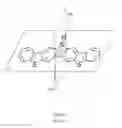
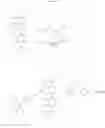
The term “space group C2v” is illustrated in FIG. 1 and indicates that a molecule or molecular part has a 2-fold rotation axis AA′ and a mirror plane M1 parallel to the axis of rotation. Combination of the 2-fold axis and mirror plane gives one more mirror plate M2 which is parallel to the rotation axis and perpendicular to the first mirror plane M1.
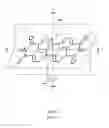
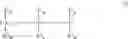
The term “space group D2h” is illustrated in FIG. 2 and indicates that a molecule or molecular part has two 2-fold rotation axes AA′ and BB′ perpendicular to each other and mirror plane M1 perpendicular to one of them. This combination of the symmetry elements gives two additional mirror planes M2 and M3 perpendicular to each other and perpendicular to the initial mirror plane. It also provides one additional 2-fold, axis CC′ which is perpendicular to the initial 2-fold axes. An inversion center O is in the center of the molecular structure.
SUMMARY OF THE INVENTION
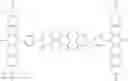
The present invention provides an organic compound of the general structural formula I:
where Cor1 is a polycyclic core of a first type; Cor2 is a polycyclic core of a second type; B is a bridging group providing a bond of the polycyclic core Cor1 with the polycyclic core Cor2 via covalent chemical bonds; R1 and R2 are molecular groups providing solubility of the organic compound in a suitable solvent; m is 1, 2, 3 or 4; n is 0, 1, 2, 3 or 4; X1 X2 are modifying groups which modify energy levels HOMO and LUMO of the polycyclic cores Cor1 and Core2 accordingly; p is 0, 1, 2; and q is 0, 1, 2. Said organic compound forms rod-like supramolecules because of π-π-interaction and absorbs electromagnetic radiation in at least one predetermined spectral subrange within a wavelength range from 400 to 3000 nm with excitation of electron-hole pairs. The polycyclic core Cor1, bridging group B, and polycyclic core Cor2 form a molecular system. Cor1-B-Cor2-B-Cor1 selected from the list comprising donor-bridge-acceptor-bridge-donor and acceptor-bridge-donor-bridge-acceptor in which a dissociation of excited electron-hole pairs is carried out.
In a further aspect, the present invention provides a photovoltaic device comprising a first and a second electrodes and at least one photovoltaic layer having a front surface and a rear surface. Said photovoltaic layer comprises at least one organic compound having a general structural formula I:
where Cor1 is a polycyclic core of a first type; Cor2 is a polycyclic core of a second type; B is a bridging group providing a bond of the polycyclic core Cor1 with the polycyclic core Cor2 via covalent chemical bonds; R1 and R2 are molecular groups providing solubility of the organic compound in a suitable solvent; m is 1, 2, 3 or 4; n is 0, 1, 2,3 or 4; X1 and X2 are modifying groups which modify energy levels HOMO and LUMO of the polycyclic cores Cor1 and Cor2 accordingly; p is 0, 1, 2; q is 0, 1, 2. Said organic compound forms rod-like supramolecules because of π-π-interaction and absorbs electromagnetic radiation in at least one predetermined spectral subrange within a wavelength range from 400 to 3000 nm with excitation of electron-hole pairs. The polycyclic core Cor1, bridging group B, and polycyclic core Cor2 form a molecular system Cor1-B-Cor2-B-Cor1 selected from the list comprising donor-bridge-acceptor-bridge-donor and acceptor- bridge-donor-bridge-acceptor in which a dissociation of excited electron-hole pairs is carried out. The organic compound homeotropically aligned in respect to the photovoltaic layer surface and the polycyclic cores Cor1 and Cor2 assemble into a π-π stack of a first type and a π-π stack of a second type respectively. The stacks of one type realize electron transport, the stacks of another type realize hole transport and said stacks are electrically isolated from each other by the molecular groups R1 and R2.
In still further aspect, the present invention provides a photovoltaic layer comprising at least one organic compound having a general structural formula I:
where Cor1 is a polycyclic core of a first type; Cor2 is a polycyclic core of a second type; B is a bridging group providing a bond of the polycyclic core Cor1 with the polycyclic core Cor2 via covalent chemical bonds; R1 and R2 are molecular groups providing solubility of the organic compound in a suitable solvent; m is 1, 2, 3 or 4; n is 0, 1, 2, 3 or 4; X1 and X2 are modifying groups which modify energy levels HOMO and LUMO of the polycyclic cores Cor1 and Cor2 accordingly; p is 0, 1, 2; q is 0, 1, 2. Said organic compound forms rod-like supramolecules because π-π-interaction and absorbs electromagnetic radiation in at least one predetermined spectral subrange within a wavelength range from 400 to 3000 nm with excitation of electron-hole pairs. The polycyclic core Cor1, the bridging group B, and the polycyclic core Cor2 form a molecular system Cor1-B-Cor2-B-Cor1 selected from the list comprising donor-bridge-acceptor-bridge-donor and acceptor-bridge-donor-bridge-acceptor in which a dissociation of excited electron-hole pairs is carried out. The organic compound homeotropically aligned in respect to the photovoltaic layer surface and the polycyclic cores Cor1 and Cor2 assemble into a π-π stack of a first type and a π-π stack of a second type respectively. The stacks of one type realize electron transport, the stacks of another type realize hole transport and said stacks are electrically isolated from each other by the molecular groups R1 and R2.
BRIEF DESCRIPTION OF THE DRAWINGS
These and various other features and advantages of the present invention will become better understood upon reading of the following detailed description in conjunction with the accompanying drawings and the appended claims provided below, where:
FIG. 1 illustrates a space group C2v.
FIG. 2 illustrates a space group D2h
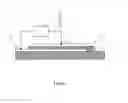
FIG. 3 shows the cross section of a photovoltaic device according to the present invention.
DETAILED DESCRIPTION OF THE INVENTION
The general description of the present invention having been made, a further understanding can be obtained by reference to the specific embodiments, which are given herein only for the purpose of illustration and are not intended to limit the scope of the appended claims.
The present invention provides the organic compound as disclosed hereinabove. A solution of the organic compound or its salt forms a solid photovoltaic layer on a substrate. In one embodiment of the disclosed organic compound at least one of the polycyclic cores is a heterocyclic core. In one embodiment of the disclosed compound, the providing solubility groups R1 and R2 are independently selected from the list comprising —COOH, —SO3H, and —H2PO3 for water or water-miscible solvent; and linear and branched (C1C35)alkyl, (C2C35)alkenyl, and (C2-C35)alkinyl, substituted alkyl, substituted aryl, and any combination thereof for organic solvent, wherein these groups are connected with the cores Cor1 and Cor2 directly or via a spacer selected from the list comprising aryl, —C(O)—, —C(O)O—, —C(O)—NH—, —S(O2)NH—, —O—, —CH2O—, —NH—, >N—, and any combination thereof. In another embodiment of the compound, at least one of the bridging groups B is selected from the list comprising p-phenylene (Php) oligomer, where p is 1, 2, 3, 4 or 5; 2,7-ogliofluorene (Fls) oligomer, where s is 1, 2, 3, or 4, and alkylen groups —(CH2)2—, where j is 1, 2, 3, or 4. In yet another embodiment of the compound, the modifying groups X1 and X2 are independently selected from the list comprising H, Cl, Br, F, OH, NO2, NO, and NH2. In still another embodiment of the compound, at least one of the polycycilc cores Cor1 and Cor2 comprises hetero-atoms selected from the list comprising nitrogen, oxygen, sulfur, and any combination thereof.
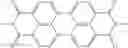
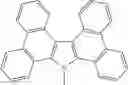
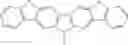
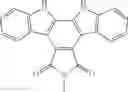
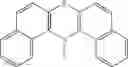
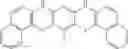
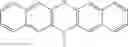
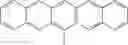
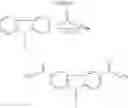
In yet another embodiment of the compound, the polycyclic core Cor2 is selected from the list comprising structures from 1 to 5 shown in Table 1.
| TABLE 1 |
| Examples of the polycyclic core Cor2 |
| 1 | |
| 2 | |
| 3 | |
| 4 | |
| 5 | |
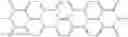
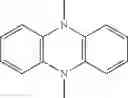
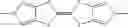
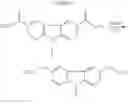
In still another embodiment of the compound, the polycyclic core Cor1 is selected from the list comprising structures from 6 to 20 shown in Table 2.
| TABLE 2 |
| Examples of the polycyclic core Cor1 |
| 6 | |
| 7 | |
| 8 | |
| 9 | |
| 10 | |
| 11 | |
| 12 | |
| 13 | |
| 14 | |
| 15 | |
| 16 | |
| 17 | |
| 18 | |
| 19 | |
| 20 | |
In one embodiment of the disclosed compound, the core Cor1 possesses symmetry of the C2s or D2h space groups, and the core Cor2 possesses symmetry of the D2h space group. In another embodiment of the disclosed compound, the molecular system Cor1-B-Cor2-B-Cor1 possesses a symmetry of the D2h space group. In one embodiment of the compound, the energy levels of donors are correlated with energy levels of acceptor according to the following equations: HOMOA<HOMOD≦LUMOA−1 eV and LUMOA<LUMOD.
In another embodiment of the present invention, perylene diimide serves as the acceptor core Cor2 the bridging group B is selected from the list comprising phenyl and biphenyl, and the energy levels HOMOD and LUMOD of donor cores Cor1 satisfy to the following conditions −6.0 eV<HOMOD<−5.5 eV and −4.0 eV<LUMOD.
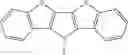
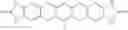
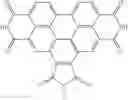
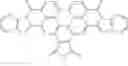
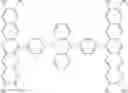
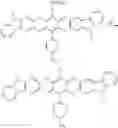
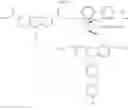
In another embodiment of the present invention, the organic compound is selected from the list comprising structares from 21 to 26 shown in Table 3.
| TABLE 3 |
| Examples of the organic compound according to the present invention |
| 21 | |
| 22 | |
| 23 | |
| 24 | |
| 25 | |
| 26 | |
where R, R1 and R2 are linear and branched (C1C35)alkyl, (C2-C35)alkenyl, and (C2-C35)alkinyl, substituted alkyl, substituted aryl, and any combination thereof; and X is Cl or Br.
In yet another embodiment of the disclosed compound, the suitable solvent is selected from the list comprising water, water-miscible solvent, ketones, carboxylic acids, hydrocarbons, cyclohydrocarbons, chlorohydrocarbons, alcohols, ethers, esters, and any combination thereof.
The present invention also provides the photovoltaic device as disclosed hereinabove. In one embodiment of the disclosed photovoltaic device, at least one of the polycyclic cores Cor1 and Cor2 is a heterocyclic core. In another embodiment of the disclosed photovoltaic device, the providing solubility groups R1 and R2 are independently selected from the list comprising —COOH, —SO3H, and —H2PO3 for water or water-miscible solvent; and linear and branched (C1-C35)alkyl, (C2-C35)alkenyl, and (C2-C35)alkinyl, substituted alkyl, substituted aryl, and any combination thereof for organic solvent, wherein these groups are connected with the cores Cor1 and Cor2 directly or via a spacer selected from the list comprising aryl, —C(O)—, —C(O)O—, —C(O)—NH—, —(SO2)NH—, —O—, —CH2O—, —NH—, >N—, and any combination thereof. In yet another embodiment of the disclosed photovoltaic device, at least one of the bridging groups B is selected from the list comprising p-phenylene (Php) oligomer, where p is 1, 2, 3, 4 or 5; 2,7-oligofluorene (Fls) oligomer, where s is 1, 2, 3, or 4; and alkylen groups —(CH2)j—, where j is 1, 2, 3, or 4. In still another embodiment of the disclosed photovoltaic device, the modifying groups X1 and X2 are selected from the list comprising H, Cl, Br, F, OH, NO2, NO, and NH2, In one embodiment of the disclosed photovoltaic device, at least one of the polycyclic cores Cor 1 and Cor 2 comprises hetero-atoms selected from the list comprising nitrogen, oxygen, sulfur, and any combination thereof. In still another embodiment of the disclosed photovoltaic device, the polycyclic core Cor2 is selected from the list comprising structures from 1 to 5 shown in Table 1. In one embodiment of the disclosed photovoltaic device, the polycyclic core Cor1 is selected from the list comprising structures from 6 to 20 shown in Table 2. In another embodiment of the disclosed photovoltaic device the polycyclic core Cor1 possesses a symmetry of the C2v or D2h space group, and the Cor2 possesses a symmetry of the D2h space group. In yet another embodiment of the disclosed photovoltaic device, the molecular system Cor1-B-Cor2-B-Cor1 possesses a symmetry of the D2h space group. In another embodiment of the disclosed photovoltaic device, the energy levels of donors are correlated with energy levels of acceptor according to the following equations: HOMOA<HOMOD≦LUMOA1 eV and LUMOA<LUMOD. In yet another embodiment of the photovoltaic device, perylene diimide serves as the acceptor core Cor2, the bridging group B is selected from the list comprising phenyl and biphenyl, and the energy levels HOMOD and LUMOD of donor cores Cor1 satisfy to the following conditions −6.0 eV<HOMOD<−5.5 eV and −4.0 eV<LUMOD. In yet another embodiment of the photovoltaic device, the compound is selected from the list comprising structures from 21 to 26 shown in Table3.
In one embodiment of the present invention, the disclosed photovoltaic device comprises the photovoltaic layer, the first electrode formed on at least part of the front surface of said photovoltaic layer, and the second electrode formed on at least part of the rear surface of said photovoltaic layer. In one embodiment of the disclosed photovoltaic device, the second electrode is a reflective electrode for the electromagnetic radiation incident upon the device. In another embodiment of the disclosed photovoltaic device, one said electrode is made of material with work function providing a hole-harvesting contact and a barrier contact for electrons, and another said electrode is made of material with work function providing a barrier contact for holes and an electron-harvesting contact. In yet another embodiment of the disclosed photovoltaic device, the electrode material is selected from the list comprising metals, ITO (indium tin oxide), carbon nanotube conductive coatings, PEDOT: PSS layers, phthalocyanines, LiF, and aluminium-doped zinc oxide. In still another embodiment of the disclosed photovoltaic device, one said electrode comprises an electron-acceptor layer contacting with the photovoltaic layer, and another said electrode comprises an electron-donor layer contacting with the photovoltaic layer. In one embodiment of the present invention, the disclosed photovoltaic device further comprises a substrate bearing said electrodes and said photovoltaic layer. In one embodiment of the disclosed photovoltaic device, the substrate is made of material selected from the list comprising a polymer and glass. In another embodiment of the disclosed photovoltaic device, the substrate is transparent for the incident electromagnetic radiation to which said device is sensitive.
FIG. 3 presents a schematic diagram of the disclosed photovoltaic device, based on a photovoltaic layer (4) located between the first electrode (1) and the second electrode (2). The first electrode is made of material with work function providing a hole-harvesting contact and a barrier contact for electrons, and the second electrode is made of material with work function providing a barrier contact for holes and an electron-harvesting contact. The electrode material may be selected from the list comprising metals, ITO (indium tin oxide), carbon nanotube conductive coatings, PEDOT; PSS layers, phthalocyanines, LiF, and aluminium-doped zinc oxide. At least one of said electrodes is transparent for the incident electromagnetic radiation to which said photovoltaic layer is sensitive so the first electrode shown in FIG. 3 is transparent. Said photovoltaic layer (4) comprises the homeotropically aligned in respect to the surface of the photovoltaic layer organic compound which forms rod-like supramolecules. The rod-like supramolecules are formed by means of π-π-interaction of the single-type polycyclic cores providing different current-conducting-paths with electron and hole conductivity respectively. These current-conducting-paths are electrically isolated among themselves due to the groups providing solubility of the organic compound. The entire structure is formed on a substrate (5) and the electrodes are connected to a resistive load (3). The substrate is made of material selected from the list comprising a polymer and glass.
In one embodiment of the present invention, the photovoltaic device further comprises two or more said photovoltaic layers, wherein said photovoltaic layers comprise different organic compounds having the general structural formula I, and ensuring absorption of electromagnetic radiation in the same or different spectral subranges within a wavelength range from 400 to 3000 nm.
The present invention provides the photovoltaic layer as disclosed hereinabove. In one embodiment of the disclosed photovoltaic layer, at least one of the polycyclic cores Cor1 and Cor2 is a heterocyclic core. In another embodiment of the disclosed photovoltaic layer, the providing solubility groups R1 and R2 are independently selected from the list comprising —COOH, —SO3H, and —H2PO3 for water or water-miscible solvent; and linear and branched (C1-C35)alkyl, (C2-C35)alkenyl, and (C2-C35)alkinyl, substituted alkyl, substituted aryl, and any combination thereof for organic solvent, wherein these groups are connected with the cores Cor1 and Cor2 directly or via a spacer selected from the list comprising aryl, —C(O)—, —C(O)O—, —C(O)—NH—, —(SO2)NH—, —O—, —CH2O—, —NH—, >N—, and any combination thereof. In yet another embodiment of the disclosed photovoltaic layer, at least one of the bridging groups B is selected from the list comprising p-phenylcne (Php) oligomer, where p is 1, 2, 3, 4 or 5; 2,7-oligofluorene (Fls) oligomer, where s is 1, 2, 3, or 4; and alkylen groups —(CH2)j—, where j is 1, 2, 3, or 4. In still another embodiment of the disclosed photovoltaic layer, the modifying groups X1 and X2 are selected from the list comprising H, Cl, Br, F, OH, NO2, NO, and NH2. In one embodiment of the disclosed photovoltaic layer, at least one of the polycyclic cores Co1 and Cor2 comprises hetero-atoms selected from the list comprising nitrogen, oxygen, sulfur, and any combination thereof. In still another embodiment of the disclosed photovoltaic layer, the polycyclic core Cor2 is selected from the list comprising structures from 1 to 5 shown in 1 Table 1. In one embodiment of the disclosed photovoltaic layer, the polycyclic core Cor1 is selected from the list comprising structures from 6 to 20 shown in Table 2. In another embodiment of the disclosed photovoltaic layer the polycyclic core Cor1 possesses a symmetry of the C2v or D2h space group, and the Cor2 possesses a symmetry of the D2h space group. In yet another embodiment of the disclosed photovoltaic layer, the molecular system Cor1-B-Cor2-B-Cor1 possesses a symmetry of the D2h space group. In another embodiment of the disclosed photovoltaic layer, the energy levels of donors are correlated with energy levels of acceptor according to the following equations: HOMOA<HOMOD≦LUMOA1 eV and LUMOA<LUMOD. In yet another embodiment of the photovoltaic layer, perylene diimide serves as the acceptor cote Cor2, the bridging group B is selected from the list comprising phenyl and biphenyl, and the energy levels HOMOD and LUMOD of donor cores. Cor1 satisfy to the following conditions −6.0 eV<HOMOD<−5.5 eV and −4.0 eV<LUMOD. In yet another embodiment of the photovoltaic layer, the compound is selected from the list comprising structures from 21 to 26 shown in Table 3.
In order that the invention may be more readily understood, reference is made to the following examples, which are intended to be illustrative of the invention, but are not intended to be limiting the scope.
EXAMPLE 1
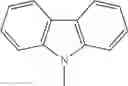
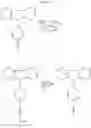
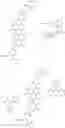
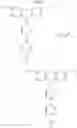
The Example describes synthesis of the organic compound according to the present invention, wherein perylene derivative (structural formula 1) serves as the polycyclic core Cor2, carbazole (structural formula 19) serves as the polycyclic core Cor1, and phenyl serves as the bridging group B (Scheme 1).
The organic compound was synthesized by Sonogashira reaction where N,N-bis[3,4-di(hexadecyloxy)benzyl]-1,7-dibromoperylene diimide is coupled with 9-(4-ethynylphenyl)carbazole.
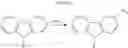
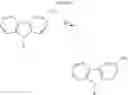
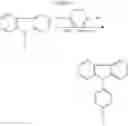
1. Synthesis of 9-(4ethynylphenyl)carbazole (Scheme 2)
Procedure:
Stage 1: A mixture of 9-(4-bromophenyl)carbazol (4.9 g, 15.3 mmol), trimethylsilylacetylene (2.17 mL), triphenylphosphine (0.19 g), and Pd(PPh3)2Cl2 (0.12 g) in 60 mL triethylamine was degassed for 15 mm. Reaction mixture was boiled for 5 min, then CuI (0.12 g) was added. The resulted mixture was boiled for another 12 hours. A mixture was left at room temperature until completely cooled down, a precipitate wax filtered out. The filtrate was evaporated on a rotor evaporator, a residue was purified by column chromatography using hexane as an eluent, and recrystallized from heptane. The yield was 76%.
Stage 2: A mixture of carbazole 3 (2.0 g) and tetrabuthylammonium. flouride in 50 mL of anhydrous THF was stirred at room temperature for 12 hours, wherein the quantity of tetrabuthylammonium fluoride was selected as three moles of tetrabuthylammonium fluoride to one mole of carbazole. The resulting mixture was treated with 1N HCl (50 mL) and extracted with ether (2×50 mL). Organic layer was separated and dried over magnesium sulfate, then a solvent was removed under reduced pressure and the residue was recrystallized from hexane to produce carbazole 4. The yield of carbazole 4 was 65 %.
2. Synthesis of N,N-bis[3,4-di(hexadecyloxy)benzyl]-1,7-bis[4-carbazole-9--yl)phenyl4-ethynl]perylene diimide
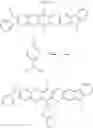
Synthesis of the organic compound 8 was comprising the direct coupling of previously obtained diimide 9 with ethynylcarbazole 4 in conditions of Sonogashira reaction (Scheme 3). The purity of diimide 9 was controlled by TLC, it was reprecipitated twice from CHCl3-MeOH system and measured NMR 1H spectra.
Diimide 9 (1.8 g), Pd(PPh3)2Cl2 (0.23 g), triphenylphosphine (0.10 g), and CuI (0.06 g) were dissolved in a mixture of NEt3 (40 mL) and THF (60 mL). The resulting solution was degassed several times and then heated at 60° C. for 20 min. 9-(4Ethynylphenyl)carbazole (0.8 g) was added to the solution in one portion under argon atmosphere. Reaction mixture was heated for 2hours and then left at room temperature until completely cooled down. The formed precipitate was filtered out, dried until the constant weight, reprecipitated from CHCl3-MeOH system and the recrystallized from CHCl3. The yield of the organic compound 8 was 1.1 g.
EXAMPLE 2
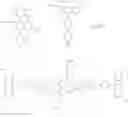
The example describes synthesis of the organic compound according to the present invention, wherein perylene derivative (structural formula 1) serves as the polycyclic core Cor2, structural formula 20 serves as the polycyclic core Cor1 and phenyl serves as the bridging group B (Scheme 4).
Synthesis of the above referenced organic compound comprises the following steps:
1. Synthesis of 3-amino-N-alkyl-carbazole
9-alkyl9H-carbazole was synthesized by treatmen-of carbazole with alkyl bromide in the presence of sodium hydride in dimethylformamide (Scheme 5):
9-alkyl-3-nitro9H-carbazole was prepared by treatment of 9-alkyl-9-carbazole with fuming nitric acid in acetic acid (Scheme 6):
3-amino-N-alkyl-carbazole was prepared by hydrogenation in the presence of 10% palladium on activated carbon powder (Scheme 7);
2, Synthesis of Dioxazine Dye
8,18-dibromo-5,15-dialkyl-5,15-dihydrocarbazolo[3′,2′:5,6][1,4]oxazino[2,3-b]indolo[2,3-i]phenoxazine (dioxazine fragment) was prepared by condensing and cycling of 3-amino-N-alkyl-carbazole with tetrabromobenzoquinine in o-dichlorobenzene in the presence of benzenesulfochloride (Scheme 8):
3. Suzuki Coupling
8-bromo5,15-dialkyl- 18-(4-nitrophenyl)-5,15-dihydrocarbazolo[3′,2′:5,6][1,4]oxazino[2,3-b]indolo[2,3-i]phenoxazine was synthesized by Suzuki reaction of 8,18-dibromo-5,15-dialkyl-5,15-dihydrocarbazolo[3′,2′:5,6][1,4]oxazinol[2,3-b]indolo[2,3-]phenoxazine with (4-nitrophenyl)boronic acid in 1-methyl-2-pyrrolidinone in the presence of tetrakis(triphenylphosphine)palladium(0) (Scheme 9):
4. Reduction of Nitro-Group
4-(18-bromo-5,15-dialkylyl-5,15-dihydrocarbazolo[3′, 2′:5,6][1,4]oxazino[2,3-b]indolo[2,3-i]phenoxazin-8-yl)aniline was prepared by hydrogenation in the presence of 10% palladium on activated carbon powder (Scheme 10):
5. Assembling of the Organic Compound
Assembling of the organic compound was done by heating of mixture 4-(18-bromo-5,15-dialkylyl-5,15-dihydrocarbazolo[3′,2′:5,6][1,4]oxazino-[2,3-b]indolo[2,3-i]phenoxazin-8-yl)aniline and 3,4,9,10-perylenetetracarboxylic dianhydride in 3-chlorophenole (Scheme 11):
EXAMPLE3
The Example describes synthesis of the organic compound according to the present invention, wherein perylene derivative (structural formula 1) serves as the polycyclic core Cor2, carbazole (structural formula 19) serves as the polycyclic core Cor1, and biphenyl serves as the bridging group B.
1. Synthesis 3,6-didodecanoylcarbazole
Method is based on acylation of carbazole with dodecanoylchloride under Friedel-Crafts conditions (Scheme 12) and subsequent reduction of two carbonyl groups.
Procedure:
A mixture of carbazole (10 g, 60 mmol) and AlCl3, (16.7 g, 127 mmol) in 84 mL of anhydrous CS2, was heated under stirring at reflux temperature and lauroyl chloride (25.2 mL, 122 mmol) added dropwise. The reaction mixture was heated at reflux until ceasing of HCI evolution (3 h) and then the solvent was distilled off. The following procedure steps contained a treatment of the obtained residue with concentrated HCl, dilution with water, filtration of the solid product and washing of the latter on the filter with water. After drying in the air, the crude material was crystallized from ethanol/dioxane to give 1.31 g (Yield: 41.1%) of pure colourless 2, m.p. 179-180° C.
2. Synthesis of 3,6-Didodecylcarbazole
Triethylsilane in trifluoroacetic acid was used for reduction of both carbonyls. The reaction readily occurs at room temperature overnight (Scheme 13).
Procedure:
Triethylsilane was added drop wise to the solution of 3,6-didodecylcarbazole 3 (10 g) in 100 mil of trifluoroacetic acid at 10° C. The resulting mixture was stirred overnight at room temperature and then 500 ml water was added. The forming precipitate was filtered out, washed with water (3×100 ml) and recrystallized from ethanol to produce 8.0 g of the product.
3. Synthesis of N-(4-nitro)biphenyl-3,6-didodecylcarbazole
For insertion the p-nitrobiphenyl group into 9-position of carbazole the Cu(I)-catalyzed coupling in the presence of potassium, phosphate and trans-1,2-diaminocyclohexane for stabilization the copper(I) was used (Scheme 14).
Procedure:
4-Iodo-4′-nitrobiphenyl (7.5 mmole) 3,6-didodecylcarbazole (9.0 mmol), K3PO4(1.58 mmol), CuI (0.16 mmol) and trans-1,2-cyclohexane-diamine (0.90 mmol) were added to 1,4-dioxane (100 ml) at room temperature. The reaction mixture was refluxed for 24 hours. After cooling the mixture to room temperature, the dissolved materials were filtered. 1,4-Dioxane was evaporated, and ethyl acetate was added. The mixture was washed with distilled water, and dried with MgSO4. The final product was obtained through column chromatography (hexane:ethylacetate (9:1). White solid product was obtained (Yield: 90%).
4. Synthesis of N-(4-amino)biphenyl-3,6-didodecylcarbazole
The hydrogenation of nitrogroup was accomplished using palladium/carbon catalysis under hydrogen atmosphere in tetrahydrofuran (Scheme 15).
Procedure:
The solution of N-(4-amino)biphenyl-3,6-didodecylcarbazole (3.1 g) in 80 ml of anhydrous THF was degassed three times using argon, then 0.5 g of Pd/C (10%) was added to the solution. The resulted suspension was degassed again and connected to hydrogen apparatus. The reaction required 8 hours to be completed. The catalyst Pd/C was filtered out and the filtrate was evaporated to afford crude of product. Purification of the product was done using column chromatography on silica gel (ethyl acetate:petroleum ether=1:3). The yield was 2.4 g.
5. Synthesis of Perylene-Based Organic Compound with Carbazole in Apex Position
An assembling of the organic compound was performed in m-chlorophenol (Scheme 16).
Procedure:
Amine 5 (1.8 g) was added to a hot (80° C.) solution of perylene 6 (0.8 g) in 10 ml of m-chlorophenol under argon, then 10 mg of benzoic acid was added to the resulting solution. A mixture was stirred at 144° C. for 18 hours (TLC-control). The hot (50° C.) mixture was poured into methanol (150 ml), stirred for 2 hours and filtered out. The precipitate was purified by column chromatography to obtain a pure product using mixture chloroform/petroleum ether (in relation to 2.5:1) as eluent. The product was additionally re-precipitated from methanol-chloroform mixture. The yield of the organic compound 7 was 0.85 g.
EXAMPLE 4
The Example describes synthesis of the organic compound according to the present invention, wherein perylene derivative (structural formula 1) serves as the polycyclic core Cor2, carbazole (structural formula 19) serves as the polycyclic core Cor 1, and phenyl serves as the bridging group B (Scheme 1). Synthesis of this organic compound comprises the following steps:
1. Synthesis of 9-(4-bromophenyl)carbazole (Scheme 17)
Procedure:
A mixture of CuI (1.14 g, 6 mmol); 18-Crown-6 (0.53 g, 2 mmol), K2CO3 (16.6 g, 120 mmol), 1,3-dimethyl-3,4,5,6-tetrahydro-2-(1H)-pyrimidinone (DMPU) (2 mL), dibromobenzene (1.42 g, 60 mmol) and carbazole (10 g, 60 mmol) was heated at 170° C. for 11 h under nitrogen. After cooling to room temperature, the mixture was quenched with 1 N HCl, the precipate was filtered and washed with NH4OH and water. The grey solid substance was purified with column chromatography using hexane as eluent. The yield was 62%.
2. Synthesis of 9-(4-ethynylphenyl)carbazole (Scheme 18)
Procedure:
Stage 1: A mixture of 9-(4-bromophenyl)carbazol (4.9 g, 15.3 mmol), trimethylsilylacetylene (2.17 mL), triphenylphosphine (0.19 g), Pd(PPh3)2Cl2 (0.12 g) in 60 mL triethylamine was degassed for 15 min. Reaction mixture was boiled for 5 mm, the CUI (0.12 g) was added; the resulted mixture was additionally boiled for 12 hours. After mixture reached room temperature, precipitate was filtered out. Filtrate was evaporated on rotor evaporator, a residue was purified by column chromatography using hexane as eluent and recrystallized from heptane. The yield was 76%.
Stage 2: A mixture of carbazole 3 (2.0 g) and 3 equivalents of tetrabuthylammonium fluoride in 50 mL of anhydrous THF was stirred at room temperature for 12 hours. The resulting mixture was treated with 1N HCl (50 mL) and extracted with ether (2×50 mL). Eether layer was separated and dried over magnesium sulfate, then solvent was removed under reduced pressure and the residue was recrystallized from hexane to produce carbazole 4 with a 65% yield,
3. Synthesis of 1,7-bis[4-carbazole-9-yl)phenyl-4-ethynyl]perylene dianhydride (Scheme 19)
Procedure:
Procedure for 5:
A mixture of 2-(ethylhexyl)-amine (5.0 g), N-ethylhexyl-1,7-dibromoperylene monoimide (5.0 g) and zinc acetate (0.5 g) in 3-methylphenol (30 mL) was heated at 140° C. for 10 hours. A resulted mixture was allowed to reach 20° C. and poured into 250 mL of 2N HCl. The precipitate was filtered out, washed with ethanol (100 mL) and water (100 mL), dried under vacuum at 100° C. Dried crude of product was additionally washed with hot iso-propanol (2500 ml) and dried again as described above. The yield of pure organic compound 1 was 4.8 g.
Procedure for 6:
A mixture of diimide 5 (1.0 g) 9-(4-ethynylphenyl)carbazole (1.4 g), triphenylpbosphine (0.15 g), Pd(PPh3)2Cl2 (0.2 g) NEt3 (20 mL) in 80 mL THF was degassed for 15 min. Reaction mixture was heated for 5 min, the CuI (0.03 g) was added; the resulted mixture|′ was additionally heated for 12 hours. After a mixture reached room temperature, precipitate was filtered out. Filtrate was concentrated to 50 mL on a rotor evaporator and poured out into a mixture ethanol-water (1:1), a resulted precipitate was filtered out and then washed with hot ethanol (100 mL). Combination of these two precipitates was additionally washed with hot ethanol (100 mL) and dried in vacuum at 80° C. for 10 hours to produce the product 6 with the yield of 0.7 g.
Procedure for 7:
A solution of 0.65 g of 6, 0.2 g of KOH in 70 ml of t-BuOH was refluxed for 3days until TLC-analysis indicated the full conversion of starting material. Then mixture was poured into hot methanol (100 ml), precipitate was filtered out, dried at 100° C. until the constant weight. The yield of the product 7 was 0.4 g.
Procedure for 8:
A mixture of dianhydride 7 (0.4 g), 4 equivalents of 3,4-di(hexadecyloxy)benzylamine, and 10 mg of benzoic acid in 5 ml of m-Cl-phenol was heated at 145°C. for 3 days. TLC-analysis did not register any reaction.
Although the present invention has been described in detail with reference to a particular preferred embodiment, persons possessing ordinary skill in the art to which this invention pertains will appreciate that various modifications and enhancements may be made without departing from the spirit and scope of the claims that follow.
Claims
We claim:1. A photovoltaic layer comprising at least one organic compound having a general structural formula I:
where Cor1 is a polycyclic core of a first type;
Cor2 is a polycyclic core of a second type;
B is a bridging group providing a bond of the polycyclic core Cor1 with the polycyclic core Cor2 via covalent chemical bonds;
R1 and R2 are molecular groups providing solubility of the organic compound in a suitable solvent;
m is 1, 2, 3 or 4;
n is 0, 1, 2, 3 or 4;
X1and X2 are modifying groups which modify energy levels HOMO and LUMO of the polycyclic cores Cor1 and Cor2 accordingly;
p is 0, 1, 2;
q is 0, 1, 2;
wherein said organic compound forms rod-like supramolecules and absorbs electromagnetic radiation in at least one predetermined spectral subrange within a wavelength range from 400 to 3000 nm with excitation of electron-hole pairs;
the polycyclic core Cor1, the bridging group B, and the polycyclic core Cor2 form a molecular system Cor1-B-Cor2-B-Cor1 selected from the list comprising a donor-bridge-acceptor-bridge-donor system and acceptor-bridge-donor-bridge-acceptor system in which a dissociation of excited electron-hole pairs is carried out;
wherein the organic compound homeotropically aligned in respect to the photovoltaic layer surface and the polycyclic cores Cor1 and Cor2 assemble into a π-π stack of a first type and a π-π stack of a second type respectively, and
wherein the stacks of one type realize electron transport, the stacks of another type realizehole transport and said stacks are electrically isolated from each other by the molecular groups R1 and R2.
2. A photovoltaic layer according to claim 1, wherein at least one of the polycyclic cores Cor1 and Cor2 is heterocyclic core.
3. A photovoltaic layer according to claim 1, wherein the providing solubility groups R1and R2 are independently selected from the list comprising —COOH, —SO3H, and —H2PO3 for water or water-miscible solvent; and linear and branched (C1-C35)alkyl, (C2-C35)alkenyl, and (C2-C35)alkinyl, substituted alkyl, substituted aryl, and any combination thereof for organic solvent, wherein these groups are connected with the cores Cor1 and Cor2 directly or via a spacer selected from the list comprising aryl, —C(O)—, —C(O)O—, —C(O)—NH—, —(SO2)NH—, —O—, —CH2O—, —NH—, >N—, and any combination thereof.
4. A photovoltaic layer according to claim 1, wherein at least one of the bridging groups B is selected from the list comprising p-phenylene (Php) oligomer, where p is 1, 2, 3, 4 or 5; 2,7-oligofluorene (FlS) oligomer, where s is 1, 2, 3, or 4, and alkylen groups —(CH2)J—, where j is 1, 2, 3, or 4.
5. A photovoltaic layer according to any of claim 1, wherein the modifying groups X1and X2 are selected from the list comprising H, Cl, Br, F, OH, NO2, NO, and NH2.
6. A photovoltaic layer according to claim 1, wherein at least one of the polycyclic cores Cor1 and Cor2 comprises hetero-atoms selected from the list comprising nitrogen, oxygen, sulfur, and any combination thereof.
7. A photovoltaic layer according to claim 1, wherein the Cor2 is selected from the list comprising structures from 1 to 5:
8. A photovoltaic layer according to claim 1, wherein the Cor1 is selected from the list comprising structures from 6 to 20:
9. A photovoltaic layer according to claim 1, wherein the polycyclic core Cor1 possesses a symmetry of the C2v or D2h space group and the Cor2 possesses a symmetry of the D2h space group.
10. A photovoltaic layer according to claim 1, wherein the molecular system Cor1-B-Cor2-B-Cor1 possesses a symmetry of the D2h space group.
11. A photovoltaic layer according to claim 1, wherein the energy levels of donors are correlated with energy levels of acceptor according to the following equations: HOMOA<HOMOD≦(LUMOA−1 eV) and LUMOA<LUMOD.
12. A photovoltaic layer according to claim 1, wherein perylene diimide serves as the acceptor core Cor2, the bridging group B is selected from the list comprising phenyl and biphenyl, and the energy levels HOMOD and LUMOD of donor cores Cor1 satisfy to the following conditions −6.0 eV<HOMOD<−5.5 eV and −4.0 eV<LUMOD.
13. A photovoltaic layer according to claim 12, wherein the organic compound is selected from the list comprising structures from 21 to 26:
where R, R1 and R2 are linear and branched (C1-C35)alkyl, (C2-C35)alkenyl, and (C2-C35)alkinyl, substituted alkyl, substituted aryl, and any combination thereof; and X is Cl or Br.
14. A photovoltaic layer according to claim 1, wherein photovoltaic layer is placed on a substrate.
15. A photovoltaic layer according to claim 1, wherein the substrate is made of material transparent for the incident electromagnetic radiation to which said organic compound is sensitive.
Images & Drawings included:


















Sources:
- United States Patent and Trademark Office - verify current appl. status at the USPTO↗
Similar patent applications:
- » 20120227802
Organic compound and photovoltaic device comprising the same - » 20140076403
DIPYRIN BASED MATERIALS FOR PHOTOVOLTAICS, COMPOUNDS CAPABLE OF UNDERGOING SYMMETRY BREAKING INTRAMOLECULAR CHARGE TRANSFER IN A POLARIZING MEDIUM AND ORGANIC PHOTOVOLTAIC DEVICES COMPRISING THE SAME - » 20150303377
COMPOUNDS CAPABLE OF UNDERGOING SYMMETRY BREAKING INTRAMOLECULAR CHARGE TRANSFER IN A POLARIZING MEDIUM AND ORGANIC PHOTOVOLTAIC DEVICES COMPRISING THE SAME
Recent applications in this class:
- » 20240107880 2024-03-28
ORGANIC ELECTROLUMINESCENT MATERIALS AND DEVICES - » 20240008362 2024-01-04
LIGHT-EMITTING LAYER, LIGHT-EMITTING DEVICE AND LIGHT-EMITTING APPARATUS - » 20230320207 2023-10-05
PLURALITY OF HOST MATERIALS, ORGANIC ELECTROLUMINESCENT COMPOUND, AND ORGANIC ELECTROLUMINESCENT DEVICE COMPRISING THE SAME - » 20230309390 2023-09-28
Organic light-emitting device comprising emission layer satisfying specific singlet excitation energy level conditions - » 20230255108 2023-08-10
Phenanthroline-based compound and optoelectronic device comprising the same - » 20230232715 2023-07-20
LIGHT EMITTING DEVICE - » 20230232714 2023-07-20
LIGHT EMITTING ELEMENT AND POLYCYCLIC COMPOUND FOR THE SAME - » 20230217823 2023-07-06
ORGANIC ELECTROLUMINESCENT DEVICE - » 20230217821 2023-07-06
Light Emitting Device and Light Emitting Display Device Including the Same - » 20230217820 2023-07-06
PLURALITY OF HOST MATERIALS AND ORGANIC ELECTROLUMINESCENT DEVICE COMPRISING THE SAME
Recent applications for this Assignee:
- » 20140058080 2014-02-27
Organic compound, photovoltaic layer and organic photovoltaic device - » 20120227802 2012-09-13
Organic compound and photovoltaic device comprising the same - » 20100065122 2010-03-18
Organic compound, photovoltaic layer and organic photovoltaic device