Near field communication system in a local network
US20160043777A1
2016-02-11
14/885,714
2015-10-16
✅ Patent granted
US 9,344,154 B2
2016-05-17
-
-
Afsar M Qureshi
DLA Piper LLP US
2035-10-16
Abstract:
A system for a local network, the system being configured to extend a near field communication (NFC) between an NFC device and an NFC mobile device beyond the range defined by the NFC standards.
Inventors:
- Bertrand Wendling 27 🇫🇷 Divonne-Les-Bains, France
- Henri Kudelski 15 🇨🇭 Chexbres, Switzerland
Assignee:
- NAGRAVISION S.A. 398 🇨🇭 CHESEAUX-SUR-LAUSANNE, Switzerland
Applicant:
Interested in similar patents?
Get notified when new applications in this technology area are published.
Classification:
H04B5/0031 » CPC main
Near-field transmission systems, e.g. inductive loop type; Near field system adaptations for data transfer
H04B5/00 IPC
Near-field transmission systems, e.g. inductive loop type
H04W84/12 » CPC further
Network topologies; Hierarchically pre-organised networks, e.g. paging networks, cellular networks, WLAN [Wireless Local Area Network] or WLL [Wireless Local Loop]; Small scale networks; Flat hierarchical networks WLAN [Wireless Local Area Networks]
H04L41/50 » CPC further
Arrangements for maintenance, administration or management of data switching networks, e.g. of packet switching networks Network service management, e.g. ensuring proper service fulfilment according to agreements
G06Q20/3278 » CPC further
Payment architectures, schemes or protocols characterised by the use of specific devices or networks using wireless devices; Short range or proximity payments by means of M-devices RFID or NFC payments by means of M-devices
H04N21/4126 » CPC further
Selective content distribution, e.g. interactive television or video on demand [VOD]; Client devices specifically adapted for the reception of or interaction with content, e.g. set-top-box [STB]; Operations thereof; Structure of client; Structure of client peripherals; Peripherals receiving signals from specially adapted client devices The peripheral being portable, e.g. PDAs or mobile phones
H04N21/41407 » CPC further
Selective content distribution, e.g. interactive television or video on demand [VOD]; Client devices specifically adapted for the reception of or interaction with content, e.g. set-top-box [STB]; Operations thereof; Structure of client; Structure of client peripherals; Specialised client platforms, e.g. receiver in car or embedded in a mobile appliance embedded in a portable device, e.g. video client on a mobile phone, PDA, laptop
H04N21/2543 » CPC further
Selective content distribution, e.g. interactive television or video on demand [VOD]; Servers specifically adapted for the distribution of content, e.g. VOD servers; Operations thereof; Management operations performed by the server for facilitating the content distribution or administrating data related to end-users or client devices, e.g. end-user or client device authentication, learning user preferences for recommending movies; Management at additional data server, e.g. shopping server, rights management server Billing, e.g. for subscription services
G06Q20/385 » CPC further
Payment architectures, schemes or protocols; Payment protocols; Details thereof using an alias or single-use codes
G06Q20/425 » CPC further
Payment architectures, schemes or protocols; Payment protocols; Details thereof; Confirmation, e.g. check or permission by the legal debtor of payment using two different networks, one for transaction and one for security confirmation
G06Q30/0637 » CPC further
Commerce, e.g. shopping or e-commerce; Buying, selling or leasing transactions; Electronic shopping; Lists, e.g. purchase orders, compilation or processing; Processing of requisition or of purchase orders Approvals
G06F9/54 » CPC further
Arrangements for program control, e.g. control units using stored programs, i.e. using an internal store of processing equipment to receive or retain programs; Multiprogramming arrangements Interprogram communication
H04L47/70 » CPC further
Traffic control in data switching networks Admission control; Resource allocation
H04L69/08 » CPC further
Network arrangements, protocols or services independent of the application payload and not provided for in the other groups of this subclass Protocols for interworking; Protocol conversion
H04N21/2223 » CPC further
Selective content distribution, e.g. interactive television or video on demand [VOD]; Servers specifically adapted for the distribution of content, e.g. VOD servers; Operations thereof; Server components or server architectures; Secondary servers, e.g. proxy server, cable television Head-end being a public access point, e.g. for downloading to or uploading from clients
H04N21/4185 » CPC further
Selective content distribution, e.g. interactive television or video on demand [VOD]; Client devices specifically adapted for the reception of or interaction with content, e.g. set-top-box [STB]; Operations thereof; Structure of client; Structure of client peripherals; External card to be used in combination with the client device, e.g. for conditional access for payment
H04B7/15 » CPC further
Radio transmission systems, i.e. using radiation field; Relay systems Active relay systems
G06Q20/32 IPC
Payment architectures, schemes or protocols characterised by the use of specific devices or networks using wireless devices
H04N21/43637 » CPC further
Selective content distribution, e.g. interactive television or video on demand [VOD]; Client devices specifically adapted for the reception of or interaction with content, e.g. set-top-box [STB]; Operations thereof; Processing of content or additional data, e.g. demultiplexing additional data from a digital video stream; Elementary client operations, e.g. monitoring of home network or synchronising decoder's clock; Client middleware; Interfacing a local distribution network, e.g. communicating with another STB or one or more peripheral devices inside the home; Adapting the video or multiplex stream to a specific local network, e.g. a IEEE 1394 or Bluetooth® network involving a wireless protocol, e.g. Bluetooth, RF or wireless LAN [IEEE 802.11]
H04N21/485 » CPC further
Selective content distribution, e.g. interactive television or video on demand [VOD]; Client devices specifically adapted for the reception of or interaction with content, e.g. set-top-box [STB]; Operations thereof; End-user applications End-user interface for client configuration
H04N21/47815 » CPC further
Selective content distribution, e.g. interactive television or video on demand [VOD]; Client devices specifically adapted for the reception of or interaction with content, e.g. set-top-box [STB]; Operations thereof; End-user applications; Supplemental services, e.g. displaying phone caller identification, shopping application Electronic shopping
H04N21/8355 » CPC further
Selective content distribution, e.g. interactive television or video on demand [VOD]; Generation or processing of content or additional data by content creator independently of the distribution process; Content; Generation or processing of protective or descriptive data associated with content; Content structuring; Generation of protective data, e.g. certificates involving usage data, e.g. number of copies or viewings allowed
H04W88/16 » CPC further
Devices specially adapted for wireless communication networks, e.g. terminals, base stations or access point devices Gateway arrangements
H04N21/4221 » CPC further
Selective content distribution, e.g. interactive television or video on demand [VOD]; Client devices specifically adapted for the reception of or interaction with content, e.g. set-top-box [STB]; Operations thereof; Structure of client; Structure of client peripherals; Input-only peripherals , e.g. global positioning system [GPS]; User interfaces specially adapted for controlling a client device through a remote control device; Remote control devices therefor characterized by hardware details Dedicated function buttons, e.g. for the control of an EPG, subtitles, aspect ratio, picture-in-picture or teletext
H04N21/4222 » CPC further
Selective content distribution, e.g. interactive television or video on demand [VOD]; Client devices specifically adapted for the reception of or interaction with content, e.g. set-top-box [STB]; Operations thereof; Structure of client; Structure of client peripherals; Input-only peripherals , e.g. global positioning system [GPS]; User interfaces specially adapted for controlling a client device through a remote control device; Remote control devices therefor characterized by hardware details Remote control device emulator integrated into a non-television apparatus, e.g. a PDA, media center or smart toy
H04N21/42222 » CPC further
Selective content distribution, e.g. interactive television or video on demand [VOD]; Client devices specifically adapted for the reception of or interaction with content, e.g. set-top-box [STB]; Operations thereof; Structure of client; Structure of client peripherals; Input-only peripherals , e.g. global positioning system [GPS]; User interfaces specially adapted for controlling a client device through a remote control device; Remote control devices therefor characterized by hardware details Additional components integrated in the remote control device, e.g. timer, speaker, sensors for detecting position, direction or movement of the remote control, microphone or battery charging device
H04N21/4627 » CPC further
Selective content distribution, e.g. interactive television or video on demand [VOD]; Client devices specifically adapted for the reception of or interaction with content, e.g. set-top-box [STB]; Operations thereof; Management operations performed by the client for facilitating the reception of or the interaction with the content or administrating data related to the end-user or to the client device itself, e.g. learning user preferences for recommending movies, resolving scheduling conflicts; Content or additional data management, e.g. creating a master electronic program guide from data received from the Internet and a Head-end, controlling the complexity of a video stream by scaling the resolution or bit-rate based on the client capabilities Rights management associated to the content
H04N21/478 IPC
Selective content distribution, e.g. interactive television or video on demand [VOD]; Client devices specifically adapted for the reception of or interaction with content, e.g. set-top-box [STB]; Operations thereof; End-user applications Supplemental services, e.g. displaying phone caller identification, shopping application
H04N21/6334 » CPC further
Selective content distribution, e.g. interactive television or video on demand [VOD]; Network structure or processes for video distribution between server and client or between remote clients; Control signalling between clients, server and network components; Transmission of management data between server and client, e.g. sending from server to client commands for recording incoming content stream ; Communication details between server and client ; Control signaling related to video distribution between client, server and network components; Network processes for video distribution between server and clients or between remote clients , e.g. transmitting basic layer and enhancement layers over different transmission paths, setting up a peer-to-peer communication via Internet between remote STB's; Communication protocols; Addressing; Control signals issued by server directed to the network components or client directed to client for authorisation, e.g. by transmitting a key
H04W4/00 IPC
Services specially adapted for wireless communication networks; Facilities therefor
H04W80/00 » CPC further
Wireless network protocols or protocol adaptations to wireless operation
G06Q20/38 IPC
Payment architectures, schemes or protocols Payment protocols; Details thereof
G06Q20/42 IPC
Payment architectures, schemes or protocols; Payment protocols; Details thereof Confirmation, e.g. check or permission by the legal debtor of payment
G06Q30/06 IPC
Commerce, e.g. shopping or e-commerce Buying, selling or leasing transactions
H04N5/44 IPC
Details of television systems Receiver circuitry for the reception of television signals according to analogue transmission standards
H04N21/222 IPC
Selective content distribution, e.g. interactive television or video on demand [VOD]; Servers specifically adapted for the distribution of content, e.g. VOD servers; Operations thereof; Server components or server architectures Secondary servers, e.g. proxy server, cable television Head-end
H04N21/41 IPC
Selective content distribution, e.g. interactive television or video on demand [VOD]; Client devices specifically adapted for the reception of or interaction with content, e.g. set-top-box [STB]; Operations thereof Structure of client; Structure of client peripherals
H04N21/414 IPC
Selective content distribution, e.g. interactive television or video on demand [VOD]; Client devices specifically adapted for the reception of or interaction with content, e.g. set-top-box [STB]; Operations thereof; Structure of client; Structure of client peripherals Specialised client platforms, e.g. receiver in car or embedded in a mobile appliance
H04N21/422 IPC
Selective content distribution, e.g. interactive television or video on demand [VOD]; Client devices specifically adapted for the reception of or interaction with content, e.g. set-top-box [STB]; Operations thereof; Structure of client; Structure of client peripherals Input-only peripherals , e.g. global positioning system [GPS]
H04N21/4363 IPC
Selective content distribution, e.g. interactive television or video on demand [VOD]; Client devices specifically adapted for the reception of or interaction with content, e.g. set-top-box [STB]; Operations thereof; Processing of content or additional data, e.g. demultiplexing additional data from a digital video stream; Elementary client operations, e.g. monitoring of home network or synchronising decoder's clock; Client middleware; Interfacing a local distribution network, e.g. communicating with another STB or one or more peripheral devices inside the home Adapting the video or multiplex stream to a specific local network, e.g. a IEEE 1394 or Bluetooth® network
H04N21/4367 » CPC further
Selective content distribution, e.g. interactive television or video on demand [VOD]; Client devices specifically adapted for the reception of or interaction with content, e.g. set-top-box [STB]; Operations thereof; Processing of content or additional data, e.g. demultiplexing additional data from a digital video stream; Elementary client operations, e.g. monitoring of home network or synchronising decoder's clock; Client middleware; Interfacing a local distribution network, e.g. communicating with another STB or one or more peripheral devices inside the home Establishing a secure communication between the client and a peripheral device or smart card
H04N21/4784 » CPC further
Selective content distribution, e.g. interactive television or video on demand [VOD]; Client devices specifically adapted for the reception of or interaction with content, e.g. set-top-box [STB]; Operations thereof; End-user applications; Supplemental services, e.g. displaying phone caller identification, shopping application receiving rewards
H04N21/42221 » CPC further
Selective content distribution, e.g. interactive television or video on demand [VOD]; Client devices specifically adapted for the reception of or interaction with content, e.g. set-top-box [STB]; Operations thereof; Structure of client; Structure of client peripherals; Input-only peripherals , e.g. global positioning system [GPS]; User interfaces specially adapted for controlling a client device through a remote control device; Remote control devices therefor characterized by hardware details Transmission circuitry, e.g. infrared [IR] or radio frequency [RF]
Description
CROSS-REFERENCE TO RELATED APPLICATIONS
This application is a continuation of U.S. patent application Ser. No. 14/202,779 filed Mar. 10, 2014, which claims the benefit of U.S. Provisional Application No. 61/775,737 filed Mar. 11, 2013. All of the foregoing are incorporated by reference in their entireties.
FIELD OF THE INVENTION
Embodiment disclosed herein relate to systems using near field communication (NFC) technology for digital devices connected to a local network.
BACKGROUND
Near Field Communication Technology, known by the acronym “NFC”, is a wireless, high frequency communication technology having a range of a few centimeters intended to exchange information between several peripherals. This technology results from a combination of a contactless chip card interface and a reader in a single device. An NFC peripheral can communicate with other NFC peripherals as well as with other devices meeting ISO 14443 standards such as e.g., contactless chip cards.
The NFC standards covering communication protocols and data exchange formats are based on existing radio frequency identification standards (RFID) such as ISO/IEC 14443, FeliCa and ISO/IEC 18092. They include the standards defined by the “NFC Forum” founded in 2004 by Nokia, Philips and Sony comprising today more than 180 members.
NFC technology is an extension of RFID technology, allowing bidirectional communications between two peripherals, while previous systems, such as contactless chip cards, allowed only unidirectional communication.
NFC technology is usable only over a short distance of about a few centimeters, which implies a voluntary process from the user by preventing a usage without his knowledge.
NFC devices may be passive or active. A passive device such as a tag, chip card or a single chip integrated in an object contains information accessible in a read only mode by other NFC compatible devices. The passive device is powered by the electromagnetic field emitted by the reader (active device) so that it does not need its own power supply. On the other hand, an active device generates the electromagnetic field for communicating with a passive device or for establishing a communication channel between two active devices.
The fact that a device like a smartphone has a power supply does not necessarily mean that it will work in active mode only. A smartphone, or any other portable device like a PDA (Personal Digital Assistant) or a digital tablet, may process its NFC interface in a passive or active mode. In a passive mode, the smartphone emulates a chip card and stores, in a secure memory, the information usually stored in the chip card. Thus, when the smartphone detects the electromagnetic field, it will access the secure memory and answer in a passive NFC mode with the information read from this secure memory.
The following are examples of known applications that use NFC technology:
-
- Payment using a contactless bank card or a mobile device (e.g., smartphone, portable computer, digital tablet, PDA, etc.) on a contactless payment terminal;
- Parking payment on a terminal accepting contactless payment carried out with a portable phone;
- Buying and contactlessly validating a ticket for transportation or a show with the smartphone or other mobile device;
- Managing discount vouchers in a shop, couponing by traders, etc;
- Accessing and starting a vehicle with a portable phone or other mobile device;
- Reading product information (e.g., price, composition, usage, etc.) in a shop;
- Controlling physical access to reserved places (e.g., meeting rooms, company, class rooms, etc.)
- Exchanging profiles between two users of a social network or game by bringing phones close together (e.g., user peer-to-peer communications);
- Reading electronic business cards with a mobile terminal or PDA;
- Synchronizing Internet bookmarks and contacts between a PDA and a portable phone;
- Retrieving a key or code to a WiFi access point by approaching an NFC mobile terminal to the emitting hotspot; and
- Accessing different automation functionalities of a building (e.g., home automation)
NFC systems are designed to enable communication between devices that are positioned close to each other. However, sometimes this may be cumbersome within e.g., a home or a home network in which users wish to access additional functions offered through an NFC link, even if the distance between the devices is greater than the usual NFC communication distance.
SUMMARY
An object of the embodiments disclosed herein is to extend NFC communications between an NFC device and an NFC mobile device beyond the range defined by the NFC standards.
This object is achieved by a system comprising:
at least two repeater devices, each repeater device comprising a first communication interface configured to exchange information within a local communication network and a second communication interface locally connected to the first communication interface, the second communication interface comprising an NFC transceiver configured to exchange digital data intended to be transferred to the local communication network via the first communication interface;
a stand alone device associated with a first repeater device, the stand alone device comprising an NFC communication interface coupled with the NFC transceiver of said first repeater device; and
a mobile device comprising an NFC communication interface configured to exchange digital data with an NFC transceiver of a second repeater device, said second repeater device being configured to forward, to the local communication network, the digital data received from the mobile device via the NFC communication interface, said digital data being transmitted to the stand alone device via the first repeater device, said first repeater device being at a distance from the second repeater device exceeding a standard range for NFC communications.
The data read by the second repeater device through the NFC communication interface of the mobile device is thus transferred to the stand alone device due to the local communication network to which the first repeater device is connected to.
The stand alone device may thus be located a long distance away from the NFC featured mobile device and still receive data in a manner similar to the manner offered by direct NFC communications (i.e., as if the mobile device was located only a very small distance away from the stand alone device).
This solution uses bi-directional NFC repeater devices connected to the local communication network, each being provided with NFC communication capabilities. For example, a home or a household is equipped with several repeater devices; each repeater device comprises a mechanism for communicating with at least one other repeater device, such that all of the repeater devices of the home network are connected together. The communication can be made through several means such as e.g., WiFi, Internet, radio frequency, power lines (PLC Power Line Carrier) or any other technology with a longer communication range than the NFC standard range.
Each repeater device comprises NFC capabilities such that the digital data comprising commands or instructions from an NFC mobile device can be read by at least one repeater device if the NFC mobile device is placed close to the repeater device. The repeater device receiving command data from an NFC mobile device forwards said command data to any other repeater device of the home network through the home network. Thus, a single NFC mobile device can be used to communicate with other devices (e.g., stand alone devices) of the home network even if the NFC mobile device is located a distance away from the stand alone devices.
BRIEF DESCRIPTION OF THE DRAWINGS
The embodiments disclosed herein and their advantages will be better understood with reference to the enclosed drawings and the following detailed description, in which:
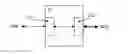
FIG. 1 shows a block diagram of a repeater device comprising a LAN and NFC communication interfaces
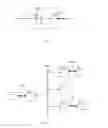
FIG. 2 shows a block diagram of a system according to a disclosed embodiment comprising a plurality of repeater devices connected to a local network allowing the transfer of data from an NFC mobile device to a distant device via repeater devices placed respectively close to the mobile device and to the distant device.
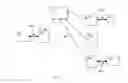
FIG. 3 shows a block diagram of an embodiment of the system disclosed herein comprising a gateway configured to forward information from one repeater device to another.
DETAILED DESCRIPTION
A repeater device R is schematically illustrated in FIG. 1 as comprising a first communication interface CI1 able to exchange data with a local network LAN and a second communication interface CI2 able to communicate with an NFC device via an NFC transceiver. The first and the second communication interfaces are locally connected together so that data received from the second communication interface CI2 or NFC interface are transferred to the first communication interface CH or LAN interface and vice-versa. In addition, the LAN interface may transmit data coming from the local network back to the NFC interface.
According to a desired configuration, repeater devices R1, R2, R3, R4 are connected to each other in a bidirectional local network LAN via their first communication interface CI1 as illustrated by FIG. 2. The system of the invention comprises a set of repeater devices each associated with a stand alone device and a set of repeater devices configured to communicate with a mobile NFC device. In the example of FIG. 2, the system comprises repeater devices R1, R2, R3, R4, . . . whose second communication interface CI2 or NFC interface may be linked either to at least one NFC mobile device P or at least one stand alone device D1, D2 having NFC capabilities.
The local network LAN is preferably wireless using a standardized radio frequency connection such as defined in Wi-Fi standard, but it may also be wired using a standard cable connection such as e.g., Ethernet links, or hybrid using a combination of wireless and wired connections.
The mobile NFC device P may comprise a smart card of a passive or active type, smartphone, PDA, tablet, remote control or any other potable or hand held device adapted to transmit data to a repeater device R1, R2, R3, R4, . . . of the LAN network.
An active smartcard as described in e.g., U.S. Pat. No. 7,128,274 is provided with an internal power source that generates an electromagnetic field for communicating with the repeater device R1, R2, R3, R4, . . . .
A passive smart card acts as an RFID device powered by an electromagnetic field generated by the repeater device. The other mobile NFC devices (e.g., smartphone, tablet, PDA, etc.) may be set to either the passive or active mode.
The stand alone devices D1, D2 may comprise a fixed appliance provided with an NFC communication interface placed near a repeater device R1, R2, R3, R4, . . . at a distance within the NFC range (e.g., up to 10 cm). A connection between the stand alone device D1, D2 and the LAN network communication interface is thus facilitated since communication is possible via the repeater device. For example, in a home network, devices such as a television set, decoder or set top box, DVD and/or HD (hard disc) reader/writer, media player, personal computer, security alarm, heat controller, air conditioner, etc. may be activated/deactivated or controlled with via an NFC connection with a repeater device R1, R2, R3, R4, . . . .
In the system represented by FIG. 2, a portable NFC device P sends, via the NFC link of repeater device R2, digital data in form of a command addressed to stand alone device D1 associated with repeater device R1 and/or to stand alone device D2 associated with the repeater device R4.
The following transmission modes may be used to forward the command:
a) Broadcast mode: all repeater devices R2, R3, R4 receive the same command without a specific identifier of a repeater device or of a stand alone device D1, D2. In this case, the NFC transceiver of the repeater device sends an interrogation signal to test a presence of a stand alone device within the NFC range. If such a device is present, its NFC communication interface replies to the interrogation signal with a response signal informing the repeater device that the stand alone device is ready to receive the command. The broadcasting mode thus allows activating several stand alone devices D1, D2 at a same time, with a portable NFC device P, if they are placed near a repeater device R1, R4 of the LAN network and their NFC interface is powered on.
The broadcast mode allows using an NFC featured smart card in a passive mode, which may be read by any repeater device in the network to automatically send a command to one or more other repeater devices R1, R4, and to their associated stand alone devices D1, D2.
b) Push mode: a command is addressed to a specific stand alone device while the other stand alone devices ignore the command even if they are placed within the NFC range and have an NFC interface powered on. In this case, the command comprises a device identifier and/or an identifier of the repeater device to which a stand alone device is associated with. After checking the identifier of the command, the NFC transceiver of the repeater device forwards the command to the stand alone device only when a match is found with the identifier of the repeater device or the identifier of the stand alone device.
The push mode requires a user interface on the mobile NFC device allowing the selection of a specific stand alone device to be controlled with a command. For example, in a system setup phase all repeater devices and associated stand alone devices may be registered with their particular parameters in an application. A user can thus create and address specific commands to a specific stand alone device. The NFC interface of the mobile device is preferably used in active mode.
According to an embodiment, the application on the mobile device may also be allowed to create predefined groups of stand alone devices to which a same command can be addressed.
c) Pull mode: the mobile NFC device P interrogates a repeater device to detect active stand alone devices associated with the other repeater devices of the network. Once one or more active devices are detected, commands may be sent to these devices either in broadcast mode or, individually, in push mode. In this case, a first repeater device of the network is requested by the mobile device to explore the network and discover each active repeater device, which are requested in their respective turn to send an interrogation signal to an associated stand alone device, if any. The responses of the stand alone devices received by the repeater devices are forwarded to the network and read by the mobile NFC device in contact with the first repeater device. An application of the mobile device identifies each discovered stand alone device and creates a list allowing the selecting and activating, deactivating or controlling of a stand alone device by a specific command addressed to one device or a common command addressed to all or a group of devices.
According to a further embodiment, the mobile NFC device P may be provided with an application allowing it to send commands to the stand alone devices either in broadcast, push, or pull mode, or a combination of these modes, depending on a mode selection made on the user interface.
According to a further embodiment illustrated in FIG. 3, each repeater device R1, R2, R3, R4 may be connected to a gateway G server in charge of managing the bidirectional communications between the repeater devices of e.g., a local network LAN. The connection between the repeater devices and the gateway G may be wireless, wired or mixed as in the network configuration of FIG. 2. The above discussed transmission modes are also operable in this embodiment since they do not depend on the configuration of the local network.
According to a further embodiment, an acknowledgement message may be returned to the mobile NFC device when the command has been received and/or executed successfully by one or more stand alone devices associated with their respective repeater device.
As the NFC communication technology has a short range of up to 10 cm, the repeater device and the mobile NFC device or the stand alone device must be close to one another so that encryption of the transmission is in general not necessary. However, for high security purposes, the transmission may be encrypted using a pairing mechanism between the concerned devices. The pairing may be applied as described for example in the European document EP1078524B1. The command transmitted from the repeater device to the stand alone device is encrypted by a unique pairing key known by the repeater device and the stand alone device. The latter verifies the pairing with the repeater device preferably at each reception of a command. If the pairing verification is successful, the command is executed by the stand alone device. An advantage of this pairing feature is that it prevents associating an unauthorized stand alone device to a repeater device.
A similar pairing mechanism may also be applied between the mobile NFC device and each repeater device of the network. In this case, the mobile NFC device stores all of the necessary pairing keys in order to be able to communicate with any repeater device of the local LAN network. An advantage of this pairing feature is that it prevents communications between a repeater device and an unauthorized mobile device.
In order to save power, an NFC communication between a repeater device R1, R4 and an associated stand alone device D1, D2, as well as the communication between the mobile NFC device and a repeater device, is deactivated after successful transmission of the command. In the case of an unsuccessful transmission, the NFC communication is deactivated after a predetermined time.
It should be appreciated that a stand alone device can also receive a command directly from the NFC mobile device when it is placed close to the NFC interface.
Claims
1. A system comprising:
at least one first repeater device, the at least one first repeater device comprising a first network communication interface configured to exchange data within a local communication network and a first near field communication (NFC) transceiver locally connected to the first network communication interface, the first NFC transceiver being configured to exchange data to be transferred to the local communication network; and
at least one second repeater device, the at least one second repeater device comprising a second network communication interface configured to exchange data within the local communication network and a second near field communication (NFC) transceiver locally connected to the second network communication interface, the second NFC transceiver being configured to exchange data to be transferred to the local communication network;
wherein the first NFC transceiver is further configured to be coupled with an NFC communication interface included in a first device; and
wherein the second NFC transceiver is further configured to be coupled with an NFC communication interface included in a second device, the at least one second repeater device being further configured to receive, forward, to the local communication network data received by the second NFC transceiver, and the first repeater device is configured to receive the data from the local communication network and transmit said data to the first NFC transceiver, said at least one first repeater device being at a distance from the at least one second repeater device exceeding a standard range for NFC communications.
2. The system according to claim 1, wherein the local communication network uses wireless connections, wired connections or a combination of wireless and wired connections.
3. The system according to claim 1, wherein the second NFC transceiver is configured to exchange data with a portable NFC device including an active or passive smart card.
4. The system according to claim 1, wherein the second NFC transceiver is configured to exchange data with a portable NFC device including one of a smartphone, a tablet, a personal digital assistant, television remote control, or a game controller.
5. The system according to claim 1, wherein the first NFC transceiver is configured to be coupled with a first device comprising a fixed appliance having an NFC communication interface placed near the first NFC transceiver at a distance within the standard range for NFC communications.
6. The system according to claim 4, further comprising a set of first repeater devices, each configured to be associated with a first device, and a set of second repeater devices configured to exchange data with the portable NFC device.
7. The system according to claim 6, wherein the NFC transceivers of the second repeaters of the set are configured to receive data from the portable NFC device, the data being sent, in a broadcast mode, by the portable NFC device, to all first devices, each associated with a first repeater device of the set.
8. The system according to claim 6, wherein the NFC transceivers of the second repeaters of the set are configured to receive a command from the portable NFC device, the command sent, in a push mode, by the portable NFC device, is addressed to one specific first device or to a group of first devices via their respective first repeater devices.
9. The system according to claim 6, wherein the NFC transceivers of the second repeaters of the set are configured to receive a command from the portable NFC device, the command sent, in a pull mode, by the portable NFC device, is addressed to one specific first device or to a group of first devices via their respective first repeater devices, the portable NFC device being configured to explore the local network to detect first repeater devices associated with active first devices before sending the command.
10. The system according to claim 1, wherein the at least one first repeater device and the at least one second repeater device are connected to a gateway server that manages bidirectional communications between the repeater devices, the connection between the repeater devices and the gateway being wireless, wired or a combination of wireless and wired connections.
11. The system according to claim 6, wherein the NFC transceivers of the second repeaters of the set are configured to return an acknowledgement message to the portable NFC device when a command has been received and/or executed successfully by one or more first devices associated with their respective first repeater device.
12. The system according to claim 1, wherein the NFC transceiver of the at least one first repeater device is further configured to encrypt data transmitted to the first device by a unique pairing key known by the at least one first repeater device and the first device.
13. The system according to claim 4, wherein the second NFC transceiver is further configured to apply a pairing mechanism between the portable NFC device and each second repeater device of the network, the portable NFC device being configured to store all the necessary pairing keys in order to be able to communicate with any second repeater device of the local network.
14. The system according to claim 4, wherein the first NFC transceiver and the second NFC transceiver are further configured to deactivate, after successful transmission of a command, the NFC communication between the at least one first repeater device and the associated first device, as well as the NFC communication between the portable NFC device and the at least one second repeater device.
15. The system according to claim 4, wherein the first NFC transceiver and the second NFC transceiver are further configured to deactivate, after a predetermined time after an unsuccessful transmission of a command, the NFC communication between the at least one first repeater device and the associated first device, as well as the NFC communication between the portable NFC device and the at least one second repeater device.
16. A method for transmitting data from a first device to a second device, via a first repeater device comprising a first near field communication (NFC) transceiver and a second repeater device comprising a second near field communication (NFC) transceiver, the first repeater device and the second repeater device being connected to a local communication network, the method comprising:
receiving, by the first repeater device, data from the first device via the first NFC transceiver;
transmitting said data to the local communication network connected to said first repeater device;
receiving, by the second repeater device, said data from the local communication network;
transmitting said data to the second device via the second NFC transceiver, wherein the first repeater device is located at a distance from the second repeater device exceeding a standard range for NFC communications.
17. The method according to claim 16, wherein the local communication network uses wireless, wired or a combination of wireless and wired connections.
18. The method according to claim 16, wherein the first device is an active or passive smart card.
19. The method according to claim 16, wherein the first device is one of a smartphone, a tablet, a personal digital assistant, television remote control, or a game controller.
20. The method according to claim 16, wherein the second device includes a fixed appliance including an NFC communication interface placed near the second NFC transceiver at a distance within the standard range for NFC communications.
Images & Drawings included:
Sources:
- United States Patent and Trademark Office - verify current appl. status at the USPTO↗
Similar patent applications:
- » 20140254470
Near field communication system in a local network
Recent applications in this class:
- » 20240171217 2024-05-23
NEAR-FIELD COMMUNICATION DATA TRANSMISSION AND ANALYSIS - » 20240128997 2024-04-18
CONTROL VOLTAGE ADJUSTMENT - » 20240128996 2024-04-18
REMOTE REPEATER DEVICE FOR MOBILE DEVICE DOCK AND METHODS OF MAKING AND USING - » 20240113745 2024-04-04
Method and system for mitigating interference by rotating antenna structures - » 20240113744 2024-04-04
WIRELESS DEVICE NETWORK TOPOLOGY - » 20240097738 2024-03-21
NEAR FIELD COMMUNICATION DEVICE CAPABLE OF OPERATING IN A POWERED OR UNPOWERED MODE - » 20240088941 2024-03-14
File transmission/reception device and control method of file transmission/reception device - » 20240080065 2024-03-07
Method and device for adapting a near-field communication - » 20240072846 2024-02-29
METHOD AND APPARATUS FOR SELECTING CHANNEL OF NFC SIGNAL - » 20240048181 2024-02-08
Serialization with wireless labels
Recent applications for this Assignee:
- » 20240236193 2024-07-11
Method to transmit messages between a device and a remoter server - » 20240137624 2024-04-25
Watermarking multimedia fragments into two or more variants - » 20240107107 2024-03-28
Method and apparatus to create intuitive favorites for users - » 20240106831 2024-03-28
Location based authentication - » 20240056463 2024-02-15
Method and system to detect abnormal message transactions on a network - » 20230401292 2023-12-14
Security of surveillance media - » 20230396887 2023-12-07
Extended scene view - » 20230362430 2023-11-09
Techniques for managing generation and rendering of user interfaces on client devices - » 20230326884 2023-10-12
INTEGRATED CIRCUIT DEVICE - » 20230283673 2023-09-07
Method to transmit messages between a device and a remoter server