Microfluidic chips with optically transparent glue coating and a method of manufacturing microfluidic chips with optically transparent glue coating for a microfluidic device
US20160059233A1
2016-03-03
14/934,794
2015-11-06
✅ Patent granted
US 9,636,674 B2
2017-05-02
-
-
Jennifer Wecker
K&L Gates LLP
2035-11-06
Abstract:
A microfluidic chip for a microfluidic system includes a PDMS substrate having a first thickness, at least one microfluidic pathway in the substrate, a coating along the microfluidic pathway, and a glass layer having a second thickness on the substrate and above the microfluidic pathway, wherein the coating contains an optically transparent material, and the first thickness is greater than the second thickness. The coating includes cyanoacrylates, an UV curable epoxy adhesive, a gel epoxy or epoxy under trade name of EPO-TEK OG175, MasterBond EP30LV-1 or Locite 0151.
Inventors:
- Tej Patel 1 🇺🇸 Tustin, CA, United States
- Ryan Revilla 1 🇺🇸 Tustin, CA, United States
- Matthew D'Ooge 1 🇺🇸 Tustin, CA, United States
Assignee:
- FluxErgy, LLC 1 🇺🇸 Tustin, CA, United States
Applicant:
Interested in similar patents?
Get notified when new applications in this technology area are published.
Classification:
B01L3/502707 » CPC main
Containers or dishes for laboratory use, e.g. laboratory glassware ; Droppers; Containers for the purpose of retaining a material to be analysed, e.g. test tubes with fluid transport, e.g. in multi-compartment structures by integrated microfluidic structures, i.e. dimensions of channels and chambers are such that surface tension forces are important, e.g. lab-on-a-chip characterised by the manufacture of the container or its components
B01L2200/10 » CPC further
Solutions for specific problems relating to chemical or physical laboratory apparatus Integrating sample preparation and analysis in single entity, e.g. lab-on-a-chip concept
B01L2300/0654 » CPC further
Additional constructional details; Auxiliary integrated devices, integrated components; Sensor or part of a sensor is integrated Lenses; Optical fibres
B01L2300/0663 » CPC further
Additional constructional details; Auxiliary integrated devices, integrated components; Sensor or part of a sensor is integrated Whole sensors
B01L2300/12 » CPC further
Additional constructional details Specific details about materials
B01L2300/168 » CPC further
Additional constructional details; Surface properties and coatings Specific optical properties, e.g. reflective coatings
B01L2300/18 » CPC further
Additional constructional details Means for temperature control
B01L3/00 IPC
Containers or dishes for laboratory use, e.g. laboratory glassware ; Droppers
C12Q1/68 IPC
Measuring or testing processes involving enzymes, nucleic acids or microorganisms ; Compositions therefor; Processes of preparing such compositions involving nucleic acids
C12Q1/6806 » CPC further
Measuring or testing processes involving enzymes, nucleic acids or microorganisms ; Compositions therefor; Processes of preparing such compositions involving nucleic acids Preparing nucleic acids for analysis, e.g. for polymerase chain reaction [PCR] assay
G01N21/0332 » CPC further
Investigating or analysing materials by the use of optical means, i.e. using sub-millimetre waves, infrared, visible or ultraviolet light; Arrangements or apparatus for facilitating the optical investigation; Cuvette constructions with temperature control
B01L3/50851 » CPC further
Containers or dishes for laboratory use, e.g. laboratory glassware ; Droppers; Containers for the purpose of retaining a material to be analysed, e.g. test tubes rigid containers not provided for above for multiple samples, e.g. microtitration plates specially adapted for heating or cooling samples
B32B2307/202 » CPC further
Properties of the layers or laminate having particular electrical or magnetic properties, e.g. piezoelectric Conductive
B01L3/5027 » CPC further
Containers or dishes for laboratory use, e.g. laboratory glassware ; Droppers; Containers for the purpose of retaining a material to be analysed, e.g. test tubes with fluid transport, e.g. in multi-compartment structures by integrated microfluidic structures, i.e. dimensions of channels and chambers are such that surface tension forces are important, e.g. lab-on-a-chip
B32B37/12 » CPC further
Methods or apparatus for laminating, e.g. by curing or by ultrasonic bonding characterised by using adhesives
B01L3/50853 » CPC further
Containers or dishes for laboratory use, e.g. laboratory glassware ; Droppers; Containers for the purpose of retaining a material to be analysed, e.g. test tubes rigid containers not provided for above for multiple samples, e.g. microtitration plates with covers or lids
B01L7/525 » CPC further
Heating or cooling apparatus ; Heat insulating devices with provision for submitting samples to a predetermined sequence of different temperatures, e.g. for treating nucleic acid samples with physical movement of samples between temperature zones
B01L2200/027 » CPC further
Solutions for specific problems relating to chemical or physical laboratory apparatus; Adapting objects or devices to another; Fluid interfacing between devices or objects, e.g. connectors, inlet details for microfluidic devices
B01L2200/028 » CPC further
Solutions for specific problems relating to chemical or physical laboratory apparatus; Adapting objects or devices to another Modular arrangements
B01L2200/0689 » CPC further
Solutions for specific problems relating to chemical or physical laboratory apparatus; Fluid handling related problems Sealing
B01L2200/12 » CPC further
Solutions for specific problems relating to chemical or physical laboratory apparatus Specific details about manufacturing devices
B01L2300/0816 » CPC further
Additional constructional details; Geometry, shape and general structure rectangular shaped Cards, e.g. flat sample carriers usually with flow in two horizontal directions
B01L2300/0883 » CPC further
Additional constructional details; Geometry, shape and general structure; Configuration of multiple channels and/or chambers in a single devices Serpentine channels
B01L2300/0887 » CPC further
Additional constructional details; Geometry, shape and general structure Laminated structure
B01L2300/123 » CPC further
Additional constructional details; Specific details about materials Flexible; Elastomeric
B01L2300/1827 » CPC further
Additional constructional details; Means for temperature control; Conductive heating, heat from thermostatted solids is conducted to receptacles, e.g. heating plates, blocks using resistive heater
B32B37/10 IPC
Methods or apparatus for laminating, e.g. by curing or by ultrasonic bonding characterised by the pressing technique, e.g. using action of vacuum or fluid pressure
B32B2383/00 » CPC further
Polysiloxanes
G01N27/44791 » CPC further
Investigating or analysing materials by the use of electric, electrochemical, or magnetic means by investigating electrochemical variables; by using electrolysis or electrophoresis; Systems using electrophoresis; Apparatus specially adapted therefor Microapparatus
G01N2021/056 » CPC further
Investigating or analysing materials by the use of optical means, i.e. using sub-millimetre waves, infrared, visible or ultraviolet light; Arrangements or apparatus for facilitating the optical investigation; Cuvette constructions; Flow-through cuvettes Laminated construction
G01N2021/058 » CPC further
Investigating or analysing materials by the use of optical means, i.e. using sub-millimetre waves, infrared, visible or ultraviolet light; Arrangements or apparatus for facilitating the optical investigation; Cuvette constructions; Flow-through cuvettes Flat flow cell
B32B37/16 » CPC further
Methods or apparatus for laminating, e.g. by curing or by ultrasonic bonding characterised by the properties of the layers with all layers existing as coherent layers before laminating
G01N21/03 IPC
Investigating or analysing materials by the use of optical means, i.e. using sub-millimetre waves, infrared, visible or ultraviolet light; Arrangements or apparatus for facilitating the optical investigation Cuvette constructions
G01N27/447 IPC
Investigating or analysing materials by the use of electric, electrochemical, or magnetic means by investigating electrochemical variables; by using electrolysis or electrophoresis; Systems using electrophoresis
B01L7/00 IPC
Heating or cooling apparatus ; Heat insulating devices
G01N21/64 IPC
Investigating or analysing materials by the use of optical means, i.e. using sub-millimetre waves, infrared, visible or ultraviolet light; Systems in which the material investigated is excited whereby it emits light or causes a change in wavelength of the incident light optically excited Fluorescence; Phosphorescence
B32B2457/00 » CPC further
Electrical equipment
B32B38/08 » CPC further
Ancillary operations in connection with laminating processes Impregnating
B32B38/10 » CPC further
Ancillary operations in connection with laminating processes Removing layers, or parts of layers, mechanically or chemically
G01N21/05 » CPC further
Investigating or analysing materials by the use of optical means, i.e. using sub-millimetre waves, infrared, visible or ultraviolet light; Arrangements or apparatus for facilitating the optical investigation; Cuvette constructions Flow-through cuvettes
G01N2021/6482 » CPC further
Investigating or analysing materials by the use of optical means, i.e. using sub-millimetre waves, infrared, visible or ultraviolet light; Systems in which the material investigated is excited whereby it emits light or causes a change in wavelength of the incident light optically excited; Fluorescence; Phosphorescence; Specially adapted constructive features of fluorimeters Sample cells, cuvettes
Description
CROSS REFERENCE TO RELATED APPLICATION
The present application is a continuation of U.S. patent application Ser. No. 14/028,320, filed Sep. 16, 2013, which is incorporated by reference herein in its entirety.
BACKGROUND OF THE INVENTION
1. Field of the Invention
The present invention relates generally to a method of manufacturing microfluidic chips for handling fluid samples on a microfluidic level, and, more specifically, to a method of manufacturing microfluidic chips with coating to reduce fluid diffusion and microfluidic chips with a coating to reduce fluid diffusion. The manufactured microfluidic chips can be used to perform real-time analysis, for example, polymerase chain reaction (PCR) analysis.
2. Discussion of the Related Art
Microfluidics can be used in medicine or cell biology researches and refers to the technology that relates to the flow of liquid in channels of micrometer size. At least one dimension of the channel is of the order of a micrometer or tens of micrometers to be considered as microfluidics. In particular, microfluidic devices are useful for manipulating or analyzing micro-sized fluid samples on microfluidic chips, with the fluid samples typically in extremely small volumes down to less than picoliters.
When manipulating or analyzing fluid samples, fluids are pumped onto the micro-channel of microfluidic chips in doses or are continuously flowed onto the micro-channel of microfluidic chips. If the fluid sample is pumped in doses, the fluid sample stays in the micro-channel of the microfluidic chip until the fluid sample is suctioned out from the micro-channel. The fluid sample can be manipulated or analyzed while being held in the micro-channel.
Alternatively, for continuous flow analysis, the fluid is pumped continuously into the micro-channel. Due to the continuous fluid pumping, the fluid sample instead flows and travels through the micro-channel and exits the micro-channel when reaches the outlet of the micro-channel. The fluid sample can be manipulated or analyzed while flowing through the micro-channel, and one can perform a biochemical reaction examination on the continuously flowing fluid sample, including treating and manipulating processes of the fluid.
Presently, microfluidic chips have micro-channels molded in PolyDiMethyiSiloxane (“PDMS”). The micro-channels then are sealed when the PDMS block is bonded to a glass slide.
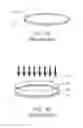
Figures IA-1D are perspective views of manufacturing a microfluidic chip mold according to the related art. The manufacturing of a microfluidic chip according to the related art takes a channel design and duplicates the channel design onto a photomask 10. As shown in Figure IA, a photoresist 22 is deposited onto a semiconductor wafer 20. As shown in FIG. 1B, the photomask 10 that reflects the channel design 12 is placed over the wafer 20, and the wafer 20 with the mask 10 undergoes UV exposition to cure the photoresist 22. Then, as shown in FIG. 1C, the wafer 20 with the cured photoresist 22′ is developed. The ‘negative’ image of a channel according to the channel design is etched away from the semiconductor wafer 20. As shown in FIG. 1D, after all residual photoresist are removed, the resulting wafer becomes a mold 20′ that provides the channel according to the channel design 12′.
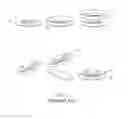
FIG. 2 are perspective views of the steps of manufacturing a microfluidic chip according to the related art. As shown in FIG. 2, PDMS in liquid form 30 is poured onto the mold 20′. Liquid PDMS 30 may be mixed with crosslinking agent. The mold 20′ with liquid PDMS 30 is then placed into a furnace to harden PDMS 30. As PDMS is hardened, the hardened PDMS block 30′ duplicates the micro-channel 12″ according to the channel design. The PDMS block 30′ then may be separated from the mold 20′. To allow injection of fluid into the micro-channel 12″ (which will subsequently be sealed), inlet or outlet is then made in the PDMS block 30′ by drilling into the PDMS block 30′ using a needle. Then, the face of the PDMS block 30′ with micro-channels and a glass slide 32 are treated with plasma. Due to the plasma treatment, the PDMS block 30′ and the glass slide 32 can bond with one another and close the chip.
The microfluidic chip according to the related all has a micro-channel in the PDMS block. PDMS belongs to a group of polymeric organosilicon compounds that are commonly referred to as silicone, and can be deposited onto the master mold in liquid form and subsequently hardened.
However, PDMS is inherently porous and due to its polymer structure, PDMS is highly permeable. Thus, diffusion of fluid sample through PDMS has been observed. Such diffusion of fluid sample does not impact a microfluidic system that pumps fluid samples in doses as significantly as a continuous flow microfluidic system. In particular, when a continuous flow microfluidic system monitors treating and manipulating of the flowing fluid in real-time analysis applications, diffusion or unaccounted loss of fluid sample can significantly impact the real-time analysis. Thus, there exists a need for reducing diffusion or loss of fluid sample in micro-channel of a microfluidic chip.
SUMMARY OF THE INVENTION
Accordingly, embodiments of the invention are directed to a method of manufacturing microfluidic chips for handling fluid samples on a microfluidic level and microfluidic chips that can substantially obviate one or more of the problems due to limitations and disadvantages of the related art.
An object of embodiments of the invention is to provide a method of manufacturing microfluidic chips to reduce fluid diffusion in micro-channel, and microfluidic chips manufactured using the same.
An object of embodiments of the invention is to provide a method, of manufacturing microfluidic chips with micro-channel coating, and microfluidic chips manufactured using the same.
Additional features and advantages of embodiments of the invention will be set forth in the description which follows, and in part will be apparent from the description, or may be learned by practice of embodiments of the invention. The objectives and other advantages of the embodiments of the invention will be realized and attained by the structure particularly pointed out in the written description and claims hereof as well as the appended drawings.
To achieve these and other advantages and in accordance with the purpose of embodiments of the invention, as embodied and broadly described, a microfluidic chip device according to an embodiment of the present invention includes a substrate having a first thickness, at least one microfluidic pathway in the substrate, a coating along the microfluidic pathway, and a glass layer having a second thickness on the substrate and above the microfluidic pathway, wherein the coating contains cyanoacrylates, and the first thickness is greater than the second thickness.
In accordance with another embodiment of the invention, as embodied and broadly described, a microfluidic chip device includes a substrate having a first thickness, at least one microfluidic pathway in the substrate, a coating along the microfluidic pathway, and a glass layer having a second thickness on the substrate and above the microfluidic pathway, wherein the coating contains an optically transparent material, and the first thickness is greater than the second thickness.
In accordance with another embodiment of the invention, as embodied and broadly described, a method for manufacturing a microfluidic chip device includes etching a substrate having a first thickness for forming at least one microfluidic pathway in the substrate, coating the substrate, and bonding a glass layer having a second thickness on the substrate and above the microfluidic pathway, wherein the step of coating includes coating an optically transparent material, and the first thickness is greater than the second thickness.
In accordance with another embodiment of the invention, as embodied and broadly described, a microfluidic chip device includes a coating along the microfluidic pathway, wherein the coating includes cyanoacrylates, an UV curable epoxy adhesive, a gel epoxy or epoxy under trade name of EPO-TEK OG175, MasterBond EP30LV-1 or Locite 0151.
In accordance with another embodiment of the invention, as embodied and broadly described, a method for manufacturing a microfluidic chip device includes etching a substrate having a first thickness for forming at least one microfluidic pathway in the substrate and coating along the microfluidic pathway, wherein the coating includes coating with cyanoacrylates, an UV curable epoxy adhesive, a gel epoxy or epoxy under trade name of EPO-TEK OG1.75, MasterBond EP30LV-1 or Locite 0151.
It is to be understood that both the foregoing general description and the following detailed description are exemplary and explanatory and are intended to provide further explanation of embodiments of the invention as claimed.
BRIEF DESCRIPTION OF THE DRAWINGS
The accompanying drawings, which are included to provide a further understanding of embodiments oft/he invention and are incorporated in and constitute a part of this specification, illustrate embodiments of the invention and together with the description serve to explain the principles of embodiments of the invention.
FIGS. 1A-1D are perspective views of manufacturing a microfluidic chip mold according to the related art.
FIG. 2 illustrates the steps of manufacturing a microfluidic chip according to the related art.
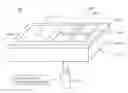
FIG. 3 is a perspective view of a microfluidic chip for a microfluidic system according to an embodiment of the present invention.
FIG. 4 is a side view of the microfluidic chip shown in FIG. 3.
FIG. 5 is a side view of the microfluidic chip according to another embodiment of the present invention.
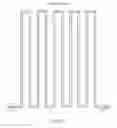
FIG. 6 is a top view of a heater for a microfluidic chip of a microfluidic system according to an embodiment of the present invention.
DETAILED DESCRIPTION OF THE PREFERRED EMBODIMENTS
Reference will now be made in detail to the preferred embodiments of the invention, examples of which are illustrated in the accompanying drawings.
FIG. 3 is a perspective view of a microfluidic chip for a microfluidic system according to an embodiment of the present invention, and FIG. 4 is a side view of the microfluidic chip shown in FIG. 3. As shown in FIGS. 3 and 4, a microfluidic chip 100 includes a PDMS substrate 110 and a glass layer 120 on the substrate 110. The glass layer 120 may be formed of borosilicate. As shown in the substrate 110. For instance, the glass layer 120 may have a thickness of about 0.01 inch or less.
The substrate 110 includes micro-channels 130. The micro-channels 130 form a microfluidic pathway, and the channels allow fluid samples to be flowed through therein. The micro-channels 130 may be formed by etching the substrate 110.
After the micro-channels 130 are formed in the substrate 110 but prior to sealing micro-channels 130 with the glass layer 120, the substrate 110 is coated with cyanoacrylates 112 to seal the surface pores of the substrate 110. Cyanoacrylates are acylic resin and are mainly used as adhesives. However, cyanoacrylates are not used as adhesives in the micro-channels of the substrate 110. Instead, cyanoacrylates are allowed to set to form a coating along the micro-channels 130.
When coating the substrate 110, the amount of cyanoacrylates deposited is controlled so as not to fill the micro-channels 130 of the substrate 110. In addition or alternatively, the micro-channels 130 are formed wider and/or deeper in the substrate 110 to account for the subsequent coating thickness of cyanoacrylates 112.
The microfluidic chip 100 further includes heaters 140a, 140b and 140c. For example, the heaters 140a, 140b and 140c may be resistive heating devices, such as thin-film heaters. The heaters 140a, 140b and 140c may be formed by applying a thin film of conductive material directly on the glass layer 120. For example, the heaters 140a, 140b and 140c may include aluminum. More specifically, the heaters 140a, 140b and 140c may have a thickness of about 0.001 inch or less.
The microfluidic chip 100 further includes temperature sensors 150a, 150b and 150c. For example, the temperature sensors 150a, 150b and 150c may be resistance temperature detectors. The temperature sensors 150a, 150b and 150c provide real-time temperature detection to more than one zones or portions of the microfluidic chip 100. The real-time temperature detection is then used to control heaters 140a, 140b and 140c, respectively. As such, the microfluidic chip 100 may have independently-temperature-controlled zones.
A microprocessor (not shown) may be connected to the temperature sensors 150a, 150b and 150c and the heaters 140a, 140b and 140c to provide independently-temperature-controlled zones for the microfluidic chip 100. For example, the microprocessor may implement a control algorithm, such as PID control to receive temperature inputs from the temperature sensors 150a, 150b and 150c and dynamically controls the output of the heaters 140a, 140b and 140c.
For real-time analysis, an optical sensor 160 is further included and can be placed above or below the microfluidic chip 100. The optical sensor 160 provides real-time monitoring of the manipulation of the fluid sample in the micro-channel 130 of the microfluidic chip 100. The same microprocessor (not shown) can also receive and control the optical sensor 160.
FIG. 5 is a side view of the microfluidic chip according to another embodiment of the present invention. In FIG. 5, a microfluidic chip 100′ includes a layer of cured optically transparent material 112′ between a substrate 110′ and a seal layer 120′. As shown in FIG. 3, the thickness of the seal layer 120′ is much smaller than the thickness of the substrate 110′. For instance, the seal layer 120′ may have a thickness of about 0.01 inch or, less.
The substrate 110′ includes micro-channels 130′. The micro-channels 130′ form a microfluidic pathway, and the channels allow fluid samples to be flowed through therein. The micro-channels 130′ may be formed by etching the substrate 110′.
After the micro-channels 130′ are formed in the substrate 110′ but prior to sealing micro-channels 130′ with the seal layer 120′, the substrate 110′ is coated with an optically transparent material to seal the surface of the substrate 110′. The optically transparent material is allowed to set or hardened to form the layer of cured optically transparent material 112′. An UV curable epoxy adhesive, a gel epoxy or epoxy under trade name of EPO-TEK OG175, MasterBond EP30LV-1 or Locite 0151 may be used to coat the surface of the substrate 110′.
When coating the substrate 110′, the amount of the optically transparent material deposited are controlled so as not to fill the micro-channels 130′ of the substrate 110′. In addition or alternatively, the micro-channels 130′ are formed wider and/or deeper in the substrate 110′ to account for the subsequent layer of cured optically transparent material 112′.
The microfluidic chip 100′ further includes heaters 140a′, 140b′ and 140c′. For example, the heaters 140a′, 140b′ and 140c′ may be resistive heating devices, such as thin-film heaters. The heaters 140a′, 140b′ and 140c′ may be formed by applying a thin film of conductive material directly on the seal layer 120′. For example, the heaters 140a′, 140b′ and 140c′ may include aluminum. More specifically, the heaters 140a′, 140b′ and 140c′ may have a thickness of about 0.001 inch or less.
The microfluidic chip 100′ further includes temperature sensors 150a′, and 150c′. For example, the temperature sensors 150a′, 150b′ and 150c′ may be resistance temperature detectors. The temperature sensors 150a′, 150b′ and provide real-time temperature detection to more than one zones or portions of the microfluidic chip 100′. The real-time temperature detection is then used to control heaters 140a′, 140b′ and 140c′, respectively. As such, the microfluidic chip 100 may have independently-temperature-controlled zones.
A microprocessor (not shown) may be connected to the temperature sensors 150a′, 150b′ and 150c′ and the heaters 140a′, 140b′ and 140c′ to provide independently-temperature-controlled zones for the microfluidic chip 100′. For example, the microprocessor may implement a control algorithm, such as PID control to receive temperature inputs from the temperature sensors 150a′, 150b′ and 150c′ and dynamically controls the output of the heaters 140a′, 140b′ and 140c′.
Although not shown, for real-time analysis, an optical sensor is further included and can be placed above or below the microfluidic chip 100′. The optical sensor provides real-time monitoring of the manipulation of the fluid sample in the micro-channel 130′ of the microfluidic chip 100′. The optical sensor may be controlled by a microprocessor.
FIG. 6 is a top view of a heater for a microfluidic chip of a continuous-flow microfluidic system according to an embodiment of the present invention. As shown in FIG. 6, a thin-film heater 140 for a microfluidic chip of a microfluidic system preferably may include two electrical interface pads 142a and 142b. The two electrical interface pads 142a and 142b may receive voltage and/or current. More specifically, electrical resistance or heat may be generated by the thin-film heater 140 based on V2/R or I2×R. Such heat may provide temperature to the channels 130 or 130′ shown in FIG. 4 or 5.
Preferably, the thin-film heater 140 is spread above the channels 130 or 130′ evenly to provide consistent heating of the channel below. The thin-film heater 140 may have a line-like shape between the two electrical interface pads 142a and 142b. For example, the thin-film heater 140 may have elongated strips that are substantially parallel with one another.
It will be apparent to those skilled in the art that various modifications and variations can be made in the microfluidic chip of embodiments of the invention without departing from the spirit or scope of the invention. Thus, it is intended that embodiments of the invention cover the modifications and variations of this invention provided they come within the scope of the appended claims and their equivalents.
Claims
What is claimed:1. A microfluidic system comprising:
a microfluidic chip configured to receive a fluid sample for an optical analysis, the microfluidic chip including at least one microfluidic pathway for the fluid sample to flow through, the at least one microfluidic pathway including a coating to reduce fluid diffusion; and
an optical sensor configured to perform the optical analysis of the fluid sample while the fluid sample is held within the microfluidic chip.
2. The microfluidic system of claim 1, wherein the optical sensor is configured to measure a fluorescence of the fluid sample while the fluid sample is held within the microfluidic chip.
3. The microfluidic system of claim 1, wherein the optical sensor is configured to perform the optical analysis of the fluid sample while the fluid sample is located within the at least one microfluidic pathway.
4. The microfluidic system of claim 1, wherein the microfluidic chip includes a substrate and a glass layer, the at least one microfluidic pathway formed between the substrate and the glass layer.
5. The microfluidic system of claim 4, wherein the at least one microfluidic pathway is etched into the substrate between the substrate and the glass layer.
6. The microfluidic system of claim 1, wherein the coating includes an acrylic resin.
7. The microfluidic system of claim 1, wherein the coating includes cyanoacrylates.
8. The microfluidic system of claim 1, wherein the coating includes an optically transparent material.
9. The microfluidic system of claim 1, wherein the microfluidic chip includes at least one heater configured to heat the fluid sample held within the microfluidic chip.
10. The microfluidic system of claim 1, wherein the microfluidic chip includes at least one temperature sensor configured to sense the temperature of the fluid sample held within the microfluidic chip.
11. A microfluidic device comprising:
a first layer having at least one microfluidic pathway etched therein;
a second layer placed against the first layer such that the at least one microfluidic pathway is located between the first layer and the second layer; and
a coating exposed along the at least one microfluidic pathway to reduce fluid diffusion as a fluid sample flows through the at least one microfluidic pathway.
12. The microfluidic device of claim 11, wherein the coating includes an acrylic resin.
13. The microfluidic system of claim 11, wherein the coating includes cyanoacrylates.
14. The microfluidic system of claim 11, wherein the coating includes an optically transparent material.
15. The microfluidic system of claim 11, wherein the second layer includes glass.
16. The microfluidic system of claim 11, wherein the coating is resistant to temperature as high as about 100 degrees Celsius.
17. A method of manufacturing a microfluidic device comprising:
etching a first layer of the microfluidic device to form at least one microfluidic pathway in the first layer;
coating the at least one microfluidic pathway with a coating to reduce fluid diffusion;
allowing the coating to set so that the coating is exposed along the at least one microfluidic pathway; and
bonding a second layer to the first layer so that the at least one microfluidic pathway is located between the first layer and the second layer and so that the coating is exposed to reduce fluid diffusion of a fluid sample flowing through the at least one microfluidic pathway.
18. The method of manufacturing of claim 17, wherein bonding the second layer to the first layer includes bonding a glass layer to the first layer.
19. The method of manufacturing of claim 17, wherein bonding the second layer to the first layer includes bonding the second layer directly to the first layer.
20. The method of manufacturing of claim 17, which includes forming at least one of the first layer or the second layer with an optically transparent material that allows an optical measurement of a fluid sample in the microfluidic pathway to be taken through the at least one first layer or second layer.
Images & Drawings included:



Sources:
- United States Patent and Trademark Office - verify current appl. status at the USPTO↗
Similar patent applications:
Recent applications in this class:
- » 20250288990 2025-09-18
MICROCHAMBER ARRAY AND METHOD FOR MANUFACTURING MICROCHAMBER ARRAY - » 20250288989 2025-09-18
CHIP AND PREPARATION METHOD THEREFOR - » 20250281925 2025-09-11
SEALING A MICROFLUIDIC MODULE BY MEANS OF SEALING FILM AND SEALING RIDGE - » 20250276316 2025-09-04
MICROFLUIDIC DEVICE AND METHOD OF MANUFACTURING THE SAME - » 20250276315 2025-09-04
COVALENTLY MODIFIED SURFACES, KITS, AND METHODS OF PREPARATION AND USE - » 20250276314 2025-09-04
MICROFLUIDIC ASSEMBLY - » 20250276313 2025-09-04
MICROFLUIDIC CHIP - » 20250269369 2025-08-28
COLORIMETRIC SENSOR INCLUDING METAL-ORGANIC FRAMEWORK AND METHOD OF MANUFACTURING THE COLORIMETRIC SENSOR - » 20250256276 2025-08-14
PARTICLE MANIPULATION SYSTEM WITH MULTISORT VALVE - » 20250229267 2025-07-17
Adhesive Film for a Microfluidic Device, Microfluidic Device with Adhesive Film, and Use of an Adhesive Film for Closing an Opening of a Microfluidic Device