Composite material comprising a precious metal, manufacturing process and use of such material
US20160060180A1
2016-03-03
14/755,729
2015-06-30
✅ Patent granted
US 9,695,090 B2
2017-07-04
-
-
Elizabeth Mulvaney
Miller, Matthias & Hull LLP
2035-06-30
Abstract:
A composite material combining—a precious metal or an alloy containing a precious metal—and a boron-based ceramic having a melting point greater than that of said precious metal and a density at most equal to 4 g/cm3.
Inventors:
- Senad Hasanovic 2 🇨🇭 Lausanne, Switzerland
- Andreas Mortensen 2 🇨🇭 St-Saphorin/Morges, Switzerland
- Ludger Weber 2 🇨🇭 Le Mont /s Lausanne, Switzerland
- Reza Tavangar 2 🇮🇷 Tehran, Iran
Assignee:
- HUBLOT SA 1 🇨🇭 Nyon, Switzerland
Applicant:
Interested in similar patents?
Get notified when new applications in this technology area are published.
Classification:
C04B41/4523 » CPC main
After-treatment of mortars, concrete, artificial stone or ceramics; Treatment of natural stone; Coating or impregnating e.g. injection in masonry, partial coating of green or fired ceramics, organic coating compositions for adhering together two concrete elements, characterised by the method of application applied from the molten state ; Thermal spraying, e.g. plasma spraying
A44C27/003 » CPC further
Materials for manufacturing jewellery; Metallic materials Metallic alloys
C04B41/88 » CPC further
After-treatment of mortars, concrete, artificial stone or ceramics; Treatment of natural stone of only ceramics; Coating or impregnation with inorganic materials Metals
C22C32/00 » CPC further
Non-ferrous alloys containing at least 5% by weight but less than 50% by weight of oxides, carbides, borides, nitrides, silicides or other metal compounds, e.g. oxynitrides, sulfides whether added as such or formed
C22C5/02 » CPC further
Alloys based on noble metals Alloys based on gold
C22C32/0057 » CPC further
Non-ferrous alloys containing at least 5% by weight but less than 50% by weight of oxides, carbides, borides, nitrides, silicides or other metal compounds, e.g. oxynitrides, sulfides whether added as such or formed with carbides, nitrides, borides or silicides as the main non-metallic constituents only carbides based on BC
C04B41/45 IPC
After-treatment of mortars, concrete, artificial stone or ceramics; Treatment of natural stone Coating or impregnating e.g. injection in masonry, partial coating of green or fired ceramics, organic coating compositions for adhering together two concrete elements,
C04B35/563 » CPC further
Shaped ceramic products characterised by their composition ; Ceramics compositions ; Processing powders of inorganic compounds preparatory to the manufacturing of ceramic products based on non-oxide ceramics based on carbides or oxycarbides based on boron carbide
B22F3/10 » CPC further
Manufacture of workpieces or articles from metallic powder characterised by the manner of compacting or sintering; Apparatus specially adapted therefor ; Presses and furnaces Sintering only
C04B41/009 » CPC further
After-treatment of mortars, concrete, artificial stone or ceramics; Treatment of natural stone characterised by the material treated
Y10T428/249994 » CPC further
Stock material or miscellaneous articles; Web or sheet containing structurally defined element or component Composite having a component wherein a constituent is liquid or is contained within preformed walls [e.g., impregnant-filled, previously void containing component, etc.]
B32B3/00 IPC
Layered products comprising a layer with external or internal discontinuities or unevennesses, or a layer of non-planar form ; Layered products having particular features of form
C04B41/00 IPC
After-treatment of mortars, concrete, artificial stone or ceramics; Treatment of natural stone
B22D19/00 » CPC further
Casting in, on, or around objects which form part of the product
Description
FIELD OF THE INVENTION
The invention pertains to composite materials comprising precious metals, their manufacturing process and their uses.
BACKGROUND OF THE INVENTION
Document U.S. Pat. No. 7,608,127 describes composite materials consisting of a metallic matrix of precious metals or precious metal alloys, reinforced with a filler material of tungsten carbide or molybdenum carbide. During its manufacture, this composite material is obtained by infiltration of the liquid metal, under pressure, in a preform of tungsten carbide or molybdenum carbide. The composite material described in this document may have a metal concentration ranging from 56 to 75% by weight and a hardness greater than 171 VHN, possibly exceeding 500 VHN.
OBJECT AND SUMMARY OF THE INVENTION
The primary object of the present invention is to propose a new composite material having characteristics at least as advantageous, if not better, than the prior art described above. To that end, the invention proposes a composite material combining:
-
- a precious metal or an alloy containing a precious metal (the alloy in question can be, for example, an alloy of precious metals with one another and/or with other metals such as aluminum, copper, and titanium),
- and a boron-based ceramic having a melting point greater than that of said precious metal and a density at most equal to 4 g/cm3.
We thereby obtain a composite material of low density, through the choice of the boron-based ceramic, and considerable hardness. In spite of the very low wettability of boron-based ceramics, the composite material can be realized primarily by liquid metal infiltration under pressure.
In various embodiments of the composite material according to the invention, we can advantageously have recourse to one and/or the other of the following arrangements:
-
- the composite material has a precious metal concentration greater than 75% by weight of the total weight of said material;
- the said precious metal is chosen from among: gold, platinum, palladium, and silver;
- the said precious metal is gold;
- the ceramic is combined with an alloy of gold or aluminum, the composite material having a concentration of aluminum at most equal to 20% by weight of the total weight of the composite material, preferably at most equal to 5% by weight of the total weight of the composite material;
- the precious metal is alloyed to titanium, the concentration of titanium being comprised between 0.5 and 2% of the total weight of the composite material, advantageously approximately 1% by weight of the total weight of the composite material, which facilitates infiltration of the precious metal or alloy in the ceramic;
- said ceramic is chosen from among: a boron carbide, a boron nitride, a boron oxide, and a BCN heterodiamond;
- said ceramic is chosen from the boron carbides having as their approximate formula B4C, B13C2, and B12C3;
- said ceramic is a boron nitride having the formula BN, chosen from among: cubic boron nitride, boron nitride having a Wurtzite type crystalline structure, hexagonal boron nitride;
- said ceramic is boron oxide B6O;
- said ceramic is cubic BC2N;
- said ceramic is an electrical conductor, which allows the composite material to be machined by electrical discharge machining;
- the material has a hardness greater than 320 VHN, preferably greater than 400 VHN;
- the ceramic represents a volume fraction comprised between 55 and 80% of said material;
- the ceramic is in the form of discrete particles having an equivalent diameter comprised between 0.1 μm and 1 mm, preferably comprised between 1 μm and 100 μm;
- the ceramic forms a continuous, interconnected phase;
- the composite material has a density generally comprised between 7 and 14 g/cm3.
Another object of the invention is a process to manufacture a composite material as defined above, said process having an infiltration step in which the precious metal or alloy is infiltrated under a pressure of 10 to 200 bar, preferably from 75 to 150 bar, in a porous preform consisting of said ceramic.
As indicated above, infiltration under pressure allows the metal to infiltrate the boron-based ceramic in spite of the very low wettability of this type of ceramic. Additionally, we thereby obtain a composite material appreciably without porosity.
In various embodiments of the process according to the invention, we can have recourse to either of the following situations:
-
- during the infiltration step, an alloy of gold and aluminum in liquid form is infiltrated under pressure in a porous preform of boron carbide;
- the process also comprises, prior to the infiltration step, a sintering step during which the ceramic preform is at least partially sintered.
Finally, another object of the invention is the use of a composite material as described above in clock making or jewelry making.
BRIEF DESCRIPTION OF THE DRAWINGS
Other characteristics and advantages of the invention will appear from the following description of one of the embodiments, provided with respect to the attached drawings, in which:
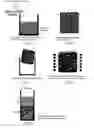
FIG. 1 is a schematic illustration of an example of manufacturing a composite material according to an embodiment of the invention;
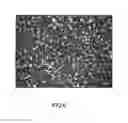
and FIG. 2 is a photograph of a crystallographic section showing a composite material according to an embodiment of the invention.
MORE DETAILED DESCRIPTION
As explained above, the invention pertains to a composite material combining:
-
- a precious metal (notably: gold, platinum, palladium, or silver) or an alloy containing a precious metal;
- and a boron-based ceramic with a melting point greater than that of said precious metal and a density at most equal to 4 g/cm3 (preferably less than 3.5 g/cm3).
Concerning the aforementioned alloys, it may, notably, involve:
-
- an alloy of gold or aluminum, the composite material having a concentration of aluminum at most equal to 20% by weight of the total weight of the composite material, preferably at most equal to 5% by weight of the total weight of the composite material;
- alloys comprising at least one precious metal and at least titanium to facilitate the infiltration of the metal into the ceramic (the concentration of titanium being comprised between 0.5 and 2% of the total weight of the composite material, preferably approximately 1% by weight of the total weight of the composite material);
- alloys comprising at least one precious metal and at least copper.
The composite material may have a precious metal concentration greater than 75% by weight of the total weight of said material, for example on the order of 80%.
The technical ceramics here referred to are hard, refractory, lightweight materials, and very stable chemically. Their melting point is generally above 2000 degrees Celsius. The ceramics that can be used for the present invention notably comprise:
-
- boron carbides having an approximate formula B4C, B13C2, and B12C3 (melting point: 2450° C., density 2.48-2.51 g/cm3),
- the boron nitrides, BN (density: approximately 3.5 g/cm3), notably cubic boron nitride (melting point: 2970° C.), boron nitride with a Wurtzite type crystalline structure (melting point: 1700° C.), hexagonal boron nitride (melting point: approximately 2500° C.),
- certain boron oxides, notably boron oxide B6O (melting point: greater than 2000° C.),
- certain BCN compounds, notably cubic BC2N (melting point greater than 2000° C.).
The ceramic may represent a volume fraction comprised between 55 and 80% of the material. It can be in the form of discrete particles having an equivalent diameter comprised between 0.1 μm and 1 mm, preferably comprised between 1 m and 100 μm. It may be advantageous to have particles of various sizes in the same material, notably to obtain a spangled visual effect.
When the process of preparing the composite according to the invention comprises a sintering step, the ceramic then forms a continuous phase in which the ceramic grains are interconnected. The chosen ceramic will preferably be sufficiently electrically conductive to enable the use of electrical discharge machining. In particular, this is the case with the boron carbide having the statistical formula B4C. We can thus easily machine the composite material in spite of its extreme hardness.
We thereby obtain a material that is both light (low density) and very hard, therefore, nearly unscratchable, characterized by a hardness greater than 320 VHN, preferably greater than 400 VHN, or even much higher. This latter property is particularly interesting, notably for the use of composite materials in clockmaking or jewelry making.
We can realize the material described below notably by the process illustrated in FIG. 1, comprising the following steps:
-
- fabrication of a porous ceramic preform, notably by sintering;
- infiltration under pressure of the precious metal or alloy into the ceramic preform.
Example
A commercial boron carbide powder, F1000 (particle size 5 μm), of statistical formula B4C, has been cold compacted at 200 MPa isostatic pressure (FIG. 1, steps (a) to (c)), then sintered at 2100° C. in an oven, under vacuum, for 1 hour (FIG. 1, step (d)).
The density of the sintered preform is 1.766 g/cm3 and the density of the powder is 2.48 g/cm3. Thus, the preform is 71.19% dense, leaving 28.81% porosity.
Pure gold is then infiltrated in the sintered preform at a temperature of 1200° C. under 150 bar gas (argon) pressure (FIG. 1, step (e)).
The material obtained is a metal-matrix composite having a density of 7.48 g/cm3. The concentration of pure gold in the composite is greater than 76% by mass and its hardness is comprised between 650 and 700 Vickers (30 N load, 16 seconds). The crystallographic section shown in FIG. 2 was made with an optical microscope at 50× enlargement on a sample of said composite, polished with diamond particles up to 0.25 μm. The bright regions correspond to the metal infiltrated in the ceramic.
Claims
1-21. (canceled)
22. A composite material containing a precious metal chosen among gold and platinum,
wherein said composite material has a concentration of precious metal greater than 75% by weight of the total weight of said material,
and wherein said composite material has a density comprised between 7 and 14 g/cm3.
23. The composite material according to claim 22, in which said precious metal is gold.
24. The composite material according to claim 22, in which the precious metal is alloyed to titanium, the concentration of titanium being comprised between 0.5 and 2% of the total weight of the composite material, preferably approximately 1% by weight of the total weight of the composite material.
25. The composite material according claim 22, having a hardness greater than 320 VHN, preferably greater than 400 VHN.
26. The composite material according to claim 22, wherein said precious metal is combined with a boron-based ceramic, said boron-based ceramic having a melting point greater than that of said precious metal and a density at most equal to 4 g/cm3.
27. The composite material according to claim 26, in which the ceramic is combined with an alloy of gold and aluminum, the composite material having a concentration of aluminum at most equal to 5% by weight of the total weight of the composite material.
28. The composite material according to claim 26, in which said ceramic is chosen from among: a boron carbide, a boron nitride, a boron oxide, and a BCN heterodiamond.
29. The composite material according to claim 28, in which said ceramic is chosen from among the boron carbides having as an approximate formula B4C, B13C2, and B12C3.
30. The composite material according to claim 28, in which said ceramic is boron nitride having the formula BN, chosen from among: cubic boron nitride, boron nitride with a Wurtzite type crystalline structure, hexagonal boron nitride.
31. The composite material according to claim 28, in which said ceramic is boron oxide B6O.
32. The composite material according to claim 28, in which said ceramic is cubic BC2N.
33. The material according to claim 26, in which said ceramic is an electrical conductor.
34. The composite material according to claim 26, in which the ceramic represents a volume fraction comprised between 55 and 80% of said material.
35. The composite material according to claim 26, in which the ceramic is in the form of discrete particles having an equivalent diameter comprised between 0.1 μm and 1 mm, preferably comprised between 1 μm and 100 μm.
36. The composite material according to claim 26, in which the ceramic forms a continuous, interconnected phase.
37. The composite material according to claim 22, wherein said precious metal is combined with a porous ceramic preform.
38. A process for manufacturing a composite material according to claim 37, said process having an infiltration step in which the precious metal or alloy is infiltrated under a pressure of 10 to 200 bar, preferably from 75 to 150 bar, in said porous ceramic preform.
39. The process according to claim 38, in which, during the infiltration step, an alloy of gold and aluminum in liquid form is infiltrated under pressure in said porous ceramic preform, and said porous ceramic preform is made of boron carbide.
40. The process according to claim 38, also comprising, prior to the infiltration step, a sintering step during which the ceramic preform is at least partially sintered.
41. Use of a composite material according to claim 22 in clock making or jewelry making.
Images & Drawings included:
Sources:
- United States Patent and Trademark Office - verify current appl. status at the USPTO↗
Similar patent applications:
Recent applications in this class:
- » 20250145540 2025-05-08
METHOD FOR CLOSING AN ORIFICE OF A SILICON CARBIDE-BASED CONTAINER - » 20240190779 2024-06-13
METHOD FOR MANUFACTURING METAL-IMPREGNATED CERAMIC FIRED BODY - » 20230033984 2023-02-02
COATING TAPE - » 20200385315 2020-12-10
Systems and methods for infiltrating porous ceramic matrix composite (CMC) preforms - » 20190225553 2019-07-25
Coating tape - » 20190016644 2019-01-17
Modified barium titanate foam ceramic/thermosetting resin composites and preparation method thereof - » 20150079297 2015-03-19
METHOD OF COATING A FIBER WITH PRE-COATING - » 20050162007 2005-07-28
Graduated release/proportioning valve