Self-lubricating articulation element made from a composite material and operating under high dynamic loadings
US20160061267A1
2016-03-03
14/436,693
2013-10-15
✅ Patent granted
US 9,989,096 B2
2018-06-05
WO; PCT/FR2013/052459; 20131015
WO; WO2014/064367; 20140501
Daniel J Wiley
Heslin Rothenberg Farley & Mesiti P.C.
2035-04-08
Abstract:
The element is formed from the winding of a fabric of small thickness ranging between 20 μm and 150 μm and mixed with a resin containing fillers. The fabric has the form of strips having a width ranging between 5 mm and 200 mm, with the strips being crossed in several layers.
Inventors:
- Emmanuel Masse 5 🇫🇷 Feurs, France
- Philippe Maurin-Perrier 13 🇫🇷 Saint-Marcellin-En-Forez, France
- Olivier BLANDENET 7 🇫🇷 Meylan, France
Assignee:
- H.E.F. 43 🇫🇷 Andrezieux Boutheon, France
Applicant:
Interested in similar patents?
Get notified when new applications in this technology area are published.
Classification:
C10M103/02 » CPC further
Lubricating compositions characterised by the base-material being an inorganic material Carbon; Graphite
C10M103/06 » CPC further
Lubricating compositions characterised by the base-material being an inorganic material Metal compounds
C10M107/38 » CPC further
Lubricating compositions characterised by the base-material being a macromolecular compound containing halogen
C10M2201/0413 » CPC further
Inorganic compounds or elements as ingredients in lubricant compositions; Elements; Carbon; Graphite; Carbon black used as base material
C10M2201/0663 » CPC further
Inorganic compounds or elements as ingredients in lubricant compositions; Metal compounds; Sulfides; Selenides; Tellurides; Molybdenum sulfide used as base material
C10M2213/0623 » CPC further
Organic compounds containing halogen as ingredients in lubricant compositions; Perfluoro polymers; Polytetrafluoroethylene [PTFE] used as base material
F16C41/00 » CPC main
Other accessories, e.g. devices integrated in the bearing not relating to the bearing function as such
F16C17/02 » CPC further
Sliding-contact bearings for exclusively rotary movement for radial load only
F16C23/02 » CPC further
Bearings for exclusively rotary movement adjustable for aligning or positioning Sliding-contact bearings
F16C33/203 » CPC further
Parts of bearings; Special methods for making bearings or parts thereof; Parts of sliding-contact bearings; Brasses; Bushes; Linings; Sliding surface consisting mainly of plastics Multilayer structures, e.g. sleeves comprising a plastic lining
F16C33/201 » CPC further
Parts of bearings; Special methods for making bearings or parts thereof; Parts of sliding-contact bearings; Brasses; Bushes; Linings; Sliding surface consisting mainly of plastics Composition of the plastic
F16C33/208 » CPC further
Parts of bearings; Special methods for making bearings or parts thereof; Parts of sliding-contact bearings; Brasses; Bushes; Linings; Sliding surface consisting mainly of plastics Methods of manufacture, e.g. shaping, applying coatings
F16C2208/02 » CPC further
Plastics; Synthetic resins, e.g. rubbers comprising fillers, fibres
F16C2208/40 » CPC further
Plastics; Synthetic resins, e.g. rubbers; Thermoplastic resins Imides, e.g. polyimide [PI], polyetherimide [PEI]
F16C2208/70 » CPC further
Plastics; Synthetic resins, e.g. rubbers; Thermoplastic resins Polyesters, e.g. polyethylene-terephthlate [PET], polybutylene-terephthlate [PBT]
F16C2208/86 » CPC further
Plastics; Synthetic resins, e.g. rubbers; Thermosetting resins Epoxy resins
F16C2208/90 » CPC further
Plastics; Synthetic resins, e.g. rubbers; Thermosetting resins Phenolic resin
F16C2240/30 » CPC further
Specified values or numerical ranges of parameters; Relations between them Angles, e.g. inclinations
F16C2240/60 » CPC further
Specified values or numerical ranges of parameters; Relations between them; Linear dimensions, e.g. length, radius, thickness, gap Thickness, e.g. thickness of coatings
F16C33/20 IPC
Parts of bearings; Special methods for making bearings or parts thereof; Parts of sliding-contact bearings; Brasses; Bushes; Linings Sliding surface consisting mainly of plastics
F16C33/28 » CPC further
Parts of bearings; Special methods for making bearings or parts thereof; Parts of sliding-contact bearings; Brasses; Bushes; Linings with embedded reinforcements shaped as frames or meshed materials
F16C11/04 » CPC further
Pivots; Pivotal connections Pivotal connections
Description
The invention relates to the technical field of self-lubricating joints.
The invention advantageously applies for all types of joints requiring a greaseless operation, that is, with a self-lubricating operation and operating under high loads in dynamic state.
The invention aims at obtaining a self-lubricating joint made of polymer which is homogeneous across its entire thickness with no reinforcement substrate and operating under high loads, for example, greater than 60 MPa in dynamic state.
According to the state of the art, this type of composite polymer joint is not fully satisfactory due to its poor load behavior and to the risks of flow and delamination under a dynamic load, including for loads lower than 60 MPa. For example, according to the state of the art, the joint element may be obtained from a winding of a synthetic fabric mixed with a thermosetting or thermoplastic resin of epoxy, polyester, or other type, the fabric thickness being on the order of 300 μm. The fabric appears in the form of strips formed in several layers to obtain the desired thickness, for example, 3 layers.
The invention aims at overcoming these disadvantages in a simple, reliable, efficient, and rational way.
The problem that the invention aims at solving is to obtain a polymer-type joint capable of operating under high dynamic loads, greater than 60 MPa.
According to the invention, the joint element is formed from the winding of a fabric of small thickness ranging between 20 μm and 150 μm and preferably between 20 μm and 130 μm and mixed with a resin comprising fillers, said fabric appearing in the form of strips having a width ranging between 5 mm and 200 mm, said strips being crossed in several layers, according to the filament winding technique.
Such features provide a better homogeneity with the use of thinner strips and a better resistance to tangential frictional stress due to the crossing of the layers of fabric forming the material.
This also results in a better dynamic load behavior due to the crossing of the strips and a better static load behavior due to a better homogeneity of the material.
Advantageously, the crossing angle ranges between 10° and 90°, and preferably between 30° and 86°.
According to other features, the resin is of epoxy, ester vinyl, polyester, phenolic, polyimide, or other type while the fillers are of PTFE, MoS2, or graphite type.
It should be noted that the fillers amount to between 5 and 70% of the volume.
The invention is discussed hereafter in further detail by means of the accompanying drawings, among which:
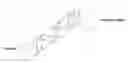
FIG. 1 shows the winding of a fabric of small thickness according to the features of the invention;
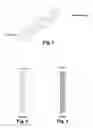
FIG. 2 is a very simplified view showing the fabric winding according to the prior state of the art to obtain a determined thickness;
FIG. 3 is a view similar to FIG. 2 showing the fabric winding according to the invention to obtain the same determined thickness.
According to the invention, the self-lubricating joint element, such as a ring, for example, is made from the winding of a synthetic fabric of small thickness ranging between 20 μm and 150 μm and advantageously between 20 μm and 130 μm.
The fabric, which appears in the form of strips, is mixed with a resin of epoxy, ester vinyl, polyester, phenolic, polyimide, or other type.
This resin comprises fillers of PTFE, MoS2, graphite or other types, by on the order of from 5 to 70% of the volume. The aim is to obtain a product which is homogeneous across its entire thickness.
The fabric strips have a width ranging between 5 mm and 200 mm and are wound on a mandrel of determined diameter, according to the filament winding technique.
The strips are wound and crossed in several layers, the crossing angle ranging between 10° and 90° and advantageously between 30° and 86°.
Reference should be made to FIG. 3, which shows a winding in the form of 9 plies of 100 μm as opposed to a winding according to the state of the art in the form of 3 plies of 300 μm.
It should be noted that the fabric intended to be mixed with the resin may be made of taffeta, satin, twill or a cloth, without excluding other fiber textures.
Reference should be made to the following tests in the case of a joint in the form of a self-lubricating composite ring receiving an axis of characteristic 16 NC 6 CT Ra: 04.
-
- Shaft diameter: 30 mm
- Width of the guide member: 20 mm
- Motion: alternated rotation over 90°
- Pressure calculated in projected area: 80 MPa
- Sliding speed: 8 mm/s
- Friction coefficient>0.25
The tests have the following results:
Prior State of the Art
-
- Winding at 90°
- Width of the fabric strip used: 1,200 mm
- Fabric thickness: 0.30 mm
- Outer diameter of the ring to be obtained: 36 mm
- Obtained wear>0.5 mm
- Friction coefficient<0.2 mm
- Number of cycles: 30,000.
According the Features of the Invention:
-
- Crossed winding
- Width of the fabric strip used: 30 mm
- Fabric thickness: 0.10 mm
- Outer diameter of the ring to be obtained: 36 mm
- Obtained wear: 0.4 mm
- Friction coefficient<0.1 mm
- Number of cycles: 365,000.
Claims
1. A self-lubricating joint element operating under high loads in dynamic state, comprising a winding of a fabric of thickness ranging between 20 μm and 150 μm mixed with a resin comprising fillers and being across its entire thickness, said fabric having the form of strips having a width ranging between 5 mm and 200 mm, said strips being crossed in several layers by filament winding.
2. The element of claim 1, wherein the fabric thickness ranges between 20 μm and 130 μm.
3. The element of claim 1, wherein a crossing angle of the crossed strips ranges between 10° and 90°.
4. The element of claim 1, wherein a crossing angle of the crossed strips ranges between 30° and 86°.
5. The element of claim 1, wherein the fabric comprises a synthetic fabric.
6. The element of claim 1, wherein the resin comprises epoxy, ester vinyl, polyester, phenolic, or polyimide.
7. The element of claim 1, wherein the fillers comprise PTFE, MoS2, or graphite.
8. The element of claim 7, wherein the fillers amount to between 5 and 70% of the volume.
Images & Drawings included:
Sources:
- United States Patent and Trademark Office - verify current appl. status at the USPTO↗
Recent applications in this class:
- » 20250215934 2025-07-03
Bearing Device - » 20250207638 2025-06-26
BEARING DEVICE STATE DETECTING METHOD, DETECTING DEVICE, AND PROGRAM - » 20250116299 2025-04-10
BEARING DEVICE AND ASSOCIATED MACHINE - » 20250102017 2025-03-27
PROCESS FOR DETERMINING THE RELIABILITY OF A SENSORIZED ROLLER BEARING - » 20250075742 2025-03-06
Rolling bearing assembly - » 20250020170 2025-01-16
ROLLING BEARING MONITORING DEVICE AND METHOD - » 20240263673 2024-08-08
A METHOD FOR MANUFACTURING A SENSORIZED BEARING RING - » 20240255030 2024-08-01
BEARING DEVICE STATE DETECTING METHOD, DETECTING DEVICE, AND PROGRAM - » 20240175468 2024-05-30
METHOD AND DEVICE FOR FAULT DIAGNOSIS OF A SLIDING BEARING IN ROTATING MACHINERY - » 20240159276 2024-05-16
RESOLVER INTEGRATED-TYPE BEARING DEVICE AND METHOD FOR MANUFACTURING SAME
Recent applications for this Assignee:
- » 20210123395 2021-04-29
Piston for a heat engine, heat engine comprising such a piston, and methods - » 20200362260 2020-11-19
Guiding member in the form of a metal ring for assembly with friction and with the articulating and/or sliding capability of a shaft - » 20200274168 2020-08-27
Metal foil for electrochemical element electrode comprising a material, based on ti, c and h - » 20200132111 2020-04-30
Mechanical system comprising a shaft coupled to a bearing, and method for manufacturing such a system - » 20200080686 2020-03-12
Friction piece, mechanical system comprising such a friction piece and method of implementation - » 20190194481 2019-06-27
Multimaterial powder with composite grains for additive synthesis - » 20190187567 2019-06-20
System and method for producing an optical mask for surface microtexturing, and surface microtexturing plant and method - » 20190187554 2019-06-20
System and method for producing an optical mask for surface treatment, and surface treatment plant and method - » 20180201739 2018-07-19
Conductive composite produced from coated powders - » 20180179396 2018-06-28
Powder paint thermosetting binder composition and manufacturing method