Method for producing a multilayer element having a protective coating
US20160061539A1
2016-03-03
14/785,451
2014-03-17
✅ Patent granted
US 9,915,484 B2
2018-03-13
WO; PCT/FR2014/050615; 20140317
WO; WO2014/170570; 20141023
Moshe Wilensky
Christopher J. Cronin
2034-07-18
Abstract:
Process for producing an element comprising a multilayer architecture, the layers of which comprise primary channels on their upper faces, said process comprising the following successive steps:
-
- (a) producing secondary channels on the lower faces of each layer, each secondary channel being intended to be facing a primary channel of the neighboring lower layer within the architecture,
- (b) depositing a coating that protects against oxidation at a temperature of between 500° C. and 1000° C. and against corrosion over all of the lower and upper surfaces of the layers,
- (c) sanding or mechanical cleaning of the surfaces intended to be assembled, and
- (d) assembling via superposition of the various layers so that each secondary channel of a lower face of an upper layer is facing and is centered on a primary channel of the neighboring lower layer,
the width of each secondary channel being greater than the width of the primary channel which it is facing within the architecture.
Inventors:
- Pascal Del-Gallo 47 🇫🇷 Dourdan, France
- Marc Wagner 33 🇫🇷 Saint Maur Des Fosses, France
- Thierry MAZET 11 🇫🇷 Nancy, France
- Michel VILASI 9 🇫🇷 Bouxieres Aux Dames, France
- Stephane MATHIEU 6 🇫🇷 Villers Les Nancy, France
- Damien SALLAIS 1 🇫🇷 Versailles, France
- Laurent PROST 8 🇫🇷 Gif Sur Yvette, France
- Michei VILASI 1 🇫🇷 Bouxieres Aux Dames, France
Assignee:
- CENTRE NATIONAL DE LA RECHERCHE SCIENTIFIQUE 3,102 🇫🇷 PARIS, France
- L'Air Liquide Societe Anonyme Pour L'Etude Et L'Exploitation Des Procedes Georges Claude 1,492 🇫🇷 Paris, France
- CENTRE NATIONAL DE LA RECHERCHE SCIENTIFIQUE 308 🇫🇷 Paris Cedex 16, France
- Universite de Lorraine 28 🇫🇷 Nancy Cedex, France
- L'AIR LIQUIDE SOCIÉTÉ ANONYME POUR L'ÉTUDE ET L'EXPLOITATION DES PROCEDES GEORGES CLAUDE 4 🇫🇷 Paris, France
- UNIVERSITE DE LORRAINE 2 🇫🇷 Paris, France
Applicant:
Interested in similar patents?
Get notified when new applications in this technology area are published.
Classification:
C22F1/10 » CPC further
Changing the physical structure of non-ferrous metals or alloys by heat treatment or by hot or cold working of nickel or cobalt or alloys based thereon
C23C18/08 » CPC further
Chemical coating by decomposition of either liquid compounds or solutions of the coating forming compounds, without leaving reaction products of surface material in the coating; Contact plating by thermal decomposition characterised by the deposition of metallic material
F28F13/18 » CPC main
Arrangements for modifying heat-transfer, e.g. increasing, decreasing by applying coatings, e.g. radiation-absorbing, radiation-reflecting; by surface treatment, e.g. polishing
F28F21/08 IPC
Constructions of heat-exchange apparatus characterised by the selection of particular materials of metal
F28F21/089 » CPC further
Constructions of heat-exchange apparatus characterised by the selection of particular materials of metal Coatings, claddings or bonding layers made from metals or metal alloys
F28D9/0037 » CPC further
Heat-exchange apparatus having stationary plate-like or laminated conduit assemblies for both heat-exchange media, the media being in contact with different sides of a conduit wall the conduits for one heat-exchange medium being formed by paired plates touching each other the conduits for the other heat-exchange medium also being formed by paired plates touching each other
C23C10/60 » CPC further
Solid state diffusion of only metal elements or silicon into metallic material surfaces After-treatment
F28F19/06 » CPC further
Preventing the formation of deposits or corrosion, e.g. by using filters or scrapers by using coatings, e.g. vitreous or enamel coatings of metal
F28F2260/02 » CPC further
Heat exchangers or heat exchange elements having special size, e.g. microstructures having microchannels
F28F2275/061 » CPC further
Fastening; Joining by welding by diffusion bonding
F28F3/08 » CPC further
Plate-like or laminated elements; Assemblies of plate-like or laminated elements Elements constructed for building-up into stacks, e.g. capable of being taken apart for cleaning
F28D9/00 IPC
Heat-exchange apparatus having stationary plate-like or laminated conduit assemblies for both heat-exchange media, the media being in contact with different sides of a conduit wall
C23C10/48 » CPC further
Solid state diffusion of only metal elements or silicon into metallic material surfaces using solids, e.g. powders, pastes; Embedding in a powder mixture, i.e. pack cementation only one element being diffused Aluminising
Description
The present invention relates to the production of a corrosion-protection coating on a multilayer element having channels.
In order to increase the thermochemical resistance of metal alloy parts subjected to chemically harsh conditions induced by gas mixtures, one solution consists in depositing a protective coating on the exposed surfaces in order to produce, in the best case scenario, a barrier, or at the very l east an impediment to the corrosion phenomenon.
In the case of parts having a complex architecture after assembly, with channels of small dimensions and of various geometries that may have a high tortuosity and zones that are difficult to access, the conventional techniques for application of these protective coatings do not make it possible to produce a uniform and homogeneous deposition over the whole of the architecture.
Alternative solutions must consequently be implemented, such as the production of the protective coating before assembling the elements constituting the complex part. In this case, the protective coating must however be deposited selectively on the surfaces intended to be protected, without modifying the surface finish of the surfaces intended to be assembled, in order not to disrupt the subsequent assembling step.
The solutions that currently exist that make it possible to apply a selective deposition consist in producing a masking or resist of the surfaces that do not have to be coated during the coating deposition step. Since the deposition of the protective coating takes place at high temperature (i.e. between 600° C. and 1100° C.), these maskings must be resistant to these high temperatures.
Among these solutions are mechanical masking or masking with the aid of a paint or a varnish.
Regarding mechanical masking, the drawbacks of this technique lie, on the one hand, in the production of the equipment, which is difficult and expensive in the case of small-sized complex surfaces to be mechanically masked and, on the other hand, in the risk of a local absence of coating (linked to an inaccuracy in the positioning of the masking equipment or to the geometry of the equipment itself) or of a local excess of coating (prejudicial for the assembly).
Regarding masking with the aid of a high-temperature paint or varnish, the major difficulty of this technique remains its tricky selective application to small-sized complex surfaces, any inaccuracy in its application possibly leading to a local lack of coating (preferred site of corrosion) or to a local excess of coating (prejudicial to the assembly step).
Starting from here, one problem that is faced is to provide an improved process for coating channels incorporated within a multilayer architecture.
One solution of the present invention is a process for producing an element comprising a multilayer architecture, the layers of which comprise primary channels on their upper faces, said process comprising the following successive steps:
(a) producing secondary channels 2 on the lower faces of each layer, each secondary channel 2 being intended to be facing a primary channel 1 of the neighboring lower layer within the architecture,
(b) depositing a coating that protects against oxidation at a temperature of between 500° C. and 1000° C. and against corrosion over all of the lower and upper surfaces of the layers,
(c) sanding or mechanical cleaning of the surfaces intended to be assembled, and
(d) assembling via superposition of the various layers so that each secondary channel 2 of a lower face of an upper layer is facing and is centered on a primary channel 1 of the neighboring lower layer,
the width of each secondary channel 2 being greater than the width of the primary channel 1 which it is facing within the architecture.
The expression “centered on” is understood to mean centering with a margin of error of less than 0.15 mm.
The expression “secondary channels” is understood to mean additional channels located on the opposite face of the layers having primary channels at the surface.
The process according to the invention makes it possible to avoid the production of masking in zones having a complex architecture, i.e. in the channels, which is difficult to carry out and which may generate a contamination of the coating or of the surfaces to be assembled.
It should be noted that the secondary channels have the objective, after deposition of the coating and assembly of the various layers, of providing a complete and homogeneous protection of the whole of the surface of the channels, without local lack of coating that may generate a preferred site of corrosion.
The channels will preferably have a semicircular cross section and the counter-channels will preferably have a cross section of half-rectangle shape, when considering a rectangle cut lengthwise.
Within the context of the invention, the coating may be formed by pack cementation by carrying out a low-activity aluminization starting from a mixture of a metal (Ni2Al3) powder, a diluent (Al2O3) powder and also a powder of an activating agent (such as NH4F, NH4Cl, CrCl3).
In this case, the process may comprise, downstream of the assembly step:
(i) a step of heating, under vacuum or under Ar, the element buried in the mixture of powders at a temperature of between 950° C. and 1000° C. for a duration of between 8 and 10 h. This process makes it possible to directly form the desired NiAl coating.
Another possibility is to choose to form a coating by pack cementation by carrying out a high-activity aluminization starting from a mixture comprising an Al metal powder, a diluent (Al2O3) powder and a powder of an activating agent (such as NH4F, NH4Cl, CrCl3).
In this case, said process comprises, downstream of the assembly step:
(i) a first step of heating the element buried in the mixture of powders at a temperature of 600° C. for a duration of between 8 and 10 h so as to form a first layer of NiAl3; and
(ii) a second step of annealing the element resulting from step (i) at a temperature of between 1000° C. and 1100° C. for a duration of between 4 and 8 h so as to convert this layer of (brittle) NiAl3 into NiAl (desired coating).
The step of producing the secondary channels may comprise mechanical machining or chemical milling.
The assembly step may be carried out in the following manner: by diffusion welding, a technique that consists, in principle, in obtaining from two separate elements a single homogeneous block by diffusion of material in the solid state by applying a constant pressure during a heating cycle in a vacuum furnace (press furnace).
It should be noted that the element in question here is preferably an element made of metal alloy and the coating is preferably an anti-corrosion coating.
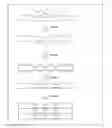
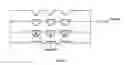
FIG. 2 schematically shows the main steps of the process according to the invention:
Step (a): production of secondary channels on the lower faces of each layer, each secondary channel being intended to be facing a primary channel of the neighboring lower layer within the architecture. These secondary channels will have to be centered on the primary channels of the opposite face and have a width greater than the width of the primary channels in order to ensure a protection of the whole of the surface of the channel after assembly, including in the case of a slight error in positioning the parts on one another during the assembly.
Step (b): deposition of a protective coating on all of the lower and upper surfaces of the layers. In the present case, masking is completely sidestepped.
Step (c): mechanical grinding of the surfaces intended to be assembled. By virtue of this technique (to be explained), only the surfaces of the primary and secondary channels retain the coating, the other surfaces being bared in order to be more easily assembled.
Step (d): assembling via superposition of the various layers so that each secondary channel of a lower face of an upper layer is facing and is centered on a primary channel of the neighboring lower layer. This results, after assembly, in an assembled part having channels that are coated homogeneously over the whole of their surface.
Another subject of the present invention is a metallic heat exchanger comprising a multilayer architecture, each layer comprising primary channels on its upper face, characterized in that:
-
- each lower face of the layers comprises secondary channels centered on the channels of the neighboring lower layer within the architecture and having a width greater than the width of the primary channels, and
- a coating that protects against oxidation at a temperature of between 500° C. and 1000° C. and against corrosion, and the thickness variation of which is less than 10 μm over all of the surfaces of the primary and secondary channels.
Preferably, the heat exchanger may have one or more of the following features:
-
- the thickness of the coating is between 50 and 100 μm,
- the channels are millimeter-sized channels,
- the layers of the architecture have a thickness of between 1.6 and 2 mm.
Preferably, the heat exchanger according to the invention will be used for the production of hydrogen.
Claims
1-10. (canceled)
11. A process for producing an element comprising a multilayer architecture, the layers of which comprise primary channels on upper faces thereof, said process comprising the following successive steps:
for each layer, producing secondary channels on a lower face of thereof, each secondary channel of a layer being intended to be facing a primary channel of an adjacently lower layer within the architecture;
depositing a coating over all of the lower and upper surfaces of the layers, the coating protecting against oxidation at temperatures between 500° C. and 1000° C. and also protecting against corrosion;
for each layer, sanding or mechanically cleaning portions of the faces that that, during assembly of the multilayer architecture, are intended to be diffusion welded to sanded or mechanically cleaned portions of adjacent layers;
superposing each of the sanded or mechanically cleaned layers so that each secondary channel is facing and is centered on a primary channel of an adjacently lower layer within the architecture; and
diffusion welding the superposed layers, wherein a width of each secondary channel is greater than a width of the primary channel which it is facing within the architecture.
12. The process of claim 11, wherein the coating is formed from a mixture comprising an activating agent powder, an Ni2Al3 metal powder and a solvent Al2O3.
13. The process of claim 12, wherein said process further comprises, after said diffusion welding step:
burying the element in the mixture of powders; and
heating the element under vacuum or under Ar at a temperature between 950° C. and 1000° C. for a duration of between 8 and 10 hours.
14. The process of claim 11, wherein the coating is formed from a mixture comprising an activating agent powder, an Al metal powder and a solvent Al2O3.
15. The process of claim 14, wherein said process further comprises:
after said diffusion welding, burying the element in the mixture of powders;
heating the buried element at a temperature of about 600° C. for a duration of between 8 and 10 hours so as to form a first layer of NiAl3; and
after said heating step, annealing the element at a temperature of between 1000° C. and 1100° C. for a duration of between 4 and 8 hours so as to convert the NiAl3 layer into a NiAl layer.
16. A metallic heat exchanger comprising a multilayer architecture, wherein:
each layer comprises a lower face, an upper face and primary channels formed in the upper face;
each lower face comprises secondary channels centered on the primary channels of the adjacently lower layer within the architecture;
the secondary channels have a width greater than a width of the primary channels;
a coating is formed over all of the surfaces of the primary and secondary channels;
the coating protects against oxidation at temperatures between 500° C. and 1000° C. and also protects against corrosion; and
the coating has a thickness variation of less than 10 μm.
17. The heat exchanger of claim 16, wherein the thickness of the coating is between 50 and 100 μm.
18. The heat exchanger of claim 16, wherein each of the layers has a thickness of between 1.6 and 2 mm.
19. The heat exchanger of claim 16, wherein the heat exchanger is suitable for the production of hydrogen.
Images & Drawings included:
Sources:
- United States Patent and Trademark Office - verify current appl. status at the USPTO↗
Recent applications in this class:
- » 20250172357 2025-05-29
COMPOSITE RADIATIVE COOLING MATERIALS - » 20250155206 2025-05-15
RADIATION HEAT DISSIPATION SUBSTRATE, RADIATIVE COOLING DEVICE CONTAINING THE SAME AND PREPARATION METHOD THEREOF - » 20250129999 2025-04-24
SELF-ADAPTIVE THERMAL MANAGEMENT SYSTEMS AND METHODS THEREOF - » 20240384947 2024-11-21
THERMAL RADIATOR SHUTTER AND SYSTEM AND METHOD FOR THERMAL CONTROL USING A THERMAL RADIATOR SHUTTER - » 20240361089 2024-10-31
RADIATIVE COOLING WITH SOLAR SPECTRUM REFLECTION - » 20240344783 2024-10-17
COOLING STRUCTURE HAVING METAL PLATING LAYER - » 20240318927 2024-09-26
LARGE-SIZE LIQUID-COOLING COOLER FOR ELECTRIC VEHICLE - » 20240175648 2024-05-30
Radiative Cooling Device - » 20240167776 2024-05-23
Radiative Cooling Device - » 20240167775 2024-05-23
Radiative Cooling Film Material
Recent applications for this Assignee:
- » 20250294920 2025-09-18
METHOD FOR FORMING A LAYER WITH THE BASIS OF A DIELECTRIC MATERIAL ON A LAYER WITH THE BASIS OF AN ETCHED III-V MATERIAL - » 20250290202 2025-09-18
FLUORINATION OF ANCILLARY LIGANDS OF GROUP (III) PRECURSORS AND THEIR APPLICATIONS IN VAPOR DEPOSITIONS - » 20250289195 2025-09-18
PROCESS FOR PRODUCING, AT THE END OF A STRUCTURE, A MICRO-OR NANO-COMPONENT MADE OF VITREOUS MATERIAL PRODUCED BY MULTI-PHOTON PHOTOPOLYMERIZATION - » 20250288576 2025-09-18
SPECIFIC TETRADENTATE COPPER CHELATORS AS ANTICANCER AGENTS - » 20250288544 2025-09-18
PROBENECID FOR USE IN TREATING EPILEPTIC DISEASES, DISORDERS OR CONDITIONS - » 20250284027 2025-09-11
METHOD FOR CHARACTERIZING A GEOLOGICAL RESERVOIR OF INTEREST - » 20250283579 2025-09-11
DEVICE FOR STORING AND SUPPLYING CRYOGENIC FLUID, IN PARTICULAR LIQUEFIED HYDROGEN - » 20250279163 2025-09-04
METHODS, SYSTEMS, AND COMPUTER READABLE MEDIA FOR APTAMER SELECTION - » 20250277965 2025-09-04
MODULE INTENDED TO BE ASSOCIATED WITH A MICROSCOPE, AND ASSEMBLY FORMED BY A MICROSCOPE AND SUCH A MODULE - » 20250275994 2025-09-04
Quinoline Derivatives For Use In The Treatment Of Inflammation Diseases