Lithium secondary battery negative electrode active material and method for manufacturing same
US20160072127A1
2016-03-10
14/783,113
2014-02-26
✅ Patent granted
US 10,141,573 B2
2018-11-27
WO; PCT/JP2014/054760; 20140226
WO; WO2014/167906; 20141016
Michael L Dignan
The Dobrusin Law Firm, P.C.
2035-08-08
Abstract:
Problem: To provide a lithium secondary battery negative electrode active material consisting of a Sn—Sb based sulfide that delivers a high electrode capacity density, excellent output characteristics, and excellent cycle life characteristics and also provide a method for manufacturing the lithium secondary battery negative electrode active material, said method being capable of easily manufacturing the high performance lithium secondary battery negative electrode active material at low cost without requiring a high-temperature processing step and special facilities as required in a glass melting method.
Solution: A method for manufacturing a lithium secondary battery negative electrode active material containing a Sn—Sb based sulfide comprises a step of obtaining a Sn—Sb based sulfide precipitate by adding an alkali metal sulfide to a mixed solution of a tin halide and an antimony halide.
Inventors:
- Takashi MUKAI 38 🇯🇵 Osaka, Japan
- Tetsuo Sakai 32 🇯🇵 Osaka, Japan
- Taichi Sakamoto 19 🇯🇵 Osaka, Japan
- Naoto Yamashita 21 🇯🇵 Osaka, Japan
- Koichiro Ikeda 8 🇯🇵 Osaka, Japan
- Yuta Ikeuchi 16 🇯🇵 Osaka, Japan
- Kiichiro Yamaguchi 2 🇯🇵 Osaka, Japan
Assignee:
- National Institute of Advanced Industrial Science and Technology 1,844 🇯🇵 Tokyo, Japan
- ISUZU GLASS LTD. 2 🇯🇵 Osaka, Japan
Applicant:
Interested in similar patents?
Get notified when new applications in this technology area are published.
Classification:
H01M4/364 » CPC further
Electrodes; Electrodes composed of, or comprising, active material; Selection of substances as active materials, active masses, active liquids; Composites as mixtures
H01M4/366 » CPC further
Electrodes; Electrodes composed of, or comprising, active material; Selection of substances as active materials, active masses, active liquids; Composites as layered products
H01M4/386 » CPC further
Electrodes; Electrodes composed of, or comprising, active material; Selection of substances as active materials, active masses, active liquids of elements or alloys Silicon or alloys based on silicon
H01M4/387 » CPC further
Electrodes; Electrodes composed of, or comprising, active material; Selection of substances as active materials, active masses, active liquids of elements or alloys Tin or alloys based on tin
H01M2004/027 » CPC further
Electrodes; Electrodes composed of, or comprising, active material characterised by the polarity Negative electrodes
H01M4/58 IPC
Electrodes; Electrodes composed of, or comprising, active material; Selection of substances as active materials, active masses, active liquids of inorganic compounds other than oxides or hydroxides, e.g. sulfides, selenides, tellurides, halogenides or LiCoF; of polyanionic structures, e.g. phosphates, silicates or borates
H01M4/36 IPC
Electrodes; Electrodes composed of, or comprising, active material Selection of substances as active materials, active masses, active liquids
H01M4/38 IPC
Electrodes; Electrodes composed of, or comprising, active material; Selection of substances as active materials, active masses, active liquids of elements or alloys
H01M4/48 » CPC further
Electrodes; Electrodes composed of, or comprising, active material; Selection of substances as active materials, active masses, active liquids of inorganic oxides or hydroxides
C01P2002/02 » CPC further
Crystal-structural characteristics Amorphous compounds
C01G30/00 IPC
Compounds of antimony
C01G30/008 » CPC further
Compounds of antimony Sulfides
H01M4/02 IPC
Electrodes Electrodes composed of, or comprising, active material
C01G19/00 » CPC further
Compounds of tin
C01P2002/04 » CPC further
Crystal-structural characteristics Compounds with a limited amount of crystallinty, e.g. as indicated by a crystallinity index
C01P2002/72 » CPC further
Crystal-structural characteristics defined by measured X-ray, neutron or electron diffraction data by d-values or two theta-values, e.g. as X-ray diagram
C01P2004/61 » CPC further
Particle morphology; Particles characterised by their size Micrometer sized, i.e. from 1-100 micrometer
C01P2004/62 » CPC further
Particle morphology; Particles characterised by their size Submicrometer sized, i.e. from 0.1-1 micrometer
C01P2004/82 » CPC further
Particle morphology; Particles consisting of a mixture of two or more inorganic phases two phases having the same anion, e.g. both oxidic phases
C01P2006/40 » CPC further
Physical properties of inorganic compounds Electric properties
H01M2220/20 » CPC further
Batteries for particular applications Batteries in motive systems, e.g. vehicle, ship, plane
H01M10/052 » CPC further
Secondary cells; Manufacture thereof; Accumulators with non-aqueous electrolyte Li-accumulators
H01M4/5815 » CPC main
Electrodes; Electrodes composed of, or comprising, active material; Selection of substances as active materials, active masses, active liquids of inorganic compounds other than oxides or hydroxides, e.g. sulfides, selenides, tellurides, halogenides or LiCoF; of polyanionic structures, e.g. phosphates, silicates or borates; Chalcogenides or intercalation compounds thereof Sulfides
H01M4/485 » CPC further
Electrodes; Electrodes composed of, or comprising, active material; Selection of substances as active materials, active masses, active liquids of inorganic oxides or hydroxides of mixed oxides or hydroxides for inserting or intercalating light metals, e.g. LiTiO or LiTiOxFy
Description
TECHNICAL FIELD
This invention relates to a high performance negative electrode active material for lithium secondary battery and a method for easily manufacturing the high performance negative electrode active material for a lithium secondary battery without the need of high temperature processing or any special facilities.
BACKGROUND ART
Lithium secondary battery has been commercially available for more than twenty years and remarkably developed its capacity and performance. In recent years, the lithium secondary battery has also been increasingly used as an in-car power supply in addition to as a power supply of an information-communication device, and thus is expected to provide higher capacity and higher output.
However, there are some problems: a graphite negative electrode comprising a graphite system as an active material is used for a commercially available lithium secondary battery and thus an electrolytic solution is limited to an ethylene carbonate (EC) system; and the electrode and the electrolytic solution tend to react when the battery's temperature reaches more than 45° C., causing the lithium secondary battery to be severely deteriorated. On the other hand, when the battery's temperature is 0° C. or less, Li dendrite is likely to generate at the time of charge. Accordingly, it is necessary to prevent a short circuit using a microporous separator with pore size of 100 nm or less, and thus a separator such as a woven fabric and a nonwoven fabric has not been preferably used. Furthermore, a carbon-based negative electrode has higher conductivity in a direction of electrode plane, and thus a large current flow in a short-circuited part in an internal short circuit test, such as nail penetration, rapidly produces heat, resulting in thermal runaway of a battery.
In order to break limits of conventional lithium secondary batteries and expand the industrial field, any change is essential and thus research and development of any negative electrode material such as Sn system and Si system has been actively performed.
The inventors have reported that Sn—Sb based sulfide glass functions as a negative electrode material of a lithium secondary battery or a sodium secondary battery and stably works even under the environment of −20 to 60° C. It has been found that when in particular used for the lithium secondary battery, Sn—Sb based sulfide glass can be combined with Si to obtain stable cycle life in a capacity of 1000-2000 mAh/g (nonpatent literatures 1-3).
However, Sn—Sb based sulfide glass requires special facilities since it is obtained by fusion in hot sulfur gas atmosphere at the temperature of about 1000° C. Furthermore, the Sn—Sb based sulfide glass is combined with Si by further mechanical milling process, which is complex and accordingly raises the production cost.
PRIOR ART DOCUMENTS
Nonpatent Literature
[Non Patent Document 1] The substance of lectures for the 52nd battery debate, 1C04, p. 108 (2011)
[Non Patent Document 2] The substance of lectures for the 79th battery debate, 3D32, p. 138 (2012)
[Non Patent Document 3] The substance of lectures for the 53rd battery debate, 1 D29, p. 227 (2012)
SUMMARY OF THE INVENTION
Problems to be Solved by the Inventions
The present invention is made in view of the present condition of the above-mentioned prior art, and mainly aims to provide a negative electrode active material for a lithium secondary battery consisting of Sn—Sb based sulfide which shows excellent output characteristics and cycle life characteristics in high electrode capacity density, and a method for easily and inexpensively manufacturing such a high performance negative electrode active material for lithium secondary battery without the need of high temperature processing steps or any special facilities required for a glass melting method.
Means to Solve the Problems
The negative electrode active material for lithium secondary battery of the present invention contains Sn—Sb based sulfide, wherein the Sn—Sb based sulfide has a disordered crystal structure which is in an intermediate state of a crystal and an amorphous. The Sn—Sb based sulfide having the disordered crystal structure shows the same degree of battery performance as Sn—Sb based sulfide glass obtained by a glass melting method. The negative electrode using such Sn—Sb based sulfide as an active material is less likely to rapidly generate heat in an internal short circuit test, such as nail penetration, resulting in improvement of battery safety. The disordered crystal refers to a substance in the intermediate state between a crystal and an amorphous. Taking antimony sulfide as an example, it has a structure wherein an antimony array is regular but a location and an array of a sulfur element around the antimony are random, and the antimony element exhibiting crystal structure and the sulfur element exhibiting amorphous structure are mixed in one substance.
The negative electrode active material for lithium secondary battery of the present invention contains a compound powder with A component particle surface coated with Sn—Sb based sulfide, the A component may be an element or a compound comprising the element which can occlude a lithium ion in early charge and occlude and release the lithium ion in the subsequent charge and discharge. The coating of the A component particle surface with Sn—Sb based sulfide results in Sn—Sb based sulfide around the A component nucleus. This can suppress any cracking due to expansion and contraction of the A component following the occlusion and release (charge and discharge) of lithium. This makes possible it for even an active material having shorter cycle life only with the A component to improve cycle characteristics, and thus also makes it possible for a high-capacity (high volume expansion) active material to obtain better cycle life characteristics.
The negative electrode active material for lithium secondary battery of the present invention preferably has a ratio of A component to Sn—Sb based sulfide in the compound powder being A component: 10 to 80 mass % and Sn—Sb based sulfide: 90 to 20 mass %, given the total of the both is 100 mass %. By using this negative electrode active material, it is possible to manufacture a long life or high capacity type negative electrode.
The negative electrode active material for lithium secondary battery of the present invention preferably has a 0.1-20 micrometer of a particle diameter D50 of the A component by a laser diffraction/a dispersion-type particle size distribution method. This allows compound powder to be uniform and the negative electrode active material can be used for producing excellent cycle life characteristics.
The method of manufacturing the negative electrode active material for lithium secondary battery containing the Sn—Sb based sulfide of the present invention comprises a step of obtaining a precipitate of Sn—Sb based sulfide by adding alkali metal sulfide to a mixed solution of tin halide and antimony halide.
The Sn—Sb based sulfide obtained by the manufacturing method of the present invention shows same degrees of battery performance as a Sn—Sb based sulfide glass obtained by a glass melting method, and the negative electrode using the Sn—Sb based sulfide as an active material is less likely to rapidly generate heat in an internal short circuit test, such as nail penetration, resulting in improvement of battery safety. Furthermore, it is possible to easily manufacture the Sn—Sb based sulfide at a low cost without the need of high temperature processing steps or special facilities required for a glass melting method.
In the manufacturing method of the present invention, it is preferable that the mixed solution of tin halide and antimony halide also contains an organic acid.
By addition of this organic acid, it is possible to shorten the time required for dissolving the tin halide and the antimony halide. When, in particular, SnCl2 and SbCl3 are simultaneously dissolved, SbCl3 does not dissolve easily and thus powder to be obtained is less likely to be uniform. For that purpose, addition of an organic acid can improve solubility of various kinds of halides and enhance their productivities. Addition of the organic acid may also produce a specific effect of bringing about disordered crystallization of the obtained sulfide. This produces a remarkable effect of improving life characteristics of the negative electrode active material.
In the manufacturing method of the present invention, it is preferable that the amount of alkali metal sulfide to be added is 1-4 mol with respect to 1 mol of the total amount of tin halide and antimony halide. This facilitates progress of precipitation reaction and makes it possible to obtain a desired object without losing the precipitate of Sn—Sb based sulfide.
The manufacturing method of the present invention preferably includes a step of (1) producing a compound powder with A component particle surface being coated with Sn—Sb based sulfide by dispersing A component powder in a mixed solution of tin halide and antimony halide, and subsequently adding an alkali metal sulfide solution into the mixed solution to produce, or (2) producing a compound powder with A component particle surface being coated with Sn—Sb based sulfide by dispersing A component powder in an alkali metal sulfide solution and subsequently adding the mixed solution of tin halide and antimony halide into the alkali metal sulfide solution. The A component is an element or a compound comprising the element which can occlude a lithium ion in early charge and occlude and release the lithium ion in the subsequent charge and discharge.
The coating of the A component particle surface with Sn—Sb based sulfide results in Sn—Sb based sulfide around the A component nucleus. This can suppress any cracking due to expansion and contraction of the A component following the occlusion and release (charge and discharge) of lithium. This makes possible it for even an active material having shorter cycle life only with the A component to improve cycle characteristics, and thus also makes it possible for a high-capacity (high volume expansion) active material to obtain better cycle life characteristics.
In the manufacturing method of the present invention, a ratio of A component to Sn—Sb based sulfide in the compound powder is preferably A component: 10 to 80 mass % and Sn—Sb based sulfide: 90 to 20 mass %, given the total of the both is 100 mass %. By using this negative electrode active material, it is possible to manufacture a long life or high capacity type negative electrode.
In the manufacturing method of the present invention, a particle diameter D50 of the A component by a laser diffraction/a dispersion-type particle size distribution method is preferably 0.1-20 micrometer. This can make the compound powder uniform and this compound powder can be used to manufacture the negative electrode active material having excellent cycle life characteristics.
In the manufacturing method of the present invention, it is preferable that the mixed solution of tin halide and antimony halide further contains an conductive auxiliary agent and/or a binding agent to produce a compound powder, wherein the A component particle surface is coated with Sn—Sb based sulfide and the conductive auxiliary agent and/or the binding agent is contained in the Sn—Sb based sulfide. This makes it possible to produce a negative electrode active material having excellent conductivity and improved binding property of the Sn—Sb based sulfide.
EFFECT OF THE INVENTION
According to the present invention, it is possible to easily and inexpensively manufacture a negative electrode active material for lithium secondary battery consisting of Sn—Sb based sulfide which shows excellent output characteristics and cycle life characteristics in high electrode capacity density without the need of high temperature processing steps or any special facilities required for a glass melting method.
BRIED DESCRIPTION OF THE DRAWINGS
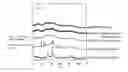
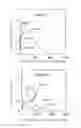
FIG. 1 is a XRD pattern of variety kinds of precipitates.
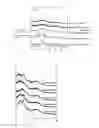
FIG. 2 is a XRD pattern of Sn—Sb based sulfides of Examples 1-5.
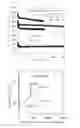
FIG. 3 is a cycle life characteristic of the negative electrode using the Sn—Sb based sulfide of Examples 1-3, and 5 as an active material.
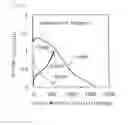
FIG. 4 is a charge-and-discharge curve of the negative electrode using the Sn—Sb based sulfide of Example 1 as an active material.
FIG. 5 is a charge-and-discharge curve of the negative electrode using the Sn—Sb based sulfide of Example 2 as an active material.
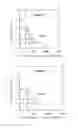
FIG. 6 is a charge-and-discharge curve of the negative electrode using the Sn—Sb based sulfide of Example 3 as an active material.
FIG. 7 is a charge-and-discharge curve of the negative electrode using the Sn—Sb based sulfide of Example 5 as an active material.
FIG. 8 is a charge-and-discharge curve of the negative electrode using the Sn—Sb based sulfide of Example 6 as an active material.
FIG. 9 is a charge-and-discharge curve of the negative electrode using the Sn—Sb based sulfide of a comparative example 1 as an active material.
DETAILED DESCRIPTION OF THE INVENTION
Embodiments of the negative electrode active material for lithium secondary battery and its manufacturing method according to the present invention will be described below.
The negative electrode active material for lithium secondary battery containing the Sn—Sb based sulfide of the present invention is obtained by a step of obtaining a precipitate of Sn—Sb based sulfide by adding alkali metal sulfide to a mixed solution of tin halide and antimony halide.
Addition of alkali metal sulfide to the mixed solution of tin halide and antimony halide causes precipitation of the Sn—Sb based sulfide. This precipitate can be filtered and dried to give a Sn—Sb based sulfide. This Sn—Sb based sulfide is used as a negative electrode active material of lithium secondary battery, so that it can have the same degree of battery performance as a Sn—Sb based sulfide glass obtained by a glass melting method. The negative electrode using this Sn—Sb based sulfide is less likely to rapidly generate heat in an internal short circuit test, such as nail penetration, resulting in improvement of battery safety.
A solvent of the mixed solution of tin halide and antimony halide can be, but not particularly limited to, water, alcohols, ketones, organic acids, organic acid esters, and hydrocarbons. When, for example, tin halide is tin chloride (SnCl2), antimony halide is antimony chloride (SbCl3), and alkali metal sulfide is sodium sulfide (Na2S), SnS and Sb2S3 can precipitate simultaneously to compound a Sn—Sb co-precipitate by a reaction of the following formula 1.
2SnCl2+2SbCl3+4Na2S→SnS↓+Sb2S3↓+8NaCl (formula 1)
A ratio of Sn and Sb in the above-mentioned mixed solution is preferably, but not limited to, Sn: 10 to 90 mol %, and more preferably 10 to 70 mol %, with respect to the total amount 100 mol % of Sn and Sb. If the ratio of Sn exceeds 90 mol %, its capacity decreases as the cycle proceeds, which is not preferable.
In the manufacturing method of the present invention, it is preferable that the mixed solution of the tin halide and antimony halide further contains an organic acid.
The organic acid is a substance of acidic property (acidity) among substances combined with an “organic” in which a carbon is a principal component.
The organic acid includes, but not specifically limited to, for example a tartaric acid, citric acid, malic acid, lactic acid, gluconic acid, succinic acid, fumaric acid, maleic acid, formic acid, valeric acid, stearic acid, acetic acid, ascorbic acid, amino acid, etc.
It is not easy to dissolve tin halides, especially SbCl3, into water just by adding water and stirring it, thus requiring long-term dissolving time. For example, if SnCl2 and SbCl3 are dissolved simultaneously, precipitates of Sb2S3 with a large particle diameter are generated since SbCl3 is hard to dissolve, often resulting in ununiform powders.
In order to address this issue, the solubility of various halides can be improved by an addition of the organic acid. This allows for shortening of the time required for the dissolution and obtaining of uniform Sn—Sb based sulfide powders.
Also, efficient disordered crystallization of the Sn—Sb based sulfide can be achieved by the addition of the organic acid. The disordered crystal refers to a substance in the intermediate state between a crystal and an amorphous. Taking antimony sulfide as an example, it has a structure wherein an antimony array is regular but a location and an array of a sulfur element around the antimony are random, and the antimony element exhibiting crystal structure and the sulfur element exhibiting amorphous structure are mixed in one substance. The disordered crystal provides a broad or weak diffraction peak in X-ray diffraction analysis.
In order to examine what kinds of effects the addition of the organic acid has on the obtained Sn—Sb based sulfide, an organic acid with a tartaric acid added and an organic acid without the tartaric acid were prepared, and then a XRD measurement was performed. XRD patterns of various precipitates are shown in FIG. 1.
A tin sulfide-derived peak was observed for the precipitates obtained by mixing SnCl2 aqueous solution and Na2S aqueous solution. An antimony sulfide peak was observed for the precipitates obtained by mixing SbCl3 aqueous solution and Na2S aqueous solution.
On the other hand, it was found out that a XRD pattern became broad in precipitates obtained by mixing SbCl3 aqueous solution and Na2S aqueous solution with the tartaric acid added, and that the precipitates have a specific effect, the disordered crystallization of the precipitates.
Precipitates obtained by mixing the mixed aqueous solution of SnCl2 and SbCl3 added with the tartaric acid and Na2S aqueous solution had a XRD pattern substantially consistent with that of the Sn—Sb based sulfide produced by a glass melting method. Accordingly, the manufacturing method by the precipitation of the present invention proved to be capable of preparing the sulfides.
In the manufacturing method of the present invention, it is preferable that the amount of alkali metal sulfide to be added is 1-4 mol with respect to 1 mol of the total amount of tin halide and antimony halide.
If the amount of the alkali metal sulfides to be added is less than 1 mol with respect to a total amount of 1 mol of the tin halide and antimony halide, a precipitation reaction is less likely to progress, causing the obtained Sn—Sb based sulfide to contain a lot of unreacted substances. On the other hand, if the amount of the alkali metal sulfides to be added is more than 4 mol with respect to a total amount of 1 mol of the tin halide and antimony halide, the deposited sulfide disappears and the desired Sn—Sb based sulfide cannot be obtained.
The precipitates of the Sn—Sb based sulfide may be obtained by any one of the following steps of:
(1) producing a compound powder with A component particle surface being coated with Sn—Sb based sulfide by dispersing A component powder in a mixed solution of tin halide and antimony halide, and subsequently adding an alkali metal sulfide solution into the mixed solution to produce, or
(2) producing a compound powder with A component particle surface being coated with Sn—Sb based sulfide by dispersing A component powder in an alkali metal sulfide solution and subsequently adding the mixed solution of tin halide and antimony halide into the alkali metal sulfide solution,
Wherein the A component is an element or a compound comprising the element which can occlude a lithium ion in early charge and occlude and release the lithium ion in the subsequent charge and discharge.
The A component may be a primary particle itself or also be an aggregated secondary particle etc. The Sn—Sb based sulfide may be completely coated on the entire surface of the A component, or may be coated on only a part of the A component. If it is coated on only a part of the A component, 25% or more of the surface area of the A component should only be coated with the Sn—Sb based sulfide. In the present invention, the ratio of the A component coated with the Sn—Sb based sulfide can be measured from the ratio of the surface of the A component particle covered with the Sn—Sb based sulfide using, for example, s SEM photograph.
The A component contained in the compound powder may be at least one or more kinds of an element selected from the group consisting of, but not specifically limited to, for example, Li, Na, C, Mg, Al, Si, P, K, Ca, Sc, Ti, V, Cr, Mn, Fe, Co, Ni, Cu, Zn, Ga, Ge, Y, Zr, Nb, Mo, Pd, Ag, Cd, In, Sn, Sb, W, Pb, and Bi, or an alloy, oxide, chalcogenide, or halide using these elements, as long as the A component can occlude lithium ions in the early charge and occlude and release the lithium ions in the subsequent charge and discharge. From a perspective that the region of discharge plateau can be observed within the range of 0-1V (with respect to electric potential for lithium), at least one or more kinds of an element selected from the group consisting of Li, C, Mg, Al, Si, Ti, Zn, Ge, Ag, In, Sn, and Pb, or an alloy, oxide, chalcogenide, or halide using these elements are preferable among them. Furthermore, from a perspective of energy density, Al, Si, Zn, Ge, Ag, and Sn, etc. are preferable as an element, each combination such as Si—Al, Al—Zn, Si—Mg, Al—Ge, Si—Ge, Si—Ag, Si—Sn, Zn—Sn, Ge—Ag, Ge—Sn, Ge—Sb, Ag—Sn, Ag—Ge, and Sn—Sb, etc are preferable as an alloy, SiO, SnO, SnO2, SnC2O4, and Li4Ti5O12, etc. are preferable as an oxide, SnS, and SnS2, etc. are preferable as a chalcogenide, and SnF2, SnCl2, SnI2, and SnI4, etc. are preferable as a halide. Also, two or more kinds of these A components may be used.
In the manufacturing method of the present invention, a ratio of A component to Sn—Sb based sulfide in the compound powder is preferably A component: 10 to 80 mass % and Sn—Sb based sulfide: 90 to 20 mass %, given the total of the both is 100 mass %.
Furthermore, it is more preferable that the A component is 20 to 70 mass % and the Sn—Sb based sulfide is 80 to 30 mass %.
For example, in the case where the A component is Si, when the A component (Si) is 10-35 mass % and the Sn—Sb based sulfide is 90-65 mass %, the capacity per active material weight is 400-1,600 mAh/g and the cycle life characteristics is highly improved. Thus, the active material is promising as a long life type of negative electrode. On the other hand, when the A component (Si) is 35-80 mass % and the Sn—Sb based sulfide is 65-20 mass %, the capacity per active material weight is as very high as 1300-3500 mAh/g. Thus, the active material is promising as a high capacity type of negative electrode.
In the manufacturing method of the present invention, the particle diameter D50 by the laser diffraction/dispersion type particle size distribution method of the A component is preferably 0.1-20 micrometer.
If it is less than 0.1 micrometer, the A component is easy to aggregate, often resulting in ununiform compound powders. If it is more than 20 micrometer, a crack is generated in the A component in charging and discharging, thereby decreasing the cycle life.
In the manufacturing method of the present invention, the step of generating compound powders is preferably a step of generating compound powders with the mixed solution of the tin halide and antimony halide further containing a conductive auxiliary agent and/or binding agent, wherein the A component particle surface is coated with Sn—Sb based sulfide and the conductive auxiliary agent and/or the binding agent is contained in the Sn—Sb based sulfide.
It is preferable to use, but not specifically limited to, a carbon black as a conductive auxiliary agent, since a metal or conductive polymer possibly reacts with the Sn—Sb based sulfide. The carbon black includes an acetylene black (AB), ketjen black (KB), carbon fiber (VGCF), carbon nanotube (CNT), graphite, graphene, soft carbon, hard carbon, etc.
When the Sn—Sb based sulfide is 100 mass %, the content of the conductive auxiliary agent is preferably 0.1-10 mass %, and more preferably 0.5-5 mass % for 100 mass %. If the content is 0.1 to 10 mass %, a sufficient conductive improvement effect is achieved, allowing for an improvement of high rate discharging characteristic and holding capacity lowering to a minimum due to falling of the Sn—Sb based sulfide from the A component. If a conducting agent with high cohesiveness, for example, the carbon black is used among the above-mentioned conductive auxiliary agents, it is preferable to disperse the conductive auxiliary agent by an agitator or supersonic wave, etc.
EXAMPLE
Hereinafter, the present invention will be explained more specifically by Examples but is not limited to these Examples.
(1) Preparation of Sn—Sb Based Sulfide
In order to make a predetermined ratio of Sn and Sb showing in Table 1 below, a tin chloride (SnCl2) aqueous solution was mixed with an antimony chloride (SbCl3) aqueous solution to produce a tin-antimony chloride aqueous solution. The amount of tartaric acid as shown in Table 1 was added to this tin-antimony chloride aqueous solution, and then a sodium sulfide aqueous solution containing the amount of sodium sulfide (Na2S) as shown in Table 1 was mixed with the solution to prepare precipitates of the Sn—Sb based sulfide.
| TABLE 1 | |||||
| Sn:Sb | Tartaric | ||||
| (Molar Ratio) | SnCl2•2H2O | SbCl3 | NA2S | Acid | |
| Example 1 | 90:10 | 8.148 g | 0.494 g | 3.5 g | 4.160 g |
| Example 2 | 70:30 | 6.370 g | 1.448 g | 4.2 g | 4.104 g |
| Example 3 | 50:50 | 4.982 g | 2.341 g | 5.08 g | 4.069 g |
| Example 4 | 30:70 | 1.384 g | 1.584 g | 5.38 g | 4.201 g |
| Example 5 | 10:90 | 0.500 g | 2.185 g | 6.48 g | 4.000 g |
XRD patterns of the obtained precipitates of the Sn—Sb based sulfide in Examples 1-5 are shown in FIG. 2. In the Sn—Sb based sulfides of Examples 1-5, no sharp peak derived from Sb2S3 or SnS2 is observed and the disordered crystallization can be found.
(2) Preparation of Sn—Sb Based Sulfide with A Component Added
In order to make a predetermined ratio of Sn and Sb showing in Table 2 below, a tin chloride (SnCl2) aqueous solution was mixed with an antimony chloride (SbCl3) aqueous solution to produce a tin-antimony chloride aqueous solution. The amount of tartaric acid as shown in Table 2 was added to this tin-antimony chloride aqueous solution, and then a sodium sulfide aqueous solution containing the amount of sodium sulfide (Na2S) and the A component as shown in Table 2 was mixed with the solution and dispersed to prepare precipitates of the Sn—Sb based sulfide with the A component added.
| TABLE 2 | ||||||
| Sn:Sb | ||||||
| (Molar Ratio) | SnCl2•2H2O | SbCl3 | NA2S | AComponent | Tartaric Acid | |
| Example6 | 70:30 | 6.210 g | 1.461 g | 4.1 g | 1.8 g | 4.100 g |
| ( A Component: | ||||||
| Si) | ||||||
| Example7 | 70:30 | 6.217 g | 1.442 g | 4.1 g | 3.0 g | 4.100 g |
| ( A Component: | ||||||
| Si) | ||||||
| Example8 | 70:30 | 6.199 g | 1.450 g | 4.1 g | 4.9 g | 4.099 g |
| ( A Component: | ||||||
| Si) | ||||||
| Example9 | 70:30 | 6.215 g | 1.447 g | 4.1 g | 1.9 g | 4.080 g |
| ( A Component: | ||||||
| Sn) | ||||||
| Example10 | 70:30 | 6.200 g | 1.444 g | 4.1 g | 1.8 g | 4.011 g |
| ( A Component: | ||||||
| SiO) | ||||||
(3) Preparation of Sn—Sb Based Sulfide Glass
A sulfur, antimony, tin, and germanium were blended so as to become 60:9:16:15 mol % and the contents were melted by heat treatment to produce a sulfide glass. As a heat treatment condition, after the sulfide glass was increasingly heated to a prescribed temperature with the heating rate of 20° C./hour, and then was kept at the same temperature for 12 hours. Then, it was naturally cooled down to the room temperature to be completed. The obtained sulfide was found to be vitrified according to the XRD measurement using a X-ray diffractometer (FIG. 1).
Production of Test Negative Electrode
The obtained precipitates of the Sn—Sb based sulfide in Examples 1-10 were filtered, dried, and used as negative electrode active materials. Also, for a comparison, the above-mentioned Sn—Sb based sulfide glass was used as a negative electrode active material in Comparative Example 1 and Si (made by Fukuda Metal: D50=1 micrometer) was used as a negative electrode active material in Comparative Example 2, respectively.
These negative electrode active materials, a carbon powder agent (made from Lion Corporation: ECP300), and a polyimide binder were blended so as to become 80:5:15 mass %, and the slurried material was coated on a 10 micrometer thick of stainless foil and dried under reduced pressure at 250° C. to obtain a test negative electrode.
Cell Testing
A CR2032 coin cell equipped with a test negative electrode, a glass filter (GA-100), a metal lithium counter electrode, and a 1M LiPF6 (EC:DEC=50:50 vol %) electrolytic solution was used for a cell testing.
The cycle life characteristics of the negative electrodes in Examples 1-10 and Comparative Examples 1-2 are summarized in Table 3. A charging and discharging test condition was set as environmental temperature: 30° C., cutoff potential: 0-1 (V, vs. Li+/Li), and charging and discharging current rate: 0.2 C. As an example, the cycle life characteristics of the negative electrodes in Examples 1-3, and 5 are shown in FIG. 3. Also, the charge and discharge curves in Examples 1-3, 5, and 6 and Comparative Example 1 are shown in FIGS. 4-9.
In Example 1, high capacity was seen because of the relatively high ratio of Sn, while capacity lowering was gradually found as the cycle proceeds. On the other hand, in each sample of Examples 2, 3, and 5, relatively stable capacity was seen, and high capacity was seen in Example 2 among them.
In Examples 6-10, further higher capacity could be achieved as compared with Example 3, since the A component was added to the component of Example 3.
| TABLE 3 | ||
| Discharging Capacity |
| 1cycle | 10cycle | 100cycle | |
| Example 1 | 439 mAh/g | 396 mAh/g | 378 mAh/g |
| Example 2 | 362 mAh/g | 322 mAh/g | 314 mAh/g |
| Example 3 | 347 mAh/g | 283 mAh/g | 271 mAh/g |
| Example 4 | 230 mAh/g | 196 mAh/g | 189 mAh/g |
| Example 5 | 116 mAh/g | 78 mAh/g | 77 mAh/g |
| Example 6 | 1070 mAh/g | 858 mAh/g | 705 mAh/g |
| Example 7 | 1280 mAh/g | 1005 mAh/g | 761 mAh/g |
| Example 8 | 1510 mAh/g | 1104 mAh/g | 785 mAh/g |
| Example 9 | 590 mAh/g | 466 mAh/g | 371 mAh/g |
| Example 10 | 850 mAh/g | 680 mAh/g | 612 mAh/g |
| Comparative | 583 mAh/g | 570 mAh/g | 553 mAh/g |
| Example 1 | |||
| Comparative | 3263 mAh/g | 2530 mAh/g | 245 mAh/g |
| Example 2 | |||
INDUSTRIAL APPLICABILITY
The negative electrode active material obtained by the manufacturing method of the present invention has the equivalent performance to the negative electrode active material obtained by the glass melting method, and the manufacturing method of the present invention requires no high temperature processing steps or special facilities as needed in the conventional glass melting method and allows for easy production at low cost, such that it can be conveniently utilized for use in main power supplies, etc., of, for example, a mobile communication device, a portable electronic device, a battery-assisted bicycle, a battery-assisted two-wheeled vehicle, and an electric vehicle.
Claims
What is claimed is:1. A negative electrode active material for lithium secondary battery containing Sn—Sb based sulfide obtained by adding alkali metal sulfide to a mixed solution of tin halide and antimony halide, the solution further containing an organic acid, wherein the Sn—Sb based sulfide has a disordered crystal structure which is in an intermediate state of a crystal and an amorphous.
2. The negative electrode active material for lithium secondary battery according to claim 1, comprising a compound powder with A component particle surface coated with said Sn—Sb based sulfide, wherein said A component is an element or a compound comprising the element capable of occluding a lithium ion in early charge, and occluding and releasing the lithium ion in the subsequent charge and discharge.
3. The negative electrode active material for lithium secondary battery according to claim 2, wherein a ratio of A component to Sn—Sb based sulfide in the compound powder is A component: 10 to 80 mass % and Sn—Sb based sulfide: 90 to 20 mass %, given the total of the both is 100 mass %.
4. The negative electrode active material for lithium secondary battery according to claim 2, wherein a particle diameter D5 of the A component by a laser diffraction/a dispersion-type particle size distribution method is 0.1-20 micrometer.
5. A method of manufacturing a negative electrode active material for lithium secondary battery containing Sn—Sb based sulfide, comprising a step of obtaining a precipitate of Sn—Sb based sulfide by adding alkali metal sulfide to a mixed solution of tin halide and antimony halide containing an organic acid.
6. (canceled)
7. The method of manufacturing a negative electrode active material for lithium secondary battery according to claim 5, wherein the amount of alkali metal sulfide to be added is 1-4 mol with respect to 1 mol of the total amount of tin halide and antimony halide.
8. The method of manufacturing a negative electrode active material for lithium secondary battery according to claim 5, comprising:
producing a compound powder with A component particle surface being coated with Sn—Sb based sulfide by dispersing A component powder in a mixed solution of tin halide and antimony halide, and subsequently adding an alkali metal sulfide solution into the mixed solution, or
producing a compound powder with A component particle surface being coated with Sn—Sb based sulfide by dispersing A component powder in an alkali metal sulfide solution and subsequently adding the mixed solution of tin halide and antimony halide into the alkali metal sulfide solution,
wherein said A component is an element or a compound comprising the element capable of occluding a lithium ion in early charge, and occluding and releasing the lithium ion in the subsequent charge and discharge.
9. The method of manufacturing a negative electrode active material for lithium secondary battery according to claim 8, wherein a ratio of A component to Sn—Sb based sulfide in said compound powder is A component: 10 to 80 mass % and Sn—Sb based sulfide: 90 to 20 mass %, given the total of the both is 100 mass %.
10. The method of manufacturing a negative electrode active material for lithium secondary battery according to claim 8, a particle diameter D5 of said A component by a laser diffraction/a dispersion-type particle size distribution method is 0.1-20 micrometer.
11. The method of manufacturing a negative electrode active material for lithium secondary battery according to claim 8, wherein the mixed solution of tin halide and antimony halide further contains an conductive auxiliary agent and/or a binding agent to produce a compound powder, wherein the A component particle surface is coated with Sn—Sb based sulfide and the conductive auxiliary agent and/or the binding agent is contained in the Sn—Sb based sulfide.
12. The negative electrode active material for lithium secondary battery according to claim 3, wherein a particle diameter D5 of the A component by a laser diffraction/a dispersion-type particle size distribution method is 0.1-20 micrometer.
13. The method of manufacturing a negative electrode active material for lithium secondary battery according to claim 7, comprising:
producing a compound powder with A component particle surface being coated with Sn—Sb based sulfide by dispersing A component powder in a mixed solution of tin halide and antimony halide, and subsequently adding an alkali metal sulfide solution into the mixed solution, or
producing a compound powder with A component particle surface being coated with Sn—Sb based sulfide by dispersing A component powder in an alkali metal sulfide solution and subsequently adding the mixed solution of tin halide and antimony halide into the alkali metal sulfide solution,
wherein said A component is an element or a compound comprising the element capable of occluding a lithium ion in early charge, and occluding and releasing the lithium ion in the subsequent charge and discharge.
14. The method of manufacturing a negative electrode active material for lithium secondary battery according to claim 13, wherein a ratio of A component to Sn—Sb based sulfide in said compound powder is A component: 10 to 80 mass % and Sn—Sb based sulfide: 90 to 20 mass %, given the total of the both is 100 mass %.
15. The method of manufacturing a negative electrode active material for lithium secondary battery according to claim 9, a particle diameter D5 of said A component by a laser diffraction/a dispersion-type particle size distribution method is 0.1-20 micrometer.
16. The method of manufacturing a negative electrode active material for lithium secondary battery according to claim 13, a particle diameter D5 of said A component by a laser diffraction/a dispersion-type particle size distribution method is 0.1-20 micrometer.
17. The method of manufacturing a negative electrode active material for lithium secondary battery according to claim 14, a particle diameter D5 of said A component by a laser diffraction/a dispersion-type particle size distribution method is 0.1-20 micrometer.
18. The method of manufacturing a negative electrode active material for lithium secondary battery according to claim 9, wherein the mixed solution of tin halide and antimony halide further contains an conductive auxiliary agent and/or a binding agent to produce a compound powder, wherein the A component particle surface is coated with Sn—Sb based sulfide and the conductive auxiliary agent and/or the binding agent is contained in the Sn—Sb based sulfide.
19. The method of manufacturing a negative electrode active material for lithium secondary battery according to claim 10, wherein the mixed solution of tin halide and antimony halide further contains an conductive auxiliary agent and/or a binding agent to produce a compound powder, wherein the A component particle surface is coated with Sn—Sb based sulfide and the conductive auxiliary agent and/or the binding agent is contained in the Sn—Sb based sulfide.
20. The method of manufacturing a negative electrode active material for lithium secondary battery according to claim 17, wherein the mixed solution of tin halide and antimony halide further contains an conductive auxiliary agent and/or a binding agent to produce a compound powder, wherein the A component particle surface is coated with Sn—Sb based sulfide and the conductive auxiliary agent and/or the binding agent is contained in the Sn—Sb based sulfide.
Images & Drawings included:
Sources:
- United States Patent and Trademark Office - verify current appl. status at the USPTO↗
Similar patent applications:
- » 20250149557
Lithium Secondary Battery, Manufacturing Method of Negative Electrode Active Material, and Manufacturing Method of Lithium Secondary Battery - » 20100310939
Negative electrode active material, lithium secondary battery using the same, and method of manufacturing negative electrode active material - » 20150300956
QUALITY MANAGEMENT METHOD FOR NEGATIVE ELECTRODE ACTIVE MATERIAL OF LITHIUM-ION SECONDARY BATTERY, METHOD OF MANUFACTURING NEGATIVE ELECTRODE OF LITHIUM-ION SECONDARY BATTERY, METHOD OF MANUFACTURING LITHIUM-ION SECONDARY BATTERY, NEGATIVE ELECTRODE OF LITHIUM-ION SECONDARY BATTERY, AND LITHIUM-ION SECONDARY BATTERY - » 20150349332
Negative electrode for lithium ion secondary battery comprising negative electrode active material containing two carbons and method for manufacturing lithium ion secondary battery comprising same - » 20240047678
NEGATIVE ELECTRODE ACTIVE MATERIAL FOR LITHIUM SECONDARY BATTERY, METHOD FOR MANUFACTURING THE SAME, AND LITHIUM SECONDARY BATTERY COMPRISING THE SAME - » 20200266444
Negative electrode active material for lithium secondary battery, method for manufacturing the same, and lithium secondary battery comprising the same - » 20250253324
NEGATIVE ELECTRODE ACTIVE MATERIAL, MANUFACTURING METHOD OF NEGATIVE ELECTRODE ACTIVE MATERIAL, NEGATIVE ELECTRODE COMPOSITION, NEGATIVE ELECTRODE FOR LITHIUM SECONDARY BATTERY INCLUDING SAME, AND LITHIUM SECONDARY BATTERY INCLUDING NEGATIVE ELECTRODE - » 20160285091
Negative electrode active material, method for manufacturing same, and lithium secondary battery - » 20240351886
NEGATIVE ELECTRODE ACTIVE MATERIAL, MANUFACTURING METHOD OF NEGATIVE ELECTRODE ACTIVE MATERIAL, NEGATIVE ELECTRODE COMPOSITION, NEGATIVE ELECTRODE FOR LITHIUM SECONDARY BATTERY INCLUDING SAME, AND LITHIUM SECONDARY BATTERY INCLUDING NEGATIVE ELECTRODE - » 20120119138
Negative electrode active material of lithium secondary battery, secondary battery using the same, method for manufacturing the same
Recent applications in this class:
- » 20250266450 2025-08-21
ELECTRODE COMPOSITE MATERIALS, ELECTRODES COMPRISING SAME, AND ALL SOLID STATE BATTERIES COMPRISING SAME, AND METHODS OF MAKING SAME - » 20250260009 2025-08-14
CARBON-FREE CATHODES FOR LITHIUM SULFUR BATTERIES - » 20250219076 2025-07-03
POSITIVE ELECTRODE FOR SECONDARY BATTERY, AND SECONDARY BATTERY - » 20250183297 2025-06-05
POSITIVE ELECTRODE ACTIVE MATERIAL, POSITIVE ELECTRODE, BATTERY, AND METHOD FOR PRODUCING LITHIUM-CONTAINING COMPOUND - » 20250174652 2025-05-29
ELECTRODE FOR LITHIUM SULFUR BATTERY AND LITHIUM SULFUR BATTERY INCLUDING THE SAME - » 20250158056 2025-05-15
SULFUR CATHODES - » 20250149574 2025-05-08
SULFUR-CARBON COMPOSITE FOR LITHIUM SULFUR BATTERY AND LITHIUM SULFUR BATTERY INCLUDING THE SAME - » 20250140850 2025-05-01
Preparation method and application of multifunctional interface layer modified composite zinc cathode based on zinc blende - » 20250132333 2025-04-24
CATHODE AND LITHIUM SECONDARY BATTERY INCLUDING THE SAME - » 20250105285 2025-03-27
COMPOSITE MATERIAL, AND METHOD FOR MANUFACTURING SAME
Recent applications for this Assignee:
- » 20250267902 2025-08-21
SUPERJUNCTION SILICON CARBIDE SEMICONDUCTOR DEVICE HAVING PARALLEL PN COLUMN STRUCTURE WITH CRYSTAL DEFECTS - » 20250238002 2025-07-24
CONTROL SYSTEM, CONTROL METHOD, AND RECORDING MEDIUM - » 20250237797 2025-07-24
WIRE GRID POLARIZING ELEMENT AND METHOD FOR PRODUCING SAME - » 20250233150 2025-07-17
GRAPHITE PARTICLES - » 20250216772 2025-07-03
PELLICLE FILM FOR PHOTOLITHOGRAPHY, PELLICLE, PHOTOLITHOGRAPHY MASK, PHOTOLITHOGRAPHY SYSTEM, AND METHOD OF PRODUCING PELLICLE FILM FOR PHOTOLITHOGRAPHY - » 20250215424 2025-07-03
SINGLE-STRAND FORM POLYNUCLEOTIDE AND USE THEREOF IN GENOME EDITING - » 20250210235 2025-06-26
SAMARIUM-IRON-NITROGEN BASED MAGNET POWDER AND SAMARIUM-IRON-NITROGEN BASED MAGNET - » 20250205731 2025-06-26
PEROVSKITE CRYSTAL DEPOSITION METHOD AND DEPOSITION APPARATUS - » 20250201457 2025-06-19
Sm-Fe-N-BASED MAGNETIC MATERIAL AND PRODUCTION METHOD THEREOF - » 20250182853 2025-06-05
METHOD FOR PRODUCING LIBRARY BY MACHINE LEARNING