CAN PRODUCTION PROCESS
US20160076153A1
2016-03-17
14/784,784
2014-04-11
Abstract:
A method of at least partially removing an oxide layer from the surface of an aluminium work piece or product. The method comprises introducing the work piece or product into a processing chamber and exposing the work piece or product to a solid particulate cleaning material. This material comprises a multiplicity of particles.
Inventors:
- Grahame HUGHES 3 🇬🇧 Oxfordshire, United Kingdom
- Michael Alexander COCHRAN 2 🇬🇧 Oxfordshire, United Kingdom
- Michael Alexander COCHRAN 1 🇬🇧 Wantage Oxfordshire, United Kingdom
- Grahame HUGHES 1 🇬🇧 Wantage Oxfordshire, United Kingdom
Interested in similar patents?
Get notified when new applications in this technology area are published.
Classification:
C23G5/00 » CPC main
Cleaning or de-greasing metallic material by other methods; Apparatus for cleaning or de-greasing metallic material with organic solvents
B05D7/14 » CPC further
Processes, other than flocking, specially adapted for applying liquids or other fluent materials to particular surfaces or for applying particular liquids or other fluent materials to metal, e.g. car bodies
Description
TECHNICAL FIELD
The present invention relates to a can production process and more particularly to an improved process for producing aluminium cans, such as aluminium beverage cans.
BACKGROUND
In a typical aluminium can production process it is necessary to clean the aluminium material at a number of different stages in the production process, for example, to remove dirt and liquid films from the material. A typical cleaning stage might involve dipping the aluminium material, either prior to forming the can body or after such formation, in, or spraying the material with, water, possibly containing a detergent.
As is well known, when exposed to air, aluminium undergoes oxidation to form an oxide layer on its surface. During a can production process the oxide layer will crack resulting in a visible deterioration of the surface. In order to improve the surface finish and make the surface suitable for ink printing it is necessary to remove the cracked oxide layer. The conventional water based cleaning stages described above are not suitable for removing the oxide layer. Conventional production processes therefore include one or more further cleaning stages which make use of hydrofluoric acid. Of course, in such a stage, it is necessary to subsequently remove or rinse the material to remove any traces of hydrofluoric acid.
It will be appreciated that the use of hydrofluoric acid to remove an oxide layer from aluminium has both environmental and cost implications, particularly as disposal of waste hydrofluoric acid is subject to stringent requirements.
SUMMARY
According to the present invention there is provided a method of at least partially removing an oxide layer from the surface of an aluminium work piece or product. The method comprises introducing the work piece or product into a processing chamber and exposing the work piece or product to a solid particulate cleaning material. This material comprises a multiplicity of particles.
In certain embodiments of the invention, the solid particulate cleaning material may comprise a multiplicity of polymer particles, and the solid particulate cleaning material may be combined with a liquid, e.g. water.
The particles of said solid particulate cleaning material may be impregnated and/or coated with a material that is transferred, as a result of the step of exposing, to the surface of the work piece or product. This transfer may be achieved primarily by direct physical contact between the particulate material and the surface. Alternatively, the transfer of said material, from the particulate material to the surface, may be achieved primarily by one or more of a temperature induced transfer, application of an electrical potential or magnetic field, a pressure induced transfer. The coating or impregnating material may be an inorganic material. The coating or impregnating material may be an organic material.
BRIEF DESCRIPTION OF THE DRAWINGS
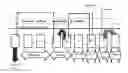
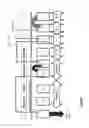
FIG. 1 illustrates schematically various stages in a can production process.
DETAILED DESCRIPTION
It is known to employ a solid particulate cleaning material for the cleaning of textiles. Such a cleaning material might comprise a multiplicity of polymeric particles, for example, a multiplicity of nylon beads. A relatively small volume of liquid is introduced into the material in order to lubricate the “flow” of the particles within a cleaning chamber. Embodiments of this known textile cleaning approach make use of an apparatus comprising a drum that is rotated to allow the mechanical interaction of the cleaning material with the textile to be cleaned.
For further details of the known textile cleaning processes reference should be made to: WO2012/098408; WO2012/056252; WO2012/095677; WO2012/035353; WO2012/035342; WO2011/128680; WO2011/098815; WO2011/064581; WO2010/0128337; WO2010/094959.
It is proposed here to employ the known processes for cleaning textiles and using a particulate cleaning material, for the purpose of removing an oxide layer, and in particular a visibly damaged oxide layer, from an aluminium work piece or product. The proposed process finds particular application in the production of aluminium beverage cans where it is required to remove a damaged oxide layer prior to ink printing of the can surface. The proposed process may replace existing oxide removal processes that employ hydrofluoric acid. The cost and environmental benefits are potentially significant.
A possible embodiment of this process is incorporated into a beverage can production line. The embodiment employs a chamber through which the production line passes. The beverage cans are introduced into the chamber on a conveyor. Within the conveyor the cans are exposed to a particular particulate cleaning material, for example, nylon beads having a density in the range 0.5-2.5 g/cm3 and a volume in the range 5-275 mm3. In order to achieve that sufficient contact between the cans and the cleaning material the cleaning material may be sprayed into the chamber and recirculated. Alternatively the chamber might be agitated, e.g. shaken. According to the known textile cleaning processes a volume of liquid, for example, water, may be combined with the cleaning material. The particulate material may be applied in a pulsating manner, e.g. being forced through one or more nozzles.
In addition to using this approach to remove an oxide layer from aluminium work pieces and products, the approach may be used at other stages in a production line in order to clean the work piece. Additionally, or alternatively, the approach may be modified in order to apply a coating to the work piece or product. This might be achieved, for example, by mixing the coating into the particulate material, or employing pre-coated particles. For example, the particles can be pre-coated or impregnated with inorganic substances, which are then transferred to the metal substrate or metal component, such as a beverage can, during a subsequent washing process. This may enhance corrosion resistance, provide passivation of the surface, improve lacquer or printing adhesion and may reduce unwanted oxide growth (for example if it is required to store the substrates or components for prolonged periods before further coating). Inorganic substances that may be used in these processes include, for example, titanium, molybdenum, and zirconium. In some cases, the particles may be coated or impregnated with an organic material, This approach may be used to apply paint to the surface, to apply a protective finish, resin, extrusion coating, polymer film, reactive compound, pigmented resin, tactile or visual surface coating. The material may contain carbon, hydrogen, in combination with any/all other non-metal elements. The material particles may be coated or impregnated with a biocide.
By way of further example, these approaches may be used to achieve the following:
Coatings:
-
- Decoration—colour, e.g. pigmented or dye containing films, interference effects, eg “oil-slick” or view-angle dependent colours, holographic effects/micro-embossing.
- Decoration—surface finish, eg “brushed” effect, tactile effect, matt effects, gloss effects.
- Protection of the internal surface from the product contents (e.g. a carbonated drink)—controlling and/or prevention of corrosion reactions, perforation of the container, leakage.
- Protection of the product contents from the metal surface—controlling and/or prevention of metal dissolution and permeation into the product, controlling and/or prevention of flavour modification of the product by the metal surface, controlling and/or prevention of migration of/destruction of product components.
- Metal protection using Bisphenol A (BPA) free (super-compliant simplified coatings).
- Metal protection using purely inorganic coatings—ie removing organics completely.
Surface Treatments:
-
- Passivation of plain exposed surfaces (stability over time).
- Surface friction modification to aid mobility and handling, or reduce damage to unprotected clean metal surfaces (scratches, marring, other visual marks).
- Coating adhesion promotion to the metal.
- Coating adhesion promotion to a coated metal surface.
FIG. 1 illustrates schematically the incorporation of an oxide removal and cleaning station into a can production line, and embodying the principles described above. The various stages are as follows:
-
- Before Pre-Rinse Stage Washing
- cans are contaminated with for example lubricants that must be removed.
- Pre-Rinse (Stage 1)
- This water is taken from the 1st rinse stage
- It is the most contaminated water. May be recirculated but ultimately goes to treatment and/or drain.
- Function is to remove most of the residual coolant and other water soluble contaminants.
- Pre-Wash (Stage 2a)
- Temperature˜50-60° C.
- controlled pH
- Purpose is to remove most of the oil to keep stage 2b as clean as possible
- The high temperature and low pH causes oils to break out of emulsion and float to surface—and overflow to waste.
- Wash (Stage 2b)
- This is a modified stage that introduces bead cleaning as described above. Beads may be injected into the cleaning chamber via a set of nozzles.
- Beads are cleaned and recycled.
- Drag Out Tank (Stage 3a)
- controlled pH
- Surface flocculants overflow to waste
- 1st Rinse (Stage 3b)
- Uses water from 2nd rinse stage
- controlled pH
- Treatment (Stage 4)
- Uses zirconium, phosphate and fluoride
- Purpose is to grow a high integrity oxide film on the can surface to provide protection and excellent lacquer adhesion
- 2nd Rinse (Stage 5)
- DI rinse (stage 6)
- Mobility Enhancer (stage 7)
- Deposits a very thin organic coating onto external can surface
- Purpose is to improve can handling, drying and decorating processes
- The ME may be added to the DI rinse stage but preferred process is to keep stage 7 separate to stage 6.
- Before Pre-Rinse Stage Washing
It will be appreciated by a person skilled in the art that various modifications may be made to the above described embodiments without departing from the scope of the present invention.
Claims
1. A method of at least partially removing an oxide layer from the surface of an aluminium work piece or product, the method comprising introducing the work piece or product into a processing chamber and exposing the work piece or product to a solid particulate cleaning material.
2. A method according to claim 1, wherein said solid particulate cleaning material comprises a multiplicity of polymer particles.
3. A method according to claim 1 and comprising combining said solid particulate cleaning material with a liquid.
4. A method according to claim 3, wherein said liquid is water.
5. A method according to any claim 1, wherein particles of said solid particulate cleaning material are impregnated and/or coated with a material that is transferred, as a result of the step of exposing, to the surface of the work piece or product.
6. A method according to claim 5, wherein the transfer of said material, from the particulate material to the surface, is achieved primarily by direct physical contact between the particulate material and the surface.
7. A method according to claim 5, wherein the transfer of said material, from the particulate material to the surface, is achieved primarily by one or more of a temperature induced transfer, application of an electrical potential or magnetic field, a pressure induced transfer.
8. A method according to claim 5, wherein the coating or impregnating material is an inorganic material.
9. A method according to claim 5, wherein the coating or impregnating material is an organic material.
10. A method of manufacturing an aluminium can, the method comprising using the method of claim 1 to remove an oxide layer formed on surfaces of the can.
11. A method according to claim 10 and comprising locating aluminium cans on a moving conveyor whereby the cans are introduced into a chamber where they are exposed to said particulate material.
Images & Drawings included:
Sources:
- United States Patent and Trademark Office - verify current appl. status at the USPTO↗
Similar patent applications:
- » 20210302447
Processed product production apparatus, processed product production method, computer-readable storage medium, and processed product production system - » 20200265226
FOOD PRODUCT PROCESSING DEVICE, FOOD PRODUCT PROCESSING DEVICE MANAGEMENT SYSTEM, AND FOOD PRODUCT PROCESSING DEVICE MANAGEMENT METHOD - » 20140277677
PRODUCTION PROCESSING SYSTEM, CONTROL DEVICE FOR PRODUCTION PROCESSING, METHOD FOR CONTROLLING PRODUCTION PROCESSING AND STORAGE MEDIUM - » 20060075927
Aqueous shellac coating agent and production process therefor, and coated food and production process therefor, coated drug and production process therefor, glazing composition for oil-based confectionary, glazing process, and glazed oil-based confectionary using same - » 20060233917
Aqueous shellac coating agent and production process therefor, and coated food and production process therefor, coated drug and production process therefor, glazing composition for oil-based confectionary, glazing process, and glazed oil-based confectionary using same - » 20130082029
STAMPER, IMPRINT DEVICE, PRODUCT PROCESSED BY IMPRINT DEVICE, DEVICE FOR MANUFACTURING PRODUCT PROCESSED BY IMPRINT DEVICE, AND METHOD FOR MANUFACTURING PRODUCT PROCESSED BY IMPRINT DEVICE - » 20110288670
Device for determining build-to-order production process, program, system for determining build-to-order production process, and method for determining build-to-order production process - » 20170130090
Protection membrane forming film, protection membrane forming utilization sheet, production method and inspection method for workpiece or processed product, workpiece determined as adequate product, and processed product determined as adequate product - » 20120225257
Molded product, clothing, production process for laminate, and production process for molded product - » 20110198264
Process oil, process for production of deasphalted oil, process for production of extract, and process for production of process oil
Recent applications in this class:
- » 20240360564 2024-10-31
FLUORIDE ION CLEANING SYSTEMS AND METHODS INCLUDING POST-RETORT FLUID STREAM PROCESSING - » 20240150902 2024-05-09
FLUORIDE ION CLEANING SYSTEMS - » 20220081779 2022-03-17
TREATING METHOD OF METAL SURFACE AND COATING METHOD THEREOF USING THE SAME - » 20210115571 2021-04-22
Method for removing oxide materials from a crack - » 20160115599 2016-04-28
Use of a catalyst in a base coating to improve the strippability of subsequent coatings - » 20130323066 2013-12-05
MASKANT FOR FLUORIDE ION CLEANING - » 20120291807 2012-11-22
Device and process for continuously cleaning surface of molybdenum wire at high temperature - » 20120160265 2012-06-28
Use of a catalyst in a base coating to improve the strippability of subsequent coatings - » 20110229377 2011-09-22
Apparatus for removal of surface oxides via fluxless technique involving electron attachment and remote ion generation - » 20110005549 2011-01-13
METHOD FOR THE THERMOCHEMICAL CLEANING AND/OR STRIPPING OF TURBINE COMPONENTS