Entangled net product with crumb
US20160090745A1
2016-03-31
14/859,689
2015-09-21
✅ Patent granted
US 9,528,279 B2
2016-12-27
-
-
Jeremy Luks
Hammer & Associates, P.C.
2035-09-21
Abstract:
An entangled net having a crumb dispersed therein may be used as a sound deadening material in a flooring system. The crumb may be adhered to said entangled net. The entangled net may include a first barrier layer affixed to an upper surface of said entangled net and/or a second barrier layer affixed to a lower surface of said entangled net. The crumb may be selected from the group consisting of: rubber; foam; natural elastic materials; synthetic elastic materials; fibers; and combinations thereof. The method of use and manufacture are also disclosed.
Applicant:
Interested in similar patents?
Get notified when new applications in this technology area are published.
Classification:
E04F15/206 » CPC further
Flooring; Separately-laid insulating layers; Other additional insulating measures; Floating floors for sound insulation Layered panels for sound insulation
E04F15/203 » CPC main
Flooring; Separately-laid insulating layers; Other additional insulating measures; Floating floors for sound insulation Separately-laid layers for sound insulation
B32B5/16 » CPC further
Layered products characterised by the non- homogeneity or physical structure, i.e. comprising a fibrous, filamentary, particulate or foam layer; Layered products characterised by having a layer differing constitutionally or physically in different parts characterised by features of a layer formed of particles, e.g. chips, powder or granules
B32B5/028 » CPC further
Layered products characterised by the non- homogeneity or physical structure, i.e. comprising a fibrous, filamentary, particulate or foam layer; Layered products characterised by having a layer differing constitutionally or physically in different parts characterised by structural features of a layer Net structure, e.g. spaced apart filaments bonded at the crossing points
B32B7/12 » CPC further
Layered products characterised by the relation between layers; Layered products characterised by the relative orientation of features between layers, or by the relative values of a measurable parameter between layers, i.e. products comprising layers having different physical, chemical or physicochemical properties; Layered products characterised by the interconnection of layers; Interconnection of layers using interposed adhesives or interposed materials with bonding properties
B32B37/12 » CPC further
Methods or apparatus for laminating, e.g. by curing or by ultrasonic bonding characterised by using adhesives
B32B2264/0207 » CPC further
Composition or properties of particles which form a particulate layer or are present as additives; Synthetic macromolecular particles Particles made of materials belonging to
B32B2307/102 » CPC further
Properties of the layers or laminate having particular acoustical properties Insulating
B32B2471/00 » CPC further
Floor coverings
E04F15/20 IPC
Flooring; Separately-laid insulating layers; Other additional insulating measures; Floating floors for sound insulation
B32B5/02 » CPC further
Layered products characterised by the non- homogeneity or physical structure, i.e. comprising a fibrous, filamentary, particulate or foam layer; Layered products characterised by having a layer differing constitutionally or physically in different parts characterised by structural features of a layer
B32B37/1284 » CPC further
Methods or apparatus for laminating, e.g. by curing or by ultrasonic bonding characterised by using adhesives Application of adhesive
B32B2262/00 » CPC further
Composition or structural features of fibres which form a fibrous or filamentary layer or are present as additives
B32B5/022 » CPC further
Layered products characterised by the non- homogeneity or physical structure, i.e. comprising a fibrous, filamentary, particulate or foam layer; Layered products characterised by having a layer differing constitutionally or physically in different parts characterised by structural features of a layer Non-woven fabric
B32B5/18 » CPC further
Layered products characterised by the non- homogeneity or physical structure, i.e. comprising a fibrous, filamentary, particulate or foam layer; Layered products characterised by having a layer differing constitutionally or physically in different parts characterised by features of a layer of foamed material
B32B5/22 » CPC further
Layered products characterised by the non- homogeneity or physical structure, i.e. comprising a fibrous, filamentary, particulate or foam layer; Layered products characterised by having a layer differing constitutionally or physically in different parts characterised by the presence of two or more layers which are next to each other and are fibrous, filamentary, formed of particles or foamed
B32B7/00 » CPC further
Layered products characterised by the relation between layers; Layered products characterised by the relative orientation of features between layers, or by the relative values of a measurable parameter between layers, i.e. products comprising layers having different physical, chemical or physicochemical properties; Layered products characterised by the interconnection of layers
B32B7/02 » CPC further
Layered products characterised by the relation between layers; Layered products characterised by the relative orientation of features between layers, or by the relative values of a measurable parameter between layers, i.e. products comprising layers having different physical, chemical or physicochemical properties; Layered products characterised by the interconnection of layers Physical, chemical or physicochemical properties
B32B27/06 » CPC further
Layered products comprising synthetic resin as the main or only constituent of a layer, next to another layer of a
B32B27/08 » CPC further
Layered products comprising synthetic resin as the main or only constituent of a layer, next to another layer of a of synthetic resin
B32B27/12 » CPC further
Layered products comprising synthetic resin next to a fibrous or filamentary layer
B32B37/24 » CPC further
Methods or apparatus for laminating, e.g. by curing or by ultrasonic bonding characterised by the properties of the layers with at least one layer not being coherent before laminating, e.g. made up from granular material sprinkled onto a substrate
B32B5/06 » CPC further
Layered products characterised by the non- homogeneity or physical structure, i.e. comprising a fibrous, filamentary, particulate or foam layer; Layered products characterised by having a layer differing constitutionally or physically in different parts characterised by structural features of a layer characterised by a fibrous layer to another layer, e.g. of fibres, of paper
B32B5/12 » CPC further
Layered products characterised by the non- homogeneity or physical structure, i.e. comprising a fibrous, filamentary, particulate or foam layer; Layered products characterised by having a layer differing constitutionally or physically in different parts characterised by structural features of a layer characterised by the relative arrangement of fibres or filaments of different layers, e.g. the fibres or filaments being parallel or perpendicular to each other
B32B5/00 » CPC further
Layered products characterised by the non- homogeneity or physical structure, i.e. comprising a fibrous, filamentary, particulate or foam layer; Layered products characterised by having a layer differing constitutionally or physically in different parts
B32B2264/00 » CPC further
Composition or properties of particles which form a particulate layer or are present as additives
B32B2264/02 » CPC further
Composition or properties of particles which form a particulate layer or are present as additives Synthetic macromolecular particles
B32B2264/0221 » CPC further
Composition or properties of particles which form a particulate layer or are present as additives; Synthetic macromolecular particles; Particles made of materials belonging to Thermoplastic elastomer particles
B32B2266/00 » CPC further
Composition of foam
B32B2305/30 » CPC further
Condition, form or state of the layers or laminate Fillers, e.g. particles, powders, beads, flakes, spheres, chips
B32B2305/38 » CPC further
Condition, form or state of the layers or laminate Meshes, lattices or nets
B32B2307/10 » CPC further
Properties of the layers or laminate having particular acoustical properties
B32B2307/7265 » CPC further
Properties of the layers or laminate; Other properties; Permeability to liquids, absorption Non-permeable
B32B2419/00 » CPC further
Buildings or parts thereof
B32B2419/04 » CPC further
Buildings or parts thereof Tiles for floors or walls
B32B37/02 » CPC further
Methods or apparatus for laminating, e.g. by curing or by ultrasonic bonding characterised by a sequence of laminating steps, e.g. by adding new layers at consecutive laminating stations
B32B2307/7242 » CPC further
Properties of the layers or laminate; Other properties; Permeability to gases, adsorption Non-permeable
Description
RELATED APPLICATION
This application claims the benefit of co-pending U.S. Provisional Application Ser. No. 62/056,657 filed Sep. 29, 2014, incorporated herein by reference.
FIELD OF THE INVENTION
The entangled net product with crumb may be used as a sound deadening product in flooring systems.
BACKGROUND OF THE INVENTION
The transmission of sound through a flooring system is of great concern, especially in multi-family dwellings. The ability of the flooring system not to transmit sound from one living space to the next is greatly desired.
In many multi-family dwelling, the flooring system uses a gypsum (or cementitious) material covering over a subfloor structure. While the gypsum material has some inherent sound deadening properties, those properties are not sufficient to meet the higher standards now being sought by the building industry.
The industry has looked at the use of various forms of entangled net to address the sound deadening issue, see, for example, U.S. Pat. No. 7,096,630, US2006/0230699; U.S. Pat. No. 8,146,310; U.S. Pat. No. 8,544,218; and U.S. Pat. No. 8,528,286, each incorporated herein by reference. While each of these solutions have provided an advancement, the industry is still looking for greater sound deadening properties.
Entangled nets are known, for example see U.S. Pat. No. 7,096,630, US2006/0230699; U.S. Pat. No. 8,146,310; U.S. Pat. No. 8,544,218; and U.S. Pat. No. 8,528,286, each incorporated herein by reference. Entangled nets may be in two general forms: 1) a solid formed of a plurality of entangled fibers (filaments or continuous fibers), for example see U.S. Pat. No. 7,096,630, U.S. Pat. No. 8,146,310, and U.S. Pat. No. 8,544,218; or 2) a sheet of entangled fibers (filaments or continuous fibers) where the sheet is folded (eg, forming a sine curve in cross-section or ‘peaks and furrows’ (or ‘W’)) or dimpled (eg, cone-shaped) to create a three-dimensional solid, for example see U.S. Pat. No. 8,528,286 and U.S. Pat. No. 8,146,310.
Accordingly, there is a need for new sound deadening products that meet or exceed the performance of the foregoing products.
SUMMARY OF THE INVENTION
An entangled net having a crumb dispersed therein may be used as a sound deadening material in a flooring system. The crumb may be adhered to said entangled net. The entangled net may include a first barrier layer affixed to an upper surface of said entangled net and/or a second barrier layer affixed to a lower surface of said entangled net. The crumb may be selected from the group consisting of: rubber; foam; natural elastic materials; synthetic elastic materials; fibers; and combinations thereof. The method of use and manufacture are also disclosed.
DESCRIPTION OF THE DRAWINGS
For the purpose of illustrating the invention, there is shown in the drawings a form that is presently preferred; it being understood, however, that this invention is not limited to the precise arrangements and instrumentalities shown.
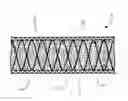
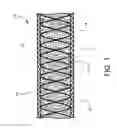
FIG. 1 shows an embodiment of the instant invention.
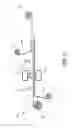
FIG. 2 illustrates a method of manufacturing the instant invention.
DESCRIPTION OF THE INVENTION
The invention may be characterized as: an entangled net including crumb (an article of manufacture); a sound deadening product (or method for sound deadening) having an entangled net including crumb; and a method for making an entangled net including crumb.
Referring to the drawings, where like elements have like numerals, there is shown, in FIG. 1, an embodiment of the entangled net with crumb 10. In general, the entangled net with crumb 10 includes an entangled net 12 including crumb 14. Additionally, the invention 10 may include a first barrier layer 16 affixed on an upper surface of the entangled net 12. Additionally, the invention 10 may include a second barrier layer 18 affixed on a lower surface of the entangled net 12. The entangled net with crumb 10 may include both barrier layers, neither barrier layer, or just one of the barrier layers.
Entangled nets may be in either of two general forms: 1) a solid formed of a plurality of entangled fibers (filaments or continuous fibers), for example see U.S. Pat. No. 7,096,630, U.S. Pat. No. 8,146,310, and U.S. Pat. No. 8,544,218; or 2) a sheet of entangled fibers (filaments or continuous fibers) where the sheet is folded (eg, forming a sine curve in cross-section or ‘peaks and furrows’ (or ‘W’)) or dimpled (e.g., cone-shaped) to create a three-dimensional solid, for example see U.S. Pat. No. 8,528,286. Entangled nets are known, for example see U.S. Pat. No. 7,096,630, US2006/0230699; U.S. Pat. No. 8,146,310; U.S. Pat. No. 8,544,218; and U.S. Pat. No. 8,528,286, each incorporated herein by reference. In general, the fibers of the entangled net create an open solid (open in the sense of the interstitial spaces between the fibers).
The crumb 14 may be any crumb material. When the entangled net with crumb is used as a sound deadening product, the crumb should have sound deadening properties. In general, sound deadening properties refers to the ability to absorb acoustical energy. Such crumb may generally be elastic, but is not necessarily so. Examples of crumb having such sound deadening properties include: rubber (e.g., crumb and/or sponge and/or cross-linked and/or non cross-linked); foam (e.g., closed cell and/or opened cell); natural elastic materials (e.g., cork); synthetic elastic materials; fibers—any length and any diameter) (e.g., cellulosic, thermoplastic (e.g., polyolefin, amide, acrylic); and combinations thereof. The crumb may have any diameter. In one embodiment, the crumb has a diameter no greater than 1/8″ (0.125 inch).
The crumb may be adhered to the entangled net. Any adhesive may be used. Such adhesives include, but are not limited to: hot-melt adhesives (elastic, inelastic, tacky, nontacky), pressure-sensitive adhesives, energy activated adhesives (activated by heat, IR, etc), moisture activated adhesives, two component adhesives, and combinations thereof. In sound deadening application, any adhesive having sound deadening properties may be used; but, sound deadening properties are not necessary. Such adhesives include those mentioned above that have sound deadening properties. In some embodiments, the adhesive remains tacky, so that the tacky entangled net, when exposed, may be used to adhere the product to the subflooring to facilitate installation (ie, hold the product in place during floor installation without the need of nails or staples to hold the product in place).
The first barrier layer (optional) may be any sheet or film material. The first barrier may, for example, be used to: prevent the ingress of foreign materials into the product during use, and/or the loss of crumb during manufacture. When used in flooring systems, such as the cementitious flooring systems, the first barrier layer may be any material that is at least water impermeable, but may be water impermeable and moisture permeable. Such materials may include nonwovens (for example spunbonded, meltblown, and or spunmelt nonwovens). The first barrier layer is adhered to the entangled net is any conventional fashion.
The second barrier layer (optional) may be any sheet or film material. The second barrier layer may, for example, be used to: prevent the loss of crumb after manufacture; and/or as a release layer, so when the product is wound (product typically sold as roll goods), it does not adhere to itself; and/or as a sound deadening layer; and/or a peelable layer so that the tacky entangled net may be exposed to facilitate installation. The second barrier layer may be a foam or nonwoven or fabric (woven or knitted) or a film (perforated or nonperforated), or combinations thereof.
In FIG. 2, a method of manufacturing the invention is illustrated. The entangled net 12 may be unwound 22 (or taken directly from its manufacture) to a station 28 where crumb 14 is added. The adhesive may be added to the entangled net before 26 crumb addition, or after 32 crumb addition, or before and after crumb addition. The use of a vacuum station 30 may be used to facilitate crumb distribution within the entangled net 12. The first barrier layer 16 may be added 24 to the entangled net 12 before crumb addition (note in this embodiment, the first battier layer is located on the bottom surface of the entangled net). The second barrier layer may be added 34 to the entangled net after crumb addition (note in this embodiment, the second battier layer is located on the upper surface of the entangled net). After formation of the invention, the product may be wound-up 36 to form a roll good. Alternatively, the entangled net 12 and the first barrier layer 16 may be made before the addition 26 of the crumb.
In use, the entangled net with crumb is installed on top of the subfloor of the building (e.g., a multi-family dwelling). If the barrier layers are used, the first barrier layer faces up (e.g., toward the cementitious or gypsum layer), and the second layer (or bottom surface of the entangled net with crumb) faces down (e.g., toward the subfloor). All or a portion of the second layer may be removed (or peeled back), so that the adhesive may be used to secure the entangled net with crumb to the subfloor. After installation of the entangled net with crumb over the subfloor, the cementitious or gypsum layer may be poured over the entangled net with crumb.
The present invention may be embodied in other forms without departing from the spirit and the essential attributes thereof, and, accordingly, reference should be made to the appended claims, rather than to the foregoing specification, as indicating the scope of the invention.
Claims
We claim:1. A method for reducing sound transmission through a flooring system comprising the step of:
providing an entangled net having a crumb dispersed within the entangled net.
2. The method of claim 1 wherein the crumb is a sound deadening crumb.
3. The method of claim 1 wherein the crumb is adhered to the entangled net.
4. The method of claim 1 wherein the entangled net has a first barrier layer affixed to an upper surface of the entangled net.
5. The method of claim 1 wherein the entangled net has a second barrier layer affixed to a lower surface of the entangled net.
6. The method of claim 1 wherein the crumb has an average diameter no greater than 1/8″.
7. The method of claim 1 wherein the crumb is selected from the group consisting of: rubber; foam; natural elastic materials; synthetic elastic materials; fibers; and combinations thereof.
8. An article for manufacture comprising an entangled net having a crumb dispersed within said entangled net.
9. The article of claim 8 wherein the crumb is a sound deadening crumb.
10. The article of claim 8 wherein said crumb is adhered to said entangled net.
11. The article of claim 8 wherein said entangled net has a first barrier layer affixed to an upper surface of said entangled net.
12. The article of claim 8 wherein said entangled net has a second barrier layer affixed to a lower surface of said entangled net.
13. The article of claim 8 wherein said crumb has an average diameter no greater than 1/8″.
14. The article of claim 8 wherein said crumb is selected from the group consisting of: rubber; foam; natural elastic materials; synthetic elastic materials; fibers; and combinations thereof.
15. The article of claim 8 wherein the article reduces sound transmission through a flooring system.
16. A method of making an entangled net having crumb dispersed therein comprising the steps of:
adhering the crumb to the entangled net.
17. The method of claim 16 wherein adhering further comprising: applying an first adhesive to the entangled net and then adding the crumb; or applying a first adhesive to the entangled net, adding the crumb, and then applying a second adhesive to the entangled net; or adding the crumb to the entangled net, and then applying a first adhesive to the entangled net.
18. The method of claim 16 further comprising vacuuming the crumb into the entangled net.
19. The method of claim 16 wherein the entangled net has a first barrier layer affixed to an upper surface of the entangled net.
20. The method of claim 16 wherein the entangled net has a second barrier layer affixed to a lower surface of the entangled net.
Images & Drawings included:
Sources:
- United States Patent and Trademark Office - verify current appl. status at the USPTO↗
Recent applications in this class:
- » 20240401345 2024-12-05
UNDERLAY ELEMENT FOR FLOORING AND FLOOR ASSEMBLY - » 20240247501 2024-07-25
Field-assembled wall and flooring systems - » 20230279673 2023-09-07
Field-assembled wall and flooring systems - » 20230243162 2023-08-03
Floor lift layer providing rigidity, sound reduction, and thermal insulation - » 20230102074 2023-03-30
Sound transmission control in cross laminated timber construction - » 20230085014 2023-03-16
ARCHITECTURAL FLOORING UNDERLAYMENT - » 20220364373 2022-11-17
Sound transmission control in cross laminated timber construction - » 20220251855 2022-08-11
Field-assembled flooring systems - » 20220228374 2022-07-21
Field-assembled flooring systems with mold-resistant isolation boards - » 20220195740 2022-06-23
Underlay element for flooring and floor assembly