Insect bait application device
US20160100568A1
2016-04-14
14/712,986
2015-06-22
✅ Patent granted
US 9,713,326 B2
2017-07-25
-
-
Darren W Ark
2035-08-10
Abstract:
A method and device for distributing and containing ant bait that provides a dry environment and prolongs its effectiveness through a temporarily reusable device.
Applicant:
Interested in similar patents?
Get notified when new applications in this technology area are published.
Classification:
A01M1/2011 » CPC main
Stationary means for catching or killing insects; Poisoning, narcotising, or burning insects; Poisoning insects using bait stations for crawling insects
A01M1/103 » CPC further
Stationary means for catching or killing insects; Traps for crawling insects
A01M1/2005 » CPC further
Stationary means for catching or killing insects; Poisoning, narcotising, or burning insects Poisoning insects using bait stations
A01M1/20 IPC
Stationary means for catching or killing insects Poisoning, narcotising, or burning insects
A01M1/10 IPC
Stationary means for catching or killing insects Traps
Description
TECHNICAL FIELD
The Ring of Fire is a formed plastic housing device with a “donut” style shape that contains a prefilled commercial produced ant bait. The device can be used on multiple ant locations until bait is depleted.
BACKGROUND
It is well known that commercial fire ant baits are rendered useless when water comes in contact with the bait. This device is designed to shed water from rain and irrigation systems keeping the bait inside dry.
This device allows for a “non-human contact” solution for fire ant bait distribution.
SUMMARY
This device has a “peel off” barrier on the bottom that allows the ant bait to stay contained inside. Once removed, a ⅛″ gap between the upper and lower “shell” is exposed allowing ants to enter the device and carry the bait back to the mound.
The device contains enough bait for multiple applications.
DESCRIPTION
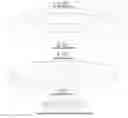
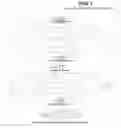
FIG. 1 shows two individually molded upper and lower portions of the device. The first is a “concaved” upper shell with a conical downward protruding center. The second is a “concaved” lower shell that is slightly smaller in the outer diameter. The upward facing inner circular protrusion which is ¼″ larger slides over the downward facing protrusions from the upper shell. When placed together, they create a hollow “donut” shape that contains the ant bait. There is a ⅛″ gap between the two protrusions. The upper extends over the lower that allows ants to enter and exit the device, while retaining the ability to shed water off the device, allowing the bait to remain dry.
The device can be made in various sizes, shapes and colors, but most commonly uses a 5 inch over all diameter, 1½ height profile and a 2 inch center hole.
The device is constructed from 015 to 040 vacuum form plastics.
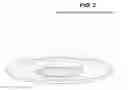
FIG. 2 shows the upper and lower shells bonded together to form a hollow “donut” shaped container.
The darkened area in the bottom references the peel of tab that fits inside of the lower protrusion and adheres to the bottom of the upper protrusion. This is to contain the bait unit it is ready to be used.
Claims
1. The Ring of Fire, ant bait container is a protective water shedding container that allows for ant bait to be used in outdoor environments where ant bait typically would not retain its effectiveness due to moisture created by rain or irrigation systems.
Images & Drawings included:
Sources:
- United States Patent and Trademark Office - verify current appl. status at the USPTO↗
Recent applications in this class:
- » 20250234851 2025-07-24
SUPPORT FOR UPHOLSTERED FURNITURE, SPECIFICALLY TO CONTRAST BED BUGS - » 20250176522 2025-06-05
BEDBUG DETECTION, MONITORING AND CONTROL TECHNIQUES - » 20250169486 2025-05-29
BAIT STATIONS - » 20240041017 2024-02-08
Bait stations - » 20220408712 2022-12-29
Monitoring camera with repellent sheet adhered to tip end flange - » 20220408711 2022-12-29
LIQUID ANT BAIT PACK WITH TEAR-AWAY TAB - » 20220125030 2022-04-28
Bedbug detection, monitoring and control techniques - » 20210368765 2021-12-02
INSECT TRAP WITH COMPOUND BAIT - » 20210120801 2021-04-29
Bait stations - » 20200383310 2020-12-10
Insect Bait Stakes