INTERACTIVE ONLINE LEARNING SYSTEM AND METHOD
US20160104387A1
2016-04-14
14/855,211
2015-09-15
Abstract:
An interactive online learning system and method.
Interested in similar patents?
Get notified when new applications in this technology area are published.
Classification:
G09B5/08 » CPC main
Electrically-operated educational appliances providing for individual presentation of information to a plurality of student stations
G09B5/02 » CPC further
Electrically-operated educational appliances with visual presentation of the material to be studied, e.g. using film strip
Description
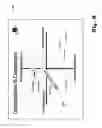
BRIEF DESCRIPTION OF THE FIGURES
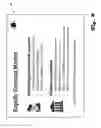
FIG. 1 depicts a title page.
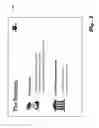
FIG. 2 depicts a vision statement.
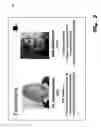
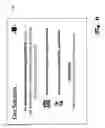
FIG. 3 depicts co-founders.
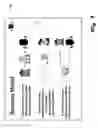
FIG. 4 depicts a growing market.
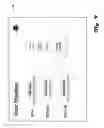
FIG. 5 depicts a problem description.
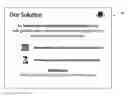
FIG. 6. depicts a solution description.
FIG. 7. depicts a business model.
FIG. 8. depicts spectra of personalization and interaction.
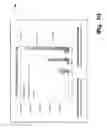
FIG. 9. depicts a user pipeline.
FIG. 10. depicts a forecast.
FIG. 11. depicts business metrics.
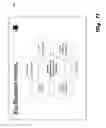
FIG. 12. depicts design attributes.
FIG. 13. depicts a development stage.
FIG. 14. depicts a conclusion page.
DETAILED DESCRIPTION:
FIG. 1 depicts a title page.
FIG. 2 depicts a vision statement.
FIG. 3 depicts co-founders.
FIG. 4 depicts a growing market.
Likelihood of hybrid degrees (a portion online) for all universities in the future; as well as growth of entirely online universities.
Question: How to tap rapidly growing higher education market?
FIG. 5 depicts a problem description.
FIG. 6. depicts a solution description.
E-learning providers=customers
Students=users
We are NOT a content provider. We think the marginal cost of content is going to go very low, very quickly.
We think that the monetization potential is in other areas. Online learners have been targeting proctoring and accreditation, but we're targeting discussion and engagement.
FIG. 7. depicts a business model.
Converts discussion forums from a low-touch to a high-touch environment, which is peer-driven.
Distinct Features:
(i) Designed for non-STEM as well as STEM students.
(ii) Quantifies discussion participation in a proprietary Proll Score algorithm—enabling discussion marks to be included in final MOOC mark
(iii) Score EQ as well as IQ. Question: who would you rather hire—a student who got 96% in a course, but was ranked as very unhelpful by fellow students, with low engagement and contribution score; or a student who got 91% in the same course, but was ranked amongst the top 10 most helpful and active contributors? This will be particularly of interest to employers as face-to-face contact reduces in an online education world (how are you going to write a reference letter for a student you have never met?).
Unique Niche:
(ii) Patented features for soft gamification, interactivity, engagement. These capture EQ (rather than IQ), and are represented in a Proll Score algorithm, which is (a) a portion of the final course mark (something currently not possible with the current online learning technology) first to do this, and (b) is also noted on a separate Participation Certificate the students receive for the course. In the online job training space, this will give additional information to prospective employers about students with high EQ and IQ.
Proll measures attributes employers want: ability to work in teams, EQ, etc . . . .
Note: In the MOOC space, we anticipate that students will be willing to pay for these Participation Certificates—just like they currently pay for the Course Completion Certificate from the MOOC providers.
TAs: are also incentivized because students can rank them—top TAs are recognized with a certificate—rather than an unthanked volunteer job it is a credible contribution you can put on a CV—important for the graduate students and sessionals who are currently doing a lot of this work for free. And a great gatekeeping strategy for the use of virtual community Tas, which is what is currently being tested in some online learning environments.
Incentives
-
- E.g. Students: Top Prollsters, Proll Score, Certificate
- TAs: Tips & Certificate
- MOOC platform: revenue, increased engagement, course completion
FIG. 8. depicts spectra of personalization and interaction.
A new opportunity in an emerging market that has not yet figured out how to monetize.
We are piggybacking on platforms that many describe as disruptive.
BUT note that there is also a bigger market of traditional education (continuing ed., exec. Ed and professional recertification) moving online).
Key message: MOOCS are not our only opportunity, and the sector does not need to be successfully or massively disrupted for our model to work.
FIG. 9. depicts a user pipeline.
Risks and Barriers to Entry
-
- Oligopoly (corporate ego) □ large and growing number of smaller providers to whom we can market—lacking in-house capacity to build discussion groups (Thinkific, ChinaNext); approach mid-size providers first (e.g. Udacity). Current MOOC providers=gateway (we can do an end-run focusing on niche providers, individual professors—but it will be more timeconsuming and slower to scale).
- Suboptimal equilibrium—why would profs or student want more engagement?
- Gamification and student WTP as yet unvalidated
FIG. 10. depicts a forecast.
FIG. 11. depicts business metrics.
Our business model aligns our incentives with those of our users and customers, as measured by these key metrics.
Student engagement: (visits, number of contributions, length of response, ratings, peer review).
FIG. 12. depicts design attributes.
Design principles: Intuitive, easy to use, inviting
Design ethos: “friendly faces” in an “online campus” experience
Visual design leitmotifs: spiral and ampitheatre, using a “crowded café” analogy
Technical mission statement: Stable, fast platform
Full spectrum of learning: Arts/social science as well as STEM
List of target provisional patents. Note, if not otherweise specified, user may refer to professor (or teacher), student, and/or teaching assistant (or aide):
Participation Scoring
-
- calculating a quotient of participation in a discussion (forum)
- calculating a participation score using an algorithm based on duration and frequency of visits, length of contributions, and peer scoring
- visual and verbal representation of the score with quantitative and qualitative metrics and elements
Option: certificate
Ranking of Users Based on Participation Scoring
-
- ranking users based on activity in a social learning network
Option: ranking students
Option: ranking teaching assistants or other teaching aides
Option: ranking both teaching assistants (or other teaching aides) and students
-
- calculating an overall score based on crowd-funding activity and participation in a social network
- providing these rankings to third party services via an automated API
Option:—submitting a participation grade to a learning management system (LMS)
option: based on activity in a social network
-
- visual and verbal representation of teacher/professor score with quantitative and qualitative metrics and elements
Option: certificate
-
- visual and verbal representation of student score with quantitative and qualitative metrics and elements
Option: certificate
-
- visual and verbal representation of TA score with quantitative and qualitative metrics and elements
Option: certificate
-
- visual and verbal representation of for super-posters score with quantitative and qualitative metrics and elements
Option: certificate
Participation Context Quality Assessment
-
- assessing the quality of content of participatory contributions based on user activity
Option: based on peer assessment
-
- identifying the most “valuable” users in a social network (super-posters)
- Assessment algorithm based on peer assessment of EQ metrics (e.g. helpfulness)
Participation—Linked Payment Process
-
- compensating/paying users in a social network based on the value they generate
- aggregating a “score” representing the value of a user in a social network
- process for purchasing grades in a LMS
- calculating a score representing crowd-funding activity
option: in the education space
option: for purchasing participation score
-
- algorithm for calculating proportional cost of participation fee based on metrics and variables that are teacher and peer assessed
Personalized Grouping Algorithm for Participation in a Discussion Forum
-
- grouping users based on participation in a social network
option: based on geographic location
12
option: matching for the sake of offline meeting
-
- calculating an “ideal diversity metric” for participation in a social network
e.g. what composition of groups (previous activity, location, language, etc.)
encourage greatest participation
-
- algorithm for matching students to tutors
Crowdfunding and Crowdcreating Learning Materials
-
- process for crowd-funding learning materials
- process for calculating proportional participatory contributions to learning materials
- process for revenue sharing to co-creators of crowd-created learning materials
Design
-
- Proll certificate
- arranging inactive users in a semi-circle (the “audience”)
- arranging active users in a spiral
- using lines of text to create a spiral representing a discussion in a social network
- moving avatars of inactive users from one area of an interface to another when they become active
(more specifically, from the semi-circle to the spiral)
-
- using a spiral/galaxy design to represent frequency of participation and density of a social network
- interface sequence: 1) visual representation of activity in a social network →2) content in the network
- visualizing search results in a social network as facets of a geographic pattern
- organizing content in a social network based on helpfulness
- visually representing participation in a social network using a thermometer-like design
- awarding badges or achievements to users of an LMS
FIG. 13. depicts a development stage.
FIG. 14. depicts a conclusion page.
Claims
Having thus described the invention, what is claimed is:1. An interactive online learning system as shown and described above.
Images & Drawings included:
Sources:
- United States Patent and Trademark Office - verify current appl. status at the USPTO↗
Similar patent applications:
- » 20140344673
SYSTEM AND METHOD FOR ENHANCING INTERACTIVE ONLINE LEARNING TECHNOLOGY - » 20200351329
Computerized system and method for an interactive online learning experience - » 20190080260
Machine learning methods and systems for predicting online user interactions - » 20200394932
SYSTEMS AND METHODS FOR GENERATING INTERACTIVE ONLINE MATERIAL FOR THERAPY AND LEARNING - » 20220343256
SYSTEM AND METHOD FOR DETERMINING INSTRUCTOR EFFECTIVENESS SCORES IN INTERACTIVE ONLINE LEARNING SESSIONS - » 20220198949
SYSTEM AND METHOD FOR DETERMINING REAL-TIME ENGAGEMENT SCORES IN INTERACTIVE ONLINE LEARNING SESSIONS
Recent applications in this class:
- » 20250140125 2025-05-01
Generating, interpreting and adapting a 3D learning environment using ANNs - » 20250037597 2025-01-30
AUTONOMOUS FRAMEWORK FOR LEARNING AND TEACHING PROCESSES - » 20240331559 2024-10-03
Self Sufficiency Hub - » 20240304100 2024-09-12
EDUCATIONAL ANALYTICS PLATFORM AND METHOD THEREOF - » 20240144838 2024-05-02
CAREER ASPIRATION-BASED EDUCATIONAL METHOD AND SYSTEM - » 20240127705 2024-04-18
FITNESS AND SOCIAL ACCOUNTABILITY - » 20240105072 2024-03-28
ANALYSIS APPARATUS, ANALYSIS METHOD, AND NON-TRANSITORY COMPUTER-READABLE MEDIUM - » 20230368691 2023-11-16
EDUCATIONAL CONTENT DELIVERY SYSTEM FOR CONTROLLED ENVIRONMENTS - » 20230360551 2023-11-09
Adaptive learning environment driven by real-time identification of engagement level - » 20220254265 2022-08-11
METHOD AND APPARATUS FOR ADVANCING THROUGH A DECK OF DIGITAL FLASH CARDS TO MANAGE THE INCENTIVIZING OF LEARNING