Component consisting of ceramics, comprising pore channels
US20160106540A1
2016-04-21
14/892,855
2014-05-23
✅ Patent granted
US 10,098,742 B2
2018-10-16
WO; PCT/EP2014/060691; 20140523
WO; WO2014/187969; 20141127
Alvin Stewart
James R. Crawford | Norton Rose Fulbright US LLP
2034-05-23
Abstract:
A ceramic component that consists of a shell, a filler material and pore channels that pass through the filler material, and can be used as an implant, particularly as a spacer.
Inventors:
- Heinrich Wecker 21 🇩🇪 Eckental, Germany
- Meinhard Kuntz 13 🇩🇪 Esslingen, Germany
- Kilian Friederich 12 🇩🇪 Plochingen, Germany
- Alfons Kelnberger 14 🇩🇪 Rothenbach, Germany
- Katia Biotteau 1 🇫🇷 Lille, France
- Moritz Messmer 1 🇩🇪 Stuttgart, Germany
Assignee:
- CERAMTEC GMBH 88 🇩🇪 Plochingen, Germany
Applicant:
Interested in similar patents?
Get notified when new applications in this technology area are published.
Classification:
A61F2/2846 » CPC main
Filters implantable into blood vessels; Prostheses, i.e. artificial substitutes or replacements for parts of the body; Appliances for connecting them with the body; Devices providing patency to, or preventing collapsing of, tubular structures of the body, e.g. stents; Prostheses implantable into the body; Bones Support means for bone substitute or for bone graft implants, e.g. membranes or plates for covering bone defects
A61L27/10 » CPC further
Materials for prostheses or for coating prostheses; Inorganic materials Ceramics or glasses
A61L27/56 » CPC further
Materials for prostheses or for coating prostheses; Materials characterised by their function or physical properties, e.g. injectable or lubricating compositions, shape-memory materials, surface modified materials Porous materials, e.g. foams or sponges
A61F2002/2839 » CPC further
Filters implantable into blood vessels; Prostheses, i.e. artificial substitutes or replacements for parts of the body; Appliances for connecting them with the body; Devices providing patency to, or preventing collapsing of, tubular structures of the body, e.g. stents; Prostheses implantable into the body; Bones; Bone graft implants for filling a bony defect or an endoprosthesis cavity, e.g. by synthetic material or biological material Bone plugs or bone graft dowels
A61F2/28 » CPC further
Filters implantable into blood vessels; Prostheses, i.e. artificial substitutes or replacements for parts of the body; Appliances for connecting them with the body; Devices providing patency to, or preventing collapsing of, tubular structures of the body, e.g. stents; Prostheses implantable into the body Bones
A61L2430/38 » CPC further
Materials or treatment for tissue regeneration for reconstruction of the spine, vertebrae or intervertebral discs
A61L27/50 » CPC further
Materials for prostheses or for coating prostheses Materials characterised by their function or physical properties, e.g. injectable or lubricating compositions, shape-memory materials, surface modified materials
Description
The subject matter of the present invention is a ceramic component that consists of a shell, a filler material and pore channels that pass through the filler material. This component can preferably be used as an implant and in particular as a spacer.
Porous materials are particularly suitable for the attachment and growth of new cell tissue such as bone cells. The porous component should consist of a biocompatible material that is capable of bearing loads, promotes biological cell attachment, the propagation of cells and the biological function thereof. This requires that a sufficient supply with biological liquids and nutrients is ensured at the site of the formation of new cells. For these reasons, the porous components should have a proportion of percolating pore volume.
Moreover, the pore size should fall within the range of the sizes of the newly formed cells. In addition, the component must be sufficiently stable to withstand the operation and the initial load in vivo without any damage.
In the past, various techniques for generating porous components and in particular ceramic components with a defined porosity were used. So far, however, no method exists that could be used to produce large numbers of these components with a reliable design at low costs and within a short time.
It is the object of the present invention to provide a component that promotes the form-locking growing on and/or in of cells in a particular way and to provide a method, by means of which large numbers of this component can be produced at low costs within a short time. At the same time, the component should ensure a primary and secondary strength that is considerably improved compared to the prior art.
The solution according to the invention provides a component/an implant that is designed as follows and preferably consists of ceramics:
-
- The shell consists of a load-bearing, high-strength, dense, biocompatible material. The shell is designed such that it can fully accommodate the external forces acting on the component even without a filling material. The pore volume content of the shell is preferably less than 3 vol %, preferably less than 2 vol % and particularly preferably less than 1 vol %.
- The implant contains a filling of a porous material of the same or a similar kind, wherein the porosity is present in a random form, occupies a volume content of 15-90 vol %, preferably of 20-70 vol % and particularly preferably of 25-50 vol %, and forms a percolating network, i.e. an interconnected network that is permeable to liquids. The pore size in the porous filling material is in a range of 2 to 400 μm, preferably in an order of magnitude of 5 to 200 μm.
- Although the porous filling material should have a permeable, percolating pore network, however, at the same time the pore structure and the pore volume content are preferably realised in such a way that a material with a comparatively high residual strength is obtained. The compressive strength of the porous filling material is preferably >250 MPa, particularly preferably >500 MPa. As a result, unlike sponge- or foam-like materials, a comparatively solid and break-proof substrate is available to the growing bone. By this means, according to the invention, a high primary and secondary strength, i.e. strength during the ingrowth process and after the ingrowth process, of the implant is achieved. On the basis of this concept, in this invention the pore volume content of the filling material is particularly preferably limited to a maximum of 50%.
- Moreover, defined directed pore channels, which are orientated in the preferential direction over the entire height of the component, pass through the porous filling material of the component. The channels may extend in a straight line or may be meandering. The diameter of the pore channels is between 0.1 and 2 mm, depending on the size of the cells that are supposed to grow in. Preferably, the diameter of the pore channels is between 0.3 and 1 mm.
- The pore channels are designed to be in liquid exchange communication with the porous filling material. This may be achieved for example on account of the fact that the pore channels cut through the porosity structure of the filling material are in hydraulic communication with these through openings thus generated in the wall of the pore channels.
- The wall of the pore channels is designed in such a way that on the one hand liquid can enter through the porous ceramic filling material and further a very pronounced surface roughness with a medium roughness depth of Rz 10-250 μm, preferably Rz 20-200 μm (determined according to DIN EN ISO 4287) is present. Thus, an intense interlocking with the structure of the walls of the pore channels is made possible.
Biocompatible materials that can be used for the component or the implant comprise in principle all the materials known from implantation technology, such as metals, in particular Ti and the alloys thereof, polymers such as poly ethyl ethyl ketone (PEEK) or polyethylene (PE) and of course ceramic materials such as oxide and nitride ceramics.
Particularly preferably, the implant is made from a ceramic.
By means of the solution according to the invention, the bone preferably grows into the pore channels, in an ideal case from both sides of the channels with an ultimate connection in the centre. However, for the anchoring of the components in the bone it is sufficient for the bone to grow only a certain distance into the channel, for example to a depth of approx. 1 mm.
In contrast, in the porous filling material there tends to be no or only very little ingrowth. The pore size is too low so as to allow the formation of new bone cells. However, due to the preferably hydrophilic nature of the ceramic material, the percolating porosity is rapidly completely filled with the body's own media, for example synovial fluid. This contributes to an optimal supply of the formation of new bone cells in the directed pore channels, since the pore channels are in hydraulic communication with the porosity of the filling material.
By means of the use according to the invention of a porous ceramic with a percolating porosity, nutritional medium can be transported via capillary forces. The growing bone cells are thus supplied with nutrients in an ideal manner. The porosity of the filling material and thus in particular of the internal walls of the continuous pore channels can, according to the invention, be designed such that a rough surface with ideal conditions for bone growth can be achieved.
The hydraulic communication between the pore channels and the porosity of the filling material thus advantageously allows the supply of the ingrowing bone cells at the site of their formation. This means that also bone cells that have already grown far into the implant can still be optimally supplied. This is oftentimes not the case with the porous materials known from the prior art, because no independent liquid communication paths are available.
Thus, according to the invention, up to four functions can be fulfilled at the same time:
-
- 1. The shell ensures strength.
- 2. The channels offer an optimal size for bone ingrowth.
- 3. The percolating porous ceramic is permeable to the body's own media and thus supports the nutrient supply of the bone cells growing in the pore channels.
- 4. The favourable surface topography of the channel walls allows a form-locking anchoring of the component during the ingrowth of the bone cells.
The component/implant according to the invention can therefore preferably be produced by means of a ceramic two-component injection moulding process. In the course of this, two plastifiable mixtures of ceramic powder and wax-like polymer preparations, so-called feedstocks, are produced. A first feedstock comprises the mixture of ceramic powder and polymer preparation, whereas the second feedstock additionally comprises pore generators.
The first feedstock is prepared such that after forming, debinding and sintering, a solid, dense ceramic body is obtained. This will form the load-bearing shell in the later component.
The second feedstock also comprises ceramic powder and a wax-like polymer preparation. However, in addition also combustible organic and inorganic pore generators are admixed (“fugitive spacers”). Upon formation, debinding and sintering, a porous ceramic body with a percolating pore network is obtained, which forms the porous filling in the component. The ceramic powder for the second feedstock is selected such that a tough bond is formed with the dense ceramic of the first feedstock. In this connection, a ceramic of the same kind may be advantageous but is not absolutely necessary. This means that for the first and the second feedstock, the same mixture of ceramic powder or a mixture of another ceramic powder may be used, with the use of the same mixture being preferred.
Preferably, oxide ceramics may be used for the component, particularly preferably ZTA (zirconia toughened alumina) ATZ (alumina toughened zirconia), compound materials on the basis of zirconium oxide with other reinforcement components, or TZP (tetragonal zirconia polycrystal). These ceramics are advantageous, inter alia, because they are hydrophilic and because they offer optimal conditions for body fluids to enter into the pore space. However, also biocompatible non-oxide ceramics such as e.g. silicon nitride fall into the scope of the invention.
Within the context of the present invention, “ceramic of the same type” is understood to be a ceramic that consists of the same ceramic basic components. It is also particularly preferred if the proportions of the ceramic basic components are substantially the same, i.e. within the limits of +/−10 vol % per proportion.
The two elements of the component are also injected, from various feedstocks, in one process into a mould, as a result of which the elements are in close physical contact with each other. This composite is subsequently debound and sintered. What is obtained is a monolithic body that has a solid, load-bearing shell and a porous filling material that is rigidly connected therein.
As pore generators, in principle any substances may be used that have a sufficient form and temperature resistance for the two-component injection moulding process of ceramic materials. Of course, pore generators have to be combustible, preferably without leaving residues, at the sintering temperatures of the ceramic.
The dimensional stability of the pore generators during the manufacturing process is essential. The pores should be permeable to fluid and should be percolating, so that any pore generators that are highly deformed by the injection moulding process are not to be tolerated. Further, the pore generators, or the pores generated thereby, must not shrink in an uncontrolled manner during the entire process, including the sintering.
Preferred pore generators within the context of the present invention, and without loss of generality, are as follows: maize semolina, melamine resin particles, polyamide particles, carbon particles, glassy carbon particles, carbon fibres, poppy seeds, cereal flour, in particular wheat flour and/or potato starch. Of course, also combinations of different pore generators may be used in a feedstock, e.g. spherical particles in combination with fibrous particles.
The pore channels may be produced by way of a particular technological design of the injection moulding tool and/or by post-processing the green body or the finished sintered body.
For the design of the injection moulding tool, the latter is provided with pin-like components which leave channel-like structures after the demoulding in the green body. The pins may additionally be provided with a surface structure, which during the deforming is correspondingly formed on the surface of the green body and thus leaves the desired rough structure.
The pore channels can also be generated by means of the directed introduction of combustible small rods which are combusted during sintering like the above-described pore generators. The small rods may for example be made from a polymer material.
A component/implant thus produced may for example be used as a spacer, i.e. as a spinal implant, for example after a spinal discectomy.
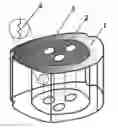
The invention will be explained in more detail below by means of examples. FIG. 1 shows a schematic embodiment of an implant according to the invention. The implant includes a solid, load-bearing shell 1 that laterally surrounds a porous filling material 2. The porous filling material 2 is exposed on the top and the bottom sides of the implant. The load-bearing shell has a pore volume proportion of less than 1 vol %.
The porous filling material 2 has a pore volume proportion that is between 15 and 90 vol %. The indicated volume proportion only relates here to the porous material itself, without considering the pore channels. The porosity of the filling material is percolated, i.e. the pores are always at least partially, preferably predominantly in communication with each other and allow body fluids to enter and to be transferred and/or to be circulated. In other words, this porosity forms a coherent network that can be filled with fluid. The pores preferably have a diameter in a range between 5 and 200 μm.
Moreover, continuous pore channels 3 pass through the porous filling material and are in this embodiment in contact with the environment through the top and bottom sides of the implant. In the implanted condition, the pore channels allow bone material to grow into and onto the implant. The pore channels 3 are in hydraulic communication with the above-described percolating pore network. The pore network is filled with body fluids on account of capillary forces. Due to the connection of pore channels and percolating porosity, these body fluids will also get into the inside of the pore channels, even if these have already been partially filled with newly formed bone material. Thus, the supply of the ingrowing bone cells with nutrients is ensured at any stage of the ingrowth.
Reference numeral 4 refers to an enlarged schematic section out of a wall of a pore channel. The wall of the pore channel is structured or roughened, so that the newly formed bone material can interlock with the implant. This interlocking affords an improved retention between the implant and the bone material.
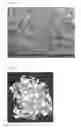
FIG. 2A shows a scanning electron micrograph of a broken-up section of a porous filling material according to the invention. An yttrium-stabilised TZP ceramic was used as the material. The individual pore sizes are very different and are in a range between 20 and 300 μm. The porosity was achieved by combusting spherical carbon particles.
FIG. 2B shows a computer tomographic reconstruction of the percolating network of the filling material shown in FIG. 2A.
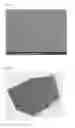
FIG. 3A shows a further embodiment of the porous filling material in a scanning electron micrograph of a ground section and the associated computer tomographic reconstruction of the pore network, see FIG. 3B. In contrast to the material shown in FIGS. 2A and 2B, a more fine-grained pore generator was used here for generating porosity, namely maize semolina with grain sizes between 5 and 50 μm. This porosity is also percolating, although the pore volume proportion is markedly lower at approx. 25 vol % compared to the example shown in FIG. 2. As a ceramic material, a ZTA ceramic was used.
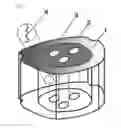
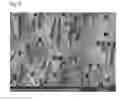
FIG. 4 shows a further embodiment of the porous filling from a Y-stabilised TZP ceramic. As a pore generator, carbon fibres with a diameter of 7 μm and a length of 150 μm were used.
Claims
1-15. (canceled)
16. An implant, comprising a solid, load-bearing shell and a porous filling material, wherein directed pore channels pass through the porous filling material.
17. The implant as claimed in claim 16, wherein the shell comprises a ceramic material.
18. The implant as claimed in claim 16, wherein the pore volume proportion of the shell is less than 3 vol %.
19. The implant as claimed in claim 16, wherein the pore volume proportion of the porous filling material is between 15 and 90 vol %.
20. The implant as claimed in claim 16, wherein the porosity of the filling material is percolating.
21. The implant as claimed in claim 16, wherein the porous filling material has pore sizes in the range of 2 to 400 μm.
22. The implant as claimed in claim 16, wherein the pore channels of the porous filling material have an average diameter of 0.1 to 2 mm.
23. The implant as claimed in claim 16, wherein walls of the pore channels have a surface roughness with an average roughness depth of Rz 10 to 250 μm.
24. The implant as claimed in claim 16, wherein the pore channels are in hydraulic contact with the porosity of the filling material.
25. A method for producing a ceramic implant comprising producing the ceramic implant via a ceramic two-component injection moulding method, wherein the ceramic implant comprises a solid, load-bearing shell and a porous filling material.
26. The method as claimed in claim 25, wherein a first and a second feedstock are formed from at least one mixture of ceramic powder and at least one wax-like polymer preparation, wherein the second feedstock additionally comprises combustible pore generators.
27. The method as claimed in claim 26, wherein the same mixture of ceramic powder or different mixes of ceramic powder are used for the first and the second feedstock.
28. The method as claimed in claim 25, wherein the pore generators are selected from the group consisting of maize semolina, melamine resin particles, polyamide particles, carbon particles, glassy carbon particles, carbon fibers, poppy seeds and cereal flour.
29. The method as claimed in claim 25, wherein an injection moulding tool having pin-like components is used, so that during injection moulding continuous pore channels are generated in the material of the second feedstock.
30. The method as claimed in claim 25, wherein by post-processing the green body or the finished sintered ceramic implant, continuous pore channels are generated in the material of the second feedstock.
31. The implant as claimed in claim 16, wherein the filling material comprises a ceramic.
Images & Drawings included:
Sources:
- United States Patent and Trademark Office - verify current appl. status at the USPTO↗
Recent applications in this class:
- » 20250152364 2025-05-15
EXPANDABLE DEVICE TO IMPROVE FIXATION OF ORTHOPAEDIC IMPLANTS - » 20250134667 2025-05-01
BIOABSORBABLE AND PHOTOCURABLE COMPOSITION, BIOABSORBABLE GUIDED TISSUE REGENERATION COMPOSITION, AND GRAFTING METHOD USING SAME - » 20250114203 2025-04-10
PROGRAMMABLE INTRAMEDULLARY IMPLANTS AND METHODS OF USING PROGRAMMABLE INTRAMEDULLARY IMPLANTS TO REPAIR BONE STRUCTURES - » 20250090326 2025-03-20
MESH FOR ENCLOSING BONE MATERIAL AND METHODS OF USE - » 20250073038 2025-03-06
BONE GRAFT SYSTEM - » 20250009516 2025-01-09
BONE IMPLANT HOLDING AND SHAPING TRAY - » 20240398571 2024-12-05
TITANIUM MESH COVERED WITH BIOCOMPATIBLE POLYPROPYLENE FILM FOR COVERING AND PROTECTING BONE GRAFTS/BIOMATERIALS AND PROCESS FOR OBTAINING SAME - » 20240325152 2024-10-03
Methods and Devices for Improving Bone Healing - » 20240148508 2024-05-09
Multi-Part Implant Having a Support Element and a Functional Element - » 20240065843 2024-02-29
Magnesium-Based Porous Coating for Orthopedic Implant
Recent applications for this Assignee:
- » 20210384115 2021-12-09
Module with connection lugs for supply lines - » 20210071697 2021-03-11
Connection arrangement of two components - » 20200030888 2020-01-30
Tool system - » 20190366444 2019-12-05
Tool system - » 20190091031 2019-03-28
Knee endoprosthesis for replacing at least parts of the knee joint - » 20190006578 2019-01-03
Production of lead-free piezoceramics in aqueous surroundings - » 20190001419 2019-01-03
Carrier tool, cutting insert, and clamping element - » 20170362131 2017-12-21
α/β-sialon having improved sintering activity and high edge strength - » 20170348464 2017-12-07
COMPONENTS FOR FUSING VERTEBRAL BODIES - » 20170341154 2017-11-30
Cutting insert geometry