Method and system for independent management of the lighting and/or signalling of vehicles
US20160114744A1
2016-04-28
14/783,080
2014-04-15
✅ Patent granted
US 10,035,481 B2
2018-07-31
WO; PCT/EP2014/001002; 20140415
WO; WO2014/170010; 20141023
Jared Fureman | Aqeel Bukhari
John Alumit
2035-04-07
Abstract:
The Independent lighting and signalling kit (10) is an innovative light system of semi-trailers trailers (7), campers and trucks that uses the best technologies. It is able to recover alternative energy and convert it into electric energy, accumulating it in the appropriate batteries (4), if necessary in situations that ensure road safety is improved, saving human lives. It is a system that is completely independent of the structure of the vehicle that can be installed subsequently. The disclosed device is able to improve road safety, reduce road accidents involving vehicles that collide against trailers or semitrailers parked in rest areas with poor or no visibility.
Inventors:
- Domenico AMABILE 1 🇮🇹 Salerno, Italy
- Domenico AMABILE 1 🇮🇹 Castel San Giorgio (Salerno), Italy
Applicant:
Interested in similar patents?
Get notified when new applications in this technology area are published.
Classification:
H02J7/00 IPC
Circuit arrangements for charging or depolarising batteries or for supplying loads from batteries
H02J7/007 » CPC further
Circuit arrangements for charging or depolarising batteries or for supplying loads from batteries Regulation of charging or discharging current or voltage
H02J7/0029 » CPC further
Circuit arrangements for charging or depolarising batteries or for supplying loads from batteries with safety or protection devices or circuits
B60Q1/26 » CPC further
Arrangement of optical signalling or lighting devices, the mounting or supporting thereof or circuits therefor the devices being primarily intended to indicate the vehicle, or parts thereof, or to give signals, to other traffic
H02J7/35 » CPC further
Circuit arrangements for charging or depolarising batteries or for supplying loads from batteries; Parallel operation in networks using both storage and other dc sources, e.g. providing buffering with light sensitive cells
B60Q1/30 IPC
Arrangement of optical signalling or lighting devices, the mounting or supporting thereof or circuits therefor the devices being primarily intended to indicate the vehicle, or parts thereof, or to give signals, to other traffic for indicating rear of vehicle, e.g. by means of reflecting surfaces
B60Q2900/10 » CPC further
Features of lamps not covered by other groups in Retrofit arrangements
B60Q1/305 » CPC further
Arrangement of optical signalling or lighting devices, the mounting or supporting thereof or circuits therefor the devices being primarily intended to indicate the vehicle, or parts thereof, or to give signals, to other traffic for indicating rear of vehicle, e.g. by means of reflecting surfaces Indicating devices for towed vehicles
B60Q2900/30 » CPC further
Features of lamps not covered by other groups in Lamps commanded by wireless transmissions
B60Q1/32 » CPC further
Arrangement of optical signalling or lighting devices, the mounting or supporting thereof or circuits therefor the devices being primarily intended to indicate the vehicle, or parts thereof, or to give signals, to other traffic for indicating vehicle sides, e.g. clearance lights
B60R16/033 » CPC main
Electric or fluid circuits specially adapted for vehicles and not otherwise provided for; Arrangement of elements of electric or fluid circuits specially adapted for vehicles and not otherwise provided for electric constitutive elements for supply of electrical power to vehicle subsystems or for characterised by the use of electrical cells or batteries
Description
TECHNICAL FIELD
The present invention relates to the field of lighting methods and systems and more precisely for vehicles of any type: semi-trailers, trailers, campers, trucks, etc.
The system is able to recover the mechanical energy produced, for example from the tractor, from the moving vehicle, and convert the energy into electric energy, accumulating the energy in the suitable batteries.
The system disclosed here is completely independent of the structure of the vehicle and the kit thereof can be subsequently mounted and installed parallel to the lighting system that is already present in the vehicle.
BACKGROUND ART
Currently the lighting or signalling system: trailers, semi-trailers, is supplied by the general system of the tractor of the vehicle (tractor) through a male/female connecting plug, this connection is obligatory because only the tractor has the electric energy to permit operation both at night and day of the lighting devices used on the vehicle.
Usually, in the case of long waits, the signalling lights or position of the entire articulated truck (tractor with trailer) are switched off because if they were kept on and with the engine switched off the battery would run down in a short period of time, compromising the function of the vehicle; whereas in the case of a switched-on engine, fuel would be consumed and a contribution to the emission of environmental pollutants would be obtained unnecessarily.
Disclosure and Advantages of the Invention
The aim of the present invention is to solve the aforesaid drawbacks by providing the prior art with a method and system in a kit that is suitable for solving the problem of the lack of lighting of articulated trucks with trailers and semi-trailers and the case in which the trailer or semi-truck is totally disconnected from the truck.
Another object of the present invention is to solve the problem of the lack of lighting of the vehicle when it is stationary, for example in unlit lay-bys, near bends, whilst waiting to be loaded/unloaded etc, without using the system already present in the vehicle.
A further object is to make the system work that is disclosed here by recovering the mechanical energy produced by the vehicle moving and converting the mechanical energy into electrical energy to be accumulated, if it is not required, into batteries.
Amongst the advantages, it must be stated that:
-
- the claimed system is completely independent of the structure of the vehicle and the kit thereof can be mounted subsequently and installed parallel to the lighting system that is already present in the vehicle;
- the system of the vehicle is not affected;
- a significant contribution is given to saving human lives because the system always works in the vehicles, especially when it is stationary.
Such objects and advantages are all reached by the kit for independent lighting or signalling that is applicable to vehicles and operates with mechanical energy produced by said vehicle that is the object of the invention that is characterised by what is set out in the claims below.
BRIEF DESCRIPTION OF DRAWINGS
This and further characteristics of the invention will be better highlighted in the following description of some embodiments thereof, illustrated, in the form of a non-limiting example, with the help of accompanying drawings.
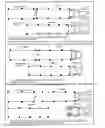
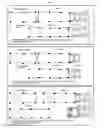
FIG. 1: the operating diagram of the independent system of lighting or signalling that is applicable to vehicles that is the object of the invention,
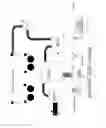
FIG. 2: this illustrates the circuit diagram that manages the electric energy produced by the generator,
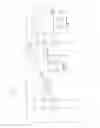
FIG. 3: this illustrates the advantage that is obtainable from the independent kit, once it has been applied to the vehicle,
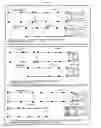
FIG. 4: this illustrates the prior art of the vehicles devoid of an independent kit in object.
DESCRIPTION OF THE INVENTION
With particular reference to the figures, with 10 the overall kit is indicated for independent lighting of a vehicle. Nevertheless, the invention disclosed here is applicable to any type of vehicle such as semi-trailers, trailers, campers, trucks, etc.
The kit 10 in question mainly consists of at least:
-
- a generating system 1,
- a converter circuit or charge adjuster 2,
- a control unit 3,
- a battery pack 4,
- a photoelectric sensor 5,
- a transmitter/receiver 6,
- a connecting plug 8.
With 7, the lighting system of the vehicle is illustrated overall. Although it is not part of the kit in question, it is also depicted because it is indispensable for operation. It is already present on the vehicle.
The generating system can be of two types:
-
- the first type consists of an electric generator with a suitable reduction gear and mechanical supports connected mechanically to the axle of the trailer/semi-trailer in a structurally non-invasive manner, creating a system that is able to recover mechanical energy and convert it into electric energy.
- The second type consists of photovoltaic cells installed on a suitable photovoltaic cells installed on a suitable shelf supporting the photovoltaic cells in the upper zone of the semi-trailer so as not to take up space, generating electric energy from solar radiation.
The choice of generation system to be applied is substantially connected to the type of trailer and semi-trailer under consideration.
With 2 he converter circuit or load adjuster is indicated; this is used to adjust the dispensed current of the generator so as to make the current suitable for the field of use of the battery, when MOSFET 1 is running, the battery charges whereas when MOSFET 2 is running, the battery supplies the charge.
MOSFET1 is driven by a comparator that ensures that the battery is protected from overcharge, whereas the drive signal of MOSFET2 protects the battery, preventing the battery becoming completely exhausted; this operation enables optimum battery performance and greater lifetime to be obtained. The signals managing the adjusting circuit are managed by the control circuit.
With 3, the control circuit is indicated, which is based on a microprocessor that is able to manage in an optimum manner the entire system, battery charging discharging, when to supply the charge, managing the various signals, etc.
With 4 one or more batteries or energy storage batteries are indicated: said battery pack will be able to supply the load for a long time, up to 48 h considering that almost all the semi-trailers or trailers are provided with LED signalling (thus with very low energy consumption, duration is much longer in the absence of generation).
With 5 the presence of a photodetector is observed that is suitable for reporting to the control unit whether the vehicle is in a zone with or without light.
With 6 a transmitter/remote control for activating and/or deactivating the system if it is voluntarily desired to keep the parked vehicle non lighted.
Lastly, 8 indicates a connecting plug.
The plug 8 ensures the flow of current from the tractor to the trailer/semi-trailer when the tractor is operating and if the tractor is switched off, ensures the flow of current from the kit in question to the lighting system of the trailer but never ensures the flow of current from the tractor to the kit because the latter is totally independent and above all does not influence the electrical operation of the truck.
Claims
1. The lighting and signalling system (10) of semi-trailers, trailers, campers, trucks to recover alternative energy and convert it into electric energy, accumulating the electric energy in suitable batteries and available if necessary in situations that ensure improved road safety, characterised in that it comprises at least:
a. a generation system (1),
b. a converter circuit or load adjuster (2),
c. a control unit (3),
d. a battery pack (4),
e. a photoelectric sensor (5),
f. a transmitter/receiver (6)
g. a connecting plug (8).
2. System according to claim 1, characterised in that said generating system (1) consists of an electric generator with a suitable reduction gear and mechanical supports connected mechanically to the axle of the trailer/semi-trailer, creating a system that is capable of recovering mechanical energy and converting the mechanical energy into electric energy.
3. System according to claim 1, characterised in that said generating system (1) consists of photovoltaic cells that are installable in the high zone of the semi-trailer, generating electric energy from the solar energy.
4. System according to claim 1, characterised in that said converting circuit or load adjuster (2) is suitable for adjusting the current dispensed by the generator so as to make the current suitable for the field of use of the battery; particularly when the MOSFET MOS1 runs, the battery charges whereas when MOSFET MOS2 runs, the battery supplies the charge; MOSFET MOS1 is driven by a comparator that ensures protection against battery overcharge whereas the control signal of MOSFET MOS2 protects the battery, preventing it becoming totally discharged.
5. System according to claims 1 and 4, characterised in that the signals managing the adjuster circuit are managed by the control circuit (3), a microprocessor that is able to manage battery charging/discharging, when to supply the charge, manage the different signals, etc.
6. System according to claim 1, characterised in that one or more batteries or energy storage batteries supply the charge for a long time.
7. System according to claim 1, characterised in that the photodetector (5) reports to the control unit whether the vehicle is in a zone with or without light.
8. System according to claim 1, characterised in that a transmitter/remote control (6) activates and/or deactivates the system.
9. System according to claim 1, characterised in that the plug 8 ensures the flow of current from the tractor to the trailer/semi-trailer when the tractor is running, and if the tractor is switched off, it ensures the flow of current from the kit in question to the lighting system of the trailer, but it never guarantees the flow of current from the tractor to the kit because the latter is totally independent and above all does not affect the operation of the electrical system of the tractor.
10. Method for lighting vehicles, the vehicle comprising a system (10) or kit according to claim 1, characterised in that it:
a. Recovers alternative energy and converts the alternative energy into batteries, exploiting the energy if necessary in situations that ensure road safety is improved,
b. Said energy is converted by a converter circuit or load adjuster (2) that is suitable for adjusting the dispensed current of the generator so as to make the current suitable for the field of use of the battery; particularly, when MOSFET MOS1 is running, the battery charges whereas when MOSFET MOS2 is running, the battery supplies the charge; said MOSFET MOS1 being driven by a comparator that ensures protection against battery overcharge, whereas the monitoring signal of MOSFET MOS2 protects the battery, preventing it becoming completely discharged;
c. The management signal of the adjusting circuit will be managed by the control circuit (3), a microprocessor that is able to manage battery charging/discharging, when to supply the charge, manage the various signals, etc.
Images & Drawings included:
Sources:
- United States Patent and Trademark Office - verify current appl. status at the USPTO↗
Recent applications in this class:
- » 20250289387 2025-09-18
ELECTRIFIED VEHICLE AND METHOD OF CONTROLLING POWER MANAGEMENT MODE FOR THE SAME - » 20250289386 2025-09-18
Supplying Power to a LV Onboard Electrical Subsystem of a Vehicle From the HV Onboard Electrical Subsystem Thereof - » 20250256668 2025-08-14
Smart Trailer Power Supply - » 20250256667 2025-08-14
CONTROL DEVICE - » 20250256666 2025-08-14
PREDICTING EFFICIENCY OF PROVIDED ELECTRICITY DURING AN OUTAGE - » 20250249852 2025-08-07
THERMAL COMPONENT PRIORITIZATION CONTROL LOGIC AND METHODS - » 20250249851 2025-08-07
VEHICLE CONTROL SYSTEM - » 20250236248 2025-07-24
POWER SUPPLY SYSTEM - » 20250236247 2025-07-24
BATTERY CHARGER AND ENGINE JUMP START SYSTEM WITH DUAL PORTS - » 20250229735 2025-07-17
ELECTRICAL SYSTEM FOR A COMBUSTION ENGINE VEHICLE AND ASSOCIATED VEHICLE