Elastic training apparatus
US20160129294A1
2016-05-12
14/535,686
2014-11-07
✅ Patent granted
US 9,630,081 B2
2017-04-25
-
-
Andrew S Lo
Plager Schack LLP
2034-11-07
Abstract:
An elastic resistance training apparatus for the performance of ankle plantar flexor resistance exercises, dorsi flexor resistance exercises, ankle inverter resistance exercises, or ankle everter exercises by a user. The apparatus comprises an elastic cord with a primary loop at each end configured to engage the dorsum and plantar surfaces of the user's foot. An auxiliary loop is connected to the primary loop and configured to engage the user's calcaneus bone when the primary loop engages the dorsum and plantar surfaces of the user's foot centering the apparatus at the talocrural joint to enable the user to perform talocrural joint movements without the apparatus disengaging from the user's foot during resistance exercises.
Applicant:
Interested in similar patents?
Get notified when new applications in this technology area are published.
Classification:
A63B21/0555 » CPC main
Exercising apparatus for developing or strengthening the muscles or joints of the body by working against a counterforce, with or without measuring devices using resilient force-resisters extension element type; Elastic ropes or bands Details of the rope or band, e.g. shape or colour coding
A63B21/055 IPC
Exercising apparatus for developing or strengthening the muscles or joints of the body by working against a counterforce, with or without measuring devices using resilient force-resisters extension element type
A63B71/0054 » CPC main
Games or sports accessories not covered in groups - Features for injury prevention on an apparatus, e.g. shock absorbers
A63B21/0552 » CPC further
Exercising apparatus for developing or strengthening the muscles or joints of the body by working against a counterforce, with or without measuring devices using resilient force-resisters extension element type Elastic ropes or bands
A63B23/1245 » CPC further
Exercising apparatus specially adapted for particular parts of the body for limbs, i.e. upper or lower limbs, e.g. simultaneously for upper limbs or related muscles, e.g. chest, upper back or shoulder muscles Primarily by articulating the shoulder joint
A63B21/0023 » CPC further
Exercising apparatus for developing or strengthening the muscles or joints of the body by working against a counterforce, with or without measuring devices isometric or isokinetic, i.e. substantial force variation without substantial muscle motion or wherein the speed of the motion is independent of the force applied by the user for isometric exercising, i.e. substantial force variation without substantial muscle motion
A63B21/4013 » CPC further
Exercising apparatus for developing or strengthening the muscles or joints of the body by working against a counterforce, with or without measuring devices; Interfaces with the user related to strength training; Details thereof; Arrangements for attaching the exercising apparatus to the user's body, e.g. belts, shoes or gloves specially adapted therefor to the lower limbs to the ankle
A63B21/4035 » CPC further
Exercising apparatus for developing or strengthening the muscles or joints of the body by working against a counterforce, with or without measuring devices; Interfaces with the user related to strength training; Details thereof; Specific exercise interfaces; Handles, pedals, bars or platforms for operation by hand
A63B2071/009 » CPC further
Games or sports accessories not covered in groups -; Features for injury prevention on an apparatus, e.g. shock absorbers Protective housings covering the working parts of the apparatus
A63B2071/026 » CPC further
Games or sports accessories not covered in groups - for large-room or outdoor sporting games; Supports, e.g. poles stabilised by weight
A63B2208/0204 » CPC further
Characteristics or parameters related to the user or player posture Standing on the feet
A63B2208/0252 » CPC further
Characteristics or parameters related to the user or player posture; Lying down supine
A63B71/00 IPC
Games or sports accessories not covered in groups -
A63B23/12 IPC
Exercising apparatus specially adapted for particular parts of the body for limbs, i.e. upper or lower limbs, e.g. simultaneously for upper limbs or related muscles, e.g. chest, upper back or shoulder muscles
A63B21/00 IPC
Exercising apparatus for developing or strengthening the muscles or joints of the body by working against a counterforce, with or without measuring devices
A63B21/04 IPC
Exercising apparatus for developing or strengthening the muscles or joints of the body by working against a counterforce, with or without measuring devices using resilient force-resisters attached to static foundation, e.g. a user
A63B21/002 IPC
Exercising apparatus for developing or strengthening the muscles or joints of the body by working against a counterforce, with or without measuring devices isometric or isokinetic, i.e. substantial force variation without substantial muscle motion or wherein the speed of the motion is independent of the force applied by the user
A63B21/0442 » CPC further
Exercising apparatus for developing or strengthening the muscles or joints of the body by working against a counterforce, with or without measuring devices using resilient force-resisters attached to static foundation, e.g. a user Anchored at one end only, the other end being manipulated by the user
A63B71/02 IPC
Games or sports accessories not covered in groups - for large-room or outdoor sporting games
A63B21/00043 » CPC further
Exercising apparatus for developing or strengthening the muscles or joints of the body by working against a counterforce, with or without measuring devices; Exercising devices moving as a whole during exercise Exercising devices consisting of a pair of user interfaces connected by flexible elements, e.g. two handles connected by elastic bands
Description
BACKGROUND
The present invention relates to the fitness industry, therapeutic rehabilitation industry, and sports performance industry. The embodiments herein relate generally to an elastic resistance training apparatus for the performance of ankle plantar flexor exercises, dorsi flexor exercises, ankle inverter exercises, or ankle everter exercises by a user.
There are countless resistance training devices in the form of elastic resistance bands and elastic resistance tubing devices that are currently on the market. Many of these devices such as patent U.S. Pat. No. 6,884,202 B2 are attached to the user's body in various arrangements by using cuffs and/or come with removable resistances that can be altered or switched by using clips to allow the user to perform the exercises and or activity that is desired. Another such device, patent U.S. Pat. No. 7,087,003 B1, provides a device that slips over the toe box of the user's shoe to perform the desired exercise. Although there are many more products that are available in the market for elastic resistance training, many of these devices suffer from the defect of being easily dislodged or disengaged from the user resulting in ineffective workouts.
Resistance exercise tubing and elastic bands are well known for their use in therapeutic rehabilitation and fitness training These devices are typically applied at the distal femur and/or the distal tibia of both legs to provide resistance training to the hip musculature which includes hip flexors, hip extensors, hip internal rotators, hip external rotators, hip adductors and hip abductors whether it be for therapeutic rehabilitation and/or fitness training The resistance for many of the products is created by the movement of limbs in opposite directions. This creates tension of the elastic resistance tubing and elastic band.
A recognized problem with the prior art devices is the inadvertent sliding and movement of the devices during use. The prior art devices frequently move up and down the leg or slide off the foot when in use which results in decreased performance and results.
It is an object of the present invention to provide users with a resistance training device that stays in place during multiple forms of exercise and resistance training
A further object of the present invention is to allow the user the ability to improve fitness in regards to progressive resistance training, flexibility, balance, coordination, muscle endurance and muscle strength.
A further object of the present invention is to provide the user the ability to perform functional movements while using the present invention.
SUMMARY
An elastic resistance training apparatus for the performance of ankle plantar flexor resistance exercises, dorsi flexor resistance exercises, ankle inverter resistance exercises, or ankle everter exercises by a user. The apparatus comprises an elastic cord with a primary loop at each end configured to engage the dorsum and plantar surfaces of the user's foot. An auxiliary loop is connected to the primary loop and configured to engage the user's calcaneus bone when the primary loop engages the dorsum and plantar surfaces of the user's foot centering the apparatus at the talocrural joint to enable the user to perform talocrural joint movements without the apparatus disengaging from the user's foot during resistance exercises. The elastic cord is surrounded by a fabric of greater elasticity to protect the user in the event the elastic cord snaps during use. the elastic cord is selected from the group comprising polyvinyl chloride tubing, thermoplastic polyurethane tubing, bungee cord.
BRIEF DESCRIPTION OF THE FIGURES
The detailed description of some embodiments of the invention will be is made below with reference to the accompanying figures, wherein like numerals represent corresponding parts of the figures.
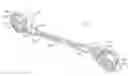
FIG. 1 shows a schematic perspective view of one embodiment of the present invention;
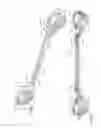
FIG. 2 shows a front view of one embodiment of the invention.
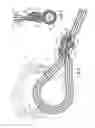
FIG. 3 is a section detail view of one embodiment of the invention along line 3-3 in FIG. 1.
FIG. 4 is a section detail view of one embodiment of the invention along line 4-4 in FIG. 3.
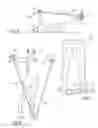
FIG. 5 is a side view of one embodiment of the invention in exemplary usage.
FIG. 6 is a perspective view of one embodiment of the invention in exemplary usage.
FIG. 7 is a detail perspective view of the invention shown in exemplary usage.
DETAILED DESCRIPTION OF CERTAIN EMBODIMENTS
By way of example, and referring to FIGS. 1 through 7, one embodiment of the present apparatus 10 comprises an elastic cord 20 with a first end and second end forming a primary loop 12 at each end. Primary loop 12 is configured to engage the dorsum and plantar surfaces of a user's 24 foot. The primary loop 12 may be formed using mechanical means such as clamps 16 or other means readily known to persons of ordinary skill in the art. It is preferred that when clamps 16 are used to form the primary loop 12 that spacers 22 are placed between each clamp 16 as depicted in FIG. 3.
An auxiliary loop 14 is connected to primary loop 12 as depicted in FIGS. 3 and 4 using mechanical means such as clamps 16 or other means readily known to persons of ordinary skill in the art. It is preferred that when clamps 16 are used to connect the auxiliary loop 14 to the primary loop 12 that spacers 22 are placed between each clamp 16 as depicted in FIG. 3. The auxiliary loop 14 is configured to engage the calcaneus bone of the user 24 when primary loop 12 engages the dorsum and plantar surfaces of the user's foot centering the apparatus at the talocrural joint to enable the user to perform talocrural joint movements without the apparatus disengaging from the user's foot during resistance exercise as depicted in FIGS. 5 and 7.
Alternatively, as depicted in FIG. 6, the primary loop 12 and auxiliary loop 14 may be gripped by the user 24 in his hands to perform arm exercises using the apparatus 10. Further, as depicted in FIG. 5 one primary loop 12 and auxiliary loop 14 may be gripped by the user 24 in his hands and the second primary loop may be secured to the users 24 foot in order to perform full body exercises.
The elastic cord 20 may be fabricated from polyvinyl chloride tubing, thermoplastic polyurethane tubing, bungee cord, or any other elastic cord. A sheath 18 having an elasticity greater than the elastic cord 20 surrounds the elastic cord 20. The inclusion of a sheath 18 reduces the risk of injury to the user if the elastic cord 20 snaps or breaks during use, especially during functional movements, flexibility and stretching exercises.
Persons of ordinary skill in the art may appreciate that numerous design configurations may be possible to enjoy the functional benefits of the inventive systems. Thus, given the wide variety of configurations and arrangements of embodiments of the present invention the scope of the invention is reflected by the breadth of the claims below rather than narrowed by the embodiments described above.
Claims
What is claimed is:1. An elastic resistance training apparatus for the performance of ankle plantar flexor resistance exercises, dorsi flexor resistance exercises, ankle inverter resistance exercises, or ankle everter exercises by a user, the apparatus comprising:
an elastic cord with a first end and a second end each formed into a primary loop configured to engage the dorsum and plantar surfaces of the user's foot;
an auxillary loop is connected to each primary loop and configured to engage the user's calcaneus bone when the primary loop engages the dorsum and plantar surfaces of the user's foot centering the apparatus at the talocrural joint to enable the user to perform talocrural joint movements without the apparatus disengaging from the user's foot during resistance exercises.
2. The elastic training apparatus of claim 1, wherein the elastic cord is surrounded by a fabric of greater elasticity to protect the user in the event the elastic cord snaps during use.
3. The elastic training apparatus of claim 1, wherein the elastic cord is selected from the group comprising polyvinyl chloride tubing, thermoplastic polyurethane tubing, bungee cord.
Images & Drawings included:
Sources:
- United States Patent and Trademark Office - verify current appl. status at the USPTO↗
Similar patent applications:
- » 20150297932
Elastic resistant training apparatus and methods - » 20180028855
Elastic resistant training apparatus and methods - » 20190054336
Elastic Weight Training Apparatus with Built-in Grip - » 20060207381
Elastic hysteretic palpatory training apparatus and method of use thereof - » 20100203488
Elastic hysteretic palpatory training apparatus
Recent applications in this class:
- » 20250205541 2025-06-26
Exercise Device For Strengthening Upper Body Muscles - » 20250065177 2025-02-27
EXPANDER WITH DEGRESSIVE STRESS BEHAVIOUR - » 20250001231 2025-01-02
Oneband resistance exercise system - » 20240390723 2024-11-28
Multifunctional Hair Band and Exercise Device and Method of Use - » 20240382794 2024-11-21
Elastic Resistance Exercising Device And Method Of Use - » 20240342537 2024-10-17
EXERCISE LOOP WITH ENHANCED FEATURES - » 20240261620 2024-08-08
WEIGHT LIFTING SUPPORT DEVICE INCLUDING A RESTRICTION PANEL - » 20240198162 2024-06-20
RESISTANCE EXERCISE BAND - » 20240173589 2024-05-30
Oneband resistance exercise system - » 20240075333 2024-03-07
Dynamic rope